

How to Organize a Small Laundry Room Tucked Into a Closet or Nook
Your washer sits in a closet the size of a phone booth. The dryer hums two inches from the wall, and every clean towel has to fight a bottle of detergent for counter space that does not exist. We have set up laundry in exactly this kind of cramped closet, and the fix is not a renovation. Good small laundry room organization is about claiming the walls, the door, and the sliver of floor between the machines, then giving every item one honest home.
Here is the promise. By the end of this, you will have a repeatable system, a short shopping list of products that actually fit, and ten setups you can copy this weekend. No demo saw. No landlord permission slip.
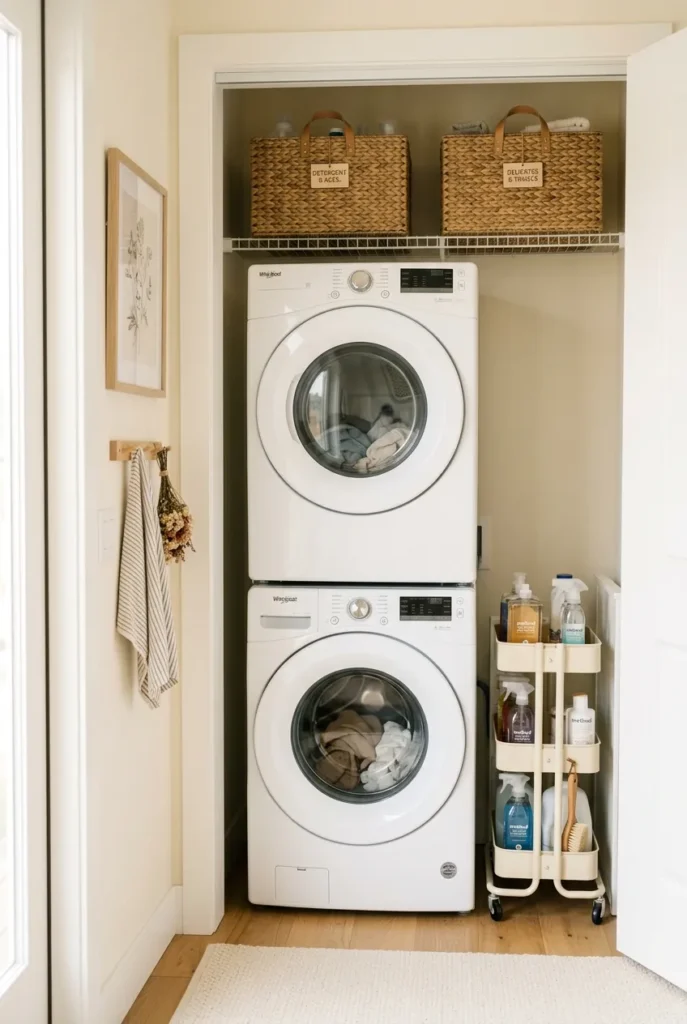
Start With Zones, Not Products (The 5-Zone Nook System)
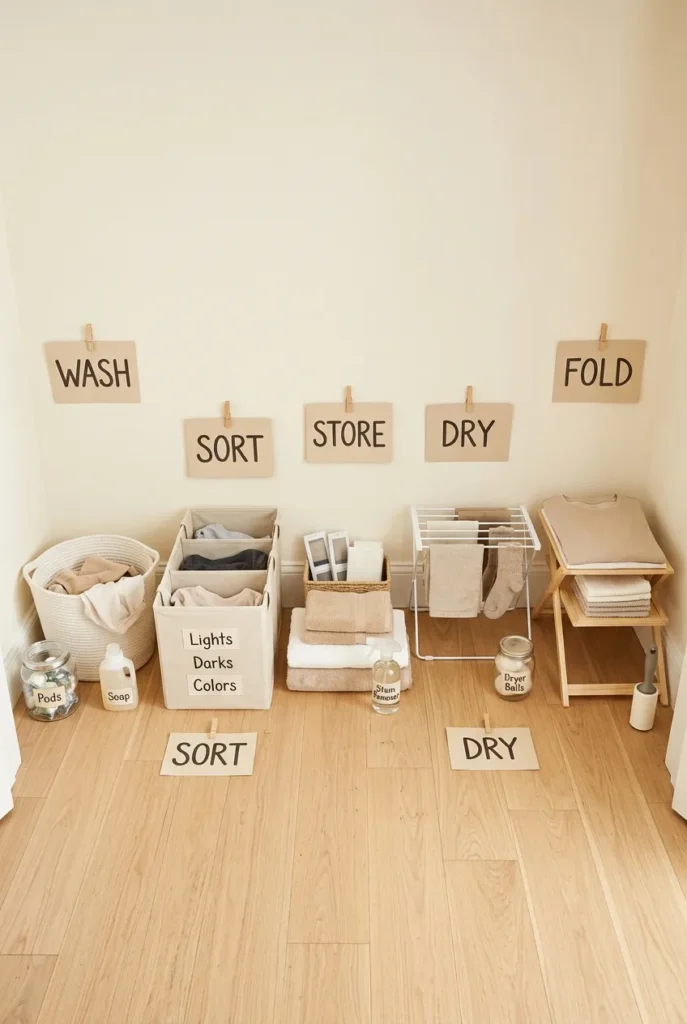
Before you buy a single bin, map your space into zones. We call this the 5-Zone Nook System, and it keeps a tiny footprint from turning into a junk drawer with a spin cycle. The five zones are wash, dry, fold, store, and sort. Every product you add has to serve one of them, or it does not come in.
Sketch it fast. Wash is your machines. Dry is wherever damp clothes hang. Fold is any flat surface, even a temporary one. Store holds detergent and supplies. Sort is your hamper flow, dirty in, clean out.
Why bother? Because zoning stops the classic tiny-laundry mistake: stacking everything on top of the dryer until you cannot open the lid. Once each zone has a spot, the room almost runs itself.
Claim the Vertical Space Above Your Machines
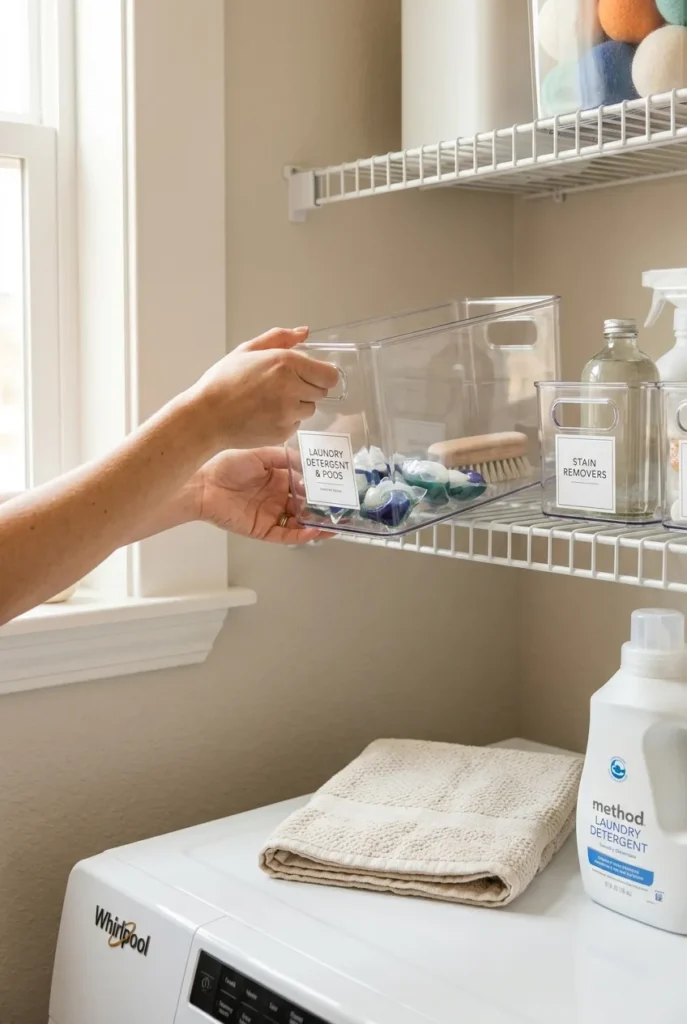
In a closet, the ceiling is your best friend. The wall above a washer and dryer is usually dead air, and that is where storage goes. A single wire or solid shelf mounted 16 to 18 inches above the machines clears the appliance tops while staying within reach.
Set your most-used supplies here in labeled bins. Clear stackable bins win because you can see the dryer sheets running low before you are out. Keep the top shelf light. Anything you lift over a running machine should be under a few pounds.
If you rent, skip the drill. A tension rod wedged wall to wall holds a curtain that hides the shelf clutter, and adhesive shelving carries the light stuff. For more damage-free tricks that translate straight to a laundry closet, our no-drill storage ideas for renters cover tension rods and adhesive racks in detail.
Turn the Back of the Closet Door Into a Wall
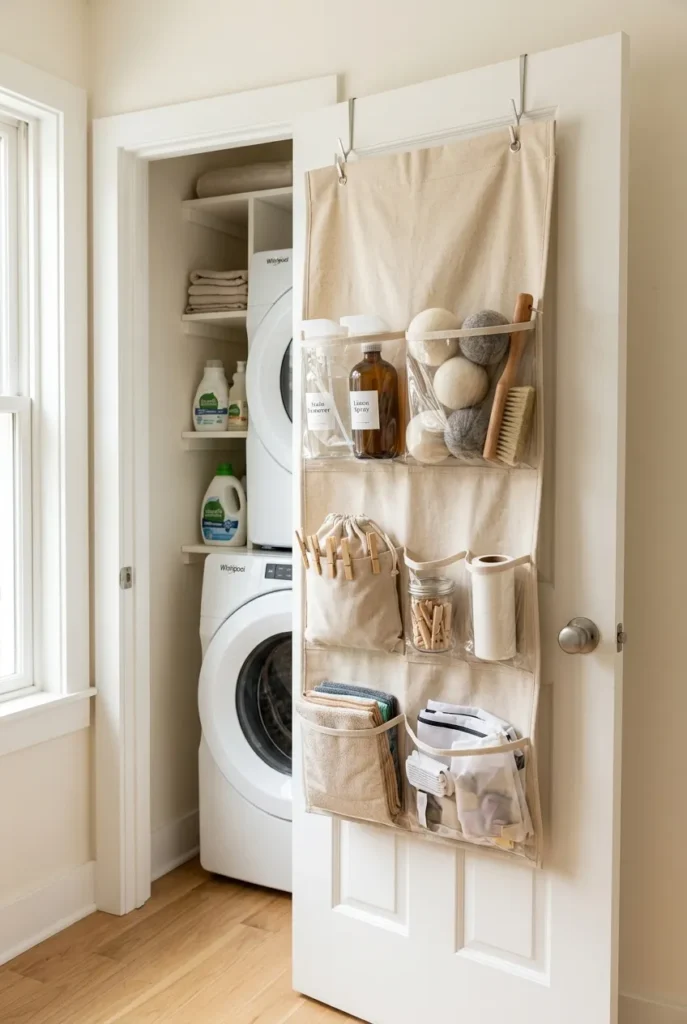
The single most wasted surface in a laundry closet is the back of the door. An over-the-door organizer turns it into a full vertical wall of storage for the price of one product. Fabric pocket organizers hold stain sticks, dryer balls, clothespins, and lint rollers. Wire racks hold spray bottles.
This is prime real estate for renters because it needs zero hardware. It hooks over the top and lifts off when you move. We break down 25 ways to use these across a home in our guide to over-the-door organizers, and a laundry closet might be the highest-value spot of them all.
Keep like with like. One pocket row for stain treatment, one for lint and dryer supplies, one for small tools. Honestly, this one move alone clears half a shelf.
Slide Storage Into the Gap Between the Machines
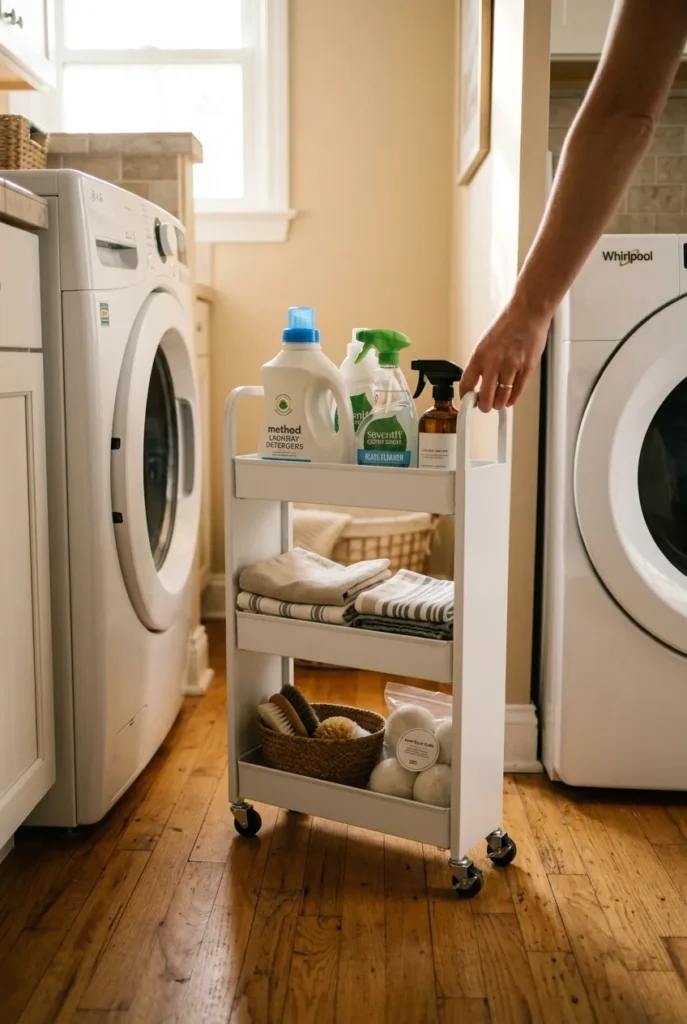
That awkward five-inch gap between the washer and dryer, or between a machine and the wall, is a hidden storage zone. A slim rolling laundry cart is built exactly for it. The mDesign slim rolling utility cart runs about five inches wide, tucks into that gap, and rolls out when you need detergent, then disappears again.
Expect to pay somewhere around $31 to $33 for a three or four-tier version. Load the bottom tier with heavy jugs so it stays stable, and keep the top tier for small daily grabs.
This is the fix for the “where does the detergent live” problem when there is no cabinet at all. The cart is your store zone on wheels.
Solve Hang-Drying Without Drilling a Single Hole
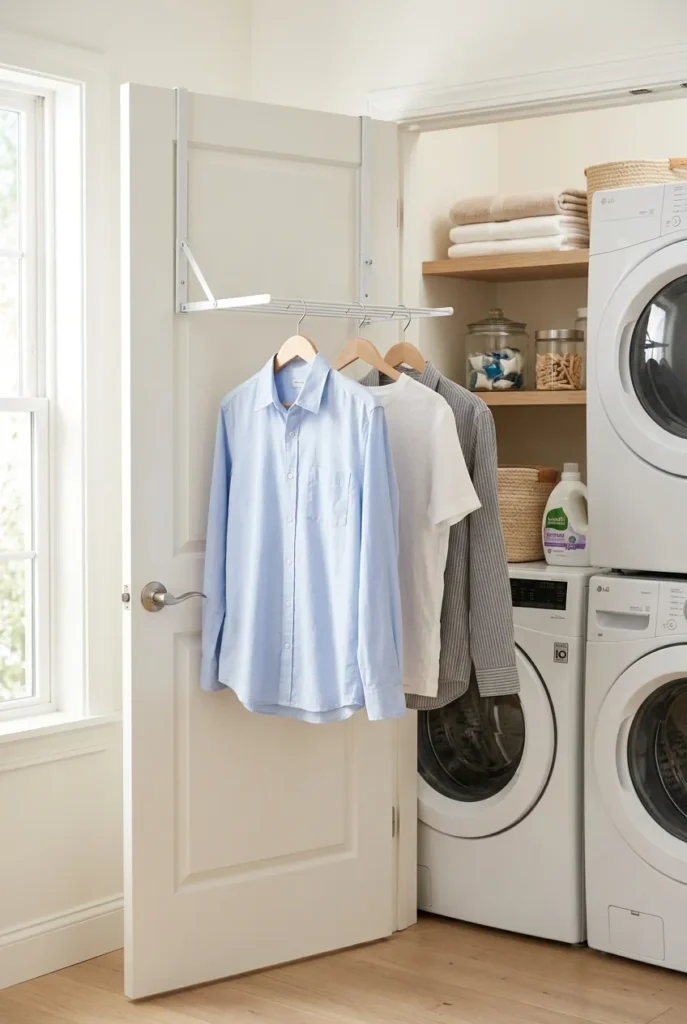
Where do you hang clothes in a small laundry room? On the door and on the machines, not on new holes in the wall. A collapsible over-the-door drying rack is the renter’s answer. The mDesign steel collapsible over-the-door laundry drying rack measures about 18.75 by 20 by 47.5 inches, hooks over the door, and folds flat when you are done. It runs roughly $38 to $58 depending on where you shop.
For a permanent-feeling look without commitment, a tension rod mounted inside the closet at shoulder height gives you a hanging bar for shirts straight out of the wash. No anchors, no patching.
If you do want one wall hook for a drying hanger, use a weight-rated one. A Command Large Utility Hook is rated to hold 5 pounds per the manufacturer, which is plenty for a few damp shirts on a hanger, and it peels off cleanly later.
Create a Folding Surface That Folds Away
Fold is the zone everyone forgets in a nook. There is no counter, so clean laundry ends up in a heap. The fix is a surface that appears when you need it and vanishes when you do not.
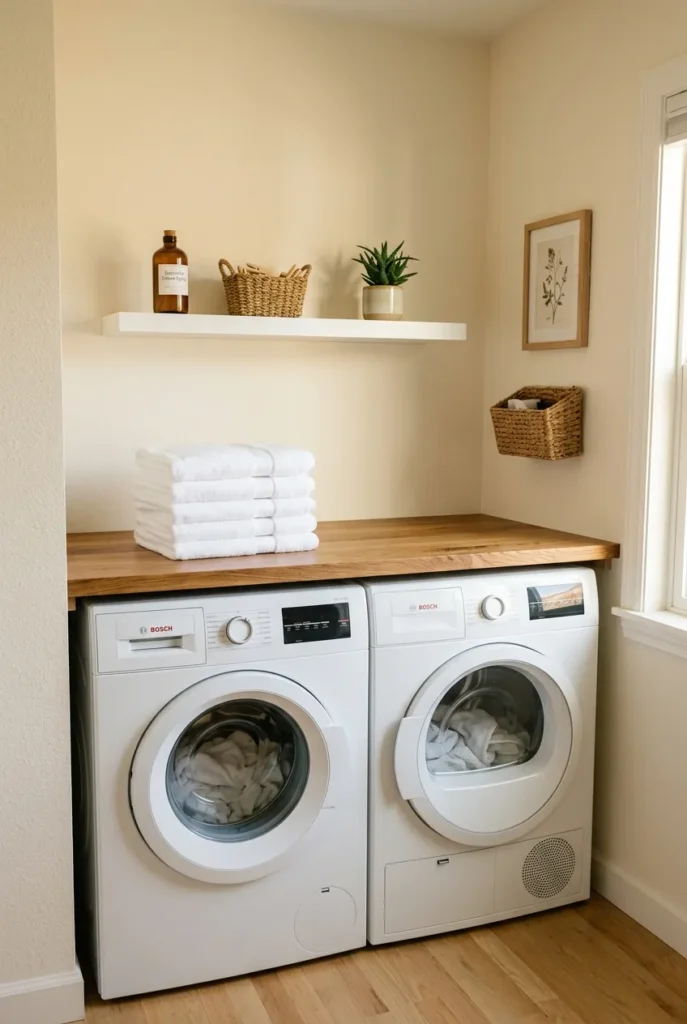
A wall-mounted drop-leaf shelf gives you a folding ledge that hinges flat against the wall. In a stacked closet, a slim countertop laid across the top of a front-loading washer and dryer becomes your fold station instantly. Even a lightweight folding board stored on a hook counts.
Keep the surface clear as a rule, not a suggestion. A fold zone only works if it is empty when the laundry comes out.
Decant Detergent So Supplies Take Half the Space
Bulky retail packaging is the enemy of a tiny laundry closet. Decanting fixes it. Pour powder detergent or transfer pods into a clear airtight canister, and you reclaim shelf space while making the room look calm and intentional, which is exactly the aesthetic that wins on Pinterest.
An OXO Good Grips POP container in the 4.4-quart size measures 6.5 by 6.5 by 9.5 inches and holds a generous scoop of pods or powder for around $22. Label it, add a small scoop, and toss the cardboard box.
One safety note: keep liquid detergent and any cleaning chemicals in their original or clearly labeled containers, and never store them where they could tip into a laundry basket of clean clothes.

Build a Two-Basket Sort Flow That Fits the Floor
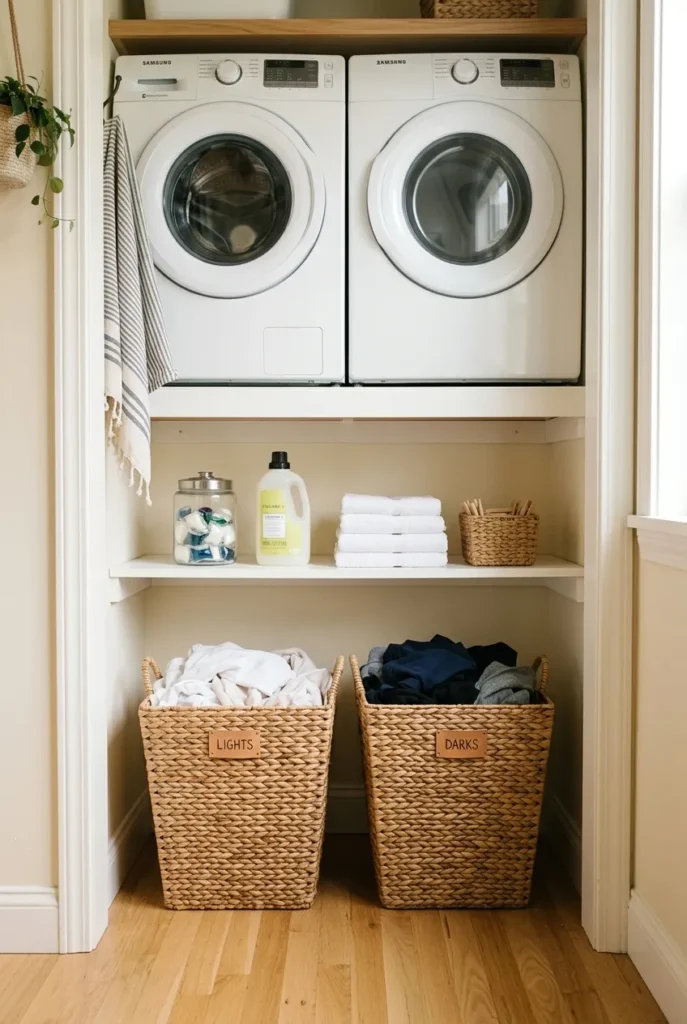
Sorting eats floor space fast if you let it. In a nook, you do not need a five-bin hamper station, you need a flow. Two slim bins do it: one for lights, one for darks. When a bin fills, that is your load.
Stackable or collapsible baskets are the move here. Collapsible bins flatten when empty so an unused basket is not stealing your only square foot of floor. Slide the clean-clothes basket out only during the fold step, then it goes back.
Label the two bins so anyone in the house drops correctly. Half of small laundry room organization is just making the right choice the easy choice.
Handle Lint and Keep the Room Safe
A tiny laundry closet traps lint, and lint is a genuine fire risk, not a tidiness footnote. Give it a home with a small magnetic bin stuck to the side of the dryer so the lint screen empties in one motion.
The U.S. Fire Administration advises cleaning the lint filter before and after each load, and clearing lint that collects around the machine. You can read the full guidance from the U.S. Fire Administration directly. In a closed closet, this matters even more because airflow is already tight.
While you are back there, keep the space behind the dryer clear. A slim setup should never mean a blocked vent. If your closet also backs up to a bathroom, the same tidy-under-the-plumbing logic in our guide to organizing the space under a sink applies to the cleaning supplies you tuck low here too.

Frequently Asked Questions
How do you organize a very small laundry room?
Zone it first, then go vertical. Map wash, dry, fold, store, and sort, then use the wall above the machines, the back of the door, and the gap between the washer and dryer. A shelf, an over-the-door organizer, and a slim rolling cart handle most tiny closets without any renovation.
How can I organize laundry detergent in a small space?
Decant it. Move powder or pods into a clear airtight canister like a 4.4-quart OXO POP container, roughly 6.5 by 9.5 inches, so it stacks on a shelf and loses the bulky box. Park liquids and heavy jugs on the bottom tier of a slim rolling cart tucked between the machines.
Where can you hang clothes in a small laundry room?
Use the door and a tension rod, not new holes. A collapsible over-the-door drying rack folds flat when you are done, and a tension rod wedged inside the closet at shoulder height gives you a hanging bar. For a single hanger, a weight-rated Command hook holds up to 5 pounds and removes cleanly.
What is the best way to organize laundry day itself?
Run a two-basket flow, lights and darks, so a full bin equals a ready load. Keep a clear fold surface, whether a drop-leaf shelf or a countertop across the machines, and empty the lint filter before and after each load for safety.
Can renters organize a laundry closet without drilling?
Absolutely. Tension rods, adhesive shelving, over-the-door racks, and Command hooks give you shelves, hanging space, and drying spots with zero damage. Everything lifts off clean when your lease ends.
Your Tiny Laundry Closet Can Absolutely Work
A laundry closet does not have to feel like a punishment. Zone the space, claim the walls and the door, slide storage into the gaps, and give lint and sorting a real home. Start with just one zone this weekend, maybe the back of the door, and see how much floor you get back. If you try the 5-Zone Nook System, we would love to hear which zone made the biggest difference in your space.