

Entryway Organization Ideas to Stop Clutter at the Door (The 5-Zone System That Actually Works)
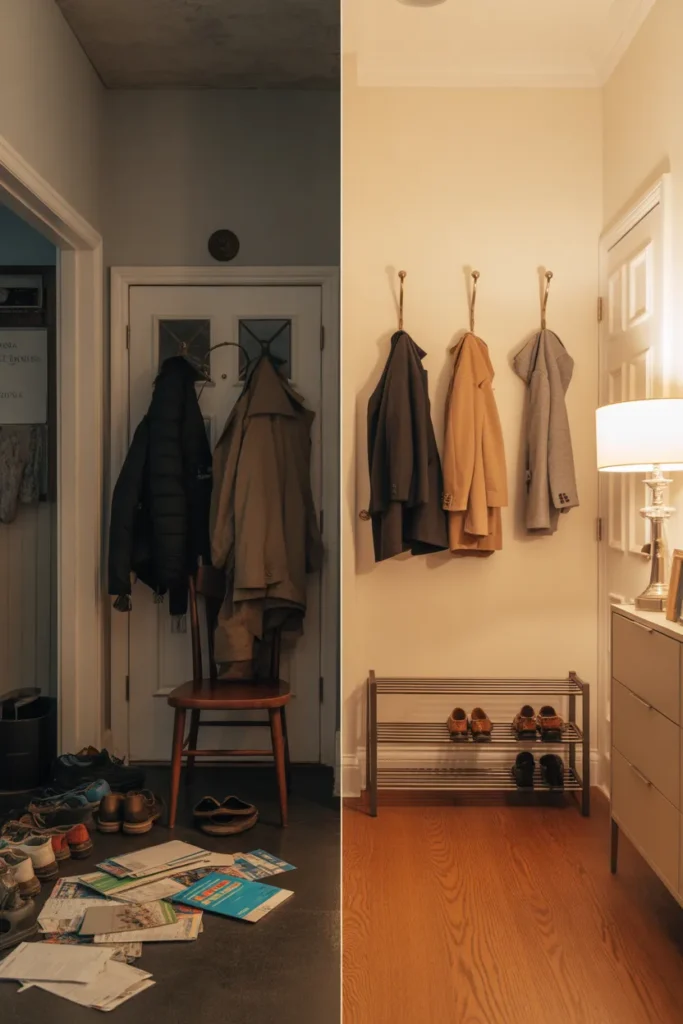
You open the front door, and there it is. Shoes piled sideways, a backpack slumped on the floor, three jackets draped over the banister, and a stack of mail you’ve been ignoring since Tuesday. Sound familiar? Your entryway is the hardest-working square footage in your home, and most of us are asking it to do its job with zero plan.
This guide fixes that. Not with more bins. With a system.
I’m walking you through 27 entryway organization ideas grouped into a simple 5-Zone framework you can audit in about ten minutes. Whether your entry is a tiny rental nook or a full mudroom, every idea below tells you exactly what it is, why it works, and how to set it up this weekend. We’re covering budget picks under $25, mid-range Target and IKEA finds, and a few splurge-worthy pieces if you’re ready to invest.
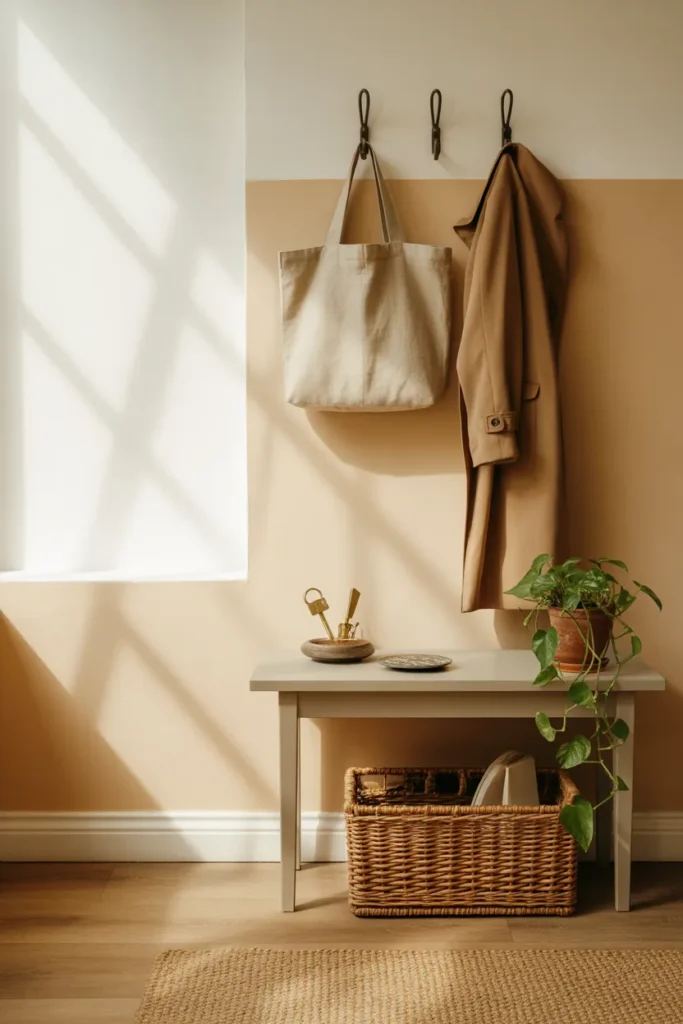
Who This Is For
This post is for you if:
- You rent and need no-drill, command-strip-safe solutions
- You own and want a system that survives kids, pets, and Amazon deliveries
- Your entryway is narrow (under 36 inches wide) or you have no real entryway at all
- You want the West Elm look on a Target budget
- You’ve bought organizers before and somehow the mess came back within two weeks
If any of that hit, you’re in the right place.
How This Article Is Organized
We’re using one clean axis: by zone. Most entryway advice fails because it throws 30 random ideas at you without a structure. The 5-Zone Entryway Audit groups every idea by the job it does, so you can spot what’s missing in your space fast.
The five zones are:
- The Drop Zone (keys, mail, sunglasses, the small daily stuff)
- The Vertical Zone (everything that hangs)
- The Floor Zone (shoes, boots, umbrellas)
- The Family Zone (kids, pets, sports gear)
- The Style Zone (the finishing layer that makes it feel like a home, not a locker room)
Save this list. It’s the screenshot worth keeping.
Zone 1: The Drop Zone (Where Keys, Mail, and Sunglasses Live)
The drop zone is the single highest-impact piece of your entryway. U.S. adults spend about 16 minutes per search event looking for essentials like keys and wallets, and creating one fixed landing spot near your door is the fastest way to reclaim that time. AB Closets
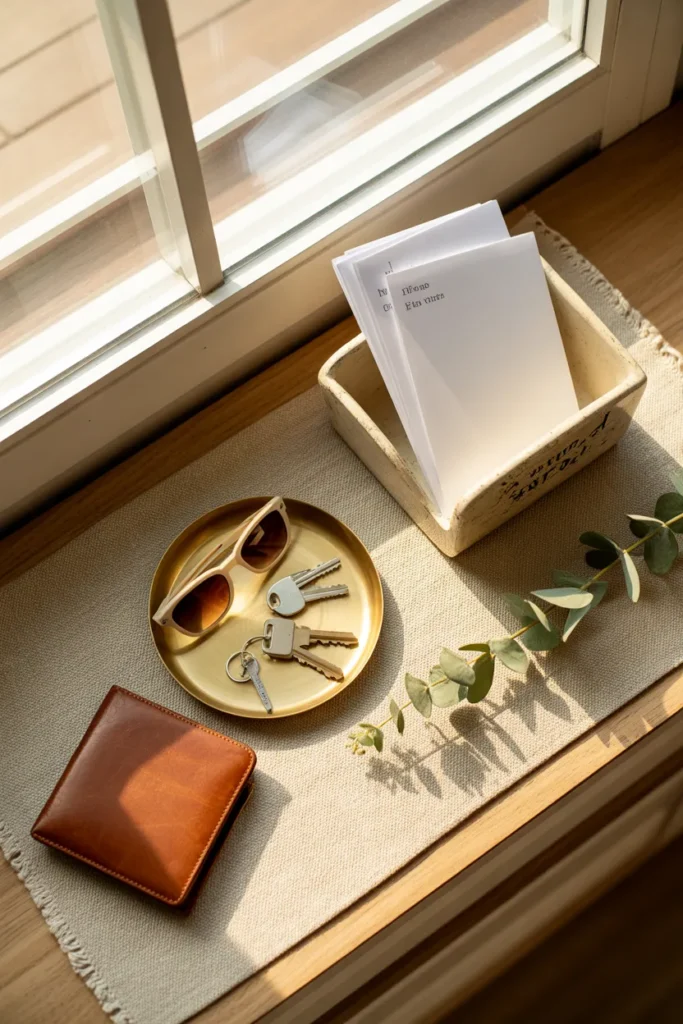
1. The Catch-All Tray
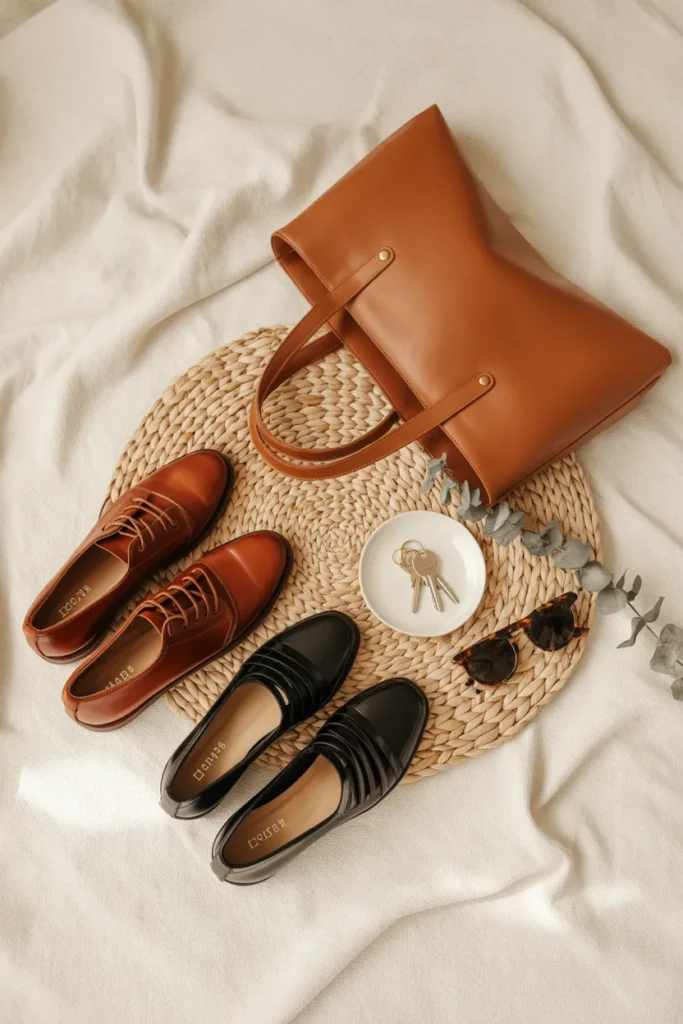
What it is: A shallow ceramic, brass, or wooden tray on a console, shelf, or floating ledge.
Why it works: It gives keys, AirPods, and loose change a permanent home, so they stop migrating to kitchen counters.
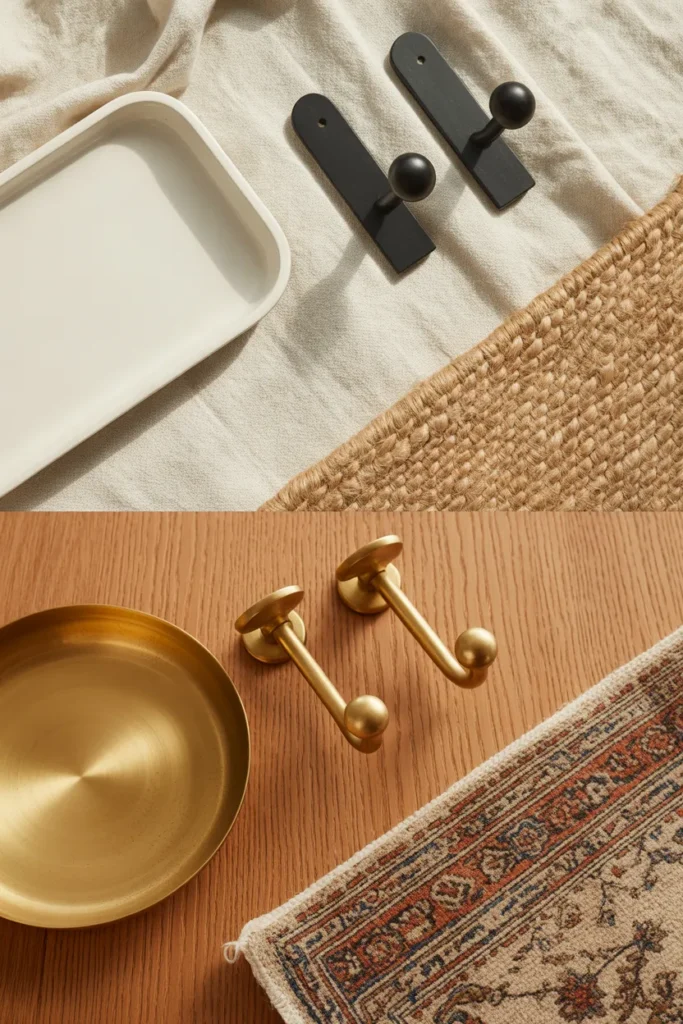
How to do it: Pick a tray that’s at least 6 inches wide so it can hold multiple sets of keys. Budget pick: $4 stoneware dish from Target’s Threshold line. Splurge: a hammered brass catchall from Anthropologie ($38).
2. A Wall-Mounted Key Holder
In rentals or homes with zero surface space, hang a small magnetic key board at eye level near the door. The IKEA SKÅDIS pegboard ($24) cut down to 12 inches works great here, or grab a 3-pack of adhesive key hooks from Amazon for under $10.
3. A Mail Sorter With In/Out Slots
Paper is the silent clutter killer. A two-slot wall mail sorter (one for “incoming/to read,” one for “to-do/bills”) keeps the pile off your console. Pottery Barn’s Daily System organizer is the splurge ($79), but a basic IKEA KVISSLE wall sorter does the same job for $24.
4. A Phone-Charging Corner
Add a tiny adhesive cable clip and a USB block here so phones charge at the door instead of cluttering nightstands. Genius for kids who lose chargers in bedrooms.
Zone 2: The Vertical Zone (Everything That Hangs)
Walls are free real estate. Most entryways waste 80% of their vertical space. The International Sanitary Supply Association reports that most of the dirt within a building is tracked in on people’s shoes, and that 85% of this can be removed if entry mats are properly designed and maintained, which is why getting outerwear up off the floor matters for cleanliness, not just looks. US EPA
5. The Three-Hook Rule
Install one hook per family member, plus one guest hook. Three to five hooks total. More than that and the wall becomes a chaos display. Black iron hooks from Target’s Hearth & Hand line ($8 per pair) read modern farmhouse. Brass knob hooks from Anthropologie ($16 each) lean grandmillennial.
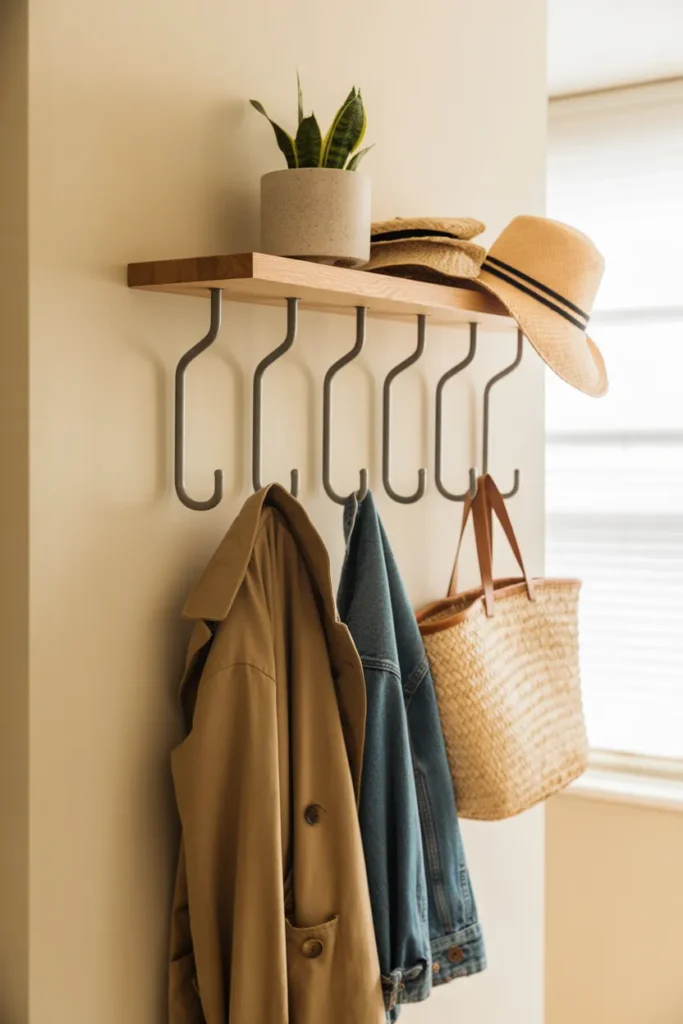
6. A Wall-Mounted Shelf With Hooks
The IKEA TJUSIG bench-shelf combos and the BERGSHULT/RAMSHULT pairing both give you a shelf for baskets up top and hooks below. Works in entryways as narrow as 20 inches wide.
7. Over-the-Door Hooks (Renter Hero)
No drilling, no commitment, holds heavy coats. Command brand strips support up to 5 pounds each and remove cleanly. Stack two strips for winter coats.
8. A Pegboard Command Center
Pegboards are the secret weapon for kids and busy families. You move the pegs as needs change. IKEA SKÅDIS or a $15 Walmart pegboard painted to match your wall both work. Hang reusable shopping bags, dog leashes, hats, and a small clipboard for the family calendar.
9. A Floating Ledge for Sunglasses and Hats
A 24-inch picture ledge (IKEA MOSSLANDA, $13) above your hooks doubles your storage without adding bulk. Stack hats, set sunglasses, prop a piece of art.
Zone 3: The Floor Zone (Shoes, Boots, Umbrellas, Dirt)
Floor clutter is the #1 entryway eyesore. The fix is removing shoes at the door and giving them a real home. According to the EPA, using doormats at exterior doors and leaving shoes at the door can reduce tracked-in dust and dirt that contains biological contaminants. Translation: a shoe system isn’t just pretty. It’s healthier. US EPA
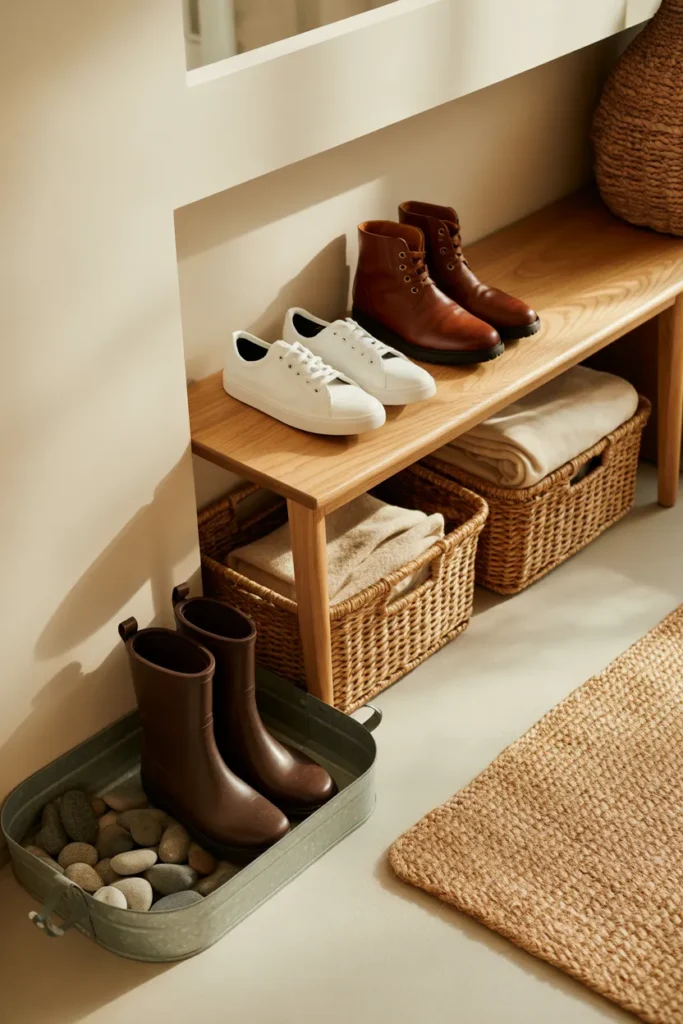
10. A Slim Shoe Bench With Storage
Look for a bench under 14 inches deep so it works in narrow halls. Target’s Brookings shoe storage bench fits 6 to 8 pairs and runs around $90. The splurge pick: Pottery Barn’s Aubrey bench ($399) in oak.
11. A Boot Tray (Non-Negotiable in Winter)
A simple rubber or galvanized metal tray catches snow melt, mud, and rain. Line it with river rocks so wet shoes air-dry faster. Target sells boot trays for $15.
12. A Shoe Cabinet for Tight Spaces
IKEA’s BISSA and TRONES shoe cabinets are the gold standard. BISSA is just under 11 inches deep and holds 12 pairs ($69). TRONES is even slimmer at 6.4 inches deep ($45 for a 3-pack) and mounts to the wall, so you keep the floor open.
13. A Woven Basket for “About to Donate” Shoes
Keep one labeled basket near the door for shoes the kids have outgrown or you no longer wear. When it fills up, it goes straight to donation. The American Cleaning Institute recommends making three piles when decluttering: relocate, donate, and toss, and pre-positioning that basket means you actually follow through. American Cleaning Institute
14. An Umbrella Stand or Hook
A ceramic or galvanized umbrella stand near the door keeps wet umbrellas from soaking your floor. Tight on space? Use a single hook on the inside of the door for a slim travel umbrella. For deeper closet and entryway storage strategy, our guide to small space storage hacks breaks down vertical-first thinking that pairs perfectly with the floor zone here.
Zone 4: The Family Zone (Kids, Pets, and the Stuff That Multiplies)
This is the angle nobody covers, and it’s the zone that breaks most systems. If your entryway has to handle kids, sports gear, or a dog, the rules change.
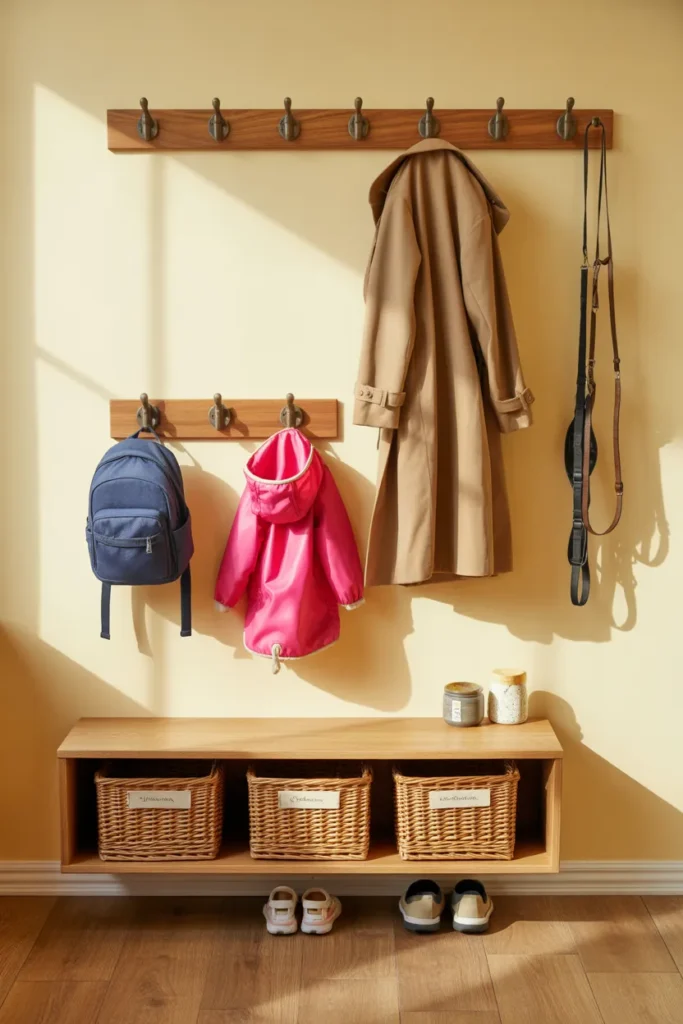
15. Kid-Height Hooks
Mount a second row of hooks at 36 to 42 inches off the ground so kids can actually reach them. This is the single best fix for backpack chaos. Use a different color or finish than the adult hooks so it reads intentional, not afterthought.
16. One Bin Per Kid
This is the cornerstone of every functional family entryway. A labeled bin (basket, cube, or cubby) per kid holds shoes, hats, library books, gym shoes, and whatever they need tomorrow. The IKEA TROFAST system on its side functions as cubbies for under $80. The Container Store’s labeled fabric bins run about $25 each.
17. A Backpack Hook (Not a Pile)
Kids drop backpacks. Always. Mount a heavy-duty hook right at their height, labeled with their name. The bag goes here the second they walk in. No exceptions, no negotiations.
18. A School Paper Inbox
A single wall-mounted file pocket (or a tiered desktop sorter on the console) catches permission slips, art projects, and report cards. Sort it weekly. Mid-range pick: a 3-tier wood mail sorter from Target ($22).
19. A Pet Station
Almost no entryway guide covers this, but if you have a dog, this corner saves your sanity. You need:
- One hook for the leash and harness (at adult height, behind the door if space is tight)
- A small lidded jar for treats so they’re grab-and-go for walks
- A microfiber paw-wiping towel hung on a small hook
- A boot tray or shallow basket for the dog’s outdoor shoes (yes, that’s a thing now)
Total cost: under $40 from Target or Amazon.
20. Sports Gear Caddy
For the soccer-baseball-jiu-jitsu-everything families, dedicate one large basket per kid for their current-season gear. The Home Edit’s 10×10 large bin from Walmart ($14) is the right size, easy to grab and go.
Zone 5: The Style Zone (Where Function Meets Pretty)
Function gets you a working entryway. Style is what makes you actually maintain it. The American Psychological Association links small organizational choices to reduced mental fatigue, and entryways with intentional design invite pauses that lower stress. EgoEase
21. A Mirror (Always)
A mirror over your console or above your hooks does three jobs: lets you check your outfit on the way out, doubles light, and makes a small entryway feel 30% bigger. Round mirrors lean Japandi and Boho. Arched mirrors lean modern farmhouse and grandmillennial.
22. One Plant or One Stem
Live trailing pothos, dried pampas grass in a stoneware vase, or a faux olive branch. Pick one. Don’t over-style.
23. A Runner Rug
Anchors the space and protects the floor. Pick a jute, vintage Persian-style, or low-pile wool runner about 2×6 feet. Boutique Rugs and Ruggable both have washable runners under $100.
24. A Scent Anchor
A single soy candle (lit on weekends) or a reed diffuser at the entry sets the tone for guests. The American Cleaning Institute’s guidance on doormats and clean entries pairs well with this finishing touch.
25. Layered Lighting
A small table lamp on the console (or a wall sconce in tight spaces) instantly upgrades any entryway. Plug-in wall sconces from Amazon run $40 and need zero hardwiring, which is renter-friendly.
Budget vs Splurge: The Same Entryway, Two Price Points
Here’s the side-by-side. Same five zones, different wallets.
| Item | Budget Pick (Under $25) | Mid-Range ($25 to $100) | Splurge ($100+) |
|---|---|---|---|
| Catchall tray | $4 Threshold dish, Target | $24 stoneware tray, HomeGoods | $38 brass tray, Anthropologie |
| Hooks (set of 3) | $9 set, Dollar Tree or Amazon | $24 matte black, Target Hearth & Hand | $48 brass knob hooks, Anthropologie |
| Shoe storage | $18 stackable rack, Walmart | $69 IKEA BISSA cabinet | $399 Pottery Barn Aubrey bench |
| Mail sorter | $15 wire wall sorter, Amazon | $24 IKEA KVISSLE | $79 Pottery Barn Daily System |
| Mirror | $20 round mirror, Target | $79 arched mirror, HomeGoods | $249 oak arched, CB2 |
| Runner | $22 jute runner, Walmart | $79 washable runner, Ruggable | $199 wool runner, West Elm |
The budget version of this entire system clocks in around $90. The splurge version runs about $1,000+. Both work. Pick what fits your moment.
DIY Entryway Storage Ideas (No Tools? No Problem)
Renters and tool-averse folks, this section is yours. Every idea below is no-drill or single-screw friendly.
26. The Command-Strip Wall System
Mount a piece of stained 1×6 pine board (cut to your wall length at Home Depot’s free cutting station) using heavy-duty Command strips. Screw or glue 4 to 5 hooks into the board. Removes cleanly when you move out. Cost: about $30 total.
27. The Tension Rod Shoe Rack
Two tension rods mounted inside a narrow closet or under a console table create a tilted shoe display that holds 8 pairs of flats and heels. Total cost: $12.
For a deeper dive on renter-friendly setups beyond the entryway, our mudroom organization guide covers laundry-mudroom combos and garage drop zones too.
Common Entryway Organization Mistakes to Avoid
After helping organize dozens of entries, I see the same five mistakes on repeat. Skip these and your system actually lasts.
- Buying bins before measuring. Always measure first, shop second. The American Cleaning Institute recommends bringing measurements and a tape measure with you when shopping for storage containers. American Cleaning Institute
- Treating it like overflow storage. Your entry is for daily-use items only. Bulk paper towels, holiday decor, and out-of-season coats belong in the garage or hall closet. For closet overflow strategy, see our closet declutter guide.
- Too many hooks. Three to five hooks total. More than that becomes a coat-stacking nightmare.
- No daily reset. A 90-second reset every night (shoes paired, mail sorted, bags hung) is the difference between maintained and ruined.
- Forgetting the lighting. A dark entryway feels cluttered even when it’s clean. Add one lamp or sconce.
Style-Matched Entryway Looks
Pick the aesthetic that matches the rest of your home so the entry doesn’t feel disconnected.
Modern Farmhouse: Black iron hooks, oak bench, woven seagrass baskets, jute runner, white ceramic catchall, one stem of dried wheat.
Japandi: Light oak floating shelf, brass low-profile hooks, stoneware in muted colors, single round mirror, one trailing plant, zero clutter on visible surfaces.
Boho: Macramé wall hanging above hooks, vintage Persian-style runner, rattan basket for shoes, terracotta planters, layered textiles.
Coastal: White-painted console, woven rope hooks, seagrass baskets, driftwood mirror frame, blue-and-white striped runner.
The 90-Second Daily Reset
This is the maintenance habit that makes everything stick. Every evening, before bed:
- Pair up all shoes on the rack or in the bench
- Hang any coats or bags on hooks (not on the bench, not on the floor)
- Sort the day’s mail into “to read” and “to do”
- Place keys in the catchall
- Set out tomorrow’s bag near the door
That’s it. Ninety seconds. Do this for two weeks and your entryway will basically maintain itself.
Frequently Asked Questions
How do I organize an entryway in a small space or rental?
Go vertical and no-drill. Use Command-strip hooks, over-the-door organizers, an IKEA TRONES wall-mounted shoe cabinet (just 6.4 inches deep), and a slim 14-inch-deep console table. Skip the bench if your hall is narrower than 36 inches and use a wall-mounted folding seat instead.
What’s the budget version of a fully organized entryway?
Under $90 total. Grab a Dollar Tree catchall ($1), a 3-pack of black iron hooks from Amazon ($12), a Walmart stackable shoe rack ($18), an IKEA KVISSLE mail sorter ($24), a $20 round mirror from Target, and a $15 jute runner. Done.
What if I don’t have a coat closet or even a real entryway?
Create one. Pick any wall within 5 feet of your front door and turn it into a vertical entry station: hooks, a floating shelf, a slim console or bench, and a runner to define the zone visually. Apartment Therapy and IKEA both have entire systems built around closet-less entries.
How do I keep an entryway organized with kids?
Three rules. One bin per kid (labeled), kid-height hooks they can actually reach, and a non-negotiable backpack hook used the second they walk in. Add a weekly Sunday-night reset where each kid empties their bin and restocks for the week ahead.
How long does it take to set up an entryway organization system?
Plan on one weekend. Saturday: declutter the current mess (toss, donate, relocate), measure the space, order or buy supplies. Sunday: install hooks, set up bins, style the surfaces. Two hours of actual work spread across the weekend.
What’s the best IKEA option for entryway storage?
For shoes: TRONES (wall-mounted, slim) or BISSA (floor cabinet). For hooks and shelves: TJUSIG or BERGSHULT/RAMSHULT combo. For mail: KVISSLE wall sorter. For pegboard organization: SKÅDIS.
Where should I put a drop zone if my front door opens into the living room?
On the closest wall (within 4 feet of the door) using a slim floating shelf, a wall-mounted mail sorter, and 3 hooks. You’re creating a visual entry zone even if there’s no architectural one.
Save This Post (and Pin It for Later)
If this guide helped, save it to your home organization Pinterest board so it’s there when you’re ready to set up your space. Then read our small space storage hacks next, because once your entry is sorted, the rest of the house gets easier too.
What zone are you tackling first? Drop, vertical, floor, family, or style? I’m betting it’s the floor zone, but you tell me.


