
Vertical Laundry Room Storage: 12 Ideas for the Space Above Your Machines
Your laundry room has more storage than you think. It is just standing up, not lying down. Most of us cram everything onto the floor and the top of the dryer, then wonder why the room feels cramped. The fix is to look up.
Vertical laundry room storage means using the wall space above and beside your washer and dryer, the back of the door, and every inch between the machines and the ceiling. Do it well and a closet-sized nook can hold detergent, towels, cleaning supplies, and a folding zone without a single new cabinet on the floor.
Below are twelve ideas, sorted from quickest to most involved. A few need a drill. Several do not, which matters if you rent. Let’s get into it.
Start by Measuring Your Real Vertical Space
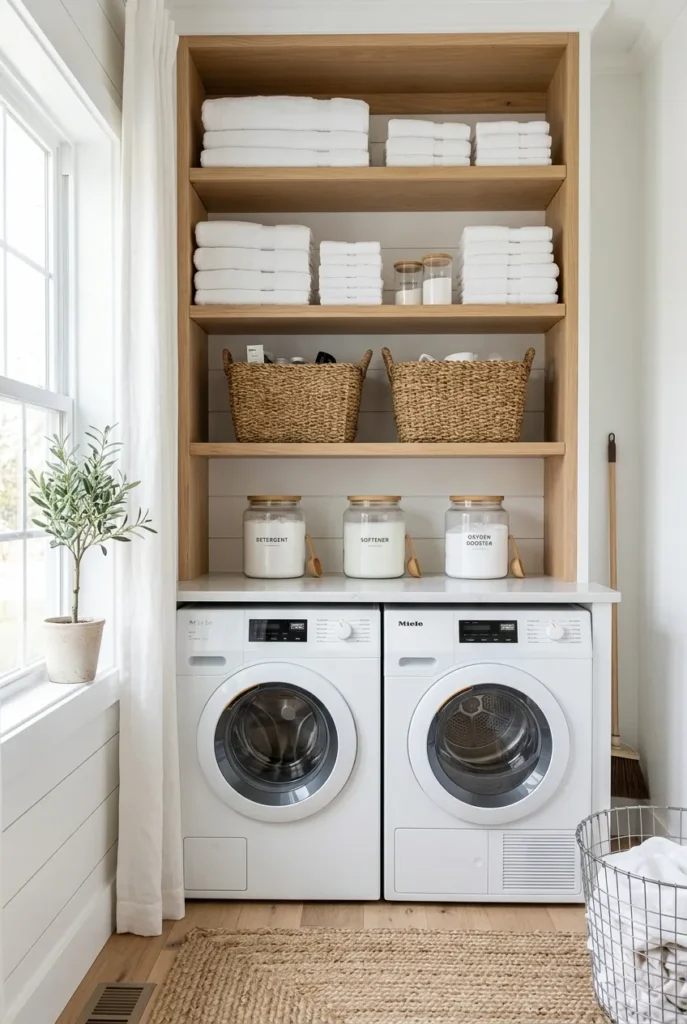
Before you buy anything, measure. This is the step everyone skips, and it is why so many shelves end up too deep or too high to reach.
Grab a tape measure and note three numbers: the height from the top of your machines to the ceiling, the width of the wall, and how far the machines stick out from the wall. Standard front-load machines are usually about 27 inches wide and 30 to 34 inches deep, so a shelf 12 to 14 inches deep clears the machine tops without bonking your head when you lean in.
One safety note worth taking seriously. If you have a gas or electric dryer, do not box in the vent or crowd the back. According to the NFPA, failure to clean dryers and blocked airflow are leading causes of home dryer fires, so leave the vent path clear when you plan shelving.
The 3-Zone Wall Rule
Here is a simple framework I use to plan any laundry wall. Divide the vertical space into three zones. The Reach Zone sits from the machine tops up to about 60 inches, for daily items you grab every load. The Stretch Zone runs from 60 inches to roughly 72 inches, for weekly items like extra towels. The Top Zone is everything above that, for stuff you touch a few times a year. Assign every item to a zone before you buy a single bin, and the room stops fighting you.
1. Float Two or Three Simple Shelves
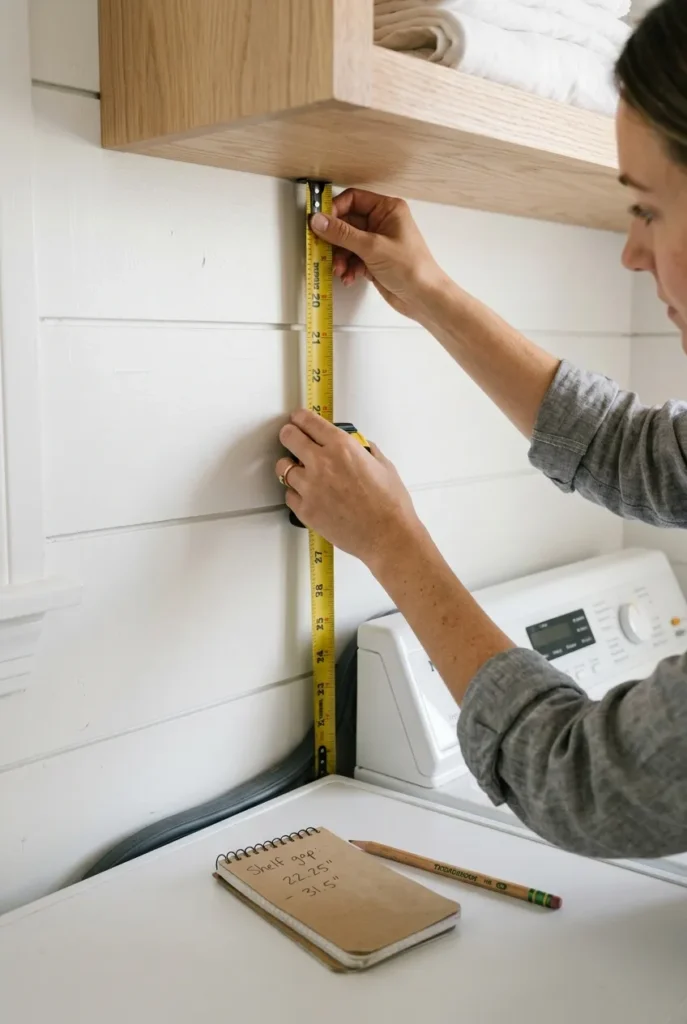
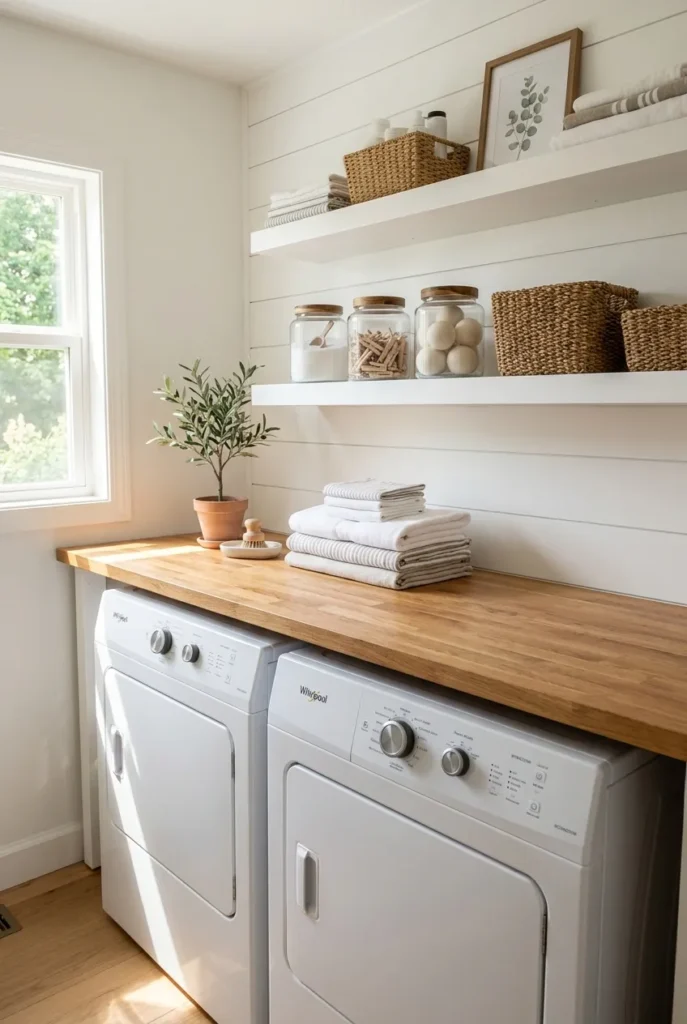
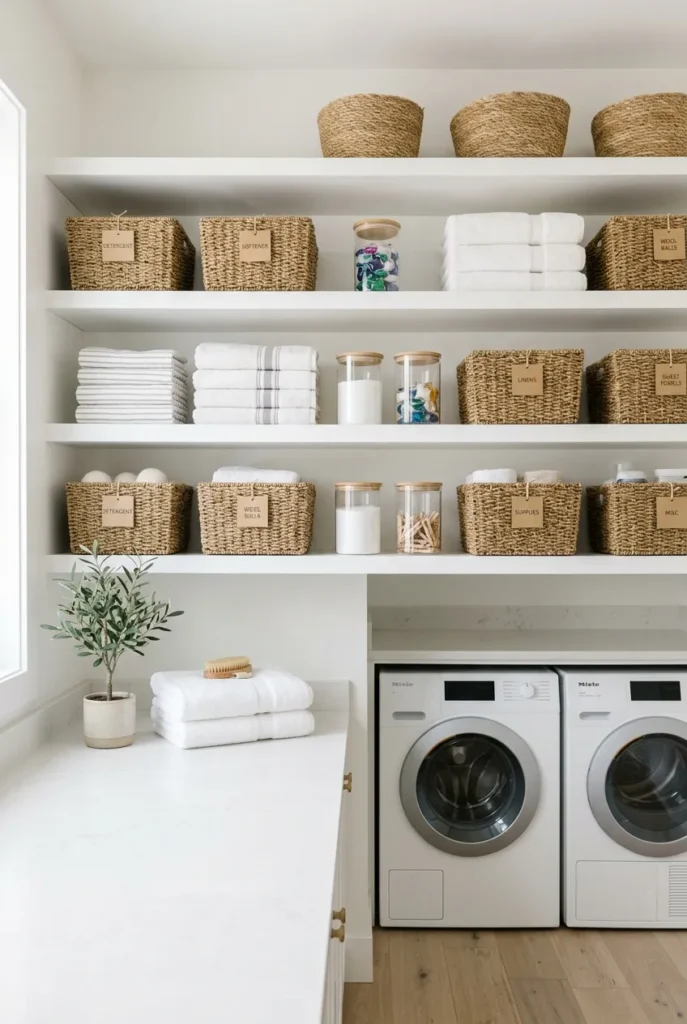
The fastest win is a pair of floating shelves mounted straight above the machines. Two shelves spaced about 14 inches apart give you room for tall detergent jugs on the bottom and folded items on top.
Wood shelves read warm and Pinterest-friendly. White laminate reads clean and bright. Either way, anchor into studs or use rated drywall anchors, because a shelf loaded with liquid detergent gets heavy fast. If you want the full walkthrough on picking shelf styles, our laundry room organization ideas post breaks down materials and spacing.
Short version: shelves first, everything else second.
2. Add a Wall-Mounted Cabinet Over the Machines
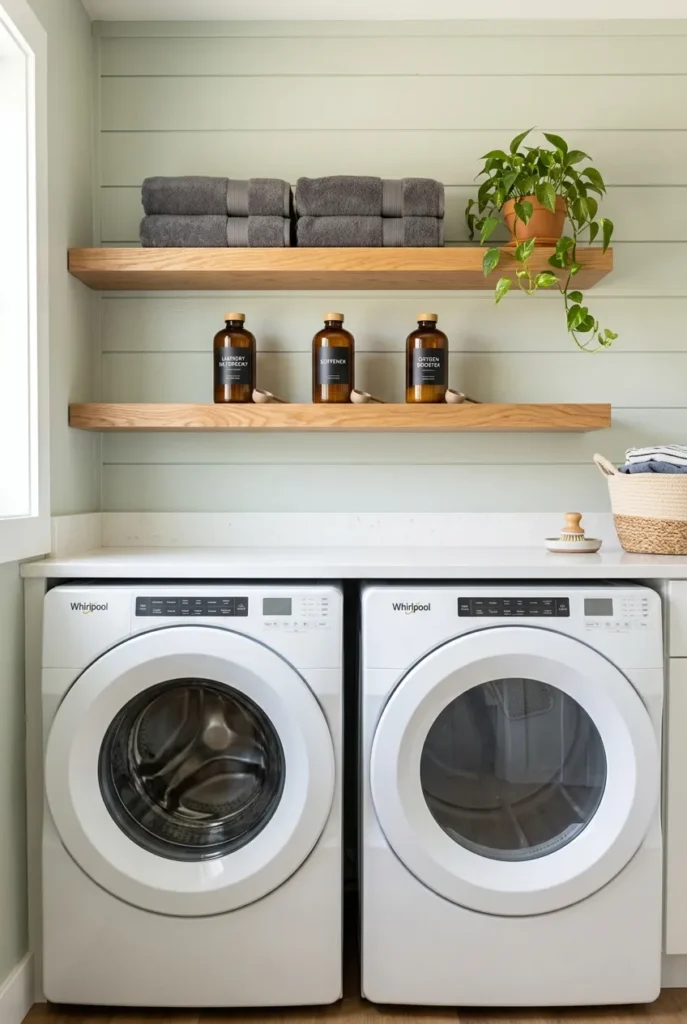
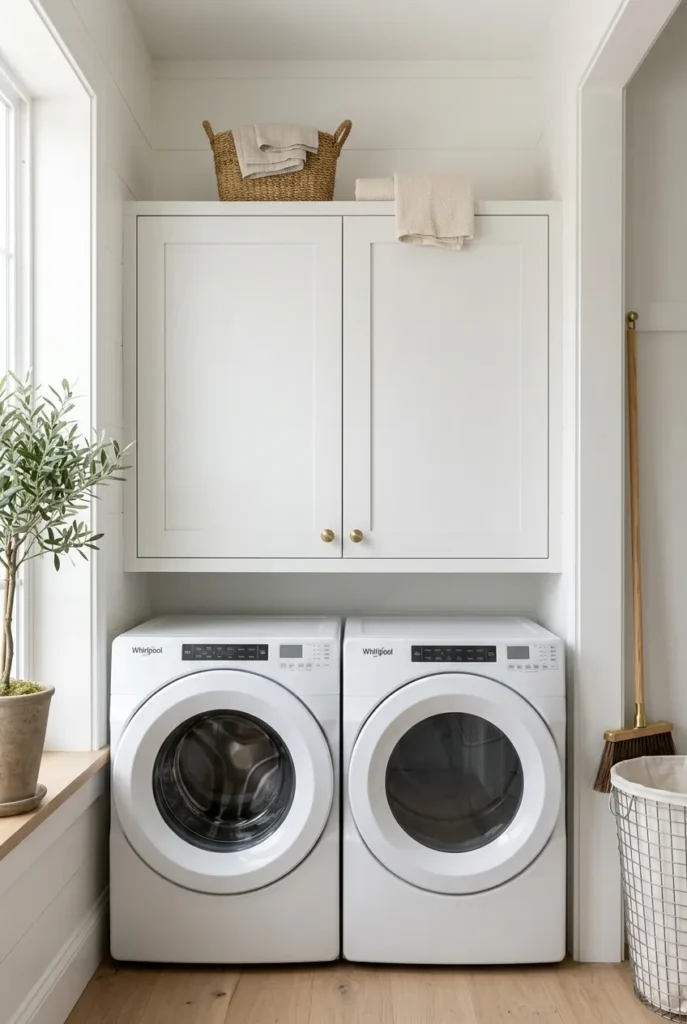
If you would rather hide the clutter, a wall-mounted cabinet does what open shelving cannot. Closed doors mean the detergent chaos disappears, and the top of the cabinet becomes bonus display or storage.
IKEA and Home Depot both sell laundry-specific wall cabinets sized to sit above machines. Mount the bottom of the cabinet at least 18 inches above the machine tops so you can still open the washer lid or reach controls.
Closed storage also cuts visual noise, which answers a real question people ask: how do you add storage without the room looking busy? Doors are the answer.
3. Stack the Washer and Dryer to Unlock a Whole Wall
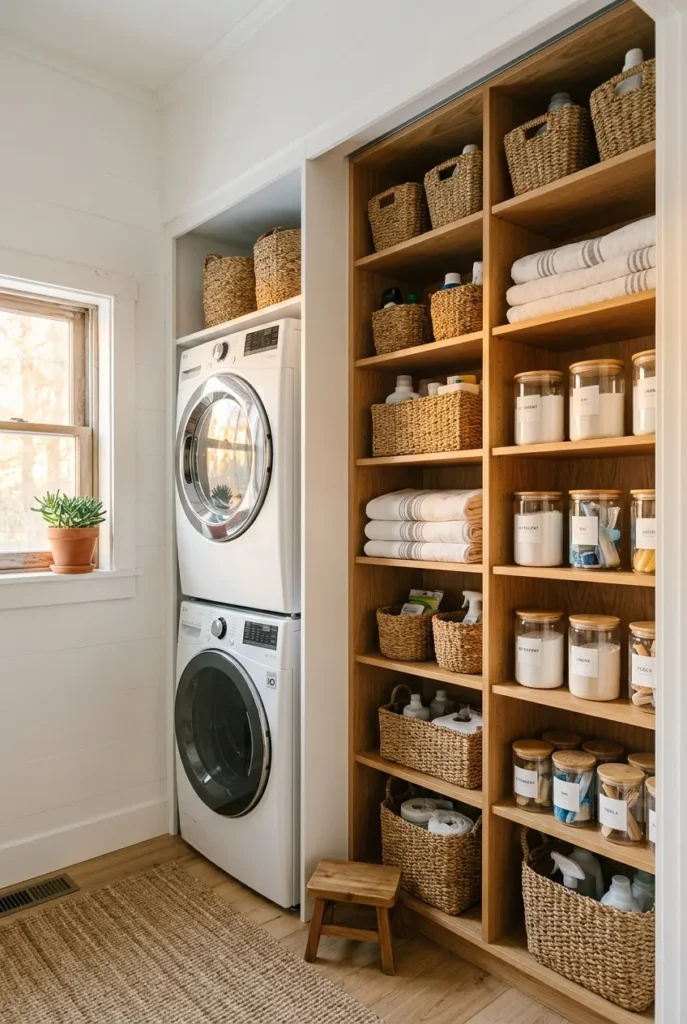
This is the big one. If you have a front-load set, stacking the dryer on top of the washer frees up an entire vertical column beside them. Suddenly there is room for a tall pantry-style cabinet, a hanging rod, or floor-to-ceiling shelving where the second machine used to sit.
Only stack machines that are designed and rated to stack, and use the manufacturer’s stacking kit. ENERGY STAR notes that many certified front-load sets are built for stacked installation, which is exactly the layout small rooms benefit from. Do not improvise a stack with straps and hope. [
Once stacked, the reclaimed wall is where your vertical storage really pays off.
4. Hang a Rod for Drip-Dry and Hangers
A single rod mounted high on the wall or under a shelf turns air into storage. Hang shirts straight out of the wash, keep empty hangers ready, or drip-dry delicates over the machines.
You can buy a wall-mounted rod bracket for a few dollars, or use a tension rod between two cabinets for a no-tools version. Mount it high enough that a hanging shirt clears the machine tops, usually around 66 to 70 inches off the floor.
Honestly, this is the idea people are most surprised by, because it costs almost nothing.
5. Put the Back of the Door to Work
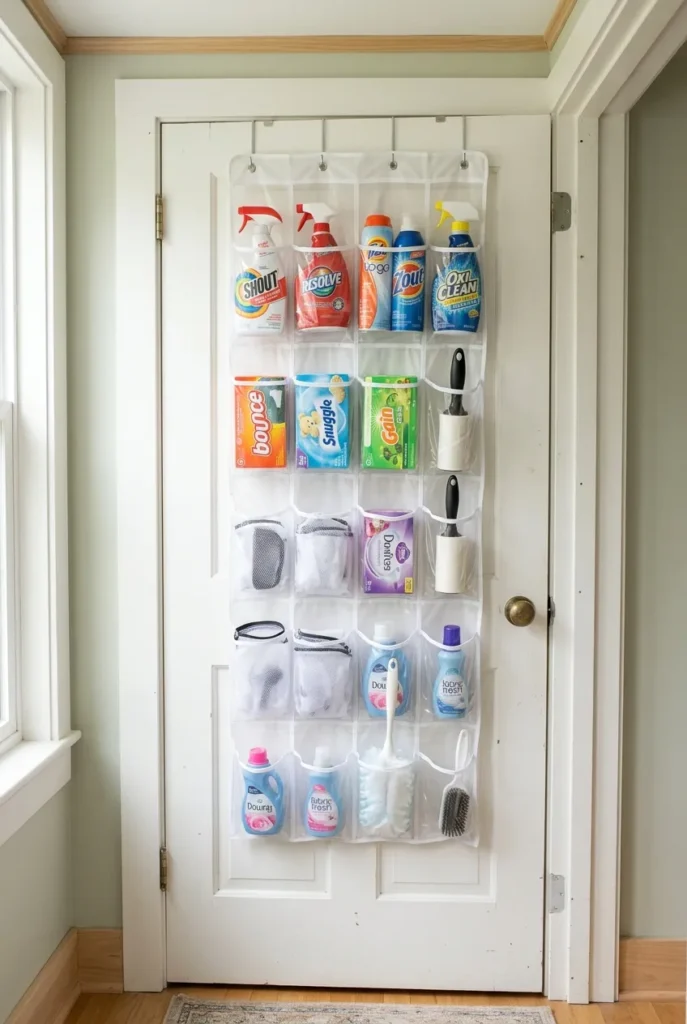
The door is prime vertical real estate, and most people ignore it completely. An over-the-door organizer holds stain sticks, dryer sheets, lint rollers, and all the small stuff that clutters shelf space.
For renters, this is gold, because it needs zero holes. Over-the-door racks hook right over the top edge. Our roundup of over-the-door organizers covers styles that suit narrow laundry doors.
6. Mount a Pegboard for Total Flexibility
A pegboard is the most adaptable vertical surface you can hang. Hooks, small bins, and shelves rearrange in seconds, so the wall grows with your needs. Hang a broom, a dustpan, spray bottles, and a small basket for clothespins all on one board.
Paint it to match the wall for a subtle look, or leave it bright for a workshop feel. This is the same trick that makes garage and craft walls work, and it translates perfectly to laundry.
7. Decant Detergent into Matching Canisters
This one is half storage, half styling, and it is why laundry pins go viral. Pouring powder detergent and pods into clear canisters does two things: it makes odd-shaped boxes stack neatly on shelves, and it makes the whole shelf look expensive.
Use food-safe or detergent-appropriate containers and label them clearly, especially pods, which can look like candy to kids. Keep them up high, out of little hands.
A row of matching jars is the single biggest before-and-after upgrade for very little money.

8. Slide in a Rolling Tower Between Machine and Wall
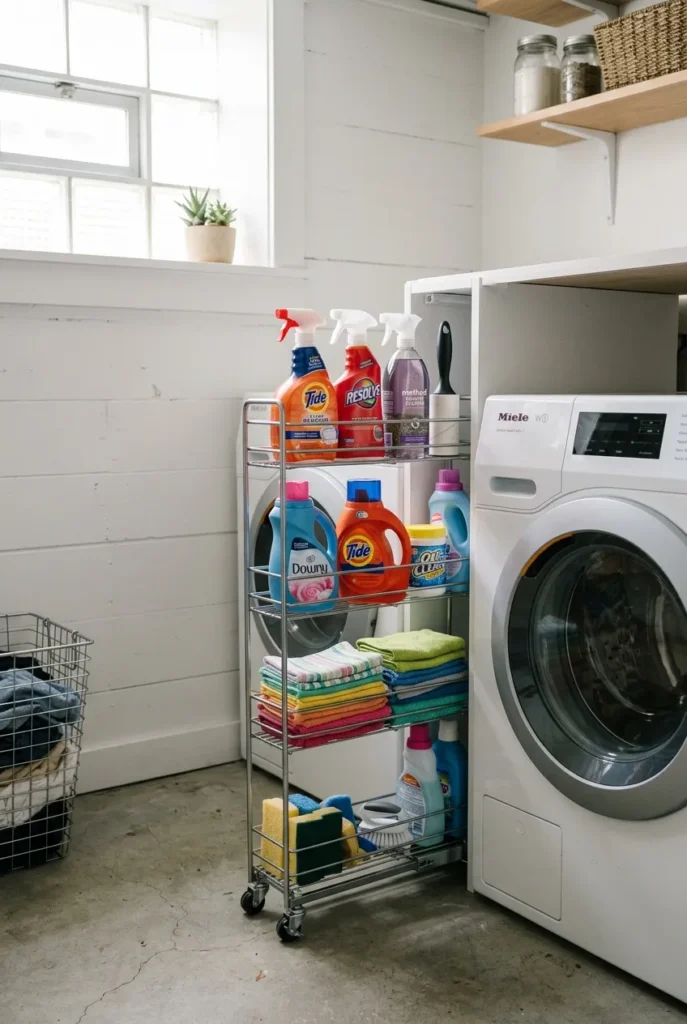
That skinny gap beside the washer is dead space begging for a slim rolling cart. A tower cart just 8 to 10 inches wide rolls out when you need it and tucks away when you do not, holding detergent, spray bottles, and a stack of cleaning rags.
It works vertically because the cart itself has three or four tiers, so a 10-inch footprint holds a surprising amount. Renters love this one too, since it needs no mounting at all.
9. Build a Counter Over Top-Load Machines, Shelves Above
If you have a top-load washer you cannot easily cover, build a floating counter that spans both machines at a height that clears the lids, then stack shelves above that. You get a folding surface plus vertical storage in one move.
The counter gives you a landing pad so clean laundry never touches the machine tops, and the shelves above keep supplies within reach. For a full small-room layout that ties this together, see our small laundry room organization plan.
10. Hang a Fold-Down Drying Rack
Wall-mounted drying racks fold flat against the wall when not in use and drop down when you need to air-dry. Because they mount high and fold away, they claim vertical space without eating the room the rest of the week.
Look for an accordion-style or bar-style rack rated for wet weight. Mount it on a wall where dripping clothes will not hit your electrical outlets or the machines.
11. Use Tall Baskets and Labeled Bins on High Shelves
Once your shelves are up, the bins you choose decide whether the wall looks calm or chaotic. Tall matching baskets hide the ugly stuff, and labels mean you are not pulling down three bins to find the fabric softener.
Group by frequency using the 3-Zone Wall Rule from earlier: daily items in the Reach Zone, backups up top. Woven baskets read cozy, while lidded fabric bins read minimalist. Pick one material and repeat it for that calm, expensive look the top pins all share.
12. Add a Narrow Pull-Out Pantry for Basement or Garage Laundry
Basement and garage laundry rooms have odd gaps, often a narrow slot between the machine and a wall or post. A tall pull-out pantry unit, the same kind sold for kitchens, slides into a gap as narrow as 6 inches and rolls out to reveal vertical rows of supplies.
This is the answer to that Pinterest search for basement laundry vertical storage. It uses height and depth in a footprint most people write off as useless. If you want more ways to steal height in other rooms, our vertical storage ideas for other rooms post has a roomful.
Renter-Friendly Vertical Storage (No Drill Required)
Renting does not lock you out of any of this. Skip anything that needs anchors and lean on these instead: an over-the-door organizer, a tension rod between cabinets or walls, a freestanding rolling tower cart, and freestanding tall shelving that leans against the wall.
Peel-and-stick options exist too, though I would only trust adhesive shelving for lightweight items, never heavy detergent. When you move out, everything comes with you and the walls stay bare.
Quick Vertical Storage Cheat Sheet
Screenshot this before you shop:
- Under 60 inches high: daily detergent, softener, stain sticks
- 60 to 72 inches high: extra towels, backup supplies
- Above 72 inches: seasonal and rarely used items
- Renters: door, tension rods, rolling carts, leaning shelves
- Anyone with a dryer: keep the vent path clear, always
FAQ
How do I add storage to a small laundry room?
Go vertical. Mount two or three shelves or a wall cabinet above the machines, add an over-the-door organizer, and slide a slim rolling cart into any gap. These four moves add real storage without touching floor space.
How do I create vertical storage over a washer and dryer?
Measure the gap from the machine tops to the ceiling, then install floating shelves or a wall cabinet starting about 18 inches above the machines. Add a hanging rod under the lowest shelf for drip-dry items.
How do I use dead space in a laundry room?
The three most-wasted spots are the wall above the machines, the back of the door, and the narrow gap beside the washer. A shelf, an over-the-door rack, and a slim rolling tower claim all three.
How do I add more storage without the room looking too busy?
Use closed cabinets instead of open shelves, pick one basket material and repeat it, and decant detergent into matching canisters. Uniformity is what makes a full wall still look calm.
Can renters add vertical laundry storage without drilling?
Yes. Over-the-door organizers, tension rods, freestanding rolling carts, and leaning shelf units all add height with zero holes in the wall.
How high can I build storage above my dryer?
Leave the dryer vent and airflow completely clear, and mount the lowest shelf or cabinet high enough to open the lid comfortably, usually at least 18 inches above the machine top. Check your appliance manual for specific clearances.
Your Wall Is Waiting
The best part of vertical laundry storage is that you can start this weekend with one shelf and build from there. Pick the idea that fits your space and your drill-or-no-drill reality, measure twice, and let the wall do the heavy lifting.
Which idea are you trying first? Save this to your laundry board so it is handy on your next Target run, and come back to tell us what worked.