
Kids Closet Organization by Age, From Toddler to Tween
Open your child’s closet right now. Go ahead. There is a good chance a shoe fell off the shelf, three hangers are empty on the floor, and something soft and outgrown is wadded in the back corner where the light does not reach. Kids closet organization is the fix, and the real secret is not a fancier system. It is matching the setup to the exact age of the kid using it. We learned that the slow way, after redoing our daughter’s reach-in closet four times in three years.
Here is the promise. By the end of this guide you will know precisely what to put at toddler height, what changes at age five, and how to hand the whole thing over to a tween who actually keeps it neat. You will get real bins by name, a label trick that works before kids can read, and one simple ladder system that grows with them so you stop starting over. No drilling required for most of it, which matters if you rent.
Start Here: Declutter Before You Buy a Single Bin
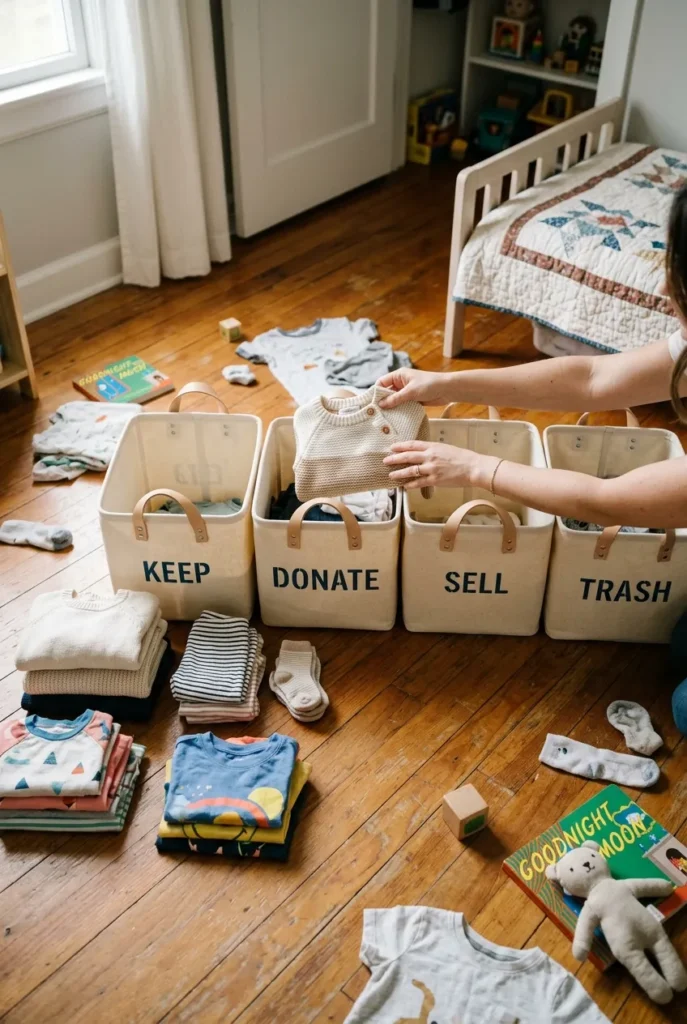
No bin can save an overstuffed closet, so the first move is always the same. Pull everything out. Every sock, every too-small jacket, every mystery item from the back. We do this on the bed so nothing sneaks back in unsorted.
Then sort into four piles: keep, donate or pass down, sell, and trash. Note the wording there. Kids inherit clothes from cousins and older siblings, so we say donate or pass down, never “toss,” because some of those pieces are spoken for. Goodwill and Buy Nothing groups move the donate pile fast, and ThredUp or Poshmark handles anything still nice enough to sell.
Be honest about size. Most kids wear about 20 percent of what is in the closet. If it has not been worn in a season and it still fits, it stays. If it is two sizes small, it goes. This single pass usually empties a third of the space, which changes everything that comes next.
The Age-by-Age Closet Ladder (Your Anchor System)
Here is the framework we built after all those redos, and it is the thing that finally stuck. The Age-by-Age Closet Ladder is one simple idea: every year, your child climbs one rung of responsibility, and the closet physically changes to match. You are not organizing once. You are setting up a system that hands off, step by step, until the kid runs it alone.
Three rungs, that is it. Rung one, the parent does it and the child watches. Rung two, the child does it with your help and visual cues. Rung three, the child owns it and you just spot-check. The trick is knowing which closet task sits on which rung at each age. The rest of this guide walks you up that ladder.
Toddlers, Ages 1 to 3: Low, Reachable, and Mostly for You
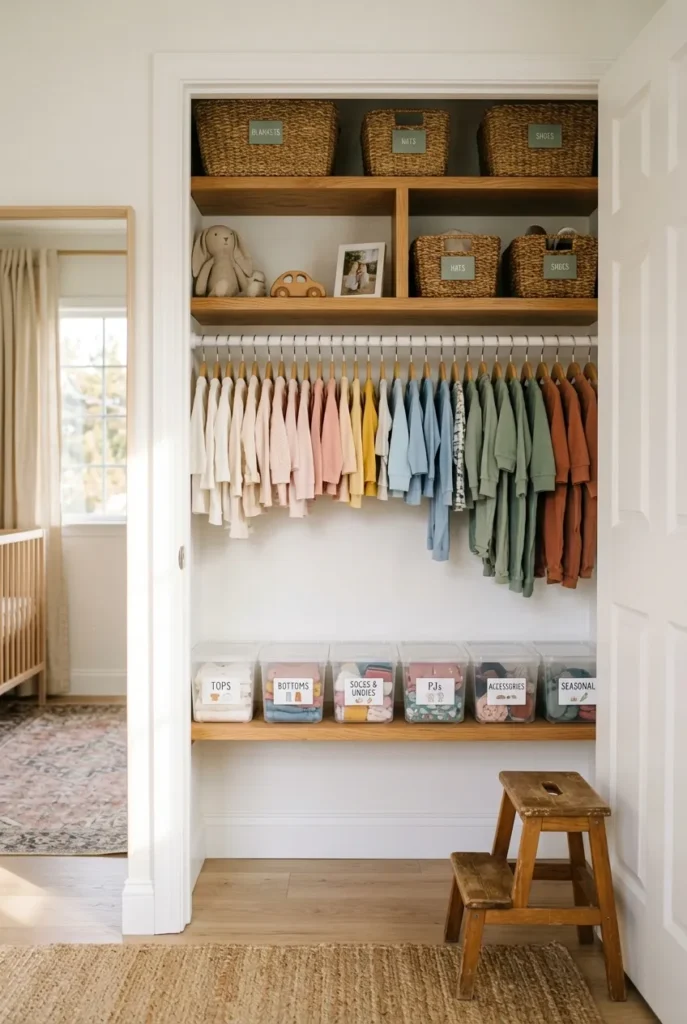
Toddler clothes are tiny, so they barely need vertical space. That frees up the bottom third of the closet for a low hanging rod the child can actually reach. A closet doubler rod is the cheap hero here. It hooks over your existing rod and adds a second one below, roughly 28 to 32 inches off the floor, right at toddler arm height. Suddenly your two-year-old can hang a coat, which feels like magic the first time it happens.
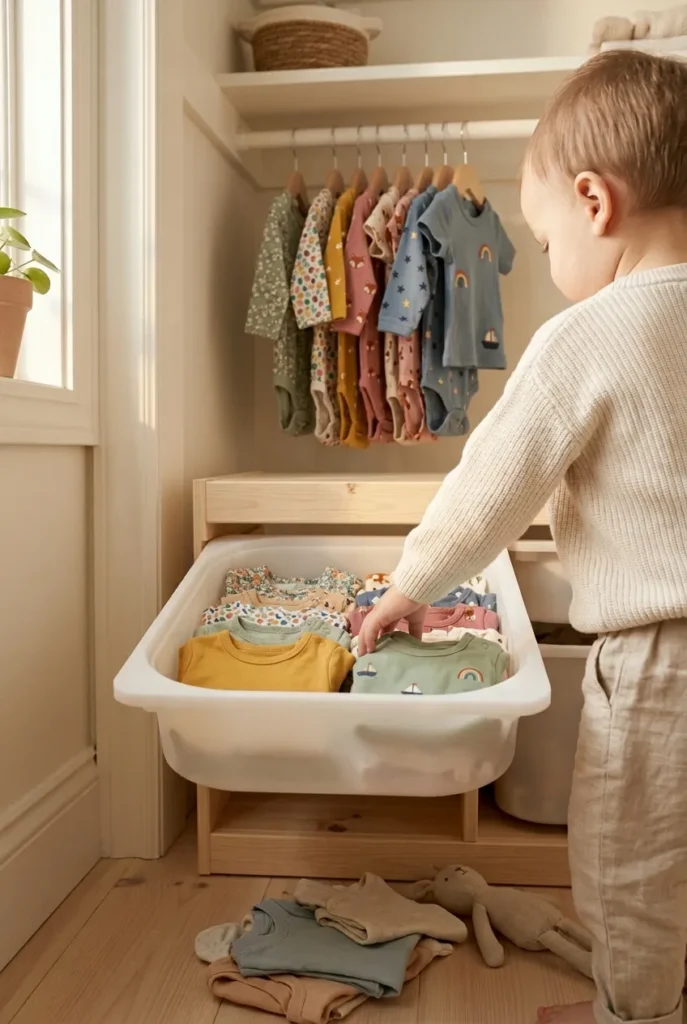
Keep daily clothes low and parent-only items (next-size-up clothes, special-occasion pieces) up high where small hands cannot redecorate. Down low, skip the hangers for most things and use open bins instead. The IKEA Trofast system shines for this age. Its boxes pull straight out, no lid to fight, and the frame sits low at about 17 inches deep so little kids reach the back. We loaded ours with pajamas, play clothes, and socks.
On the ladder, toddlers sit firmly on rung one. You organize, they watch and copy. Your only goal is teaching the motion of putting one thing away, in one spot, by themselves.
Preschoolers, Ages 4 to 6: Visual Labels Change the Game
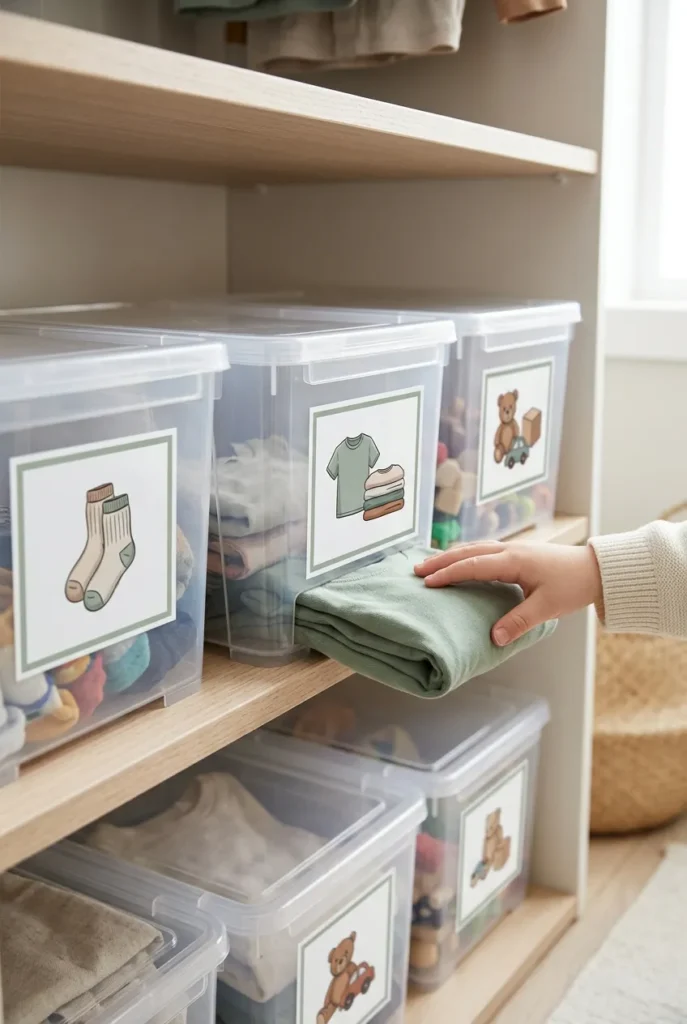
This is the age where independence clicks, and the tool that makes it happen costs almost nothing: picture labels. A child who cannot read a single word can absolutely match a photo of socks to a bin of socks. Pair the picture with a color, one color per kid, and even a four-year-old sorts laundry into the right drawer. Avery labels run through a home printer in minutes, and Appendix-friendly free printable label sets are everywhere online.
Set up three or four zones at this age. Hanging clothes within reach, an open bin for pajamas, a bin for play clothes, and a low basket for shoes. Keep it to four categories, max. More than that and the system collapses, because a five-year-old will not maintain a ten-bin filing scheme. Simple wins.
Now the toys. Most preschool closets hold more toys than clothes, and that is the gap nobody warns you about. Give toys their own labeled bins, grouped by type (blocks together, cars together, art supplies together), and rotate them. Stash half in a high bin and swap monthly, so the same toys feel new again and the floor stays clearer. Our own playroom got 30 percent quieter the week we started rotating.
Preschoolers climb to rung two. They do the work, the labels do the remembering.
School-Age Kids, Ages 7 to 12: Build the Morning Routine In
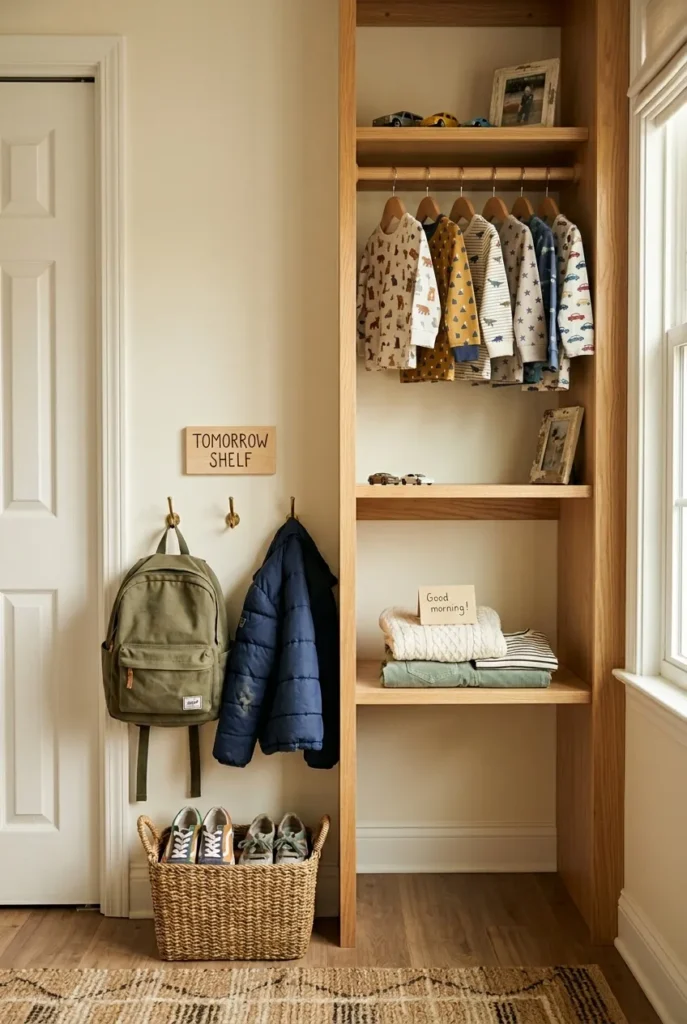
Once school starts, the closet has a new job. It has to launch a kid out the door fast. This is where you raise that doubler rod or move clothes up as the child grows, and where you add hooks for the grab-and-go stuff: backpack, jacket, hat. Hooks beat hangers every time for things a kid uses daily, because a hook forgives a rushed morning and a hanger does not.
School years also flood the closet with new categories. Sports gear, instruments, art projects, shoes for every activity. Re-label your old toy bins by activity now: soccer, art, library books. Combination labels with a picture and the written word work great for early readers ages five to eight, building reading skills while keeping the system clear.
Set out tomorrow’s outfit the night before. A small bin or a single low shelf labeled “tomorrow” turns the 7:42 a.m. scramble into a non-event. We started this the year mornings nearly broke us, and it is the one habit that stuck. If your mornings are chaos beyond the closet too, our backpack and school paper station setup pairs perfectly with this.
School-age kids are squarely on rung two, climbing toward three. They run the daily closet; you handle the seasonal swaps and the big sorts.
Tweens, Ages 11 to 12: Hand Over the Keys (Without a Fight)
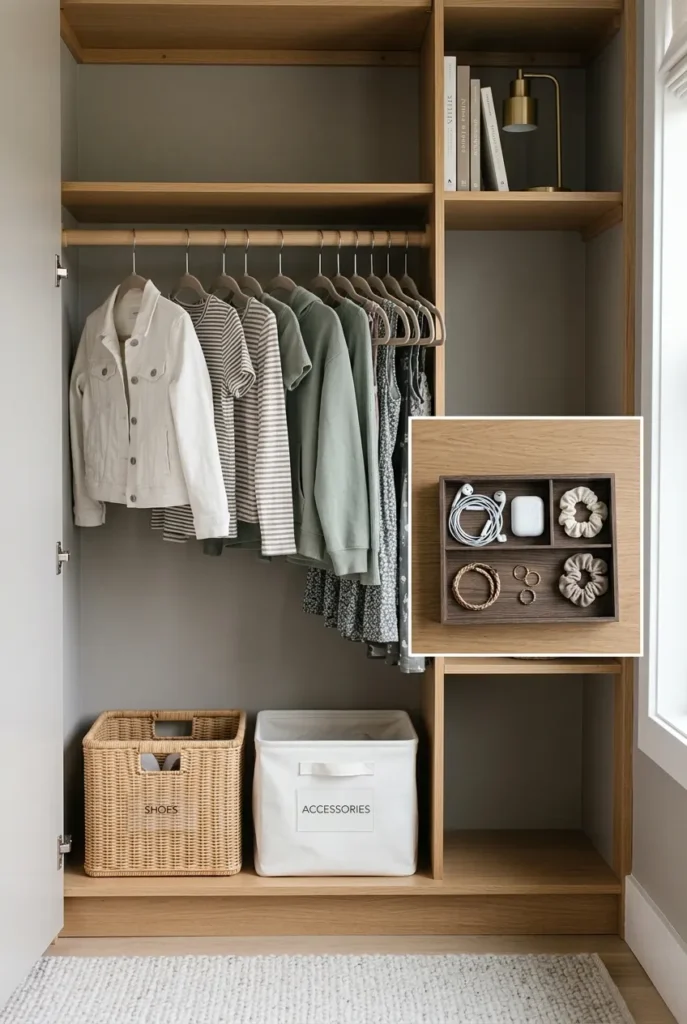
Tweens want a grown-up closet, so meet them there. Swap the picture labels for text-only labels, or drop labels entirely on the hanging section. They have opinions now, and the fastest way to lose a tween is to impose a system they did not help design. Hand them the marker. Let them decide what goes where.
The tween closet splits into two clear groups: daily stuff front and center (school clothes, the favorite hoodie, the team uniform) and rarely-used stuff tucked away (sleeping bag, dress shoes, the overnight bag). Slim velvet hangers free up real space here, because a tween’s wardrobe doubles fast and a standard hanger eats an inch you do not have. Add a small drawer organizer for the jewelry, earbuds, and small chaos that defines this age.
This is rung three. The tween owns the closet. Your job shrinks to a monthly spot-check and restocking hangers. If your tween’s room has no closet at all, which happens in older homes and apartments, our guide on organizing a bedroom with no closet covers freestanding racks that give them the same independence.
Best Storage Solutions on Any Budget
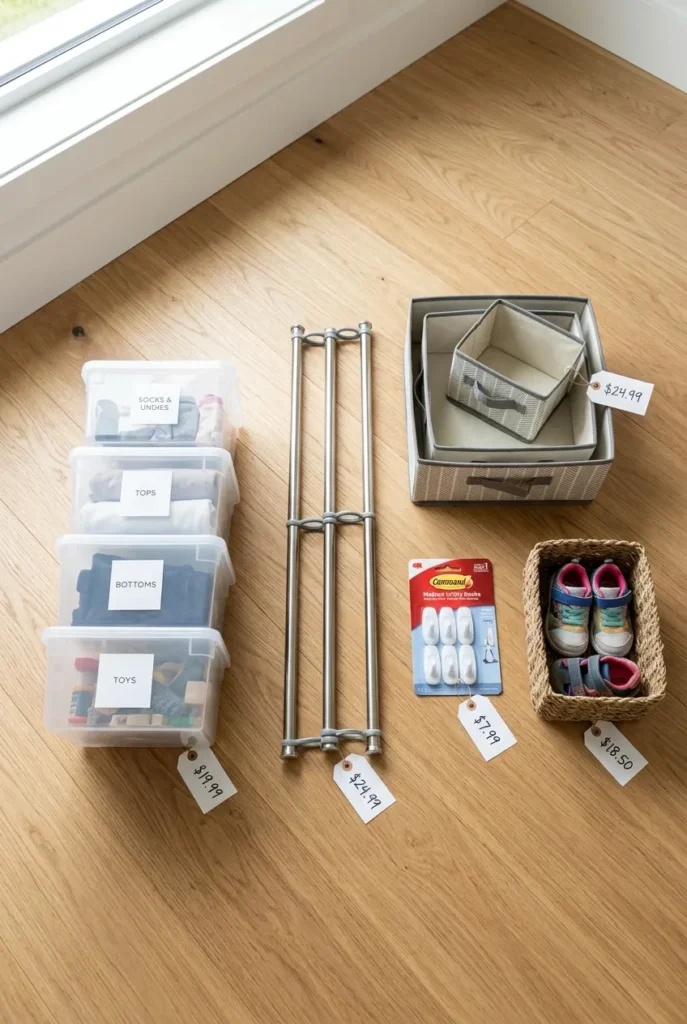
You do not need a custom build. Here is a quick screenshot-friendly breakdown of what actually works, sorted by spend.
Under 10 dollars: Dollar Tree bins and a pack of Command hooks. Honestly, a renter’s best friends. The hooks hold backpacks and hats with zero holes in the wall.
Around 25 dollars: A closet doubler rod plus a set of clear stackable bins from Target Brightroom or Amazon Basics. This is the sweet spot for most families.
50 dollars and up: An IKEA Trofast frame with boxes, roughly 39 inches wide and 17 inches deep, or a Mainstays cube shelf. Built to grow with the kid for years.
A few specifics worth naming. For drawer chaos, fabric drawer dividers turn one messy drawer into four tidy lanes. For shoes, a low open basket beats a fussy rack because kids will not aim for a rack. For sliding-door or builder-grade reach-in closets, an over-the-door pocket organizer adds a dozen pockets without touching the floor space.
How to Divide a Shared Closet for Two Kids
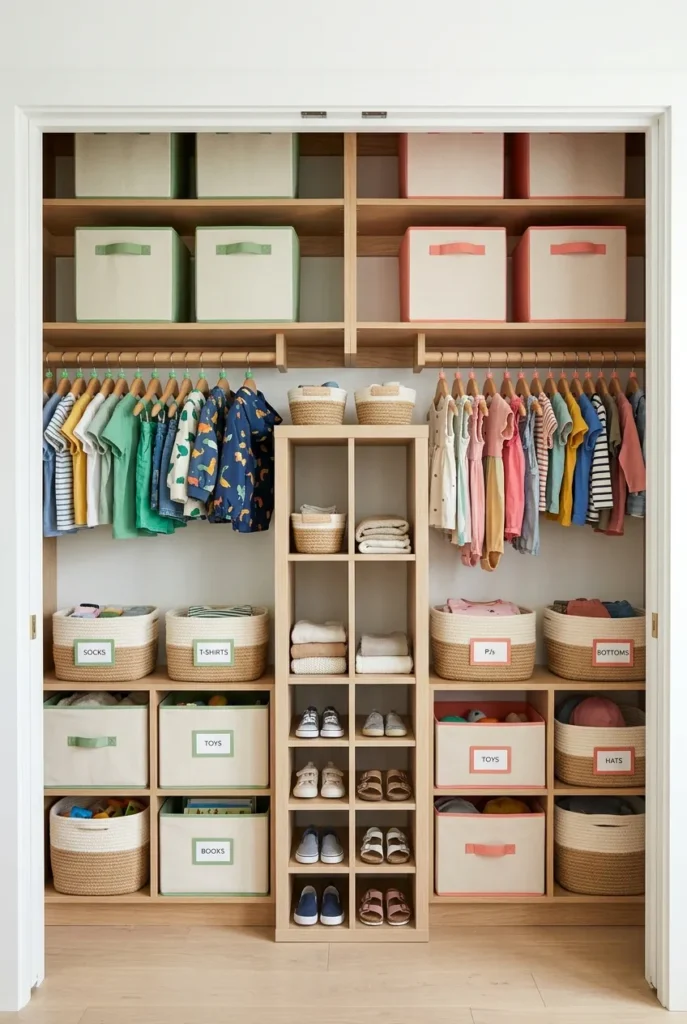
Two kids, one closet, endless border disputes. The fix is a hard visual line. Give each child a color, the same color that runs through their labels, and split the closet down the middle with that color. Left side green, right side coral, no overlap. Even young kids respect a line they can see.
Vertical space gets divided by height, not just by side. The shorter or younger child gets the lower rod and bottom bins. The taller kid takes the upper rod and high shelf. If they share toy bins, label those by toy type rather than by kid, since toys are usually communal and clothes are not.
A tension rod or a simple cube shelf in the center makes a clean physical divider if the squabbles get real. We added one between siblings and the daily negotiations basically ended.
How to Keep It Organized Long Term
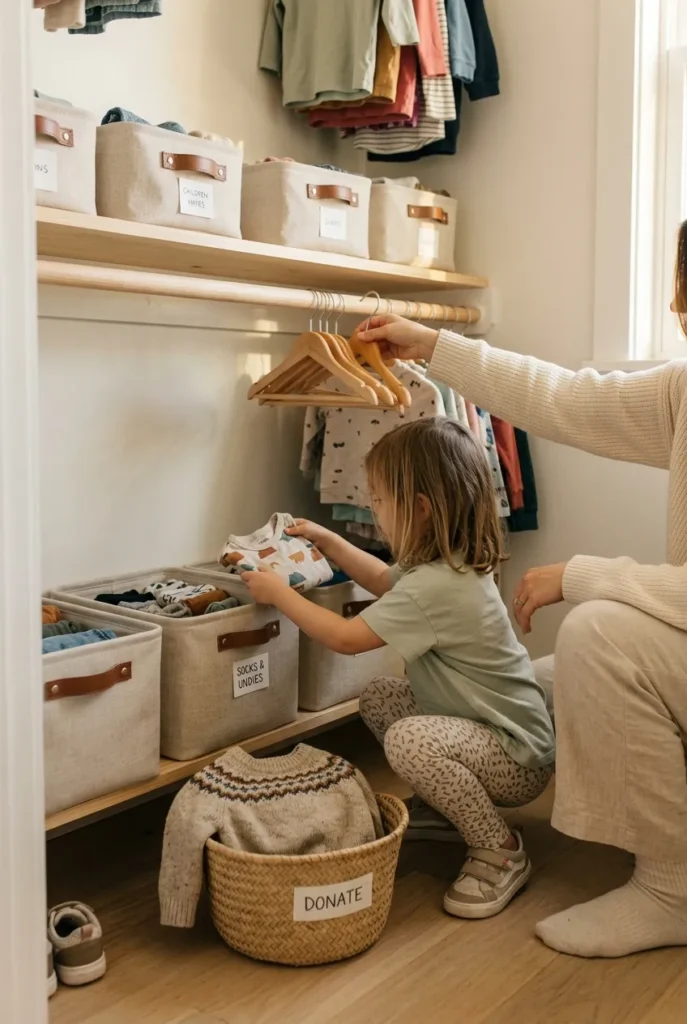
Systems drift. The closet you set up in September is a wreck by Thanksgiving unless you build in a reset. Ours is tiny: a ten-minute Sunday closet check with the kid, every week. Hangers back on the rod, bins back in their spot, anything outgrown into a donate basket that lives on the closet floor.
Twice a year, do the bigger seasonal swap. Shorts up high in winter, sweaters up high in summer, current season front and center. This is also when you re-run the four-pile declutter, because kids grow out of clothes faster than you think.
The maintenance habit matters more than the original setup. A modest system you actually reset beats a gorgeous one that falls apart. If keeping surfaces clear is a wider battle in your house, the one touch rule decluttering method is the habit that finally made it click for us.
Frequently Asked Questions
How do I organize a kid’s closet at any age?
Match the height to the kid. Daily clothes and bins go at their reach, parent-only items go up high, and you raise everything as they grow. Use the Age-by-Age Closet Ladder: parent does it, then child does it with labels, then child owns it.
How do I declutter a kid’s closet before organizing?
Pull everything out and sort into four piles: keep, donate or pass down, sell, and trash. Anything two sizes too small or unworn for a full season leaves. This usually clears a third of the space before you buy a single bin.
How do I organize a closet that has more toys than clothes?
Give toys their own labeled bins grouped by type, then rotate them. Keep half accessible and stash half on a high shelf, swapping monthly so the floor stays clear and old toys feel new again.
What is the best storage for a kids closet on a budget?
Under 25 dollars, a closet doubler rod plus clear stackable bins from Target Brightroom or Amazon Basics covers most needs. Dollar Tree bins and Command hooks work for renters spending under 10 dollars.
How do I divide a shared closet for two kids?
Assign each child a color and split the closet by that color, then divide vertically by height so the younger kid gets the lower rod. A tension rod or center cube shelf makes a clean physical divider.
How do I keep a kid’s closet organized long term?
Build in a ten-minute weekly reset with your child and a twice-a-year seasonal swap. The reset habit matters more than the original setup.
At what age can a kid organize their own closet?
Most kids hit rung three, full ownership, around ages 11 to 12, but a four-year-old can maintain a simple labeled system with your help. Independence comes from clear labels and reachable storage, not age alone.
Your Kid’s Closet, Sorted for Good
The closet that grows with your child is not about buying the prettiest bins. It is about putting the right thing at the right height, then handing off one rung at a time until your kid runs it without you. Start with the declutter this weekend, add labels at your child’s level, and let the Age-by-Age Closet Ladder do the rest.
Which rung is your kid on right now, and what is the one task you are ready to hand over? Pick that one, set it up this weekend, and watch how fast they rise to it.
This article offers general home organization tips only. For products used around small children, always follow the manufacturer’s safety and anchoring guidance.