
The One Touch Rule Decluttering Method That Cuts Home Mess in Half
We used to drop the mail on the kitchen counter “just for now.” You know the spot. By Friday that pile had a coat draped over it, two Amazon boxes, a permission slip, and a banana going soft underneath. Then we tried one touch rule decluttering, and the counter stayed clear for the first time in years. That is the whole promise here: handle each thing once, put it where it lives, and watch the daily mess drop by roughly half. No four-hour Saturday purge. No bins you have to buy first. Just a single habit that does the heavy lifting.
The rule is almost insultingly simple, which is exactly why it works for a busy home. Pick something up one time and it goes to its real home, not a holding zone. We will walk through what the rule is, where it quietly fails (every other article skips this part), and a room-by-room playbook you can actually run tonight.

What Is the One Touch Rule for Decluttering?
The one touch rule says you touch an item one time and complete its journey in that single motion. You bring in the groceries, and the cereal goes onto the pantry shelf right then, not onto the counter to be shelved “later.” Later is the enemy. Later is how a clean room turns into a clutter pile by Wednesday.
Most of us actually touch the same object five or six times a day. You move the sweatshirt off the chair to sit down. You pile it on the bed to make room. You shove it to the floor at night. You hang it in the morning. That is four touches for one sweatshirt, and it was never even put away. The one touch rule clean house approach collapses all of that into one decisive move.
Here is the catch nobody mentions: one touch does not mean fast. It means final. A slow, finished action beats a quick, half-done one every single time.
Does the One Touch Rule Actually Work? (An Honest Answer)
Yes, but not on its own. And this is where we part ways with every breezy testimonial telling you it is a magic fix.
The rule works only when every item has a home that is closer than the nearest flat surface. If your jacket’s real home is a closet down the hall, but a kitchen stool is right there, the stool wins. Your brain picks the path of least resistance, every time. So before the rule can do anything, the homes have to be obvious and close.
We learned this the hard way. The first week we tried it, honestly, we failed by Tuesday. The system only clicked once we set up landing spots within arm’s reach of where the mess actually happened.
The 3-Second Landing Rule (our original framework)
Here is the framework we built to make one touch stick, and it is the thing you will not find on any competitor’s page. The 3-Second Landing Rule: every item you regularly carry needs a home you can reach in three seconds or less from where you naturally set it down. If putting it away takes longer than grabbing a snack, the rule breaks. Time the walk. If it is over three seconds, the home is in the wrong place, not your willpower.
We use this as the anchor for everything below. Set the landing spot first, then the one touch habit runs itself.
How to Start the One Touch Rule When Your House Is Already a Mess
You do not start by touching everything. That is the mistake. If you try the rule on a house that is already buried, you will just shuffle clutter in single touches and burn out.
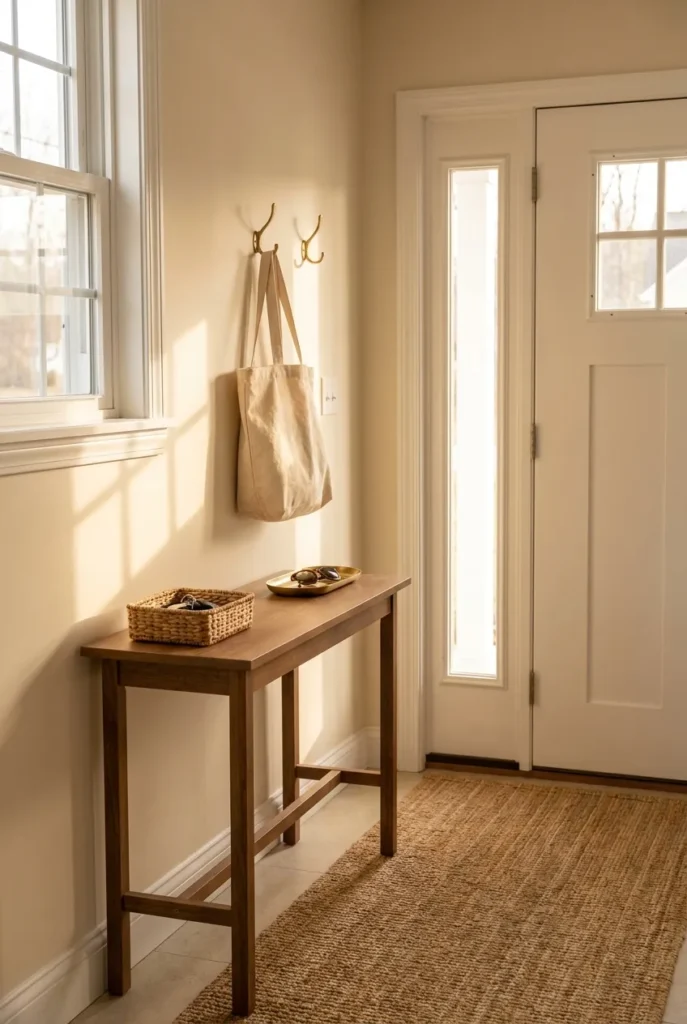
Start with one path. Pick the route you walk most, usually front door to kitchen to couch. Clear only that path’s landing spots first. A hook by the door. A basket for shoes. A tray for keys and mail. Get those three set up, and the rule has somewhere to send things.
Then layer it in slowly:
- Front-load the highest-value win: handle mail at the door, every day, the second it enters. Sort, recycle the junk, file the rest. This one habit prevents the single biggest counter pile in most homes.
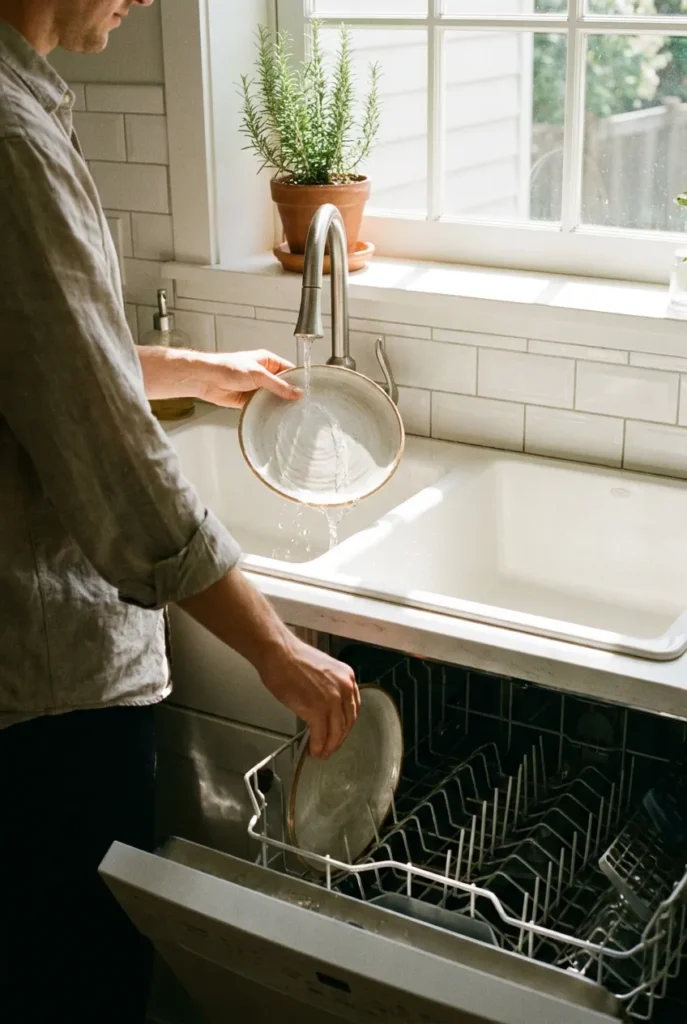
- Apply one touch to dishes next: rinse and load straight into the dishwasher, never the sink.
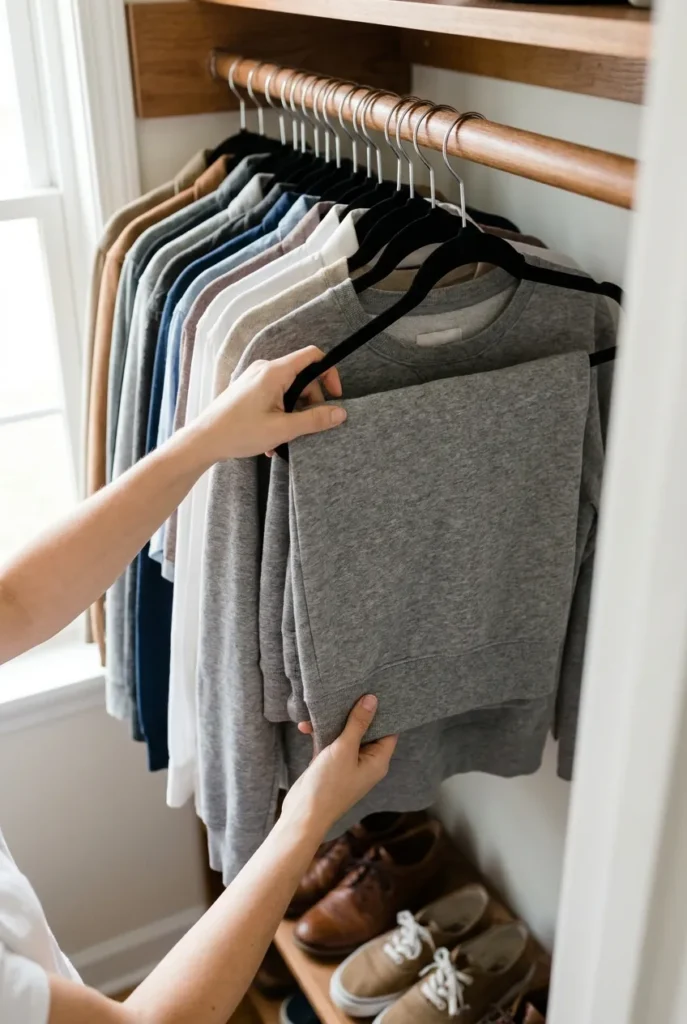
- Add laundry: clothes go to the hamper or the hanger, never the chair.
- Expand outward one zone per week until the whole house runs on it.
A quick note on tools. You do not need to buy anything to begin, but a few cheap landing spots help the habit stick. Command hooks, a Dollar Tree basket, a single tray. Keep it minimal at first. (If you want a deeper system for where to stash the supplies that keep all this running, our guide on smarter cleaning supplies storage spots pairs well with this.)
The Room-by-Room One Touch Playbook
This is the part competitors skip entirely. The rule changes shape in every room, so here is exactly how it runs in the five spots that generate the most clutter.
Kitchen
The counter is a magnet. Give every common item a three-second home: a mail slot by the door, a fruit bowl, a hook for the dish towel, a labeled drawer for chargers. When you walk in, mail gets sorted on the spot and bags get emptied to their shelves in one trip. We keep a small OXO POP container of dog treats by the back door so even that never lands on the counter.
Bedroom
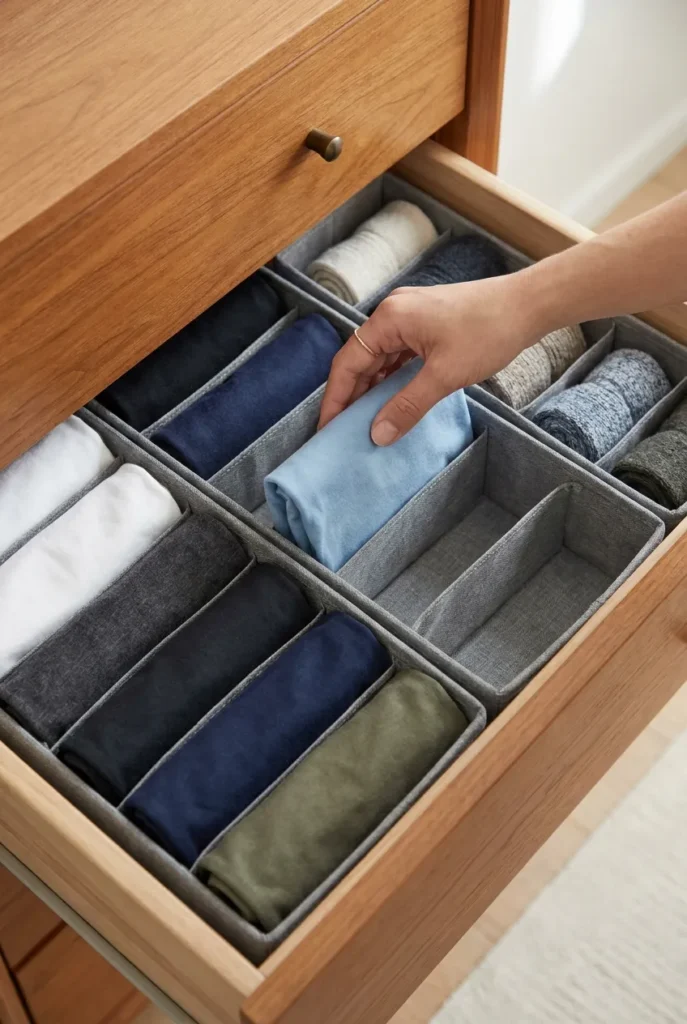
Clothes are the whole battle here. The chair is not a home; it is a clutter trap with legs. Hang it, hamper it, or fold it the moment it comes off. A pair of slim velvet hangers within reach of where you undress makes one touch nearly automatic.
Bathroom
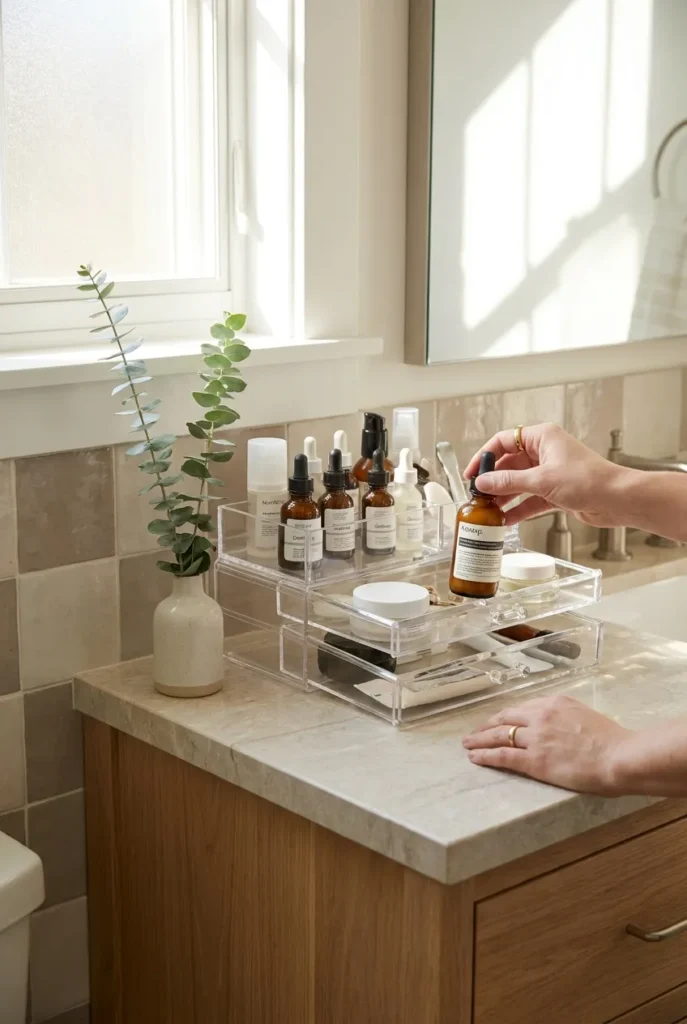
After you use something, it goes back before you leave the room. The blow dryer, the moisturizer, the floss. A shallow acrylic drawer organizer makes the “back” obvious, which is the whole point. No obvious home, no one touch.
Living Room
Remotes, blankets, mugs. A single woven basket for throws and a tray for remotes turns the nightly tidy into a 30-second sweep. The blanket gets folded into the basket in one motion as you stand up, not draped over the arm for tomorrow.
Nightstand
The nightstand is the quietest clutter magnet in the house, which is why we like a layered drawer setup for it. If you want the exact method that keeps ours from collecting chapstick and dead charging cables, here is our 3-Layer Method for bedside drawer organization.
One Touch Rule vs One In, One Out Rule (and the 90/90 Rule)
People mix these up constantly, so here is the clean breakdown you can screenshot.
The one touch rule controls where things go. You handle an item once and finish the job, which stops daily clutter from forming. It is a motion habit.
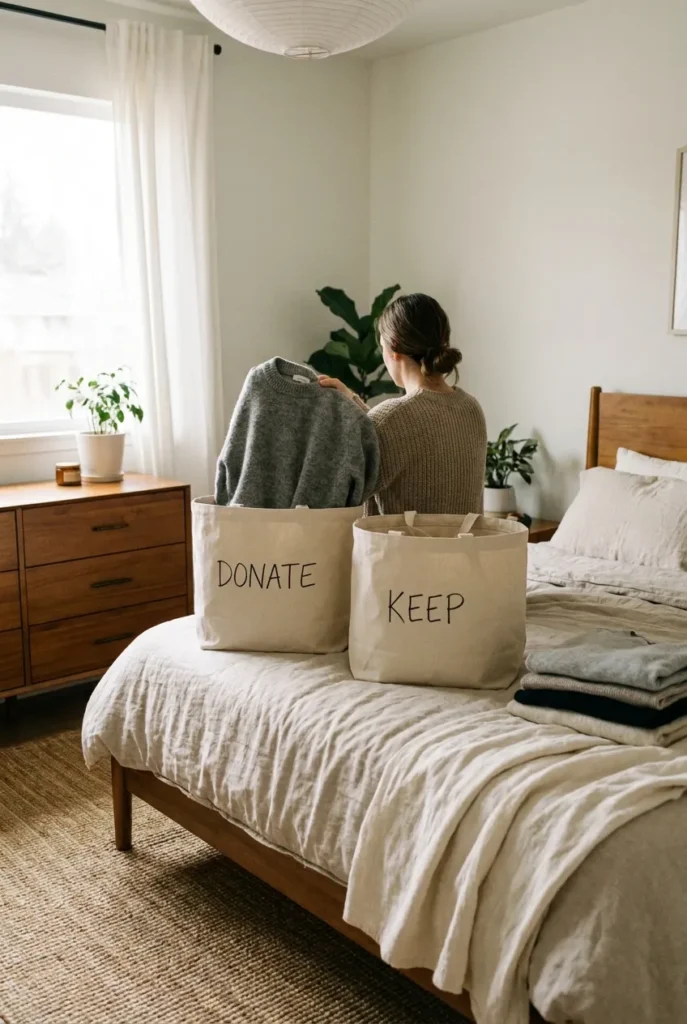
The one in one out rule controls how much you own. Bring home a new sweater, donate an old one the same day. It is a volume habit, and it pairs beautifully with one touch because fewer items means fewer things to touch.
The 90/90 rule controls what you keep. If you have not used something in the last 90 days and will not in the next 90, it goes. It is a purge habit for deciding what stays in your clutter-free home in the first place.
Run all three together and you get a system: 90/90 decides what you own, one in one out caps the total, and one touch keeps the survivors in their place. The thing is, most people only ever try one. Stack them and the effect compounds.
Where the One Touch Rule Fails (and How to Fix It)
No competitor admits this, so we will. The rule breaks in four predictable spots, and each has a fix.
It fails when items have no home. The fix is the 3-Second Landing Rule above. Build the home first.
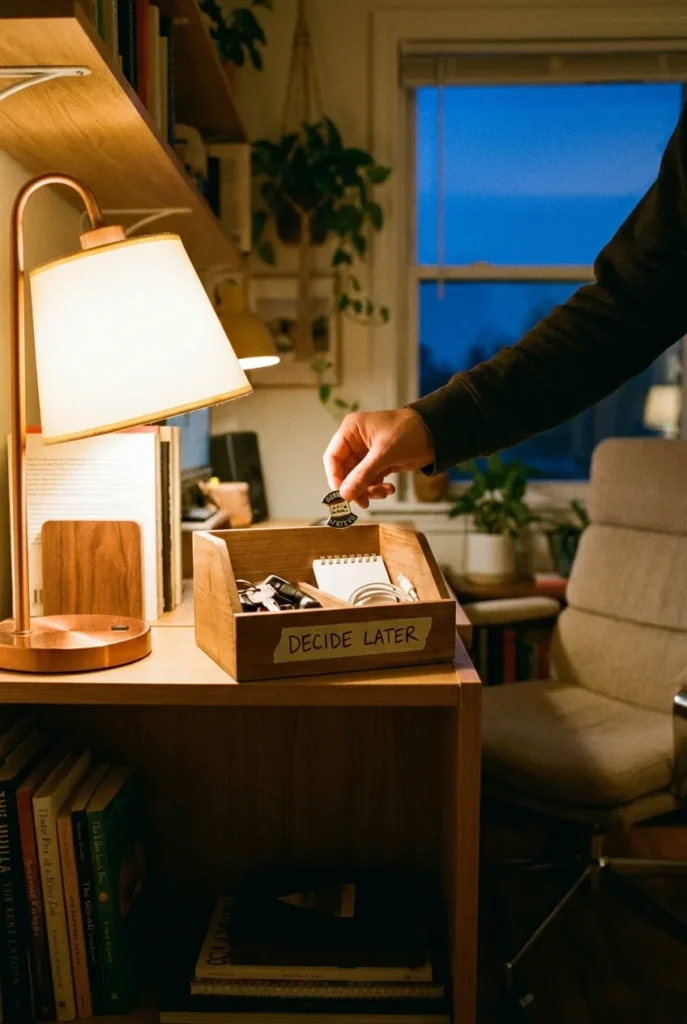
It fails with decision-heavy items. Sentimental letters, a gift you are unsure about, a maybe-broken gadget. One touch assumes you know where it goes, and sometimes you do not. The fix is a single labeled “decide later” bin, emptied every Sunday, so these do not freeze the whole system.
It fails when other people live with you. You can run one touch flawlessly and still face a partner’s coat on the chair. The fix is shared landing spots everyone helped choose, plus visual labels so nobody has an excuse. (For kids, a printable routine on the fridge does more than nagging ever will. Our free printable chore chart by age makes the expectations clear without a lecture.)
It fails during high-stress weeks. Sick kids, a deadline, travel. The fix is grace plus a 10-minute reset: one lap of the house, one touch per item, done. According to professional organizing guidance compiled by the American Cleaning Institute , short consistent routines beat occasional deep cleans for keeping a home in order, which is exactly the principle one touch runs on.
How Long Until the One Touch Rule Becomes a Habit
Give it about three to four weeks of steady practice. The first week feels clunky because you are building landing spots and catching yourself mid-pile. By week two, the easy zones (dishes, mail) run on autopilot. By week four, you stop noticing you are doing it, which is the goal.
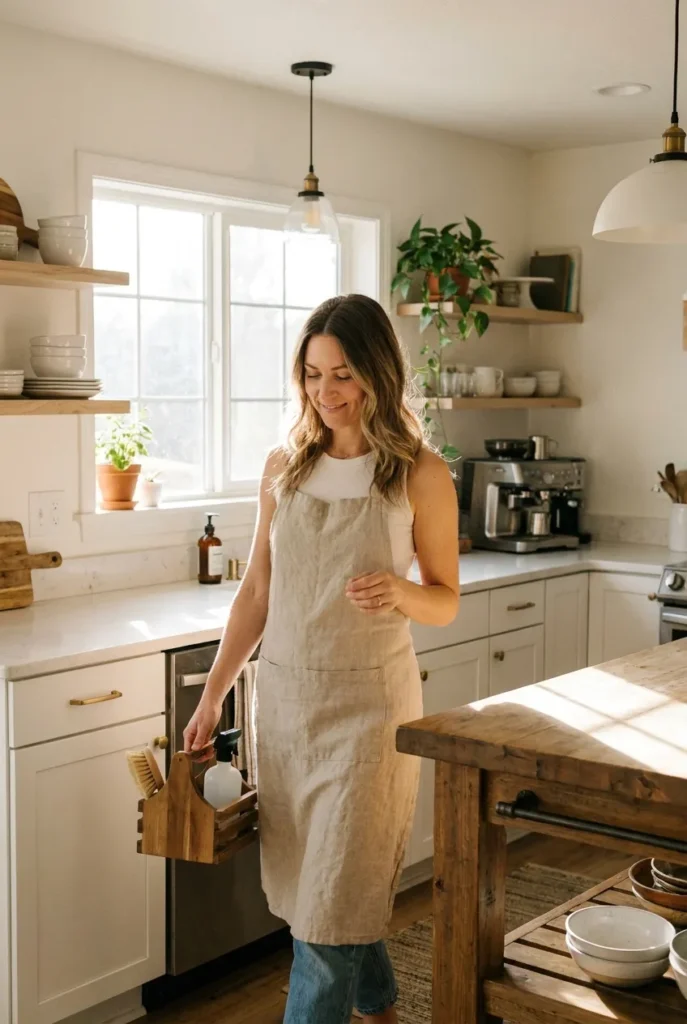
To be fair, it is not perfectly linear. You will have an off day, drop a pile on the counter, and that is fine. The habit is not ruined by one slip; it is built by the next good touch. Research on habit formation has long suggested that consistency matters more than perfection, and a wealth of practical advice from groups like the National Association of Productivity and Organizing Professionals echoes that small repeated actions are what stick.

[IMAGE PROMPT #10] Ideogram prompt: A woman in a linen apron carrying a small styled caddy across a sunlit kitchen during a quick reset, clear counters, coffee brewing in the background, warm morning light through the window, cozy and calm American home, photorealistic candid lifestyle photography, horizontal composition, 16:9 aspect ratio Alt text: A quick 10-minute reset keeps one touch rule decluttering on track in a busy home Suggested filename: one-touch-rule-decluttering-ten-minute-reset.jpg Position note: Immediately after the “off day” habit paragraph, before the FAQ block.
Frequently Asked Questions
What is the one touch rule for decluttering?
It is a habit where you handle each item only one time and put it fully away in that single motion, instead of setting it down “for now.” Touch it once, finish the job. Done consistently, it stops daily clutter from ever forming.
Does the one touch rule actually work?
It works, but only when every item has a close, obvious home. If putting something away is harder than dropping it on the nearest surface, the rule breaks. Set up landing spots first (see our 3-Second Landing Rule), then the habit holds.
What is the difference between the one touch rule and the one in one out rule?
The one touch rule controls where things go in your daily routine. The one in one out rule controls how many things you own by removing one item each time a new one arrives. They work best stacked together.
How is the one touch rule different from the 90/90 rule?
The 90/90 rule is a purge decision: if you have not used an item in 90 days and will not in the next 90, you let it go. The one touch rule is a daily motion habit for keeping what you kept in its place. One decides what stays; the other keeps it tidy.
How do I start the one touch rule if my house is already a mess?
Do not start everywhere. Clear and set up landing spots along your most-walked path first (door, kitchen, couch), then add one zone per week. Begin with mail at the door and dishes straight to the dishwasher.
Can the one touch rule work with kids in the house?
Yes, with shared, clearly labeled landing spots everyone helped choose. Visual labels and a simple printed routine work far better than reminders. Kids follow systems they can see.
How long until the one touch rule becomes a habit?
About three to four weeks of steady practice. Easy zones automate within a week or two; the whole house feels natural by week four. Slips are normal and do not reset your progress.
Your First One Touch Move Tonight
Here is the smallest possible start: pick the one surface in your home that collects the most mess, and set up a single three-second landing spot for whatever lands there. A hook, a basket, a tray. Then tonight, when you walk in, send the first thing straight home in one motion. That is it. That is the whole rule, and it is the quiet difference between a house you are always cleaning and a clutter-free home that mostly stays that way.
So what is your worst clutter spot, and what could live there instead? Set it up before you go to bed, and let one good touch start the streak.
(General information only; this is not professional organizing or health advice. For persistent overwhelm, consider speaking with a qualified professional.)