
Summer Toy Rotation: How to Cut Toy Clutter Without Tears (My Real-Mom Guide)
It’s 4:47 p.m. on a Tuesday in July. Your kid stands in the middle of a playroom that has exploded since lunch. Half a puzzle. A train track that ends in a sock. Seven Magna-Tiles, no box. And the meltdown? Already brewing.
If you’ve been quietly googling “toy rotation system” while pretending to fold laundry, welcome. You’re in good company. A summer toy rotation isn’t a Pinterest fantasy or a Montessori homework assignment. It’s the single fastest way to cut visible clutter, stretch a toddler’s attention span past four minutes, and skip the late-afternoon “I’m bored” loop without buying one more toy.
Here’s what we’re covering today. My 4-Bin Summer Rotation Rule (the framework that saved our living room last August), a step-by-step setup you can finish in one Sunday afternoon, heat-safe storage picks for summer attic and garage chaos, age-by-age guidance from one year old through grade school, and a real-mom FAQ at the end.
A small promise before we start. By the time you finish this guide, you’ll know exactly which toys to pull out this weekend, where to stash the rest, and how to rotate without your kids spotting the swap (mostly).
What a Toy Rotation System Actually Is (And Why Summer Changes the Game)
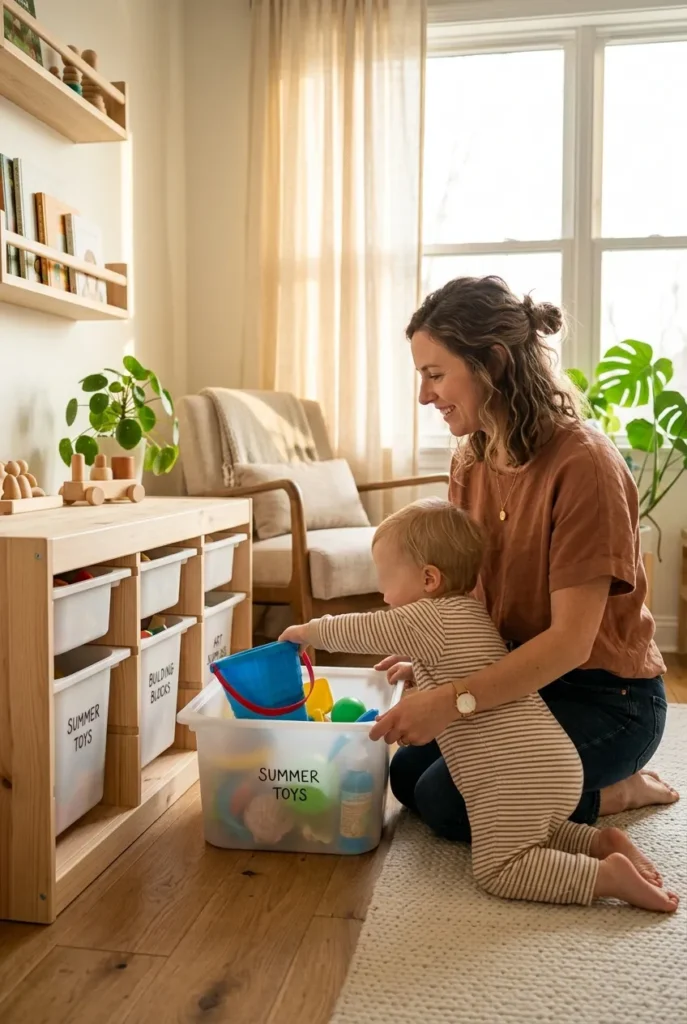
A toy rotation system is exactly what it sounds like. You store most of your kid’s toys out of sight and swap in a smaller curated set every week or two. The idea (lifted gently from Montessori, but used by zero-Montessori parents like me) is that fewer visible toys produce deeper play, less overwhelm, and far less cleanup.
But summer is its own creature. In June you suddenly have water tables, beach toys, scooters, sand buckets, and a sticky pool of melted sidewalk chalk under the porch step. The toys that worked all winter feel cramped. The outdoor stuff piles up by the back door. And your living room? It now houses three sensory bins of dried rice and a slightly leaking sprinkler.
A summer toy rotation system bends the standard rule. Instead of one shelf swap, you split rotation by zone (indoor cool-down toys versus outdoor wear-it-out toys) and stretch your bins to cover travel, beach days, and rainy afternoons when the AC is the only option.
That zone-split angle is the one most rotation guides skip. We’ll fix it with the 4-Bin Rule next.
The 4-Bin Summer Rotation Rule (My Original Framework)
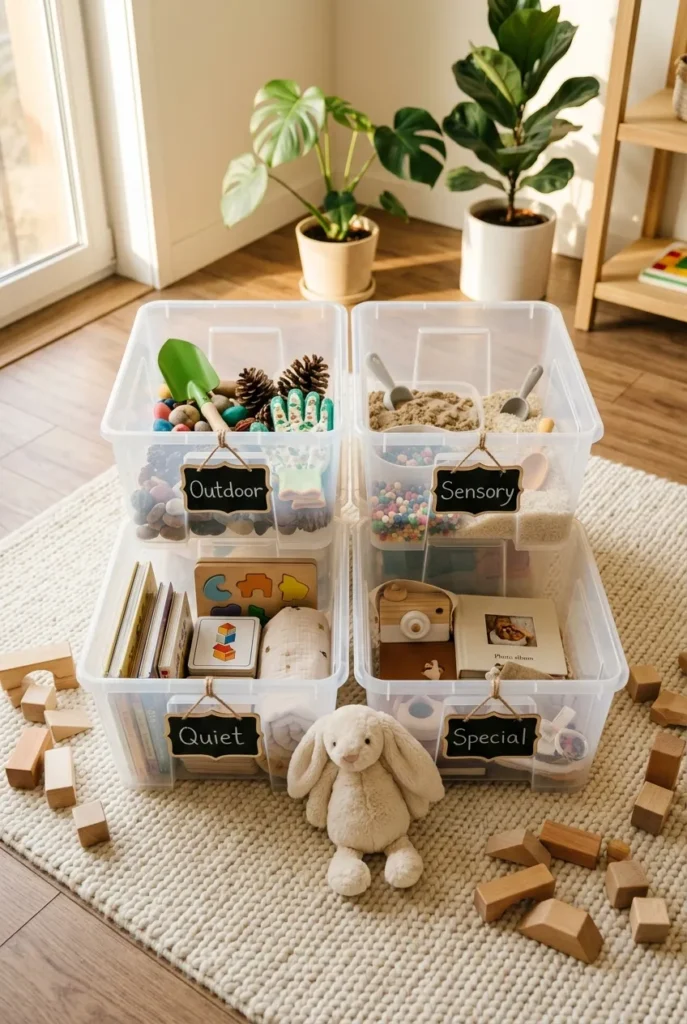
Here’s the framework I built last summer after my third “where did Magna-Tiles go” meltdown. The 4-Bin Summer Rotation Rule splits your kids’ toys into four bins (not by toy type, by mood), rotated on a loose weekly schedule. The mood split is what makes this work in July, when energy levels swing from sweaty backyard chaos to please-just-color-quietly within an hour.
Bin 1: Outdoor and Backyard
This bin lives in the garage or a covered porch box. Inside go bubble wands, sidewalk chalk, three buckets, a sand sifter, water balloons, and one scooter helmet that always disappears. Use a Sterilite 30-quart latching bin (about $9 at Walmart) or, if you want a bigger upgrade, a Suncast 73-gallon resin deck box. Both shrug off humidity. Anything plush, electronic, or battery-powered stays out of this bin (more on heat safety later).
Bin 2: Sensory and Cool-Down Indoor
This is your AC-saver bin. Kinetic sand, Play-Doh, a small dry-rice bin with measuring cups, a tray of foam letters, finger paints. We keep ours in two stacked IKEA Trofast tubs at 16.5 by 11.75 inches, which slot into the low Trofast frame. When the heat index hits 95 and you’ve already done two ice pops, you pull this bin out on the kitchen floor and buy yourself thirty minutes.
Bin 3: Quiet Indoor (Books, Puzzles, Pretend)
Wooden puzzles, board books, a small dollhouse, three stuffed animals, one set of Magna-Tiles. This bin anchors quiet time, nap transitions, and that magical post-lunch stretch. Limit it to about eight items. Any more and the kids freeze instead of choosing.
Bin 4: Special Occasion (Travel, Beach, Rainy Day)
The wildcard bin. Inside live the toys you only break out when you need them: a small Melissa and Doug doodle pad for restaurants, a Water Wow book for road trips, a tackle box of beach shells, glow sticks for a rainy-day camp-in. These items don’t rotate weekly. They live in this bin all summer and get pulled on demand. The novelty does the heavy lifting.
How to Set Up Your Toy Rotation System in One Sunday Afternoon
You don’t need a Pinterest weekend or a new shelf. You need ninety minutes, four bins, a Sharpie, and the willingness to make a small donate pile. Here’s the order that works.
Step 1: The 90-Minute Sort
Pull every loose toy from the playroom, the living room, the car, and (always) the bathtub onto one big rug. Sort into four piles. Outdoor. Sensory. Quiet. Special. Anything broken, missing pieces, or completely outgrown goes in a fifth donate-or-pass-down pile. Aim to keep about 75% of toys and offload roughly 25%. I usually find six puzzles missing one piece and a noisy book whose batteries died in 2024.
Step 2: Pick Your Storage
Match the storage to where the bin lives. Garage bins need waterproof lids and UV resistance. Indoor bins should be clear (so the kids can see what’s inside without dumping every container hunting for the dinosaur). My picks: Sterilite Stack and Carry for indoor zones, IKEA Trofast for shelf systems, and a resin deck box for the patio. Total cost if you start from scratch: about $60 for a 4-bin starter kit.
Step 3: Label for Non-Readers
If your child is under five, words mean nothing on a bin. Use pictures. Snap a photo of one item from the bin (a single block, one puzzle, the chalk), print it on a 4 by 6 card, and tape it to the front with packing tape. Avery 5263 shipping labels also work for picture printouts. Older kids (six and up) can handle word labels with a fun font.
Want a shortcut? At the very end of this post you’ll see a small note about a free printable label set, ready to print on US letter paper and laminate. Save it for laundry day.
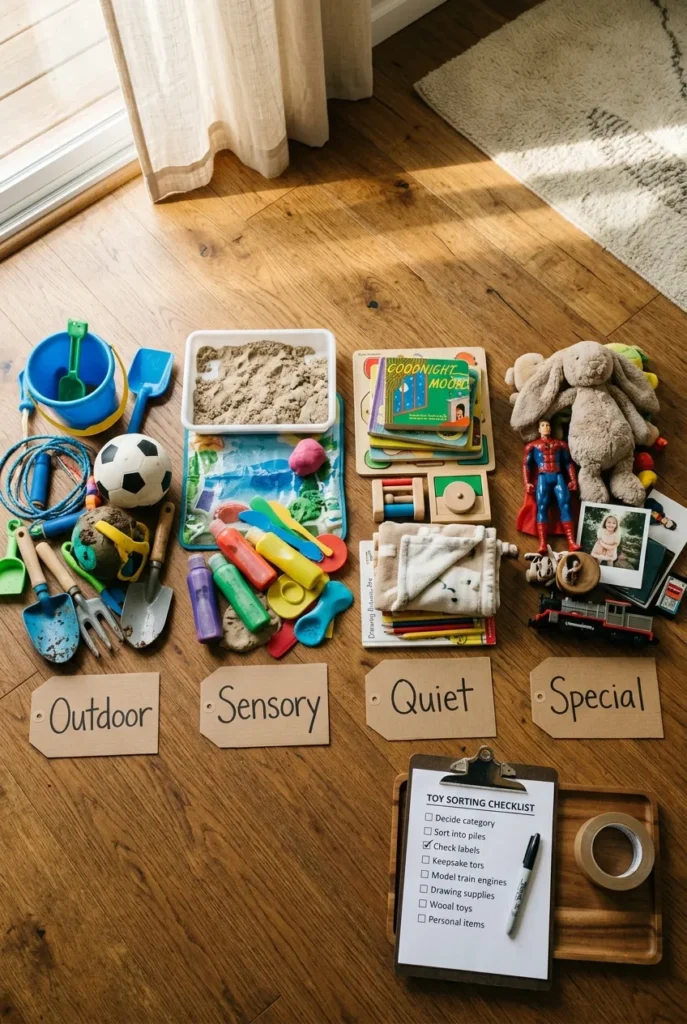
Toy Rotation Categories That Actually Work for Summer
Most rotation guides hand you a list of categories like “fine motor, gross motor, pretend play, art.” Honest answer? Those are useful for daycare planners, not for actual living rooms. For a real summer toy rotation system, sort by these five categories instead.
Open-ended building (Magna-Tiles, wooden blocks, Duplo). Stay in rotation almost every week because they scale with mood and age.
Sensory and tactile (Play-Doh, kinetic sand, water beads, rice bins). Rotate weekly so the novelty doesn’t wear off by Wednesday.
Pretend and small world (dollhouse, play kitchen pieces, animal figurines). Rotate every two weeks; pretend play has the longest novelty tail.
Books and puzzles. Rotate three at a time. Too many puzzles overwhelms; one or two gets ignored.
Outdoor active (chalk, balls, sprinklers, scooters). These live outside in the garage bin and rotate by weather, not by calendar.
A short note on toy rotation categories that show up on Pinterest autocomplete (Montessori, music, art, science). They’re useful if you go deeper, but for a first rotation, the five above will cover 90% of your toys without analysis paralysis.
For backyard-specific overflow that won’t fit indoors, see our guide on outdoor toy storage ideas to keep your backyard tidy all summer. It pairs cleanly with this rotation system.
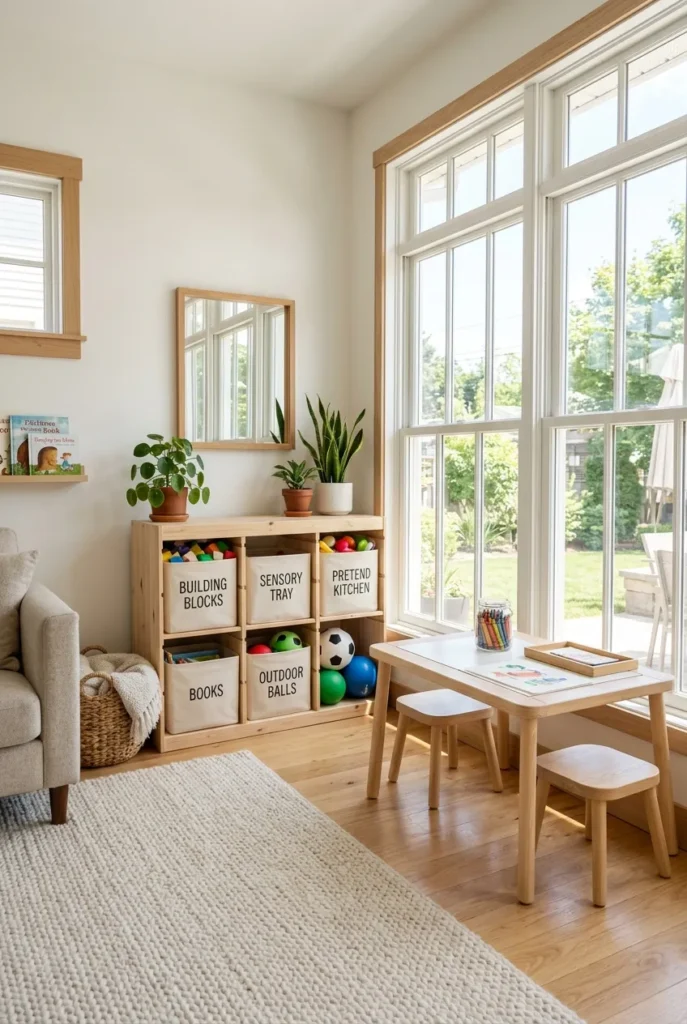
Best Storage for a Summer Toy Rotation System (Heat-Safe Picks)
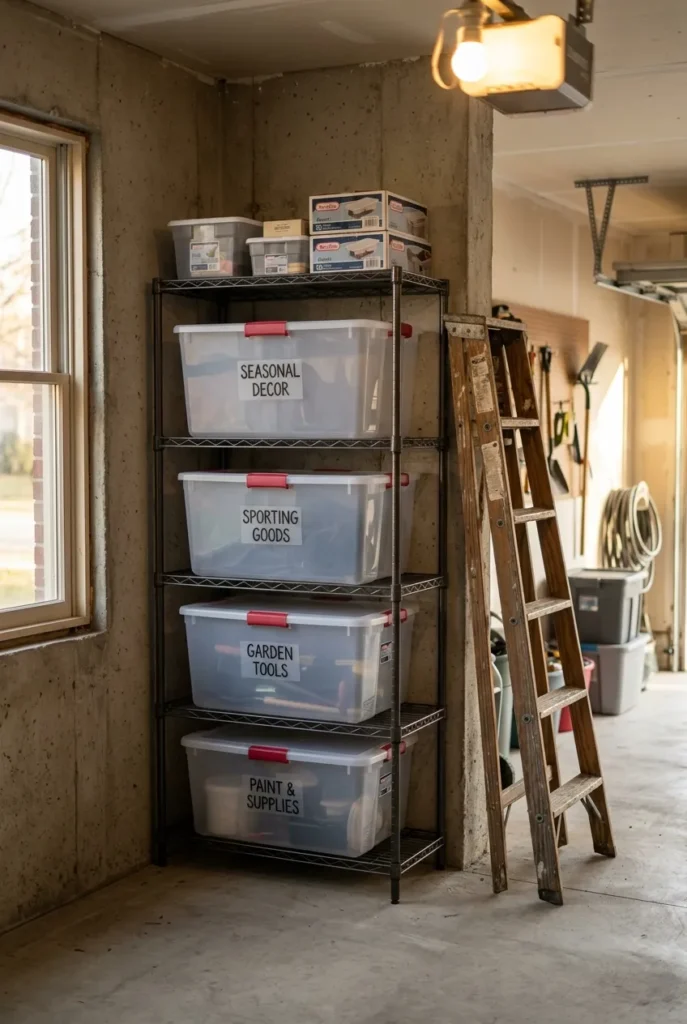
Summer adds one wrinkle no winter rotation guide warns you about: heat. Attics can hit 130°F in August. Garages routinely cross 100°F. That damages more toys than parents realize.
What melts, warps, or breaks down in heat. Cheap thin plastics warp. Crayons turn to puddles. Battery-operated toys risk leakage above 100°F. Glue and stickers on board books loosen. Stuffed animals trap moisture in humid garages and grow mold within weeks.
Where to store the off-rotation bins:
Conditioned closet (best): a hallway linen closet, the bottom shelf of a coat closet, under a bed. Stay below 78°F year round.
Basement (good): naturally cool, but watch for humidity. Toss a silica gel pack in each bin.
Attic and garage (only for outdoor-rated toys): use latching lids, label clearly, and check quarterly for damage. The Consumer Product Safety Commission recommends inspecting battery-operated and stuffed toys regularly for wear and safety hazards (see the CPSC’s toy safety guidance for the official advisories).
My personal storage stack. Three IKEA Trofast tubs for indoor rotation (16.5 by 11.75 inches, $4 each). One Sterilite 30-quart for the garage outdoor bin ($9 at Walmart). One under-bed rolling bin (Iris Weathertight, 41-quart) for off-rotation indoor toys ($25 at Target). Total: about $50 for a setup that lasts years.
Toy Rotation System for Toddlers vs Older Kids (Age by Age)
The biggest reason rotation fails? Using the same setup for a one year old and a six year old. They need different bin counts, different swap frequencies, and very different labels.
One year old (12 to 18 months). Three to five toys visible at a time. Rotate every five to seven days. Include a stacking toy, a soft ball, a sensory book, one push toy. Photo labels only. Heavy on cause-and-effect (drop, push, pull) because that’s where the brain is at.
Toddler (18 months to 3 years). Five to eight toys visible. Rotate every seven to ten days. Pretend play starts here: a little kitchen, a dolly with a blanket, a toy phone. Add one new sensory bin per week.
Preschool (3 to 5 years). Eight to twelve toys visible. Rotate every ten to fourteen days. Add open-ended building, costumes, and longer puzzles (24-piece). Picture labels still useful; word labels start landing around age four.
School age (6 to 9 years). Twelve to fifteen items, but include kits and projects (Lego, slime, science kits). Rotate every two to three weeks. At this age, let the kid help choose what comes out next; ownership keeps the system alive.
If you’re juggling two ages in the same playroom (raises hand), the safer move is to set up two mini-shelves and rotate each on its own schedule, rather than trying to share one bin set. Sharing only works once both kids are past three.
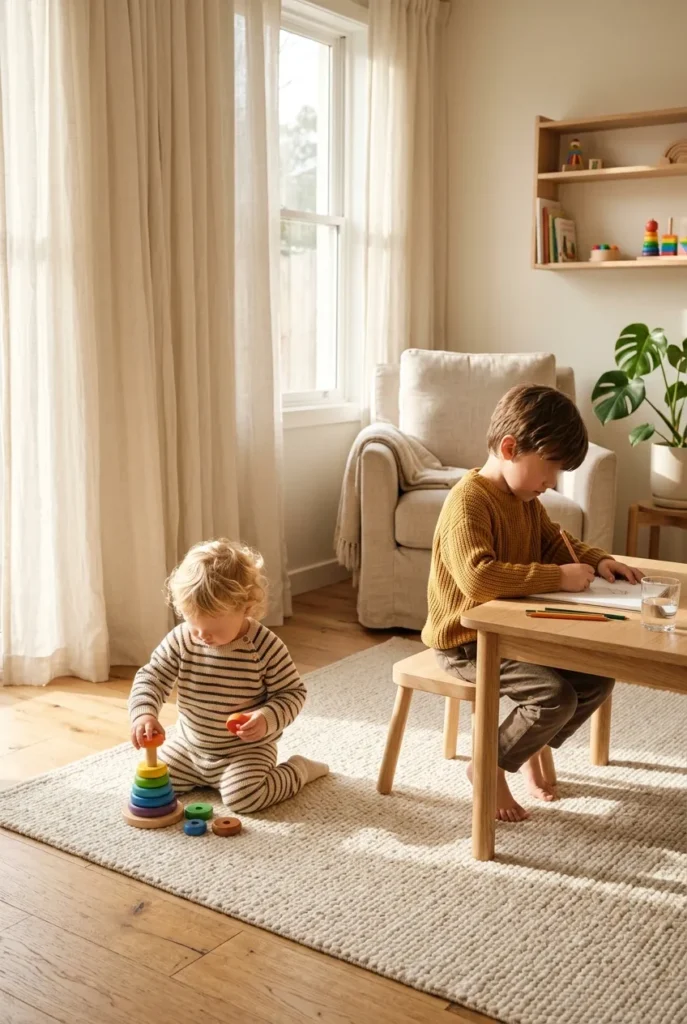
The Montessori Toy Rotation System (Simplified for Busy Families)
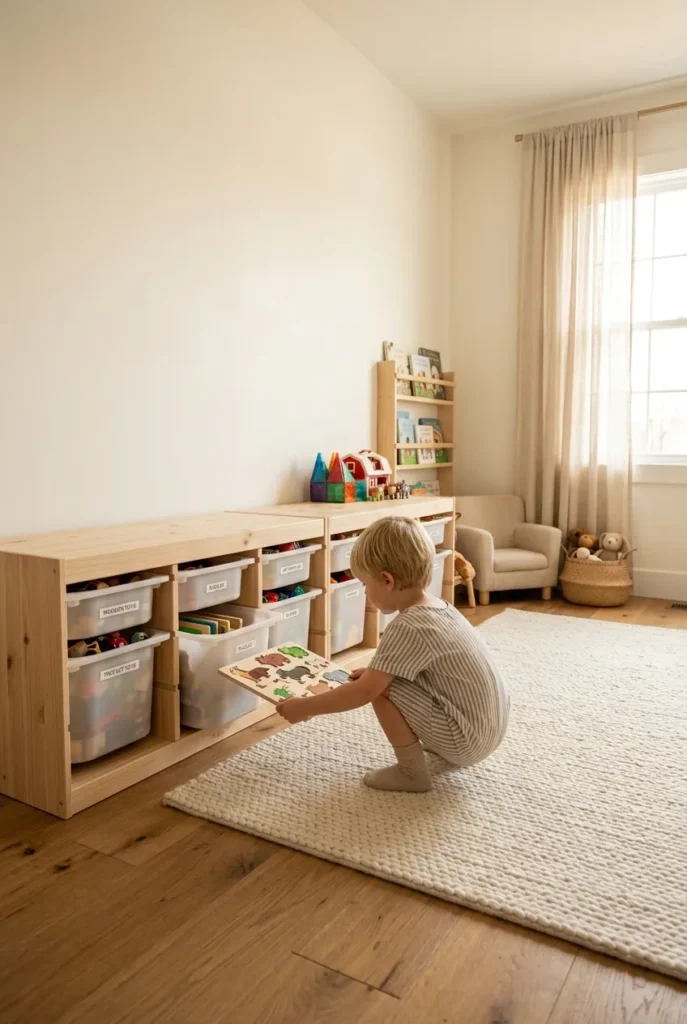
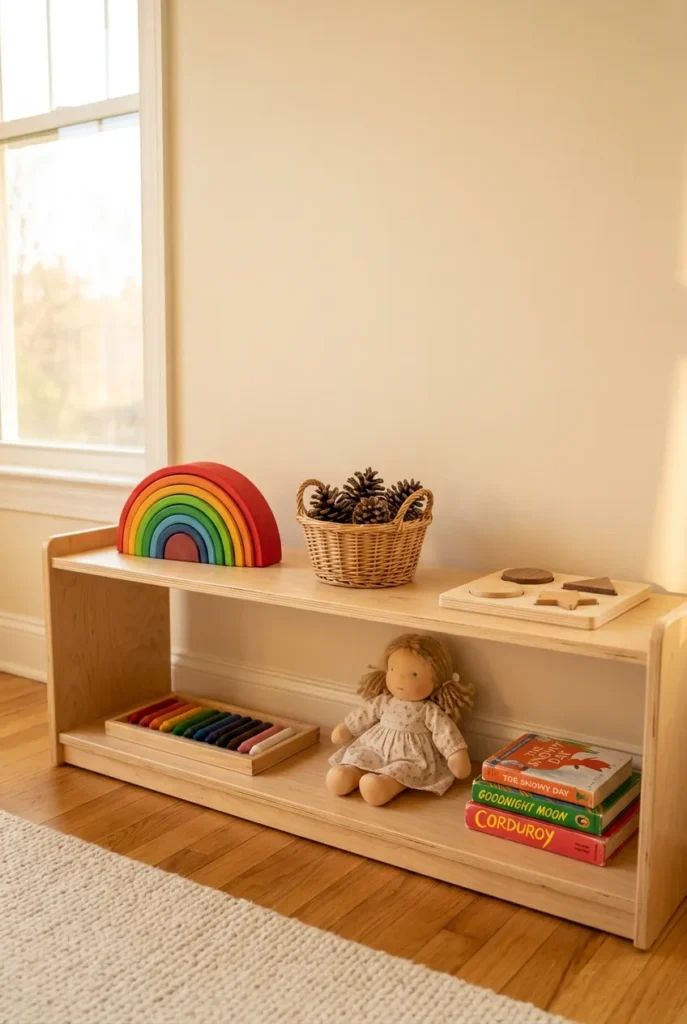
You don’t need a Montessori home to borrow the best part of Montessori toy rotation. The core idea: present a small set of beautiful, purposeful toys on low open shelves, spaced out so each one is visible and inviting. No piles. No bins-on-bins. Five to seven items at a time, max.
How to simplify it for a real American living room:
Pick six toys, not sixty. Each one earns its slot.
Space them on the shelf. A wooden tray helps anchor one activity per zone.
Choose mostly open-ended materials: wood blocks, a basket of natural objects, a small art tray, one set of figures, a stacking toy, a quiet book.
Swap one or two items per week, not the whole shelf. Familiarity matters for younger kids.
Keep the shelf at the child’s height (usually 24 to 30 inches off the floor). A Sprout Kids or IKEA Kallax laid sideways gives you the right profile.
A note for honesty. I am not a Montessori parent. We rotate, we use plastic, we own loud light-up toys (the grandparents gifted them, and we love the grandparents). The Montessori method still gave us the most useful single rule of rotation: less on the shelf, more deeply explored. Steal that one rule even if you steal nothing else.
For more background on how toy variety supports development, the American Academy of Pediatrics’ guidance on selecting toys is worth a quick read.
How Often to Rotate Toys in Summer (and When Not To)
Most guides say rotate weekly. In practice? It depends on the bin and the kid.
Weekly rotation: sensory bin (rice, kinetic sand, water beads) and books. Both lose novelty fastest.
Every 10 to 14 days: pretend play and building toys. Long novelty tail; rotating too soon wastes a perfectly good imaginative streak.
Monthly or seasonal: outdoor active toys (rotate by weather, not the calendar) and the special-occasion bin (only when you need it).
When not to rotate. If your kid is in a deep imaginative phase with one toy set (a Magna-Tile city that’s been growing for three days, a doll family with a continuous storyline), leave it. Rotation is a tool, not a religion. The whole point is more focused, deeper play. If you’ve already got that, don’t break it.
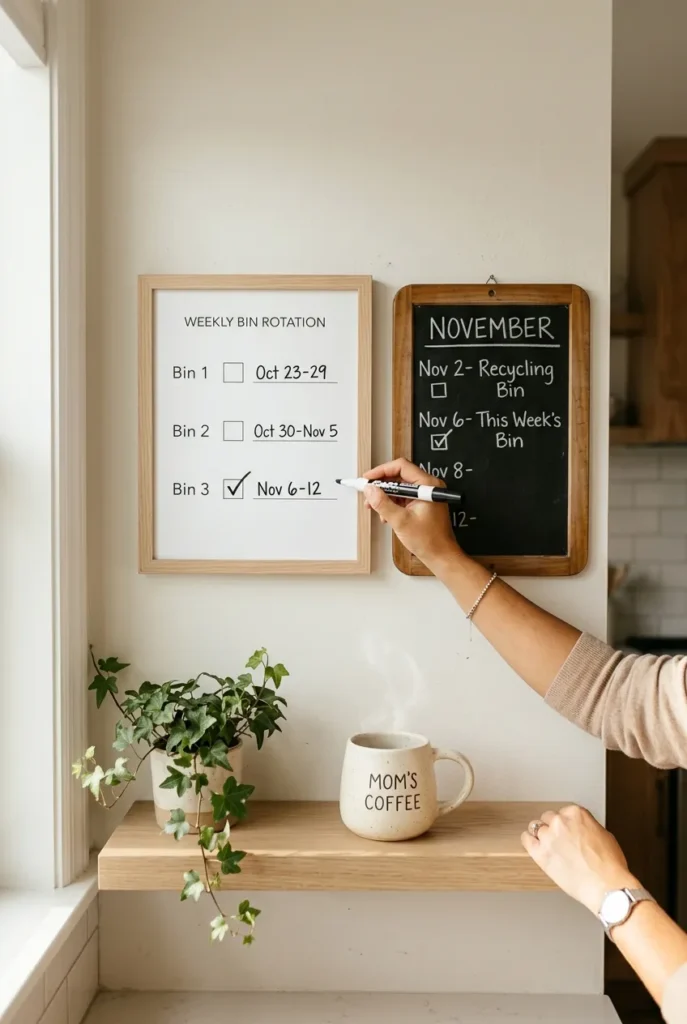
A simple trick we use. We keep a small toy rotation system chart on the fridge with each bin and the date last rotated. Two minutes per Sunday, marker in hand. That tiny visual cue is the difference between a system that lasts and one that collapses by August.
Want a printable version of that chart? At the very bottom of this post we’ll point you to a free downloadable Toy Rotation Tracker (US letter, PDF, designed to slip into a cheap dollar-store frame and use as a dry-erase board).
For more printable systems we use across the rest of the house, our home command center ideas that actually get used post pairs well with this one.
5 Mistakes That Make Toy Rotation Fail (Real-Mom Edition)
Honestly, my first three rotation attempts crashed and burned. Here’s what I got wrong so you don’t have to.
Mistake 1: rotating too many toys at once. If everything is new every week, novelty stops working. Swap a few items, not the whole shelf.
Mistake 2: hiding favorites. The lovey, the one truck, the specific bear: those never go in storage. Ever. Favorites are emotional anchors, not rotation candidates.
Mistake 3: choosing storage your kids can’t manage. If the bin is too heavy or has a complicated lid, only you can rotate. That means it won’t happen. Use bins your kid can lift.
Mistake 4: skipping the donate pile. Rotation only works if the total toy count is realistic. Aim for under 50 visible items across all four bins. If you’re north of that, the problem isn’t rotation; it’s volume.
Mistake 5: going perfect on day one. The catalog-magazine setup is not the goal. The goal is a workable system you actually maintain. Done beats pretty.
Frequently Asked Questions
Does toy rotation actually work?
Yes, with one caveat. Toy rotation works for most kids between roughly nine months and seven years old, especially when the visible toy count is small (under fifteen items at a time). It cuts cleanup time, reduces overwhelm, and lengthens attention spans. It does not work as well for kids who deeply collect or worldbuild (Lego builders mid-project, dollhouse storylines). For them, rotate around the project, not on top of it.
How do you effectively do a toy rotation?
Set a regular swap day (Sunday afternoon is mine). Keep visible toys low (5 to 12 items). Use clear bins with picture labels. Rotate sensory and books weekly, pretend and building every two weeks, outdoor by weather. Always keep favorites out of storage. Track it on a simple chart on the fridge.
At what age should you start a toy rotation system?
Around nine months, when babies start sustained independent play. A toy rotation system for one year old kids can be as simple as three toys on a tray, swapped every five days. For a toy rotation system baby setup, fewer is even better: two items at a time, ideally on a low Montessori-style shelf at 24 inches.
What is the Montessori toy rotation system?
The Montessori version uses low open shelves, five to seven beautifully spaced toys at a time, mostly natural materials (wood, fabric, basket fibers), and one to two swaps per week instead of full rotations. The goal is deep, focused, purposeful play. You can borrow the spacing and quantity rules without going full Montessori at home.
How many toys should be in each rotation bin?
Five to twelve, depending on age. One year old: 3 to 5. Toddler: 5 to 8. Preschool: 8 to 12. School age: 12 to 15.
Where do I store off-rotation toys in summer?
Inside a climate-controlled space (under bed, hall closet, basement) for most toys. Garage and attic only for outdoor-rated items in latching weatherproof bins. Avoid storing battery toys or stuffed animals anywhere above 78°F.
How do I get my kids on board with rotation?
Make the first swap together. Let them help label one bin. Frame it as a “toy library” instead of “putting toys away.” That single language shift turned a tantrum into a giggle in our house.
For travel-specific rotation (think road trips and beach days), pair this with our beach and pool bag organization hacks for easier summer days post. The two systems work hand in hand.
Your Tear-Free Summer Toy Rotation Starts Now
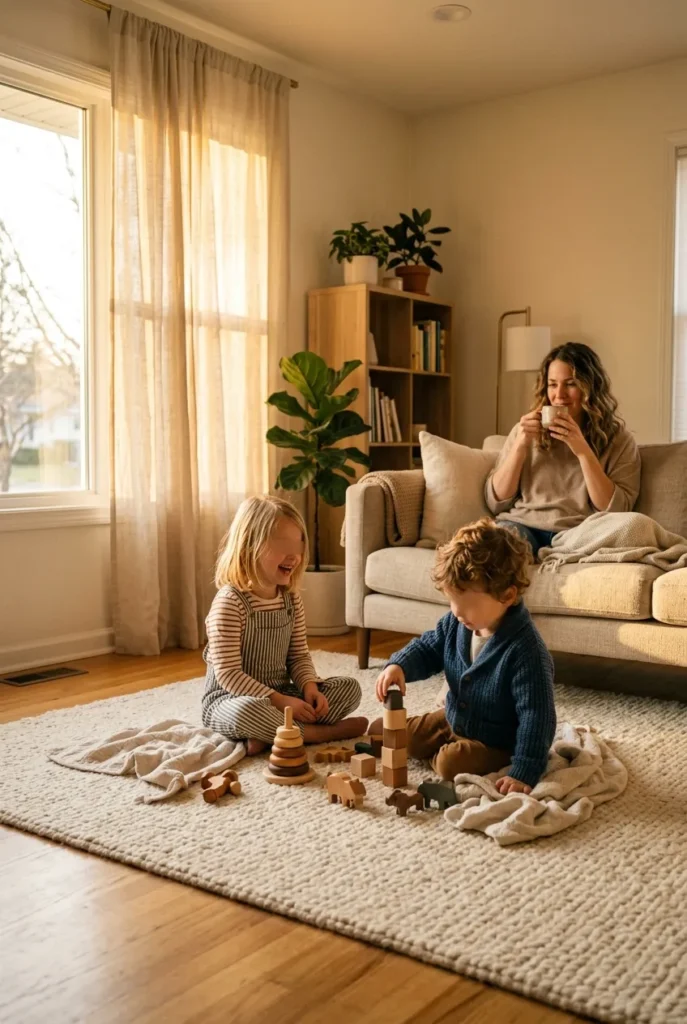
If you do one thing this weekend, do the 90-minute sort. Pull every loose toy onto a rug, build the four piles, fill the four bins, and put three bins out of sight. You’ll save the rest of summer.
I’d love to hear which bin gave you the biggest “where did all this come from” moment. Drop a comment, or grab the free Toy Rotation Tracker printable (US letter, PDF, just print and pop in a frame as a reusable chart) linked at the bottom of this post. Then come back in two weeks and tell me what changed.
A small disclaimer: the product picks and safety notes in this post are general guidance for US families based on current Consumer Product Safety Commission advisories and standard practice; always check the latest manufacturer warnings for specific toys, and consult a qualified pediatric professional for child-specific questions.