
Minimalist Home Decluttering for Real, Non-Perfect People
Let’s be honest about something. Most minimalist decluttering advice is written like you have a free Saturday, zero kids, and the emotional bandwidth to hold up a saucepan and ask if it sparks joy. That’s not most of us. We start a drawer, get interrupted, and three days later the “donate” bag is still by the door doing nothing.
This is minimalist decluttering for people who live in an actual home. You’ll get a repeatable weekly system, one simple rule for deciding what to keep, and a way to keep counters clear that survives a bad week. No all-or-nothing purge. No guilt. Just a calmer house you can maintain.
Here’s the promise: you don’t have to become a minimalist to get the benefits of one. You just need a method that fits real life.

What Minimalist Decluttering Actually Means (and What It Doesn’t)
Decluttering and minimalism get treated like the same thing, but they pull in slightly different directions. Decluttering is the act of removing what you don’t use. Minimalism is the ongoing choice to own less on purpose. You can declutter one closet this weekend. Minimalism is the reason the closet stays that way.
For non-perfect people, the useful version sits right in the middle. We’re not chasing empty white rooms. We want fewer things to manage, clearer surfaces, and less daily friction. That’s it.
And there’s a real reason clear surfaces feel so good. Research associated with the Princeton Neuroscience Institute (McMains and Kastner, published in the Journal of Neuroscience in 2011) found that when multiple objects compete in your visual field, they suppress each other and tax your attention. In plain terms: a cluttered counter quietly wears you out, even when you’re not consciously looking at it. Clearing it isn’t vanity. It’s giving your brain a break.
The Visible-Surface First Rule (Your Anchor Framework)
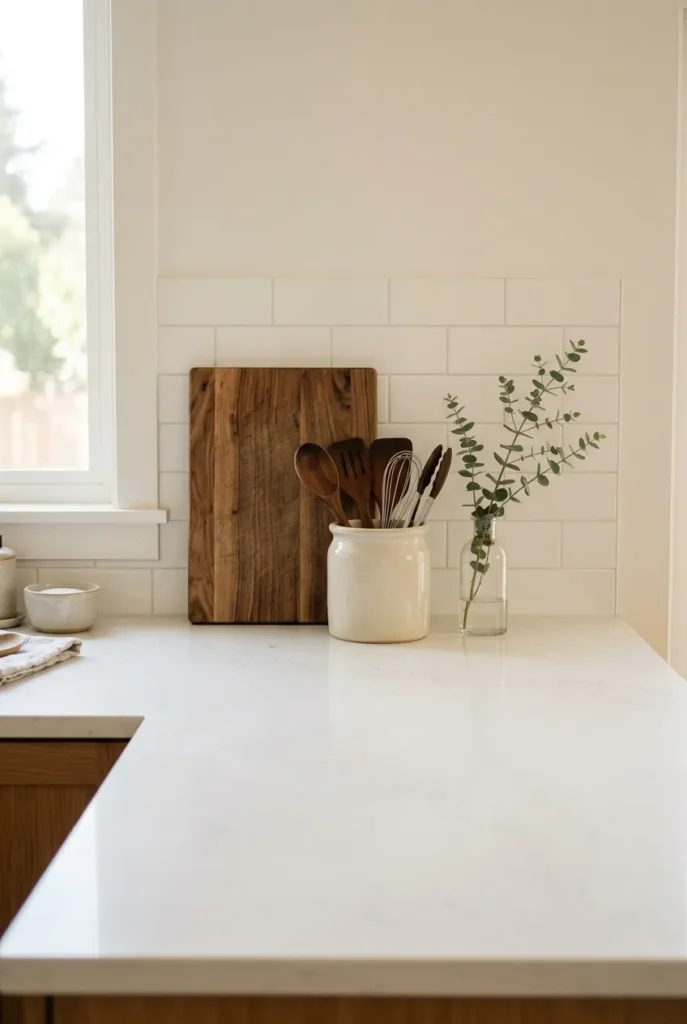
Here’s the framework this whole article hangs on. I call it the Visible-Surface First Rule: before you touch a single drawer, closet, or bin, you clear only the flat surfaces you see every day. Kitchen counter, coffee table, nightstand, the top of the dresser. That’s the entire first pass.
Why start there? Because visible clutter is the stuff draining you, and a clear surface gives you a fast, visible win that makes you want to keep going. Hidden clutter in a drawer can wait. Nobody’s stress spikes over a messy sock drawer they never open.
Run the Visible-Surface First Rule once and your home will already feel 50% calmer, even though you’ve technically decluttered almost nothing. That’s the point. Momentum beats perfection.
The One Question That Ends the “What Do I Keep?” Paralysis
The hardest part of minimalist decluttering isn’t the trash bags. It’s the deciding. You pick up a gadget, your brain runs twelve scenarios, and you put it back down. That’s decision fatigue, and it’s why so many purges stall halfway.
So use one question instead of twelve. Ask: “Have I used this in the last year, and would I buy it again today?” If the answer to both is no, it goes. No debate, no maybe pile that secretly means keep.
For the truly agonizing items, use a short holding period instead of forcing a yes or no. Box them, label the box with today’s date, and put it out of sight. If you haven’t reached for anything in it after 60 days, you already have your answer.
A quick word on sentimental things: don’t start there. Ever. Sentimental items break the system because they’re emotional, not practical. Save them for last, and give yourself permission to keep the ones that matter. Minimalism isn’t a competition to own the least.
The Weekly 20-Minute Reset (So It Never Piles Back Up)
Here’s where non-perfect people usually get abandoned by minimalist advice. You do the big declutter, feel amazing, and then life refills the counters within two weeks. The fix isn’t more willpower. It’s a small recurring loop.
Pick one 20-minute window a week. Same day, same time, so you don’t have to decide. During that window you do three things and nothing more:
- Clear every visible surface back to zero.
- Return the five to ten stray items that migrated to the wrong room.
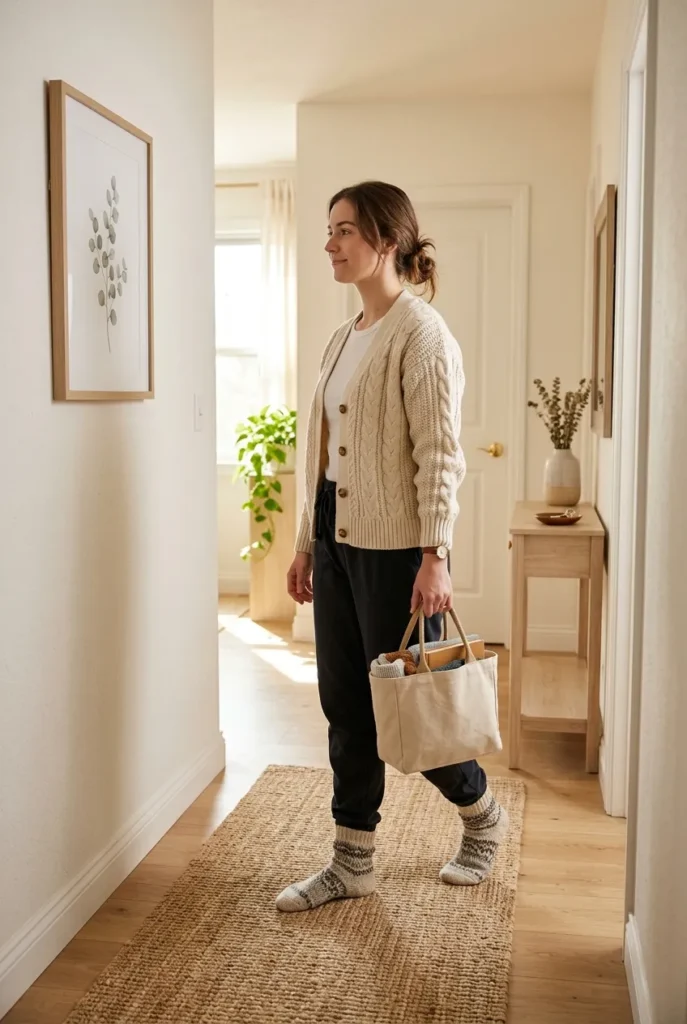
- Fill one small bag with things to donate or toss.
That’s the whole reset. Twenty minutes, once a week, and your home stays 90% of the way to where the big declutter left it. If a week gets away from you and you skip it, you skip it. You pick it back up the next week. No spiral, no starting over.
If your whole house feels like too much to even begin, this piece on where to start decluttering when every room feels like too much breaks the first move into something smaller. And if overwhelm is the real blocker, here’s how to declutter without burning out.
Room-by-Room Minimalist Decluttering, the Low-Effort Way
You don’t need to do the whole house at once (honestly, please don’t). Work one room per week, and within each room, start with the visible surfaces before you ever open storage.
Kitchen
Counters first. Move anything you use less than weekly into a cabinet. Then hit the two danger zones: the utensil drawer and the container cabinet. Match every lid to a base and let go of the orphans. Most kitchens run smoother with about a third fewer gadgets than they hold.
Bedroom and Closet
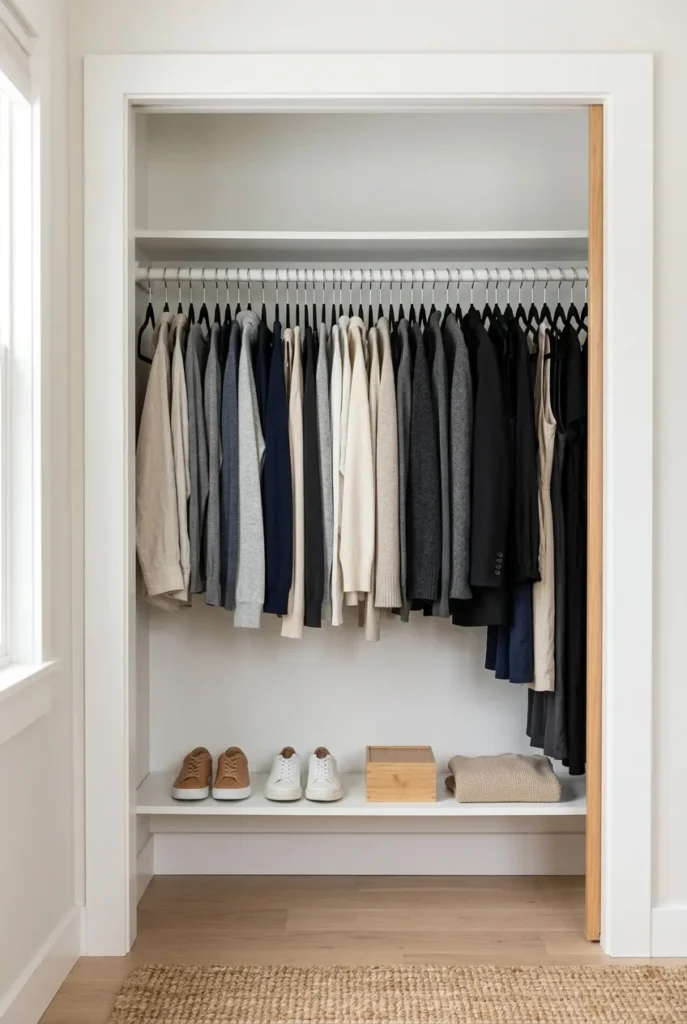
The nightstand and dresser top are your visible surfaces here. For the closet, use the backward-hanger trick: turn every hanger the wrong way, and after a season, anything still backward is something you never wore. That’s your donate pile, pre-sorted by real behavior instead of guesswork.
Bathroom
Toss expired products (yes, sunscreen and medication expire, and half-empty bottles you didn’t love). Keep only what you use in a normal week on the counter. Everything else goes under the sink or into a small labeled bin.

The Paper Pile
Paper is its own beast, and it’s usually the thing recluttering your counters within days. A dedicated intake spot plus a weekly sort keeps it from taking over. This paper clutter system that keeps counters clear walks through a setup that actually sticks.
Where Your Stuff Actually Goes (Donate, Don’t Just Dump)
When you let go of clothes and household textiles, where they land matters more than most decluttering guides admit. The EPA estimated that Americans generated about 17 million tons of textiles in a single year, and roughly 11.3 million tons of that ended up in landfills, with a recycling rate under 15%. Donating and reusing keeps usable items out of that stream.
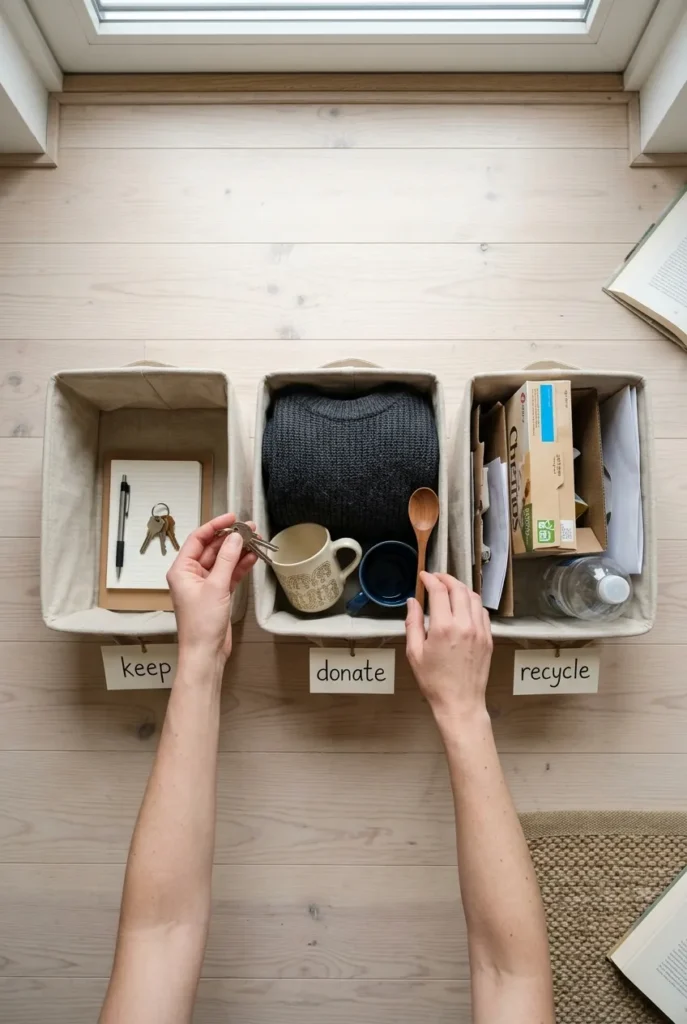
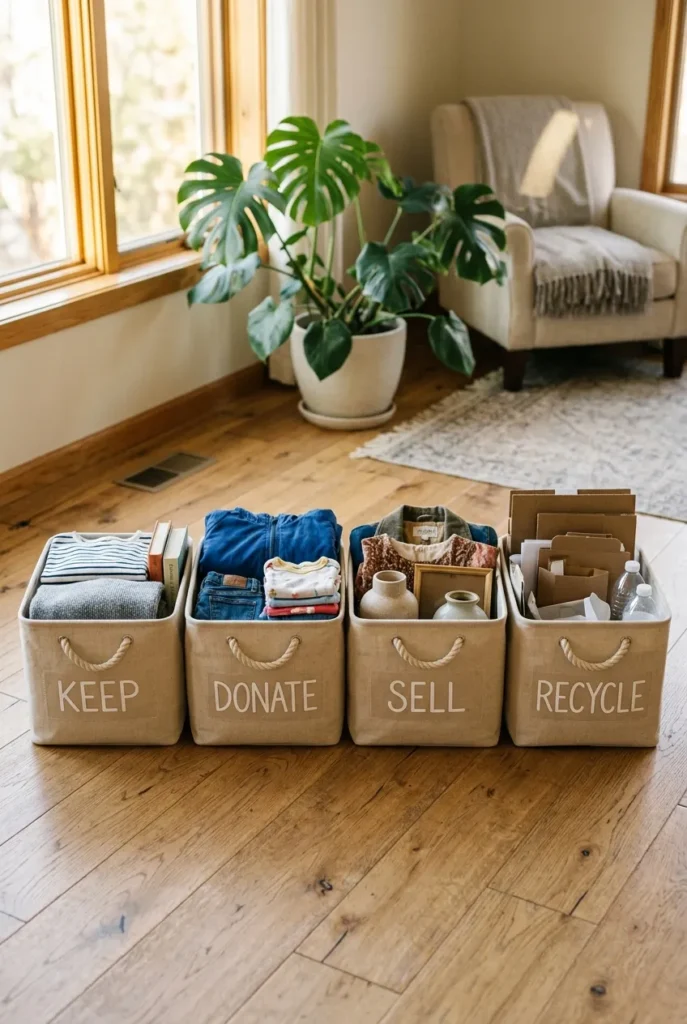
So build a simple four-bin habit as you go: keep, donate, sell, recycle. Donate wearable clothing and working household goods to a local charity or a Buy Nothing group. Recycle textiles that are too worn to donate through a textile-recycling drop-off rather than tossing them. It takes no extra time if you sort as you declutter instead of making a second pass later.
What to Declutter First When You’re Overwhelmed
If you froze reading everything above, start with these five quick wins. They’re low-emotion and high-impact, which is exactly what you want when motivation is thin:
- Expired food in the pantry and fridge.
- Expired or unloved bathroom products.
- Duplicate kitchen tools (you don’t need three spatulas).
- Clothes that don’t fit and haven’t for a year.
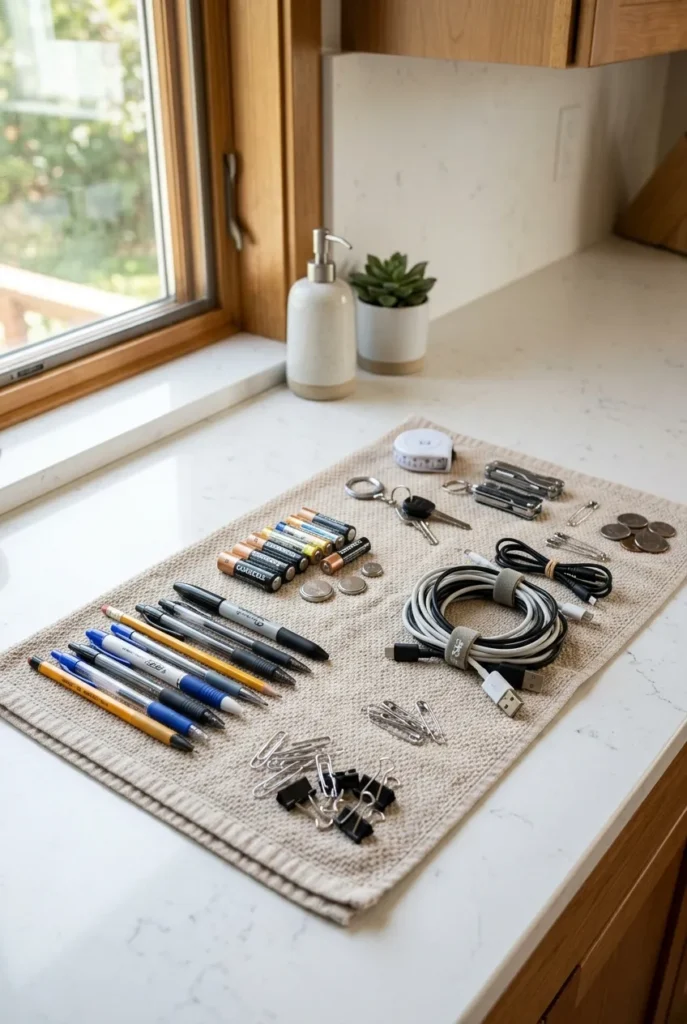
- The junk drawer, dumped onto a towel and sorted in ten minutes.
Notice none of these require a single decision about sentimental value. That’s on purpose. Easy wins first, hard calls later.
How to Keep a Minimalist Home Without Being Rigid About It
The goal was never a museum. It’s a home that resets easily. Two small habits do most of the heavy lifting.
First, the one-in-one-out idea, applied loosely. New sweater in, old sweater out. You don’t have to be militant about it, but it quietly stops the slow creep that undoes every declutter.
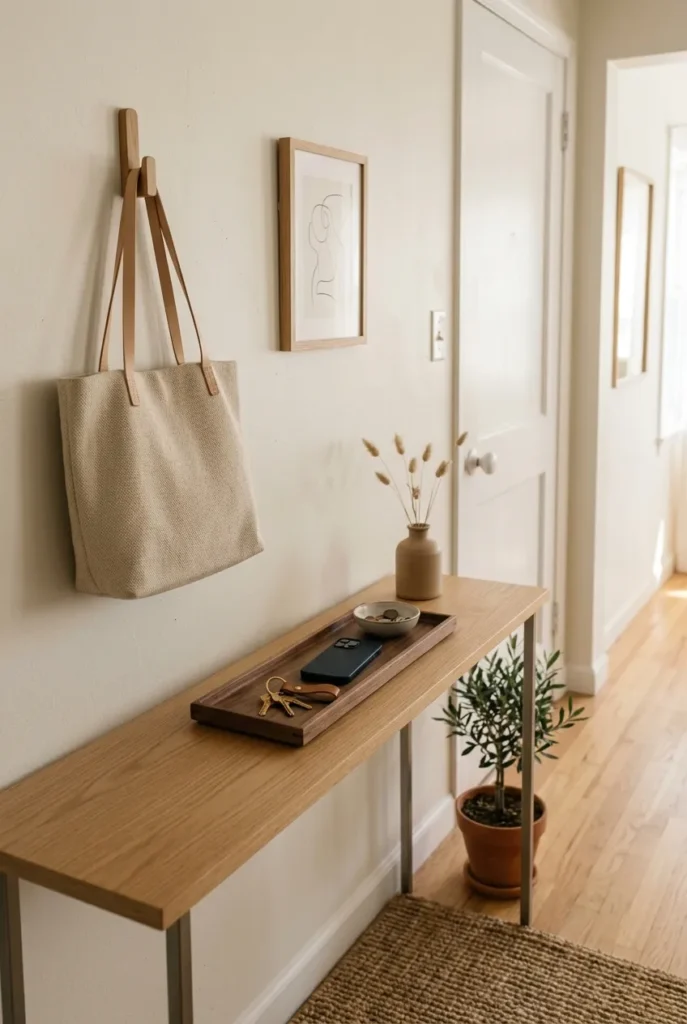
Second, a landing spot for the stuff that always wanders: keys, mail, chargers, the random receipt. Give those things one home each, and your visible surfaces stop collecting the daily debris that makes a whole room read as messy.
That’s minimalist decluttering that survives real life. Not perfect. Maintainable.
Frequently Asked Questions
What is the 3-3-3 rule for decluttering?
It’s a fast-start method: pick a space and pull out 3 things to keep, 3 to donate, and 3 to move to their proper home. It works because it caps the decisions at nine, so you get a visible result before overwhelm sets in. Think of it as a warm-up, not the whole workout.
What are 7 things minimalists tend to declutter regularly?
Common repeat offenders are expired pantry items, duplicate kitchen tools, worn-out clothes, junk mail and paper, freebie mugs and water bottles, single-use gadgets, and product samples that never get used. These refill fast, so they’re worth a recurring pass.
How do I declutter on my own without help?
Work in short sessions on one visible surface or one drawer at a time, use a single keep-or-let-go question, and sort into keep, donate, and recycle as you go. Small, solo, repeatable beats one exhausting marathon every time.
How is minimalist decluttering different from regular decluttering?
Regular decluttering removes excess once. Minimalist decluttering pairs that with owning less going forward, so you’re not back where you started in three months. The maintenance habit is the actual difference.
What should I declutter first if everything feels like too much?
Start with low-emotion, high-impact zones: expired products, duplicates, and one junk drawer. Skip anything sentimental until you’ve built momentum on the easy stuff.
Do I have to get rid of sentimental items to be a minimalist?
No. Keep what genuinely matters to you. Minimalism is about removing the things that don’t earn their space, not punishing yourself over the ones that do.
Your Calm-Home Starting Point
You don’t need a perfect weekend or a personality transplant to get a calmer home. You need one visible surface cleared today, one simple question to speed up decisions, and one 20-minute reset a week to keep it. Start with a single counter. That’s genuinely enough for today.
If this gave you a nudge, save it to your decluttering board so it’s waiting when the motivation hits, and pick just one surface to clear before you close this tab. Future-you, walking into a clear kitchen tomorrow morning, will be glad you did.