
The Paper Clutter System That Finally Keeps Your Counters Clear
Mail lands on the counter “just for a second.” Then a school form joins it. Then a bill, a receipt, a birthday invite, and by Friday there is a paper mountain nobody wants to touch. A good paper clutter system fixes that, and it takes minutes a week, not a lost Saturday. Here is the promise: by the end of this guide you will have a simple home filing setup that sorts every sheet the moment it walks in the door.
We built this after years of the counter pile winning. The trick was not fancier folders. It was giving every piece of paper one job and one place.
Most advice stops at “make folders.” That part is easy. Staying clear after week three is the hard part, and that is where we spend the most time below.
Why Paper Piles Beat Most People
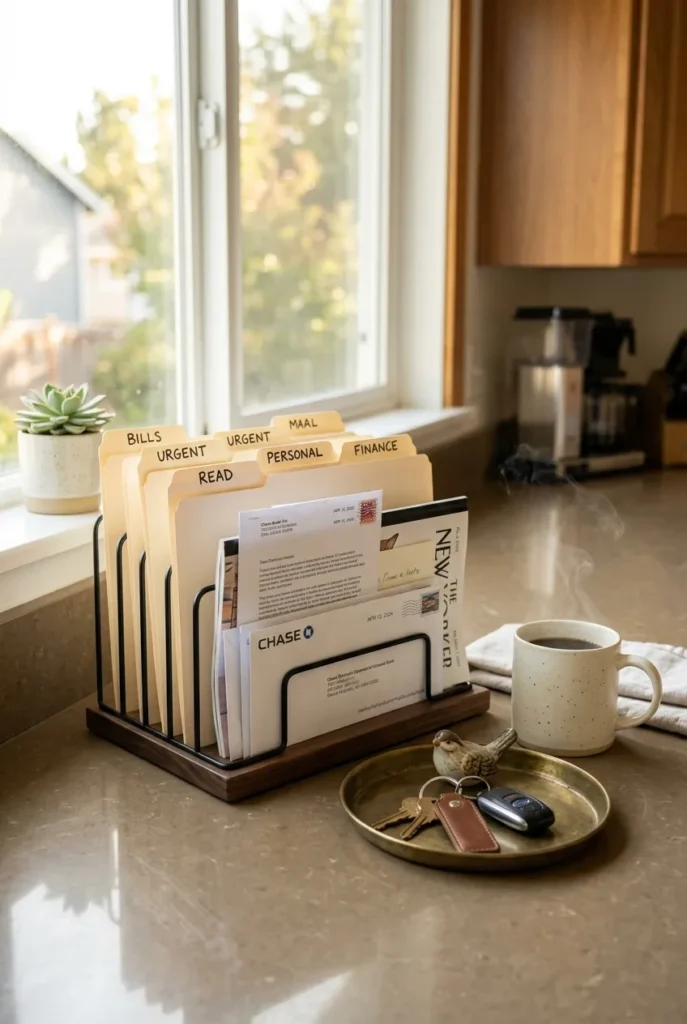
Paper wins for one reason: too many tiny decisions stack up in one undefined pile. Where does the field-trip form live until Friday? Is that bank statement a keeper? When is the dentist again? Each sheet asks a question, and “I will deal with it later” is how a clean counter turns into a two-foot stack.
The fix is not more storage. It is fewer decisions. When paper has a set path the second it enters your home, the pile never forms.
Think of it like laundry. You do not let clothes pile for a month and call it a system. Paper deserves the same small, steady rhythm.
The 4-Slot Paper Clutter System (Your Whole Setup)
Here is the framework we keep coming back to, and the one this guide anchors around.
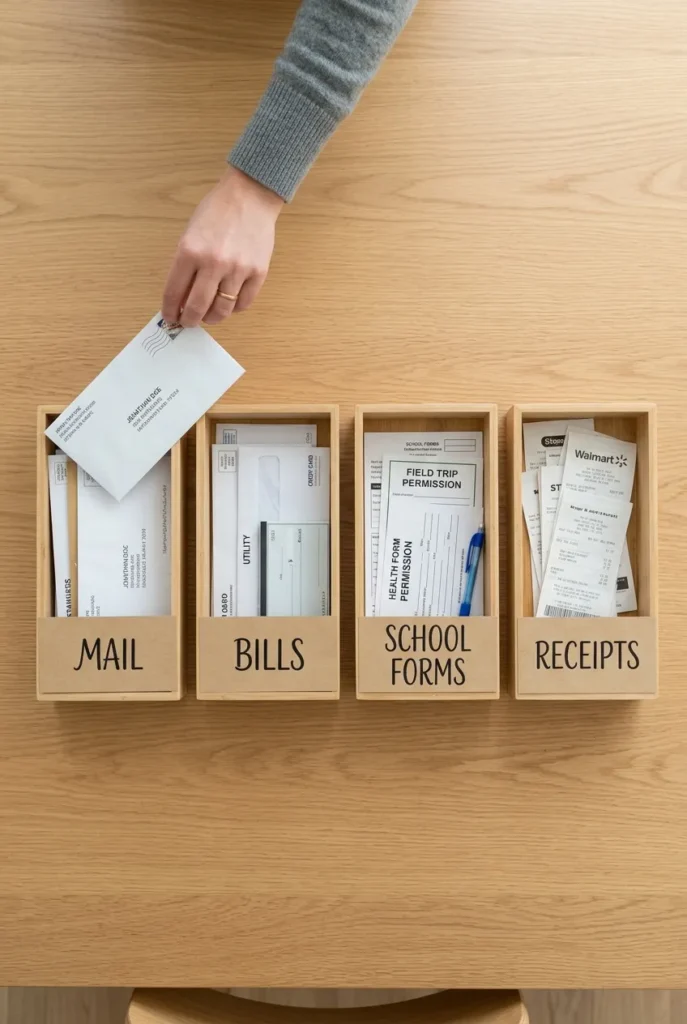
The 4-Slot Flow. Every sheet that enters your home goes to exactly one of four slots: Act, Hold, Keep, or Toss. Act is for anything needing a response soon. Hold is for “maybe useful later.” Keep is for documents you truly file. Toss is shred or recycle, decided on the spot. Four slots, no gray area, no counter pile.
That is the entire system. You can run it with a $12 sorter or a free cardboard box. The slots matter more than the container.
Let me break down each one.
Slot 1: Act (Papers With a Deadline)
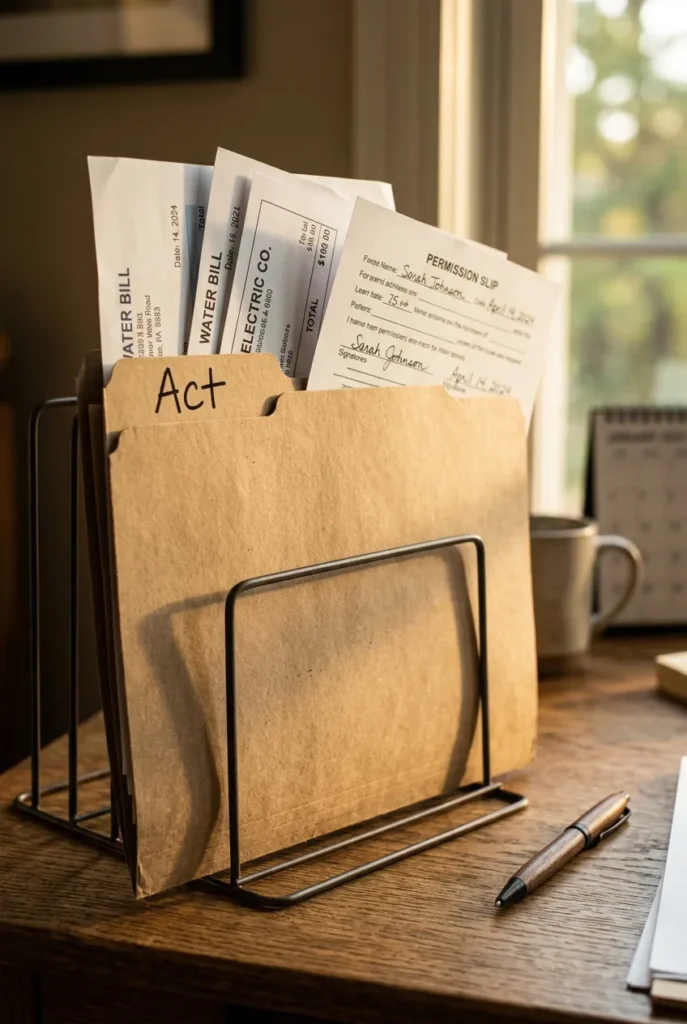
Act holds anything that needs you to do something: a bill to pay, a permission slip to sign, an RSVP, a form to return. This is the slot that causes late fees and missed parties when it goes missing.
Keep Act small and visible. A single upright folder or a wall pocket by the door works. The second a bill arrives, it comes out of the envelope and goes straight into Act, envelope tossed.
Handle this slot the way you would handle the one touch rule for decluttering: touch the paper once and move it toward done, not into a holding pile.
Slot 2: Hold (The Maybe Pile, Contained)
Hold is the sneaky hero. It catches paper you are not ready to trash but do not truly need: catalogs, coupons, a quote from a contractor, a paint chip, a business card. Most of it expires on its own.
Give Hold one basket and one rule: when the basket is full, you sort it, and anything expired goes. Nine times out of ten the basket clears itself because you never actually needed that stuff.
This single slot stops the “but what if I need it” spiral that fuels half of all paper clutter.
Slot 3: Keep (Your Real Filing)
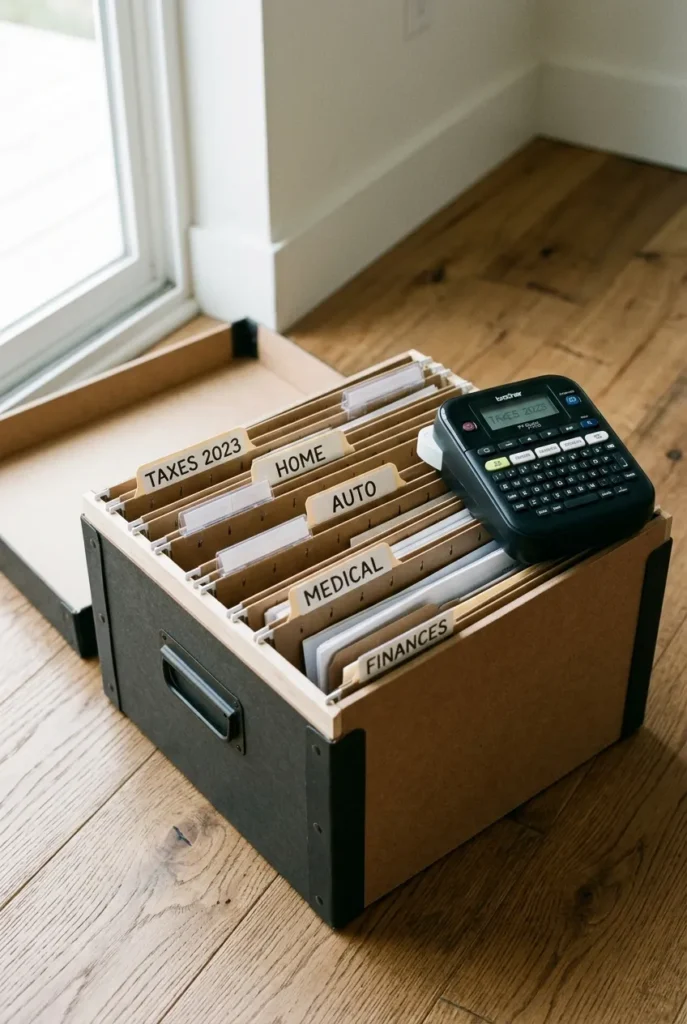
Keep is your true archive, and it should be smaller than you think. Tax documents, insurance policies, home and vehicle titles, paid medical bills, warranties. Broad categories, one year per label, done.
Do not micro-sort. Most filed paper is never opened again, so a folder marked “Taxes 2026” beats fourteen tiny sub-folders you will never maintain.
For what actually belongs here, the FTC keeps a clear, plain-English breakdown of which documents to keep and which to shred. Bank statements and pay stubs, for example, are generally short-term keepers, while birth certificates and Social Security cards are keep-forever items you lock up.
Tax records get their own note. The IRS recommends keeping records that support your return generally for at least three years, and longer in certain situations. This is general information, not tax advice, so check with a qualified US professional for your own situation.
Slot 4: Toss (Shred or Recycle On the Spot)
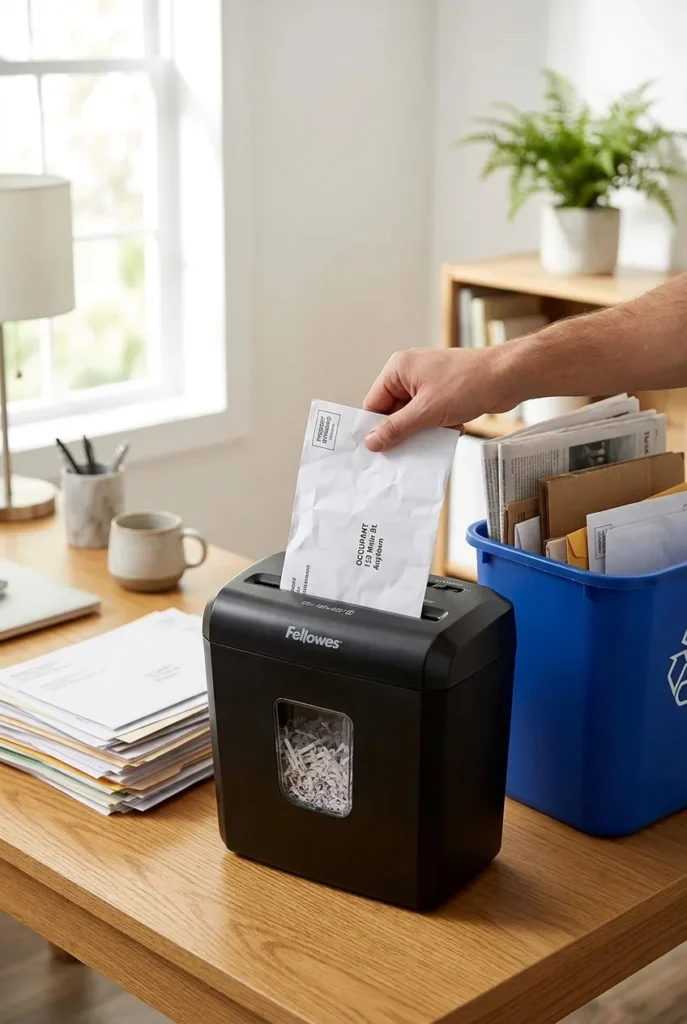
Toss is a decision, not a container. Junk mail, envelopes, expired coupons, and outdated statements never hit the counter. They go straight to recycling or the shred pile the moment they arrive.
Anything with your name, account number, or Social Security number gets shredded, not recycled. A small shredder next to your sorting spot makes this a one-second habit instead of a someday chore.
Keep a lidded bin or paper bag for shred-pile items, then run it weekly. Out of sight, but on a schedule.
Where to Put Your Paper Station
Your slots need a home, and it does not require a whole room. About two feet of counter or wall does it. The best spot is wherever paper already lands, usually the entryway or the kitchen drop area, because you want to work with the habit you already have, not fight it.
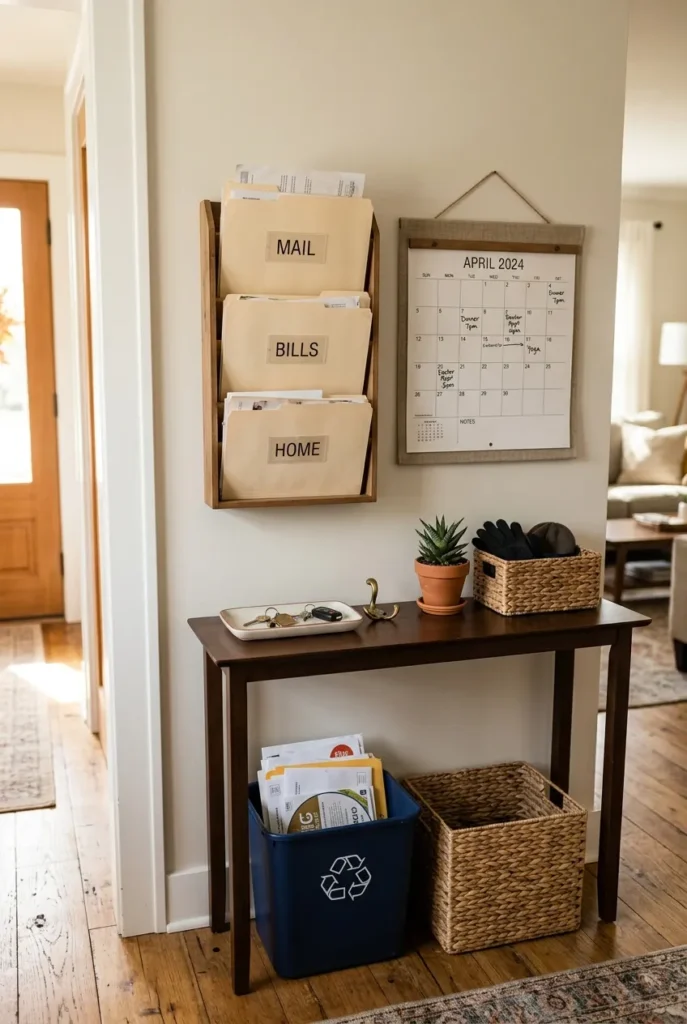
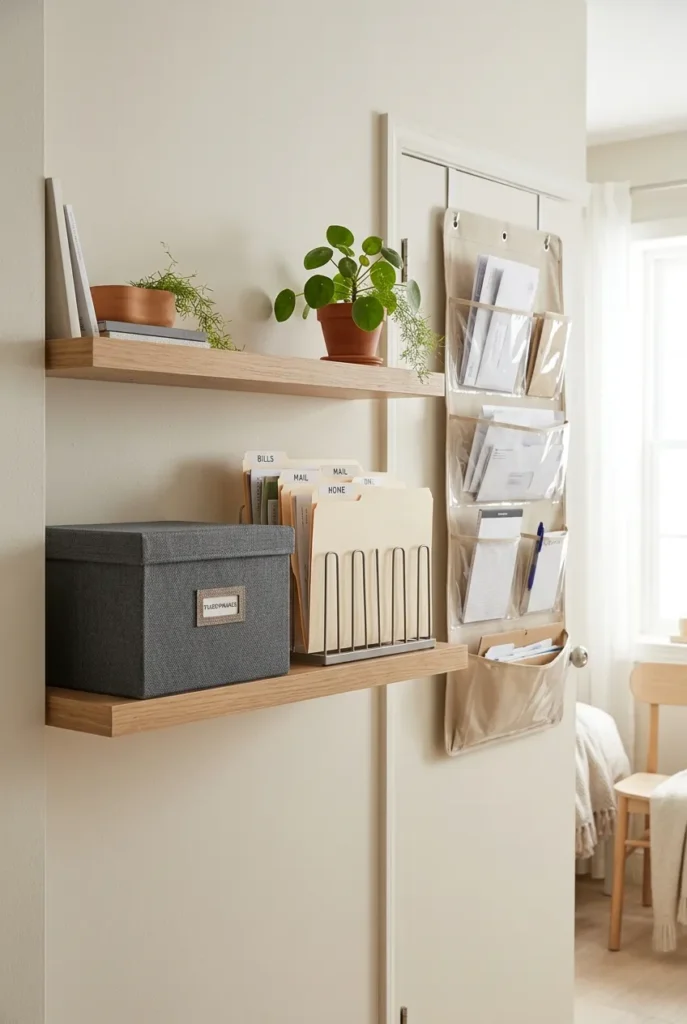
If mail piles by the door, build there. A slim wall-mounted sorter turns dead vertical space into your Act and Hold slots, and a small bin below handles Toss. This pairs naturally with an entryway drop zone for keys, bags, and shoes, so the whole entry runs on one system.
If your household juggles calendars and school paper, fold the station into a family command center wall. Mail sits right under the calendar, and everyone knows where the field-trip form lives.
The Weekly Paper Reset (The Step Everyone Skips)
Here is the part that makes or breaks everything, and it is exactly what the top-performing pins call out: a system with no reset time quietly falls apart. The slots fill, nobody clears them, and by week three you are back to a pile.
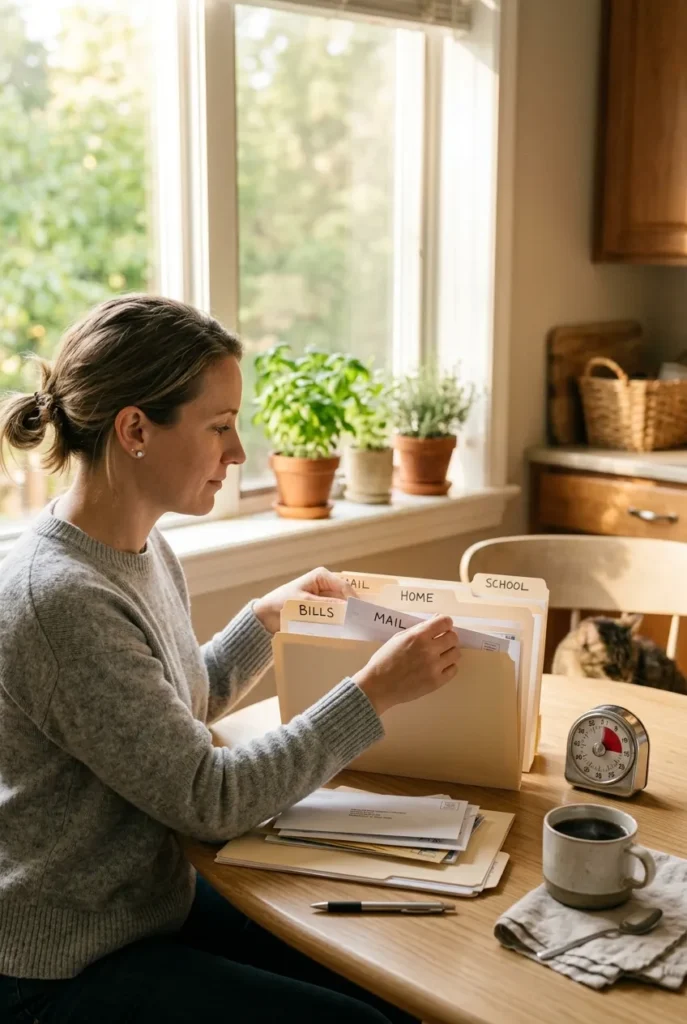
So build in one small ritual. We call it the Sunday 15. Once a week, set a timer for 15 minutes and run the slots: pay or schedule everything in Act, sort the Hold basket, file the handful in Keep, and shred the Toss bag. That is it.
Fifteen minutes. Most weeks it takes less, because the daily sorting already did the heavy lifting.
The reason this works is momentum. A cleared inbox on Sunday means Monday starts calm, and a calm start makes you far more likely to keep sorting all week.
Handling School Papers and Kids’ Art
Kids bring home a shocking amount of paper. Left alone, it buries every other system. The move is to decide fast and keep almost nothing.
Most school paper is reference for a day or two, then it is done. Action items (forms, reminders) go into Act and get put on the calendar immediately, then the paper is recycled. You keep the date, not the sheet.
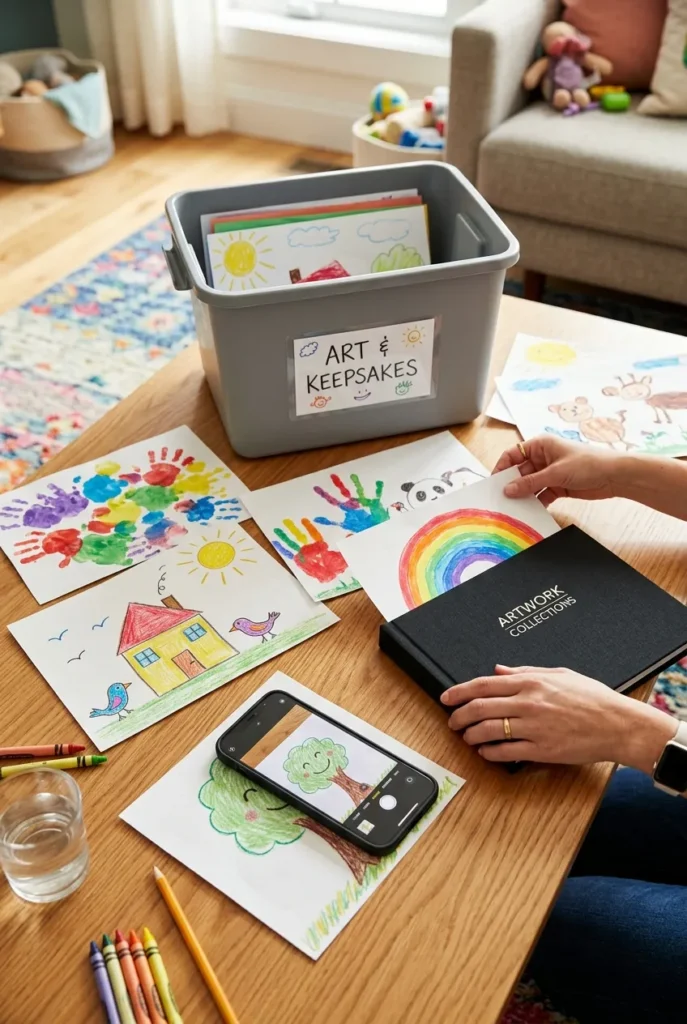
For art and keepsakes, pick one slim bin or photo book per child per year. When it fills, you curate down to the true favorites. A quick photo of the rest preserves the memory without the paper.
Go Digital Where It Makes Sense
The least cluttered paper is the paper that never arrives. Switching bills and statements to electronic delivery cuts your incoming stack fast, and most companies offer it with a couple of clicks.
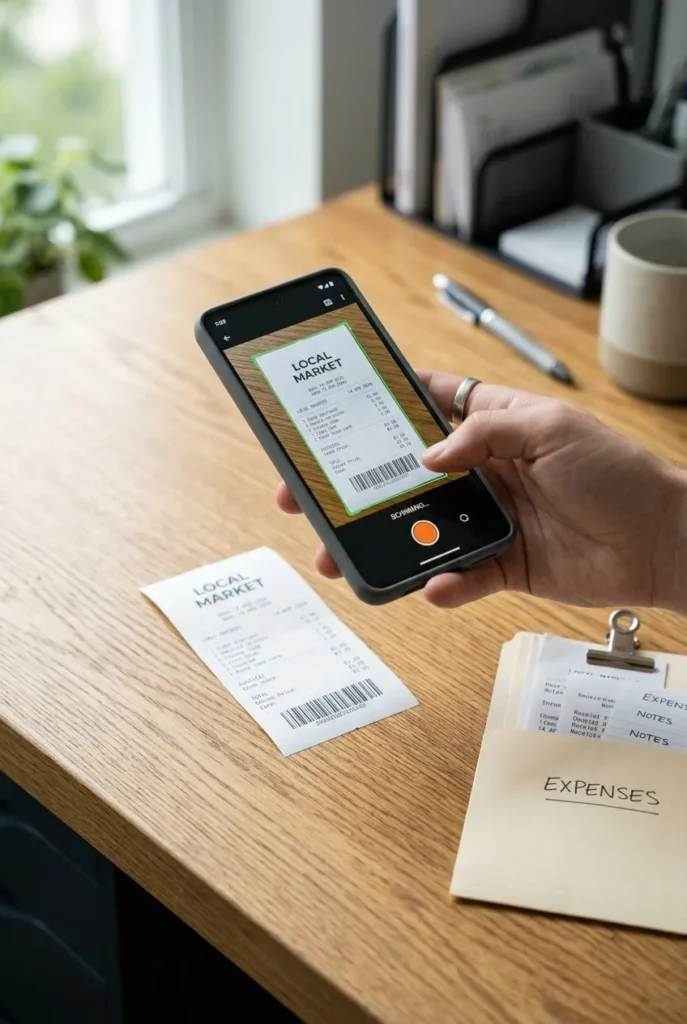
For paper you want to reference but do not need in original form, scan it. A phone scanning app turns a receipt or a manual into a searchable file in seconds, then the paper goes to Toss. Appliance manuals especially can go, since almost any manual is a quick search away online.
Keep true originals (birth certificates, Social Security cards, titles) in physical form and locked up. Digital is for convenience, not for documents that must exist on paper.
The Renter and Small-Space Version
No drilling, no filing cabinet, no problem. This system shrinks to fit a studio or a rental beautifully, and none of it leaves a mark.
Use one lidded file box for Keep, a single upright letter sorter on a shelf for Act and Hold, and a paper bag for Toss. That is a complete paper clutter system in under two square feet. Command-style hooks or an over-the-door pocket organizer add vertical Act and Hold slots without a single hole in the wall.
The slots do not care how much space you have. A tiny setup that you actually maintain beats a beautiful built-in that collects dust.
Frequently Asked Questions
How do I start a paper clutter system when I already have a huge pile?
Start with one pile and a timer. Give yourself 15 to 30 minutes and run everything through the four slots: Act, Hold, Keep, Toss. Do not organize as you go, just sort. You can file the Keep pile properly afterward once the mountain is gone.
What is the best way to organize paper clutter at home?
Give every incoming sheet one path the moment it arrives. The four-slot flow (Act, Hold, Keep, Toss) plus a weekly 15-minute reset covers nearly every household. The container matters far less than sorting on the spot and clearing the slots weekly.
How long should I keep important documents?
It depends on the document. Per the FTC, items like bank statements and pay stubs are short-term keepers, while birth certificates and Social Security cards are keep-forever items you lock up. Tax records should generally be kept at least three years per the IRS, sometimes longer. Confirm your specifics with a qualified US professional.
What papers should I shred instead of recycle?
Anything with your name paired with an account number, Social Security number, or financial details: old statements, ATM receipts, credit offers, and expired IDs. Shredding these lowers your identity-theft risk, which is exactly why the FTC recommends it.
How do I keep my paper system from falling apart?
Schedule the reset. This is the step most people skip, and it is why systems collapse by week three. A recurring 15-minute weekly sort keeps all four slots honest and stops the counter pile from ever rebuilding.
Where should I put my paper station in a small apartment?
Wherever mail already lands, usually just inside the door. One letter sorter, one lidded file box, and a shred bag fit in under two square feet, and an over-the-door organizer adds slots without any drilling.
Your Counters Can Actually Stay Clear
A paper clutter system is not about the prettiest folders. It is about giving every sheet one job, one place, and one weekly moment to reset. Set up your four slots this week, run your first Sunday 15, and watch the counter pile simply stop forming.
Pick your spot, label four slots, and start today. Then save this guide so you can come back when it is time to set up your family’s station.