
Backpack & School Gear Storage: Build the Habit Before August
School lets out, and for about six weeks the backpacks vanish into a closet. Then August arrives. New bags, new lunch boxes, new water bottles, and the same old pile by the door. We have all stood there at 7:40 a.m., one shoe on, watching a kid dig through a heap for a folder that should have had a home.
Good backpack storage ideas fix the pile before it starts. Not with a Pinterest-perfect mudroom you will never build, but with one wall, a few hooks, and a habit you set up now, in summer, while nobody is rushed. Here is the promise: pick one idea below, install it in an afternoon, and walk into the first week of school without the scramble. Let’s set it up before August.
Where to Put a Backpack Drop Zone (Start With the First Door)
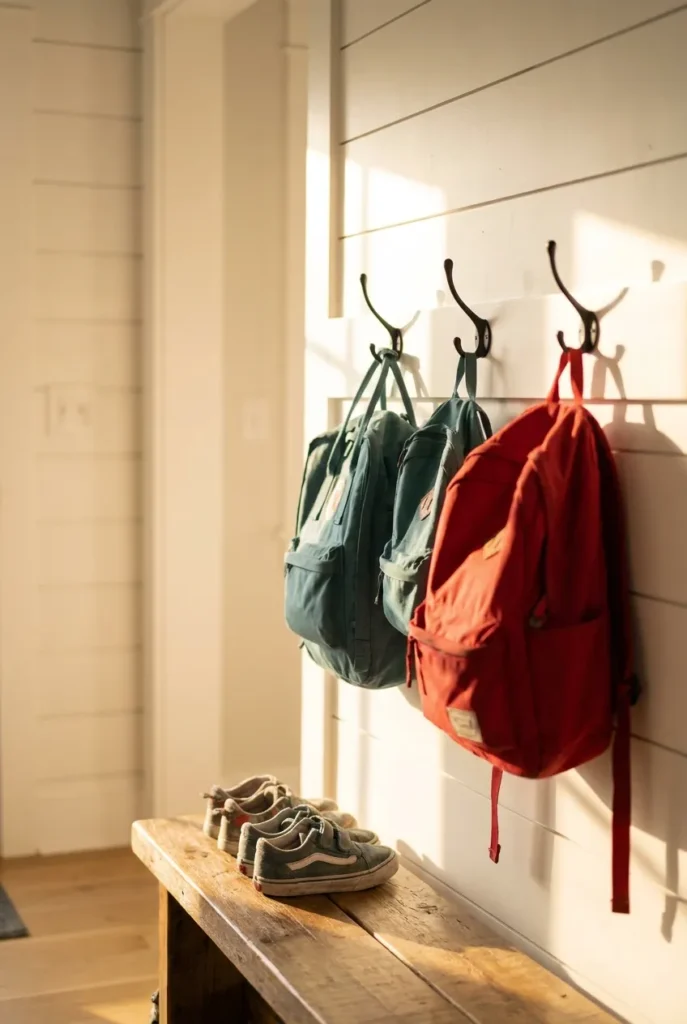
The best spot is the first door your kids walk through. For most US homes that is the door from the garage or the side entry, not the formal front foyer. Watch the traffic for one afternoon. Wherever the bags hit the floor on their own is where the storage belongs. Fighting that path never works.
Aim for a small footprint. A 24-inch stretch of wall holds three hooks and a bench. That is enough. The mistake competitors push is the full mudroom build, and most of us do not have a mudroom. We have a corner.
The 3-Hook Launchpad Rule (Our Framework for Multiple Kids)
Here is the catch every other backpack article skips: one hook works for one kid. Add a second kid and the system collapses by Wednesday.
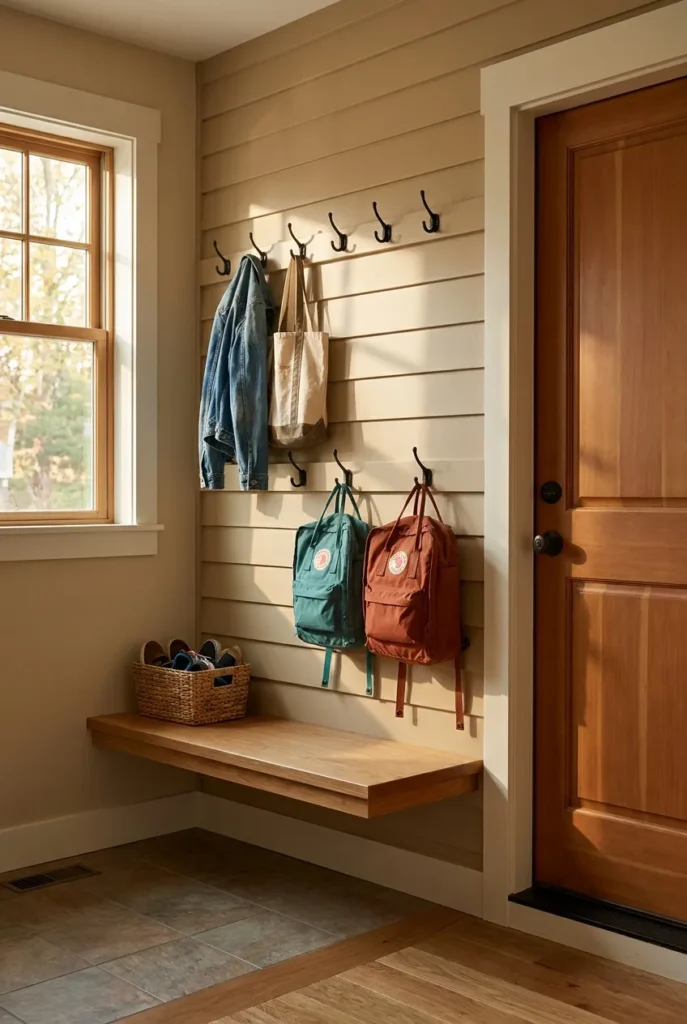
So we use The 3-Hook Launchpad Rule. The rule is simple: every kid gets exactly three hooks at their own height, stacked or in a row, and each hook owns one job. Hook one is the backpack. Hook two is the jacket or coat. Hook three is the “tomorrow” hook, where the library book, the signed permission slip, or the soccer cleats wait by the door. Three hooks, one kid, zero piles.
Why three and not one? Because a single hook turns into a hanging mountain. Splitting the load across three labeled spots means each item has a clear home, and a five-year-old can run the whole system without a parent narrating it.
Mount the hooks at the child’s shoulder height, not yours. For a kindergartner that is roughly 36 to 40 inches off the floor. For a fifth grader, closer to 48 inches. Measure each kid, mark with painter’s tape, then install. (Honestly, this two-minute measuring step is the difference between a wall they use and a wall they ignore.)
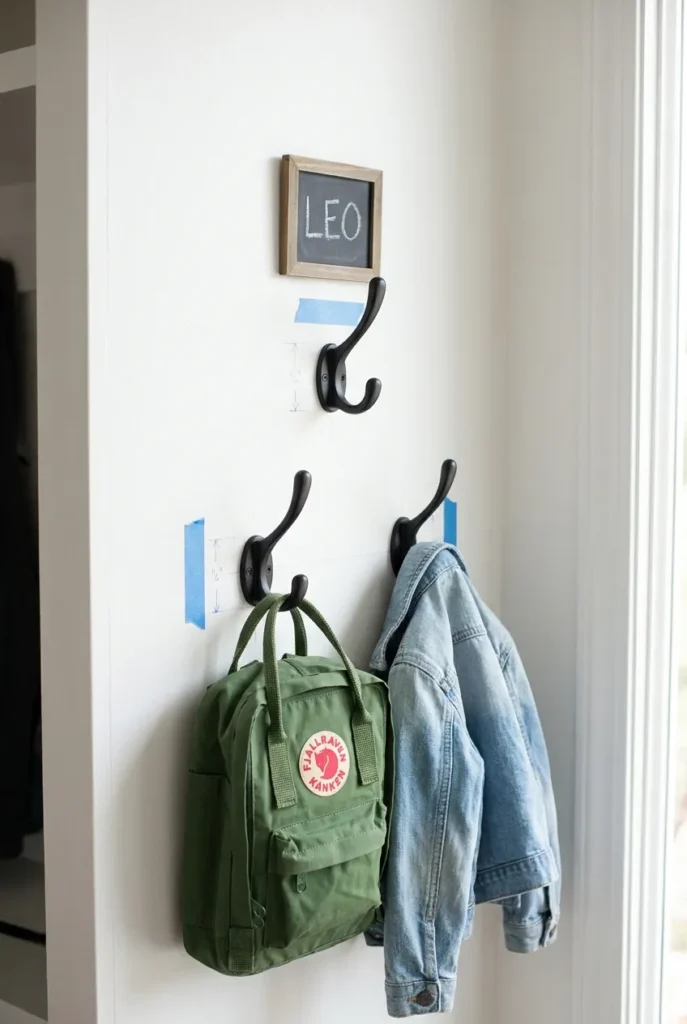
No-Drill Backpack Storage Ideas for Renters and Apartments
Renting? You still get a real system. Skip the screws entirely.
Command Hooks from 3M are the workhorse here. The large utility hooks hold a loaded school bag if you follow the cure time on the package, which means pressing them on and waiting an hour before you hang anything. Rushing that step is why people think they fail. Space three across at kid height and you have a launchpad with zero wall damage.
For a deeper hold, an over-the-door backpack rack hangs on any standard interior door, no tools at all. It is the single best small-space move on the Pinterest autocomplete list, and it tucks bags out of the walkway. A tension rod mounted inside a reach-in closet, with S-hooks slid along it, does the same job behind a closed door.
A few rental-safe picks that actually carry the weight:
- 3M Command Large Utility Hooks for the per-kid launchpad
- An over-the-door rack with five to six prongs for stacking bags vertically
- A spring tension rod plus a set of S-hooks for inside-closet hanging
- A slim storage bench with a lift lid for shoes and sports gear
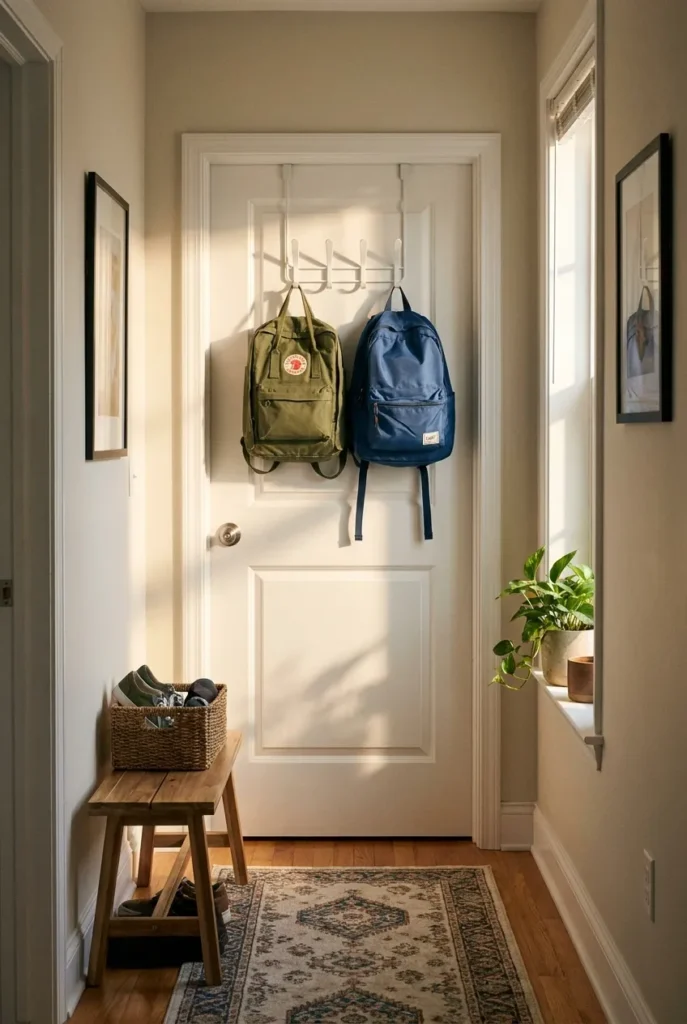
Closet and Bedroom Backpack Storage (When the Entryway Is Off Limits)
Some homes have no good entry wall. The bags go to the bedroom instead, and that is fine if the bedroom has a system.
Inside a reach-in closet, mount a row of hooks on the side wall, the part that usually sits empty. Bags hang there, off the floor, behind the door. A cube shelf like an IKEA Kallax doubles as a bench and a cubby: one cube per kid for the backpack, the cube above for folded sports clothes. Label each cube with the kid’s name so there is no debate at 7 a.m.
The bedroom wall hook is the minimalist pick. One sturdy hook by the door, the bag goes up the second they walk in, done. Pair it with the same three-hook logic if the room has space.
Vertical and Hidden Storage for Small Spaces
When floor space is gone, go up. This is the move competitors mention but rarely explain.
A pegboard, like the IKEA Skadis, turns a blank wall into a flexible grid. Add hooks for bags, small bins for chargers and earbuds, and a shelf for the water bottle lineup. Reconfigure it as the kids grow. A wall-mounted rail with movable S-hooks does a lighter version of the same thing for under twenty dollars.
Hidden storage keeps the room calm for anyone who cannot stand visible clutter. A storage bench with a lift lid swallows bags behind a clean front. An under-bed bin on casters holds off-season or overflow gear and rolls out only when needed. For a true small-space win, an over-the-door pocket organizer on the closet door sorts the small stuff, the chargers, the gym socks, the spare mask, so it never migrates into the backpack pile.
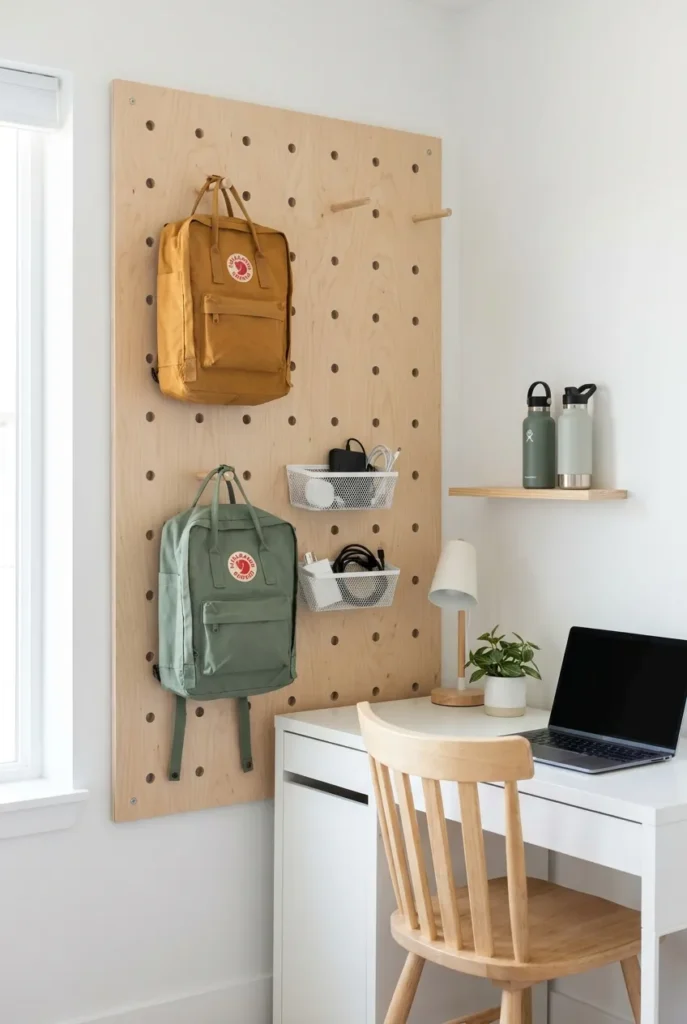
Lockers, Cubbies, and the Bench Build for Bigger Families
Three or more kids? Build out, not just up. A row of open lockers gives each child a full column: hook inside, shelf on top for the lunch box, basket on the bottom for shoes. You can buy a ready-made cubby unit or repurpose a shelf into one.
The cubby bench is the family favorite for a reason. Bags sit in the cubbies, the lid or top surface becomes the shoe-on, shoe-off perch, and the whole thing reads as furniture, not chaos. Keep each child’s column the same width so it feels fair, and color-code by kid so a four-year-old who cannot read yet still finds their spot.
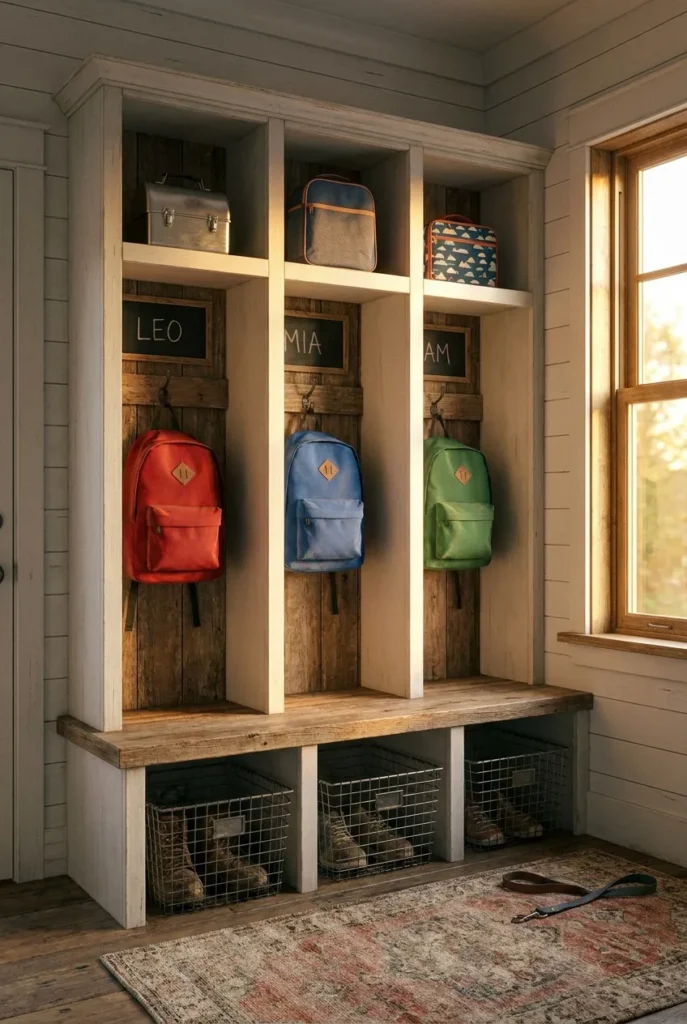
Add a Command Center So the Whole Morning Runs Itself
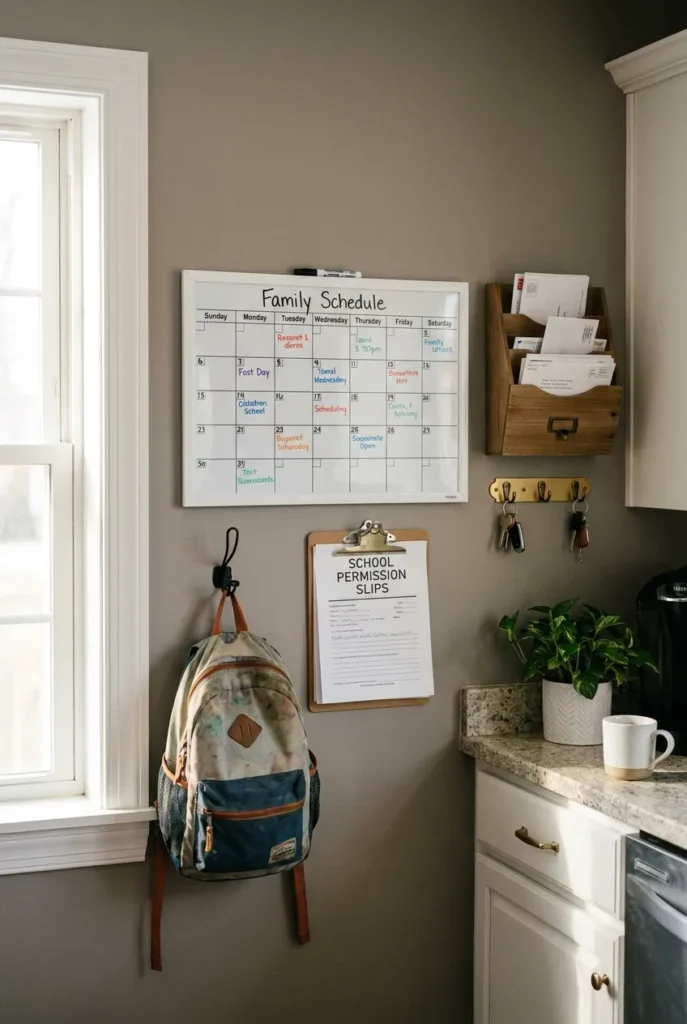
The backpack wall works harder with a small command center beside it. A wall calendar, a mail slot, a key hook, and a clip for the papers that need a signature. The launchpad handles the gear, the command center handles the information, and together they end the “where is my permission slip” panic.
Keep it to one square foot of wall. A single dry-erase board with the week on it does more than a sprawling system nobody updates. For a deeper build, our family command center setup guide walks through a weekend version.
The Weekly Backpack Reset (Where Safety Meets Storage)
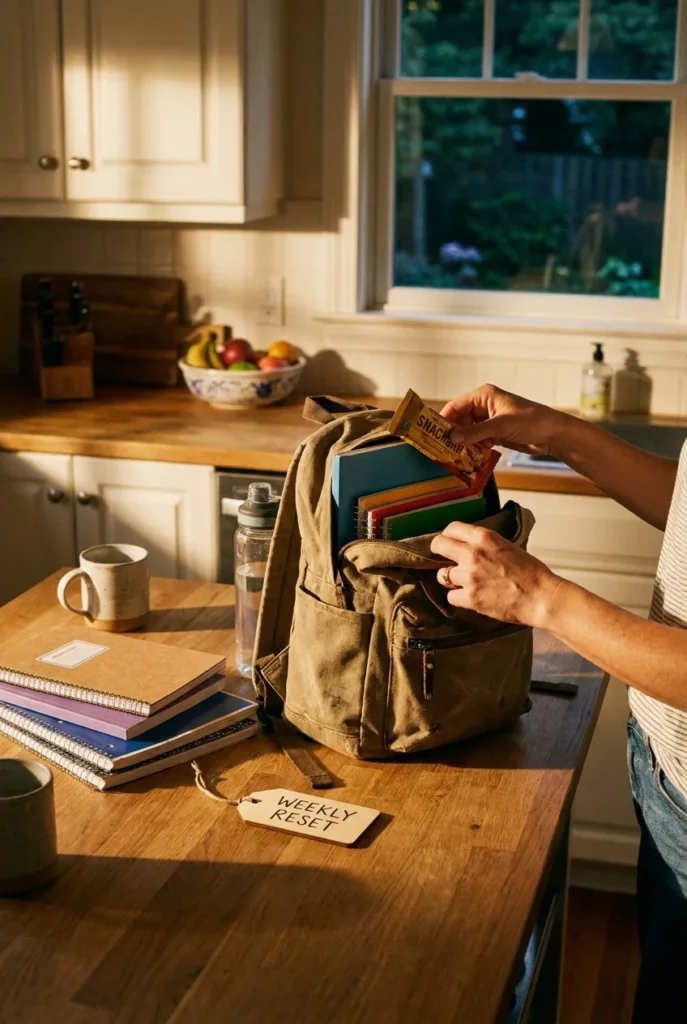
Storage only works if the bag gets emptied. So we add a five-minute weekly reset, ideally Sunday evening. Dump the bag, toss the crushed snacks and old worksheets, restock supplies, and rehang it on the launchpad ready for Monday.
This is also the moment to check the weight. The American Academy of Pediatrics and Cleveland Clinic both recommend a loaded backpack stay under 10 to 15 percent of a child’s body weight, because heavier loads strain a growing back. A quick weekly weigh-in, kid steps on the scale with the bag, then without, catches the slow creep before it becomes a problem. The reset and the weigh-in take the same five minutes.
Where Backpacks Go in Summer (Off-Season Storage Nobody Talks About)
June hits and the school bags become clutter. Instead of letting them slump in a corner all summer, do a clean off-season swap.
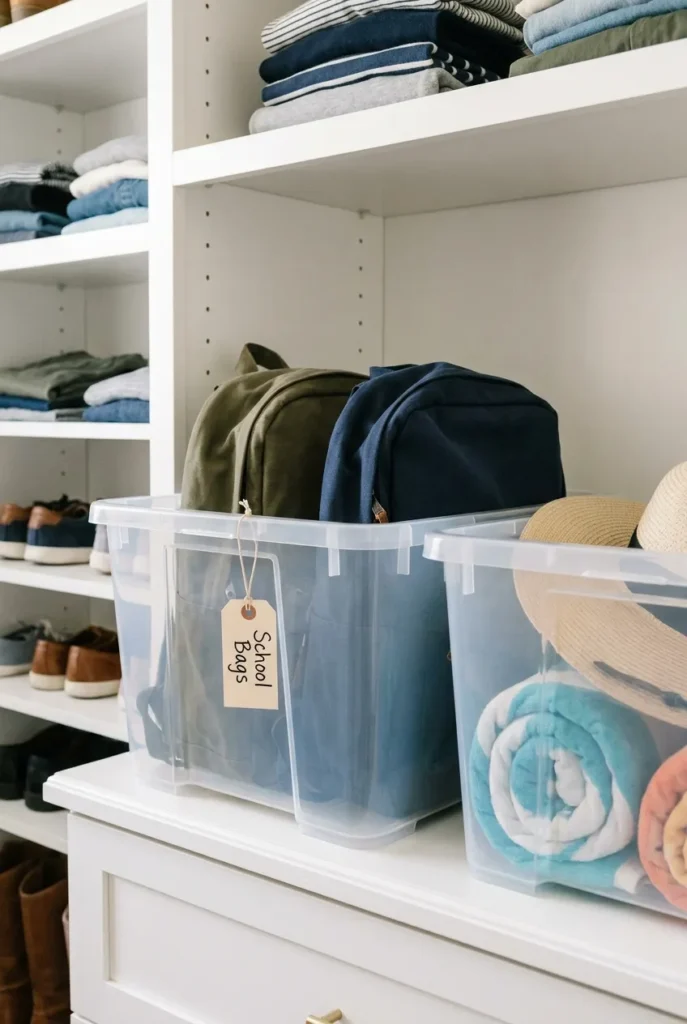
Empty each bag fully, wipe it down, and let it air out for a day. Store the lot together in one labeled bin, a clear Sterilite tote works, on a closet shelf or under a bed. Come August, the bin comes down, you sort what survived, and you shop only for what is actually worn out. The same bins hold winter gear in summer and summer gear in winter, so nothing sits empty. That reusable habit is what keeps the system going year after year.
This is also the spot for the adult bags. The gym backpack, the work pack, the diaper bag. Give each a hook on the same wall or a cubby in the same bench. A backpack station that ignores the grown-ups just moves the pile somewhere else.
Your Free Backpack Station Setup Checklist (Printable)
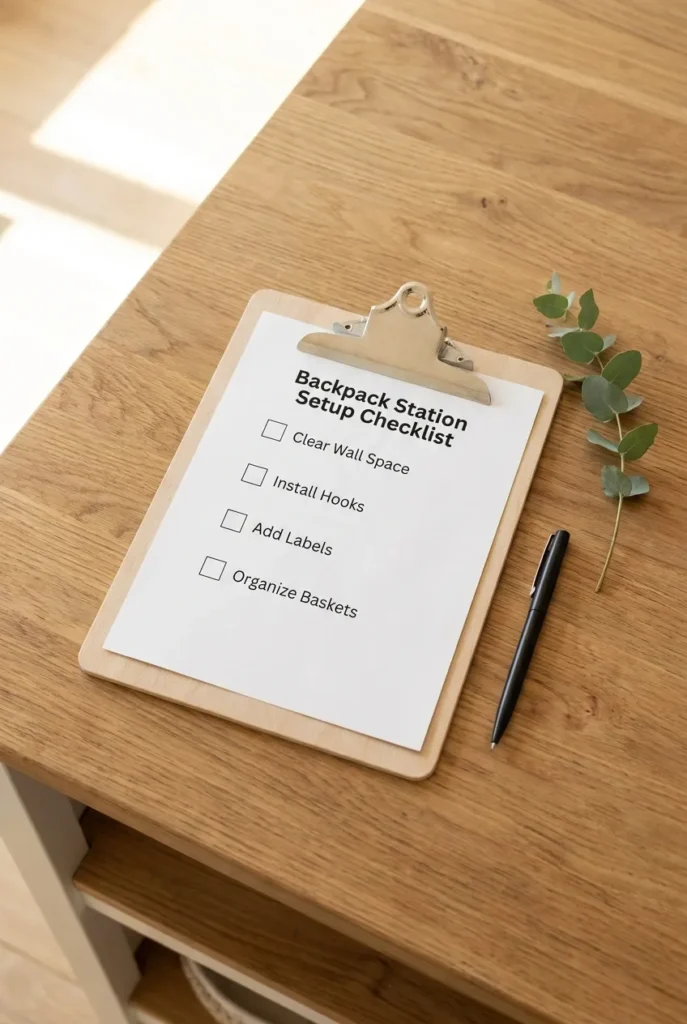
To make this easy, we built a one-page Backpack Station Setup Checklist you can print and tape inside a cabinet door. It walks through choosing the wall, measuring hook height by age, the three-hook layout, and the Sunday reset steps.
It is a US Letter (8.5 x 11) PDF, free to download. Print it in black and white to save ink, and slip it into a sheet protector or laminate it so you can check items off with a dry-erase marker each week. Grab it from the back-to-school printables library and pair it with the age-based chore chart for a full launchpad routine.
Frequently Asked Questions
How do you store a lot of backpacks at once?
Go vertical and give each bag a named spot. A row of wall hooks, an over-the-door rack with five or six prongs, or a cubby unit with one column per person holds a big load without floor clutter. For three or more kids, the 3-Hook Launchpad Rule keeps every bag, jacket, and “tomorrow” item separated so nothing turns into a pile.
How can I store backpacks without drilling holes?
3M Command Large Utility Hooks, an over-the-door rack, and a tension rod with S-hooks inside a closet all hold a loaded bag with zero wall damage. Press Command Hooks on and wait the full hour before hanging anything, and they will hold through the school year.
Where do most people put their backpacks?
At the first door they walk through, usually the garage or side entry, not the formal front foyer. The bag hits the floor on its own path, so the storage should live right where that happens. A 24-inch stretch of wall with hooks and a small bench is enough for most families.
How heavy should a kid’s loaded backpack be?
Keep it under 10 to 15 percent of the child’s body weight, the range the American Academy of Pediatrics and Cleveland Clinic both recommend. A quick weekly weigh-in during your Sunday reset catches a too-heavy bag early.
What is the best backpack storage idea for a small apartment?
An over-the-door rack is the top small-space pick: no tools, no wall damage, and it keeps bags out of the walkway. Pair it with a tension rod inside a closet and a slim lift-lid bench for shoes, and a studio entry handles the whole family.
How do I get kids to actually use the backpack station?
Mount the hooks at their shoulder height, not yours, and give each kid a clearly labeled spot. When a child can reach and recognize their own three hooks, they run the system on their own. Color-code by kid for the ones who cannot read yet.
Where should backpacks go over the summer?
Empty and wipe each bag, then store them together in one labeled clear bin on a closet shelf or under a bed. Reuse the same bins for seasonal gear so nothing sits empty, and pull the school bags back out two weeks before the first day to see what needs replacing.
Set It Up This Weekend
The whole point is to do this now, in the quiet part of summer, so August feels like a non-event. Pick your first door, measure one kid’s shoulder height, and put up three hooks this weekend. That single wall, plus a five-minute Sunday reset, is the difference between calm mornings and the 7:40 a.m. scramble. Which wall in your home is the one the bags already land on? Start there, grab the free checklist, and build the habit before the school bags come back.
General information only. For backpack weight and back-health questions specific to your child, consult a qualified US healthcare professional.