
8 Cleaning Supplies Storage Spots That Beat the Kitchen Sink (For Good)
The cabinet under your kitchen sink was not designed for cleaning supplies. The plumbing takes up half the space. The single flat shelf is too wide to organize and too deep to see into. Everything rolls, tips, and disappears behind the pipe. And yet here we all are, digging into that cabinet every single morning like something good is going to come of it.
Good cleaning supplies storage deserves better than a junk cabinet. And here’s the thing: you already have eight better spots in your home right now. Some need a $10 tension rod. Some need a rolling cart you can grab at IKEA. One of them requires nothing except a hook that’s already sitting inside your closet door.
This guide maps all eight spots, room by room, so every spray bottle, scrub brush, caddy, and refill jug is exactly where you need it when you need it. No more carrying a bucket across the house. No more buying a second bottle of glass cleaner because you forgot the first one was buried in the back.
I call the approach the 8-Zone Clean Station Method. The idea is simple and I’ll explain it in a moment. First, here’s where we’re going.
The 8-Zone Clean Station Method (Why Spreading Out Your Supplies Actually Saves Time)
Most cleaning supplies storage advice tells you to organize everything into one central place and call it done. That works fine in a studio apartment or a single-bathroom home. For everyone else, a single cleaning cabinet means you’re walking across the house to get one product and walking back, every single time.
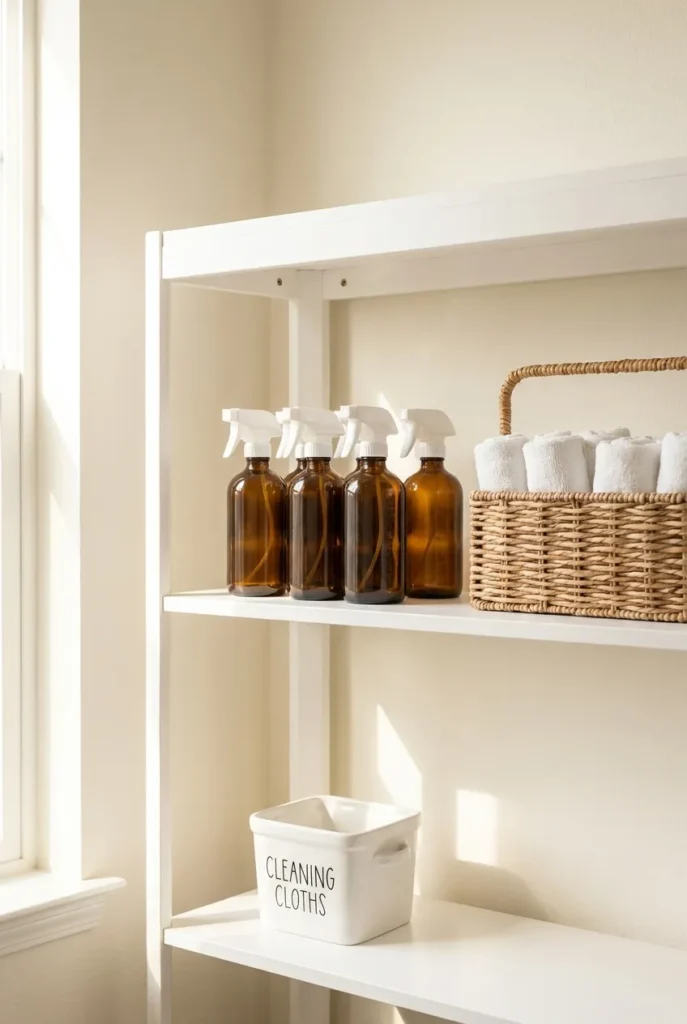
The 8-Zone Clean Station Method flips that logic. Instead of one central dump, you build small, intentional supply stations close to where the cleaning actually happens. Each zone in your home gets only what it needs. The bathroom zone holds toilet bowl cleaner, a scrub brush, and a glass cleaner. The kitchen zone holds your all-purpose spray, dish soap backup, and a degreaser. The laundry zone holds stain remover, dryer balls, and a lint brush. Each station is stocked and ready.
Here’s the quick-reference map:
| Home Zone | What Goes There |
|---|---|
| Kitchen | All-purpose spray, dish soap backup, degreaser, sponges |
| Each bathroom | Toilet cleaner, scrub brush, glass cleaner, paper towels |
| Laundry room | Stain remover, dryer balls, lint brush, bleach alternative |
| Hallway/entryway | Quick-dust spray, one microfiber cloth |
| Garage | Outdoor cleaners, pressure washer soap, heavy-duty degreasers |
| Flex zones | Anything seasonal or backup stock |
Smaller stashes. Closer reach. Far fewer trips.
The eight spots below each map to a natural zone in your home. Use all eight, or start with the two or three that match your biggest daily frustration first.
Spot 1: A 3-Tier Rolling Cart (The Most Flexible Station You’ll Ever Build)
A rolling cart is the MVP of cleaning supplies storage, and I mean that without a drop of exaggeration. You can park it next to your washing machine on a Tuesday, roll it into the bathroom during a deep clean on Saturday, and tuck it back into a closet corner before guests arrive on Sunday. That three-way flexibility is something a fixed shelf simply cannot match.
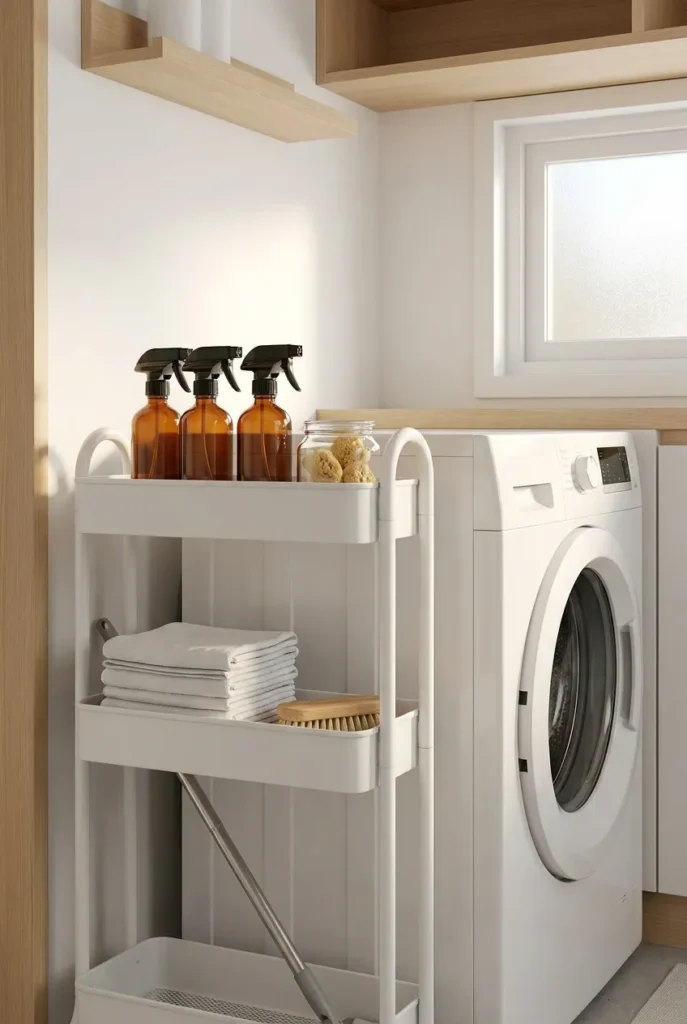
The IKEA RÅSKOG 3-tier rolling cart (check current pricing at IKEA US, typically in the $30 range) has a footprint of about 14 inches by 17 inches, which squeezes into the slim gaps beside appliances where nothing else fits. Any comparable slim utility cart with a similar footprint works just as well. Bottom tier holds your tallest bottles, spray cleaners, and refill jugs. Middle tier holds scrub brushes, sponges, and a roll of paper towels. Top tier is your grab-and-go shelf: the three or four products you reach for every single day.
Two tips that took me embarrassingly long to figure out. Hang an S-hook over the cart’s side bar to hold a mop or broom handle so it travels with the cart instead of falling over in the corner. Line each tier with a washable silicone mat (about $8 for a two-pack at Target) so bottles stop sliding when you roll across a threshold or a rug.
Spot 2: An Over-the-Door Organizer (The Renter’s Secret Weapon)
The back of a cabinet door or a closet door is some of the most overlooked vertical real estate in any home. An over-the-door organizer with clear pockets or wire baskets turns that dead zone into a working cleaning supplies storage station without a single hole in the wall.
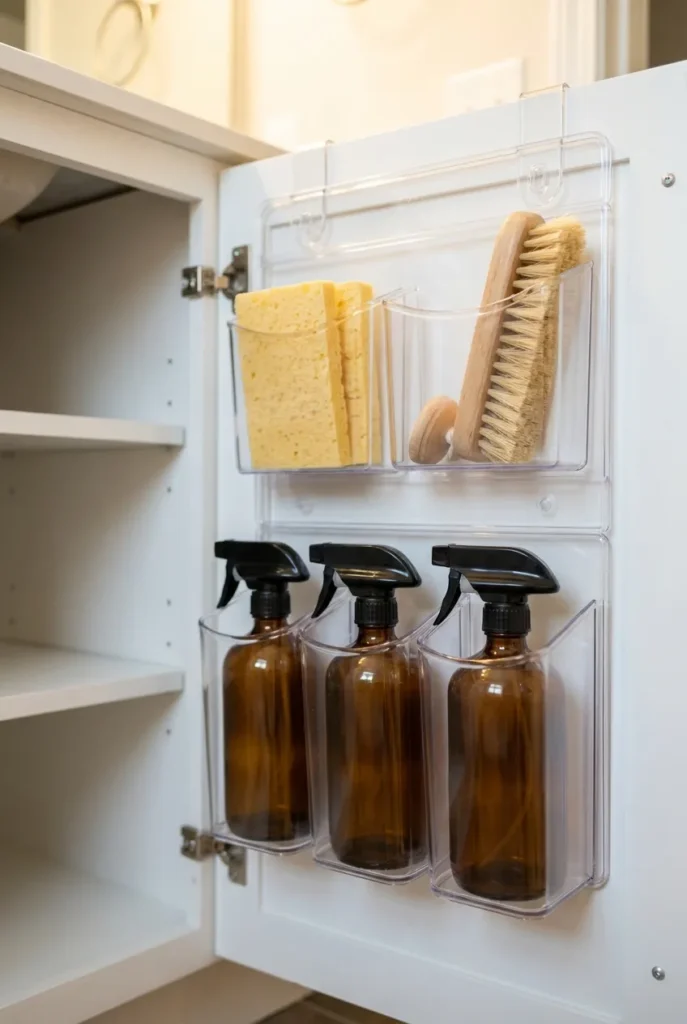
The mDesign over-the-door organizer (the 3-pocket version runs about 14 inches wide and is readily available on Amazon and at Target) fits most standard US kitchen and bathroom cabinet doors. Each large lower pocket holds two to three spray bottles standing upright. Smaller upper pockets work for sponges, scrubbers, and a dish brush. There are also versions with a mix of wire baskets and canvas pockets if you prefer airflow over the solid pocket style.
For renters, this is one of the best cleaning supplies storage ideas you’ll find with zero hardware involved. The over-the-door hook rests right on the door frame and holds everything in place. No drilling, no adhesive, no damage to the door or the cabinet.
One thing worth checking before you buy: measure the clearance between your door and the interior cabinet shelf. Standard clearance in a US kitchen base cabinet runs about 3 to 4 inches. A pocket organizer deeper than 3 inches will knock the shelf every time you open the door. Under 3 inches and you’re clear.
If you’re building out the rest of your bathroom storage at the same time, the guide on renter-friendly bathroom storage covers how to create an organized vanity and drawer system that pairs naturally with this kind of door setup.
Spot 3: The Laundry Room Wall (Your Most Efficient Dedicated Cleaning Station)
If you have a laundry room, even a compact one, you have the best possible home base for a full cleaning supplies storage laundry room setup. Cleaning supplies and laundry supplies live in the same task category. Stain remover, bleach alternatives, fabric softener, dryer sheets: they already belong here, and the room expects them.
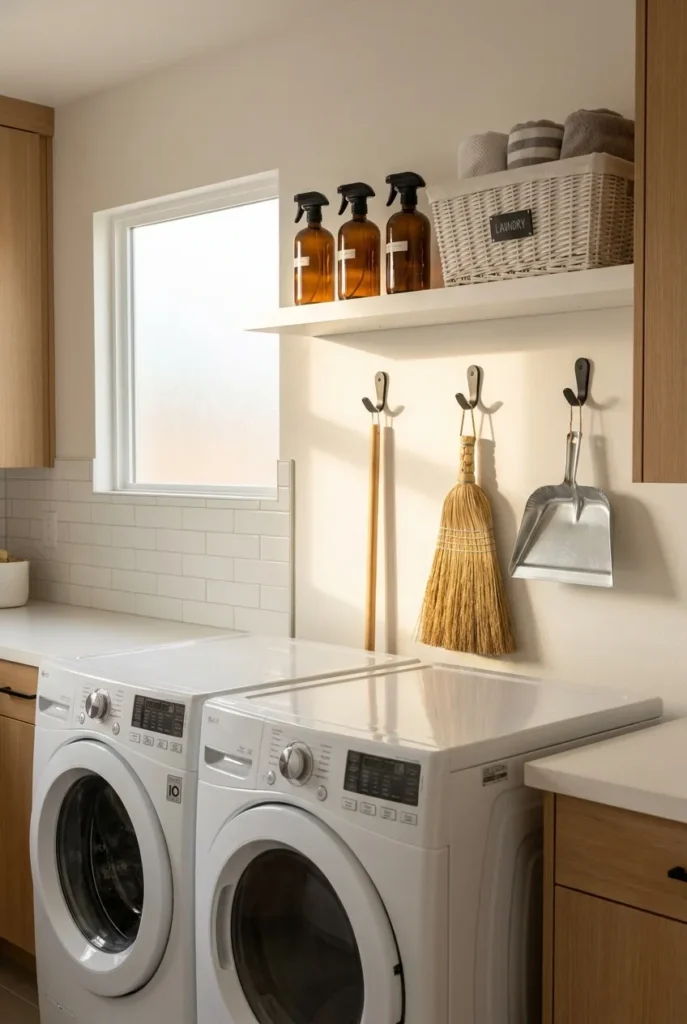
A 12-inch-deep floating shelf at about 60 inches off the floor (above the appliance tops, out of reach of small kids) turns an empty wall into a proper cleaning station. Daily-use laundry products go on the shelf. Below that shelf, three or four wall hooks hold your mop, broom, and dustpan. A slim rectangular bin at the base keeps a mop bucket or floor-cleaning machine out of the way when it’s not in use.
For smaller laundry closets, here’s the move. Mount a tension rod horizontally at the top of the closet, about 10 to 12 inches from the back wall. Hang spray bottles by their trigger handles directly over the rod. It costs under $8, takes four minutes to install, and instantly clears your entire closet floor without touching a single shelf.
Pair this setup with a consistent weekly routine and the whole system clicks into place. The summer cleaning schedule guide walks through a realistic weekly system that actually works alongside a room-by-room station setup like this one.
Spot 4: A Tension Rod Under the Sink (For the Cabinet You Already Have)
This is the single best quick fix for any under-sink cabinet, and almost nobody does it. Mount a tension rod horizontally inside the cabinet, about 10 inches below the top edge of the cabinet interior. Hang your spray bottles from their trigger loops right over the rod.
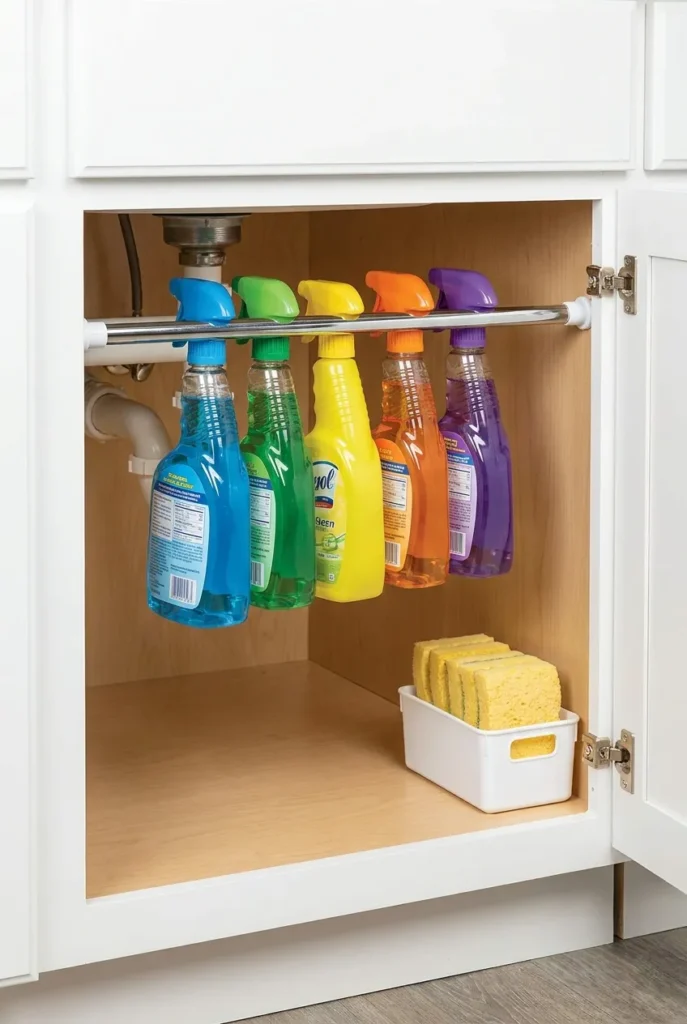
That one rod clears your entire cabinet floor. Every bottle that used to get knocked over is now hanging upright, visible, and easy to grab by the handle. Below the rod you suddenly have an open shelf’s worth of floor space for bins, a caddy, backup supplies, or the cleaning items that are too bulky to hang.
The rod itself: look for a chrome or white tension rod that extends to at least 17 inches (the standard interior width of a US base kitchen cabinet). Adjustable tension rods hold about 6 to 8 average-size spray bottles comfortably and cost under $12 at Target or Walmart. No tools, no screws, no installation time beyond a few seconds.
A safety note worth stating clearly. Don’t put bleach-based products next to ammonia-based products on the same rod. The American Cleaning Institute recommends keeping these in separate locations even within the same cabinet, because accidental spills can create dangerous fumes when those two chemicals mix. Keep all cleaning products out of reach of children and pets regardless of which storage spot you choose.
Spot 5: The Hallway Closet Converted to a Cleaning Station
Not everyone has a dedicated utility closet. But a lot of homes have a hallway closet that’s operating at maybe 40% of its actual potential, half-filled with coats from two seasons ago and a sports bag nobody’s touched since before the pandemic. Honestly, converting even the bottom two-thirds of that closet into a cleaning supplies storage zone is a Saturday-morning project, not a renovation.
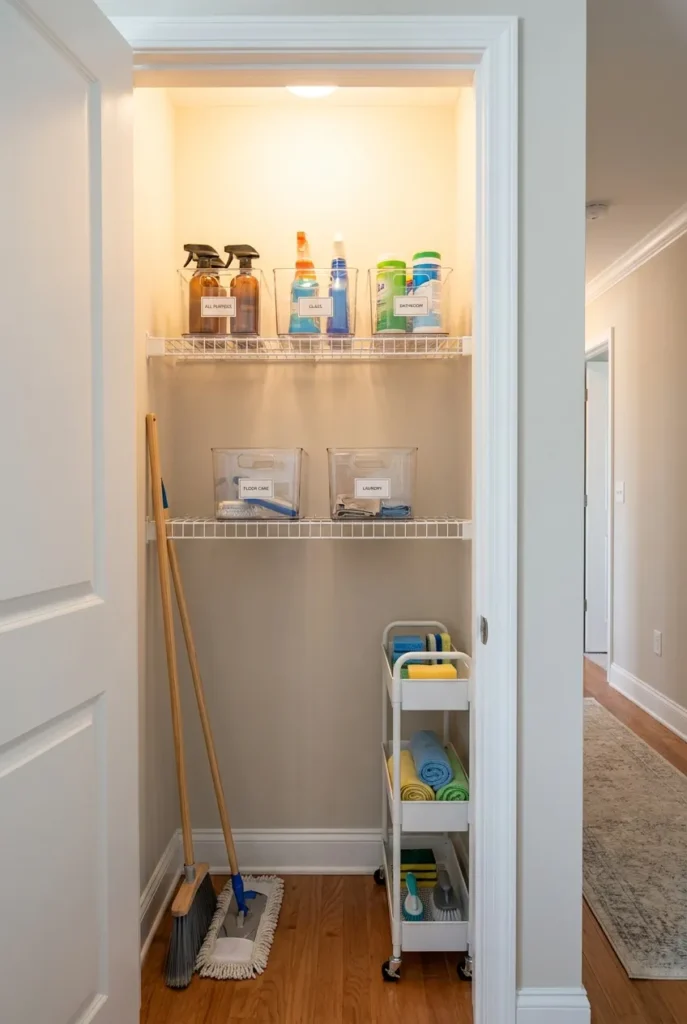
Here’s the layout that works in a standard 24-inch-deep hallway closet. Install a wire shelf at about 66 inches high to preserve the top section for coats or linens. Below that, add two more shelves at 42 inches and 24 inches from the floor. The bottom section holds your mop, broom, and a floor scrubber. The middle shelf holds clear bins of cleaning products organized by zone, one bin per room in the house. The upper shelf holds refill bottles and backup supplies you don’t reach for every week.
Use clear bins so you can see what’s inside at a glance without pulling anything out. mDesign stackable rectangular bins in the 9-inch-by-6-inch size fit two side by side on a standard closet shelf and each one holds four to five spray bottles standing upright without tipping.
For the full conversion walkthrough on this specific space, the hallway closet storage ideas guide covers every shelving option including the renter-safe versions that don’t require drilling into the closet walls.
Spot 6: The Garage Wall (The Storage Zone Nobody’s Talking About)
This is the cleaning supplies storage spot that none of the major ranking articles seem to cover, and it’s one of the most practical locations in the house. The garage wall is the right place for heavy-duty cleaners, outdoor products, and anything seasonal: deck cleaner, car interior wipes, pressure washer soap, concrete degreaser. These items don’t belong under your kitchen sink. They belong out here.
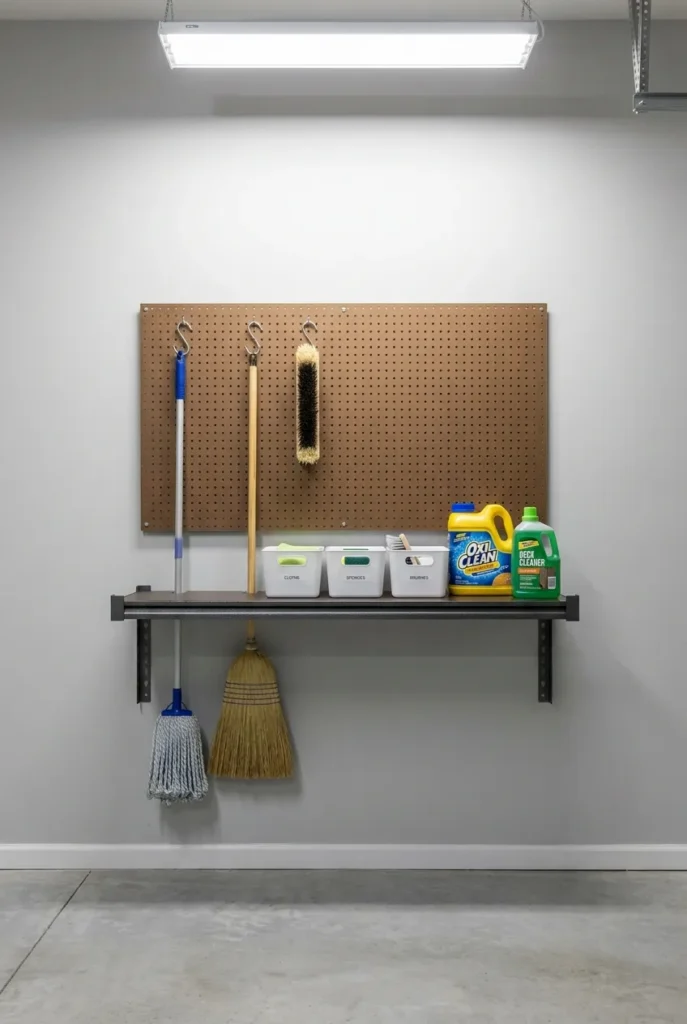
A wall-mounted pegboard panel (standard 4-foot by 2-foot panels run about $25 at Home Depot or Lowe’s) with heavy-duty hooks holds large jugs, extra mops, and long-handled brushes vertically. Add a small metal shelf unit below it for bulk supply bins. Label each bin by cleaner type so you know at a glance when something needs restocking without opening every container.
One important detail on garage storage. Liquid cleaning products should be stored above 40°F and below 100°F. The EPA’s safe storage guidelines for household chemicals note that extreme temperatures, including an unheated garage during a cold US winter, can cause liquid products to separate, degrade their packaging, or lose effectiveness. If your garage drops below freezing from December through February, move temperature-sensitive products like liquid disinfectants and all-purpose sprays to a heated indoor space for those months and use the garage shelf for dry supplies and tools only.
Spot 7: A Pegboard Station (The Best Cleaning Supplies Storage for Homes With No Closet)
No laundry room. No hallway closet. No spare cabinet. If this describes your apartment, studio, or small rental, a wall-mounted pegboard is the cleaning supplies storage no-closet solution that actually performs in tight spaces.
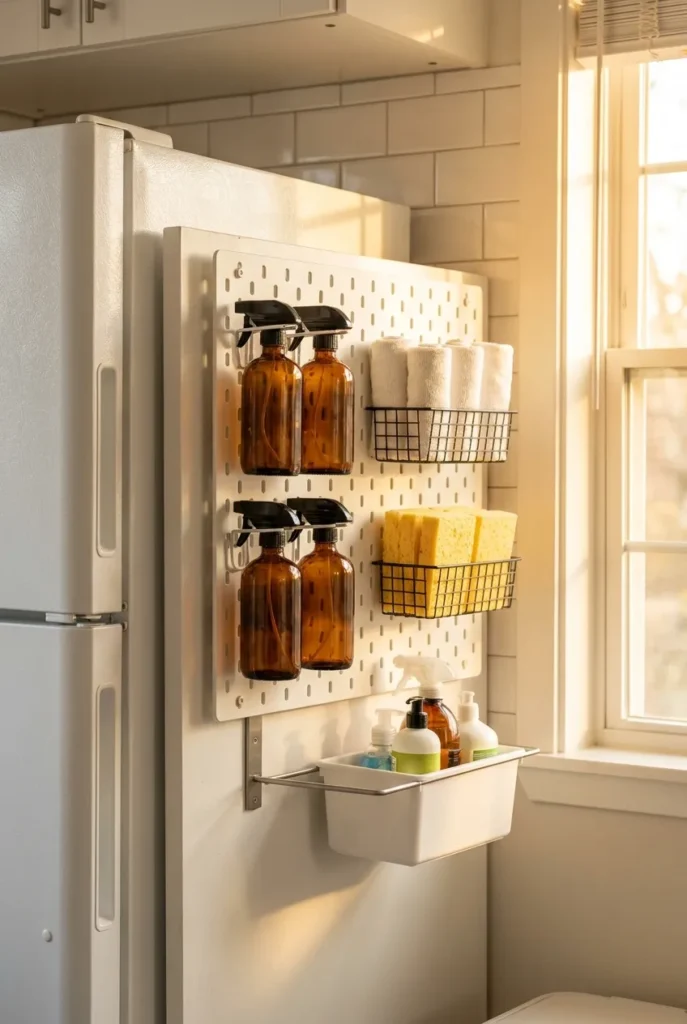
Mount a 2-foot by 4-foot pegboard panel in whatever utility space you have: a kitchen corner, inside a pantry, or along an unused hallway wall. An iDesign spray bottle holder hook (about $8 on Amazon) handles your daily sprays. Small pegboard bins hold sponges, scrubbers, and microfiber cloths. A shelf bracket at the bottom supports a slim caddy for larger bottles and backup supplies. The whole setup holds 10 to 12 products, all visible at a glance, all within arm’s reach.
For renters, use Command Large Picture Hanging Strips (the kind rated for 16 pounds per pair) to mount a lightweight 1/8-inch hardboard pegboard panel to the wall without drilling. It won’t carry a heavy cast-iron panel, but a lightweight hardboard version mounts cleanly and comes down at move-out without damaging the wall. Full cost to set this up from scratch: under $40, using pegboard from Home Depot and hooks from Amazon. This is one of the best cleaning supplies storage ideas for small spaces precisely because it uses only vertical wall space and nothing else.
Spot 8: A Lazy Susan Inside a Cabinet (For Deep Cabinets That Swallow Everything)
Deep cabinets are cleaning supply storage black holes. You know a product is in there. You just can’t see it. Reaching past three other bottles to get the one you want is a minor daily frustration that, over time, adds up to a lot of wasted minutes and a lot of duplicate purchases made because you simply forgot what you already owned. A turntable lazy Susan solves this without altering the cabinet at all.
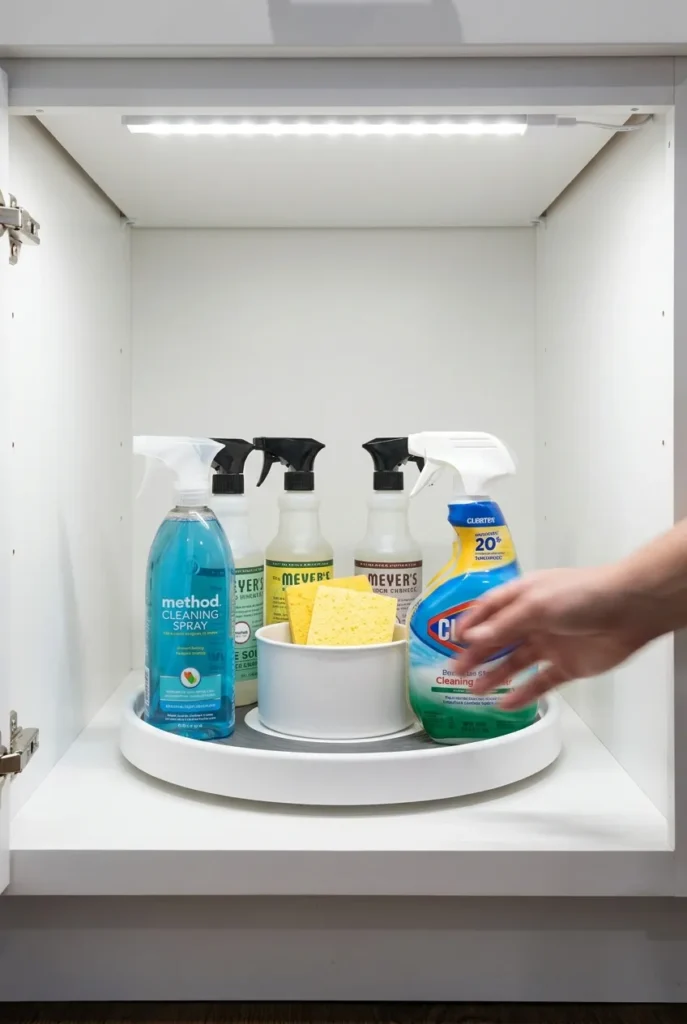
A 12-inch diameter lazy Susan fits most standard US kitchen and bathroom base cabinets. Put your daily-use cleaners on it and spin to reach the back row without moving anything forward. A 9-inch two-tier lazy Susan doubles your capacity in the same footprint, which works well if you’re consolidating what used to be two cabinets into one organized zone.
The Rubbermaid turntable organizer (about $14 on Amazon) is the version I’ve personally tested. The rubberized base grip keeps it from sliding on cabinet floors, and the low rim is just tall enough to stop bottles from rolling off without getting in the way of taller jugs. For a very deep cabinet, two of these placed side by side on the floor (one at the front half, one at the back) beats any single large organizer I’ve tried.
Organizing tip: put weekly-use cleaners in the front half of the turntable. Monthly-use and backup products go in the back. Spin only when you need the occasional items, and your most-used products are always front and center. To be fair, this one sounds almost too simple. It is, and that’s exactly why it works.
Your Cleaning Supplies Storage Questions, Answered
Where should I store extra cleaning supplies?
Store extra cleaning supplies in the same zone as the daily-use products they’ll eventually replace, just one shelf up or one bin back. If you keep your bathroom cleaner under the bathroom sink, the backup bottle belongs on a higher shelf in that same cabinet or in a clearly labeled “backup” bin in your hallway closet. The goal is keeping refills near (but not mixed with) your active supply so you never forget what you already have.
Is it safe to store cleaning products under the kitchen sink?
It can be, with a few conditions in place. Keep products sealed in their original containers. Don’t store bleach-based and ammonia-based cleaners in the same enclosed space. Install a childproof cabinet lock if there are kids in the house. The American Cleaning Institute also recommends keeping all cleaning products in a cool, dry location, away from heat sources. If your under-sink cabinet shares space with a hot water pipe or a garbage disposal that radiates heat, a laundry room shelf or a hallway closet is a smarter and safer choice.
Where should cleaning supplies go in a small kitchen?
In a small kitchen, the over-the-door organizer on your sink cabinet door is the best primary station. It keeps daily-use sprays accessible without consuming any shelf or floor space. A tension rod mounted inside that same cabinet opens up the floor for larger items. If counter space allows, a slim turntable in a base cabinet handles the products that don’t fit on the rod.
How do I store cleaning supplies with no closet?
A wall-mounted pegboard is the most practical cleaning supplies storage no-closet solution for apartments and small spaces. Mount it in a kitchen corner, beside the refrigerator, or along an unused hallway wall. Add spray bottle hooks, small bins for sponges and scrubbers, and a bracket shelf at the bottom for larger bottles. The full setup assembles in about 30 minutes and costs under $40.
How do I set up cleaning supplies storage in a small bathroom?
The tension rod under the sink (Spot 4) and the over-the-door organizer (Spot 2) cover the small bathroom completely. Together, they handle your daily cleaning products without taking up any floor space. If the cabinet under your bathroom sink is mostly plumbing, an over-the-toilet shelf unit adds two to three full shelves of storage in a spot that’s otherwise wasted.
Can I store cleaning supplies in the garage?
Yes, with one condition: temperature. Liquid cleaning products that freeze or overheat in an uninsulated garage can separate, degrade their containers, or lose effectiveness. If your garage stays above 40°F year-round, it’s a great spot for heavy-duty outdoor cleaners, bulk refills, and pressure washer supplies. Use a pegboard wall with labeled bins, and keep everything in original sealed containers.
What’s the best cleaning supplies storage setup for a laundry room?
A 12-inch-deep floating shelf at 60 inches high above the washer and dryer, paired with three or four wall hooks below it for long-handled tools, is the most efficient laundry room cleaning station you can build. Add a slim rolling cart beside the appliances for daily-grab products, and a tension rod high inside the laundry closet for extra spray bottle storage with zero floor impact.
Pick Your First Spot and Start There
You don’t need all eight of these at once. Pick the one that matches your biggest daily frustration, the cabinet you dread opening, the spot where three bottles always fall over, and set that one up first.
The 8-Zone Clean Station Method doesn’t ask for a renovation or a full weekend. It asks for a tension rod, a few hooks, maybe a rolling cart, and a decision to stop asking the under-sink cabinet to do a job it was never built for.
Every zone in your home has its own cleaning needs. When each zone has its own supplies exactly where the cleaning happens, the whole routine gets quieter. Faster. Less annoying. And that’s worth about $12 and a Saturday morning.
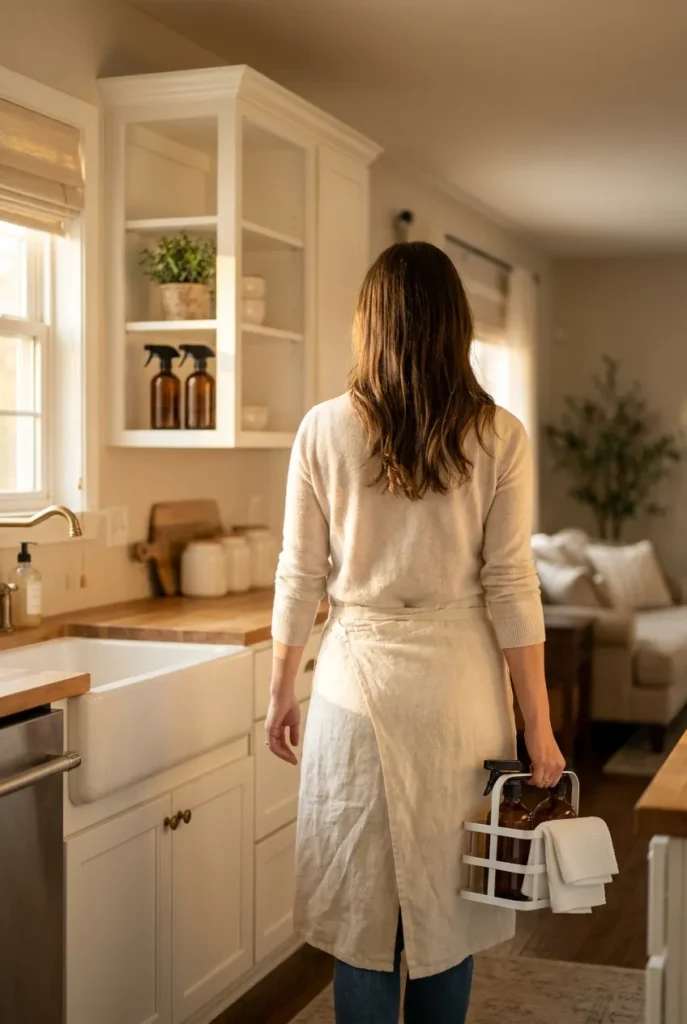
What’s your problem spot right now? The deep cabinet, the no-closet apartment corner, or the garage with nowhere to start? Drop it in the comments and let’s figure out the right station for your space.