

How to Organize a Bedroom With No Closet (8 Real Solutions)
Some of the best bedrooms we have ever lived in had no closet at all. Older homes, city apartments, converted attics, and finished basements were built before the walk-in was standard, so the storage has to come from you. That is the whole challenge of bedroom with no closet organization: the room gives you four walls and a door, and the rest is your call.
Here is the promise. You do not need a renovation, a contractor, or a single hole in the wall to fix this. By the end of this guide you will have eight working solutions, a simple three-zone system to tie them together, and a clear idea of which pieces to buy first. Most of it goes up in a weekend.
We have tested these setups in three different no-closet rooms, including one rental where the lease banned wall anchors entirely. The fixes below are the ones that survived daily use, not the ones that only look good in a photo.
One more thing before we start. A bedroom with no closet organization plan fails for one reason more than any other: people buy furniture before they sort clothes. They grab a pretty rack, fill it halfway, and still have a pile on the chair. The system below flips that order. Sort first, buy second. It costs you twenty minutes up front and saves you a return trip to the store.
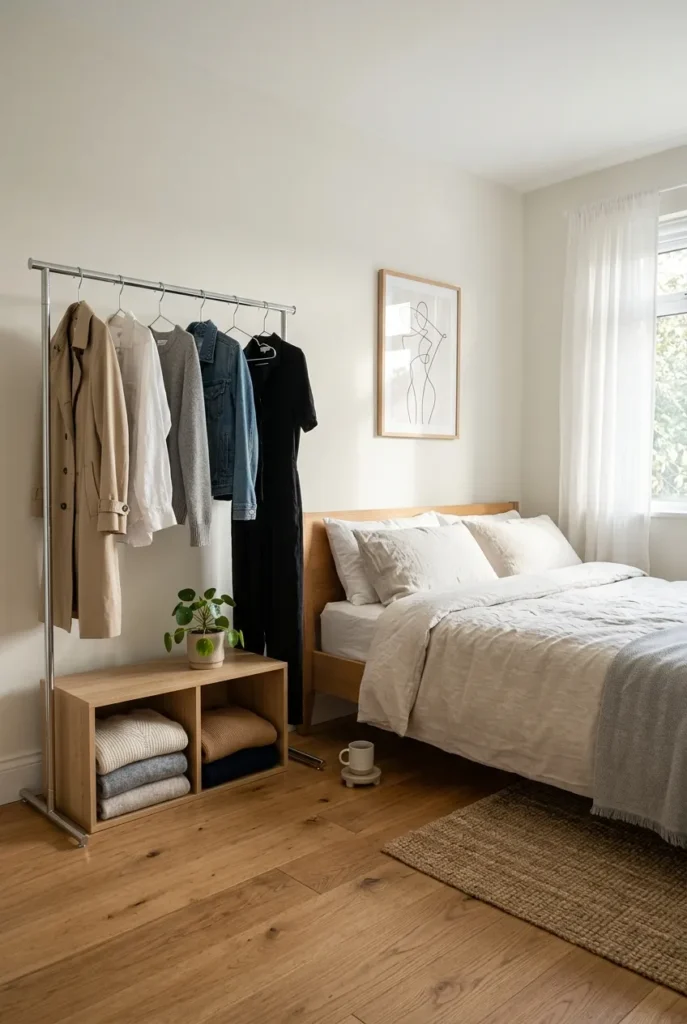
Start With the 3-Zone No-Closet Method
Before you buy anything, give your clothes a structure. We call it the 3-Zone No-Closet Method, and it solves the one problem every flat list of ideas ignores: where does each thing actually go.
Zone one is hang, for anything that wrinkles or drapes. Zone two is fold, for knits, denim, and tees that stack fine. Zone three is stash, for off-season items, shoes, and bulky extras that you do not reach for daily. Sort your wardrobe into those three piles first. The piles tell you exactly how much rod, shelf, and bin space to build, so you buy the right things once instead of guessing twice.
That is the framework. Every solution below feeds one of the three zones. Keep it in mind as you read.
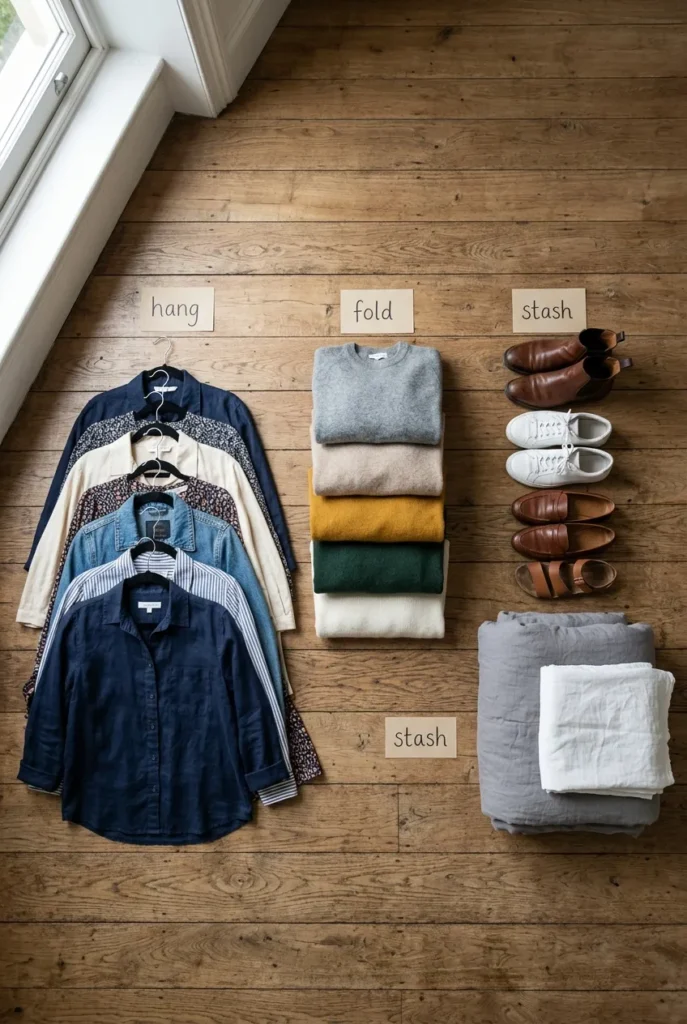
1. Build an Open Closet With a Freestanding Garment Rack
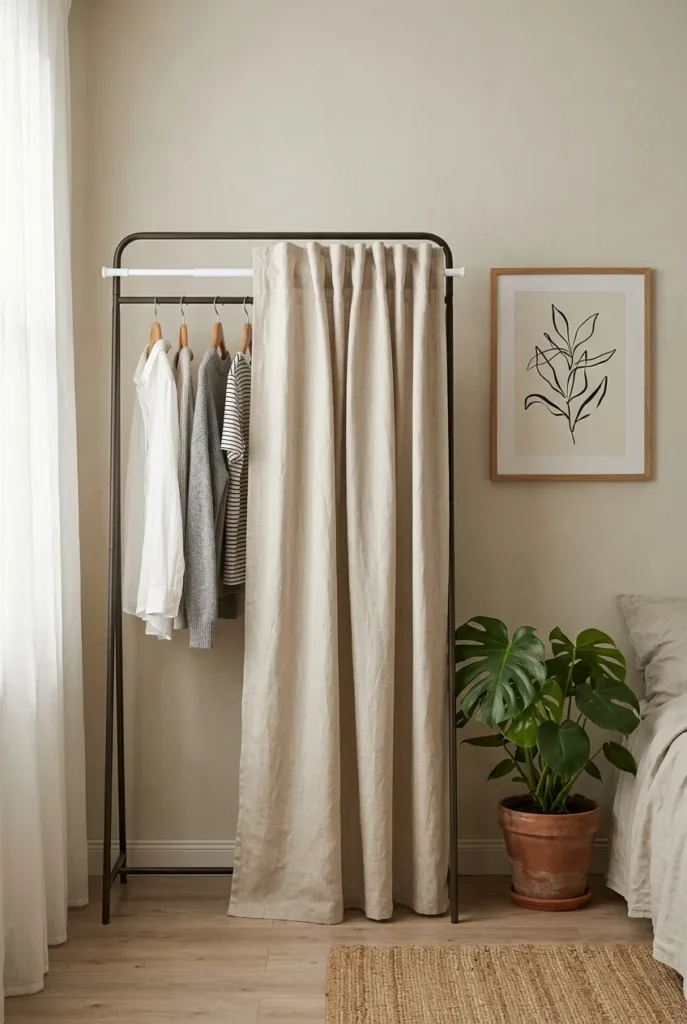
A garment rack is the fastest answer to zone one. It gives you a real hanging rod without touching a wall, which makes it the single best starting point for any small bedroom no closet solutions list.
Buy by build quality, not looks. A flimsy rack bows in the middle under a winter coat. Look for steel tube construction rated to at least 60 pounds, with a bottom shelf for folded items or shoes. The Container Store and Amazon both stock sturdy options in the $40 to $90 range, and IKEA’s Mulig rack runs cheaper if you are starting bare.
Style it so it reads intentional. Use one set of matching hangers, slim velvet ones save real space, and keep colors grouped light to dark. An open rack on display has to look deliberate, or it just looks like laundry. (Honestly, matching hangers do more visual work here than anything else you buy.)
For a deeper walkthrough of folding and sorting before you hang, our guide to closet and bedroom organization ideas pairs well with this step.
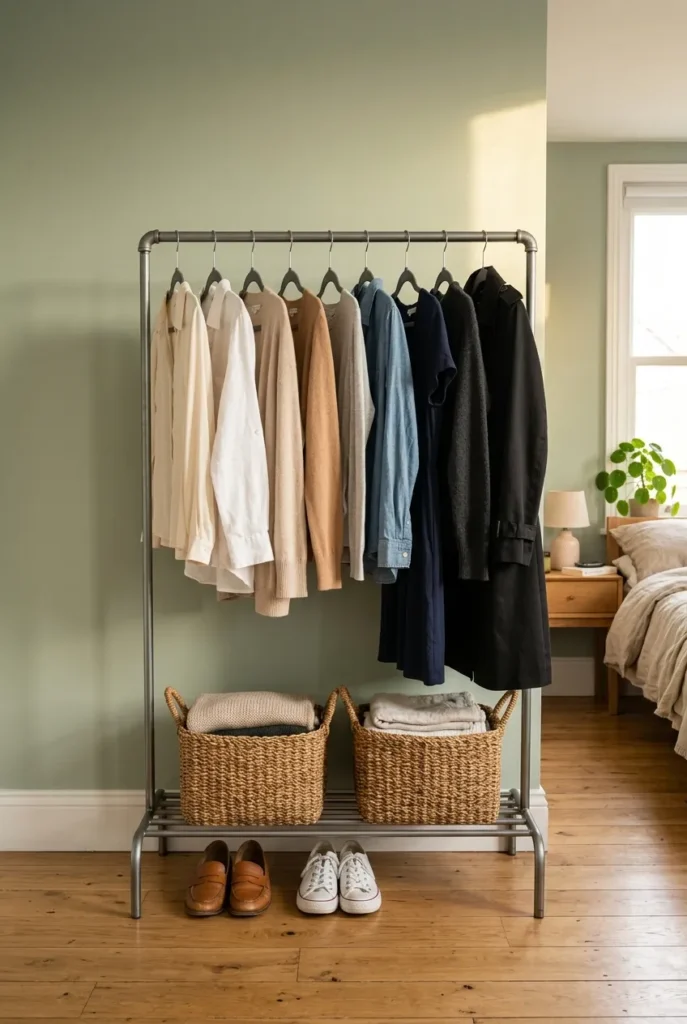
2. Claim Every Inch of Under-Bed Storage
The biggest unused space in a no-closet bedroom sits right under where you sleep. A standard bed frame leaves 7 to 11 inches of clearance, and that gap is prime zone-three stash territory for off-season clothes, spare bedding, and shoes.
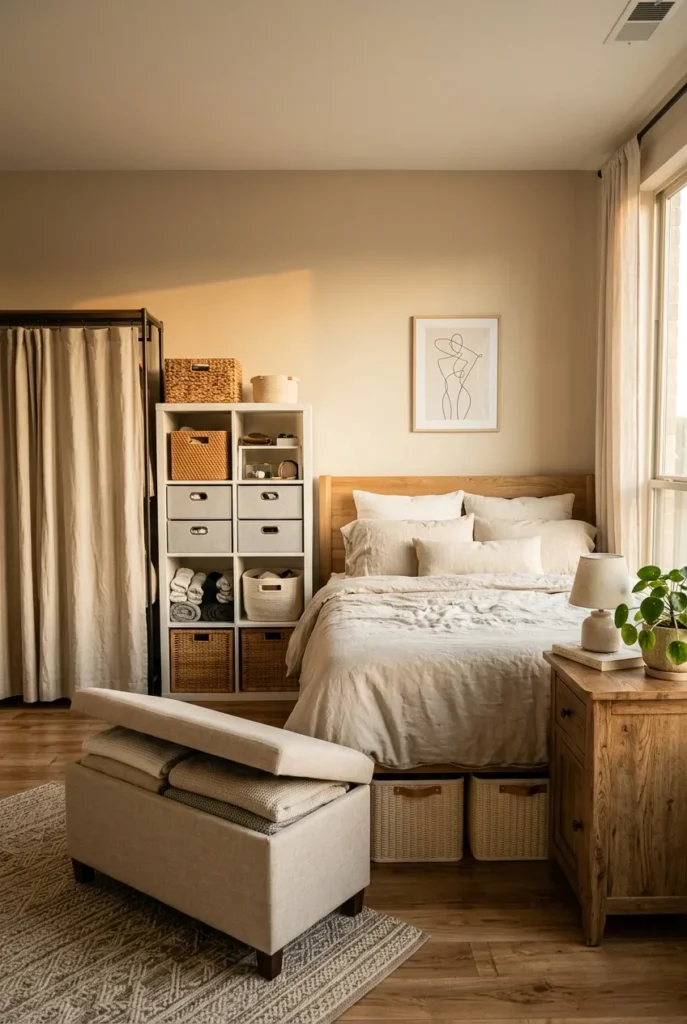
Use low-profile bins with lids and, ideally, wheels. Clear bins let you see contents at a glance, but fabric bins from Target’s Brightroom line or IKEA’s Skubb sit softer against the floor and slide quietly. Measure your clearance before you buy, because a 12-inch tote will not fit under a 9-inch frame, and that is the most common mistake people make here.
No clearance at all? Bed risers buy you another 3 to 6 inches instantly, and a set costs under $15. That small lift can double what the space holds.
One trick we learned the slow way: vacuum-seal bags belong under the bed, not in a wardrobe. Compress your puffy winter coats and spare comforters flat, drop them in a labeled bin, and slide the whole thing out of sight. A single under-bed bin packed this way can hold an entire season of bulky outerwear that would otherwise eat half your hanging space.
3. Turn Walls Into Storage With Shelves and Cubbies
When floor space runs out, go vertical. Wall shelving handles zone two, your folded knits, baskets of accessories, and shoes, without eating a single square foot of floor.
Renters, this is where you stay damage-free. Skip the drill. Use a tall freestanding cube unit like the IKEA Kallax, which holds fabric drawers and woven bins and never touches the wall. If you want true wall-mounted shelves and your lease allows it, French-cleat systems and heavy-duty Command strips hold light loads of folded clothes and accessories. Keep anything heavy on the floor-standing units and reserve the walls for light, pretty things.
A row of woven clothing storage baskets along one shelf doubles as zone-two folding storage and as decor, which is the kind of double duty a small room rewards.
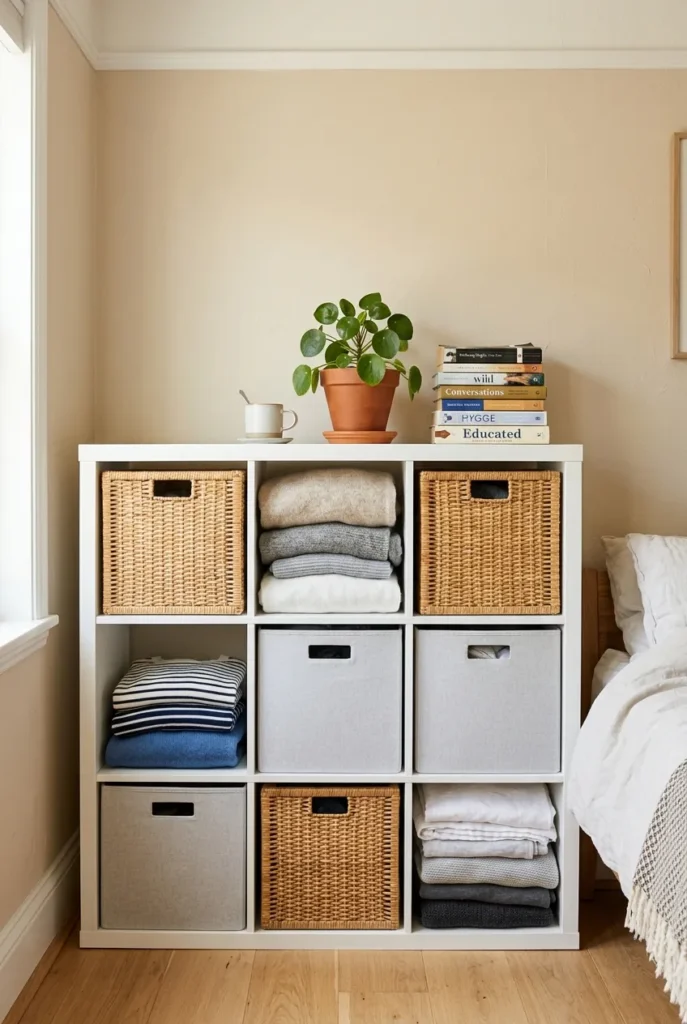
4. Invest in a Freestanding Wardrobe or Armoire
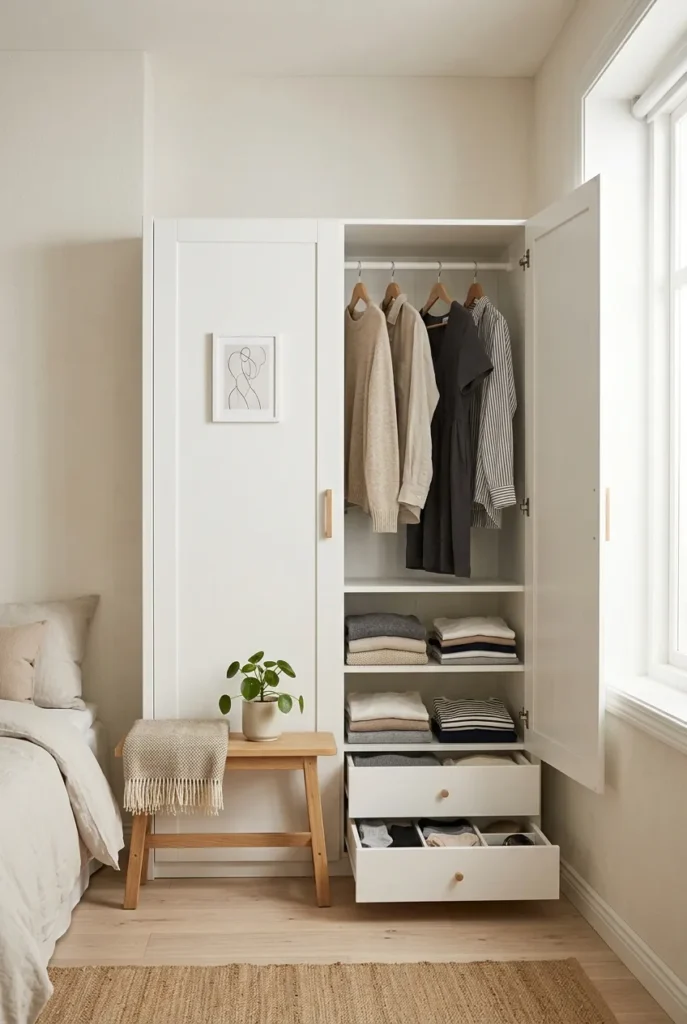
If your budget stretches and your space allows, a wardrobe is the closest thing to building a closet without construction. It is the answer most people mean when they search for no closet solutions IKEA, because the IKEA Pax system lets you configure rods, shelves, and drawers behind a closed door.
A closed wardrobe handles all three zones in one footprint: a rod up top for hang, shelves in the middle for fold, drawers at the base for stash. It also hides clothing from view and from dust, which matters a lot when your whole wardrobe lives in one room. Expect to give up about 24 inches of floor depth, so measure the wall first.
For a smaller or more characterful room, a vintage armoire from a thrift store or Facebook Marketplace does the same job with more personality and often a lower price. Mix old and new freely here.
5. Choose Double-Duty Furniture That Hides Storage
In a no-closet room, every piece of furniture should earn its footprint twice. This is the rule that separates a cramped room from a calm one.
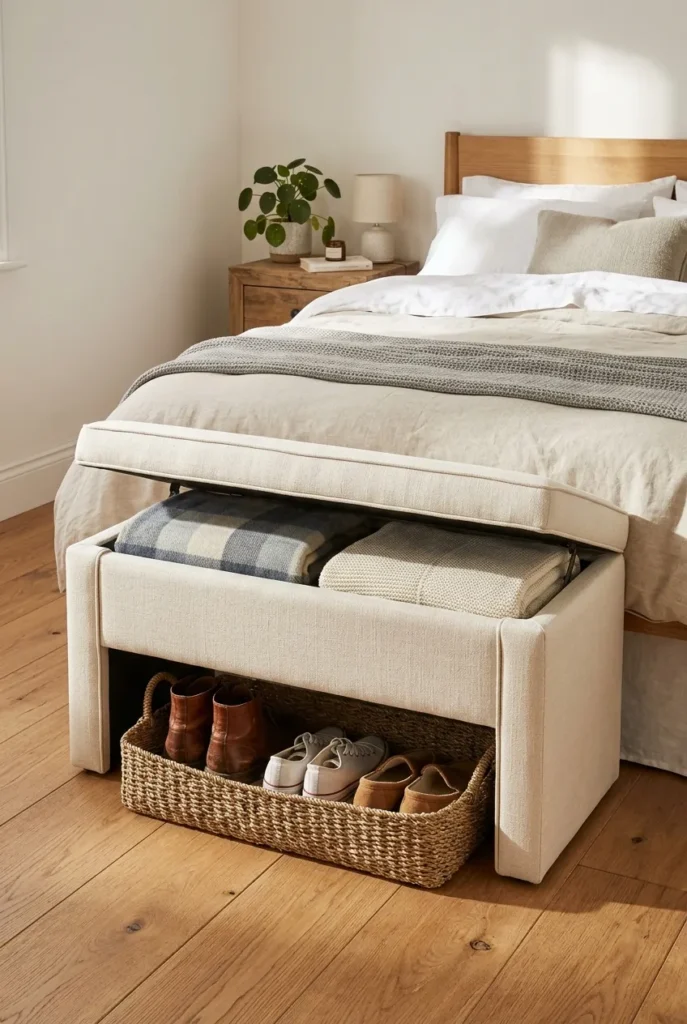
A storage ottoman holds blankets and out-of-season knits while doubling as a seat. A storage bench at the foot of the bed swallows shoes or extra bedding. A nightstand with two real drawers replaces a tiny open table and gives you stash space at arm’s reach. We lean on this constantly, and our breakdown of bedside drawer organization shows how to keep those nightstand drawers from turning back into chaos.
The test is simple: if a piece only does one job, it is costing you storage you cannot afford to lose.
Headboards count too. A bookcase headboard or a shelf ledge above the bed turns dead wall space into storage for books, folded throws, and a basket of small items. It reads as decor, but it pulls real weight. In a room this tight, the wall behind your pillows is one of the few surfaces nothing else competes for.
6. Use the Back of the Door and the Walls Above
Two surfaces in every bedroom go almost entirely unused: the back of the door and the wall space above eye level. Both are gold for small bedroom closet organization hacks.
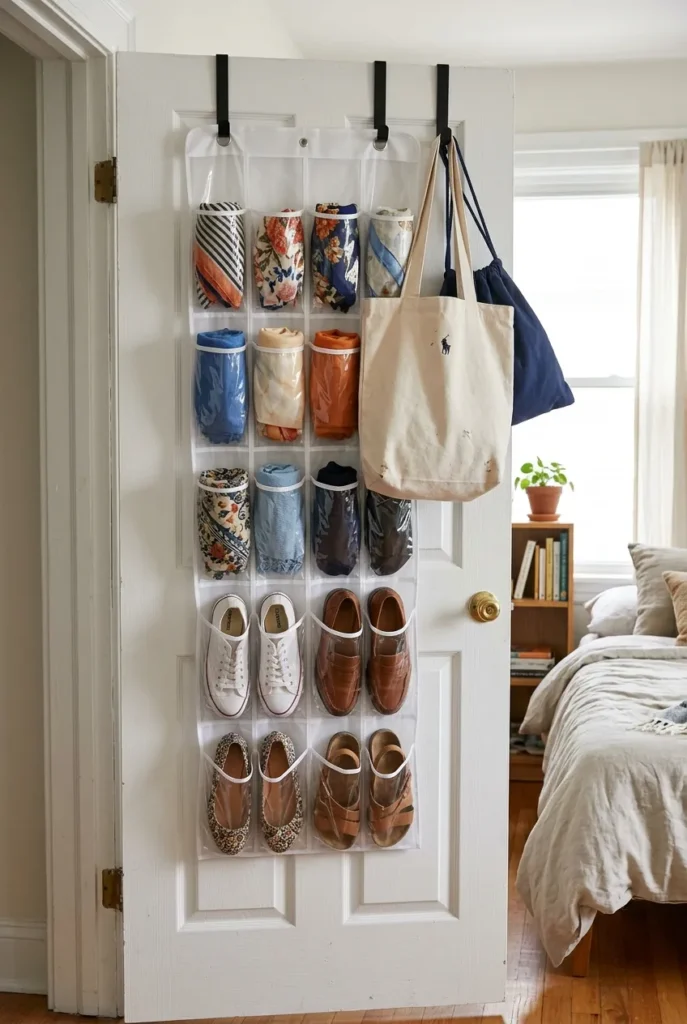
An over-the-door rack needs zero hardware and zero permission. It hangs on the door’s top edge and holds shoes, scarves, belts, or bags. For small bedroom closet shoe organization specifically, a clear over-the-door pocket organizer keeps a dozen pairs visible and off the floor. Command hooks along the back of the door add a spot for tomorrow’s outfit or a robe.
Up high, a single floating shelf or a row of hooks near the ceiling stores items you rarely touch, like luggage, hat boxes, or seasonal bags. Tall storage draws the eye up and makes a small room feel taller, so it works twice.
7. Make a DIY No-Drill Hanging Zone
You can create a real hanging rod without owning a drill, and this is where renters win. The trick is choosing mounts that grip without permanent holes.
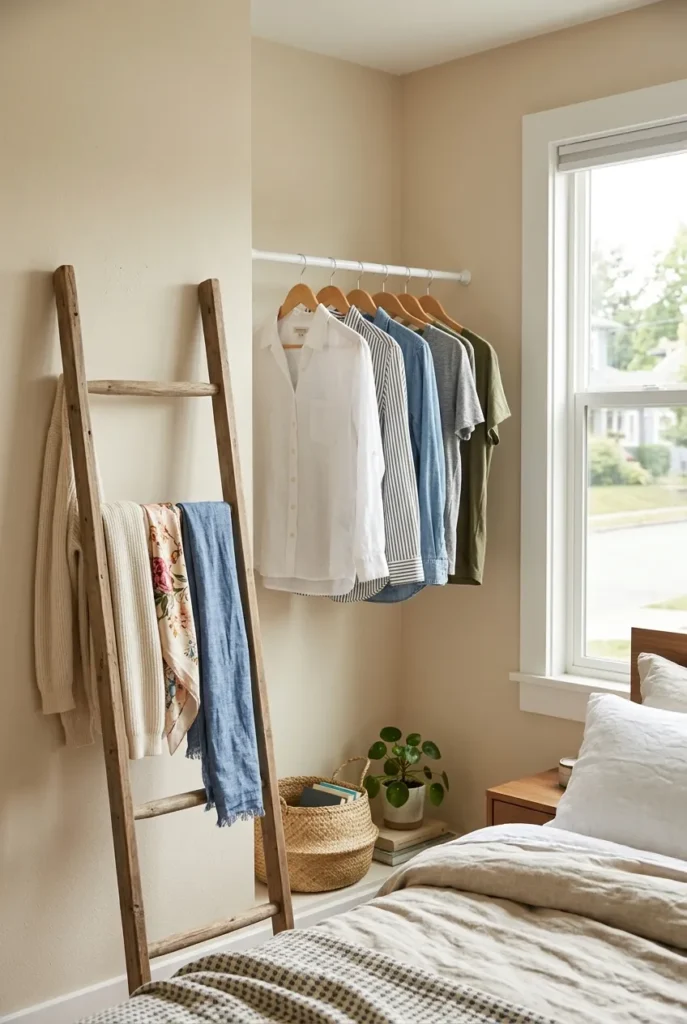
Tension rods work beautifully across a narrow alcove, a recessed nook, or the gap between two walls. Set one at a comfortable height and you have an instant hang zone for zone-one garments. For a freestanding version, a leaning ladder propped against the wall holds draped clothes, scarves, and bags with a relaxed, open look that competitors love to photograph.
If you do own the place and want something sturdier, a length of pipe suspended from two ceiling-mounted flanges makes a designer-grade rod. Just be honest about your skill level. (To be fair, the tension-rod route is the one we reach for nine times out of ten.)
For more no-tool storage thinking, our post on storage hacks and product finds covers pieces that work in any room.
8. Protect Open Storage From Dust and Light
Here is the catch nobody mentions. When your clothes live out in the open, they collect dust, and sunlight fades dark fabrics over months. Neither competitor list covers this, and it is the difference between a setup that lasts and one you redo in a year.
Hang a simple curtain or a length of linen across the front of a garment rack to cut dust and shield colors. A tension rod and a clip-ring curtain panel do this for under $25 and read as a soft, boutique detail rather than a cover-up. For folded items, lidded baskets and closed fabric bins keep dust off knits you wear seasonally.
Position your open rack away from direct afternoon sun if you can, or use that curtain as the shield. Small move, long payoff, and it keeps your whole open wardrobe looking deliberate.
Putting It All Together in a Master or Small Bedroom
The approach scales. In a small bedroom no closet setup, pick three solutions: a garment rack for hang, under-bed bins for stash, and an over-the-door organizer for shoes. That trio fits a tight room and costs under $150 all in.
For a master bedroom with no closet organization, you have room to go further. Anchor the wall with a freestanding wardrobe for hang and fold, add a storage bench for stash, and use a cube unit for everything else. The 3-Zone Method keeps it from sprawling, because every new piece has to claim a zone before it earns a spot.
Whatever the room size, build in this order: hang first, fold second, stash last. That sequence keeps your daily clothes reachable and pushes the rarely-touched items to the edges.
A quick word on upkeep, because a no-closet room shows mess faster than a room with a door to hide behind. Spend five minutes each night returning the three or four things that wandered: the jeans on the chair, the bag on the floor, the laundry by the door. With everything assigned to a zone, that reset takes almost no thought. The room stays photo-ready not because you work harder, but because each item already has one obvious home.
And budget honestly. You do not need all eight solutions. Most rooms run beautifully on three or four, chosen to cover your three zones. Buy the rack, fill it, live with it for a week, and only then add the next piece. The slow build keeps you from overspending and from cramming a small room with furniture it never needed.
Frequently Asked Questions
How do I build a closet in a room with no closet?
You have two routes. The no-construction route is a freestanding wardrobe like the IKEA Pax, which gives you a rod, shelves, and a door without touching the structure. The build route frames a small reach-in with two-by-fours and drywall, which means tools, a weekend, and landlord permission if you rent. For most people, the wardrobe wins on speed and flexibility.
What are the best storage ideas for a house with no closets?
Lean on freestanding and double-duty pieces: garment racks, wardrobes, under-bed bins, storage benches, and cube shelving. Use the back of every door, and go vertical with high shelves for rarely-used items. Sort everything into hang, fold, and stash first so each piece you buy fills a real need.
How do I organize a small bedroom with no closet on a budget?
Start with three cheap, high-impact buys: a basic garment rack, a set of under-bed bins, and an over-the-door organizer. Add bed risers for clearance and matching hangers to keep the open rack tidy. Dollar Tree and IKEA cover the bins and hooks, and the whole setup lands well under $150.
Is a bedroom with no closet a dealbreaker?
Rarely. Plenty of beautiful, functional bedrooms run entirely on open and freestanding storage, and an open wardrobe can look more intentional than a stuffed closet. The key is a system, not just more furniture. With the 3-Zone Method in place, a no-closet room can hold as much as a small reach-in.
Where do I put shoes in a bedroom with no closet?
Three easy spots: an over-the-door pocket organizer for visibility, a low shelf on a garment rack, or flat under-bed bins for off-season pairs. Keep the shoes you wear weekly at eye or floor level and stash the rest underneath.
Your Next Step
A bedroom without a closet is not a problem to solve once. It is a small system you set up and then barely think about again. Pick the one solution that fits your room today, the garment rack if you have floor space, the under-bed bins if you do not, and build out from there using the three zones.
Which zone is your room missing most right now, hang, fold, or stash? Start there, and the rest falls into place. For more room-by-room systems that stick, browse our latest organization guides and find the one that matches the space you are fighting with.
IKEA US Pax wardrobe planner
The Container Store garment rack and closet storage guide
This article offers general home organization guidance only. For structural changes, built-in closets, or anything involving wiring or load-bearing walls, consult a qualified US contractor or your landlord before you begin.


