

Laundry Room Organization Ideas: 12 Layouts That Make Wash Day Easier
Some laundry rooms are a dream. Most are a closet, a hallway nook, or a strip of wall wedged between the machines and the water heater. If yours falls in that second group, these laundry room organization ideas were built for you. We pulled together 12 real layouts that squeeze storage out of tight, awkward spots, work around a washer and dryer you can’t move, and still look tidy enough to leave the door open. No renovation required. Plenty of it works even if you rent.
Here’s the promise. By the end, you’ll have a plan for every wall, the gap between your machines, and the back of your door.
First, a simple idea that ties the whole room together. Picture how laundry actually moves: it comes in dirty, gets sorted and pre-treated, runs through the wash and dry, gets folded, then heads out to drawers and closets. That’s five stops. Sort, Treat, Wash and Dry, Fold, Store. We call it the Wash-Day Loop, and it’s the backbone of every layout below. Give each stop its own small zone, in that order, and the room starts working with you instead of against you.
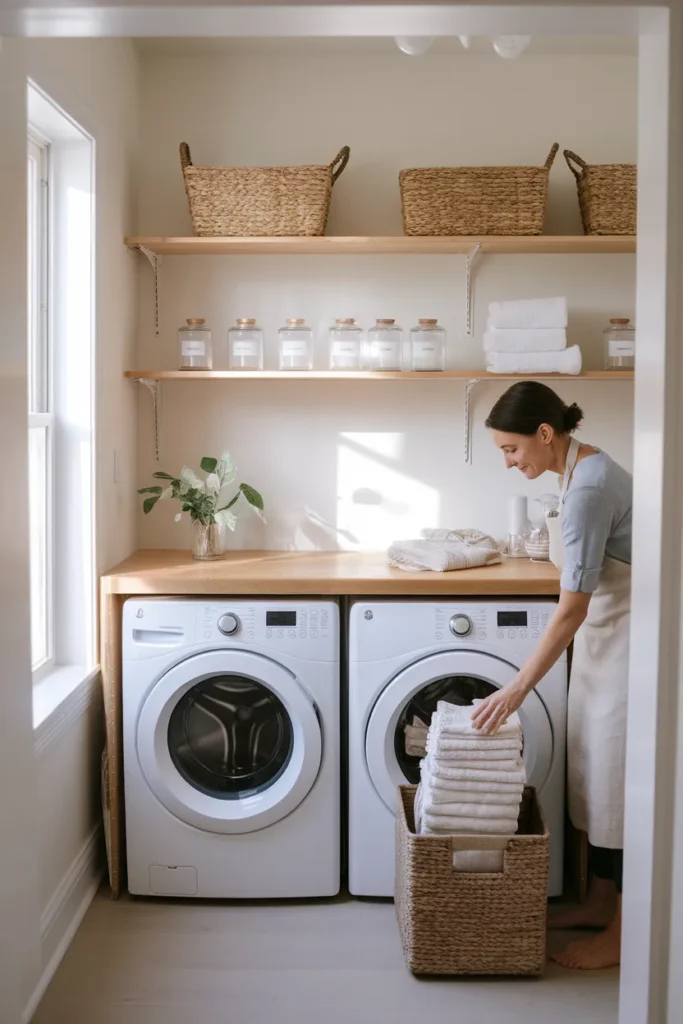
The best laundry room organization ideas start with the space you actually have, not the bins you buy. Match your space to the layouts that fit it before you spend a dollar. Screenshot this.
| Your laundry space | Start with these layouts | One product to grab first |
|---|---|---|
| Closet or stacked units | Vertical shelves, over-the-door rack, curtain cover | Over-the-door organizer |
| Hallway or narrow nook | Slim cart in the gap, wall pegboard, fold-down counter | Slim rolling cart |
| Dedicated room | Upper cabinets, folding counter, triple sorter | Wall cabinets or open shelving |
| Rental (any size) | No-drill hooks, tension rods, freestanding shelf | Command hooks and strips |
1. Go vertical and claim the wall above your machines
Of all the laundry room organization ideas in this guide, going vertical pays off fastest, so start here. The floor space is fixed, but the wall above your washer and dryer is almost always empty. Fill it. A single row of open shelves turns dead air into storage for detergent, dryer sheets, and a basket or two.
Mount your lowest shelf about 16 to 18 inches above the machine tops. That leaves room to open a top-loader lid and still reach everything without a step stool. Two shelves are usually plenty in a tight room. Three if your ceilings are tall.
For a sturdy, renter-forgiving option, a wall system like IKEA Boaxel or a Container Store Elfa run gives you adjustable shelves you can reset later. On a budget, a pair of pine boards on simple brackets does the same job for a fraction of the cost. Keep the heavy jugs low and the light, rarely-used stuff up top.

2. Mix closed cabinets with open shelves
Open shelves look great on Pinterest and keep daily items grabbable. Closed cabinets hide the ugly stuff. The trick is doing both. Run a wall cabinet over the machines for backstock and anything you don’t want on display, then add one open shelf underneath for the products you reach for every load.
Standard upper cabinets sit about 12 inches deep, which is enough for most detergent bottles and folded linens. Inside, treat it like any other cabinet: group by category, put a small lazy Susan in the corner, and store like with like. It’s the same zone-by-zone method we use to organize kitchen cabinets, just with softener instead of spices.
If a full cabinet feels like too much, a Target Brightroom bin on a shelf with a label does 80 percent of the work for a few dollars. Honestly, this is the step most people skip, and it’s the one that keeps the room from sliding back into chaos.
3. Slide a slim cart into the gap between the machines
That narrow slot between a side-by-side washer and dryer is prime real estate. Standard machines run about 27 inches wide each, and even a few inches of gap will swallow a rolling cart around 5 to 9 inches wide.
Roll it out, grab your detergent, roll it back. The IKEA Nissafors cart and slim three-tier carts from mDesign or Mainstays are all built for exactly this. Load the top tier with the products you use every time, the middle with stain sprays and dryer balls, and the bottom with backstock.
No gap to work with because your units are stacked? Park the same slim cart at the end of the machines or just inside the door. The point is a mobile supply station that keeps the loop moving without a permanent build.

4. Hang a drying zone with a rod and a fold-down rack
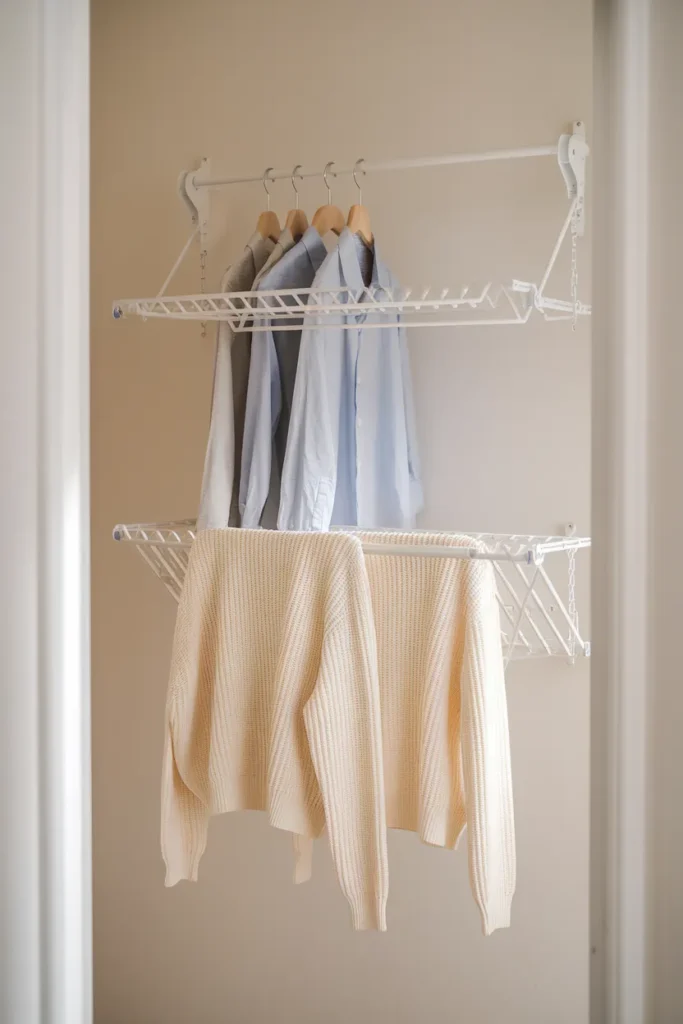
Air-drying eats floor space unless you send it up the wall. Two pieces handle almost everything. First, a tension rod mounted between two cabinets or inside a nook gives you an instant hanging spot for drip-dries and shirts straight off the cycle. Tug it hard before you trust it with wet jeans, because a rod that slips at 7 a.m. is its own kind of misery.
Second, a wall-mounted fold-down drying rack folds flat when you’re done and pops out to hold sweaters laid flat. Look at accordion-style racks that project only a few inches from the wall.
Between the two, you cover hanging items and flat-dry knits without a single drying rack cluttering the floor. Renters, both a spring tension rod and a Command-strip rack come off clean.
5. The renter’s no-drill layout
If you rent, this is your whole playbook, and it’s one of the most useful laundry room organization ideas here, because most guides pretend you own the place. You can build a full system without a single hole in the wall.
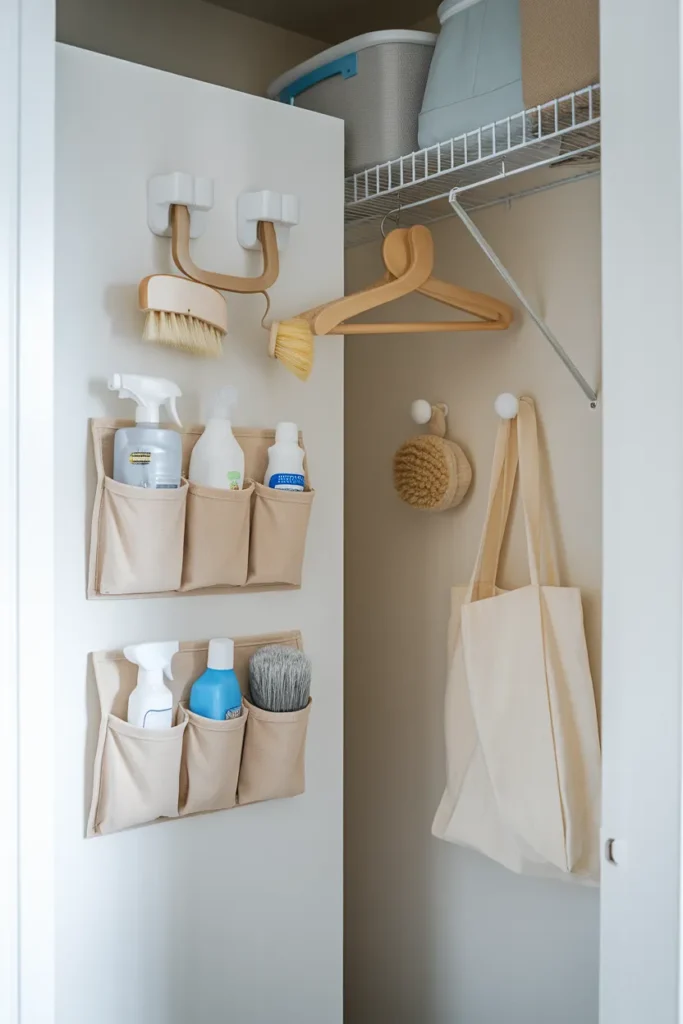
Start with the back of the door. An over-the-door organizer (the shoe-pocket kind works beautifully) holds spray bottles, brushes, and dryer sheets. Add Command hooks and strips (3M) for hanging bags, a dustpan, and a drying line. A tension rod between two walls of a closet gives you a hanging bar. For shelving, go freestanding: a slim floor-standing shelf unit or an over-the-washer shelving frame that straddles the machines and needs no anchors.
Three no-drill wins to grab first: an over-the-door rack, a two-pack of tension rods, and a set of Command hooks. That trio covers hanging, spraying, and stashing for well under the cost of one installed cabinet. When you move, everything comes with you and the walls stay deposit-safe.
6. Build a supply station you can actually reach
A supply station is just one defined spot where every wash-day product lives. When it’s scattered, you buy duplicates and lose ten minutes hunting for the stain stick. When it’s grouped, the loop speeds up.
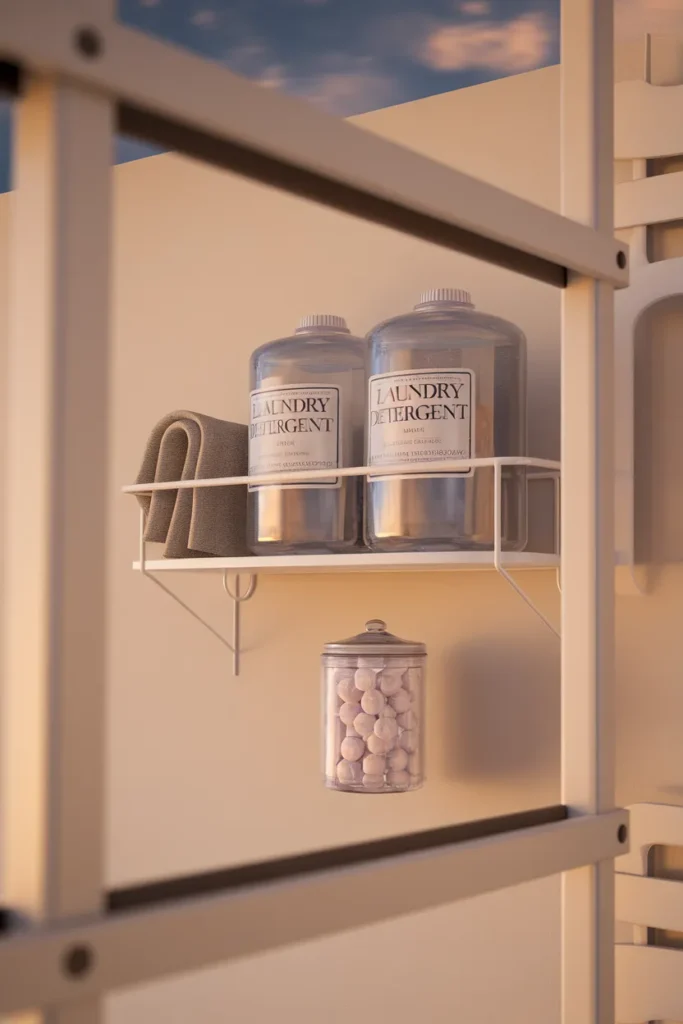
Decant the products that make a mess. Pour powder detergent into a clear canister with a scoop, and move pods into a lidded jar so a leaky bag never crusts onto a shelf again. Clear bins from mDesign or an iDesign drawer organizer keep small stuff (safety pins, spare buttons, a lint roller) from turning into a junk pile. Add one label per container, even if it’s a strip of tape and a marker.
Keep this zone at the “Treat” stop of your Wash-Day Loop, right by where you load, so pre-treating a stain takes two seconds instead of a scavenger hunt.
7. Give detergent and pods a safe, high zone
Here’s the angle most laundry posts skip entirely, and it matters more than any label. Concentrated detergents and liquid packets are genuinely hazardous if a small child or a curious pet gets into them. Pods especially look like candy or a squishy toy.
Store detergent and pods up high, out of a child’s line of sight and reach, and keep packets in their original closed container or a locked upper cabinet rather than a pretty open bowl on the counter. The American Cleaning Institute recommends keeping these products sealed and stored up and away, and their laundry safety guidance is worth a two-minute read if you have kids or pets in the house.
Aesthetics still matter, and you can absolutely have both. Just let the safe spot win the tie. A high shelf or a closed cabinet keeps the room looking calm and keeps the scary stuff where little hands can’t go.
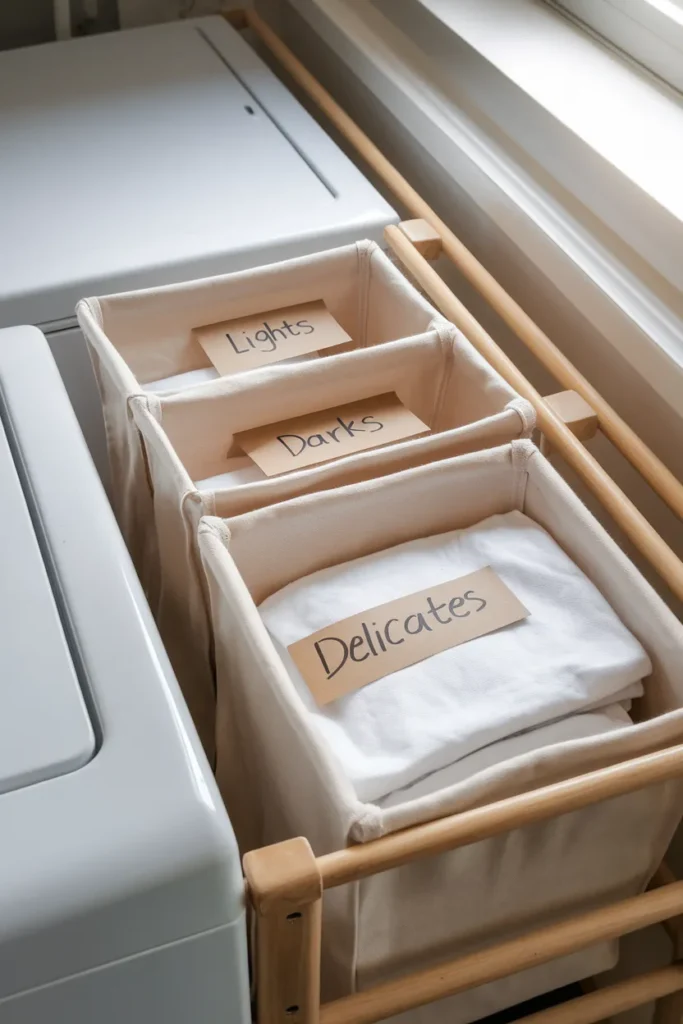
8. Sort as you go with the 3-Basket Sort
Sorting after the pile has taken over the floor is the worst. Sorting as clothes come off is easy. Some of the best laundry room organization ideas are really just habits, and that’s the whole idea behind our simple framework, the 3-Basket Sort: three labeled baskets, one system, zero mental effort.
Set three sorters or bins in a row and label them. Lights, Darks, and Delicates or Towels is the classic split, though a household with kids often does better with a basket per person. A triple laundry sorter on wheels does this in one frame, or line up three Target Brightroom bins or IKEA Skubb boxes if you want it cheaper. Whichever you pick, the labels are what make it stick, because everyone in the house can follow a label.
When a basket fills, that’s your load. No pre-sorting, no floor pile, no guessing what’s a full wash. The 3-Basket Sort turns the messiest stop in the loop into the easiest.
9. Carve out a folding counter, even over the machines
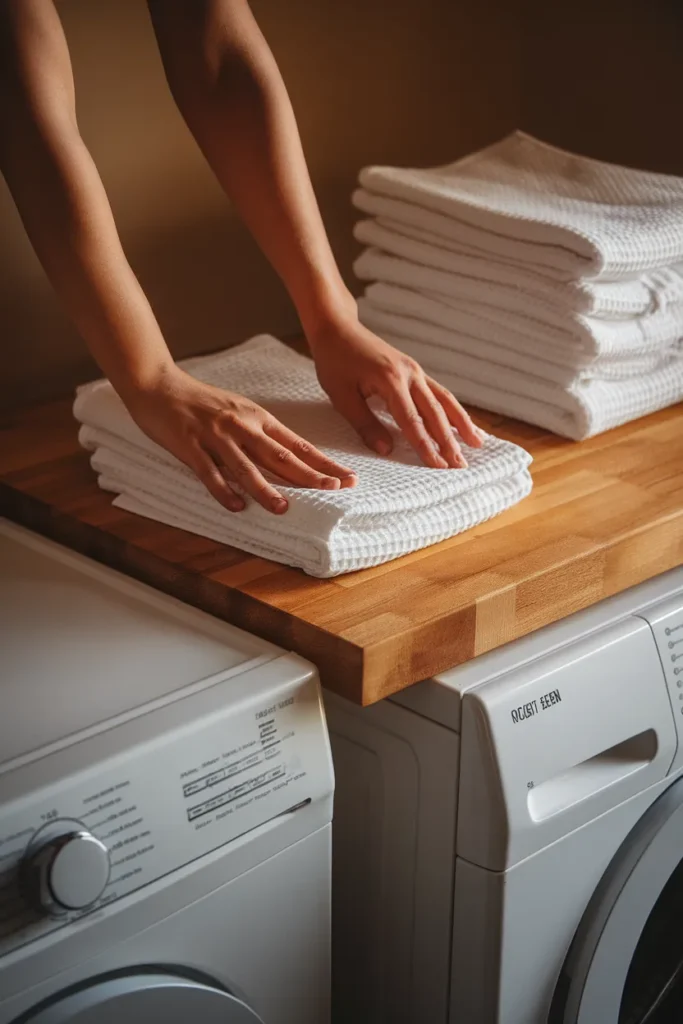
Folding needs a flat surface, and the loop breaks down when there isn’t one. Clothes end up on the bed, the bed doesn’t get made, the shirts wrinkle. Give folding a home.
In a dedicated room, a stretch of counter or a small island is ideal. In a tight one, lay a butcher-block top or a cut-to-size laminate board across the tops of a front-load washer and dryer. Suddenly you have a full folding station that costs almost nothing and takes up zero extra footprint. Add a fold-down wall-mounted table if even that isn’t an option, and drop it flat when you’re done.
Fold straight into stacks by person or room, then carry them off in the sorting baskets you already own. Build the put-away step into your Sunday night reset routine so clean laundry never sits out for three days again.
10. Put the back of the door and a pegboard to work
Two vertical surfaces get wasted in almost every laundry room: the back of the door and the bare wall. Both are easy wins.
On the door, an over-the-door rack or a few Command hooks hold the ironing board, a drying line, or a hanging bag for dry-clean items. On the wall, a pegboard turns a flat blank space into a flexible grid you can rearrange any time. Hang scissors, a lint brush, spray bottles, and a small basket for clothespins. Pegboards work hard in a small footprint, which is why they show up in workshops and tiny kitchens too.
Paint the pegboard to match the wall and it reads as intentional, not utilitarian. A renter version leans on a freestanding pegboard or a Command-strip mount so nothing gets screwed in.
11. Hide the machines and keep it calm
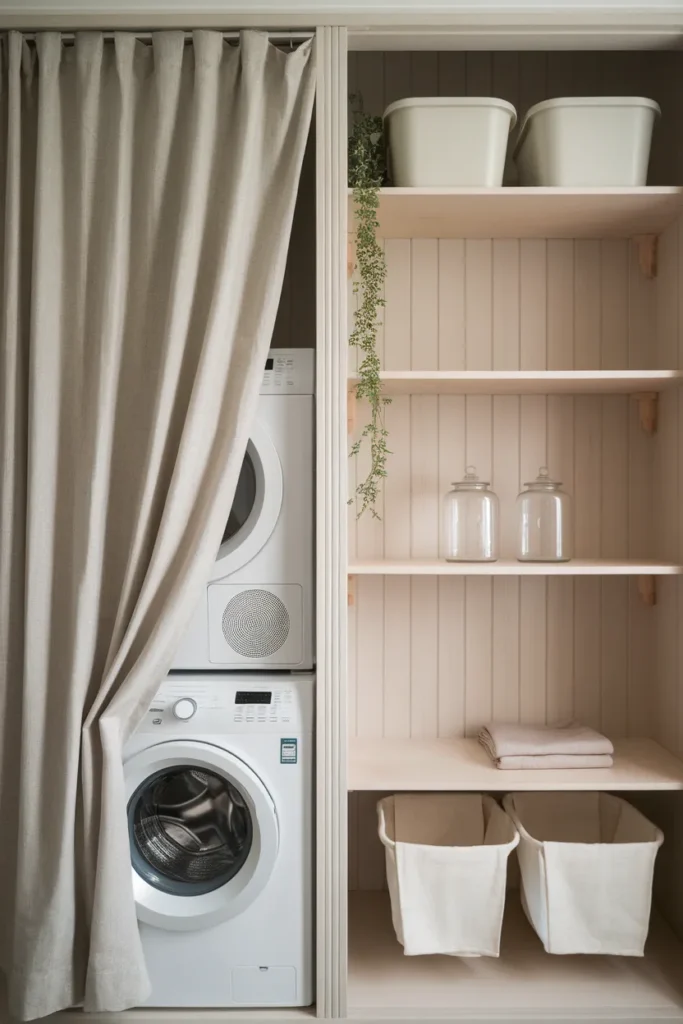
Sometimes the best laundry room organization ideas are the ones you don’t see. If your laundry sits in a hallway, a kitchen corner, or an open closet, a simple cover makes the whole space feel calmer.
A tension rod and a linen curtain hide stacked machines in seconds and cost almost nothing. Bifold or accordion doors do the same for a laundry closet without eating floor space when they open. Behind the curtain, keep the shelves neutral: matching baskets, a couple of clear jars, one small plant. Lean into a calm, Japandi-style look with natural wood, off-white bins, and nothing loud, and even a working laundry nook starts to feel restful.
The visual quiet is the point. When the machines disappear behind a curtain and the shelves match, your eye relaxes, and the room reads as finished even mid-load.
12. Keep the loop running with a 10-minute reset and a lint check
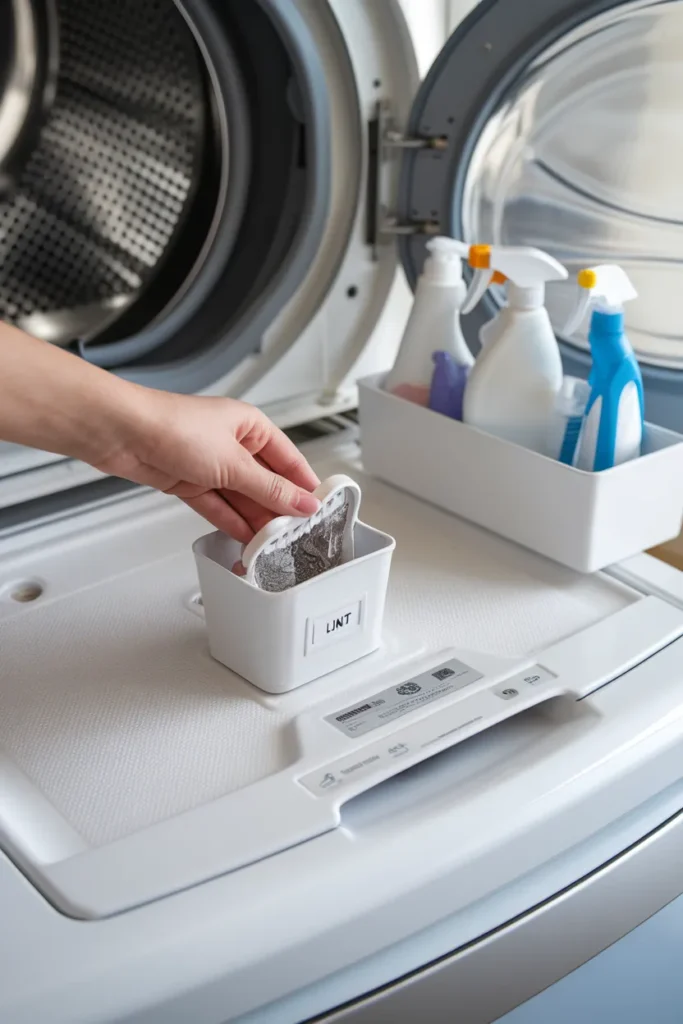
A layout only stays organized if it gets reset. The good news is that a working system takes ten minutes to reset, not an afternoon. Wipe the machine tops, return the slim cart, empty the sock drop, and toss anything orphaned back into its basket. That’s it.
Fold the reset into wash day so it never becomes its own chore. On the days you’re too wiped out to care, a little cleaning motivation for the overwhelmed helps you do the two-minute version instead of nothing.
One safety habit belongs in every reset: clear the lint. Clean the lint screen after every load and check the vent line regularly, because built-up lint is a real fire risk, not a hypothetical one. The U.S. Fire Administration’s clothes dryer fire safety guidance spells out why that one small step matters. A tidy laundry room is safer, not just prettier.
Frequently Asked Questions
How do you organize a small laundry room? The small-space laundry room organization ideas that work best all send storage upward. Work vertically and use the Wash-Day Loop. Put shelves or a cabinet on the wall above the machines, slide a slim cart into the gap between them, add an over-the-door rack, and give sorting three labeled baskets. Small rooms fail when storage stays at floor level, so send everything up the walls and onto the door.
What’s the best way to organize a laundry closet? Treat the door and the vertical space as your main storage. A tension rod for hanging, an over-the-door organizer for products, one or two shelves up high, and bifold or curtain covers to hide the machines. Because closets are tight, keep only current-use items inside and store backstock elsewhere.
Where should you store laundry detergent and pods? Up high, sealed, and out of reach of children and pets. Liquid packets in particular should stay in their original closed container or a locked upper cabinet, never in an open bowl on the counter. See the American Cleaning Institute’s laundry safety guidance for the full recommendations.
How can I organize my laundry room on a budget? Skip the matching designer sets at first. Pine boards on brackets, Dollar Tree bins, a marker for labels, and a curtain on a tension rod will organize a room for very little. Add Target Brightroom or IKEA Skubb pieces later as the budget allows.
How do I add storage to a laundry room without drilling? Lean on Command hooks and strips (3M), tension rods, over-the-door racks, and freestanding or over-the-washer shelving. This no-drill trio handles hanging, spraying, and stashing, and it all comes off clean when you move, which makes it ideal for renters.
What should go in a laundry room supply station? Detergent, stain treatment, dryer sheets or balls, a lint roller, and a small bin for odds and ends like spare buttons and safety pins. Decant messy powders and pods into labeled containers, and keep the station at the point where you load so pre-treating is effortless.
How do I keep my laundry room organized long term? Reset it in ten minutes on wash day: wipe the tops, return the cart, empty the sock drop, and clear the lint screen. A quick, repeatable reset beats a big reorganization every few months, and it keeps the whole loop running.
Start with one zone this weekend
You don’t have to do all 12 layouts at once. Pick the stop in your Wash-Day Loop that frustrates you most, sorting, folding, or just finding the detergent, and fix that one zone this weekend. Go vertical above the machines, slide a cart into the gap, or hang an over-the-door rack, and let the momentum carry you to the next.
Save these laundry room organization ideas so you have the layouts and the safe-storage reminders handy the next time you tackle the room. Then tell us in the comments: which zone are you starting with? We read every one, and your fix might be exactly what another reader needs to see.
General information only. Product availability, sizing, and safety guidance can change, so check current manufacturer and safety-agency instructions for your specific machines and products.