
Bathroom Closet Organization That Actually Sticks: Towels, TP, and Toiletries
Your bathroom closet is where good intentions go to get squished. You open the door, three rolls of toilet paper tumble out, a travel-size shampoo you forgot you owned rolls behind the towels, and somewhere in the back is expired cough syrup from a cold you had two winters ago. We have all been there.
Here is the good news. Getting your bathroom closet organization right is less about fancy products and more about giving every single item a home. Once towels, TP, and toiletries each have a clear zone, the whole thing stays neat with almost no effort. This guide walks you through the exact system we use, plus the deep-shelf fixes, real product picks, and the one maintenance habit that keeps it from sliding back into chaos.
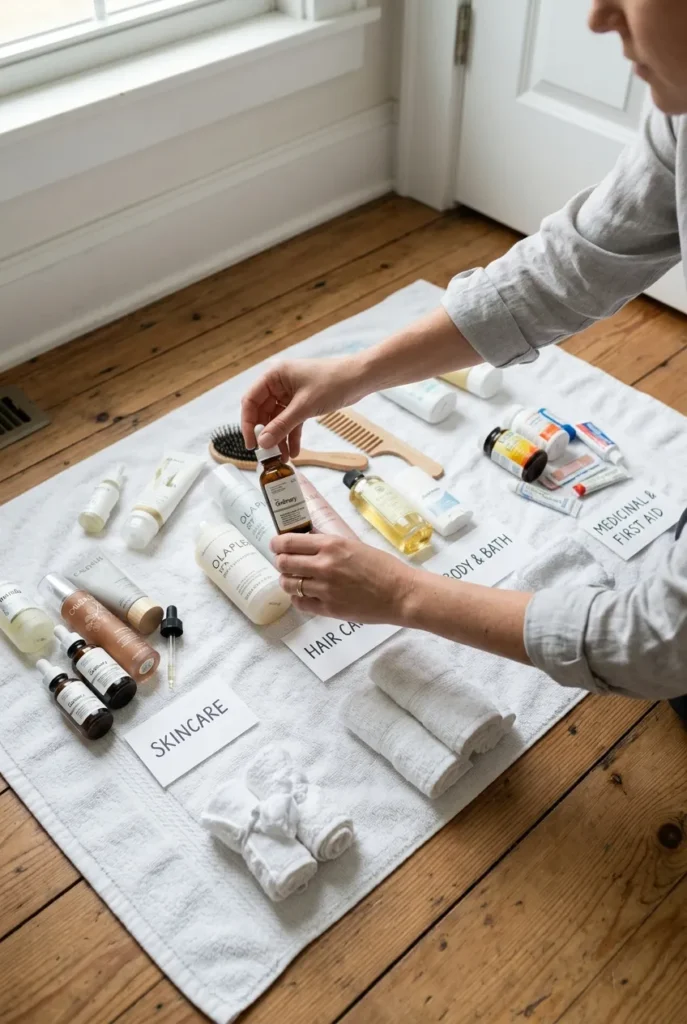
Start by Emptying the Whole Bathroom Closet
Before you buy a single bin, take everything out. Every competitor guide agrees on this one, and honestly, it works. You cannot organize a space you cannot see.
Pull it all onto a towel on the floor or the bed. Wipe down the shelves while they are empty (a little all-purpose spray and a microfiber cloth, done in two minutes). Then sort what you pulled out into four quick piles: keep, relocate, donate or pass down, and toss.
Be a little ruthless here. That crusty half-bottle of lotion? Gone. The four sets of sheets you never use? Donate or pass down to someone who will. Emptying first gives you a real inventory, and you will almost always find you have way less to store than you thought.
The 4-Zone Closet Map (Our Simple Framework)
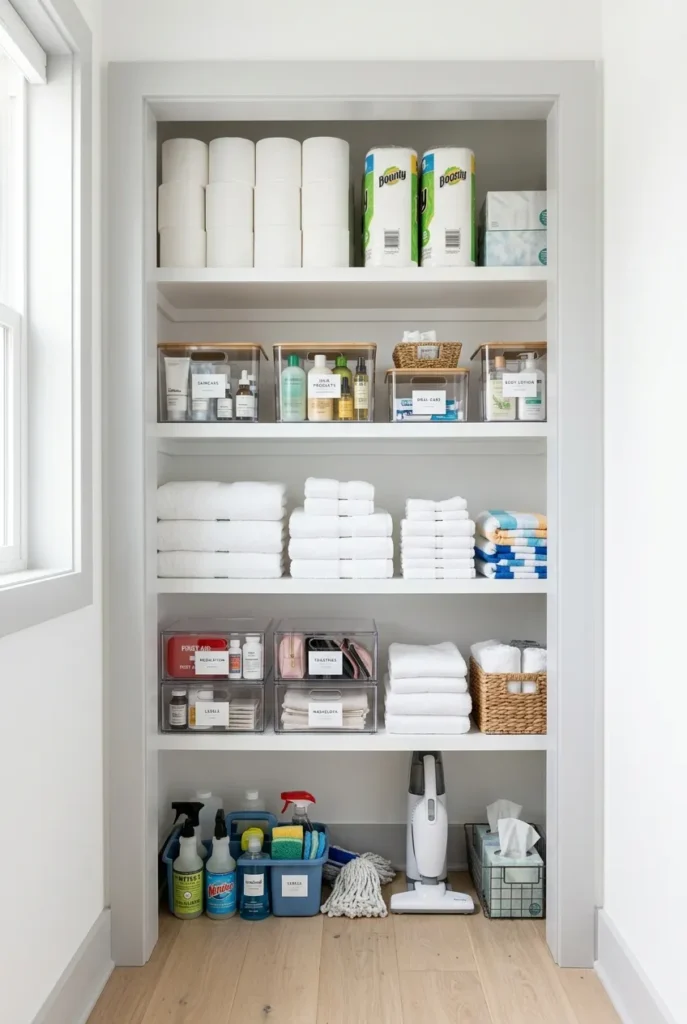
Here is the framework we build every bathroom closet around. Call it the 4-Zone Closet Map. You split the closet into four zones based on how often you reach for things, then you place each zone at the right height. That is the whole trick.
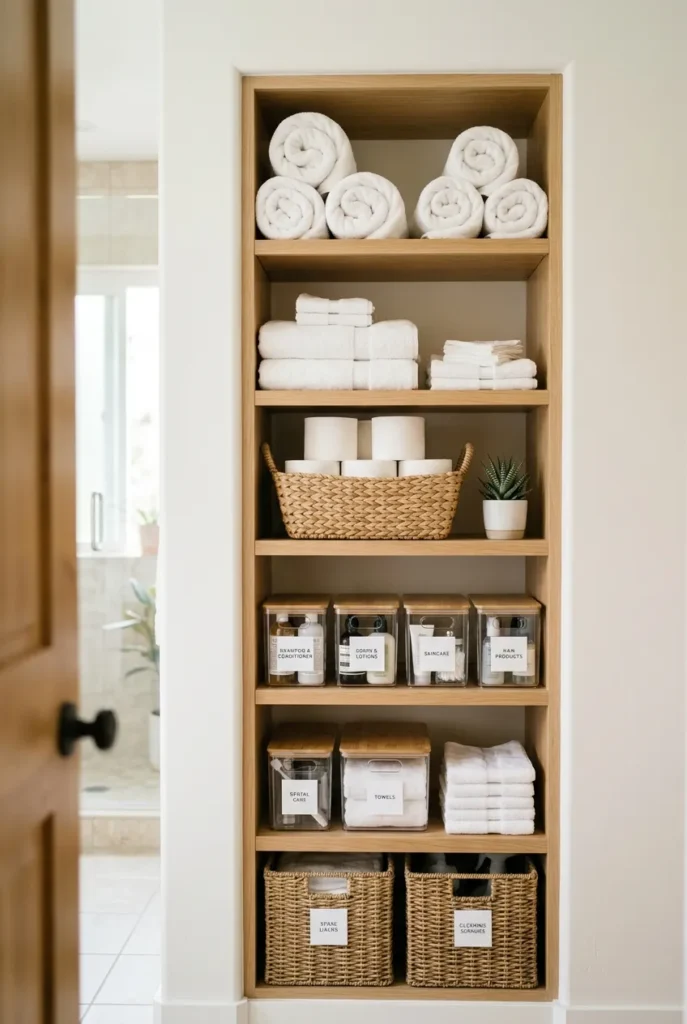
Zone 1 is Daily (eye and chest level): the towels and toiletries you touch every morning. Zone 2 is Weekly (upper-middle): backup toiletries, extra hand towels. Zone 3 is Backstock (top shelf): bulk TP, paper towels, the stuff you buy in twelves. Zone 4 is Rarely (floor or lowest shelf): heavy items, cleaning supplies, the beach towels you use twice a year.
Why height matters: you want the things you grab half-asleep at 6 a.m. right in front of your face, not on a top shelf you need a step stool for. Put the light, occasional stuff up high and the daily stuff at arm’s reach.
Towels: Roll, Stack, or Fold?
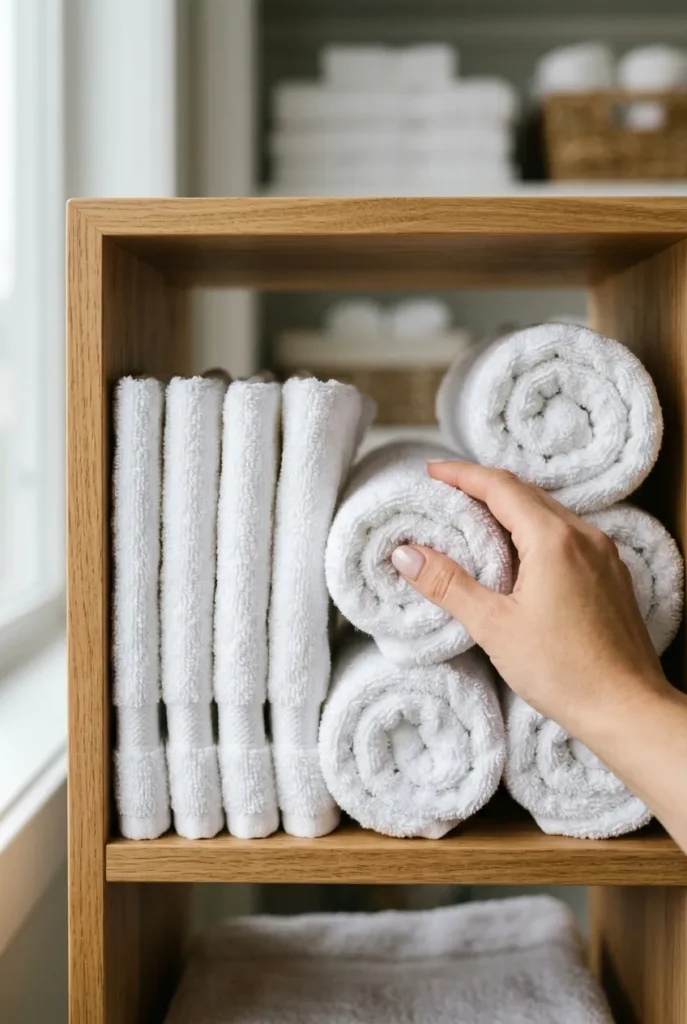
Towels eat up more closet space than anything else, so let’s get them right. You have three options, and the best one depends on your shelf depth.
Rolling looks gorgeous and works beautifully on open or shallow shelves (that spa look you see all over Pinterest). Filing towels vertically, standing them up like folders in a drawer, is our favorite for deep shelves because you can pull one without toppling the stack. Classic flat stacking is fine too, just keep piles under six high so they do not slump.
One rule we swear by: pick one towel color for the closet, ideally white or a soft neutral. It instantly looks more expensive and pulled together, even if the towels came from a Target Brightroom clearance bin. If you want the full folding breakdown by sheet and towel type, we walk through exactly how to fold and store sheets and towels in a separate post.
VERIFY: your real towel win here, e.g. “We switched our linen closet to all-white waffle towels from HomeGoods and it changed everything.”
Toilet Paper Storage That Does Not Avalanche
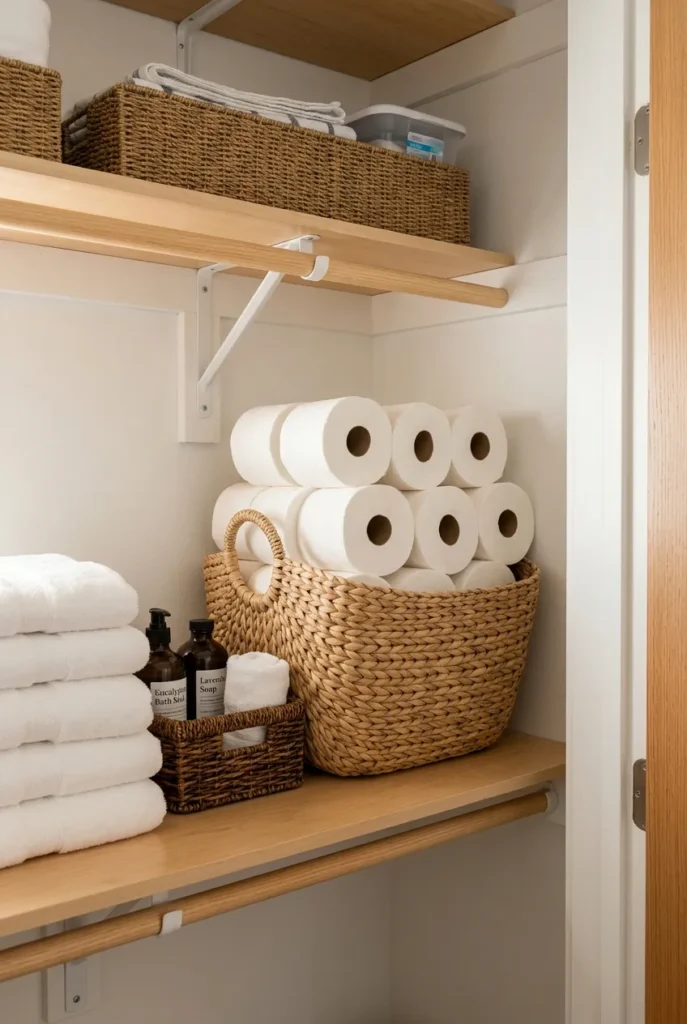
TP is the item most likely to tumble out and hit you in the shin. The fix is containment. Instead of stacking loose rolls, corral them.
A tall wicker or wire basket holds a whole multipack upright and looks intentional. For deeper closets, a stackable bin keeps rolls from rolling to the back where you forget about them. If your closet is tight, a slim over-the-door pocket organizer turns dead door space into TP storage (and yes, this is one of our favorite renter tricks).
Keep your working supply of TP in the Weekly zone at mid-height, and stash the giant warehouse-club backstock up top in Zone 3. That way you refill from below without an avalanche every time.
Toiletries: Clear Bins and Real Categories
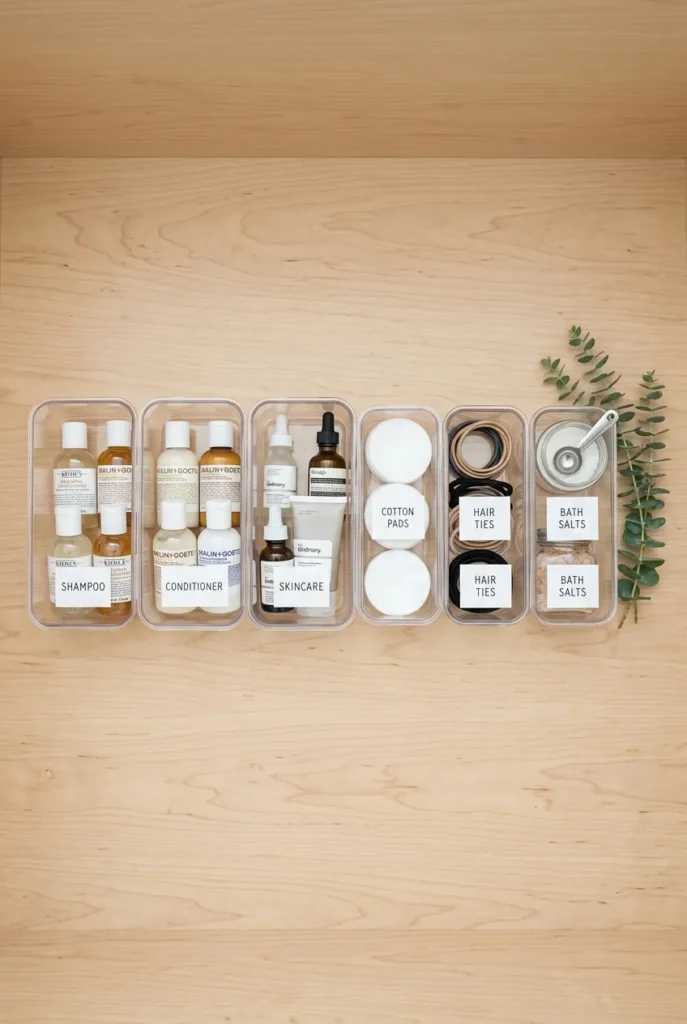
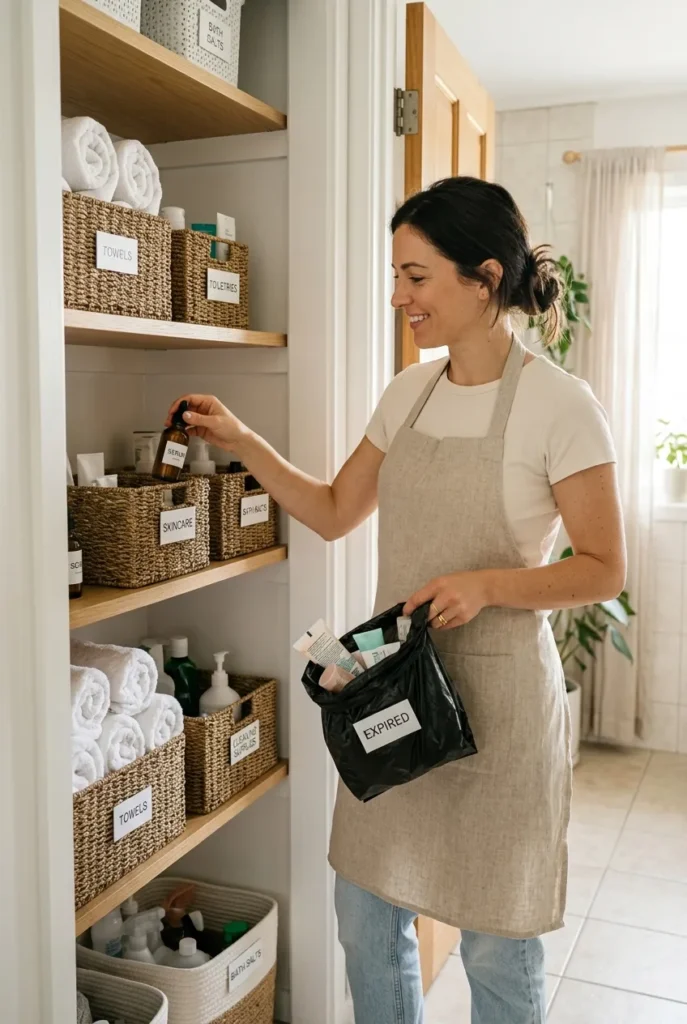
This is where clear bins for toiletries earn their keep. When you can see what you have, you stop buying your fourth backup of the same face wash. Group toiletries by category, not by owner: hair, skin, oral care, first aid, backstock.
Give each category its own labeled bin. Short, open bins work best for daily items so you can grab and go. Deeper lidded bins are great for backstock you rarely touch. A small lazy Susan on a shelf makes reaching bottles at the back effortless, just spin and grab.
Decant if you like the uniform look, but skip it for anything that needs its original packaging or expiration date (more on that below). For the smaller cabinet under the sink, we have a whole separate method to organize under the bathroom sink that pairs perfectly with this closet system.
Medicine and Backstock: Store It Safe, Not Just Pretty
Here is a gap almost every organizing post skips. A bathroom closet is warm and humid, which is genuinely one of the worst places to store medication long-term. Heat and moisture can break pills down faster.
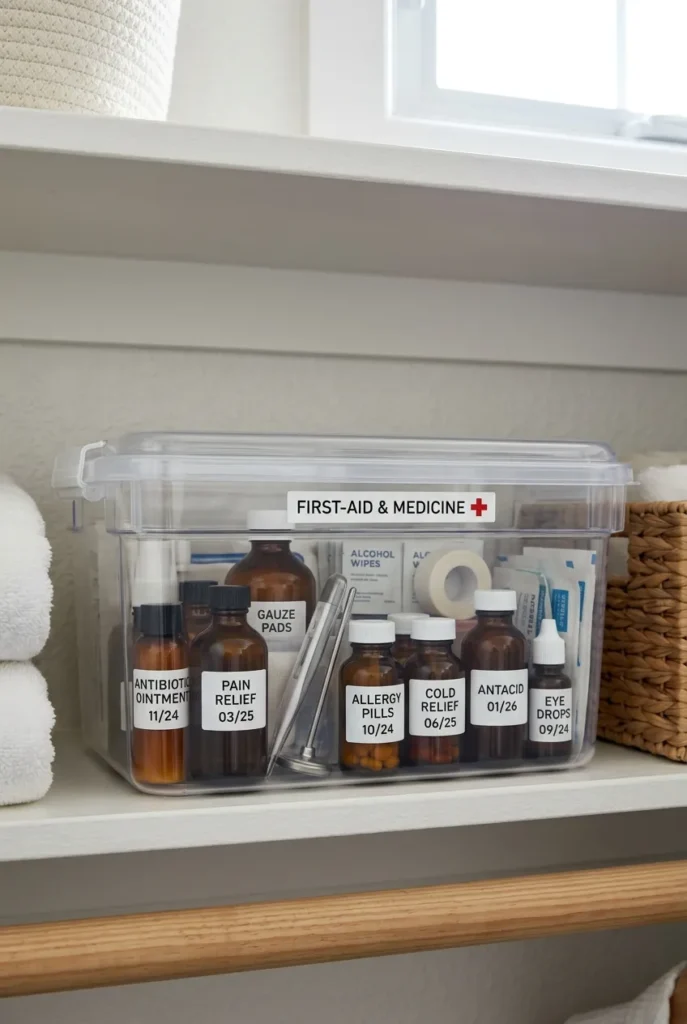
So keep a small, dated first-aid and medicine bin in your closet for grab-and-go items, but store the bulk of your medications somewhere cool and dry, and always up high and out of reach if kids or pets are in the house. The CDC has clear guidance on medication safety and safe storage worth a quick read, and when you find expired bottles during your purge, the FDA explains how to dispose of unused medicines properly rather than just tossing them in the trash.
Twice a year, do a quick expiration sweep. Line up medicines, check dates, and clear anything old. It takes ten minutes and keeps your first-aid bin actually useful in an emergency.
Fixing Deep and Narrow Closets
Deep shelves are the number one complaint we see in real forums, and for good reason. Stuff disappears into the back and you buy duplicates you did not need.
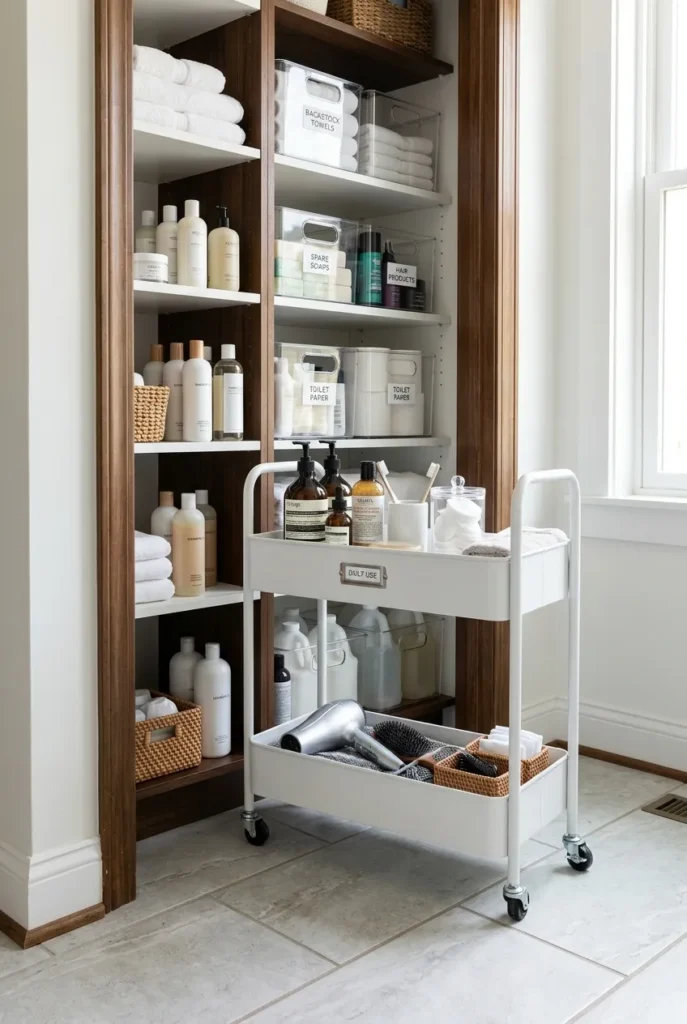
Two fixes solve almost every deep closet. First, add pull-out bins or a small rolling cart so the back shelf actually slides out to you. Second, use front-to-back zoning: daily items in front, backstock behind, so you are not digging. For narrow closets, go vertical. Stack bins, add a tension rod for hanging cleaning tools, and use the door.
If your bathroom is tight overall, our no-drill storage ideas for renters cover tension rods, adhesive shelves, and over-the-door racks that add storage without touching the walls.
Label Everything (This Is the Glue)
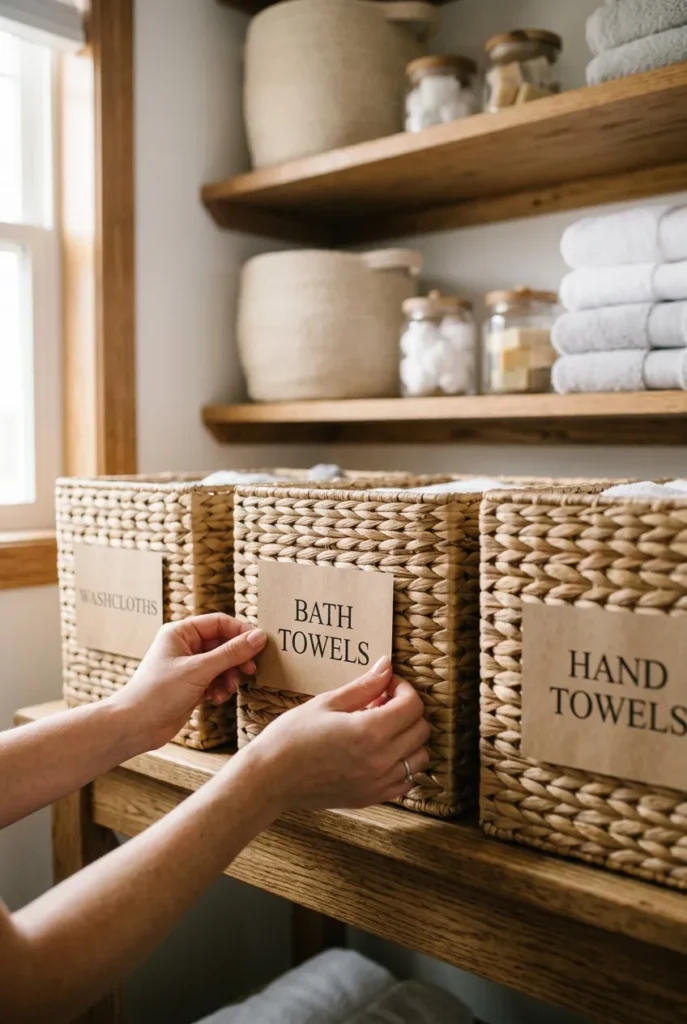
Labels are what make the system stick when other people (or half-awake you) put things away. Without them, bins drift back into chaos within a week.
You do not need anything fancy. A basic label maker, printable tags on kraft paper, or even a paint pen on the bin edge all work. Label by category, not by exact product, so “Hair” still makes sense when you swap shampoos. Keep the font and style consistent across every bin for that cohesive, calm look.
Honestly, labeling is the step people skip and then wonder why the closet fell apart. Do not skip it.
The 15-Minute Monthly Reset
Any closet drifts. The difference between a closet that stays organized and one that does not is a tiny maintenance habit. Ours is the 15-minute monthly reset.
Once a month, do three things: refill your daily zones from backstock, return any stray items to their labeled bin, and pull anything expired or empty. That is it. Fifteen minutes, once a month, and your bathroom closet organization holds all year.
Set a recurring reminder on your phone so it actually happens. Future you will be grateful.
Frequently Asked Questions
How do I organize my bathroom closet?
Empty it completely, wipe the shelves, then sort into keep, relocate, donate, and toss. Group what is left by category, place daily items at eye level and backstock up high, add clear bins and baskets, and label everything. Finish with a quick monthly reset to keep it that way.
What are the different types of bathroom organizers?
The main ones are clear stackable bins, open short bins for daily grab-and-go, woven or wire baskets for TP and towels, lazy Susans for bottles, over-the-door pocket organizers, tension rods, and pull-out carts for deep shelves.
What are 5 tips for organizing your closet?
Empty it first, sort ruthlessly, zone by how often you use things, contain everything in labeled bins, and stick to one towel color for a cohesive look.
What is the best closet organizing system?
The best system is the one you will maintain. A simple zone-based layout (daily at eye level, backstock up high) with labeled bins beats any expensive built-in you have to fight with. Match the containers to your shelf depth.
Where should I store medicine in the bathroom?
Keep a small dated first-aid bin for grab-and-go items, but store bulk medication somewhere cool and dry rather than in a humid bathroom, and always out of reach of children and pets.
Your Cozy, Clutter-Free Closet Starts Today
Here is the whole thing in one breath: empty it, zone it by how often you reach for things, contain towels and TP and toiletries in labeled bins, store medicine safely, and run a 15-minute reset once a month. That is a bathroom closet that stays calm.
Pick one shelf to start with this weekend, even just the towel shelf, and build from there. Which zone are you tackling first? Save this guide so you have the four-zone map handy when you dig in, and come back to tell us how it went.
This article is general information, not medical or professional advice. For medication storage and disposal questions, consult a qualified US pharmacist or healthcare professional.