

Laundry Room Storage: Vertical and Shelf Ideas for Every Size
Your laundry room works hard. It deserves better than a leaning tower of detergent bottles and a basket that never quite closes. Good laundry room organization storage isn’t about square footage, it’s about the wall space you already own and keep forgetting to use. We’re going to show you how to fit real storage into a closet, a nook, or a full room, using shelves, tension rods, and a handful of bins you can set up in an afternoon. No renovation. No drill required for most of it. Let’s build a laundry room you actually like walking into.
Here’s the promise: by the end of this, you’ll have a plan you can screenshot, a short shopping list with real sizes and prices, and a layout that works whether your machines live behind bifold doors or under a folding counter.
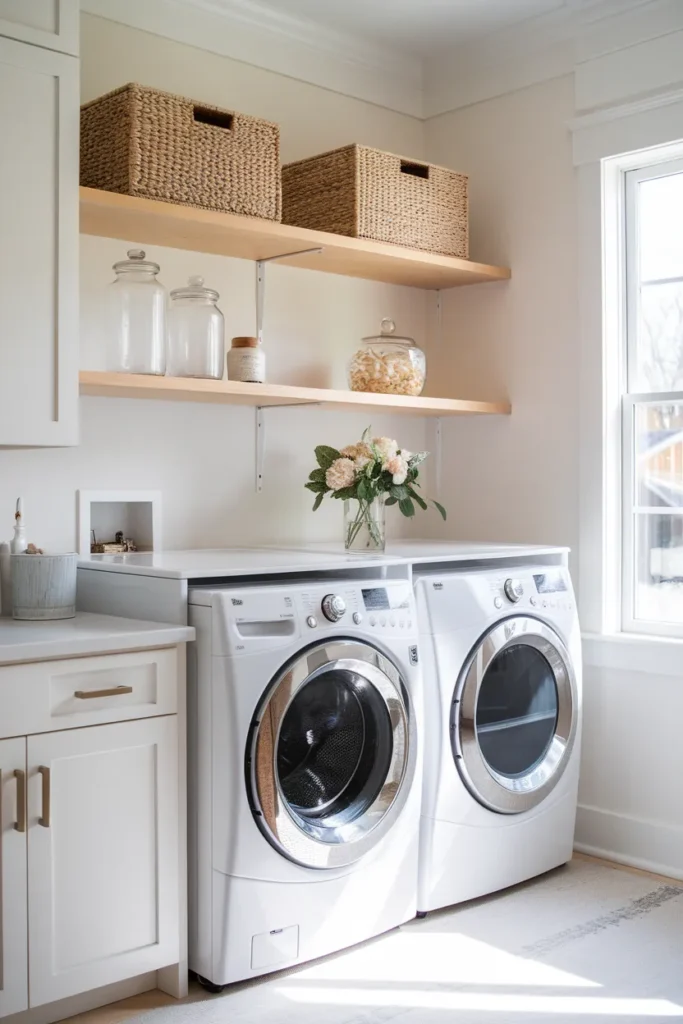
Start With the Wall, Not the Floor
Most people shop for laundry storage backward. They buy a floor cabinet, wedge it in, and lose the walking room they needed. Flip it. The cheapest square footage in any laundry room is vertical, and it’s almost always empty above the machines.
Before you buy anything, stand in the doorway and look up. Measure the open wall above your washer and dryer, the back of the door, and any sliver of gap between the appliances. Those three spots hold most of what a laundry room needs. This is the heart of smart laundry room organization storage: you’re not adding a room, you’re using the one you have all the way to the ceiling.
To keep it simple, we sort every laundry room into five jobs. We call it the 5-Zone Laundry Wall, and it’s the framework the rest of this guide follows.
The 5-Zone Laundry Wall
| Zone | What lives here | Best storage |
|---|---|---|
| Sort | dirty clothes, by lights and darks | 3-bag rolling sorter |
| Wash | detergent, pods, stain sticks | slim bin on the lower shelf |
| Dry | wet items and air-dry pieces | tension rod plus fold-down rack |
| Fold | clean, warm clothes | counter or board over the machines |
| Store | clean linens and backups | upper shelves with labeled baskets |
Print that or screenshot it. Once every item in your laundry room has a zone, the clutter has nowhere to hide. We’ll fill in each zone with real products and real measurements below.
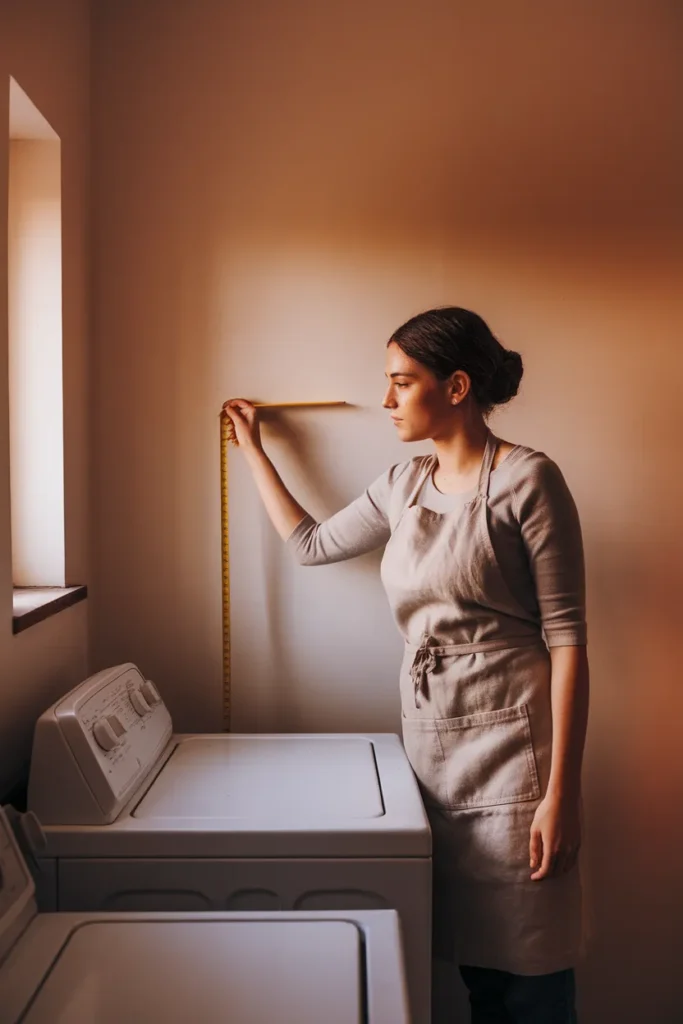
Shelves Above the Washer and Dryer (Exact Heights That Work)
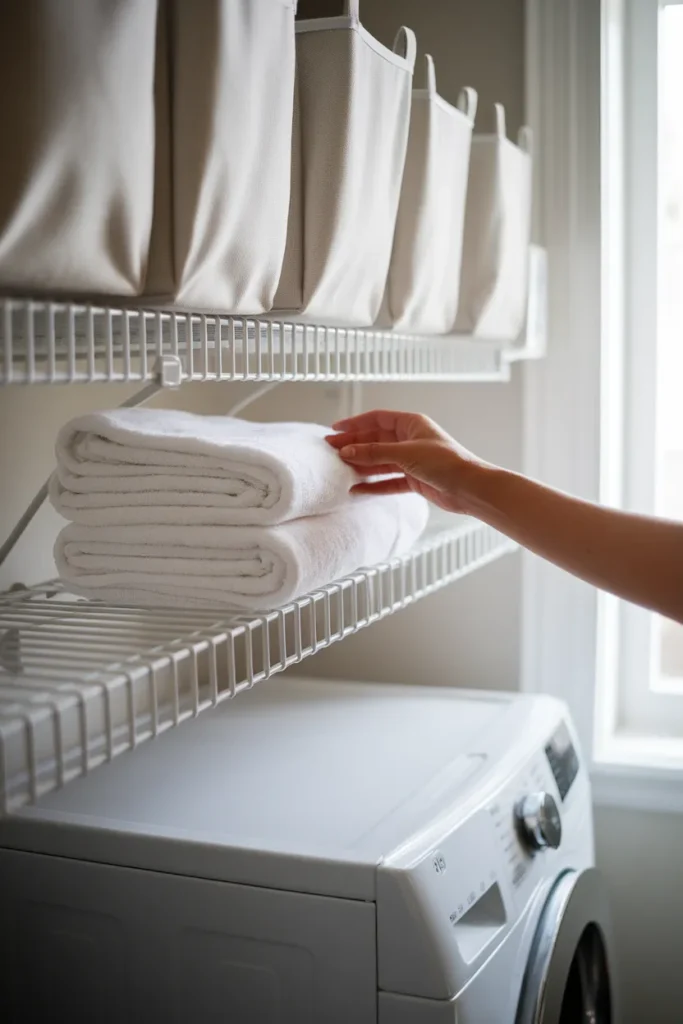
Open shelving over the machines is the single highest-value upgrade, and it’s where the “shelf ideas for every size” part really pays off. A basic ClosetMaid wire shelf kit runs about $42 for a 3-foot section at 12 inches deep, which is plenty for detergent, baskets, and folded towels. Wood shelves look richer in photos; wire shelves let lint and moisture pass through, which matters more than you’d think in a warm, damp room.
Height is where people guess and regret it. Mount the lowest shelf about 18 inches above the tops of your machines. That clears a tall detergent jug and still lets you reach the back without a step stool. If your shelf includes a hanging rod, set that rod around 82 to 84 inches from the floor so shirts on hangers clear the washer lids.
Two shelves are better than one deep cabinet here. The lower shelf holds what you touch every load. The upper shelf stores the backups and the seasonal stuff you reach for twice a year. For more ways to work walls this hard, we broke down a whole post on vertical storage ideas for wall space you are wasting.
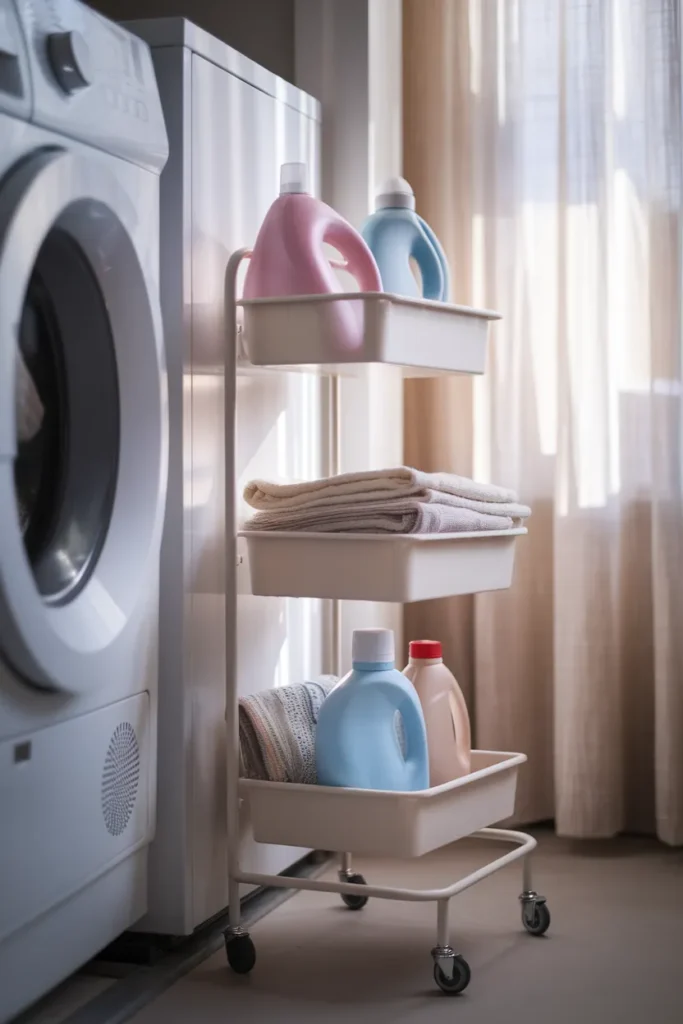
Bridge the Gap Between Your Machines
That skinny gap between a side-by-side washer and dryer is wasted in most homes. A slim rolling cart fixes it fast. The SimpleHouseware 3-tier narrow cart measures just 5.5 inches wide by 16.25 inches deep by 26.5 inches tall and rolls out for detergent, dryer sheets, and stray socks, then tucks back flush. It’s around $28, and honestly it’s the first thing we tell friends to buy (we learned the hard way that a wide cart just becomes a laundry graveyard).
If your machines sit tight together with no gap, skip the cart and move that storage up to the shelves or over to the door. The point of good laundry room organization storage is putting each item where your hand already goes, not forcing a product into a space that fights it.
Measure your gap before you order. Carts come in 5-inch, 8-inch, and 10-inch widths, so a quick tape check saves a return.
Hang It Up: Tension Rods and Drying Racks
Air-drying belongs in every laundry plan, and not only for delicates. The U.S. Department of Energy notes that ENERGY STAR washers use about 25% less energy and 35% less water than standard models, and skipping the dryer when you can stretches those savings further. You just need somewhere to hang things.
A spring tension rod is the renter’s best friend. A basic one adjusts from about 28 to 48 inches and costs a few dollars, but here’s the catch: those light rods hold only around 5 pounds, so a load of wet laundry will drop it. For real drying weight, use a heavy-duty steel closet tension rod rated for garments, wedged between two cabinets or across a nook. No screws, no holes.
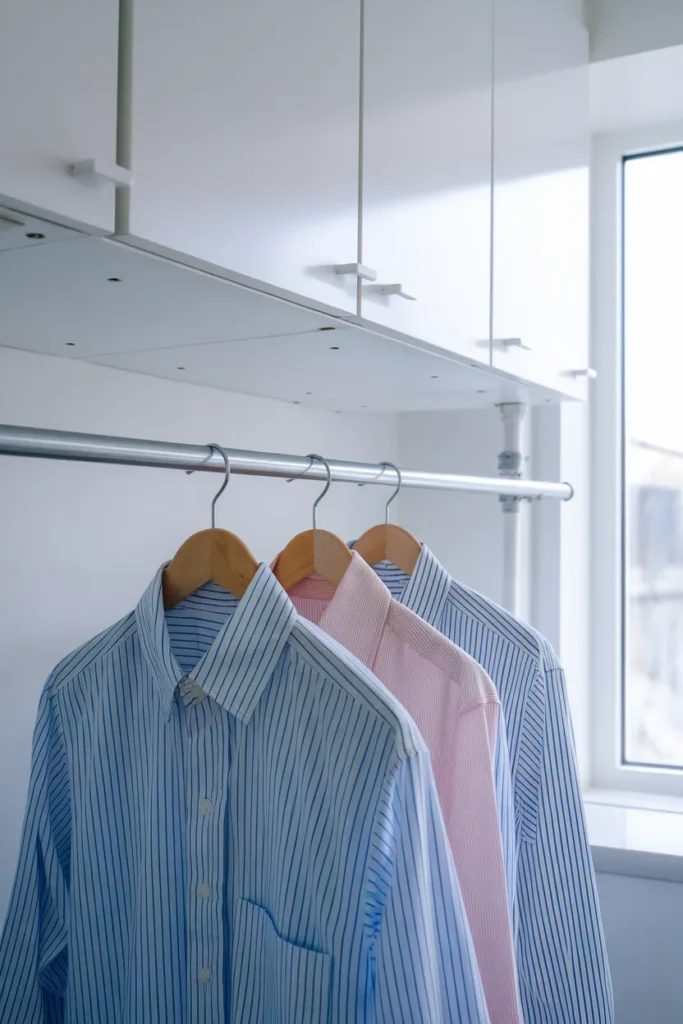
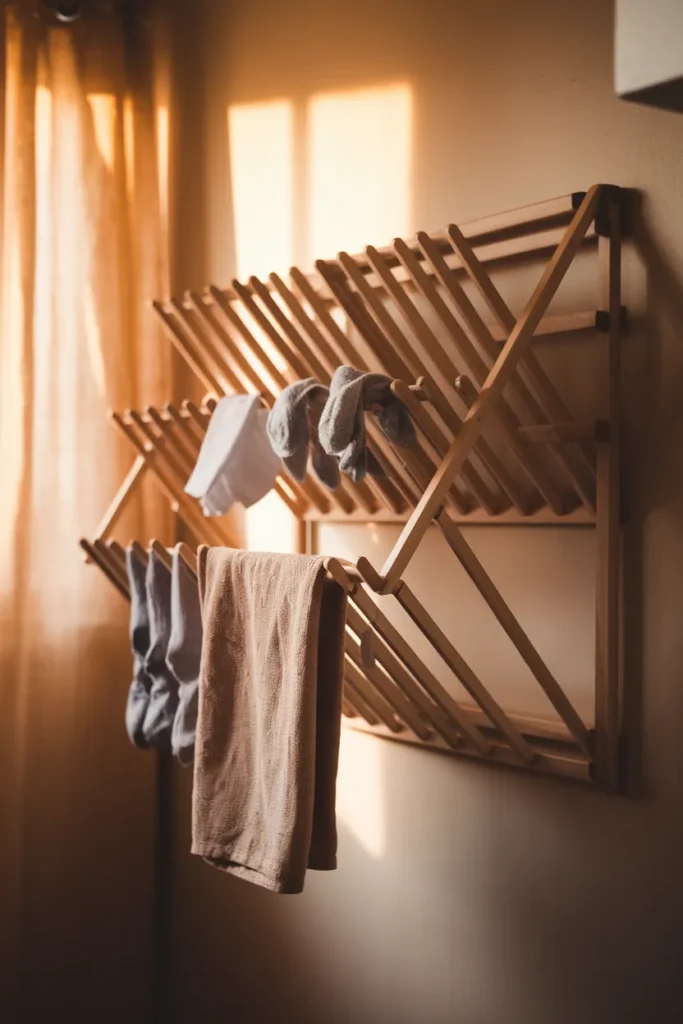
For bigger loads, a wall-mounted fold-down rack does the work and disappears when you’re done. A wood accordion-style rack (roughly 36 inches wide by 18 inches deep) opens for a full load of socks and tees, then folds flat to about 3 inches. Prices run from about $87 for a compact version up to $142 for the wide one.
Use the Back of the Door
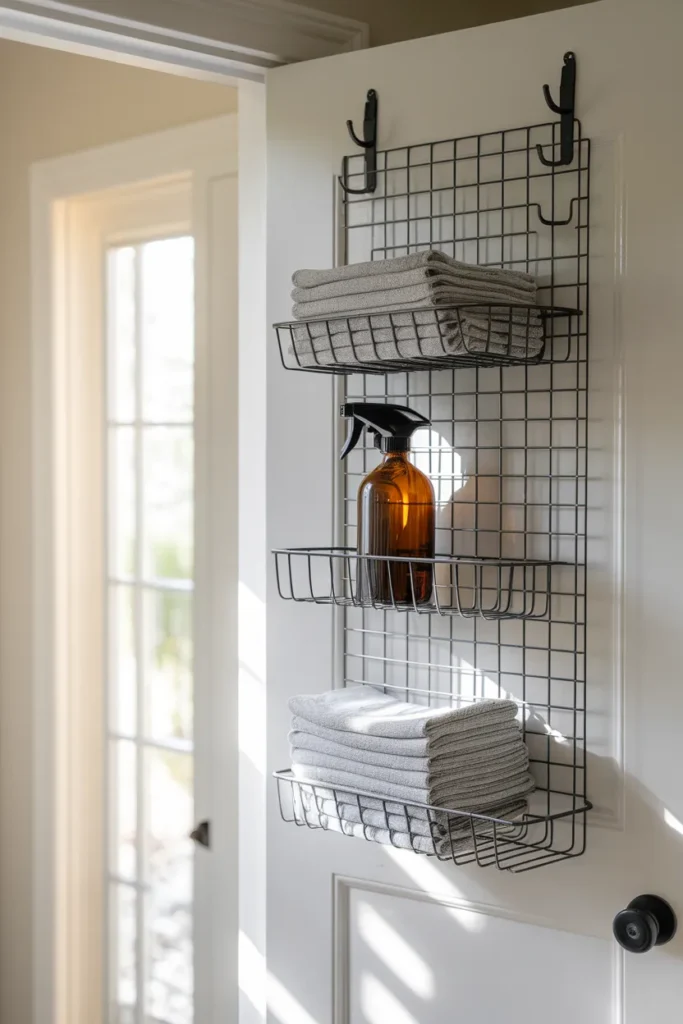
The back of the laundry room door is prime real estate, and it costs you nothing in floor space. An over-the-door metal rack (the mDesign steel version is 20 inches wide and hangs about 47 inches tall for around $38) holds spray bottles, folded microfiber cloths, and a small drying shelf. Hook it over the door, done.
Keep laundry products here and cleaning products separate from anything food-related, which is a small habit that keeps a shared space safe. If your laundry room doubles as your supply closet, we mapped out smarter spots to store cleaning supplies that beat shoving everything under the sink. For the full range of what these racks can hold, our guide to over-the-door organizers covers every room.
One more back-of-door trick: a slim over-the-door pocket organizer (the clear shoe kind) sorts stain sticks, clothespins, lint rollers, and mesh bags into pockets you can see through at a glance.
Small Laundry Room and Laundry Closet Ideas (No Drill Needed)
Renters and apartment dwellers, this section leads with you, because most laundry advice assumes you can drill into studs. You can’t always, so start with damage-free wins.
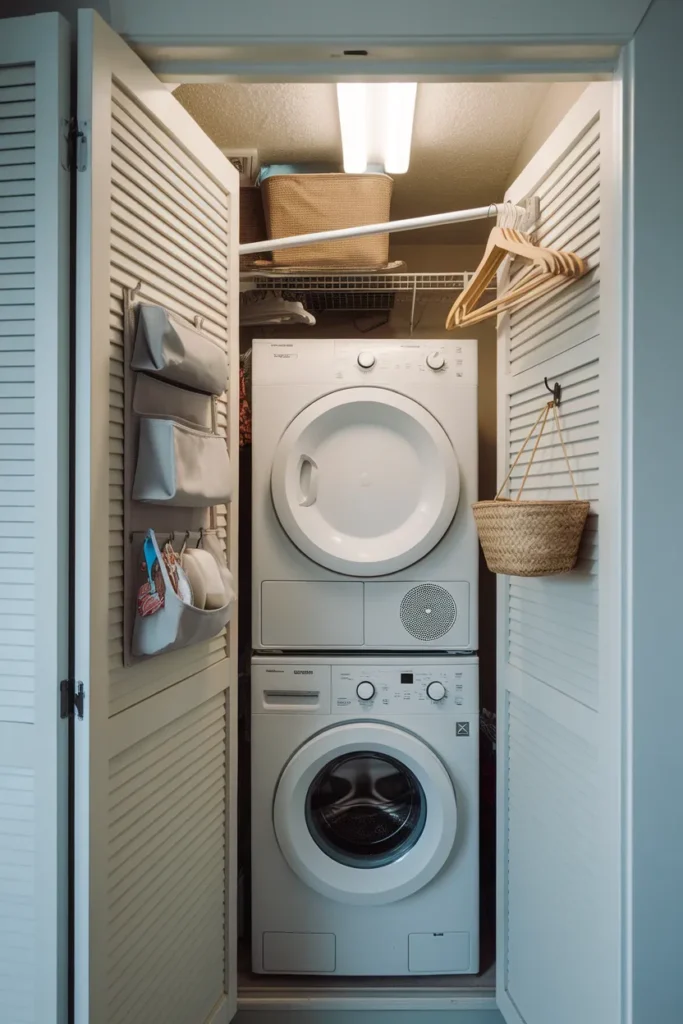
Command hooks and strips hold surprising weight and peel off clean, which makes them ideal for hanging a small basket, an ironing board, or a wall caddy inside a laundry closet. A tension rod up high gives you a hanging bar without a single hole. A stacked washer-dryer unit frees the whole vertical column beside it for a narrow shelf tower or an over-the-door organizer.
For a laundry closet behind bifold doors, the door track eats a few inches, so measure the true opening before you buy bins. Clear stackable bins work best in tight closets because you can read the contents without pulling them down. If your setup is a true closet nook, our walkthrough on how to organize a small laundry room tucked into a closet goes deeper on the exact layout. And if your machines share space with coats and backpacks, a mudroom-laundry combo setup keeps both zones from bleeding into each other.
Small laundry room organization storage lives or dies on one rule: nothing on the floor that could live on a wall.
The Best Bins, Baskets, and Labels
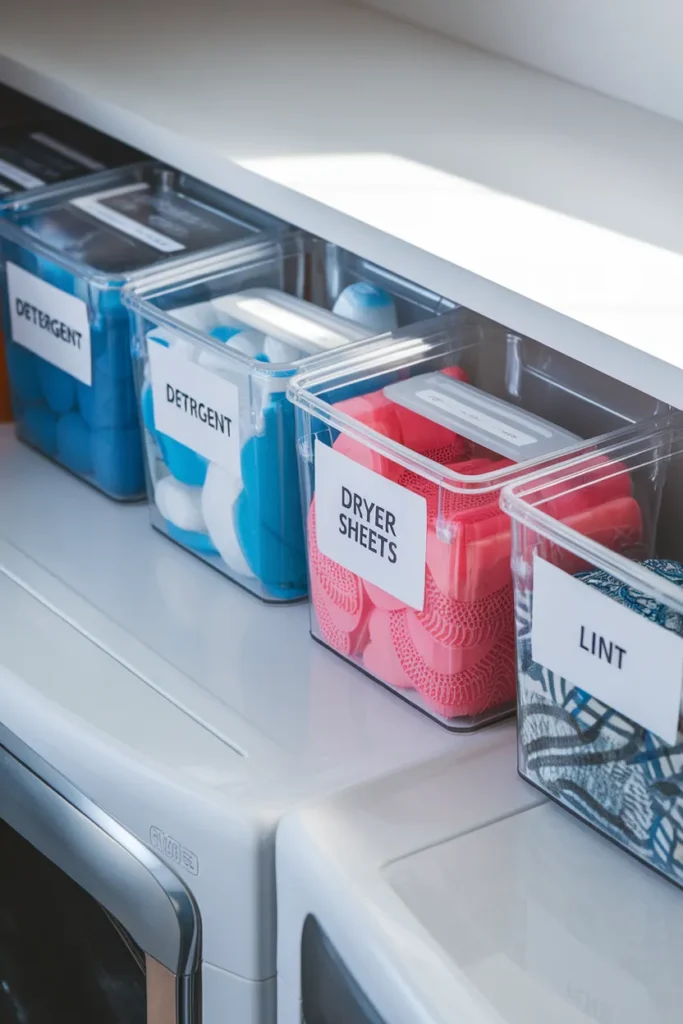
Bins turn a shelf from a pile into a system. The trick is matching the bin to the job instead of buying one giant tub for everything. Here’s a quick comparison of three we reach for, with real sizes and prices.
| Bin | Size | Price | Best for |
|---|---|---|---|
| Target Brightroom slim open bin (2-pack) | 15 by 6.25 by 6.25 in | $5.95 | dryer sheets, lint rollers, small tools |
| iDesign magnetic clear bin (2-pack) | 11 by 3 by 3.25 in | $31.99 | pods and stain sticks, stuck to the machine |
| Brightroom stackable front-opening bin | 9 by 14.9 by 8 in | $28 | detergent backups you stack two high |
Label everything, even if it feels fussy. A label maker or a set of simple write-on tags means anyone in the house can put things back, which is the only way a system survives past week one. Group by zone from the 5-Zone Laundry Wall: wash items together, dry items together, backups up top.
One caution on the cheap slim bins: they nest rather than truly stack, so if you want a two-high tower, spend up for the stackable front-opening style.
Laundry Room Storage by Size
No two laundry rooms are the same, so here’s the size-by-size blueprint the big roundups skip.
The closet (under 24 inches wide). Go all vertical. One tension rod up high, a two-shelf wire rack above the machine, an over-the-door organizer, and clear bins you can read. Skip the cart; there’s no gap to fill.
The nook (24 to 48 inches). Add a slim rolling cart in the gap, two shelves above, and a fold-down drying rack on the side wall. A single labeled basket per family member keeps clean laundry from mixing.
The full room (48 inches and up). Now you can add a folding counter over front-load machines. A washer-dryer countertop (about 54 inches wide, holding up to 250 pounds for around $197) gives you a fold station and hides the machine tops. Add a 3-bag rolling sorter (the Seville Classics steel model is 33 inches wide with a hanging bar, about $90) so sorting happens before wash day, not during it.
Whatever your size, the same five zones apply. You’re just spreading them across more wall or stacking them tighter.
Laundry Storage on a Budget (Under $25)
You don’t have to spend a paycheck to get organized. Some of our favorite laundry room organization storage fixes cost less than lunch, and they photograph just as well as the pricey ones.
Start at Dollar Tree. Clear bins, small caddies, and adhesive hooks run about $1.25 each. They’re perfect for corralling pods, clips, lint rollers, and mesh bags. Walmart’s Mainstays bins and Amazon Basics baskets keep a whole shelf matching for a few dollars apiece, which is the trick that makes a cheap setup look intentional instead of thrown together.
Hangers count too. A pack of slim plastic hangers costs almost nothing and doubles your rod space over bulky wire ones. Grab a two-dollar tension rod, add a simple curtain to hide the machines, and you’ve styled the room for the price of a coffee.
Here’s the budget order we follow. Buy bins first. They give the biggest visible change for the smallest spend. Add labels next. Then splurge on one nicer piece, a rolling cart or a fold-down rack, once the free wins are already in place.
One honest caution: measure before every dollar-store run. Cheap bins are only a deal if they actually fit the shelf. A bin that’s an inch too wide is just clutter you paid for. (We’ve made that mistake more than once.)
Keep It Safe, Dry, and Reset
Organizing isn’t only about looks, and this is the safety angle the top articles leave out. Lint is the quiet risk in a tidy laundry room. The U.S. Fire Administration reports that failing to clean dryers is the leading cause of dryer fires, so build a lint-screen wipe into every single load and keep a small trash bin within arm’s reach of the dryer. An organized room makes the safe habit the easy habit.
Moisture is the other one. A warm, damp laundry room grows musty fast, so choose wire shelving where you can, leave breathing room behind bins, and crack the door after a hot wash. A cheap moisture absorber tub on the top shelf earns its keep.
Then close the loop with a 5-minute reset. Wipe the counter, refill the pod bin, hang the damp things, and put the sorter bags back. Do it after the last load and the room resets itself daily instead of collapsing by Friday.
Your Try-This-Weekend Setup
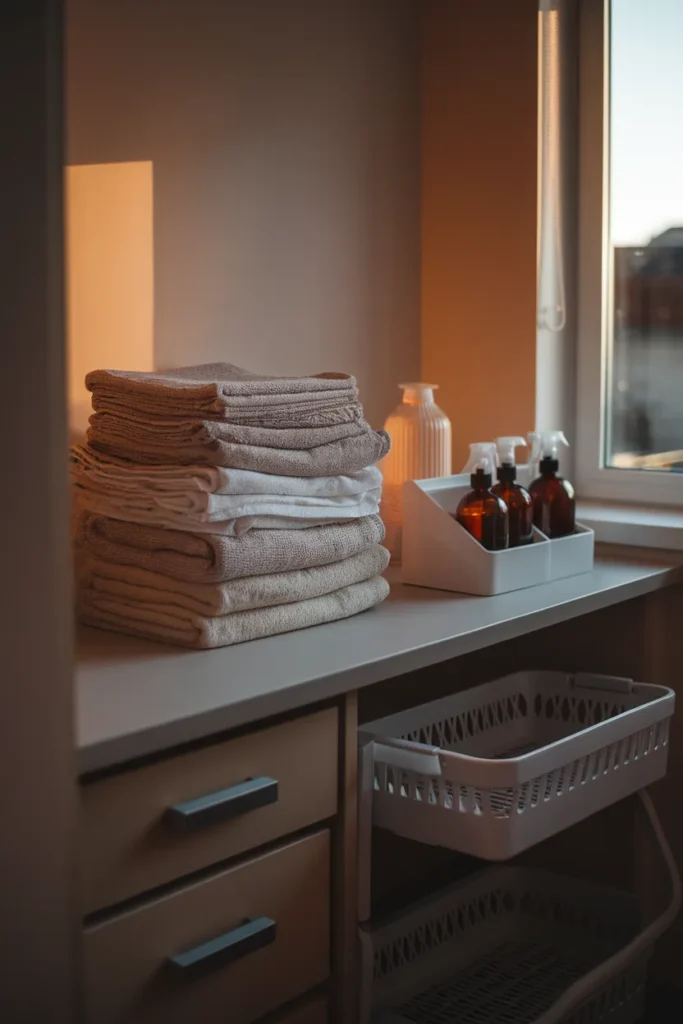
Short on time? Here’s the order that gives the fastest payoff, start to finish in one afternoon.
- Clear it out. Empty the machines and the shelf completely.
- Measure three things: the open wall, the gap between machines, and the back of the door.
- Hang the lower shelf 18 inches above the machine tops.
- Roll the slim cart into the gap and hook the over-the-door rack on the door.
- Sort supplies into labeled bins by zone.
- Add a tension rod or a fold-down rack for drying.
Two hours, tops. You’ll finish with a laundry room organization storage setup that actually holds up past week one.
Laundry Room Storage FAQ
How do you organize a small laundry room? Work vertically and lead with no-drill pieces. A high tension rod, a two-shelf rack above the machines, an over-the-door organizer, and clear labeled bins cover most small rooms without touching the floor. Assign every item to one of the five zones (sort, wash, dry, fold, store) so nothing floats.
What’s the best way to organize a laundry closet? Measure the true opening behind the bifold doors first, since the track steals a few inches. Then stack storage up the column beside a stacked washer-dryer, use clear stackable bins you can read at a glance, and hang a slim pocket organizer on the door for small supplies.
How do I add storage to a laundry room without drilling? Tension rods, Command hooks and strips, over-the-door racks, and freestanding slim carts all add real storage with zero holes. This is the core of renter-friendly laundry room organization storage, and it’s why we lead every small-space plan with damage-free options.
How high should shelves go above a washer and dryer? Mount the lowest shelf about 18 inches above the tops of the machines so a tall detergent jug fits and you can still reach the back. If the shelf has a hanging rod, set it around 82 to 84 inches from the floor so hung clothes clear the lids.
What should I store in my laundry room? Keep the daily items (detergent, pods, dryer sheets, stain sticks) at arm’s reach on the lower shelf or in the gap cart. Send backups, seasonal pieces, and clean linens to the upper shelves in labeled baskets. Keep cleaning chemicals separate from anything food-related.
Where do I put a drying rack in a small laundry room? A wall-mounted fold-down rack is the best fit because it opens for a full load and folds flat to about 3 inches when you’re done. If wall space is tight, a heavy-duty tension rod between two cabinets gives you a hanging bar with no footprint at all.
How do I keep my laundry room from smelling musty? Use wire shelving so air moves, leave a little space behind your bins, crack the door after hot washes, and set a moisture absorber on the top shelf. Wiping the machine gasket dry now and then helps too.
Your Next Load Starts Here
You don’t need a bigger laundry room. You need the wall you already have, a few honest measurements, and the five zones working together. Start with one upgrade this weekend, the shelf above the machines or the cart in the gap, and let the rest follow. Small wins stack.
If this gave you a plan, pin the image at the top so you can find it on shopping day, and tell us in the comments which zone is your problem child. We read every one, and your fix might be the next one we test.
General information only. Product sizes and prices change, so confirm current details with the retailer before you buy.


