

Bathroom Drawer Organization: How to Stop the Daily Bottle Avalanche
You reached for your toothbrush this morning, and a deodorant rolled out of the top drawer and hit the floor. A mascara tube followed. A tweezers landed in the sink. You stared at the chaos for a second, made a mental note to fix it, then walked out. Sound familiar? Bathroom drawer organization is the one project most of us postpone until something falls into the toilet.
Here is the honest truth. A good drawer system takes about 90 minutes the first time, then about 4 minutes a week to maintain. And the reason most attempts fail is not the bins. It is the wrong system for the drawer depth you actually have. We are going to fix that.
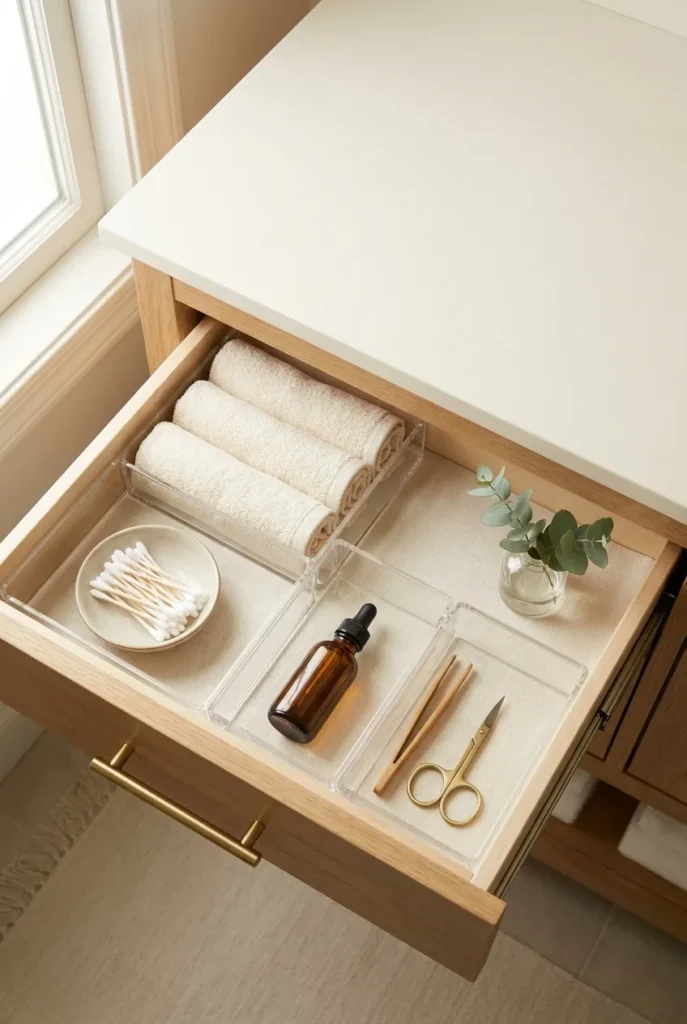
Why Bathroom Drawer Organization Always Falls Apart (And How to Fix It for Good)
Most bathroom drawers fall apart for one reason: people pick the bins first and the system second. They buy a 14-piece acrylic set on sale, dump everything in, and watch it collapse within three weeks.
The fix is the opposite order. System first. Bins second. Decluttering before either.
After resetting four different bathrooms in my own house and two for my mom over the last year, I noticed the same thing every time. The drawers that held were the ones built around the depth of the drawer, not around what was on sale at Target that week. So that is where we start.
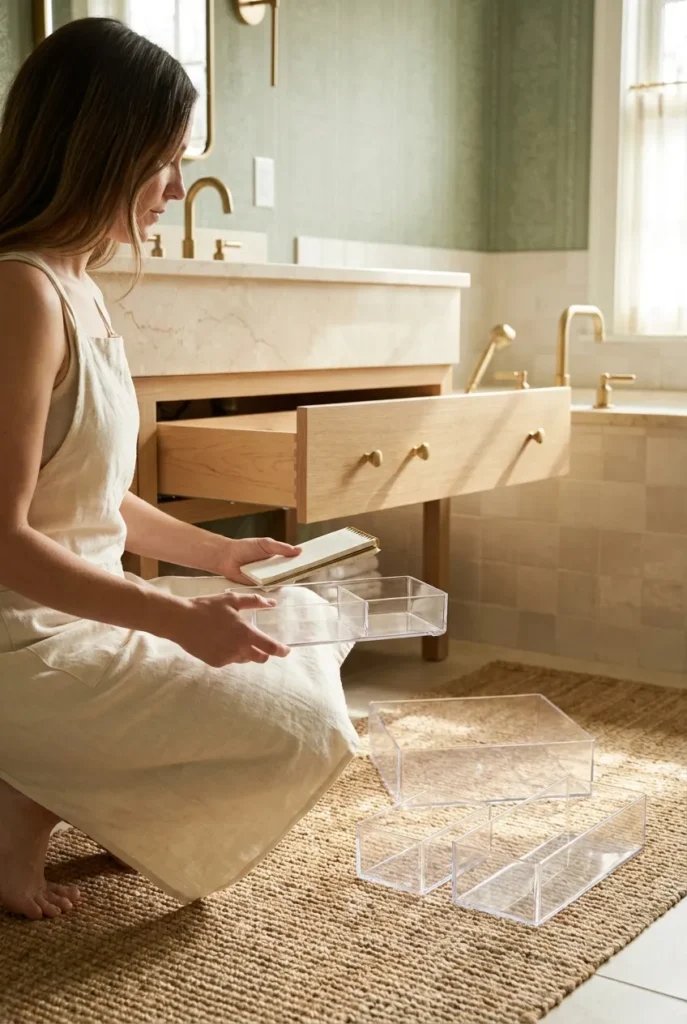
The Drawer Depth Trio: My Original System for Any Bathroom Drawer
Here is the framework that changed how my drawers stayed organized for more than three weeks. I call it the Drawer Depth Trio.
The rule is simple. The depth of the drawer dictates the system you use inside it. Most people skip this step and pick a system based on what looks pretty on Pinterest. That is why their drawers fall apart.
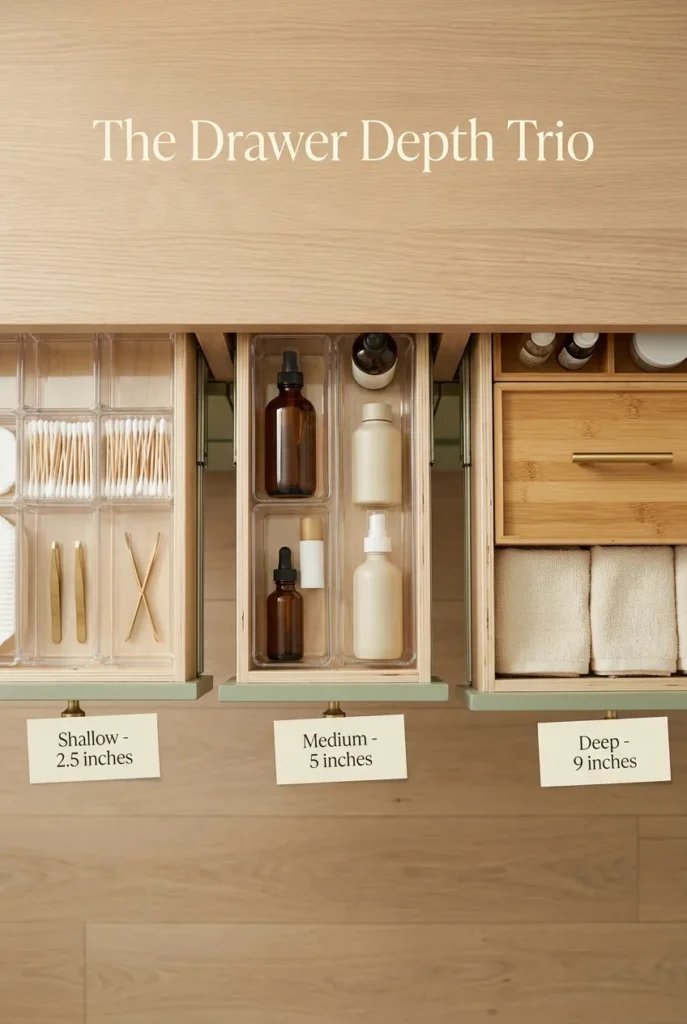
Three depth categories cover almost every bathroom drawer in a US home.
Shallow drawer (2 to 3 inches deep). Use flat acrylic dividers laid edge to edge. Everything sits in one visible layer. No stacking. This is the standard top vanity drawer in most newer homes.
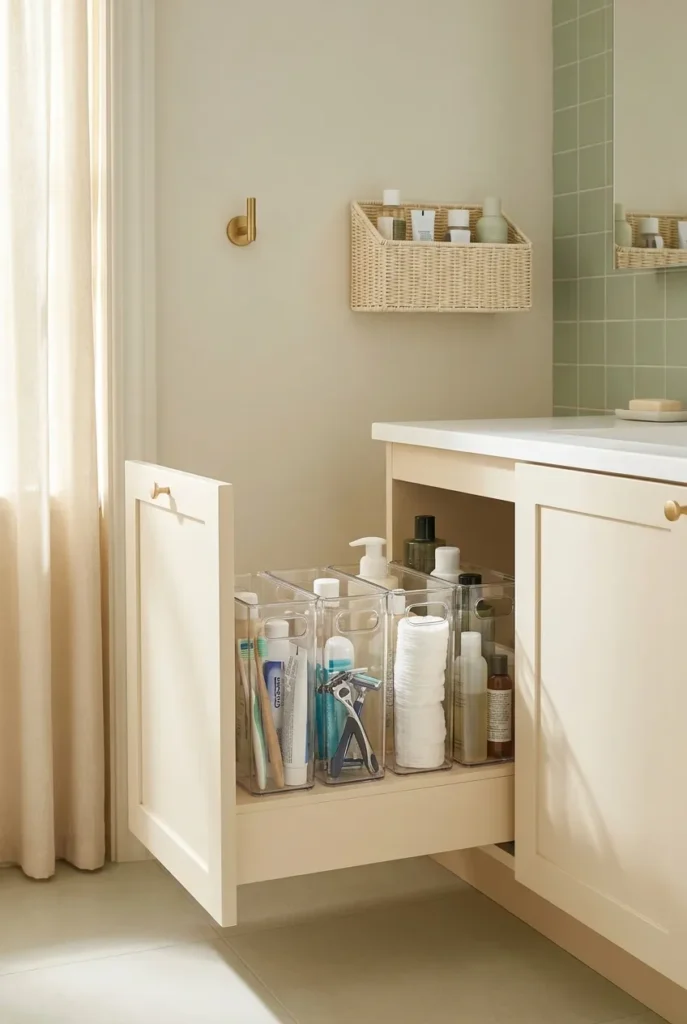
Medium drawer (3.5 to 5 inches deep). Use tall narrow acrylic bins stood vertically. Skincare bottles, hair tools, and makeup wands all stand up instead of lying flat. You can see every item from above.
Deep drawer (5.5 inches or deeper). Use a two-tier system. A removable top tray slides across the drawer holding daily-use items. The bottom layer holds backup and weekly-use items. Deep drawers are where most people fail because they treat depth as bonus space and end up with a 4-inch pile.
Measure your drawers tonight. Write the depth on a sticky note. That single number determines which products you buy.
The 90-Minute Bathroom Drawer Reset (Step by Step)
Here is the exact order I use every time. Stick to the order. Skipping steps is what makes the system fail.
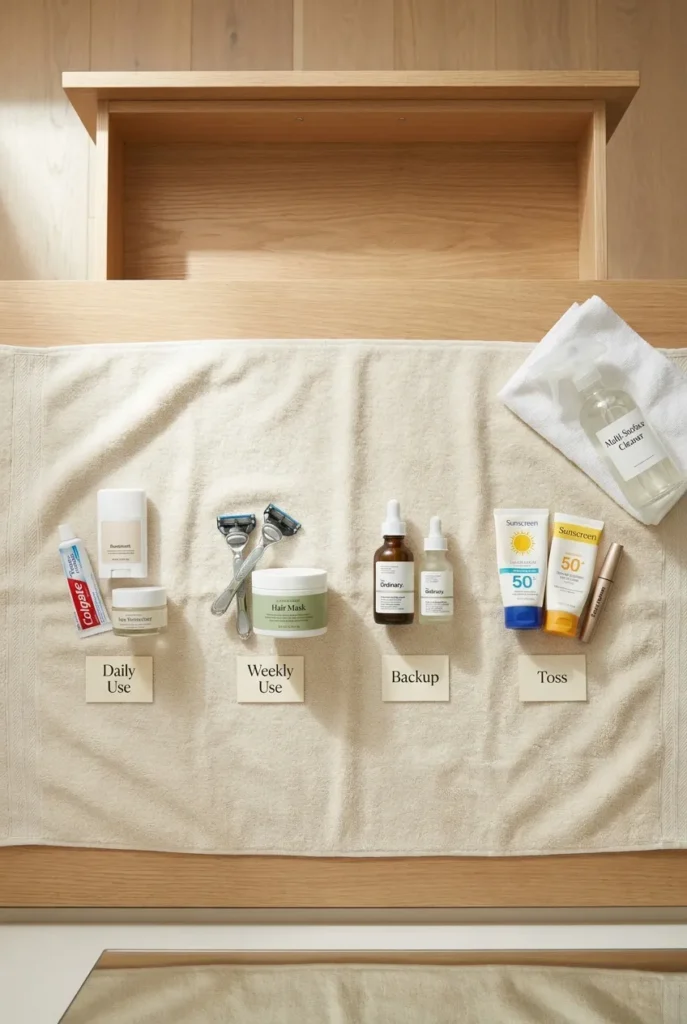
- Empty the drawer. All of it. Onto a clean bath towel laid over the counter or bed. Do not sort yet. Just pile.
- Wipe the drawer interior. A damp microfiber cloth and a spray of multi-surface cleaner. Let it dry while you sort.
- Sort the pile into four groups. Daily use, weekly use, backup, and toss. The “10 things in your bathroom you can toss tonight” guide [https://homeorganizehacks.com/things-to-throw-away-bathroom/] is worth a 5-minute read if your toss pile feels too small.
- Measure the drawer depth. Match it to the Drawer Depth Trio.
- Pick organizers that fit. Measure the drawer interior dimensions in inches (length, width, depth). Buy or pull bins that fit those numbers. Do not estimate.
- Line the drawer (optional but useful). A peel-and-stick liner in cream or natural cork keeps small items from sliding when the drawer opens.
- Place daily-use items first. They get the prime spot, usually the front center of the drawer.
- Add weekly-use items behind. Toothbrush replacements, backup razor blades, monthly hair masks.
- Drop backup items at the back or bottom tier. Unopened skincare, sealed cotton rounds, sealed deodorants.
- Label the bins (optional). A small label maker like a Brother P-touch produces clean cream-on-black labels that read as intentional, not preschool.
That is the whole loop. About 90 minutes the first time, faster from there.
Bathroom Drawer Organization Ideas by Category (What Goes Where)
The other reason drawer systems fail is that everything gets mixed. Toothbrushes next to nail clippers next to bobby pins. Each category needs its own zone. Here is the layout I use across five different bathroom drawers in my house.
Makeup Drawer Organization
Best in a medium-depth drawer using tall acrylic bins stood vertically. Lipsticks and mascaras stand upright in narrow bins. Foundation bottles get their own taller bin. Brushes go in a small ceramic cup with bristles facing up. Eyeshadow palettes lie flat at the back, sorted by frequency.
Per FDA cosmetics shelf life guidance, mascara has the shortest useful life (about 3 months once opened) and is the first thing to declutter when you reset this drawer. Foundations and concealers stretch 6 to 12 months. Powder products last longest.
Hair Tools Drawer Organization
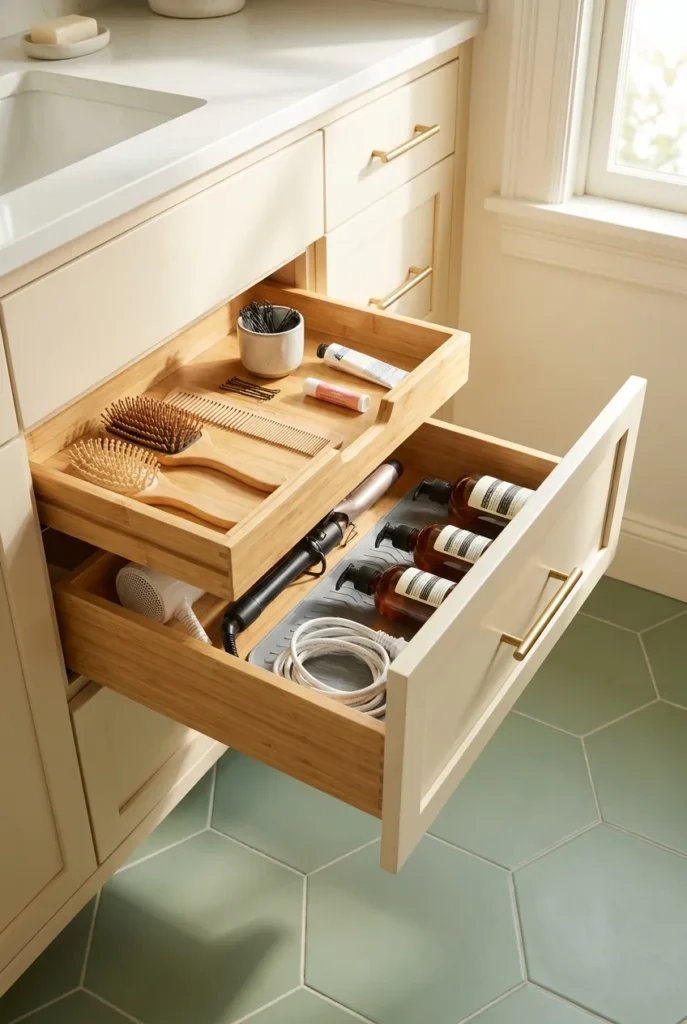
Hair tools belong in a deep drawer because they are bulky. A heat-resistant silicone mat lines the bottom. A two-tier divider holds the curling iron and straightener flat on the bottom, with the dryer cord coiled and tucked beside them. The top tier holds brushes, combs, hair ties, and clips in small acrylic sub-bins.
Never store a hot tool in the drawer right after use. Let it cool on a heat-safe mat on the counter for 15 to 20 minutes first.
Skincare Drawer Organization
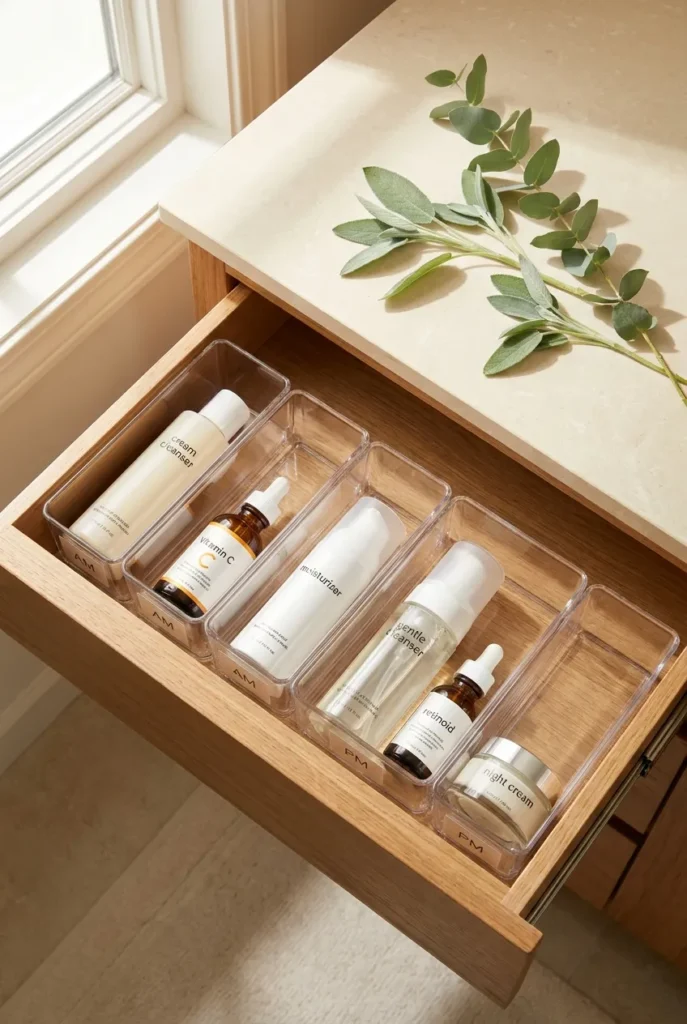
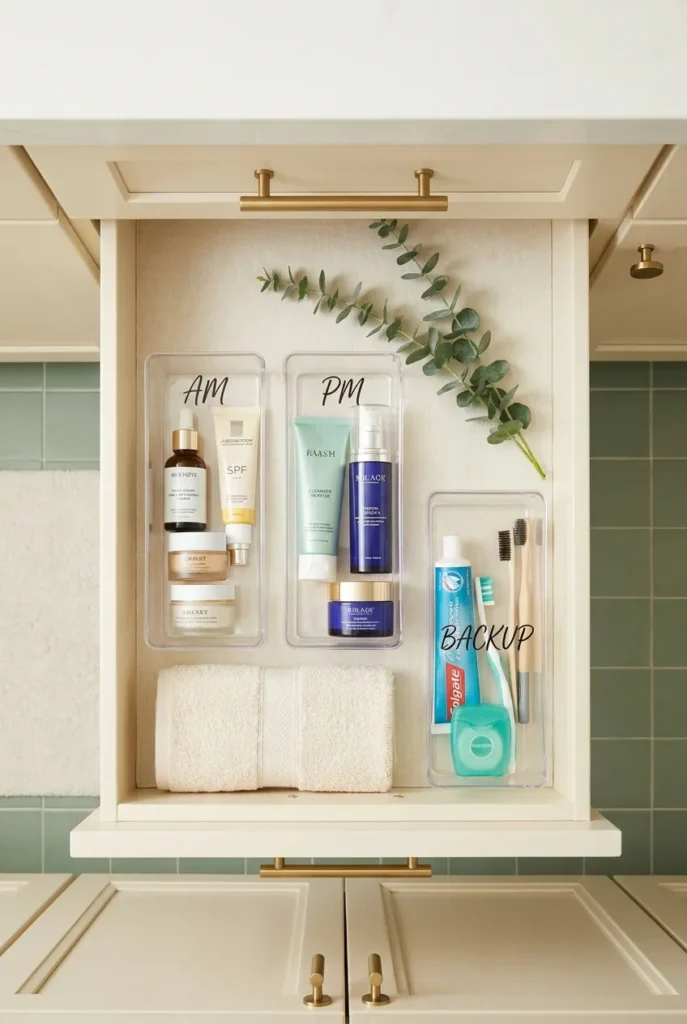
Skincare lives best in a medium-depth drawer with tall vertical bins, sorted by step. AM products on the left (cleanser, vitamin C, moisturizer, SPF). PM products on the right (cleanser, retinoid or treatment, night moisturizer). Backup serums and unopened products at the back. This is the drawer where the morning and evening routine reads at a glance.
Toothbrush and Oral Care Drawer Organization
This drawer needs its own zone and its own rules. Toothbrushes should never touch cleaning supplies, and never share a drawer with anything sprayed on (perfumes, dry shampoo, hair spray). A small ceramic cup or stand inside a shallow flat acrylic divider holds two toothbrushes head up. Floss, mouthwash backups, and toothpaste tubes get their own narrow bin.
If your bathroom is small and you can only spare one drawer, this is the one to set aside for hygiene only. Cleaning products go in a separate caddy under the sink (more on building one in the build a cleaning caddy that saves you time guide).
Men’s Grooming Drawer Organization
Often the most underestimated drawer in the house. Razors, shaving cream, beard trimmers, and aftershaves do best in a medium-depth drawer with three vertical zones: shaving (razor, cream, after balm), hair (trimmer with its guards in a small bin), and scent (cologne, deodorant). Cords stay coiled with a small Velcro tie. No cords loose.
Guest Bathroom Drawer Organization
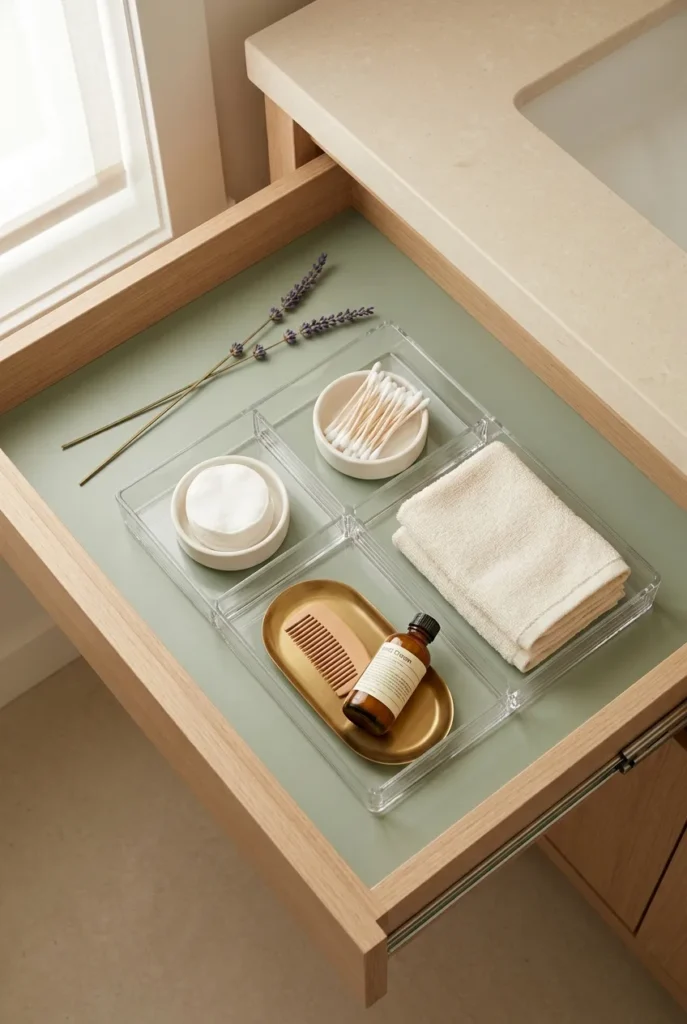
Less is more. One shallow drawer with a single flat divider holding cotton rounds, cotton swabs, a small comb, hand cream, and two folded washcloths. Restock once a month. Guests do not need 14 things. They need 6.
Best Bathroom Drawer Organizers (With Real Measurements and Prices)
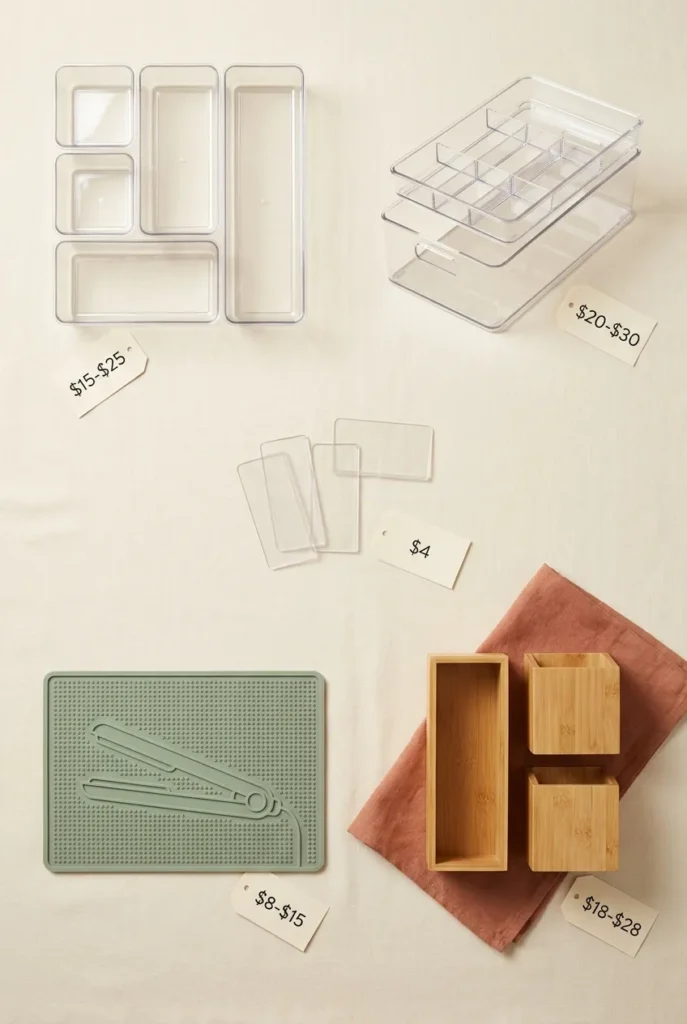
Prices drift, but ranges hold steady. Here are the products I have personally tested across three vanities. Every one fits the Drawer Depth Trio. None require a drill.
Best overall: mDesign Clear Plastic Drawer Organizer Set. Six pieces in mixed sizes, dishwasher safe, runs around $20 to $28 on Amazon. Fits most standard shallow and medium drawers.
Best deep drawer system: iDesign Linus Two-Tier Drawer Organizer. Removable top tray that slides across the drawer interior, with a deep bottom layer. Around $24 to $32 at The Container Store or Amazon. Fits drawers 5.5 inches or deeper.
Best for tight budgets: Dollar Tree clear plastic drawer organizers. Smaller and thinner walls than the brand-name versions, but at $1.25 a piece they let you test the layout before committing. I used four of these in my guest bathroom drawer for a full year before upgrading.
Best for hair tools: a 12 by 8 inch silicone heat-resistant mat plus a deep drawer divider set. The Amazon Basics silicone mat runs around $10 to $14. Pair with any deep drawer two-tier organizer.
Best for makeup: bamboo or acrylic vertical bins. The Cosmopolitan Acrylic Drawer Organizer set runs around $25 to $35. A bamboo alternative from IKEA’s Variera line runs around $8 to $15 per piece.
Quick rental note. Every product above is no-drill, peel-free, and renter-safe. Nothing here requires anchors, screws, or adhesive that could damage your vanity. If you are working with a rental that has zero drawer slides, the same products work in a small wicker basket on a shelf.
Deep Bathroom Drawer Organization (The Most Underused Space in Your Vanity)
Deep drawers (5.5 inches or more) are the single biggest waste of space in most bathrooms. The fix is the two-tier system from the Drawer Depth Trio.
Here is the exact setup.
Bottom layer holds bulky, lower-frequency items. Hair dryers laid flat, curling irons with cords coiled, sealed backup toiletries (unopened shampoo bottles, new toothbrush heads, sealed razor cartridges).
Top tier is a removable tray (the iDesign Linus or any sliding tray) that holds your daily-use items. Brushes, combs, hair clips, lip balms, hand cream, eye drops.
The tray slides left to right across the drawer so you can access the bottom layer without unloading the top. That single feature is why deep drawers stay organized instead of collapsing into a 4-inch pile within a week.
If your deep drawer is wider than 16 inches, run two trays side by side and split the daily-use items into two themes (one for hair, one for face).
Small Bathroom Drawer Organization (When You Only Have One Drawer)
A lot of bathrooms, especially in apartments and older homes, have one usable drawer total. Here is how to make it work.
Pick one category and one only. Most people choose oral care plus skincare basics. Everything else goes to a wall-mounted caddy, an over-the-toilet shelf, or a tension-rod cabinet inside the door.
Inside that one drawer, use the medium-depth playbook: tall vertical bins, daily AM and PM split, one small ceramic cup for toothbrushes. Skip the labeling. Skip the extras. Less in equals less mess.
The linen closet is your friend when a bathroom drawer cannot hold everything. The linen closet organization without buying anything new guide covers how to use that space for backup toiletries, extra towels, and overflow categories so the one drawer can stay tight.
Safety Rules for Bathroom Drawer Organization (What Never Goes Together)
Before you finalize any system, run through this short safety pass. It takes 30 seconds and protects what matters.
- Toothbrushes never share a drawer with cleaning sprays, perfumes, or aerosolized hair products. The mist drifts.
- Razors and razor cartridges never sit loose in a drawer with kids in the house. Use a small lidded box.
- Cleaning products (multi-surface spray, glass cleaner, disinfecting wipes) belong in a caddy under the sink or in a wall-mounted basket, not in a vanity drawer. The EPA Safer Choice cleaning products list [https://www.epa.gov/saferchoice] is worth a glance if you are rebuilding the under-sink area at the same time.
- Prescription medications never live in a drawer. Use a locked medicine cabinet or a high shelf out of reach of children and pets.
- Hot tools never go back in the drawer until they have cooled on a heat-safe mat for at least 15 minutes.
Five small rules. One small safety pass. Worth the 30 seconds.
Frequently Asked Questions
How do I organize bottles on a bathroom counter?
The honest fix is to get the bottles off the counter. Move daily-use bottles into a medium-depth drawer using tall vertical acrylic bins so each bottle stands upright. If a few bottles must stay on the counter, group them on a small ceramic or marble tray (about 8 by 12 inches) so the counter reads as styled, not cluttered.
What is a step-by-step plan to organize my bathroom cabinet?
Empty it, wipe it, sort into four piles (daily, weekly, backup, toss), measure the cabinet shelves, pick bins that fit, place daily items at eye level, weekly items at waist level, backup items on the top or bottom shelf. Label the bins if you live with anyone else. The same logic applies to drawers, just with the Drawer Depth Trio guiding the layout.
How do you keep a bathroom uncluttered?
Three habits do most of the work. A 4-minute weekly reset (Sunday evening is the easiest cue). A one-in-one-out rule on toiletries (a new bottle in means an old one tossed). A no-counter rule for daily products (everything lives in its drawer zone). After about three weeks the habits run on autopilot.
What is the best way to organize your drawers?
Match the system to the depth. Shallow drawers use flat dividers. Medium drawers use tall vertical bins. Deep drawers use a two-tier removable tray system. Then sort items by frequency of use, not by category. Daily use in the front, backup at the back or bottom.
What is a deep bathroom drawer organizer?
Any drawer organizer designed for drawers 5.5 inches deep or more. The most useful style is a two-tier system with a removable top tray that slides across the drawer interior. The iDesign Linus and the Joseph Joseph DrawerStore both fit this category.
Are IKEA bathroom drawer organizers worth it?
Yes, especially the Godmorgon insert series and the Variera bamboo bins. They cost less than the Container Store versions, they fit cleanly inside IKEA vanities like the Hemnes and Godmorgon, and the bamboo line works in any vanity regardless of brand.
Can I organize bathroom drawers without buying anything?
Yes. Small cardboard boxes from skincare packaging make decent temporary dividers. Mason jars work for toothbrush holders. A folded washcloth at the front of the drawer keeps small items from sliding. Once the system holds for two weeks with the no-spend version, upgrade to acrylic only if you actually want to.
The Bottom Line
Bathroom drawer organization is not about pretty bins. It is about matching the system to the depth of the drawer, sorting by frequency of use, and respecting a few small safety rules. Use the Drawer Depth Trio. Run the 90-minute reset. Give each category its own zone.
Pick one drawer this weekend. Set a timer for 90 minutes. Empty it onto a towel, sort into four piles, measure the depth, pick bins that fit. Then close the drawer, walk out, and notice how different the next morning feels.
If your toss pile filled a small garbage bag, the bathroom is asking for a fuller declutter. Start there.


