
Studio Apartment Organization: 10 Hacks to Maximize Every Inch
Your bed is two feet from your kitchen. There’s a sweater on the chair, a chair on the rug, and the rug is the only thing separating “bedroom” from “office.” If you’ve stared at your 400 square feet and felt that low-grade panic of nothing-has-a-home, you’re in exactly the right place.
We’ve lived the studio life. We’ve also organized dozens of them for friends, readers, and one very patient sister in a Brooklyn walk-up. After testing what actually sticks (and what looks great in photos but falls apart by week two), we pulled together the 10 studio apartment organization hacks that genuinely change how a small space functions. Every tip is renter-friendly, most are under $50, and a few cost nothing at all.
This guide is organized by the four zones every studio has, whether you’ve labeled them or not: sleep, cook, work, and lounge. We’ll move through each zone with specific products, real prices, and the rental-safe workaround for anyone who can’t drill a hole.
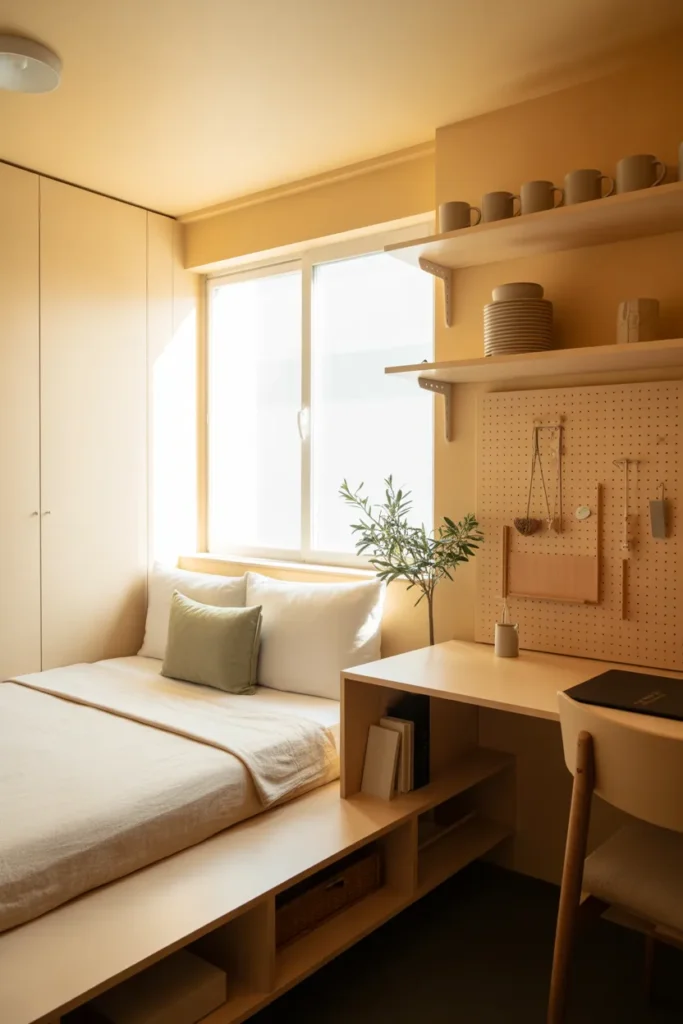
Who This Studio Apartment Organization Guide Is For
This article is built for:
- Renters who can’t drill, paint, or modify walls without losing a deposit.
- Small-space dwellers in studios under 600 square feet (we tested everything in spaces as tight as 320 sq ft).
- Budget-conscious organizers who want results under $100 total.
- Style-leaning readers who want the space to feel Scandi, Japandi, or modern minimalist, not like a dorm.
If your studio has a separate bedroom alcove or a walk-in closet, lucky you. These tips still apply, you’ll just have more room to breathe.
Why Studio Apartment Organization Is Different (and Harder)
Organizing a one-bedroom apartment is a furniture problem. Organizing a studio is a boundary problem. You’re asking a single room to do four jobs at once, and clutter in any one zone visually contaminates the other three. A pile of dishes ruins the bedroom view. An unmade bed ruins the dining view. So the goal isn’t just “tidy,” it’s defining edges between zones using storage itself.
Keep that in mind as we move through the 10 hacks.
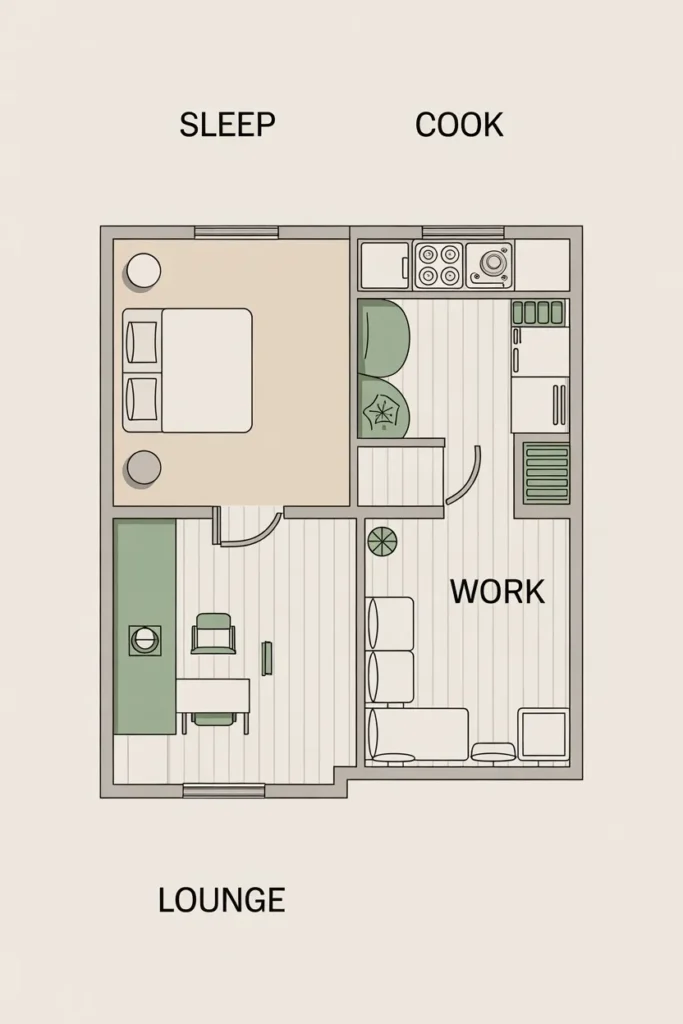
The 4-Zone Studio Map (Original Framework)
Before you buy a single bin, walk into your studio and mentally divide it into four corners or quadrants:
- Sleep zone: the bed and everything within three feet of it.
- Cook zone: kitchen counter, fridge, and a 2-foot perimeter.
- Work zone: wherever your laptop lives.
- Lounge zone: the soft seating area, even if it’s just a floor cushion.
Every item you own should belong to one zone. If it doesn’t, you don’t need it, or it’s homeless and that’s why your studio feels chaotic.
10 Studio Apartment Organization Hacks That Actually Work
Here’s the front-loaded list. Hack #1 is the highest-impact tip we’ve found across every studio we’ve tested, so start there.
1. Build a Storage Bed (the Single Biggest Win in a Studio)
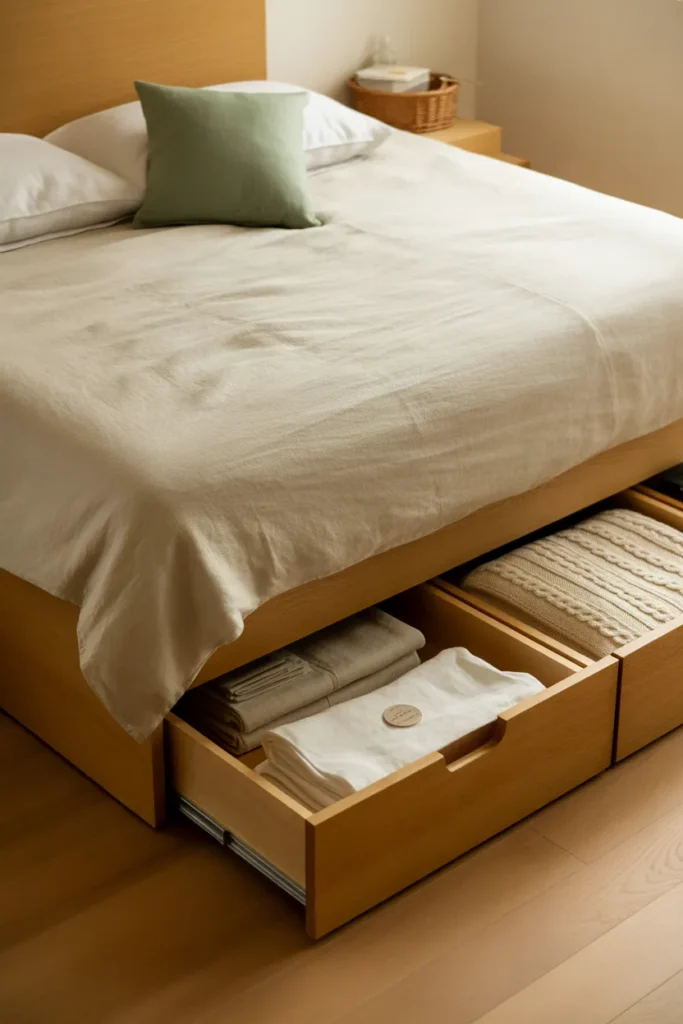
What it is: Replace your current bed frame with a platform bed that has built-in drawers, or add storage bed risers underneath your existing one.
Why it works: Your bed already takes up the largest footprint in the room. Right now, the space underneath is dead. A storage bed converts that 18 to 24 cubic feet of dead air into a hidden dresser, linen closet, or off-season clothing archive. We’ve cleared entire dressers from clients’ studios using this one swap.
How to execute it:
- Budget version (under $25): Bed risers from Walmart or Amazon (around $12 to $18) lift your existing bed 3 to 9 inches, plus six clear under-bed bins from Dollar Tree at $1.25 each. Total: under $25.
- Mid-range ($150 to $400): IKEA’s MALM storage bed in white or oak veneer, four built-in drawers, no headboard bulk. We use this in our own studio.
- Splurge ($800+): West Elm’s storage platform bed in solid wood, lift-up mechanism, full mattress-sized cavity underneath.
Renter-friendly? Yes, all three options. No drilling required.
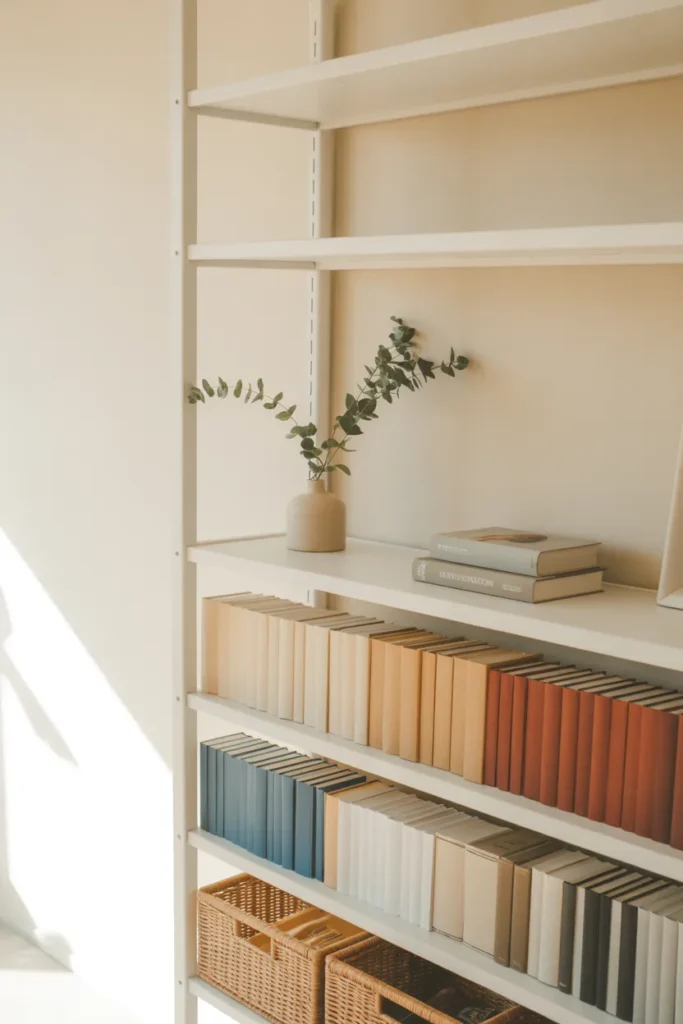
2. Go Vertical With Floor-to-Ceiling Shelving
What it is: Tall, narrow shelving units (12 to 16 inches deep, 70+ inches tall) placed against any unused wall.
Why it works: Studios are short on floor space and long on wall space. Most renters use the bottom 5 feet of their walls and ignore the upper 3 to 4 feet entirely. Floor-to-ceiling shelving converts wasted vertical air into pantry, library, and display storage simultaneously.
How to execute it:
- IKEA’s BILLY bookcase (15 inches deep, 79 inches tall, around $80) is the studio renter’s best friend.
- For renters who can’t anchor to walls, choose freestanding units with a wide base, and place heavy items on the bottom 3 shelves for stability.
- Mix closed bins on the bottom (visual calm), books in the middle (texture), and 1 to 2 styled objects on top (a ceramic vase, a trailing pothos).
For more on getting the most out of IKEA’s storage line, our complete IKEA storage hacks guide for every room breaks down which products actually earn their square footage.
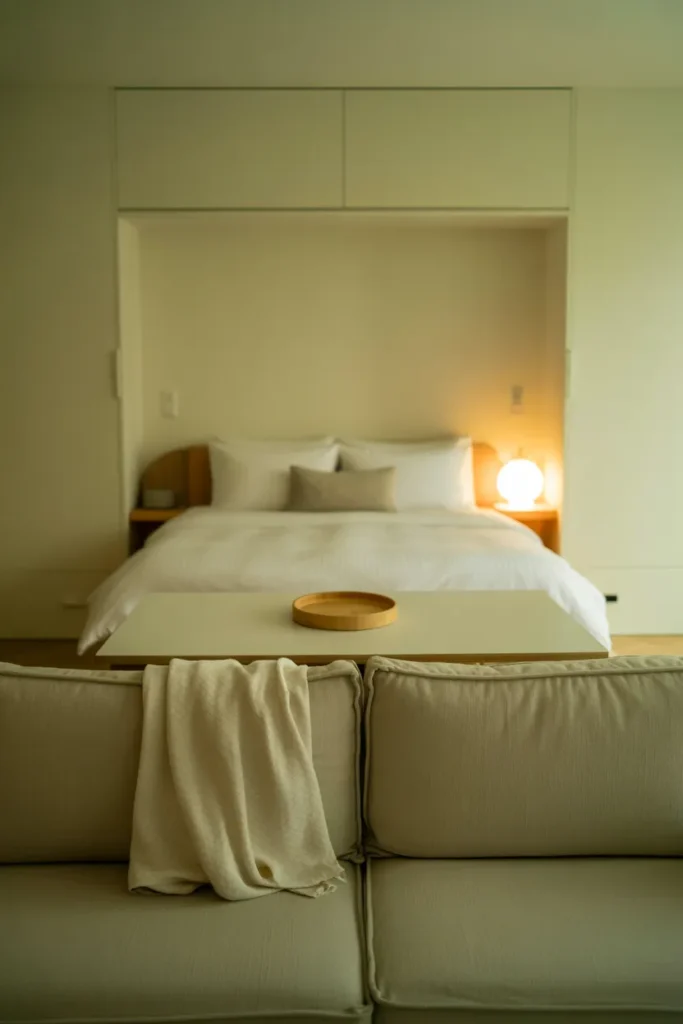
3. Use a Bookshelf or Console as a Room Divider
What it is: A double-sided shelving unit (like the IKEA KALLAX) placed perpendicular to a wall to visually separate your sleep zone from your living zone.
Why it works: Studios feel small because there are no walls. A 5×5 cube unit creates the illusion of two rooms, gives you 25 cubbies of storage, and stays under 6 feet tall so light still flows. This solves the “my bed is in the living room” problem better than any curtain.
How to execute it:
- Place the divider 6 to 8 feet from one wall to carve out a sleep nook.
- Fill the cubes facing your bed with bedroom items (folded clothes, books, a small lamp).
- Fill the cubes facing your living area with living-room items (a small TV, decor, a basket of throws).
- Renter tip: KALLAX is freestanding and tips slightly when full, so weight the bottom row with heavier items.
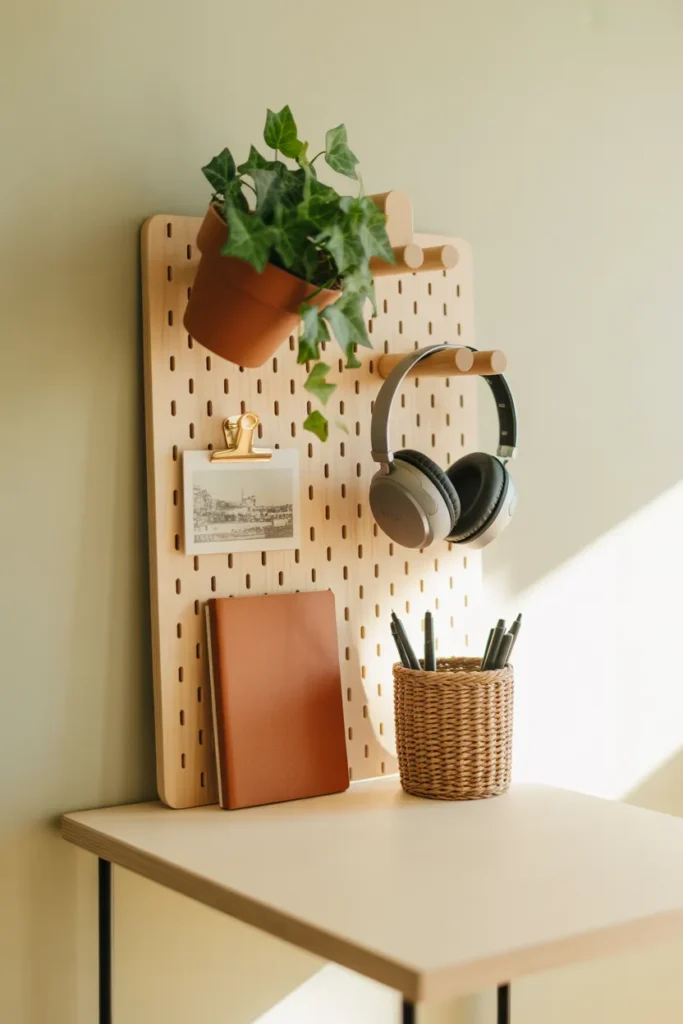
4. Hang Everything You Can on a Pegboard Wall
What it is: A 2×4 ft pegboard mounted (or leaned, for renters) above your desk, in your kitchen, or behind a door.
Why it works: Pegboards turn flat wall space into reconfigurable storage. Hooks, baskets, and shelves move on a grid, so as your needs change, your storage changes with them. They also take items off counters and tabletops, the two surfaces in a studio that get cluttered fastest.
How to execute it:
- Kitchen pegboard: hang mugs, a small cutting board, measuring cups, dish towels.
- Work pegboard: hold headphones, notebooks, a small plant, scissors, charging cables.
- Renter version: lean a freestanding pegboard against the wall behind a desk (no drilling), or use 3M Command strips rated for 5+ pounds for a smaller pegboard.
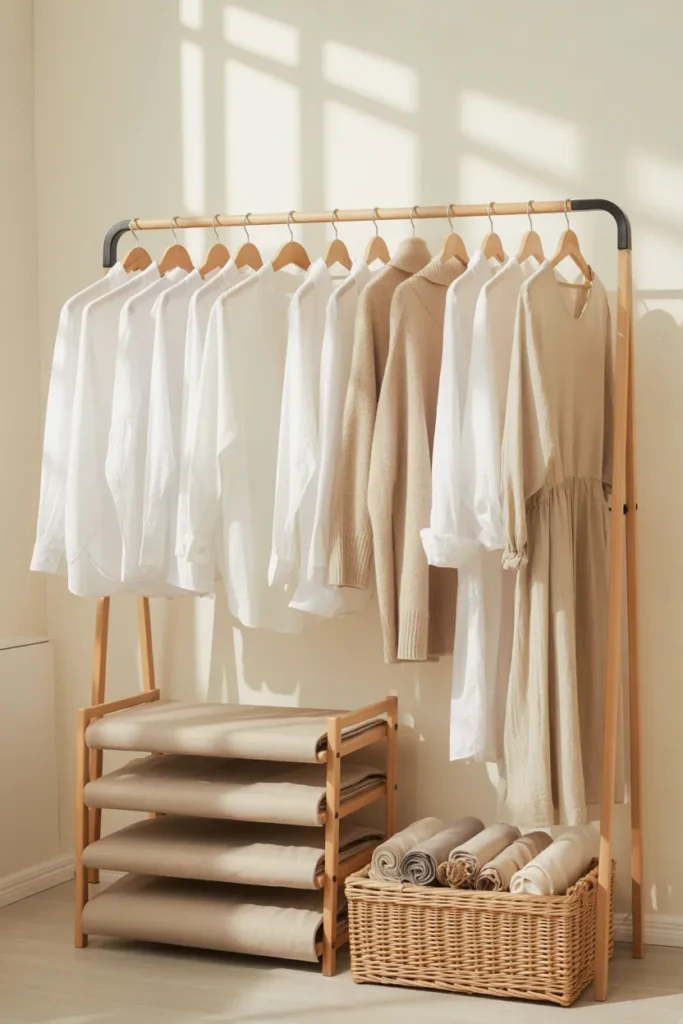
5. Create a No-Closet Clothing System (For Studios With No Closet or One Tiny Closet)
What it is: A freestanding clothing rack plus modular fabric drawers, set up to function like a real closet without the walls.
Why it works: Many studios (especially older NYC, Boston, and SF buildings) have closets the size of a refrigerator, or none at all. A standalone clothing system gives you the equivalent of a 6-foot closet for under $150 and zero damage to walls.
How to execute it:
- IKEA’s RIGGA clothing rack ($25) holds 30+ hangers and adjusts in height.
- Add a 3-tier fabric drawer unit (around $35 on Amazon) underneath for folded items.
- Use slim velvet hangers (60-pack for $20) instead of plastic ones to reclaim 30% more rack space.
- Sort clothes by color or by category (work, lounge, going out) so the open setup looks intentional rather than chaotic.
While you’re at it, the way you fold and divide what’s in your drawers matters more than people think. Our drawer organization deep guide walks through the file-fold method that doubled drawer capacity in our own dresser.
6. Maximize the Back of Every Door
What it is: Over-the-door organizers, hooks, and slim shelving on every door in your studio (entry, bathroom, closet if you have one).
Why it works: A standard door has about 18 to 20 square feet of vertical surface area, and 99% of renters use 0% of it. Behind-the-door storage adds the equivalent of a small dresser without taking a single square foot of floor.
How to execute it:
- Bathroom door: clear over-the-door pocket organizer for skincare, hair tools, first-aid supplies. Works in spaces as narrow as 20 inches.
- Entry door: 6-hook over-the-door rack for jackets, bags, umbrellas, and keys. No drilling.
- Closet door: vertical shoe organizer, but use the pockets for accessories, gloves, scarves, or pantry items if your closet is near the kitchen.
Common mistake: people buy clear pocket organizers and stuff them so full the pockets bulge. Keep them about 70% full so they sit flat against the door.
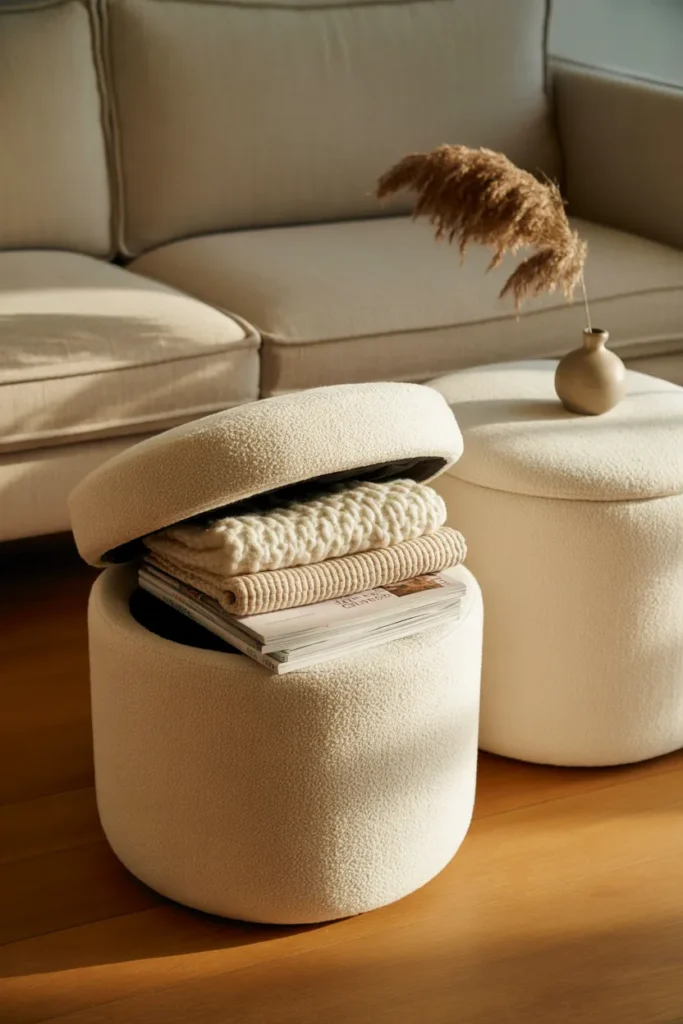
7. Turn Your Coffee Table or Ottoman Into Hidden Storage
What it is: Swap your current coffee table or accent chair for a piece with a lift-top, hinged lid, or hollow interior.
Why it works: The lounge zone is where blankets, magazines, remote controls, and chargers pile up. A hidden-storage ottoman absorbs all of that visually. We measured one client’s space: switching from a solid wood coffee table to a storage ottoman cleared 4 cubic feet of clutter and added a second seat for guests.
How to execute it:
- Budget: Walmart’s Better Homes & Gardens storage ottoman ($45 to $65) in linen or boucle.
- Mid-range: Target’s Threshold lift-top coffee table ($130 to $180) in oak or walnut finish.
- Splurge: CB2’s storage ottoman in performance velvet ($299+) for the boucle-loving Japandi reader.
8. Mount a Fold-Down Wall Desk (or Use a Console Table With Drawers)
What it is: A wall-mounted drop-leaf desk that folds flat against the wall when not in use. For renters, swap to a slim 12-inch-deep console table with drawers.
Why it works: A traditional desk eats 6 to 9 square feet permanently. A fold-down desk gives you the same work surface for the 4 to 6 hours you actually use it, then disappears. In a studio, that’s the difference between “office in the corner” and “everything in one place all the time.”
How to execute it:
- IKEA’s NORBERG fold-down desk ($60, drills into wall, deposit-conscious renters skip this).
- Renter alternative: West Elm’s Mid-Century console (12 inches deep, 2 drawers, around $400) tucks against any wall.
- Even better budget renter alternative: Target’s slim 11-inch entry console ($120) doubles as a desk with a single drawer.
- Pair with a folding chair you can hang on a wall hook when not in use.
9. Use Vertical Tension Rods Inside Cabinets and Under Sinks
What it is: Spring-loaded tension rods placed horizontally inside kitchen cabinets, under the bathroom sink, or inside a pantry.
Why it works: Cabinet interiors are the most underused storage in a studio. A $4 tension rod creates an instant second tier, doubles your usable height, and holds spray bottles, dish towels, cutting boards (vertically), and lids.
How to execute it:
- Under the kitchen sink: one tension rod near the top to hang spray bottles by the trigger.
- Inside a cabinet: place a tension rod 4 inches above the lower shelf to create a second mini-shelf for short items.
- Vertical lid storage: use two tension rods to create a “filing system” for pot lids and cutting boards inside a cabinet.
Common mistake: loading tension rods past their weight rating. Most cheap rods hold 5 to 8 pounds. Cleaning sprays only.
10. Apply the One-Bin Rule to Every Surface
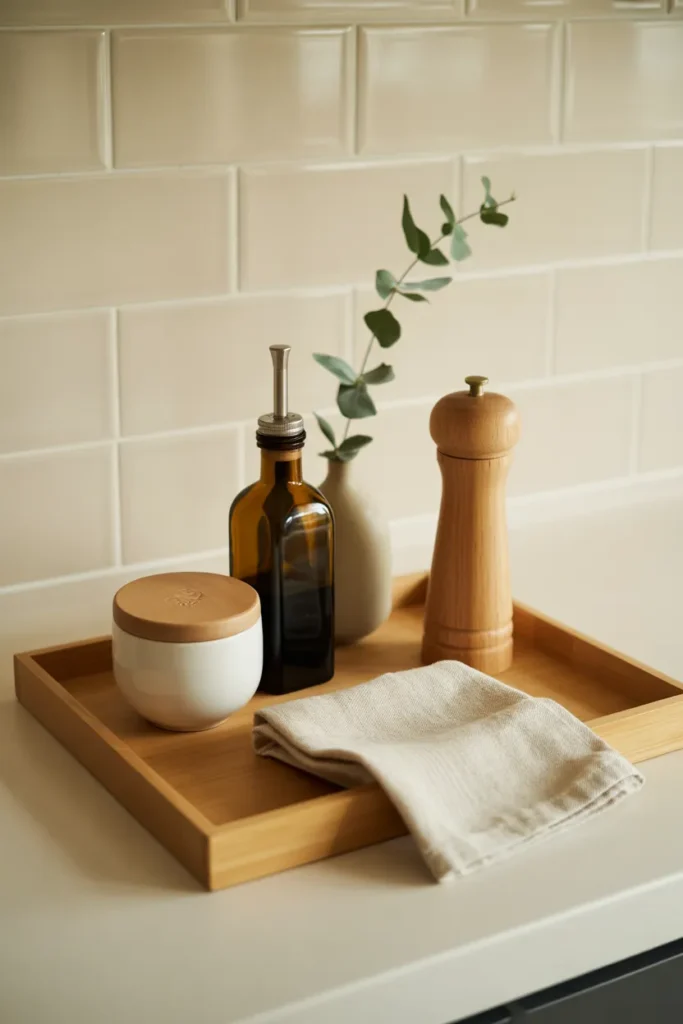
What it is: No flat surface (counter, nightstand, coffee table, kitchen table) is allowed to hold more than one decorative or functional bin or tray.
Why it works: Studios feel cluttered not because there’s too much stuff, but because the stuff is scattered across too many surfaces. The one-bin rule consolidates random items into a single corralled spot per surface. The eye reads “one object” instead of “twelve objects.”
How to execute it:
- Kitchen counter: one wood tray holding salt, pepper, oil, and a sponge holder. Everything else lives in cabinets.
- Nightstand: one ceramic catchall for jewelry and chapstick. Books stack beneath, not on top.
- Coffee table: one woven basket for remotes and chargers. That’s it.
- Bathroom counter: one marble tray holding daily skincare. Weekly products in the cabinet.
Budget vs Splurge: Studio Storage at a Glance (Screenshot This)
Here’s the side-by-side breakdown for every zone, so you can stop comparison-shopping in 12 browser tabs.
| Zone | Budget (under $25) | Mid-Range ($25 to $100) | Splurge ($100+) |
|---|---|---|---|
| Sleep | Bed risers + Dollar Tree bins | IKEA MALM storage bed | West Elm storage platform bed |
| Cook | Tension rods + dollar store bins | OXO POP containers (3-pack) | Crate & Barrel marble lazy susan |
| Work | Lap desk + folding chair | IKEA NORBERG fold-down desk | West Elm Mid-Century console |
| Lounge | Walmart storage ottoman | Target Threshold lift-top table | CB2 boucle storage ottoman |
| Closet | IKEA RIGGA clothing rack ($25) | 3-tier fabric drawers + velvet hangers | Container Store Elfa freestanding system |
For the deeper IKEA-specific breakdown of which storage products actually earn their square footage, our room-by-room IKEA storage hacks walks through the bestsellers.
How to Make Your Studio Feel Bigger While You Organize
Organization solves the clutter problem. These tactics solve the perceived size problem, and the two work hand in hand.
- Lift everything off the floor. Furniture with visible legs (sofa, bed, console) makes the floor look continuous, which makes the room read larger.
- Stick to a 3-color palette. Cream, warm wood, and one accent (sage, rust, or charcoal) keeps the eye calm. According to research from the American Society of Interior Designers, neutral monochromatic palettes consistently make small spaces feel up to 25% larger in occupant perception studies.
- Use one large rug, not multiple small ones. A single 8×10 rug visually anchors the entire studio as one cohesive space.
- Hang curtains 6 inches above the window frame. Tall window treatments draw the eye up and add perceived ceiling height.
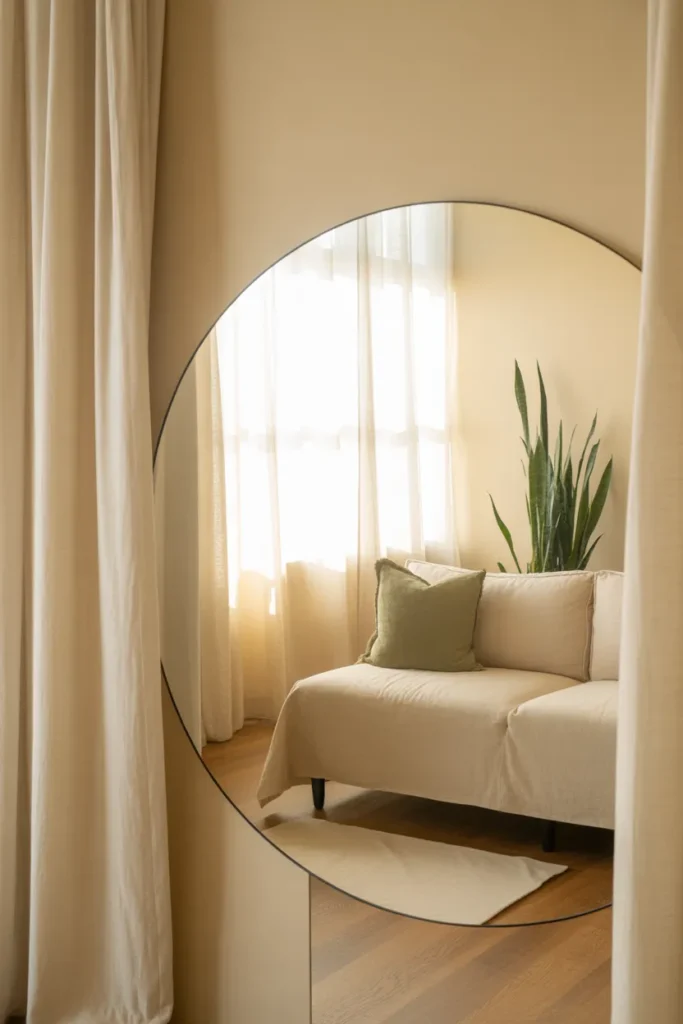
- Mount a large mirror opposite the main light source. Natural light bouncing off a mirror is the single most effective way to enlarge a small space, a tactic supported by Energy Star’s residential lighting guidance on maximizing daylight in small dwellings.
Common Studio Apartment Organization Mistakes to Avoid
After organizing dozens of studios, we see the same six mistakes on repeat. Skip these to save yourself a return trip to Target.
- Buying storage before decluttering. You don’t have a storage problem, you have a too-much-stuff problem. Cut 20% of belongings before buying a single bin.
- Mixing too many bin styles. Three random bin types in one cabinet read as chaos. Pick one bin family per zone (clear acrylic for the kitchen, woven for the lounge, fabric for the closet).
- Filling every wall. White space on walls gives the eye a place to rest. Leave at least one full wall close to empty.
- Choosing dark, heavy furniture. Espresso wood and chunky upholstery shrink a studio. Light woods, slim profiles, and visible legs do the opposite.
- Forgetting the ceiling. Hanging a plant, a pendant light, or a wall-mounted shelf in the upper 18 inches of any wall opens up cubic feet of forgotten storage.
- Skipping the reset routine. A studio looks tidy on Sunday and chaotic by Wednesday because nothing has a home. Spend 10 minutes every evening resetting items to their assigned zone.
The 10-Minute Studio Reset Routine (Original)
Use this every evening before bed. Set a timer.
- Minute 0 to 3: Walk every flat surface and return items to their zone.
- Minute 3 to 5: Make the bed (single biggest visual win in a studio).
- Minute 5 to 7: Wipe one surface (kitchen counter or bathroom).
- Minute 7 to 9: Reset the one-bin rule on every tray and basket.
- Minute 9 to 10: Open a window for 60 seconds. Air = bigger feeling space.
Studio Apartment Organization FAQ
How do I organize a studio apartment in a small space or rental?
Stick to freestanding furniture, command-strip-rated hooks, and tension rods. Every hack in this guide except the wall-mounted desk works without drilling. Choose taller-than-wide pieces (clothing racks, narrow bookshelves, freestanding pegboards) to use vertical space without committing to wall damage.
What is the budget version of studio apartment organization?
You can organize an entire studio for under $100 using bed risers ($15), Dollar Tree bins ($10 for 8), one IKEA RIGGA clothing rack ($25), one tension rod 4-pack ($12), one over-the-door organizer ($15), and a slim console or folding desk ($25 to $30 used on Facebook Marketplace).
What if I do not have a closet at all?
You’re not stuck. A 5-foot freestanding clothing rack plus a 3-tier fabric drawer system replaces a closet entirely. Place it against your longest unused wall, sort clothes by color, and add a fabric storage bin on top for off-season pieces. Total cost: around $80.
How long does studio apartment organization take?
A full studio reset takes one weekend (10 to 14 hours) if you’re decluttering and shopping. If you’ve already decluttered and just need to install systems, plan on 4 to 6 hours. The 10-minute daily reset is what keeps it from sliding back.
How do I store clothes in a studio without a dresser?
Use a freestanding clothing rack for hanging items, fabric drawer cubes underneath for folded items, and the file-fold method to maximize each drawer. Our drawer organization guide shows the exact folding system we use.
How do you make a studio look less cluttered?
Apply the one-bin rule (one tray or basket per flat surface), commit to a 3-color palette, and lift furniture off the floor with visible legs. Visual clutter is 60% palette and surface chaos, 40% actual stuff.
What is the 1-in-1-out rule and does it work in a studio?
For every new item that comes into your studio, one similar item leaves. New sweater in, old sweater out. It works exceptionally well in studios because there’s literally no room for accumulation, the rule is just naming what your square footage already enforces.
Save This Studio Apartment Organization Guide for Later
If even three of these hacks land in your studio, you’ll feel the difference within a week. Pin the storage bed image to your home decor board so you can come back to the budget vs splurge breakdown when you’re ready to shop. And if you want the next layer of small-space mastery, our room-by-room IKEA storage hacks goes even deeper into specific products that punch above their square footage.
Which zone are you tackling first, sleep or cook? Pin this post, screenshot the table, and get one win on the board this weekend.


