

Outdoor Toy Storage Ideas to Keep Your Backyard Tidy All Summer
You walked out with your coffee this morning, and there it was. A scooter on its side. Two faded balls under the hydrangea. A sand bucket half full of rainwater, growing something. The backyard you wanted to relax in looks like a daycare let out in a windstorm. Sound familiar? Good news: the right outdoor toy storage ideas fix this for real, and most of them take one afternoon. We’ve tested the messy way and the smart way (mostly the messy way, honestly), and below are the setups that actually hold up to sun, rain, and a kid who has never once put a toy back.
Why Outdoor Toy Storage Feels Impossible (And the One Shift That Fixes It)
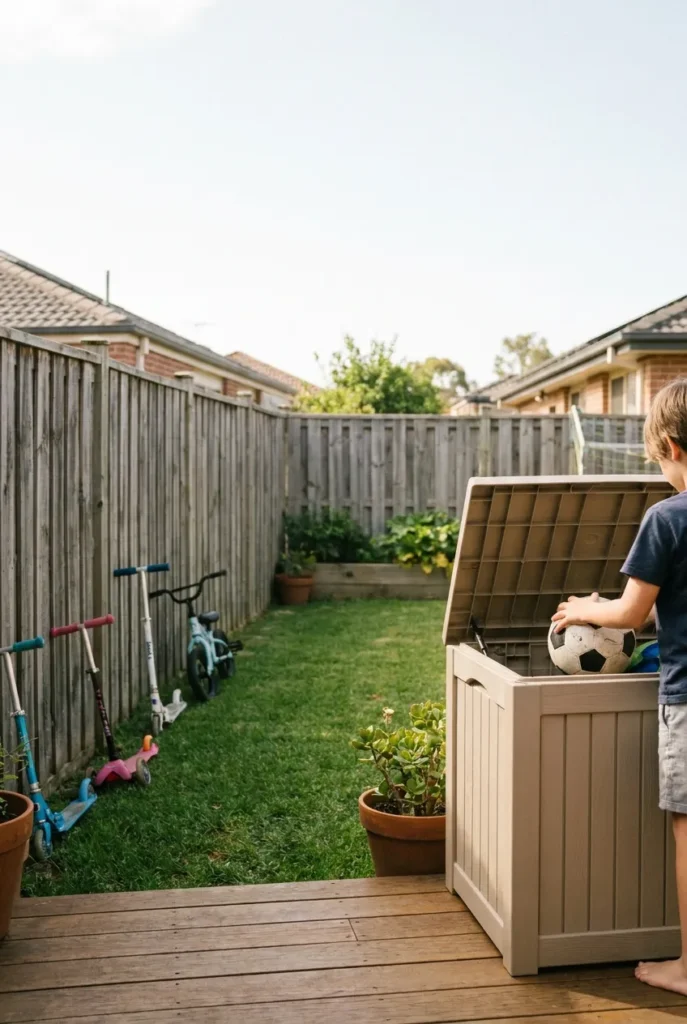
Here’s the catch with outdoor gear: it’s bigger, messier, and weirder-shaped than anything you store inside. A pool noodle does not fold. A ride-on truck weighs more than your toddler. And everything left in the yard gets attacked by sun, sprinklers, and the occasional curious raccoon.
Most of us respond by buying a bin. Then another bin. Then a cute basket from Target that dissolves in the first thunderstorm. The problem was never the number of bins. It was that we never sorted toys by what the weather actually does to them.
That single shift is the whole article. Sort first, store second.
The Sun, Shade, Splash Sort (Our Free 3-Bucket System)
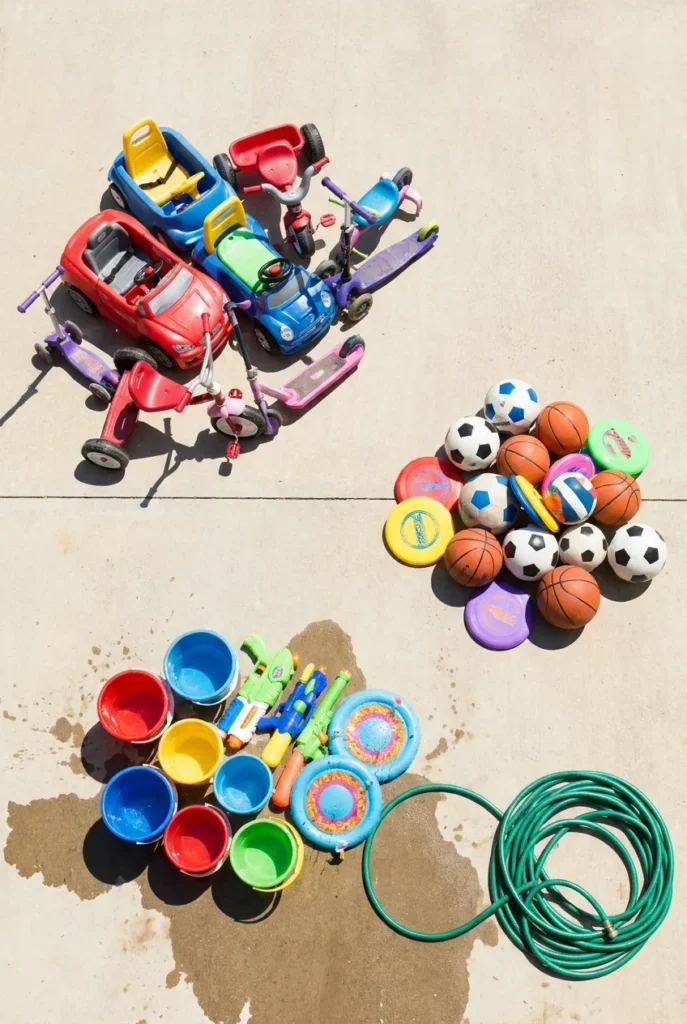
This is the original framework we built for our own yard, and it’s the backbone of every storage choice below. Before you buy anything, drag every outdoor toy into one of three buckets.
Sun toys fade, crack, or overheat in direct light. Think bright plastic slides, anything with a battery, and ride-on cars. These need shade or a closed lid. A major toy brand, KidKraft, makes the same point in its summer toy care guide: keep plastic out of the harsh sun to stop it going brittle and bleached.
Shade toys are the tough ones. Hard balls, plastic shovels, frisbees, bats. They can live in open bins or fence crates without a worry.
Splash toys touch water and must dry out. Water-table cups, squirt toys, pool floats, beach buckets. These need drainage, never a sealed lid.
Sort once, and suddenly every product decision is obvious. You’re not guessing anymore. Want the cheat sheet on the fridge? We made a free printable Sun, Shade, Splash sorting chart (US letter, 8.5 by 11, PDF), and there’s a grab link near the end of this post.
The Best Weatherproof Outdoor Toy Storage (The Heavy Hitters)
If you only buy one thing, buy from this group. These are the weatherproof outdoor toy storage ideas that survive a full season outside.
Resin Deck Boxes (Your “Sun” and “Shade” Workhorse)
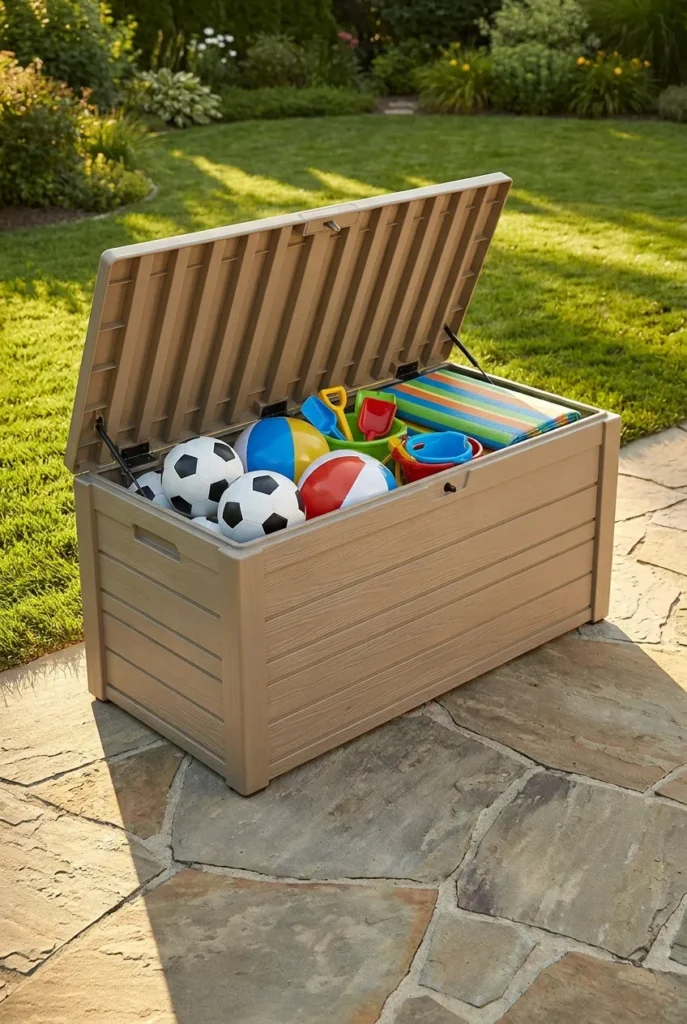
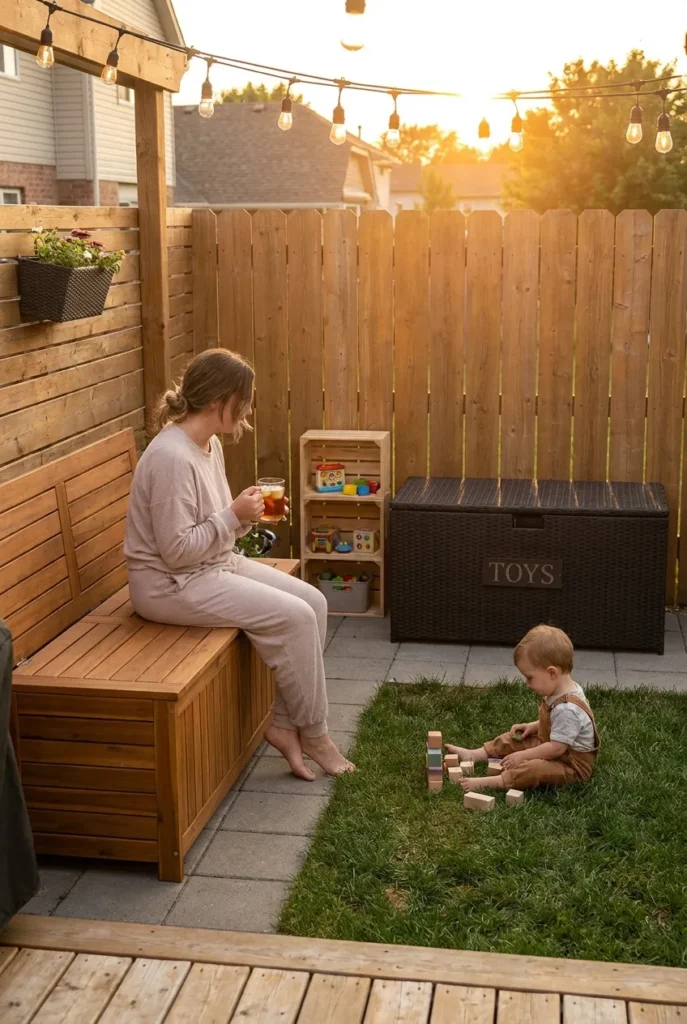
A resin deck box is the closest thing to a cheat code. The good ones are made from UV-treated HDPE resin, so they shrug off rain and sun, and the lid keeps your fade-prone toys in the shade. We use a 60-gallon East Oak box on the patio, and it swallows an absurd amount: balls, bats, two sand sets, and a deflated kiddie pool.
Look for at least 50 gallons if you have more than one kid. Position it within ten feet of where play actually happens, because a box across the yard never gets used. Bonus: the flat lid doubles as a drink ledge during a cookout.
Storage Benches (Seating Plus Storage in One)
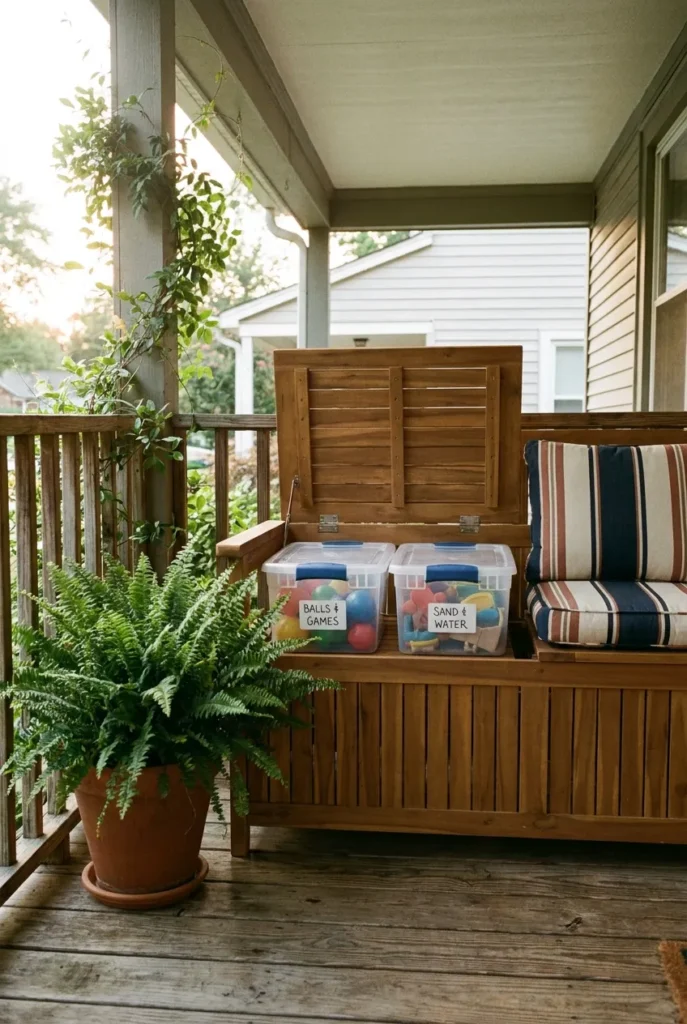
A storage bench earns its footprint twice. Kids sit on it to pull off muddy shoes, and the hinged lid hides a load of toys underneath. Pick weather-resistant resin or treated wood with a waterproof seat cushion.
One real-world note: benches get chaotic fast inside, because everything just gets tossed in. We slid two tall Sterilite latching bins inside ours to keep categories from blending into one toy soup. Cleanup stayed sane after that.
Rolling Carts (For Toys That Move With the Play)
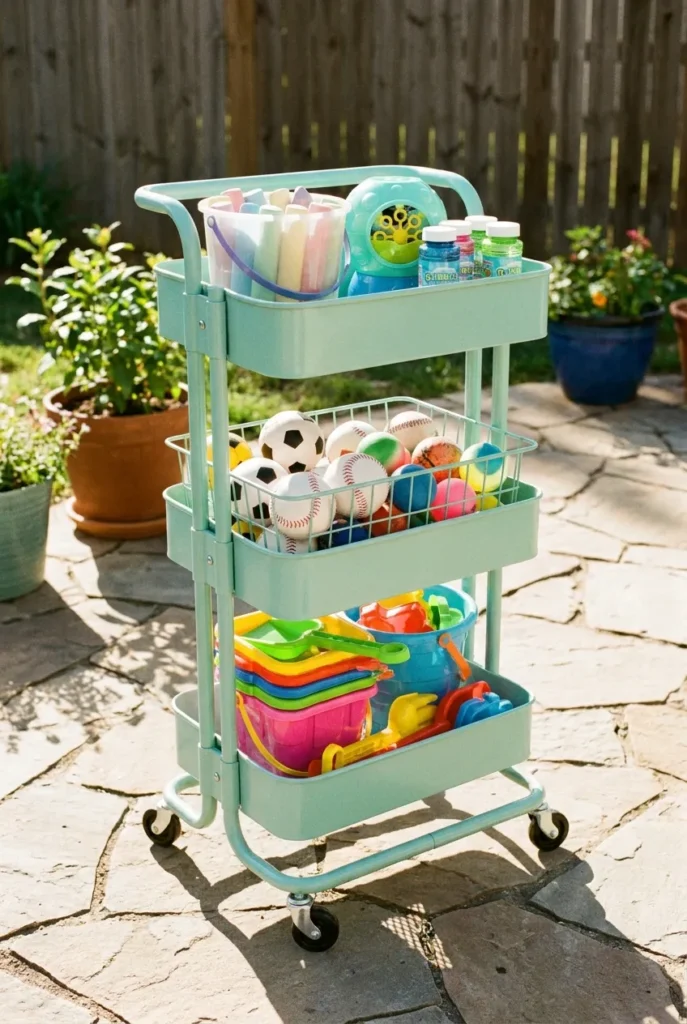
Some toys never stay in one zone. Chalk migrates to the driveway, bubbles end up by the trampoline. A rolling cart with locking wheels solves the drag. Park it in the garage overnight, roll it onto the patio in the morning, and let the open shelves show kids exactly what’s available.
A three-tier metal cart runs about $35 to $50 and handles chalk, bubbles, smaller balls, and water-balloon kits. Lock the casters during play so it doesn’t roll off on a slope.
DIY and Budget Outdoor Toy Storage Ideas
No budget for a deck box this month? Plenty of the best backyard toy storage ideas cost almost nothing. These lean on vertical space and stuff you may already own.
Fence Crates and a Ball Net (Vertical, Cheap, Genius)
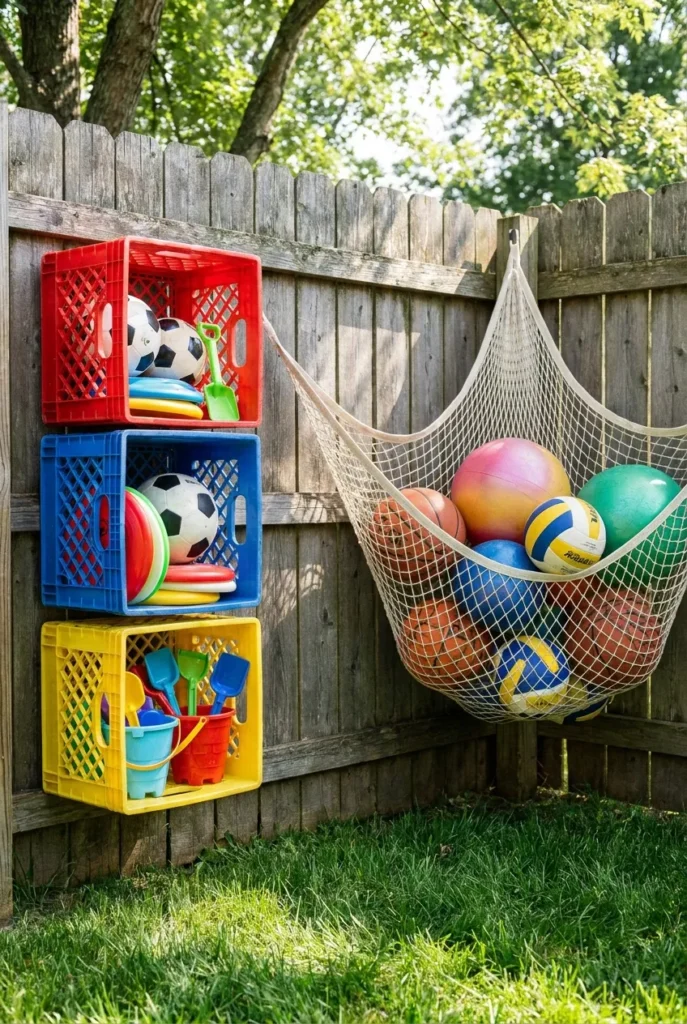
Your fence is free real estate. Screw a few plastic milk crates onto a wood fence or post (open side out), and you’ve got instant cubbies for balls, shovels, and bubble bottles. Mount them at kid height so little hands can grab and return on their own.
For the never-ending ball problem, hang a stretchy weatherproof net in a corner. Balls drop in from the top, kids pull them out the front, and the net drains and dries on its own. This is a classic small-spaces and patio fix when ground space is tight.
The Dollar Tree and Under-$10 Quick Wins
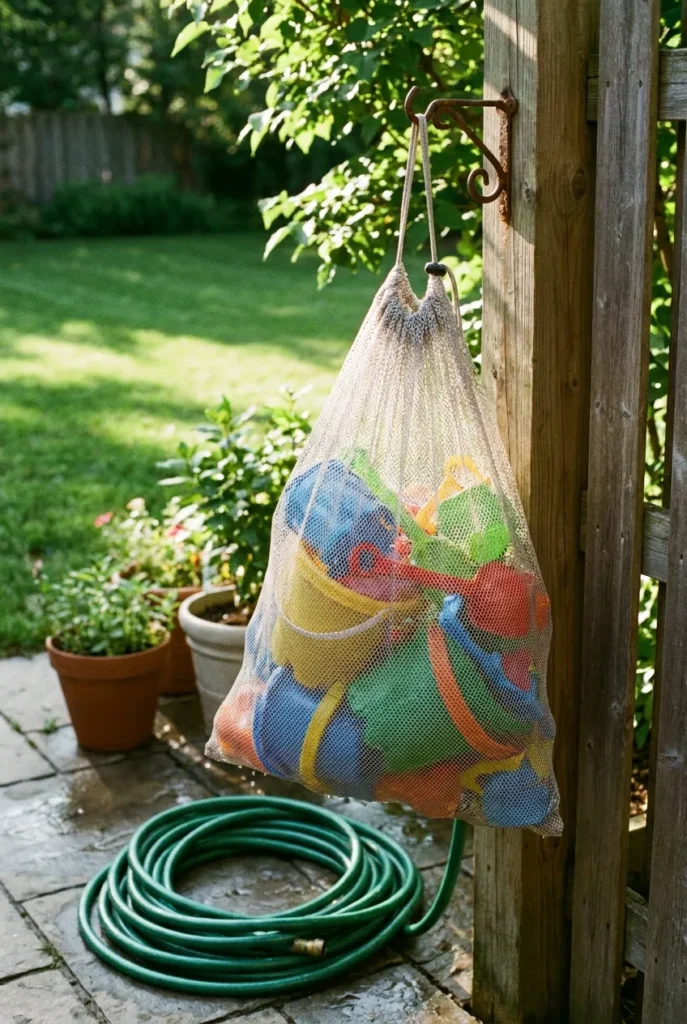
You can corral a surprising amount for pocket change. Dollar Tree mesh laundry bags (around $1.25) make perfect drainable sacks for beach and water toys. A few plastic dish tubs become grab-bins for chalk and cars. Add Command outdoor hooks under a covered eave for jump ropes and bubble wands.
The trick with cheap gear is placement, not price. Keep it shaded and off the wet ground, and a $1 bag outlasts a $30 basket left in the sun.
How to Store Wet and Water Toys Without the Mold
Water toys are where most setups fail. Seal a damp squirt gun in an airtight bin and you’ve basically built a tiny mold farm. The fix is drainage and drying, every single time.
Use mesh bags or perforated bins so air and water move through. After a water-table afternoon, pour out standing water, give toys a quick rinse, and let them dry before they go away. The EPA is blunt about this in its mold prevention guidance: control the moisture and you control the mold. For deeper grime, a soak in a 1-to-4 vinegar-and-water mix (the empty kiddie pool works great) cuts the slime, then rinse with the hose.
Store the splash group somewhere with airflow, never a closed box. A mesh bag hung on a fence hook does more than a fancy sealed tote ever could.
Storing Ride-On Toys, Bikes, and the Big Stuff
The bulky toys (cars, trikes, balance bikes, wagons) are the ones that wreck a tidy yard. They’re also the priciest, so protecting them pays off.
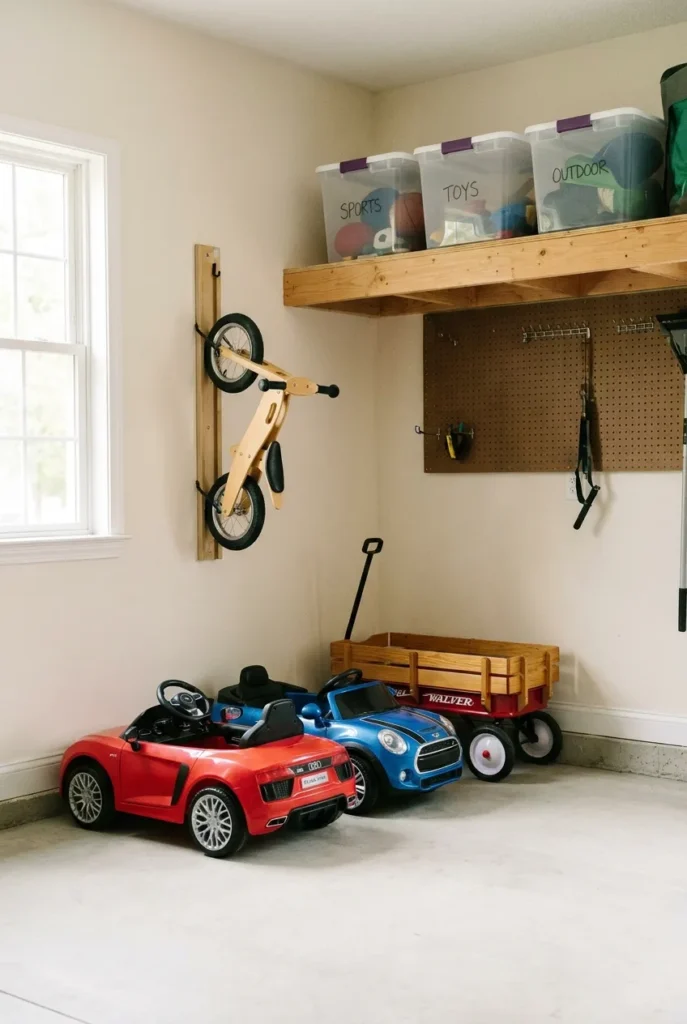
Park ride-ons under a covered porch, in a garage corner, or inside a small resin shed. If a toy has a battery, charge it, then store it around 50 percent in a dry, temperature-safe spot. Cold and damp kill electric ride-on batteries faster than any kid ever could. For bikes, a vertical wall rack or a leaning bike stand clears the floor and keeps tires off wet concrete.
No garage at all? A waterproof toy cover (or a small pop-up bike shelter) protects the big stuff out in the open. This is the same idea we use for our 4-zone mudroom system indoors: give every category a home and the chaos stops.
Getting Kids to Actually Put Toys Away (Age by Age)
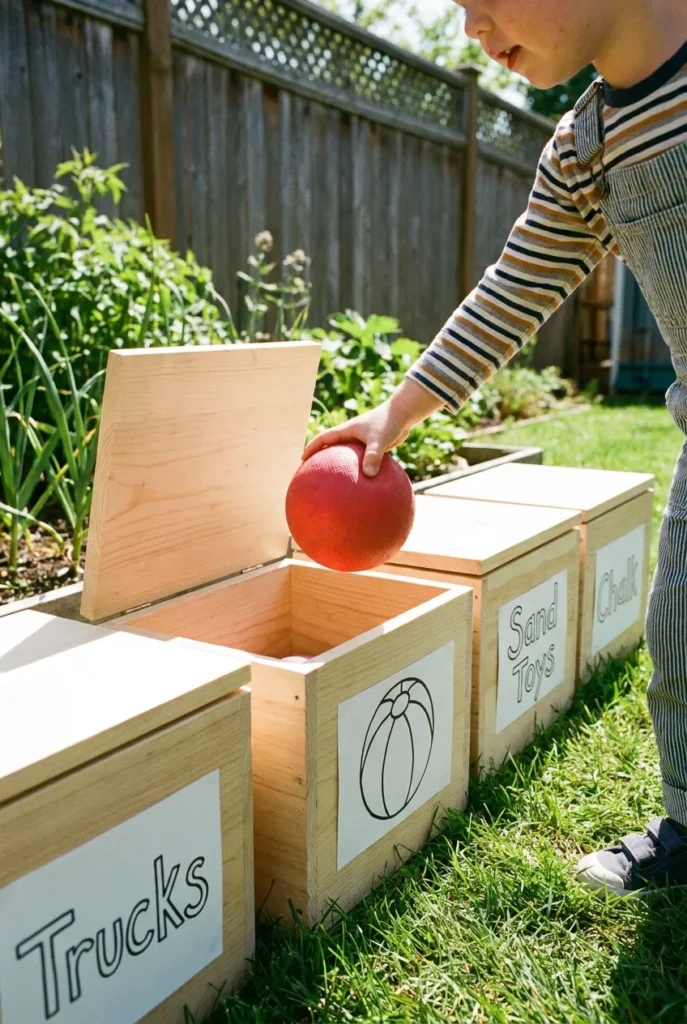
A system only works if it survives a real Tuesday. The secret is matching the job to the kid, then keeping bins low, open, and labeled. Avery picture labels work great for pre-readers, since a photo of a ball means more than the word “ball.”
Here’s a simple age-by-age ladder we lean on:
- Ages 2 to 3: toss balls into one open bin. That’s it. Win.
- Ages 4 to 5: sort into two or three labeled bins by type.
- Ages 6 to 8: wipe down wet toys and roll the cart back in.
- Ages 9 and up: run the whole five-minute reset solo.
Make the last lap of the day a quick “Sun, Shade, Splash” race: water toys to the mesh bag, balls to the net, ride-ons to the shade. Three buckets, five minutes, done.
Quick Compare: 4 Outdoor Toy Storage Picks
| Solution | Approx price | Best for | Material | Durability outside |
|---|---|---|---|---|
| Mesh ball bag | about $7 | wet toys, balls | polyester mesh | moderate, dries fast |
| Sterilite latching bin (30 qt) | about $12 | small sorted toys | plastic | good if shaded |
| IKEA Trofast frame | about $45 | sorted small toys (covered) | pine and plastic | good under cover |
| East Oak resin deck box (60 gal) | about $90 | bulk and large toys | UV-treated resin | excellent, all weather |
If you want a true under-$10 starter, the mesh bag plus a couple of dish tubs covers a beginner backyard for less than a pizza.
Keep It Tidy All Summer (The 10-Minute Maintenance Habit)
Storage solves the where. A tiny habit solves the forever. Once a week, do a fast wipe-and-rinse: hose off the gritty toys, drain anything holding water, and check bins for spiders before the kids dig in.
Twice a season, swap things out using the same seasonal-swap logic we use for clothes in our summer closet refresh. Pull the rarely touched toys, donate what they’ve outgrown, and the active set stays small enough to manage. Hosting soon? Fold this into a quick backyard pass like our 3-hour Memorial Day reset so the yard’s guest-ready fast.
Pick neutral, stackable bins in sizes you can reuse across seasons. The same gray Sterilite tubs that hold pool toys in July hold leaf-pile gloves in October. Evergreen storage means you buy once and you’re set.
Frequently Asked Questions
What is the best way to store outdoor toys?
Sort them by weather exposure first (our Sun, Shade, Splash method), then match each group to storage: a covered resin deck box for fade-prone and bulky toys, open fence crates or bins for sturdy ones, and mesh bags for anything wet. Keep storage close to where kids play so it actually gets used.
How do you store outdoor toys without a shed or garage?
Lean vertical and weatherproof. A resin deck box or storage bench needs no building, fence-mounted crates use empty wall space, and a waterproof cover protects bikes left in the open. Mesh bags on hooks handle water toys in tight patios.
What materials work best for outdoor toy storage?
UV-treated HDPE resin is the durability champ for boxes and benches, since it resists rain, sun, and cracking. For wet toys, breathable polyester mesh beats sealed plastic. Avoid untreated wood and thin baskets, which warp and fade fast outside.
How do you keep water toys from getting moldy?
Drain, rinse, and dry before storing, and never seal damp toys in an airtight bin. Use mesh or perforated containers so air moves through. For built-up grime, soak in a 1-to-4 vinegar-and-water mix, then rinse and air-dry fully.
How do you store ride-on and electric toys outside?
Keep them shaded and dry under a porch, in a garage, or in a small resin shed. For battery-powered ride-ons, charge to about half, store in a temperature-safe spot, and keep them off freezing or wet ground. A waterproof cover works if they must stay outdoors.
How do I get my kids to put their outdoor toys away?
Make it easy and age-appropriate: low open bins, picture labels for little ones, and a five-minute end-of-day reset matched to each kid’s age. A quick Sun, Shade, Splash race turns cleanup into a game instead of a fight.
Your Tidy Backyard Starts This Weekend
You don’t need a renovation or a shed full of matching containers. Start with one resin deck box or a single mesh bag, run the Sun, Shade, Splash sort, and you’ll feel the difference by Saturday afternoon. These outdoor toy storage ideas are built to last a full season, not a week.
Want the cheat sheet? Grab our free printable Sun, Shade, Splash sorting chart (US letter PDF, prints clean in black and white, laminate it for a wipeable yard copy). Which zone is your biggest mess right now: the sun pile, the shade pile, or the splash pile? Tell us, and we’ll point you to the exact fix.
General information only. Always follow manufacturer guidance for cleaning and battery storage, and keep all storage away from chemicals and out of reach where it could pose a tip-over or entrapment risk to young children.


