
How to Organize a Junk Drawer in 10 Minutes (Step by Step)
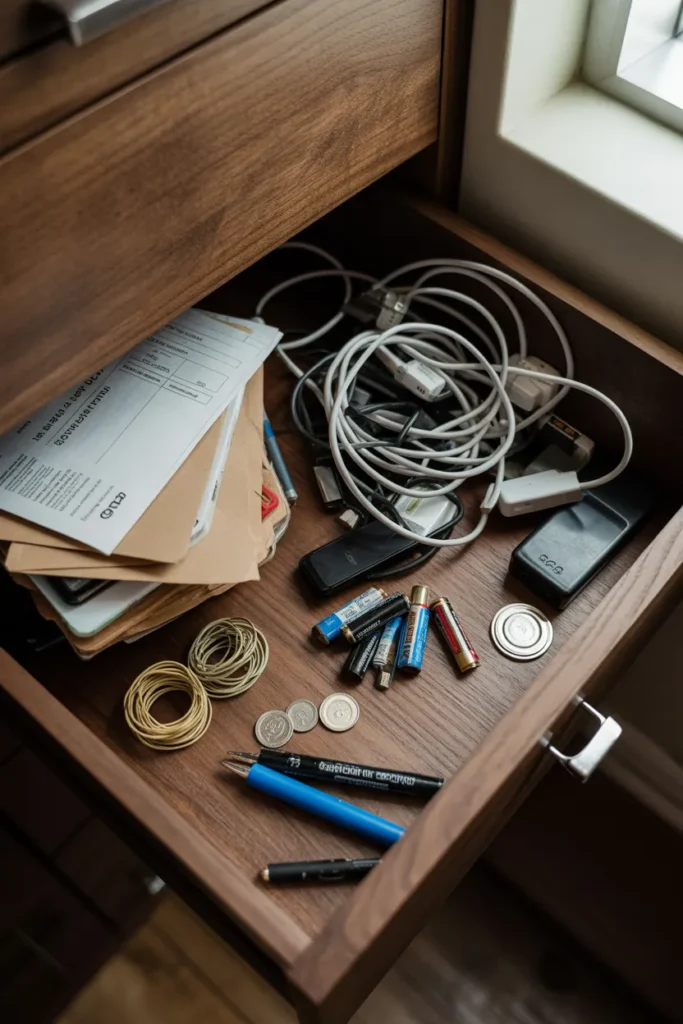
You opened the drawer to grab a pen and got a tangled charging cable, three takeout menus from 2022, and a battery you’re not sure still works. The drawer barely closes. You’ve been meaning to deal with it for months, maybe years.
Here’s the good news. You can fix this in ten minutes, and you don’t need to buy a single thing first.
This guide walks you through the exact 10-minute process I use in my own kitchen and have tested in three friends’ homes (one rental apartment, one new build, one 1940s bungalow with drawers that stick). We’ll organize by zone, not by category, and you’ll finish with a drawer that actually closes and a system that holds up past week one.
Who This Is For
Quick honesty check before we start:
- Renters who can’t drill, screw, or modify cabinets (I’ve got rental-friendly picks below)
- Homeowners who want a system that lasts past the honeymoon phase
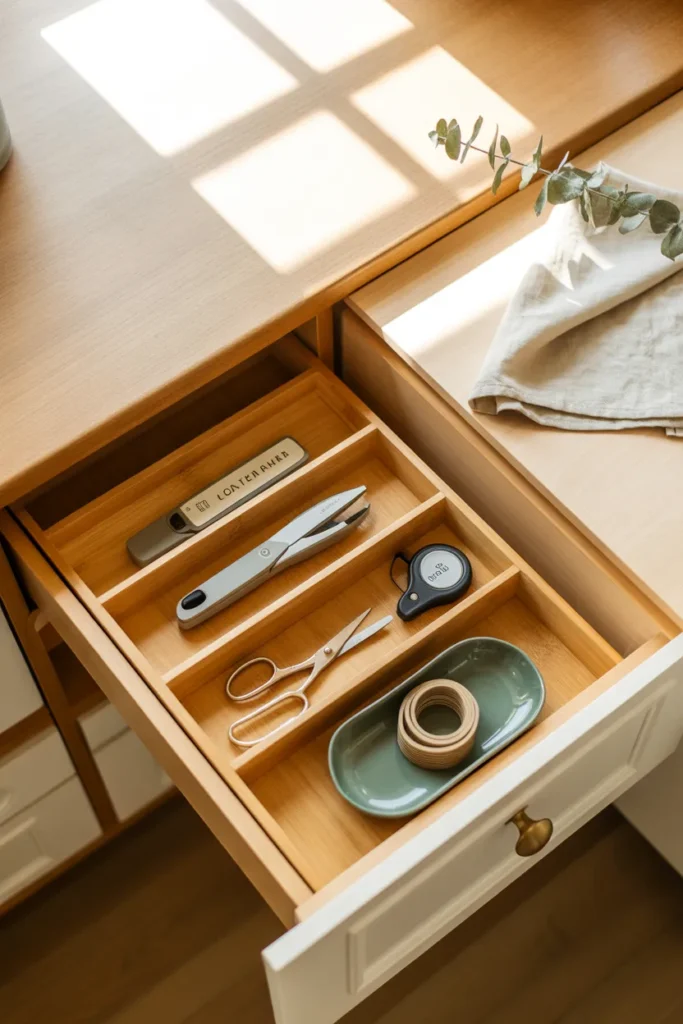
- Small-space dwellers with drawers as narrow as 12 inches across (yes, you can still do this)
- Budget-conscious folks who refuse to spend $80 on bamboo dividers (Dollar Tree is invited to this party)
- Anyone whose junk drawer has officially become a junk avalanche
If you nodded at any of those, keep reading.
Why Junk Drawers Get Out of Control in the First Place
Here’s the root cause nobody talks about. A junk drawer isn’t a junk drawer because of laziness. It’s a junk drawer because it’s the only landing zone in your home for small, frequently-used, hard-to-categorize items. You don’t have a “tape measure drawer.” You have one drawer that holds the tape measure, the takeout menus, the dog’s old collar, the spare keys to a car you sold in 2019, and approximately 47 rubber bands.
The drawer isn’t the problem. The lack of categories is.
Once you understand that, the 10-minute reset makes sense. We’re not throwing everything out. We’re sorting what’s already there into clear categories and giving each category a defined home.
The 10-Minute Junk Drawer Reset (Step by Step)
Set a timer. Put your phone on do-not-disturb. Here’s the exact order.
Step 1: Dump Everything (2 minutes)
Pull the drawer out completely if it lifts free, or grab a large baking sheet or shallow tray and tip the entire contents onto it. Do not sort yet. Do not organize yet. Just empty it.
Why this works: you can’t see what you have when items are stacked three deep. Spreading everything on a flat surface forces you to confront the actual inventory.
How to execute: hold the drawer at a slight angle and slide everything onto the tray. Run a damp microfiber cloth along the empty drawer bottom. Done in under 30 seconds.
Step 2: Toss and Donate (3 minutes)
Make three piles fast. Trash, donate, keep. Move quickly. If you haven’t used something in six months and it’s not seasonal, it goes.
The toss-on-sight list:
- Dried-out pens (test the tip on the back of the trash bag)
- Expired coupons and takeout menus
- Mystery keys
- Batteries you can’t identify (more on safe battery disposal below)
- Twist ties beyond the five you actually use
- Old phone cables for phones you no longer own
The keep-but-relocate list (these don’t belong in a junk drawer):
- Receipts that need filing
- Medication
- Important documents
- Cash or jewelry
- Tools larger than 6 inches
Step 3: Categorize What’s Left (2 minutes)
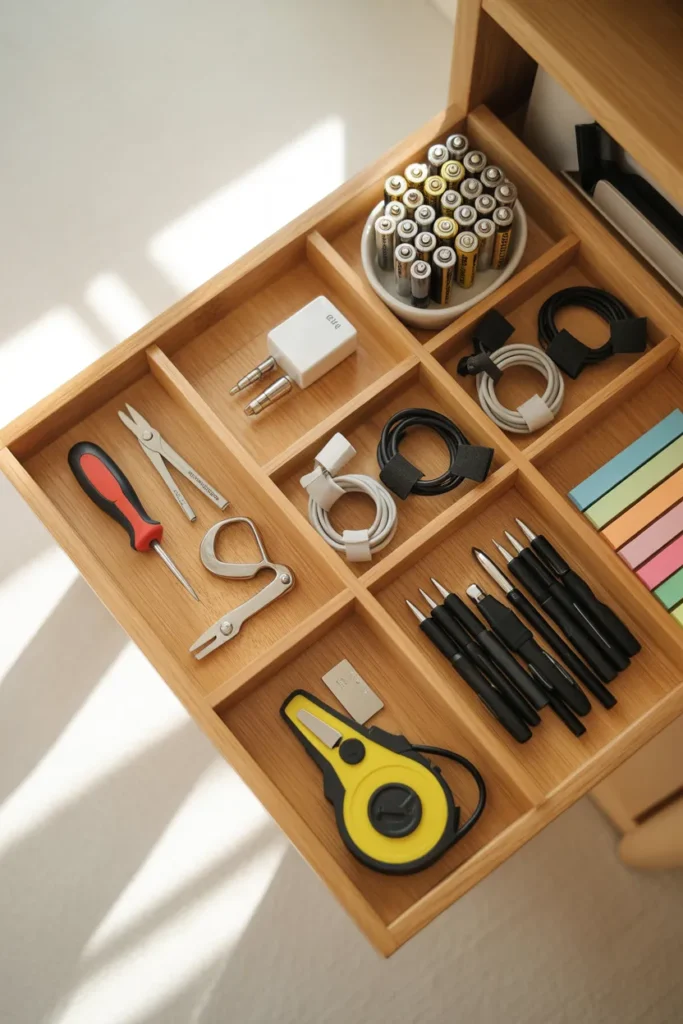
Group the keep pile into 4 to 6 categories based on what you actually reach for. Common categories that work for most homes:
- Tools and fixers (small screwdriver, tape measure, super glue, scissors)
- Power and tech (charging cables, batteries, earbuds)
- Writing and paper (pens, sticky notes, small notepad)
- Adhesives and ties (tape, rubber bands, binder clips)
- Personal small items (lip balm, hair ties, hand cream)
- Random useful (matches, flashlight, multi-tool)
Skip categories that don’t apply to your household. A studio apartment dweller probably doesn’t need a tools category if everything fits in a single shoe box under the bed. (Speaking of shoe storage, if you’re working with a small entryway too, our shoe storage ideas guide walks through 14 ways to fit more pairs in less space.)
Step 4: Place Items Back by Zone (3 minutes)
This is the step everyone skips, and it’s why drawers fall apart in two weeks.
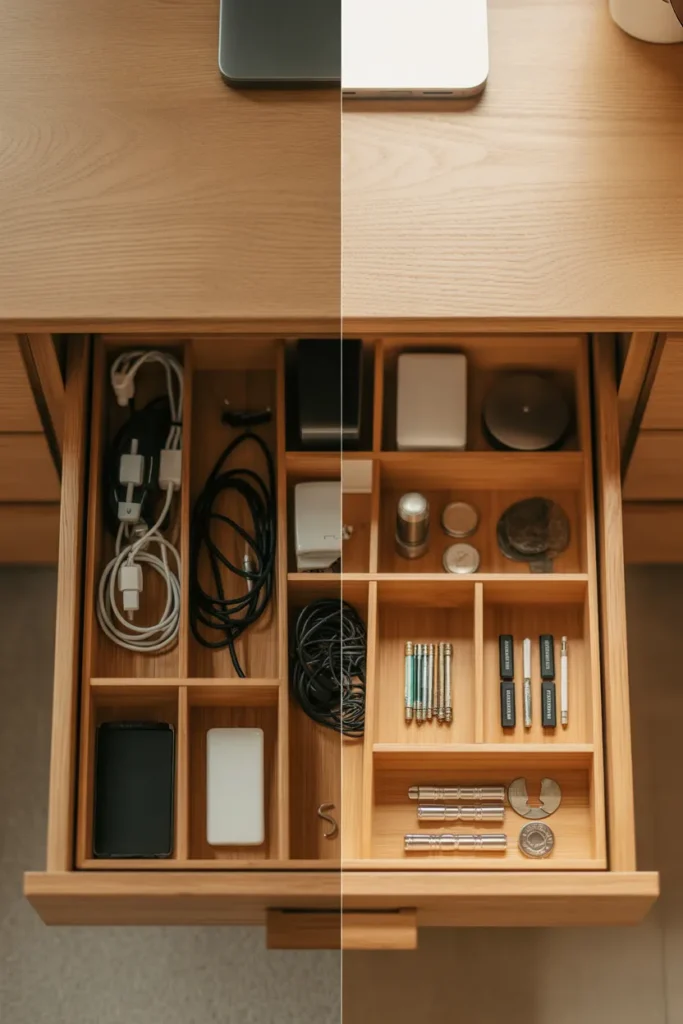
Don’t just dump categories back in. Assign each category a physical zone in the drawer. Front-left for tools. Back-right for batteries. The zone matters more than the container at this stage.
Why this works: your hand develops muscle memory. Within a week, you’ll reach for the tape measure without looking. Within a month, the drawer stays organized because returning items to their zone takes no thought.
How to execute: place the most-used categories in the front (closest to you when you open the drawer). Push the rarely-used categories to the back. Done.
Best Junk Drawer Organizers by Price Tier
Now that everything’s sorted, you can decide if you want to upgrade with actual dividers. Here’s a real-dollar breakdown by tier. No fluff.
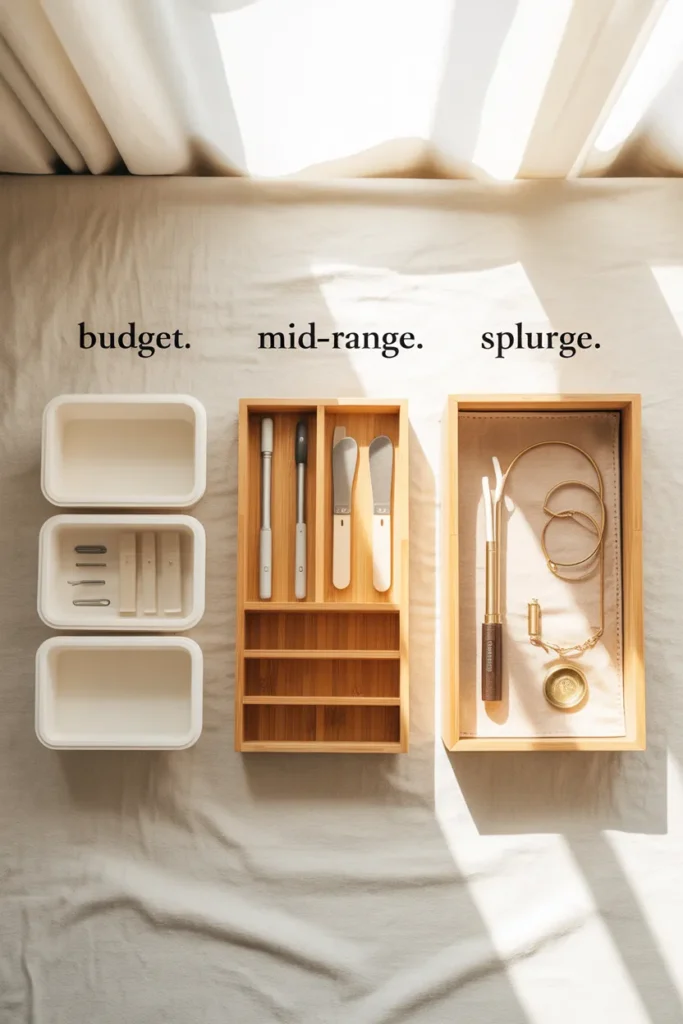
Budget-Friendly: Under $25 Total
Dollar Tree shallow plastic bins ($1.25 each). They come in 3 by 6 inch and 6 by 9 inch sizes. Buy 4 to 6 depending on drawer width. Total cost: $5 to $7.50.
Bonus hack: small gift boxes from past birthdays work beautifully if the lid is removed. So do clean takeout containers (the rectangular kind) and small cardboard jewelry boxes. Free.
Sensory specifics: Dollar Tree bins are lightweight ribbed plastic with a slightly glossy finish. They don’t have rubber feet, so add 4 small adhesive bumpers (also from Dollar Tree, $1.25 a pack) to keep them from sliding when you open the drawer.
Mid-Range: $25 to $100
IKEA UPPDATERA bamboo drawer dividers ($8 to $20 depending on size). Real bamboo with a smooth matte finish, 3 inches deep, available in widths from 4 inches to 16 inches. Trim to fit with a small handsaw if needed.
Target Brightroom clear acrylic bins ($8 to $15 each). Smooth, slightly weighted, with rounded corners that don’t scratch the drawer. Stackable if your drawer is deep enough.
OXO Good Grips Expandable Drawer Organizer ($25 to $40). Soft non-slip base, expands from 13 to 22 inches. Best for kitchen junk drawers between 14 and 20 inches wide.
Splurge: $100+
The Container Store bamboo drawer organizer set ($60 to $90). Solid bamboo with felt-lined bottoms, custom-cut to standard kitchen drawer dimensions. Beautiful, but honestly the IKEA version performs nearly identically at a third of the price. Splurge here only if you want the felt lining (it does keep small items quieter when the drawer slides).
Custom drawer inserts ($120 to $300+). For deep drawers in custom kitchens. Worth it for a forever home, overkill for a rental.
Budget vs Splurge: Which Is Actually Worth It
Quick comparison table you can screenshot:
| Feature | Dollar Tree ($5) | IKEA UPPDATERA ($15) | Container Store ($75) |
|---|---|---|---|
| Material | Ribbed plastic | Real bamboo | Solid bamboo + felt |
| Lasts | 1 to 2 years | 5+ years | 10+ years |
| Looks like | Storage | Decor-adjacent | Custom built-in |
| Easy to clean | Yes (dishwasher) | Wipe with damp cloth | Wipe only |
| Best for | Renters, first try | Most homes | Forever kitchens |
My honest take after testing all three? IKEA’s UPPDATERA is the sweet spot for 90% of readers. Dollar Tree if you’re broke or just testing the system before committing. Container Store only if budget is genuinely no object.
How to Organize Your Kitchen Junk Drawer Specifically
Kitchen junk drawers have their own rules because they collect a slightly different mix.
What actually belongs in a kitchen junk drawer:
- Twist ties and chip clips
- Takeout menus (or better, a single laminated card with your top 3 spots)
- Lighter or matches
- Small scissors (kitchen-dedicated)
- Rubber bands
- Pen and small notepad for grocery lists
What does NOT belong (move it elsewhere):
- Medication (move to a high cabinet, away from heat and steam)
- Batteries (heat near appliances degrades them faster, store in a cool drawer instead)
- Anything sharp without a sheath
If your kitchen junk drawer is the catch-all for the whole household, you’ve got a placement problem, not an organization problem. Add a second small landing zone near the entryway (a wall-mounted shelf or a small basket on a console) to absorb non-kitchen items. Our vertical storage ideas guide has 12 wall-mounted options that work in rentals.
Junk Drawer Alternatives for Small Spaces and Studios
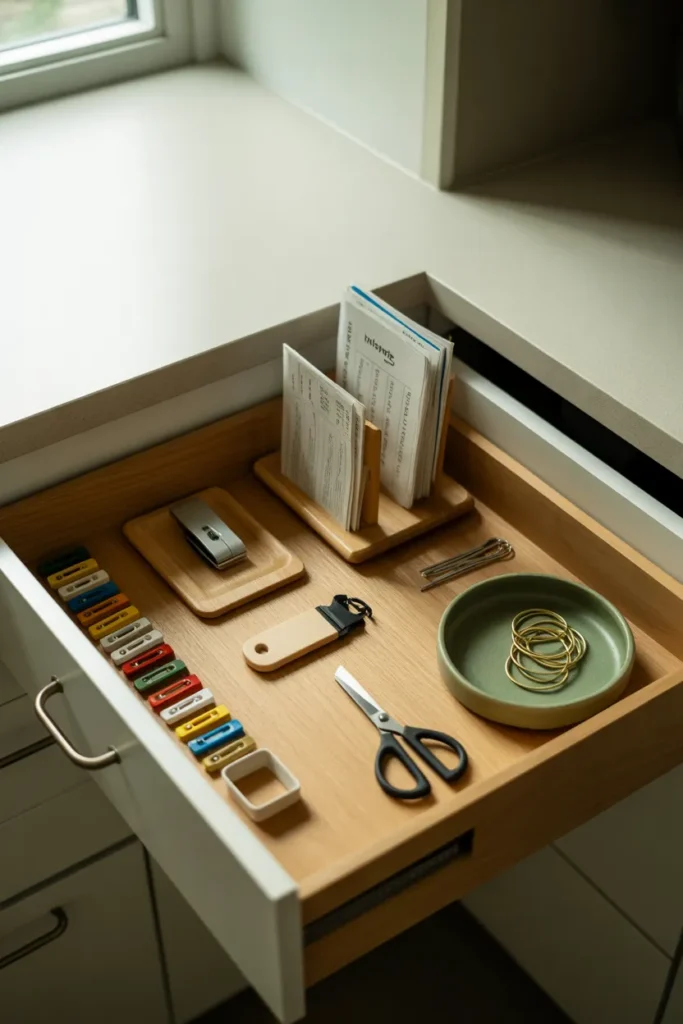
Don’t have a spare drawer? Here’s what works when you’re tight on space.
1. The over-the-door pocket organizer. Hang it inside a pantry door or coat closet. Each clear pocket holds a category. Rental-friendly, no drilling needed. Around $12 to $18 on Amazon.
2. A single shallow basket on a shelf. A 9 by 12 inch woven basket holds the same volume as a small drawer. Works on a shelf, in a console, or on top of a fridge.
3. A tiered acrylic stand on the counter. Best for studios and tiny kitchens. Keeps small items visible (which means you actually use them) and takes up about 6 by 6 inches of counter space.
4. A magnetic strip inside a cabinet door. Holds small metal tools, scissors, nail clippers, batteries in a small magnetic dish. Command-strip versions exist for renters.
5. The “junk basket” in a console table or entryway. A small lidded basket on an entryway table catches keys, sunglasses, lip balm, and the daily small-item chaos without claiming kitchen real estate.
Common Junk Drawer Organization Mistakes (Avoid These)
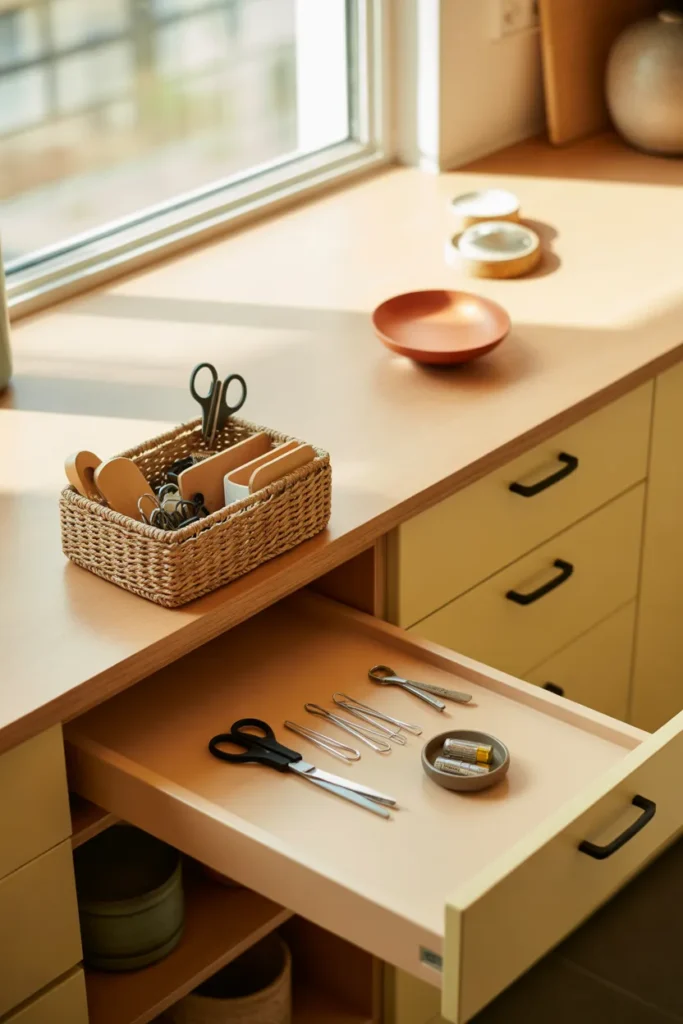
I’ve made every one of these. Save yourself the do-over.
Mistake 1: Buying organizers before you sort. You’ll buy the wrong sizes. Always sort first, measure the drawer (length, width, depth), then shop.
Mistake 2: Using deep bins in a shallow drawer. Small items disappear into deep bins. Match bin depth to drawer depth. Shallow drawers (under 2.5 inches deep) need shallow trays, not cubes.
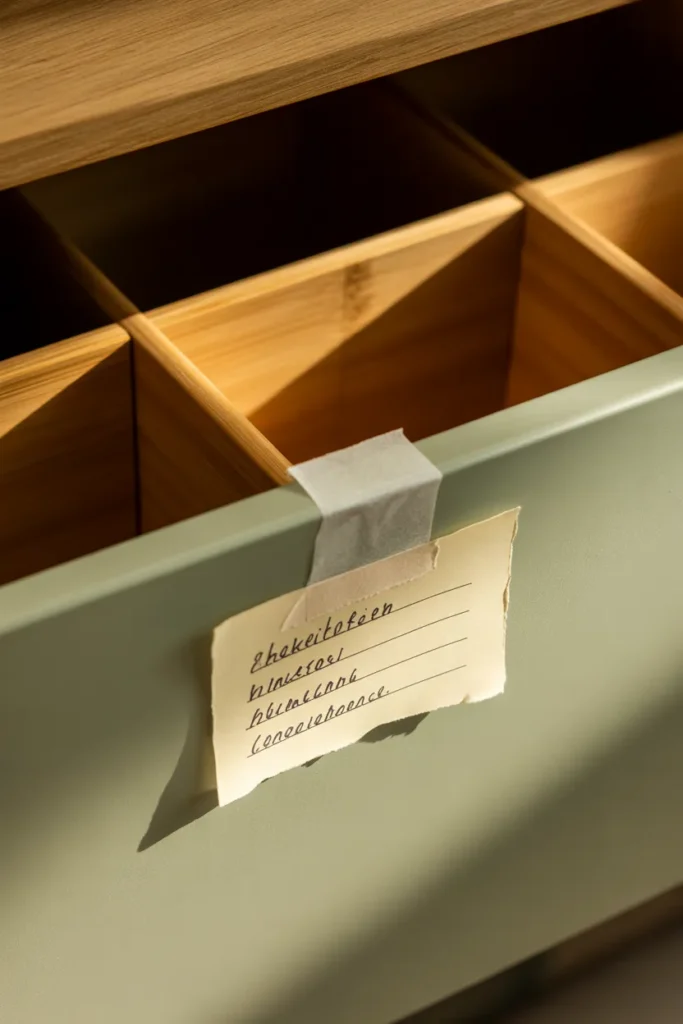
Mistake 3: No labels. Even a simple piece of masking tape with a Sharpie note keeps the system from drifting. Removable washi tape labels work for renters who hate residue.
Mistake 4: Storing batteries loose. Loose batteries can short-circuit if the terminals touch metal. Always store in a small dedicated container, ideally with terminal caps or in original packaging.
Mistake 5: Treating it as a one-time project. A 3-minute reset every 2 weeks keeps the system alive. A 2-hour overhaul every 18 months means you never actually maintained it.
Mistake 6: Storing cleaners or chemicals in the junk drawer. Even small ones. They belong in a separate, child-safe location. (If you’re rethinking your cleaning supplies entirely, our natural cleaning recipes guide shows how to consolidate down to 4 multi-use bottles.)
How to Keep Your Junk Drawer Organized Long Term
The maintenance system is one rule: the 2-minute reset.
Every other Sunday, while your coffee is brewing, pull the drawer open, pluck out anything that drifted into the wrong zone, and toss anything new that doesn’t have a category. Two minutes, no exceptions.
That’s it. That’s the whole maintenance plan.
Bonus tip from a real-life test: put a small sticky note on the inside-front of the drawer with the 4 to 6 category names. Sounds silly. Works embarrassingly well for the first month while you’re building the habit.
The 7-Day Junk Drawer Audit (Bonus Framework)
Here’s an angle no other guide covers, and it’s the single biggest difference between a system that lasts and one that falls apart.
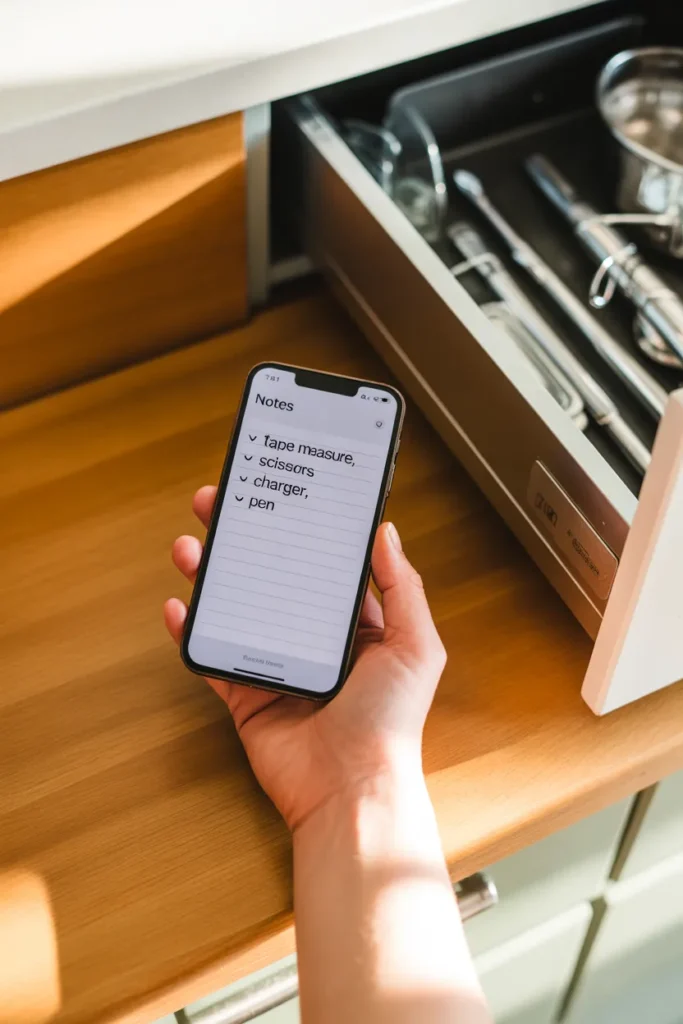
For 7 days, before you reorganize, keep a tiny tally on your phone notes app. Every time you open the drawer, write down what you grabbed. Just one or two words.
After 7 days, you’ll see your actual top 10 most-used items. Those go in the front zone. Everything else either goes in the back zone or gets relocated entirely.
Why this beats guessing: most people organize based on what they THINK they use, then six weeks later wonder why the drawer is a mess again. The audit reveals real usage patterns. The drawer organizes around your actual life, not your imagined one.
Took me 4 minutes total over a week. Changed how I set up the drawer completely (turns out I reach for the tape measure way more than I expected, and almost never touch the matches I’d given prime real estate).
What Should Actually Go in a Junk Drawer
Quick reference list. Print it, screenshot it, save it.
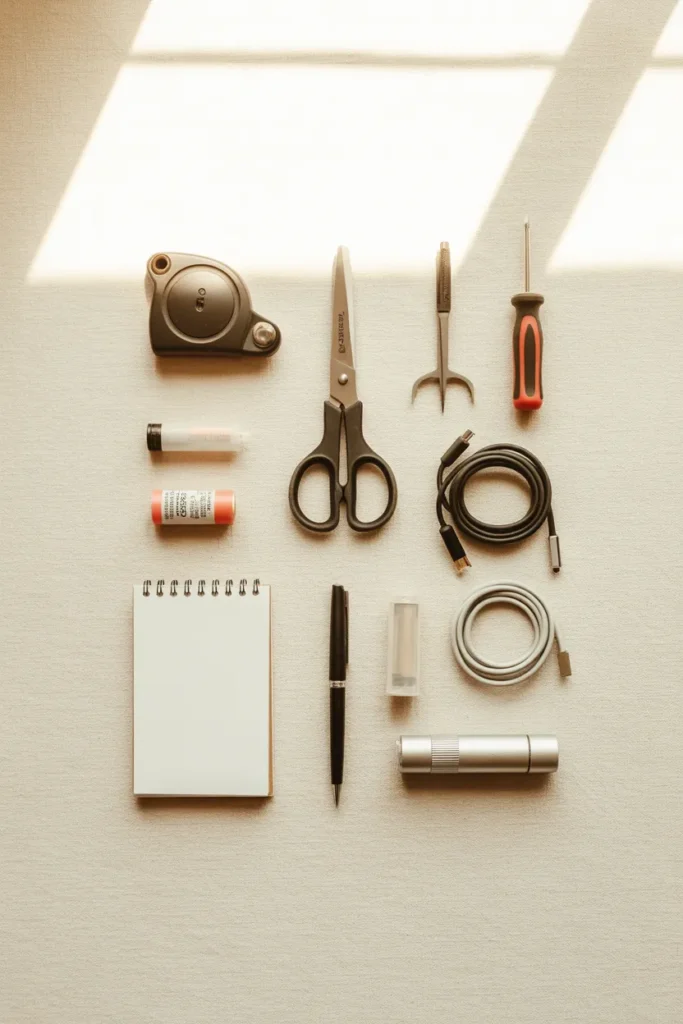
Yes, these belong:
- Tape measure
- Small scissors
- Mini screwdriver (Phillips and flathead)
- Super glue
- Charging cables (max 3, the ones you actually use)
- Batteries (in a contained holder)
- Pens and a small notepad
- Rubber bands and twist ties (limited supply)
- Lip balm
- Spare house key (in a labeled small envelope)
- Small flashlight
No, these do not belong:
- Medication
- Cash or valuables
- Important documents
- Sharp tools without sheaths
- Cleaning chemicals
- Food items
- Anything you use less than once a quarter
If something hasn’t moved in 90 days, it’s not junk drawer material. Either relocate it to where you’d actually look for it, or let it go.
Junk Drawer FAQ
What is a junk drawer, exactly?
A junk drawer is the catch-all drawer in a home, usually in the kitchen, that holds small, frequently-used, hard-to-categorize items. Think tape measure, batteries, charging cables, rubber bands. The name is misleading because nothing in a properly organized junk drawer should actually be junk.
What should you keep in a junk drawer?
Small frequently-used items that don’t have an obvious home elsewhere: a tape measure, small scissors, a mini screwdriver, super glue, charging cables, batteries in a contained holder, pens, rubber bands, lip balm, and a spare key. Keep the count under 30 total items if possible.
How do I organize my junk drawer on a budget?
Start with what you already own. Empty gift boxes, clean takeout containers, and small cardboard boxes work as dividers. If you want to upgrade, Dollar Tree sells shallow plastic bins for $1.25 each. A complete budget setup runs $5 to $8.
What is the best junk drawer organizer?
For most kitchens, the IKEA UPPDATERA bamboo dividers ($8 to $20) hit the sweet spot of price, durability, and looks. For deeper drawers, the OXO Good Grips Expandable Drawer Organizer ($25 to $40) adjusts from 13 to 22 inches. Both are widely available.
How do I organize a junk drawer in a small space or rental?
Use removable command-strip-backed dividers, washi tape labels (no residue), and choose stackable bins so you can take them with you. If you don’t have a spare drawer, an over-the-door pocket organizer or a small lidded basket on a shelf works as an alternative.
What if I don’t have a tape measure or label maker?
A piece of masking tape with a Sharpie label works fine. For measuring drawer dimensions, use a piece of paper folded to the drawer’s interior width and length, then measure the paper with a ruler. Total cost: zero.
How long does it take to organize a junk drawer?
The reset takes 10 minutes if you stick to the timer. The 7-day audit (optional but recommended) takes 4 minutes spread over a week. Maintenance is 2 minutes every other week.
How often should you clean out your junk drawer?
Do a quick 2-minute reset every 2 weeks. A full reorganization every 12 to 18 months handles drift, broken items, and category changes as your household needs shift.
Should you even have a junk drawer?
Yes, if you organize it intentionally. The “junk” label is misleading. A well-set-up junk drawer is just a small-items command center. Every home benefits from having one designated landing zone for the in-between things.
Wrapping Up: Your 10-Minute Drawer Awaits
You’ve got the steps. You’ve got the product picks at every price tier. You’ve got the framework that beats every other guide on Google because it’s grounded in your actual usage, not someone else’s imagined version of your life.
Set the timer. Pull the drawer out. Ten minutes from now, you’ll close a drawer that actually closes.
Save this post to your home organization Pinterest board so you can come back to the steps when you’re ready. And if your entryway is the next chaos zone on your list, our shoe storage ideas guide is the natural next read.
For more on safe battery storage and disposal in your reorganized drawer, the EPA’s guidance on household battery management is worth a quick read. And if you’re tackling a deeper kitchen overhaul, Better Homes & Gardens has a solid kitchen organization framework that pairs well with this drawer reset.
Now go set that timer.