
Summer Pantry Restock: 10 Heat-Friendly Items to Keep Stocked
Last June, I opened a bottle of olive oil that had been sitting in my counter cabinet, and it tasted like wet cardboard. Heat had quietly ruined it in about three weeks. That small disaster kicked off a slightly nerdy obsession: rebuilding our summer pantry essentials around items that actually hold up when the kitchen hits 78°F by 3 p.m. and the kids are demanding snacks for the fourth time before noon.
Here’s the promise. Ten heat-friendly staples, a 30-minute reset you can run this weekend, three real no-cook meals straight from the list, and a way to keep the pantry cool even if your air conditioner gives up at the wrong moment. No 47-item shopping list. No bins you don’t need. Just the summer pantry essentials that earn their shelf space all season.
Why a Summer Pantry Looks Different From the Rest of the Year
A pantry built for January is not a pantry built for July. The same shelves that quietly stored canola oil, flour, and chocolate chips all winter become a slow-motion problem once your kitchen pushes past 75°F. Oils go rancid faster. Whole-grain flours turn bitter. Chocolate chips bloom into a chalky gray mess. And if your pantry shares a wall with the oven or the dishwasher, the temperature inside can spike ten or fifteen degrees higher than the rest of the room.
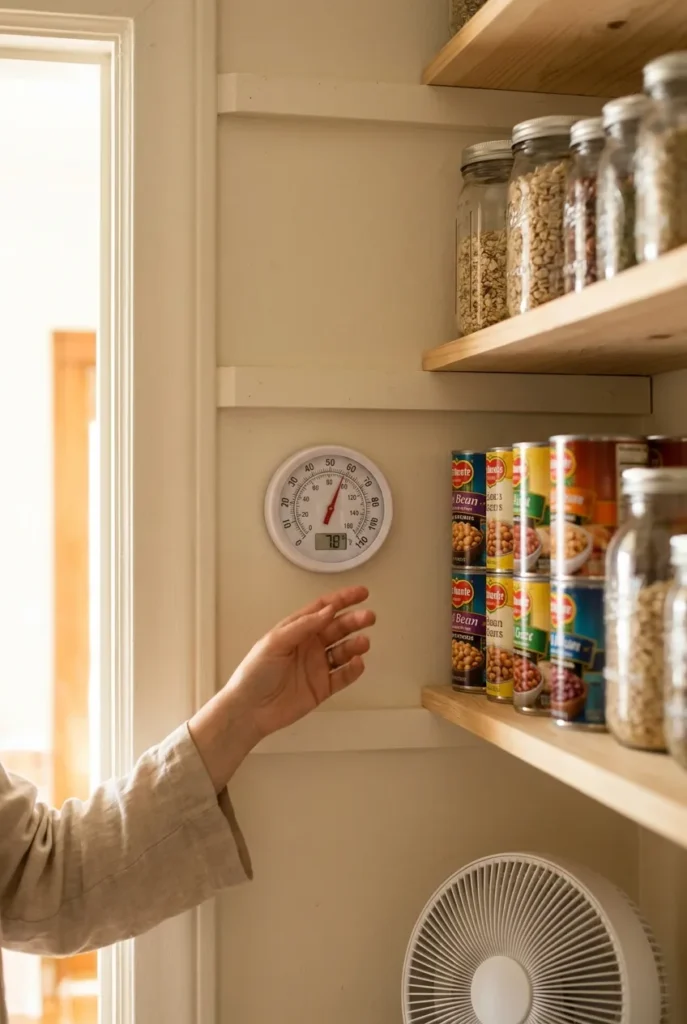
So a summer pantry restock isn’t a vibe shift. It’s a small inventory audit. The goal is to swap heat-sensitive items into smaller quantities (or move them to the fridge entirely) and lean toward staples that thrive in warm, humid storage. The result is less waste, fewer surprise grocery runs, and a kitchen that can actually feed a family at the end of a long pool day.
The Heat-Friendly 10 Rule: The Framework This List Is Built On
Before we get to the list, here’s the rule every item had to pass. I call it the Heat-Friendly 10 Rule, and it’s the simplest filter I’ve found for picking summer pantry essentials.
Each item must clear three quick tests:
- The 75°F Test. Holds quality for at least 30 days in a pantry sitting at 75°F or warmer.
- The No-Oven Test. Edible or meal-ready with zero baking and minimal stovetop time.
- The Double-Duty Test. Works as either two meals or one kid snack plus one adult meal component.
If a staple fails any of the three, it goes back on the regular pantry list and waits for fall. Honestly, this little filter cut my summer grocery list by about a third the first year I used it.
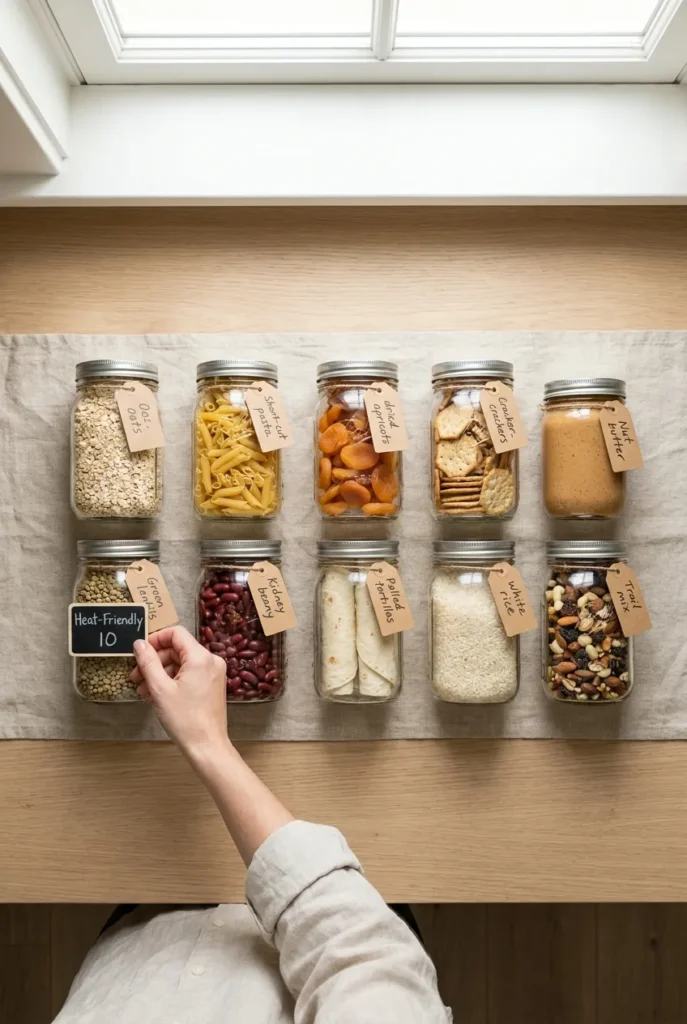
The Heat-Friendly 10: Your Summer Pantry Essentials List
1. Short-Cut Pasta (Penne, Fusilli, Rotini)
Boil once in the cool of the morning, cool it down, and a single pound of short-cut pasta turns into three days of cold pasta salads. Penne, fusilli, and rotini all hold dressings well after a night in the fridge. I keep two boxes decanted into 4-quart Cambro containers because original cardboard packaging absorbs humidity faster than glass or polycarbonate.
2. Canned Beans (Chickpeas, Cannellini, Black Beans)
The single most useful summer pantry essential, full stop. Rinse, drain, toss with olive oil and lemon, and you have a protein anchor for a salad in about ninety seconds. Stock three cans of chickpeas, three of cannellini, and three of black beans. That’s it. They feed a family of four through two summer dinners and a packed-lunch wrap with room to spare.
3. Canned Tuna or Salmon in Olive Oil
Pouches and cans of tuna packed in olive oil last about three years sealed and stay shelf-stable above 75°F. (The olive-oil variety actually holds flavor better in heat than water-packed.) I keep four tins on standby for emergency cold pasta salads, no-cook protein bowls, and one beloved tuna-on-cracker lunch the kids ask for every Saturday.
4. Rolled Oats
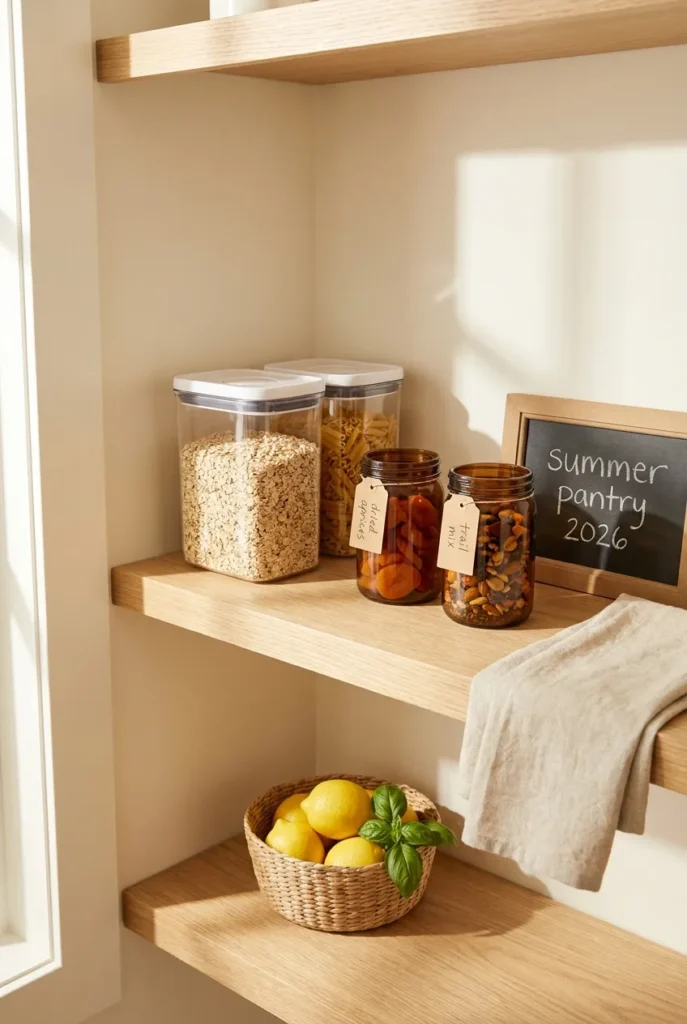
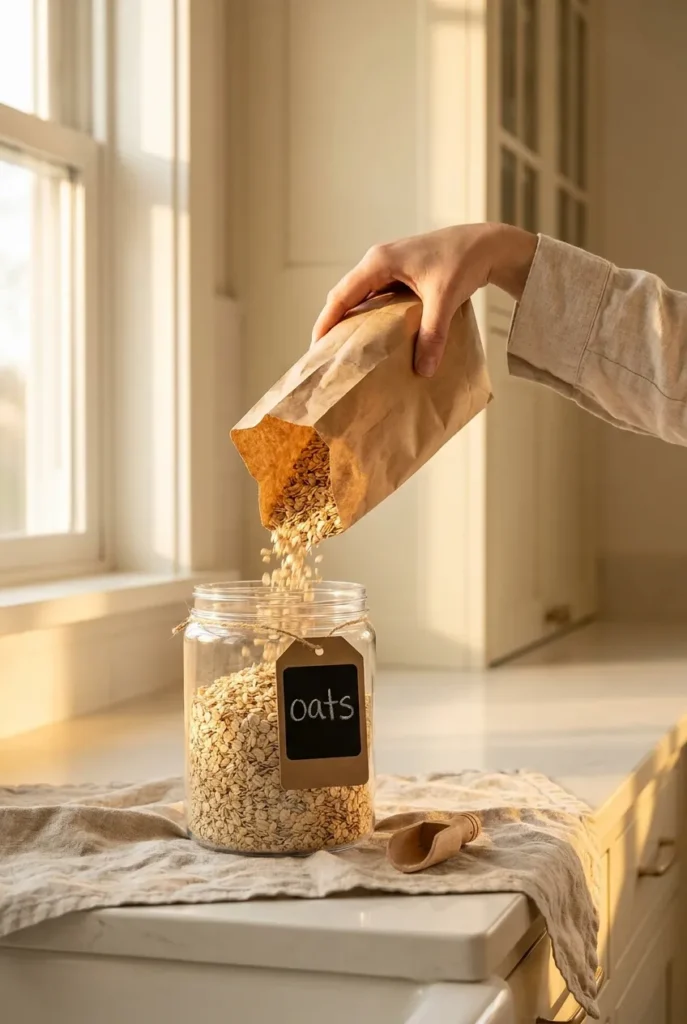
Summer changes how you eat breakfast. The oven is off. The stovetop is off. Rolled oats turn into overnight oats with shelf-stable plant milk and a spoon of nut butter, and breakfast is solved before you make the coffee. Decant a 4-pound bag into a 4.4-quart OXO POP container (about 12 inches tall) and you’ll get roughly 30 servings of overnight oats out of it.
5. Shelf-Stable UHT Plant Milk
Almond Breeze, Silk, and Pacific Foods all sell UHT (ultra-heat-treated) cartons of plant milk that live happily on the pantry shelf for six months unopened. They turn rolled oats into overnight oats. They blend into morning smoothies. And if the power goes out for a hot afternoon, they’re still drinkable. Keep three or four boxes stacked sideways on a low shelf where the floor is coolest.
6. Crackers and Rice Cakes
The kid-snack workhorse. Whole-grain crackers (Ak-Mak, Wasa, Triscuit) and plain rice cakes survive humidity better than open bags of chips, and they pair with anything from nut butter to tuna salad to a slice of fresh tomato. Move them into a clear OXO POP container the day you open the box, and they’ll stay crisp for three to four weeks even in a warm pantry.
7. Nut Butter in Small Glass Jars
Smaller is the rule here. A giant tub of natural peanut butter that takes you three months to finish will separate and turn slightly rancid in summer heat. A 12-ounce glass jar finished in four to five weeks tastes fresh every time. I rotate between peanut and almond, and I always store the open jar upside down for the last third so the oil stays mixed.
8. Shelf-Stable Tortillas, Flatbread, and Pita
Brands like Mission, La Tortilla Factory, and Joseph’s flatbread hold quality at room temperature for two to three weeks once opened, longer if you transfer them to a sealed zip bag with the air pressed out. Tortillas wrap chickpea salad. Flatbread carries hummus and cucumber. Pita splits open for a no-cook pizza with shelf-stable pesto and fresh tomato.
9. Vinegars and One Small Olive Oil
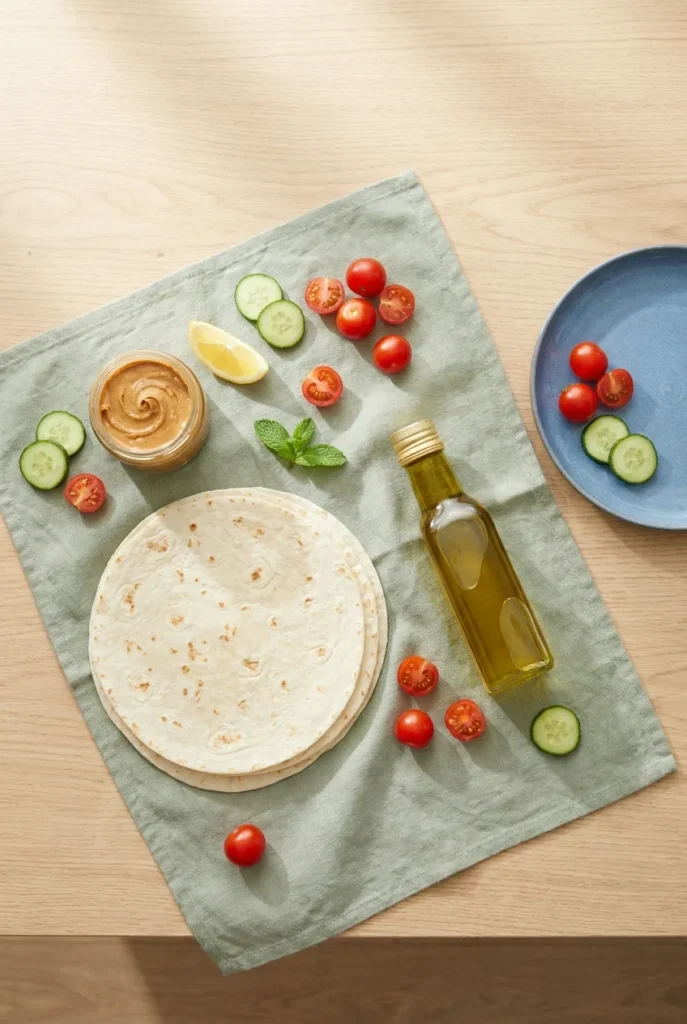
Three vinegars do almost everything: apple cider, rice, and balsamic. Pair them with a small (8.5-ounce) bottle of olive oil, finished in four to six weeks, and you have endless summer dressings. Buying olive oil in a small bottle instead of a giant jug is the single best switch I made. The flavor stays bright all season and the bottle empties before the heat can wreck it.
10. Dried Fruit, Trail Mix, and Freeze-Dried Snacks
The road-trip drawer. Individually portioned trail-mix bags, dried mango, freeze-dried strawberries, and dried apricots all hold up at 80°F without complaint. They handle car rides, beach bags, soccer practice, and the unexpected meltdown at the pediatrician’s office. Keep them in a single labeled basket on a low shelf so a five-year-old can self-serve.
That’s the ten. If you stocked nothing else, you’d still have breakfast, lunch, dinner, and snacks covered for the entire summer.
For deeper container-by-container strategy on the storage side, I walk through what’s actually worth buying (and what’s overhyped) in my guide to pantry organization essentials.
How to Keep Your Pantry Cool When the House Heats Up
This is the angle most pantry articles skip, and honestly, it’s the one that matters most. You can buy the perfect summer pantry essentials and still lose half of them to heat damage if the storage environment is wrong.
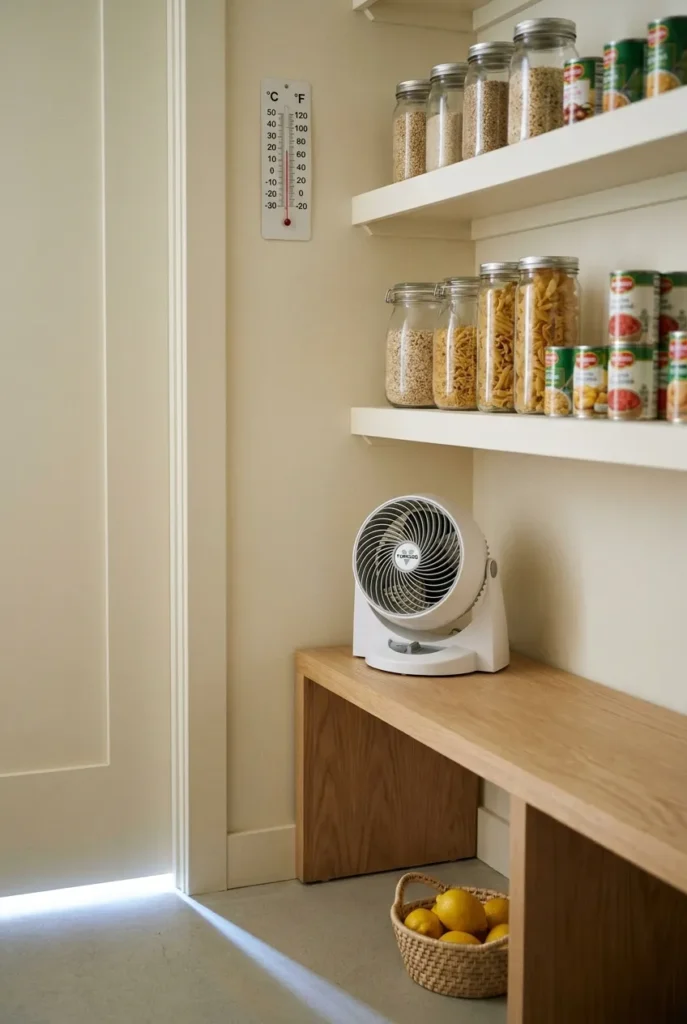
The first move is cheap: a $12 analog thermometer pinned to the inside wall of the pantry. You can’t fix what you don’t measure, and most home cooks have no idea their pantry runs five to ten degrees warmer than the rest of the kitchen. Aim for 70°F or under as a baseline. Once you cross 75°F regularly, certain items (oils, whole-grain flours, chocolate) need to move.
A few more practical moves that work in real US homes:
- Avoid the hot zones. Never store oils, nuts, or chocolate in cabinets directly above the oven, dishwasher, or refrigerator compressor. Those spots run hottest. Put canned goods and pasta there instead.
- Use the lowest shelf. Heat rises, so the floor of a closed pantry is usually the coolest spot in the room. That’s where UHT plant milks, vinegars, and your small olive oil bottle belong.
- Add airflow. A small clip-on fan on the lowest shelf, running for thirty minutes after lunch, keeps the air from stagnating and shaves a few degrees off humid afternoons.
- Switch to glass. Glass jars insulate slightly better than thin cardboard and don’t absorb humidity. The bonus is you can see what’s in them, which means less waste.
- Close the door. If your pantry is a walk-in or a closet, keep the door closed during the hottest part of the day. An open pantry pulls in kitchen heat in minutes.
For a full kitchen-side reset that pairs with this, my 15-minute kitchen reset routine handles the counters, sink, and stove in less time than it takes to unload the dishwasher.
Summer Pantry Meals: 5-Ingredient Combos From This List
The whole point of a heat-friendly pantry is that it feeds you without making the kitchen hotter. Here are three real no-cook summer pantry meals built entirely from the ten staples above (plus whatever fresh produce you grabbed at the farmers’ market).
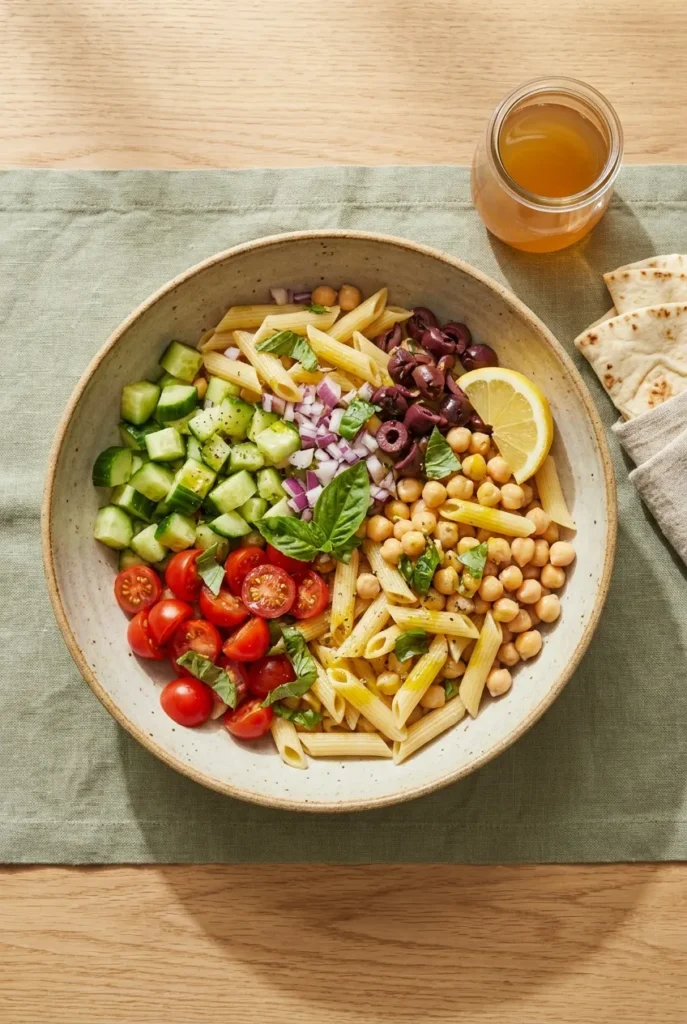
The 5-Minute Chickpea Bowl. Drained chickpeas, a glug of olive oil, a splash of apple cider vinegar, a torn flatbread, and whatever fresh thing is closest (cucumber, cherry tomato, a handful of basil). Toss it in a wide bowl. Done.
Overnight Oats with Nut Butter and Dried Fruit. Half a cup of rolled oats, three-quarters of a cup of UHT almond milk, a tablespoon of peanut butter, a small handful of dried apricot. Stir, refrigerate overnight, eat cold. A child can build this themselves by age six.
Cold Pasta Salad with Tuna and Beans. Cool cooked penne, one drained can of tuna in olive oil, one drained can of cannellini, a splash of rice vinegar, cracked pepper, halved cherry tomatoes. Fifteen minutes of hands-on time, and you’ve got two dinners plus a packed lunch.
A small note: I keep a sticky-note list of these three combos taped inside the pantry door from June through August. By July my brain has stopped problem-solving dinner, and the list makes sure no one ends up eating crackers for the third night in a row.
A Heat-Friendly Pantry for Kids on Summer Break
If your kids are home all summer, the pantry takes a different kind of beating. They’re in there constantly, the door stays open, and the snack demands hit every ninety minutes. Setting up one dedicated kid-friendly zone solves about half the chaos.
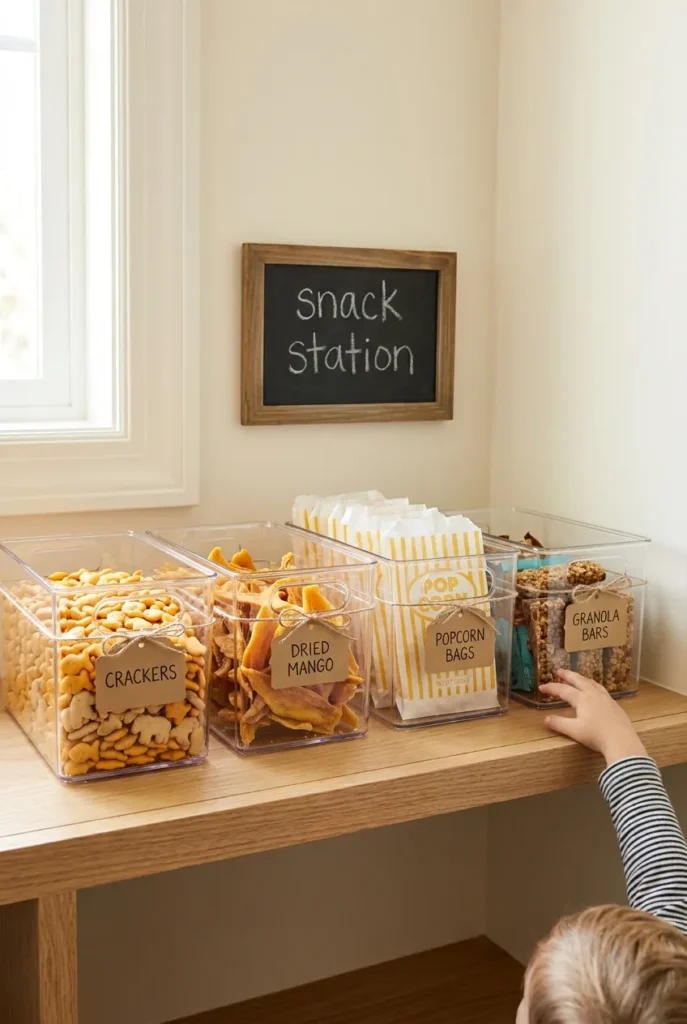
I use a four-bin system on the lowest accessible shelf, each in a clear acrylic container roughly 6 inches by 9 inches:
- Crunchy bin. Crackers, rice cakes, plain popcorn bags.
- Sweet bin. Dried fruit, freeze-dried strawberries, a few granola bars.
- Protein bin. Single-serve trail-mix bags, nut butter pouches, beef sticks for older kids.
- Hydration bin. Shelf-stable juice boxes, a small stack of paper cups, and a refillable water bottle parked on top.
The rule at our house: kids can take one item from any bin without asking, between meals. After two items, they need to drink water and wait twenty minutes. That single boundary cut our snack chaos roughly in half the first week we tried it.
For the summer kits that move from pantry to pool, my beach and pool bag organization guide shows how I prep snacks the night before so mornings don’t fall apart.
The 30-Minute Summer Pantry Reset
You don’t need a Saturday to restock your summer pantry essentials. You need thirty minutes and a clear counter.
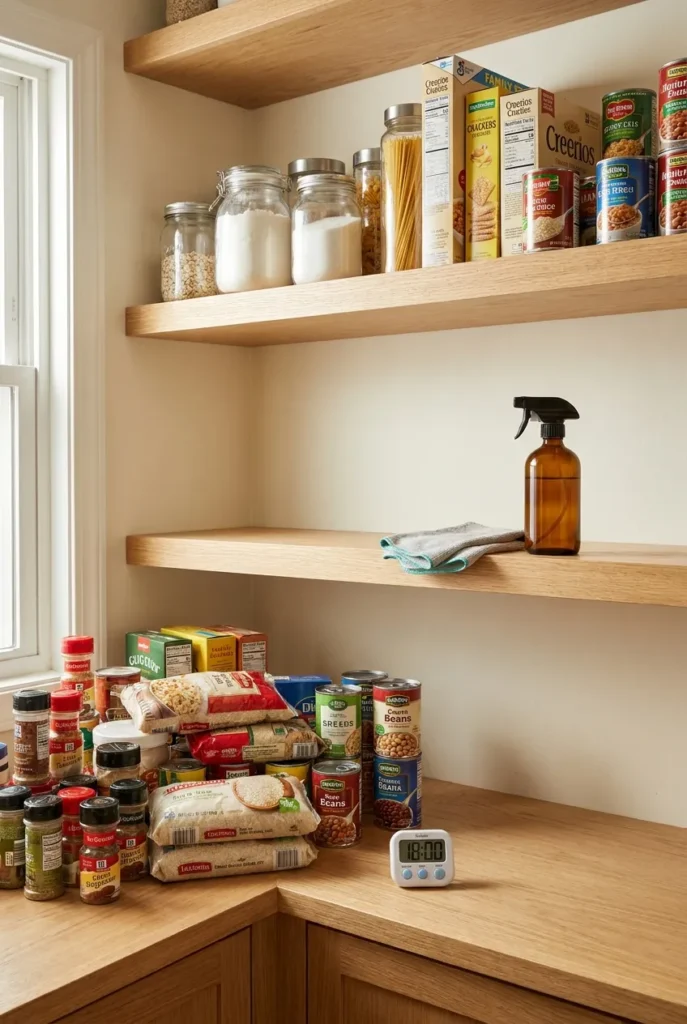
Minutes 0 to 10: Pull and Sort. Empty one shelf at a time onto the counter. Toss anything past its date or visibly stale. Group what’s left into four piles: keep on this shelf, move to a cooler shelf, move to the fridge, donate.
Minutes 10 to 20: Wipe and Reset. Spray the empty shelf with a vinegar-water mix, wipe with a microfiber cloth, and let it air-dry while you check the next shelf. This is also the moment to add or move your thermometer.
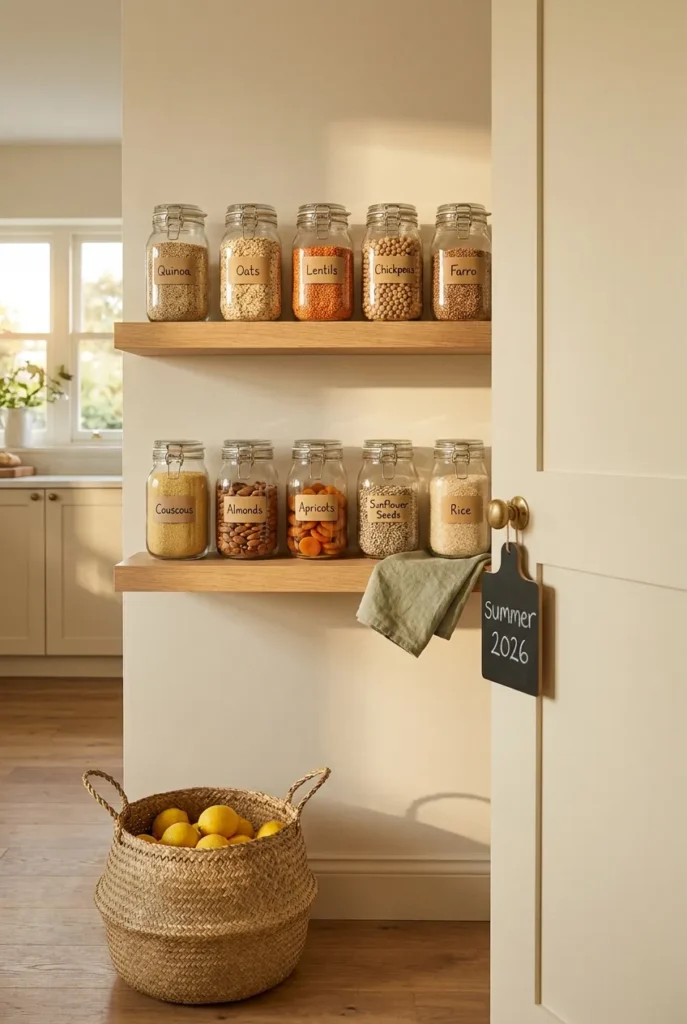
Minutes 20 to 30: Decant and Label. Move opened bags of pasta, oats, crackers, and trail mix into clear containers. Slap a kraft label on each one with the date you opened it. Stack the canned beans and tuna in front, so the oldest can rotates forward (basic FIFO, and it works).
Run this reset on June 1, July 4 weekend, and Labor Day. Three sessions cover the whole summer.
Federal food safety guidance from FoodSafety.gov and the USDA generally recommends keeping shelf-stable pantry items below 75°F to extend quality, and rotating older stock to the front of the shelf to prevent household food waste. For the official storage charts and pantry temperature recommendations, see FoodSafety.gov storage charts and the USDA FoodKeeper guidance.
A Few Things to Skip From Your Summer Pantry Essentials List
Originality matters, so let me end with what most pantry articles won’t tell you. A few items belong nowhere near your June-through-August shelves.
- Giant jugs of olive oil. A 2-liter bottle will go rancid before you finish it. Buy small, replace often.
- Chocolate chips on a top shelf. They bloom in heat. Move them to the fridge or skip them until October.
- Whole-grain flour in paper bags. The oils go bitter fast in a warm pantry. Either decant into glass and refrigerate, or buy only what you’ll use in three weeks.
- Pre-mixed cocktail or sangria mixers. Sugar and heat are a sticky disaster waiting to happen. Refrigerate from day one.
- Open bags of anything, ever. Clips don’t beat humidity. Decant or close the bag with a tight binder clip and zip it inside a second bag.
FAQs About Summer Pantry Essentials
What are the top 10 foods to stockpile for summer?
Short-cut pasta, canned beans, canned tuna or salmon in olive oil, rolled oats, UHT plant milk, crackers and rice cakes, nut butter in small jars, shelf-stable tortillas or flatbread, vinegars with one small olive oil, and dried fruit or trail mix. That ten-item list covers breakfast, lunch, dinner, and snacks for an average US family of four.
What should I have in my pantry at all times?
A protein anchor (canned beans, canned tuna, or nut butter), a starch (pasta, oats, or rice), a fat (olive oil), an acid (one good vinegar), a salt (kosher or sea), and at least one quick snack. Six categories. Everything else is seasonal.
How do you keep a pantry cool in summer?
Pin an analog thermometer inside, aim for under 75°F, keep heat-sensitive items off the top shelf, avoid cabinets next to the oven or dishwasher, and add a small clip-on fan during the hottest part of the day. Glass jars insulate slightly better than thin cardboard.
What summer pantry items are best to donate to a local food bank?
US food banks consistently ask for canned beans, canned tuna or chicken, peanut butter in plastic jars, pasta, rice, low-sugar cereals, and shelf-stable milk. When you do your June restock, set duplicates aside and drop them at your local Feeding America partner.
Are summer pantry essentials different from winter pantry essentials?
Yes, but only at the edges. The core (beans, pasta, oats, oils, vinegars) stays year-round. What changes is the format and quantity: smaller olive oil bottles, fewer baking ingredients, more no-cook proteins, more individually portioned snacks for school-free kids.
Which pantry items spoil fastest in summer heat?
Olive oil, whole-grain flours, nuts and nut butters, chocolate, and any opened bag of crackers or chips. If your pantry runs warmer than 75°F, refrigerate or buy smaller quantities of these five.
Where can I find a free printable summer pantry essentials list?
Many home organization blogs offer free US-letter PDFs of pantry checklists. Look for one that includes a temperature guide, a date-opened column for decanted items, and a “buy small” reminder column so your restocks stay realistic.
Your Next Step
Pick one shelf today. Set a timer for fifteen minutes. Pull, sort, wipe, decant. That single shelf will tell you whether the rest of your pantry needs the full thirty-minute reset, and either way, you’ve already started.
Which of these ten summer pantry essentials is already on your shelf, and which one are you adding this week? The first item you restock is usually the one your future self will thank you for the most.