
How to Organize a Reading Nook in a Small Bedroom (Without Sacrificing Sleep Space)
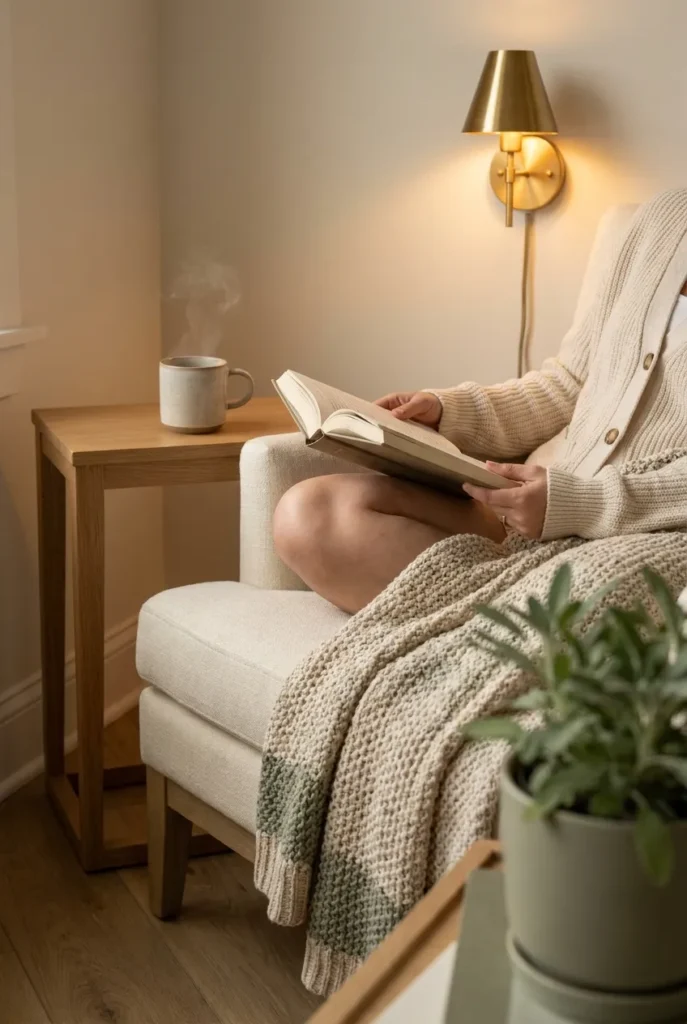
Sunday afternoon. You poured a cup of tea, grabbed the novel you’ve been meaning to start since February, walked into your bedroom, and stopped. There is nowhere to actually sit and read. The bed is right there, sure. But you already know what happens. Two pages in, you’re horizontal, and twenty minutes later you’re asleep with the book on your face.
If this sounds suspiciously specific, welcome. You’re the exact reason a proper reading nook small bedroom setup matters. The good news: you do not need a whole spare room. You do not need a bay window. You need eighteen inches of wall, four small pieces, and a plan.
Here’s what we’re covering. The promise: by the end of this post you’ll have a complete reading nook small bedroom blueprint, including the one-rule formula every nook follows, exact furniture sizing in inches, five rental-safe lighting fixes, and the five spots most people miss when they think they have nowhere to put one.
Why a Reading Nook in a Small Bedroom Is Worth Every Inch
A small bedroom already has a job. It sleeps you. So why give up precious square footage for a reading spot?
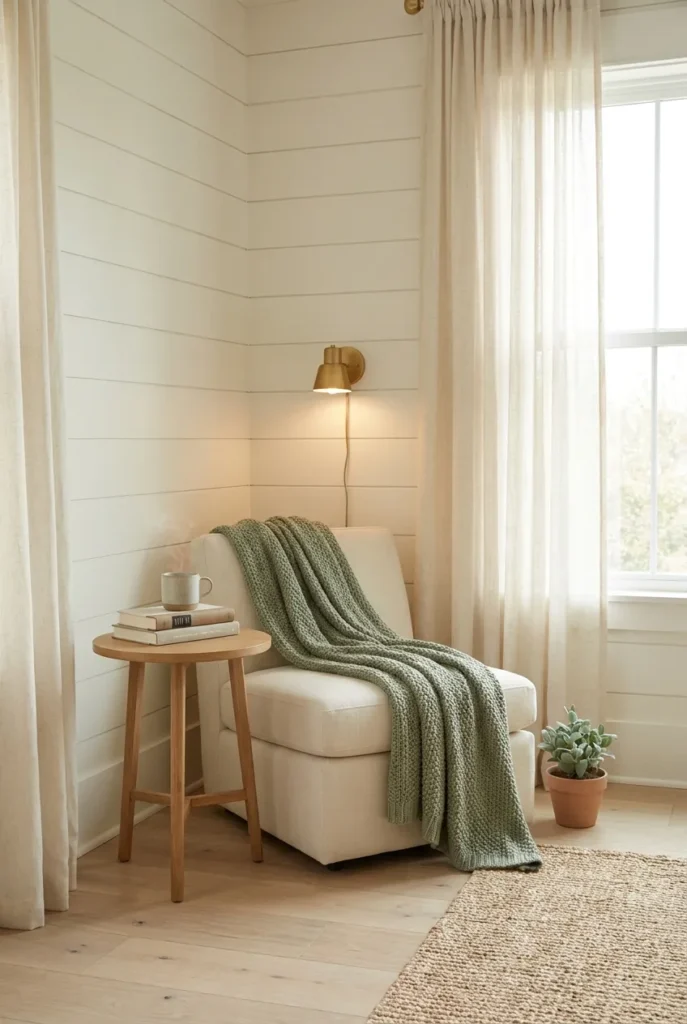
Because the two jobs actually help each other. The Sleep Foundation notes that a calm, low-stimulation bedroom environment supports better sleep, and a quiet reading habit before bed (off-screen, low light) is one of the simplest wind-down rituals you can build. The nook becomes the transition zone. You walk in, you read, you sleep. The room stops being a place you collapse into and starts being a place you ease into.
There’s a second payoff. Reading before bed is one of the most reliable stress-down activities you can name. Mayo Clinic guidance on sleep hygiene consistently lists calming evening routines (quiet reading included) as part of better sleep habits. A reading nook small bedroom corner turns “I should read more” into “I have an actual chair for that.”
Honestly, the real reason most people skip the nook is the small-room math. They look at 110 square feet, see a queen bed and a dresser, and assume there’s no room. There is. You just need a different unit of measurement.
The 4-Piece Reading Nook Formula (Your Whole System on One Page)
Here’s the part to screenshot.
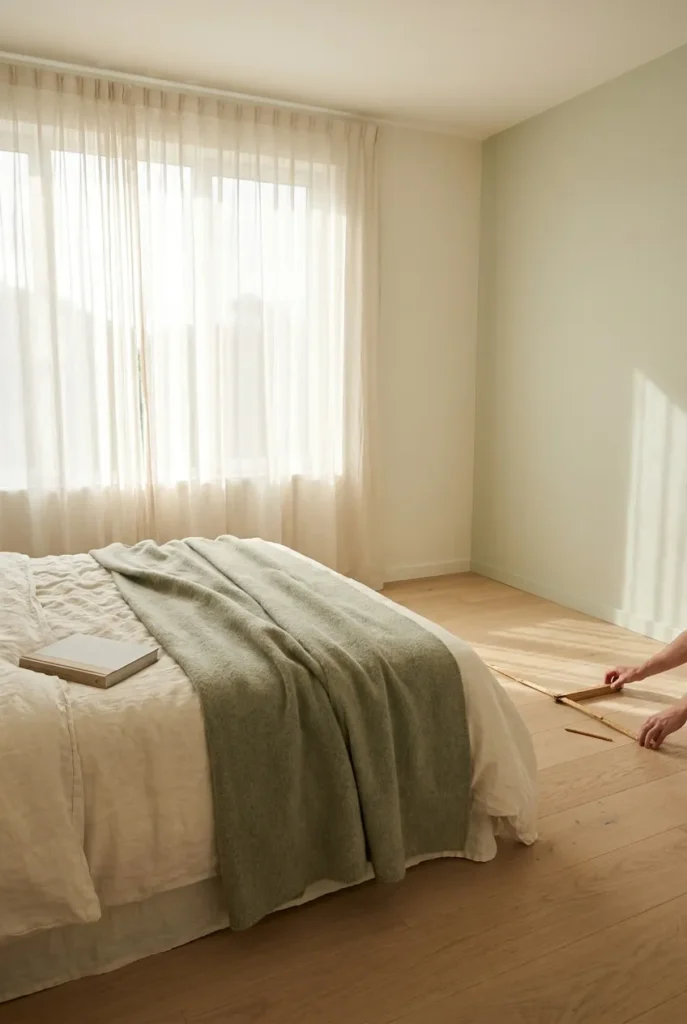
Every reading nook small bedroom setup that actually gets used (not just photographed) contains exactly four pieces. I call it the 4-Piece Reading Nook Formula, and you can run it in any room from a 70-square-foot guest bedroom to a real walk-in master. Skip a piece and the nook quietly stops working. You’ll feel it after about a week.
| Piece | What it is | The small-bedroom rule |
|---|---|---|
| 1. Seat | Chair, pouf, floor cushion, window bench | Under 30 inches wide, 24 if tight |
| 2. Light | Sconce, clip lamp, slim floor lamp | Light source within arm’s reach |
| 3. Soft | Throw, lumbar pillow, foot rug | At least one tactile layer touches you |
| 4. Stash | Side table, wall pocket, mini shelf | Holds book, mug, glasses (3 items) |
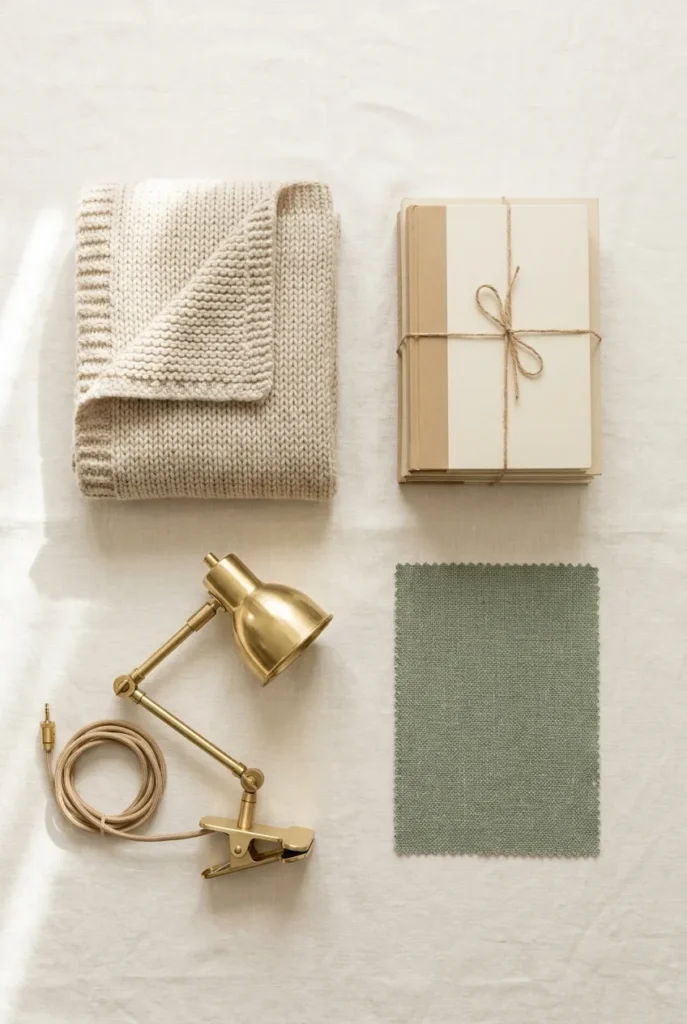
That’s the whole spine of this post. Seat. Light. Soft. Stash. Memorize the four and you can build a reading nook small bedroom corner anywhere, including spots you didn’t think counted.
Where to Put a Reading Nook in a Small Bedroom (5 Spots Most People Miss)
Look around. Yes, your bedroom has space. People miss it because they only look at the obvious empty corner.
Five spots, ranked from easiest to most creative:
- The corner farthest from the door. This is the default for a reason. You get two walls of containment, which makes any chair feel anchored. Aim for the corner with the best natural light.
- The foot of the bed. A narrow bench (under 18 inches deep) plus a single floor cushion stacked on top turns dead space into a nook. Works beautifully in long, narrow bedrooms.
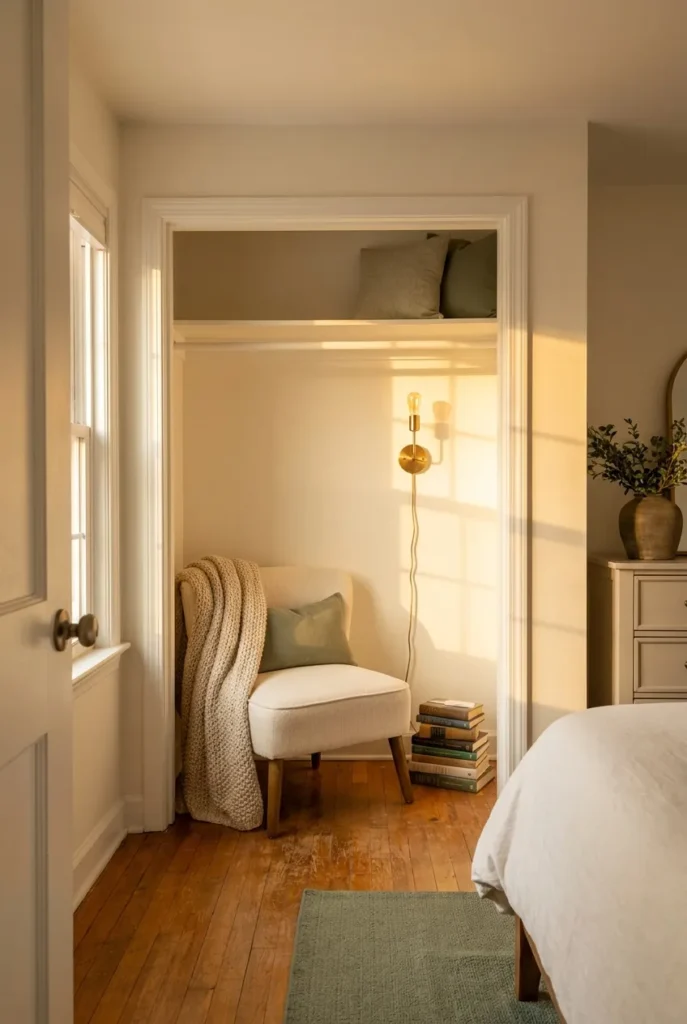
- Inside the closet. This sounds weird until you try it. A reach-in closet with the doors removed becomes an instant alcove with built-in walls and a top shelf for a sconce. For walk-ins, the back wall gets a 24-inch slipper chair, a clip lamp, and you’re done. If your closet is the issue, my guide on small closet organization ideas walks through how to free up the floor space first.
- Under or beside the window. A floor cushion plus a chunky knit throw under a 36-inch-wide window outperforms a chair you can barely fit. Bonus daylight.
- Behind the bedroom door. The triangle of wall behind a door that swings inward is almost always wasted. A pouf, a clip lamp, and a wall-mounted book ledge turns it into the smallest possible nook. Great for studios.
I tried option 3 in my old apartment last spring, and it was the one that actually stuck. The closet alcove felt like its own tiny room, which is exactly the cocoon feeling a reading nook needs.
Piece #1: The Seat (Small-Bedroom Sizing in Inches, Not Vibes)
The seat is where most people overshoot. They buy an oversized accent chair, drag it home, and immediately can’t open the dresser. Sizing matters more than style in a small bedroom.
Three rules for the seat:
- Width under 30 inches for a chair, 24 if the corner is tight. The IKEA Poäng (28 inches wide) and Target’s Threshold slipper chairs in the 24- to 28-inch range are the workhorses here. A West Elm Halsey accent chair (around 27 inches) reads more refined if budget allows.
- Depth under 32 inches so the chair doesn’t eat your walking path. Measure the path between your nook and your bed. You want at least 24 inches of clear floor in front of the seat.
- Skip the recliner. I know it’s tempting. Reclining mechanisms add 12 to 18 inches behind the chair and make every nook feel like a furniture showroom. A slipper chair, a slim accent chair, or a floor cushion wins every time.
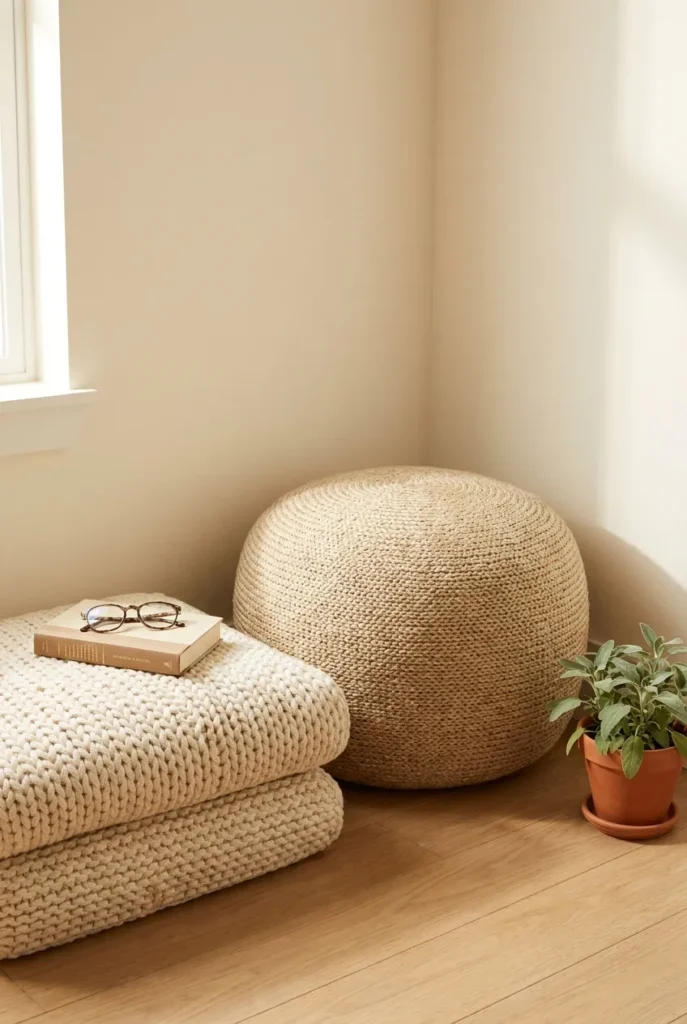
If you cannot fit a chair at all, a 24-inch round floor pouf plus a chunky knit floor cushion gives you a perfectly legitimate reading spot in literally one square foot of footprint. Cost: usually under $80 from Target or HomeGoods.
Piece #2: Layered Lighting Without Drilling a Single Hole
Lighting is where rental setups fall apart. You see a gorgeous nook with a hardwired sconce, you call your landlord, you give up. Don’t.
Three damage-free lighting fixes that look intentional:
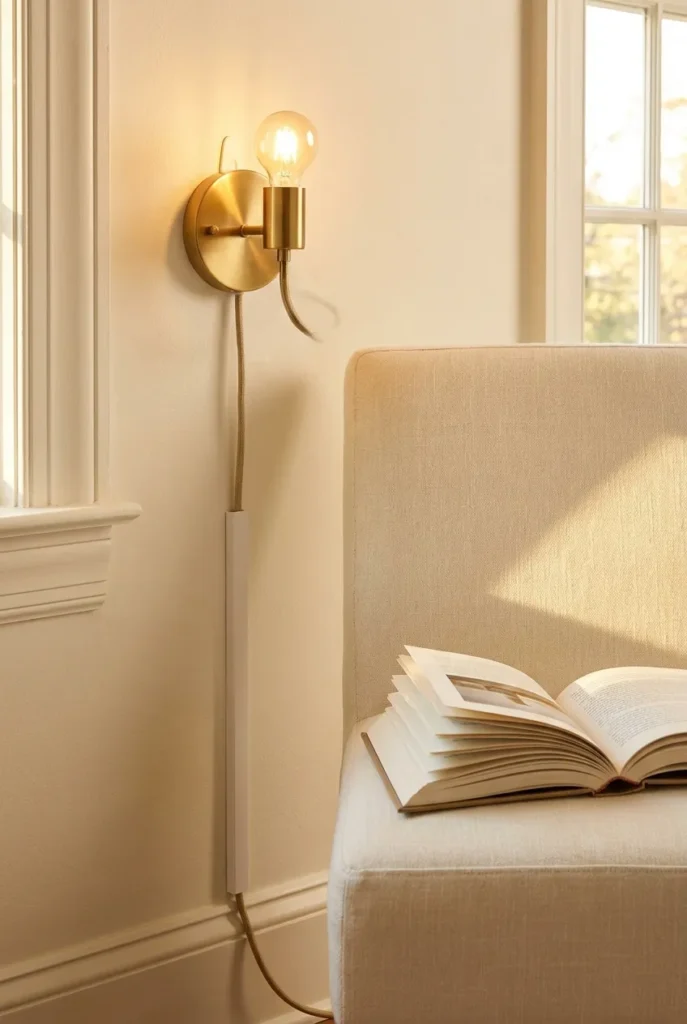
- Plug-in sconces. Brands like Hudson Valley and Cedar & Moss make beautiful plug-in versions. Cheaper option: search “plug-in wall sconce” on Amazon, where you can find brass or black-finish styles in the $40 to $80 range. The cord runs down the wall (a cord cover, $12 at Home Depot, hides it cleanly).
- Clip-on book lamps. A simple metal clip-on lamp mounted to a shelf or the chair frame gives you focused light right where you need it. Best for floor cushion setups.
- Slim floor lamps with a base under 12 inches. A pharmacy-style floor lamp like the IKEA Tertial or a CB2 brass arc lamp keeps the footprint tiny while delivering light exactly where the page is.
Aim the light source at the page from above and slightly behind your shoulder. Light shining at you from across the room makes the page look gray and tires your eyes within ten minutes. Trust me on this one. I read by ceiling light for years before I figured out why my eyes hurt every evening.
One small bonus: if you swap your bulb to a warm 2700K, the whole nook reads cozy instead of clinical. Cool white bulbs work in a kitchen. They kill the mood in a reading corner.
Piece #3: The Soft Layer (Why Texture Beats Color in a Small Space)
The soft layer is what separates a chair shoved in a corner from a reading nook small bedroom destination. Two pieces only:
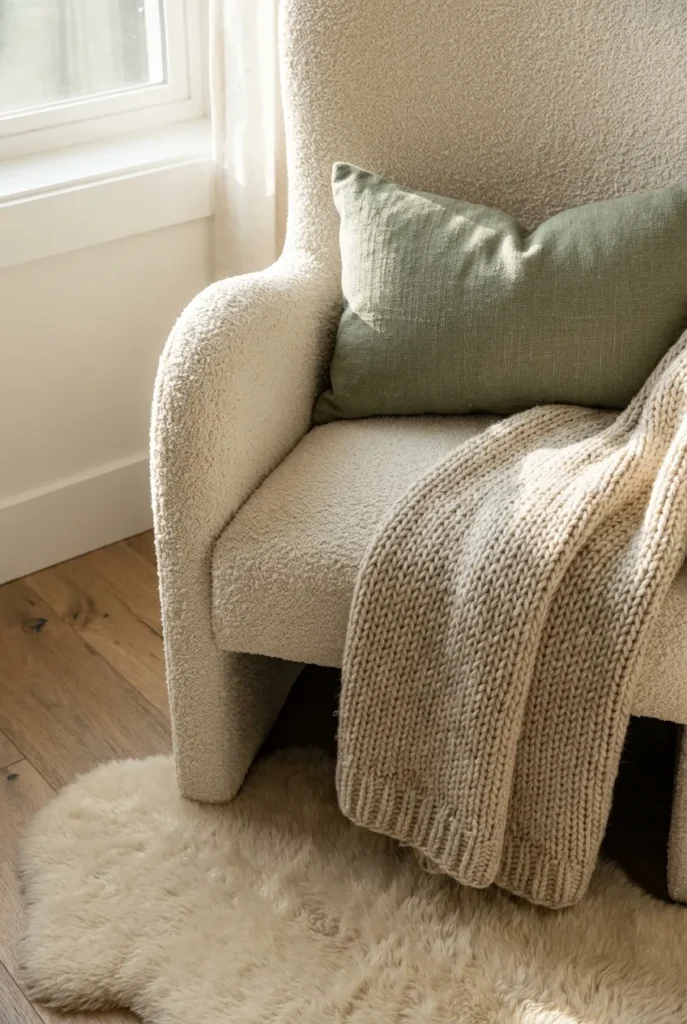
- One throw. Chunky knit, waffle weave, or cotton boucle. 50 by 60 inches is the small-space sweet spot. Anything bigger swamps the chair.
- One lumbar pillow. 12 by 20 inches. This is the single most overlooked piece in every nook on Pinterest, and it’s the difference between sitting upright comfortably for an hour versus shifting around every five minutes. Velvet, linen, or boucle. Pick a texture, not a print.
Optional third: a small foot rug. A 2-by-3-foot sheepskin or a low-pile washable rug from Ruggable defines the nook visually and warms a hardwood or tile floor underfoot. In a small bedroom, the rug also signals that this corner is its own zone, even if it’s only 18 inches from the bed.
Skip throw pillows in plural. One lumbar, one throw. More than that and you spend the whole reading session moving cushions before you can sit down.
Piece #4: Stash (Books, Mug, Glasses, All in 12 Inches)
This is where most reading nooks quietly fail. You sit down, you realize you left your glasses on the nightstand, you get up, the moment is over.
Three stash configurations that work in tight bedrooms:
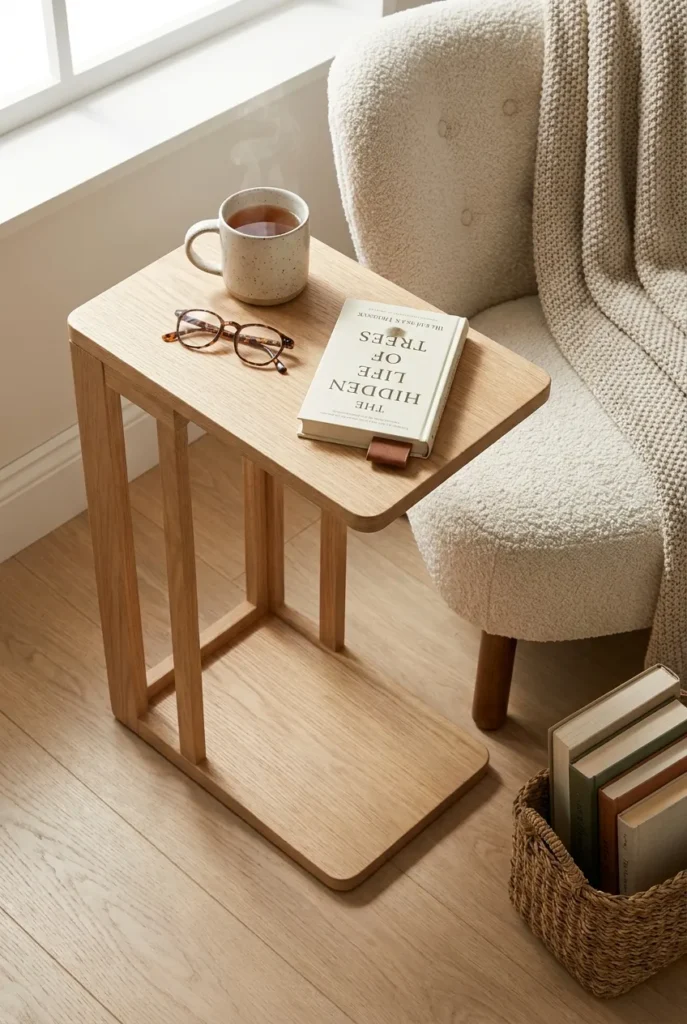
- Slim side table under 14 inches wide. A C-shaped side table (the kind that slides under a chair) gives you a surface without taking up new floor space. The Crate & Barrel Spotlight C-table and similar IKEA Vittsjö variants run about $40 to $90. This is my number one pick for chairs that already feel snug.
- Wall-mounted book ledge. A 24-inch wood picture ledge (Target sells one for around $18) mounted at shoulder height holds your current book and your reading glasses without eating any floor. For renters, Command Strip versions exist, rated up to 5 pounds.
- Floor basket stash. A 12-by-14-inch woven basket beside the chair holds three books, a folded blanket, and a mug coaster. HomeGoods, At Home, and Target all carry these for under $30.
Whatever you choose, the rule is the three-item test. Your stash needs to hold a book, your glasses, and a drink. If it can’t, it’s decoration, not function. For more ideas on building a tiny side table moment that actually earns its keep, my nightstand organization guide walks through the exact 3-item rule applied to a bigger surface.
Five Reading Nook Ideas for Small Bedrooms Under 100 Square Feet
Here are five complete builds you can copy. Each one uses the 4-Piece Formula and clocks in under $250 if you buy everything new (less if you have pieces already).
- The Closet Alcove. Remove the closet doors. Add a 24-inch slipper chair, a plug-in sconce on the back wall, a 50-by-60-inch knit throw, and a wall-mounted book ledge. Total footprint outside the closet: zero inches.
- The Foot-of-Bed Bench Nook. Slim 48-inch bench across the foot of the bed. Stack one floor cushion on top, drape a throw, add a clip lamp clipped to the bed frame. Doubles as a place to lay out tomorrow’s outfit.
- The Window Floor Cushion. Two stacked floor cushions directly under a 36-inch window. One throw. A small woven basket of books. A clip lamp on the windowsill. Best in a room that already gets afternoon sun.
- The Behind-the-Door Pouf Spot. A 24-inch round pouf in the door-swing triangle, a small wall-mounted book ledge, a clip lamp on the ledge, a small sheepskin underfoot. Total square footage: 4 sq ft.
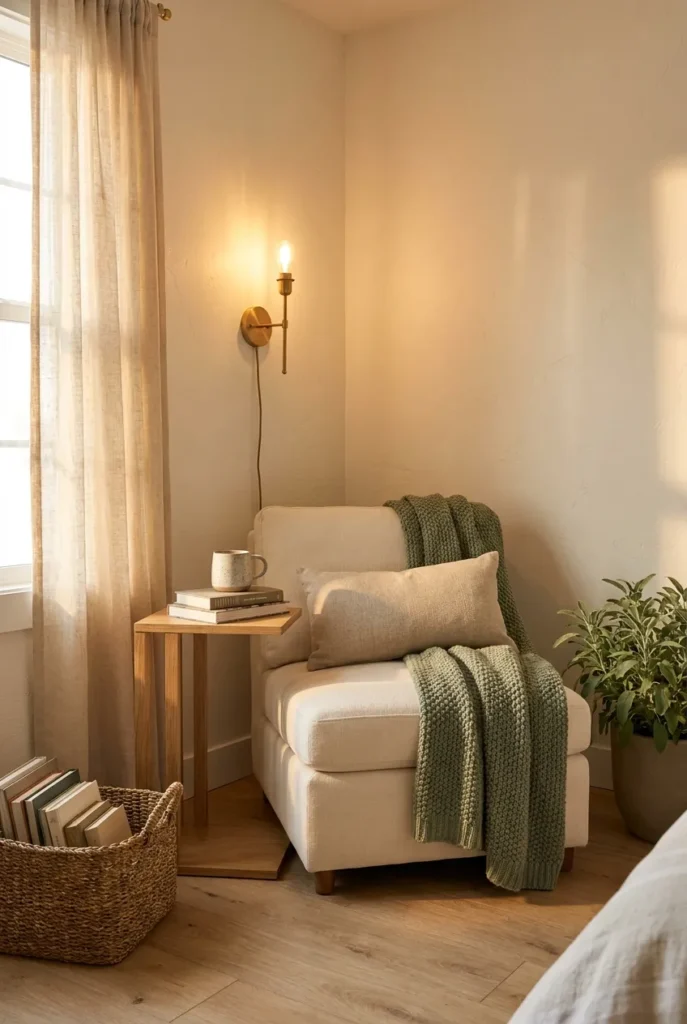
- The Corner Slipper Chair. The classic. A 28-inch slipper chair, a slim C-table sliding underneath, a brass plug-in sconce on the wall, a lumbar pillow plus throw, a small floor basket. The most “magazine” of the five and still under 9 square feet of floor.
For broader bedroom layout context (especially for the foot-of-bed setup), my bedroom organization hacks post walks through how to free up the floor before you add anything new. Worth a read before you commit to a chair.
Common Reading Nook Mistakes That Make a Small Bedroom Feel Smaller
The reading nook small bedroom rule of thumb: subtraction beats addition every time. Five mistakes worth avoiding:
- Oversized chair. Anything wider than 30 inches will fight the room. Measure before buying. Always.
- Wrong lamp height. A floor lamp shorter than 55 inches sits below shoulder level, which means light shines at your chest, not the page. Aim for 58 to 64 inches.
- No storage stash. If there’s nowhere to set your glasses, you’ll stop using the nook within two weeks. Guaranteed.
- Too many pillows. A small chair plus four pillows leaves no room for you. One throw, one lumbar. Done.
- Overhead light only. Ceiling lights wash a small bedroom flat and kill the cozy reading mood. Add a secondary light source at the nook itself.
Mistake six (the bonus one): treating the nook as a “someday” project. Build it this weekend, even if version one is a folded throw and a desk chair. You’ll iterate from there.
Frequently Asked Questions
How do you make a reading nook in a small bedroom?
Run the 4-Piece Reading Nook Formula: a Seat (chair under 30 inches or a floor cushion), a Light (plug-in sconce, clip lamp, or slim floor lamp), a Soft layer (one throw plus one lumbar pillow), and a Stash (slim side table, wall ledge, or basket for your book and glasses). Pick a corner, foot-of-bed bench, or closet alcove. Most setups take an afternoon.
What do you need in a reading nook?
Four things: somewhere to sit comfortably for at least an hour, light aimed at the page from above and slightly behind your shoulder, a soft tactile layer that touches you (throw or pillow), and a surface within arm’s reach for your book, drink, and glasses. Anything beyond those four is decoration.
Where should a reading nook go in a small bedroom?
Best spots, in order: the corner with the best natural light, the foot of the bed (use a slim bench), inside the closet with the doors removed, directly under a window with a floor cushion, or in the wall triangle behind the bedroom door. Match the spot to your traffic pattern so the nook never blocks the path to your bed or dresser.
How big should a reading nook be?
You need 4 to 9 square feet of floor. A floor cushion setup works in 4 sq ft. A slipper chair plus side table needs 9 sq ft. Plan for 24 inches of clearance in front of the seat so you can stand up without hitting furniture.
Can you have a reading nook without a window?
Yes. Window light is a nice-to-have, not a requirement. Two well-placed light sources (a plug-in sconce plus a clip lamp, or a floor lamp plus a clip lamp) deliver better reading light than a window does at night anyway. Closet alcoves and behind-the-door corners often have zero natural light and still work beautifully.
What chair is best for a small reading nook?
A slipper chair between 24 and 28 inches wide. The IKEA Poäng (28 inches), Target Threshold slipper chairs (24 to 28 inches), and Amazon Basics accent chairs in the same range all work well. If a chair won’t fit, a 24-inch round pouf plus a knit floor cushion stack delivers the same comfort in half the footprint.
How do you make a cozy reading nook on a budget?
Shop the four pieces secondhand. Facebook Marketplace and thrift stores carry slipper chairs for $30 to $80. A throw and lumbar pillow set from HomeGoods runs about $40 combined. A plug-in sconce from Amazon is $40 to $80. A wall ledge from Target is $18. Total under $200 is realistic, and using something you already own (a folded blanket, an extra throw pillow) brings it lower.
Your Cozy Corner Starts This Weekend
Here’s the thing about a reading nook small bedroom build: it does not have to be pretty in version one. It has to be used. Pick the corner, drop a folded throw on a chair you already own, clip a lamp to a shelf, and start reading there tonight. The version on Pinterest happens after you know whether you actually use the spot. Most people skip the testing step and end up with a beautifully styled nook nobody sits in.
So here’s the question: which spot in your bedroom is going to become the nook, the corner, the foot of the bed, or the closet alcove? Pick one, run the 4-Piece Formula, and you’ll be reading in it by Sunday night. Then come back and tell me which spot you chose, because I’m always curious which one wins.