

Apartment Closet Organization for Renters: The No Drilling Playbook
Your lease says no holes. Your closet says one rod, one shelf, good luck. That is the whole problem with apartment closet organization in a rental, and it is why most advice fails you: it assumes you own the walls. You do not. So here is a plan built for someone who cannot drill, cannot paint, and wants the deposit back in full. You will get the exact measurements to check before you buy anything, four surfaces to work instead of one, and a system that comes down in twenty minutes on move out day.
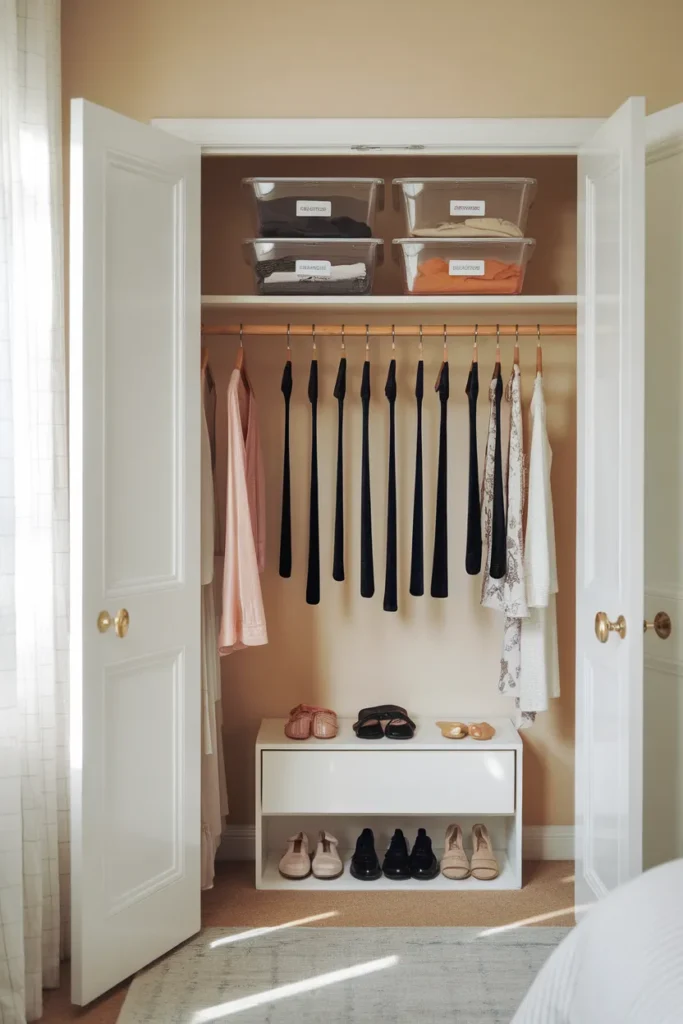
Why Apartment Closet Organization Fails in a Rental
Most rental closets hand you a single rod at chest height and one deep shelf you cannot reach. Everything else is air. That air is the whole opportunity, and almost nobody uses it.
Here is the idea this entire guide runs on.
The Four Surface Rule. Every rental closet gives you exactly four usable surfaces: the floor, the rod, the shelf, and the back of the door. You are renting all four. Most people only use one and a half of them, which is why the closet feels full at thirty percent capacity.
Once you see the closet as four separate zones instead of one crowded box, apartment closet organization stops being a shopping problem and starts being a mapping problem. You are not buying more storage. You are claiming space you already pay rent on.
| Surface | What it holds best | Typical cost to claim it |
|---|---|---|
| The rod | Hanging clothes, doubled with a tension rod | $10 to $18 |
| The shelf | Off season and bulky, in clear labeled bins | $20 to $35 |
| The floor | Shoes, folded stacks, a low drawer unit | $25 to $60 |
| The door | Shoes, bags, accessories, flat items | $12 to $25 |
Screenshot that table. It is your shopping list and your build order at the same time.
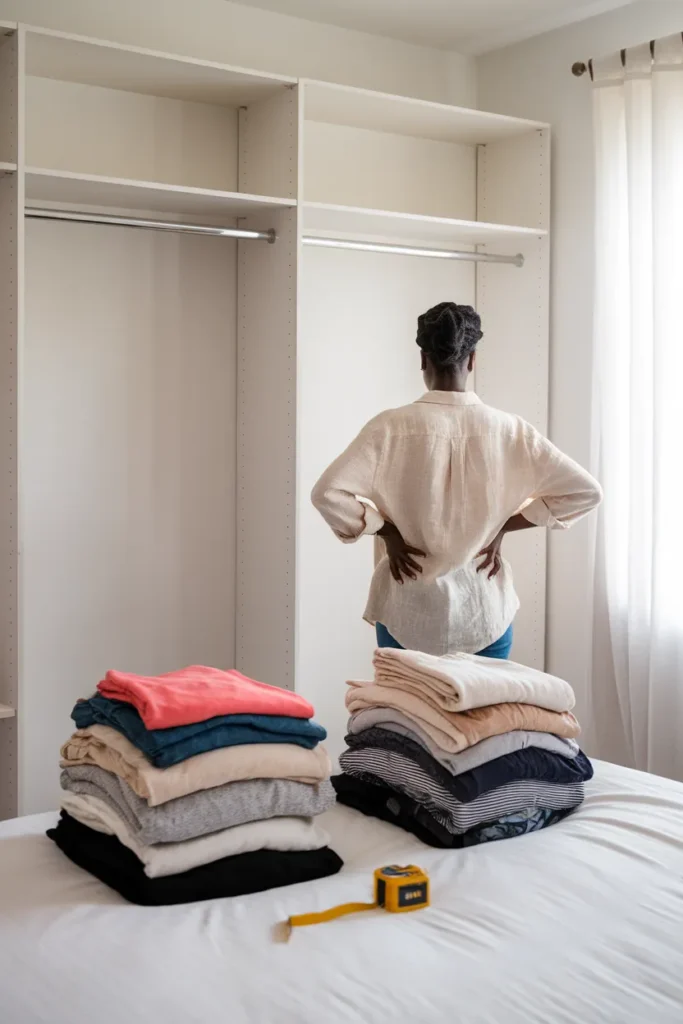
Measure First, Because the Numbers Decide Everything
Skip this and you will buy a bin that does not fit. Ask me how I know.
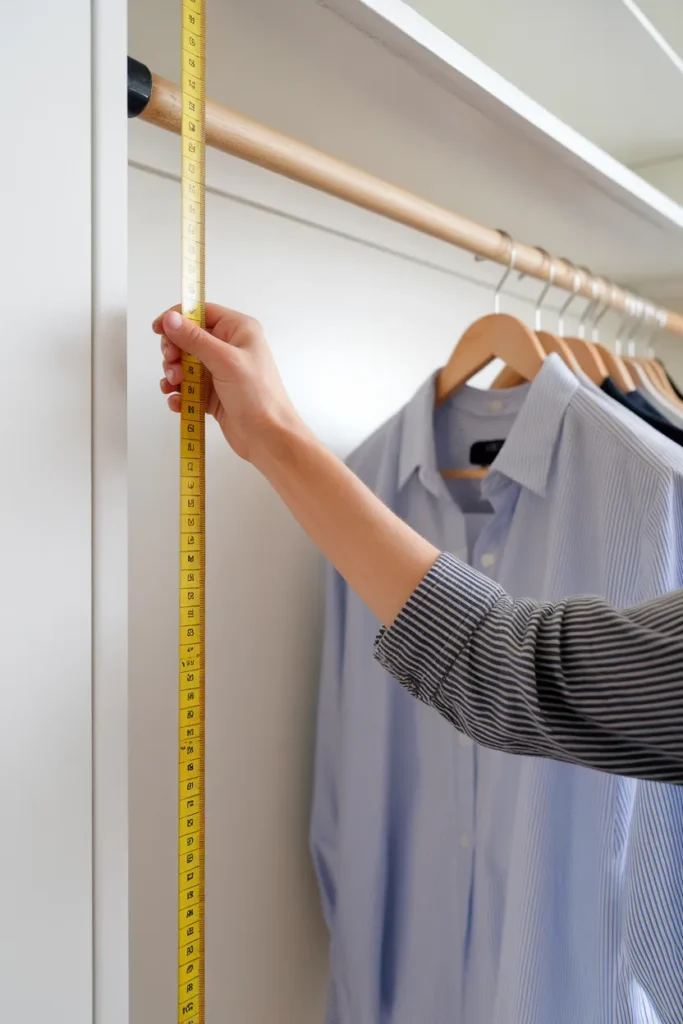
Grab a tape measure and write down five numbers before you spend a dollar. These are the industry standards your closet was probably built to, and they tell you instantly whether a second rod will fit.
| What to measure | Standard you will likely find |
|---|---|
| Single rod height from floor | 66 inches (range runs 60 to 68) |
| Double rod setup | Top rod 80 inches, lower rod 40 inches |
| Reach in closet depth | 24 to 30 inches |
| Reach in closet width | 48 to 72 inches |
| Rod distance from back wall | About 12 inches |
Now the number that actually decides your layout: how much vertical space your clothes need to hang clear of the floor. Dresses want about 60 inches. Suits and long coats want about 42 inches. Shirts, skirts, and pants folded once over a hanger want about 36 inches.
Do the math on your own closet. If your rod sits at 66 inches and your longest everyday item is a folded pair of pants at 36 inches, you have roughly 30 inches of dead air underneath. That is a second rod’s worth of storage sitting empty right now.
For folded stacks on shelves, space shelves 12 to 15 inches apart. For shoes, 6 to 7 inches is plenty.
Surface One: Double the Rod Without a Single Screw
This is the highest return fix in renter friendly closet organization, and it takes four minutes.
A spring tension rod wedged below your existing rail creates a whole second hanging level. Telescoping versions typically expand anywhere from 24 to 60 inches, so one rod fits nearly any reach in closet. No drilling. No landlord email. It comes out in seconds when you move.
Hang long items on the original rod. Shirts, blazers, and folded pants go on the new lower one. Group by category rather than by color, because you get dressed by category and you will put things back faster.
If your closet is too narrow for a tension rod to grip properly, a hanging rod doubler solves the same problem. It hooks over the existing rail and drops a second bar below it, no wall contact at all.
The same stacking logic works in even tighter spaces. If you are working with something truly small, our guide to organize a tiny shared dorm closet breaks down how to split one rod between two people without anyone losing their mind.
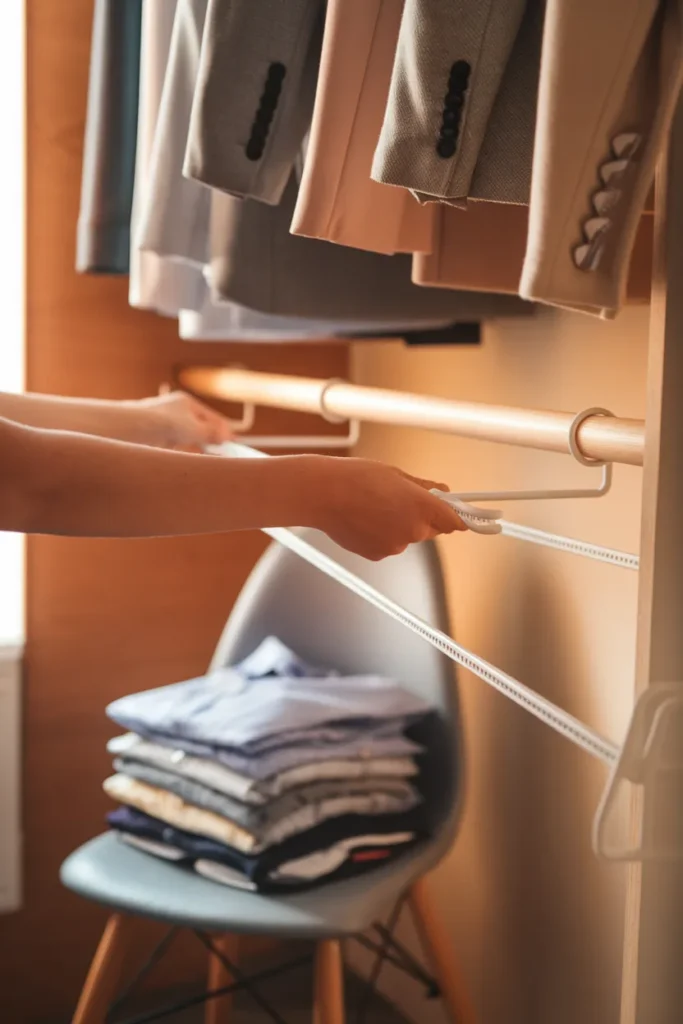
The Hanger Swap That Buys Back a Foot of Rod
Bulky plastic hangers waste more rod than anything else in the closet. Swap the whole mismatched collection for slim velvet hangers and you typically reclaim close to a foot of rail on a standard rod.
Amazon Basics velvet hangers run roughly $15 for fifty. Mainstays sells a similar pack for less. Pick one color and buy enough to do the entire closet in one go, because a half swapped rod looks worse than an untouched one.
Black or charcoal reads cleanest. Your clothes are already doing the color work.
Surface Two: Make the Top Shelf Earn Its Keep
The shelf above the rod is usually either empty because nothing up there is reachable, or a compressed pile nobody has touched since move in day.
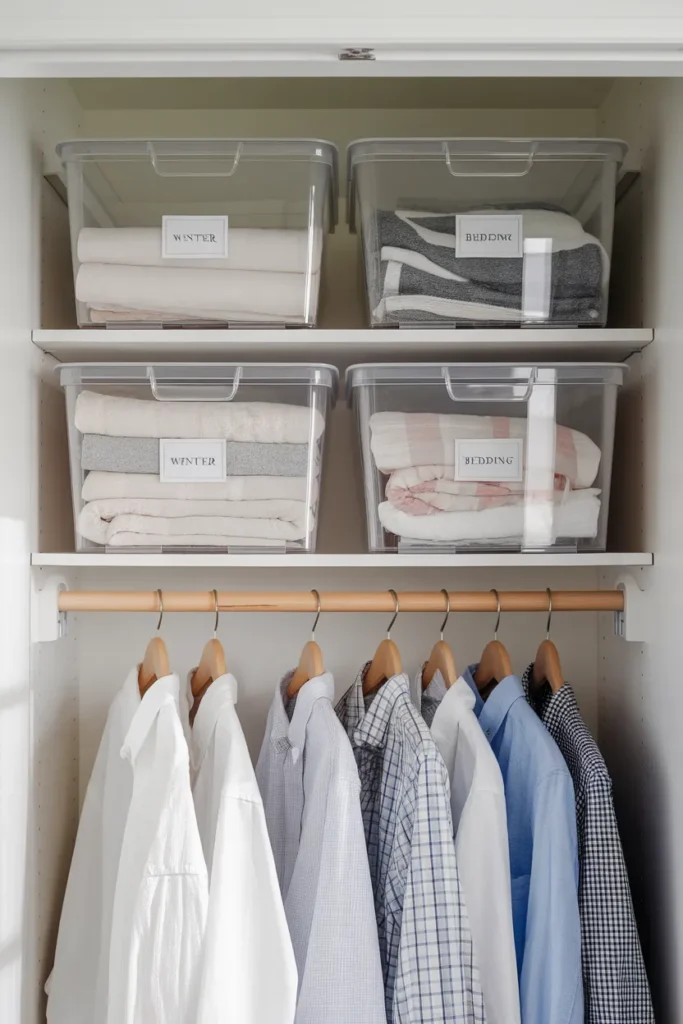
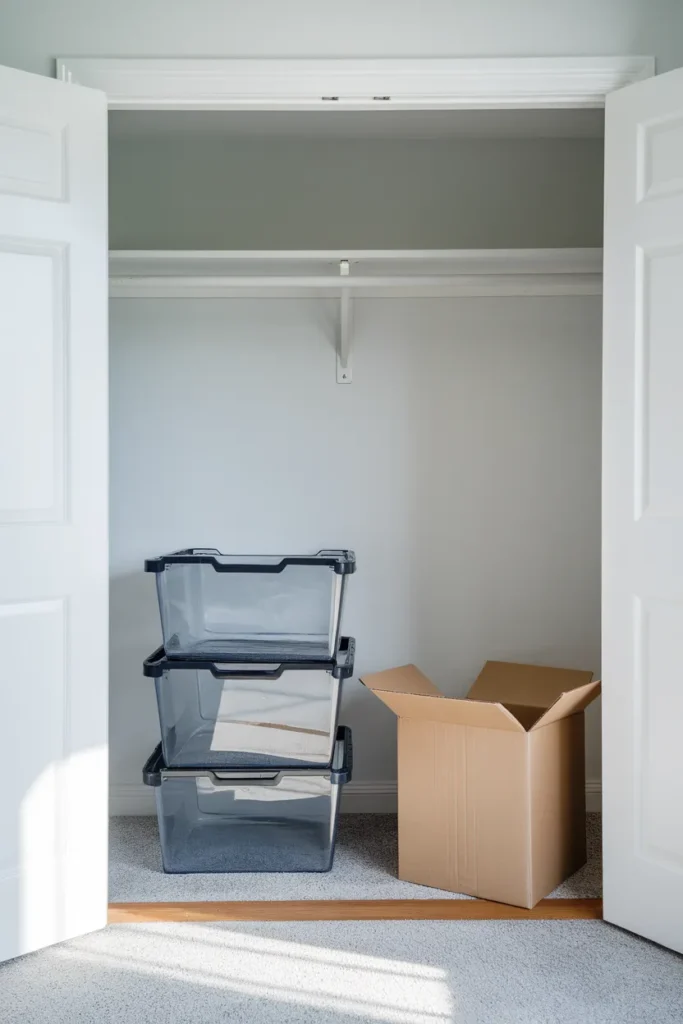
Clear stackable bins fix both. You can see what is inside without unstacking, and stacking uses the dead space between the shelf and the ceiling. The Container Store, Target Brightroom, and IKEA Skubb boxes all work here. Choose one size and repeat it, because matching bins are what make a shelf read as organized rather than accumulated.
Label the front of each bin, not the lid. You will be looking at these from below, on tiptoe, in a hurry.
Put your lowest frequency items up there: off season coats, spare bedding, the suitcase. Anything you touch weekly belongs lower. If your shelf situation needs more than bins, we walk through the full breakdown on how to make every closet shelf earn its space.
Surface Three: The Closet Floor Is Not a Laundry Basket
Right now your closet floor is holding shoes on their sides, a shopping bag, and something you have not identified in months. It is the single most wasted square footage in any rental.
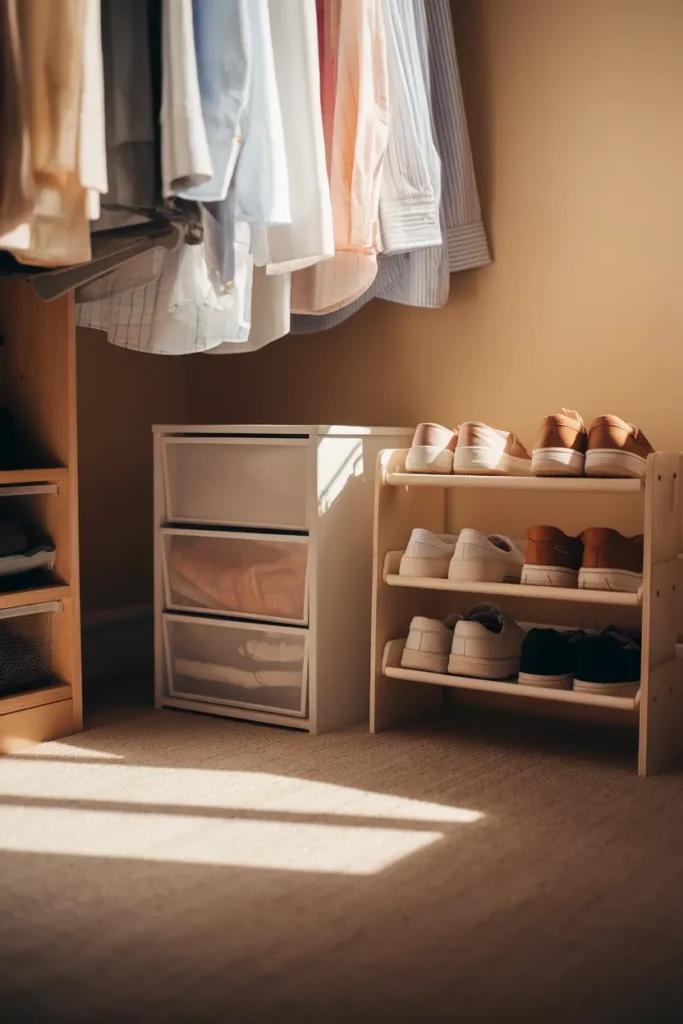
Measure your floor depth first, then fill it deliberately. A low three drawer unit tucked under the hanging clothes gives you folded storage without touching a wall. IKEA and Sterilite both make units that clear the standard 36 inch hanging line comfortably.
A tiered shoe rack handles eight to twelve pairs in a footprint smaller than a bath mat. If you want the closet to look intentional rather than merely tidy, line shoes up in a single direction and leave one empty slot. The empty slot is what makes it read as a system instead of a pile.
Storage ottomans and benches earn their keep here too, especially in a walk in. You get a place to sit while you pull on boots and a hollow interior for off season sweaters. Anything in a rental that does two jobs is worth twice its price.
Surface Four: The Back of the Door, and the Sliding Door Problem
Every guide tells you to hang an over the door organizer. Almost none of them mentions that this only works if you have a hinged door.
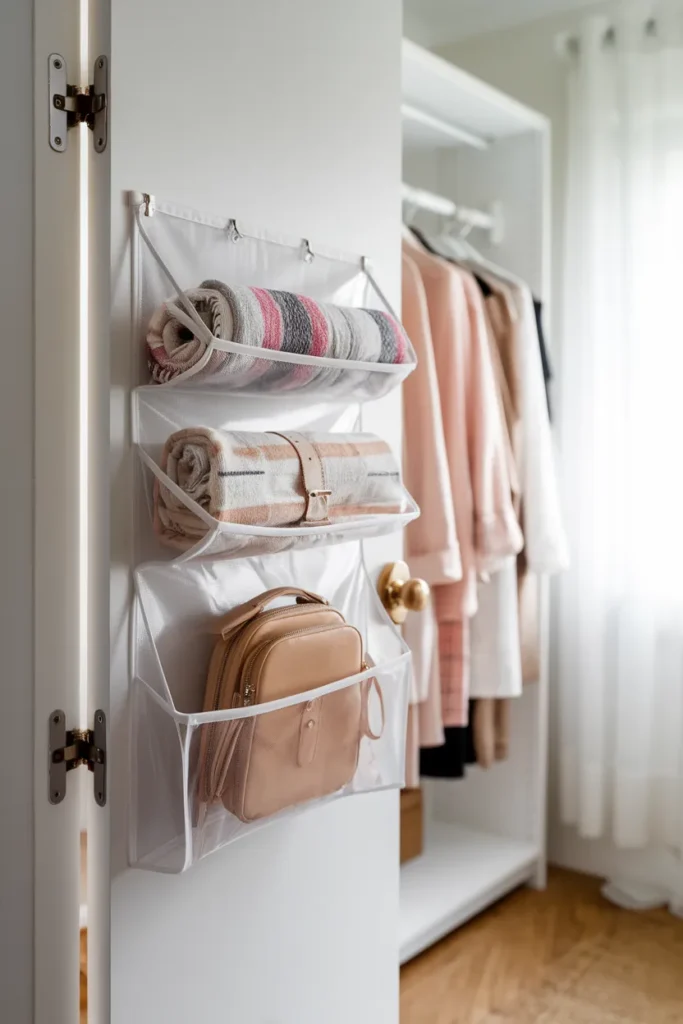
Check yours first. A clear pocket organizer is excellent for shoes, small bags, and flat accessories, and it costs under twenty dollars. Before you buy, measure the clearance between your open door and the nearest wall or dresser. Thick organizers add enough depth to stop a door swinging fully open, which turns a fix into a daily irritation.
If you have sliding doors or bifolds, an over the door unit will not fit. Nothing can hang on a panel that has to slide past a track. You have two good alternatives.
First, a slim rolling cart parked beside the closet, sized to slide into the gap when the door is closed. Second, adhesive hooks mounted on the interior side wall of the closet instead of the door, which is usually bare drywall nobody has claimed. That side wall is the most overlooked surface in the entire rental.
The No Drill Rules That Protect Your Deposit
This is the part every renter actually wants and almost nobody publishes.
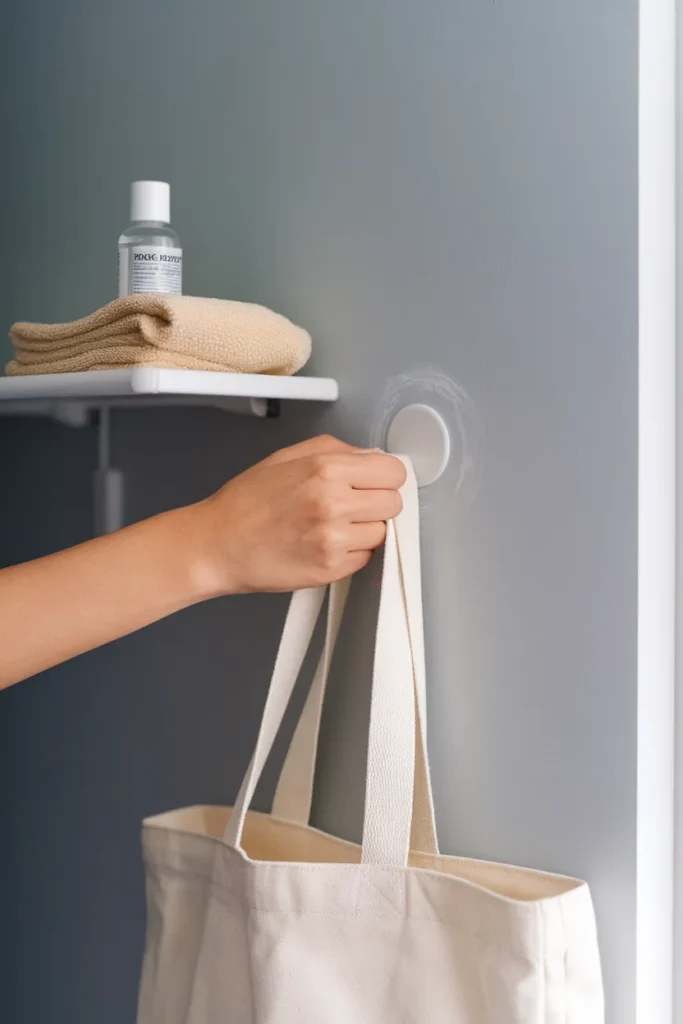
Adhesive hooks are the backbone of no drill closet storage, and most people use them wrong. Command mini hooks hold up to seven and a half pounds, and larger sizes carry more, but the number on the pack assumes correct installation. Per the manufacturer’s own product weight limits guide, you clean the wall with isopropyl rubbing alcohol first, never a household spray or wipe, because cleaning products leave a film that kills the bond. Press firmly for thirty seconds, then wait a full hour before you hang anything.
Removal is where deposits actually get lost. Pull the tab straight down along the wall, slowly, stretching it up to twelve inches until it releases. Never pull outward toward yourself. That is what takes paint with it. Also worth knowing: adhesive strips are not rated for wallpaper, so if your rental has it, skip them entirely.
Now the bigger question underneath all of this. What can a landlord actually charge you for?
The US Department of Housing and Urban Development draws the line in its Special Claims Processing Guide, and Appendix 5C of that document lists examples of tenant damage versus normal wear and tear. Small nail holes, pin holes, and minor scuffs generally fall under normal wear and tear, which is the owner’s cost of doing business rather than a deduction from your deposit. Damage from negligence or abuse is a different category and is chargeable.
That said, security deposit law is set at the state level and your lease may be stricter than the federal baseline. This is general information rather than legal advice, so read your lease and check your state’s rules or talk to a qualified professional before you assume anything is safe.
The practical takeaway: photograph the closet before you touch it and again after you strip it out. Renters who document move in condition win deposit disputes. Renters who do not, mostly do not. The same damage free thinking applies everywhere in a rental, and our renter friendly kitchen storage ideas uses the identical rule set on cabinets and counters.
Zone It So It Survives Past Week Three
Systems fail in week three, not week one. The fix is giving every category a fixed address.
Group by how you actually get dressed: work, casual, layers, occasion, accessories. Put your highest frequency zone at eye level and arm’s reach. Everything you wear less than monthly moves up to the shelf or down to the floor.
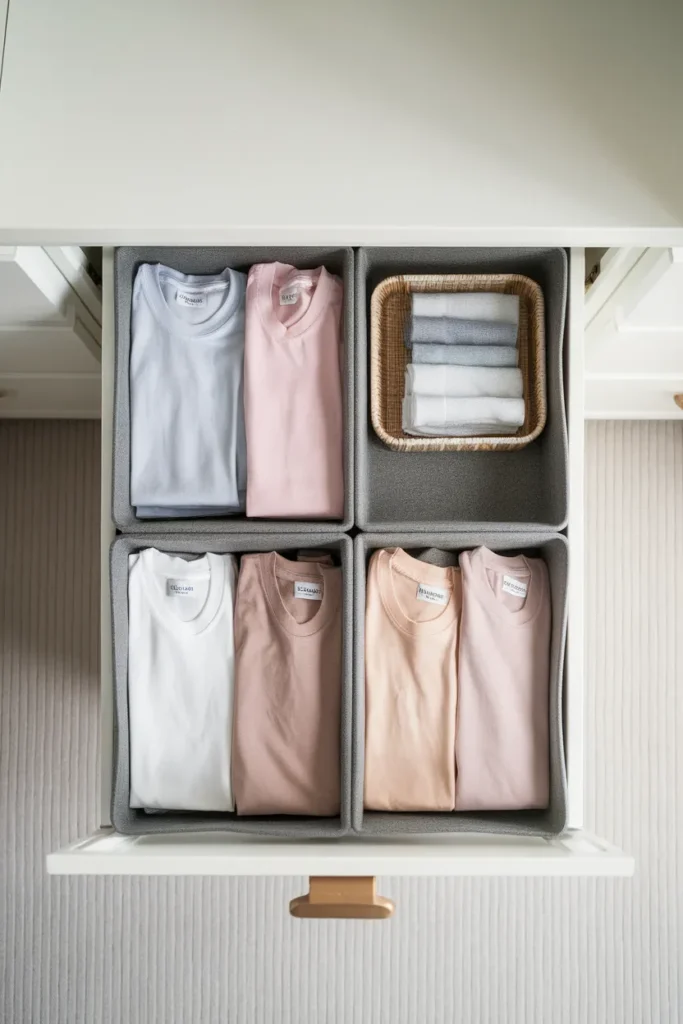
Drawer dividers finish the job. An adjustable set turns one chaotic drawer into four defined sections, and folding items upright the way Marie Kondo teaches means you see every piece without disturbing the rest. A four pack of velvet insert trays runs about twenty dollars.
One more small thing that matters more than it should: add light. Battery powered LED strips with adhesive backing cost under fifteen dollars and stick inside the closet frame with no wiring. Motion activated versions switch on when the door opens. A lit closet looks organized even on the days it is not, and you stop wearing navy you thought was black.
The Move Out Reversal Nobody Plans For
Here is the part that makes this whole approach worth doing rather than just pretty.
Every fix in this guide comes apart. Build it in the order the Four Surface Rule lists, and take it down in reverse: door first, then floor, then shelf, then rod. The tension rod releases in seconds. The bins stack inside each other. The drawer unit goes straight into the moving truck already full, which saves you a box.
Adhesive hooks come off last, slowly, straight down the wall. Give yourself thirty minutes rather than five, because rushing this step is what actually costs people money.
Then take a photograph of the bare closet. Compare it to the one from move in day. If they match, you did it right, and the whole system loads into your next apartment on day one instead of month three.
Apartment Closet Organization FAQ
How do I organize a small apartment closet with no storage? Work all four surfaces instead of the rod alone. Add a tension rod below the existing rail for a second hanging level, put clear labeled bins on the top shelf, add a low drawer unit on the floor, and hang a pocket organizer on the back of the door. That takes one closet from roughly one usable surface to four, usually for under a hundred dollars total.
What is the standard closet rod height? About 66 inches from the floor for a single rod, with most falling between 60 and 68 inches. A double rod setup puts the top bar near 80 inches and the lower bar near 40 inches. Measure yours before buying, because rental closets vary more than new construction.
Can renters install closet organizers without drilling? Yes, and most of the highest impact fixes require no hardware at all. Tension rods, hanging rod doublers, freestanding shoe racks, floor drawer units, and over the door organizers all install with zero wall contact. Adhesive hooks handle the rest, as long as you follow the manufacturer’s application and removal instructions.
Will closet organizers cost me my security deposit? Not if nothing you install penetrates or peels the wall. HUD’s guidance treats small nail holes and minor scuffs as normal wear and tear rather than chargeable damage, though state law and your specific lease govern the final answer. Photograph the closet before and after, and remove adhesive strips slowly by stretching straight down.
How much does it cost to organize a rental closet? A functional setup lands between forty and a hundred and twenty dollars depending on how much you already own. A tension rod runs about ten dollars, fifty velvet hangers about fifteen, a set of clear bins twenty to thirty five, and an over the door organizer under twenty. Buy the rod and hangers first, then live with it a week before spending more.
What if my closet has sliding or bifold doors? Skip the over the door organizer entirely, since nothing can hang on a panel that slides through a track. Use the interior side wall of the closet with adhesive hooks instead, and park a slim rolling cart in the dead space beside the closet opening.
How do I keep it organized after the first week? Give every category one fixed address and put your most worn zone at eye level. Then do a ten minute reset once a month, returning anything that drifted and pulling out whatever you have not worn in a season. Systems fail from small drift, not sudden collapse.
Start With One Surface
You do not need a free Saturday to begin. Pick the surface that annoys you most, claim it this evening, and let the rest wait.
Most people start with the rod, because a tension rod costs about ten dollars and gives back the most space per minute spent. Some start with the floor, because seeing it clear changes how the whole room feels. Either is a fine opening move.
Whichever you pick, measure before you buy, and keep the receipts until everything fits. Apartment closet organization in a rental is not about owning the space. It is about renting all four surfaces you are already paying for, then taking the whole system with you when you go.
Which surface are you claiming first?