
Closet Shelf Organization: Make Every Shelf Earn Its Space
Most closet shelf organization advice hands you a photo of a bin and calls it a system. Then the sweater stack leans, the top shelf swallows a beach bag, and eight weeks later you are back where you started. The problem is almost never the bin. It is that nobody told you which shelf should hold what, or how far apart those shelves need to sit before a stack of folded jeans stops behaving. This guide fixes that in a specific order: measure, zone, divide, then buy. By the end you will have a shelf map for your exact closet, real numbers in inches, and a five-minute reset that keeps it holding.
Why Closet Shelves Fail (It Is Rarely the Shelf)
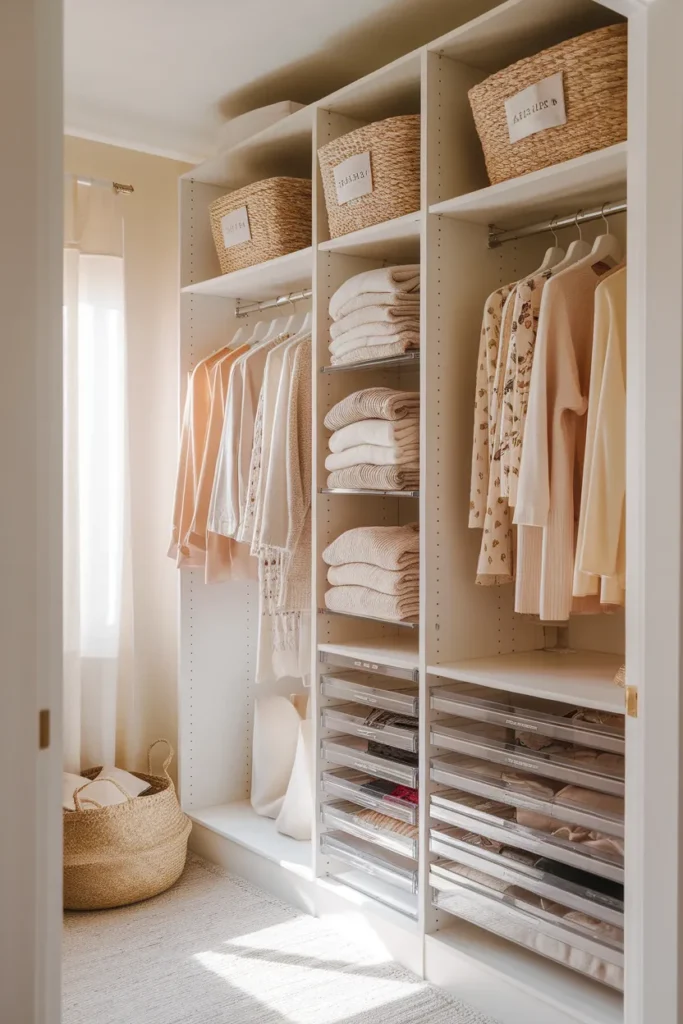
Three things break a closet shelf, and they break it in the same order every time.
First, depth mismatch. Most folded garments measure roughly 9 to 11 inches front to back. Put them on a 16-inch shelf and you get five inches of dead space behind the stack, which fills with a purse, a hair dryer, and something you will not identify for a year.
Second, wrong spacing. Shelves set too far apart waste vertical inches. Set too close and you cannot lift a stack out without dragging the one above it.
Third, no vertical boundary. A folded pile has nothing holding its sides. Pull one shirt from the middle and physics takes over.
Notice what is not on that list. Not enough shelves. Almost nobody actually needs more shelves. They need the ones they have to stop wasting space, which is a different project entirely and a much cheaper one. If your closet is small enough that you genuinely are out of room, our 10 small closet organization ideas that double your usable space covers the square-footage side of this.
The 3-Band Shelf Map: Where Everything Actually Belongs
Here is the framework this whole guide runs on. Every closet, whether it is a 24-inch reach-in or a walk-in, divides into three horizontal bands based on one thing: how easily your body reaches that height. Assign categories by band and the closet stops fighting you.
Band 1, the Reach Band (about 40 to 70 inches off the floor)
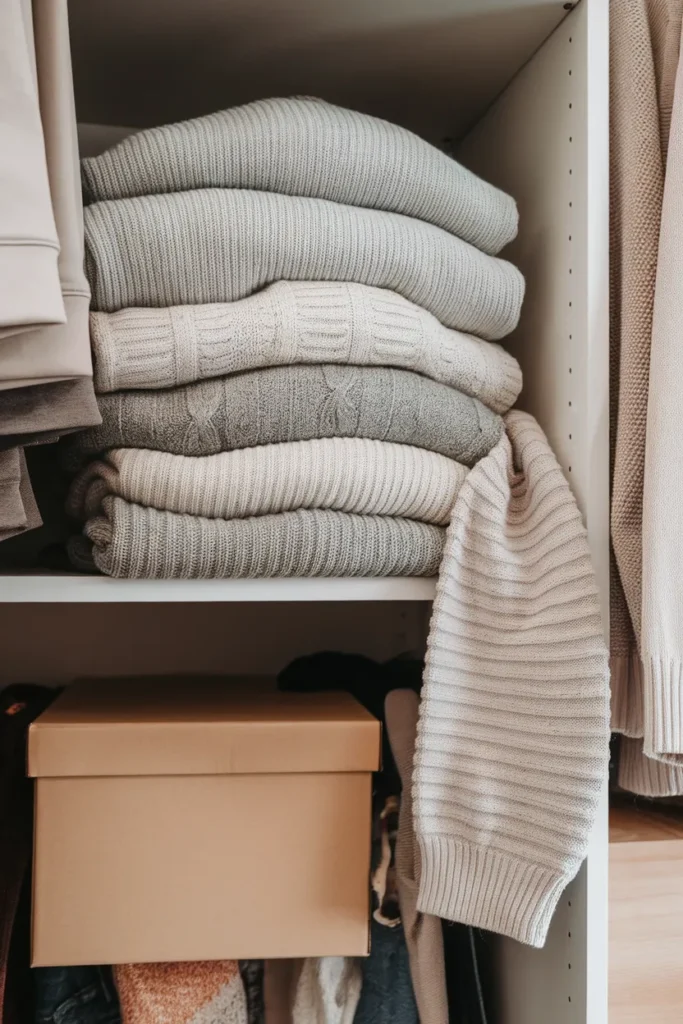
This is eye level and chest level, the space your hand goes to without thinking. It should hold only what you touch multiple times a week. Folded tees, the current-season sweaters, everyday jeans, the two bags you actually carry. Nothing seasonal. Nothing sentimental. If you have not reached for it in the last fourteen days, it does not live here.
Band 2, the Sight Band (roughly 12 to 40 inches off the floor)
Low shelves and the floor zone. You can see into this band but you have to crouch, so it earns shoes, folded weekend clothes, and anything in a pull-out bin. The bottom shelf should sit 12 to 16 inches off the floor, which leaves room for a basket underneath and makes vacuuming possible.
Band 3, the Storage Band (above 72 inches)
The top shelf. In a standard reach-in this lands at 66 to 72 inches, and in a walk-in it can run as high as 84 inches. This band is for closed containers only. Never loose items. Seasonal bedding, off-season clothing, the suitcase, the holiday tablecloth, each in a labeled bin with a handle you can hook a finger into from below.
One rule ties the map together: nothing crosses bands without a container. Loose items in Band 3 turn into the pile everyone dreads, and a bin in Band 1 wastes your best real estate on a lid you have to lift. Almost every closet failure we see traces back to a band violation, and it shows up in a few other predictable ways too, which we broke down in 7 closet organization mistakes and their quick fixes.
Measure Before You Buy a Single Bin
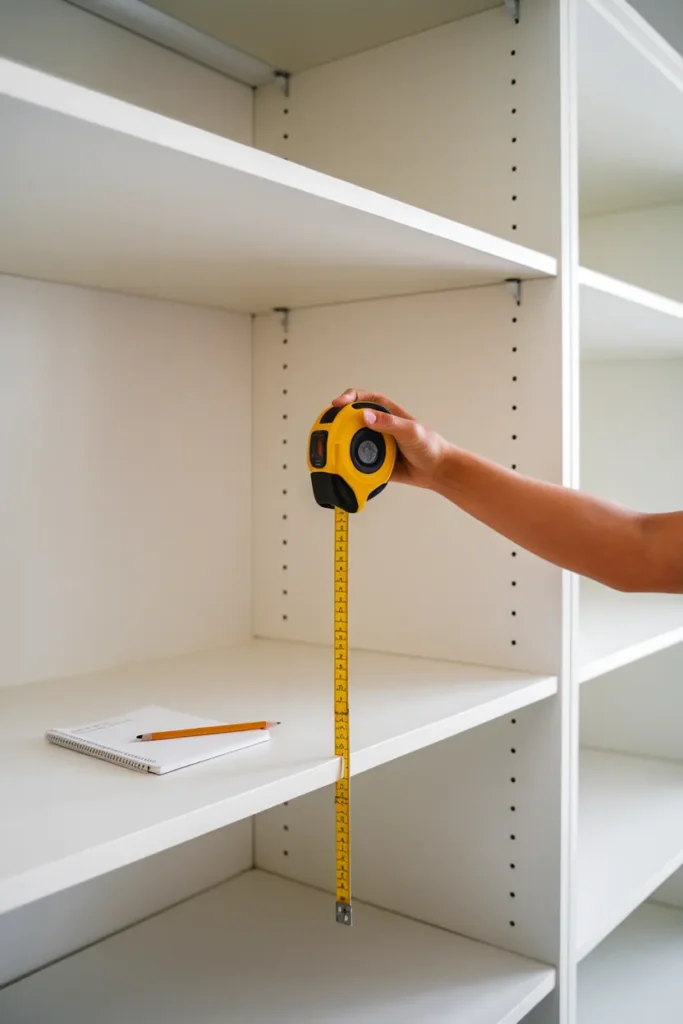
This is the step everyone skips and then regrets at the return counter. Five minutes with a tape measure saves an afternoon.
Shelf depth. Standard closet shelving runs 12 to 16 inches deep. For folded clothing, 12 inches is the sweet spot, since garments sit about 9 to 11 inches deep and you want a little breathing room without a dead zone at the back. Reserve 14 to 16 inches for linens, towels, and bulky bedding, which fold thicker.
Shelf spacing. Give clothing shelves 10 to 12 inches of vertical clearance. Bedding and towels want 12 to 15 inches. Anything tighter and you cannot get a hand around a stack.
A depth warning for reach-ins. Standard reach-in closets are 24 to 26 inches deep, so a 16-inch shelf technically fits. Up top it becomes a trap. The door header in most homes sits at 72 inches while the top shelf sits at 84, which leaves a narrow gap to angle a deep bin through. Stick with 12-inch shelves in the Storage Band and you keep it usable.
Hanging clearance, since shelves and rods compete for the same wall. Dresses need 60 inches of vertical hanging space. Suits need 42. Shirts and folded-over pants need 36. If you add a second rod, put it around 40 inches off the floor so nothing drags.
| What you are storing | Shelf depth | Vertical spacing |
|---|---|---|
| Folded tees and sweaters | 12 to 14 in | 10 to 12 in |
| Jeans and folded pants | 12 to 14 in | 10 to 12 in |
| Towels and bedding | 14 to 16 in | 12 to 15 in |
| Shoes (one pair per row) | 10 to 12 in | 8 to 10 in |
| Bins and baskets | 12 in | measure your bin, add 2 in |
Screenshot that table. It is the single most useful thing on this page.
How to Organize Closet Shelves, Step by Step
Now the work. Block ninety minutes and go in this order, because doing it out of order is why the last attempt did not hold.
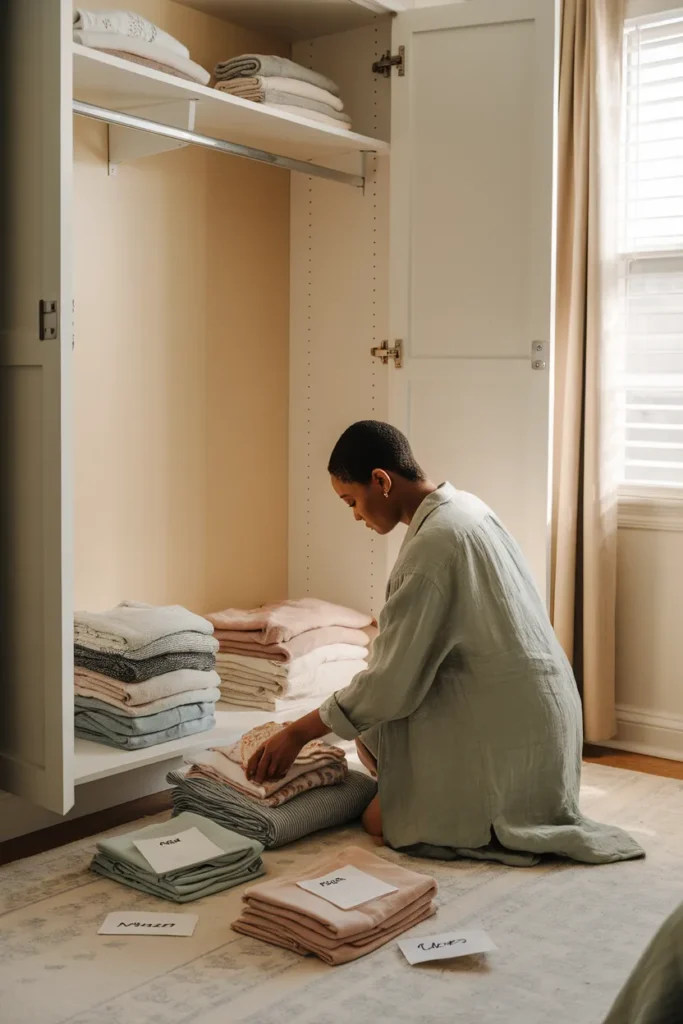
- Empty one shelf at a time. Not the whole closet. Emptying everything at once creates a floor pile so overwhelming that most people quit at the halfway mark and shove it all back.
- Sort into micro categories. Not “winter accessories.” Split it into gloves, hats, scarves. Micro sorting is what tells you how many bins you need and what size, before you spend a dollar.
- Assign each category a band. Use the 3-Band Shelf Map. Everyday goes to Band 1, crouch-level goes to Band 2, closed containers go to Band 3.
- Measure, then shop. With categories assigned and shelves measured, you now know exactly what to buy. This is the only correct moment to open Amazon.
- Load heaviest low. Denim and boots go toward Band 2. Lightweight seasonal items go up top. A bin of winter coats overhead is a hazard nobody needs.
- Leave one shelf at 20 percent empty. This is the maintenance shelf. Life produces overflow, and a closet with zero slack fails the first week something new comes in.
Step six is the one people argue with and the one that saves the system.
Shelf Dividers: The Cheapest Fix With the Biggest Payoff
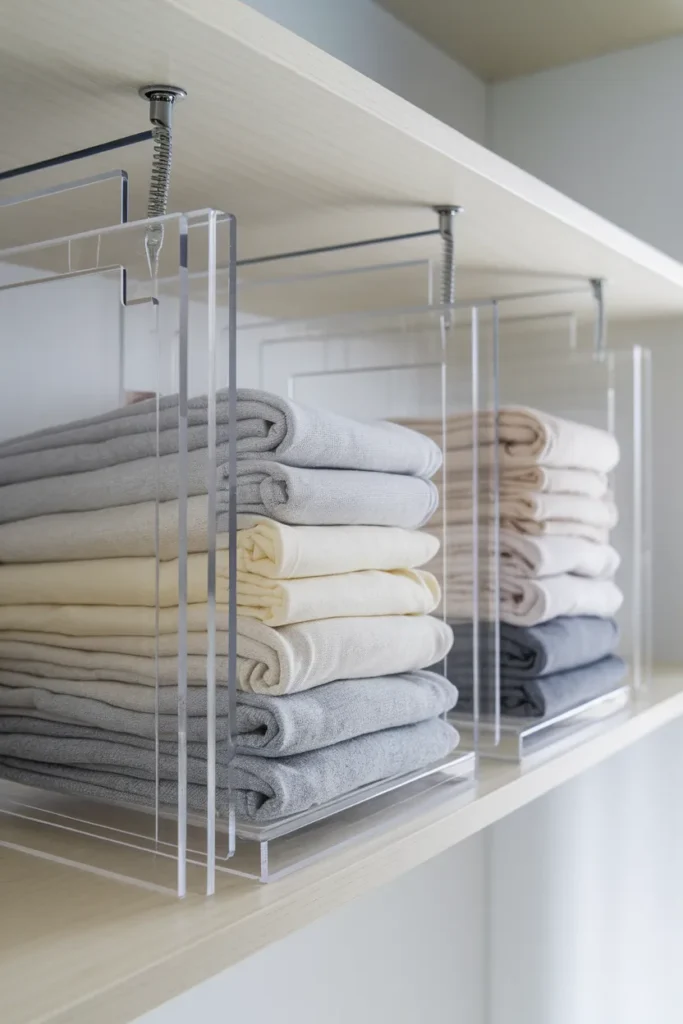
If you buy one thing from this entire guide, buy dividers. A folded stack has no side walls, so it leans, and once it leans it collapses. A divider gives the stack a boundary and the boundary is what makes the neat fold survive past Tuesday.
Two types worth knowing. Clamp-on acrylic dividers slide over the front edge of a wood or melamine shelf and need no tools, typically running $15 to $25 for a set of four. Wire shelf dividers hook over the rods of vinyl-coated wire shelving and cost less, usually $10 to $20 per set.
The trick most people miss: space dividers to the width of a folded garment, roughly 11 to 12 inches apart, and each compartment holds exactly one category. Wider than that and you are just building a smaller version of the same pile.
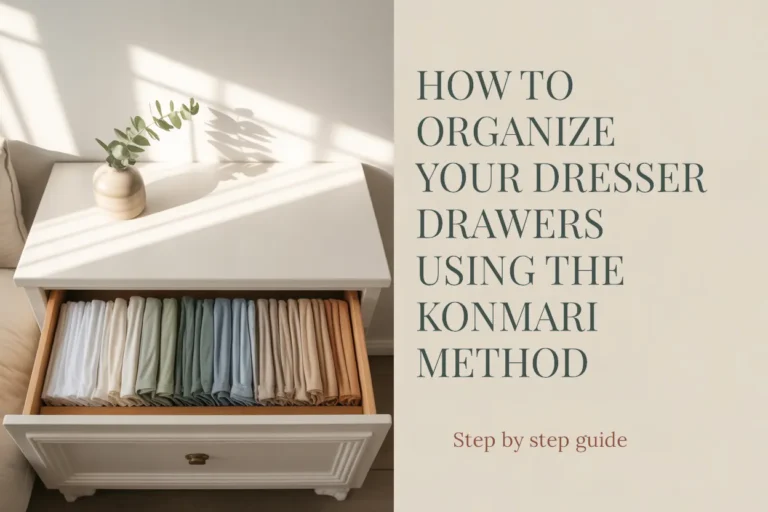
Pair dividers with file folding. Stand folded items on their edge in the compartment instead of stacking them flat. You see every item at once, and pulling one out does not disturb the others. This is the same principle behind organizing dresser drawers with the KonMari method, and it works even better on a shelf where the compartment does the holding.
Choosing Bins and Baskets That Actually Fit
Buy the shelf, not the aesthetic. Three rules keep the returns down.
Match depth to the shelf, not to the closet. A 14-inch bin on a 12-inch shelf overhangs and catches your sleeve every time you walk past.
Leave two inches of headroom above the bin. You need clearance to tilt it out, especially in the Storage Band where you are lifting overhead.
Choose handles for anything above shoulder height. A Band 3 bin without a handle means dragging it blind off a shelf above your head.
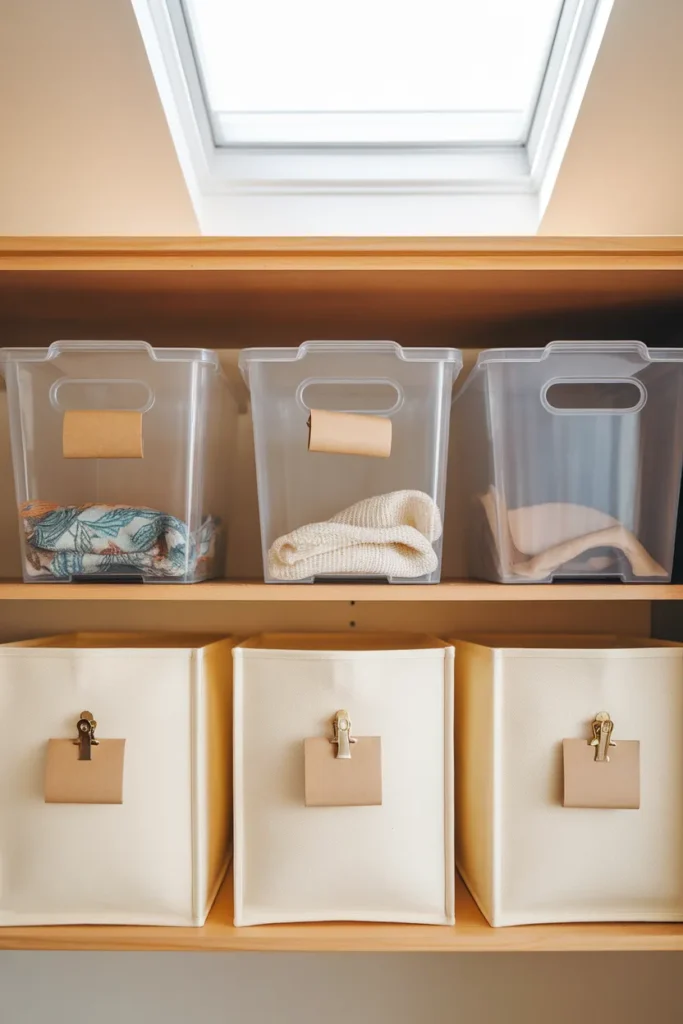
On material, one caution the design blogs skip: wicker, rattan, and raw metal baskets snag knitwear. They photograph beautifully and they will pill a cashmere sweater. Use them for shoes, bags, and folded denim, and put anything soft in smooth fabric bins or clear plastic. Fabric cube bins around 11 by 8 by 5 inches run under $10 and fit most 12-inch shelves with room to spare.
Clear plastic wins in Band 3 for one reason: you can see what is in it from the floor, so you never haul a bin down to check. If you prefer the look of woven, label it on the front-facing side.
Wire Shelving: Fixing What Most Closets Actually Have
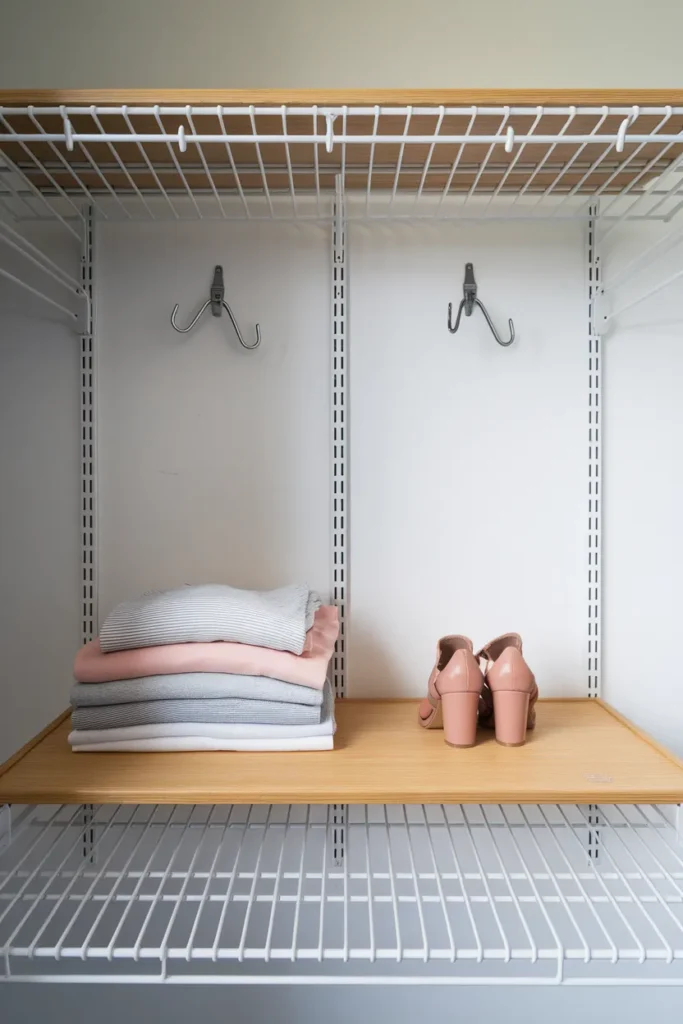
Here is the part almost nobody writes about. If your home was built in the last forty years, your closet probably came with white vinyl-coated wire shelving. Every polished closet on Pinterest shows solid wood, so wire owners assume the answer is a renovation. It is not.
Wire has exactly three problems, and all three have a fix under $30.
Things tip over. The ridged surface wobbles anything with a narrow base, so heels fall and small boxes rock. Fix it with a shelf liner, a rigid plastic or bamboo insert cut to size that gives you a flat surface. This one change makes wire shelving behave like solid shelving for a fraction of the cost.
Small items fall through. Socks, belts, and jewelry pouches slip between the rods. Fix it with the same liner, or contain those categories in bins instead of setting them loose.
Stacks slump. Wire has no side walls at all. Fix it with hook-over wire shelf dividers, which clip directly onto the rods with no tools and no drilling.
Add all three and a builder-grade wire closet performs identically to a custom build. Save the renovation budget for something else. If you are working with a larger space and want to plan the layout properly, our walk-in closet organization guide covers the full build-out.
Adding Shelves Without Drilling (Renters, This One Is Yours)
You do not need permission or a drill to add shelving. Three approaches work in almost any rental.
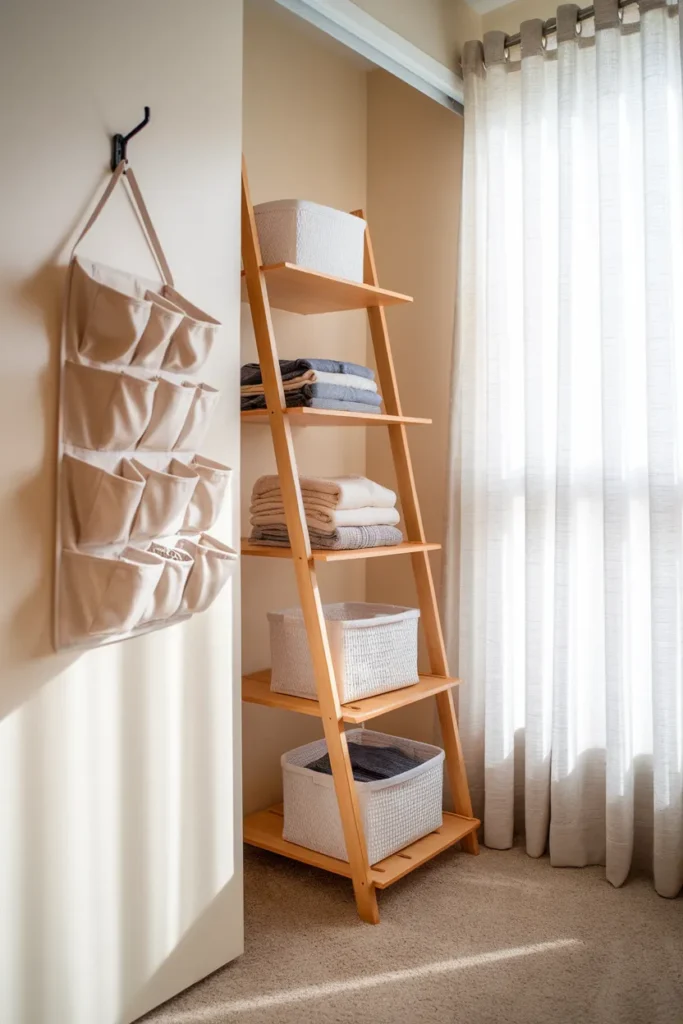
Slide in a freestanding unit. A narrow bookcase or a bamboo shelving unit sized to your closet width creates instant shelves that leave with you. Measure the closet opening first, including the door frame, since plenty of units fit the closet but not the doorway.
Use a tension rod as a shelf support. Two tension rods set at the same height across a narrow closet will hold a lightweight board or a row of rolled items. Keep the load light and check the rod rating.
Go vertical on the door. An over-the-door organizer adds pocket storage to a surface that is otherwise doing nothing, and it hangs on brackets that hook over the top edge with no hardware.
Stack a small drawer unit under the hanging rod. The floor beneath short hanging clothes is usually the most wasted space in the whole closet. A three-drawer unit fills it and doubles as a shelf surface on top.
One caution on adhesive hooks and strips: they hold reliably on smooth painted drywall, and they fail on textured walls and unfinished closet interiors. Test one with something light before you trust it with anything heavy.
Shoes, Labels, and the Five-Minute Reset
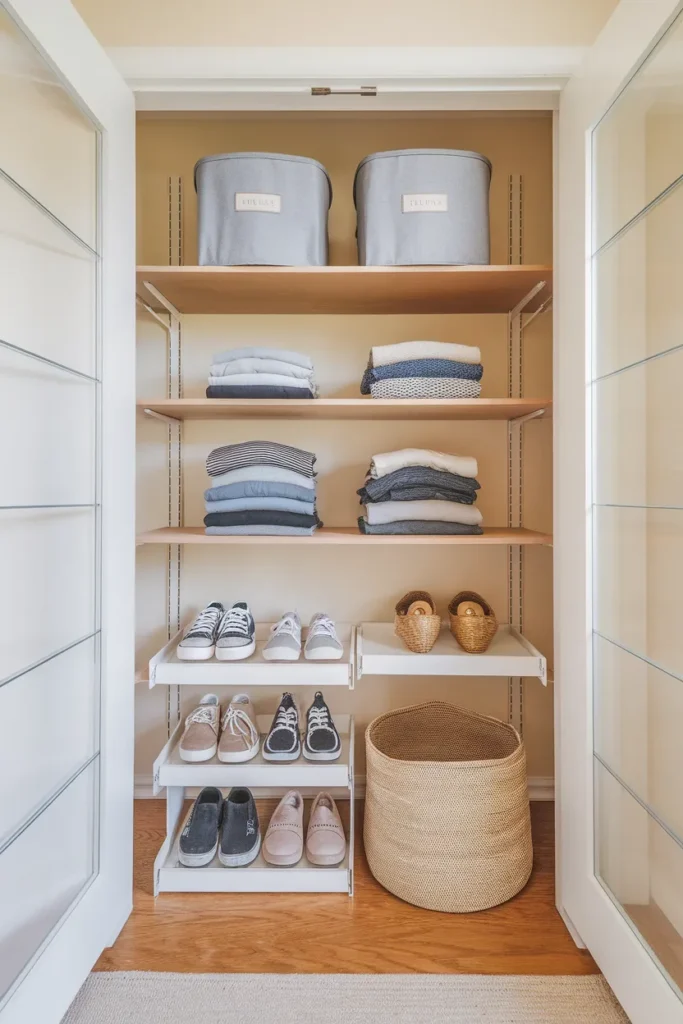
Shoes. Give shoe shelves 10 to 12 inches of depth, which fits one pair per row with no overhang, and 8 to 10 inches of vertical clearance for flats and sneakers. Boots need a taller compartment, so put them on the bottom where you have height to spare. Toe-heel alternation fits more pairs per row than lining them up facing the same way. For the full range of options beyond shelving, we covered ten ways to organize shoes in any space.
Labels. Label the container, not the shelf. Contents change, shelves do not, and a shelf label becomes a lie the first time you swap seasons. Front-facing labels on Band 3 bins matter most, since you are reading them from six feet below.
The five-minute reset. Once a week, do three passes. Straighten every stack front to back. Return anything that migrated to the wrong band. Empty the maintenance shelf. That is the entire routine, and it is the difference between a closet that holds for three weeks and one that holds for three years.
What Not to Store on Closet Shelves
A few things belong somewhere else, and this is where the closet quietly costs you money.
Anything you are keeping long term needs different conditions than everyday clothing. The University of Kentucky Cooperative Extension separates clothing storage into day-to-day, seasonal, and long-term categories, and each has its own requirements. Treating a wedding dress like a stack of tees is how heirlooms get ruined.
For anything genuinely valuable, the conservation guidance is specific. The GWU Museum and The Textile Museum recommend storing textiles at 40 to 50 percent relative humidity and 68 to 72°F, keeping items off the floor, and lining wooden shelves with acid-free tissue or barrier paper so wood acids do not contact the fabric. They also advise against attics and basements, which swing hardest in temperature and humidity. A bedroom closet is usually the best storage in the house by that standard, provided air can circulate.
So: keep damp items out entirely, never store anything worn but unwashed (body oils attract insects), and skip vacuum bags for garments you care about, since compression can set permanent creases in the fibers.

Frequently Asked Questions
How deep should closet shelves be? Twelve to 16 inches covers almost everything. Use 12 to 14 inches for folded clothes, since most garments sit 9 to 11 inches deep, and 14 to 16 inches for towels and bedding, which fold bulkier. Go shallower, around 10 to 12 inches, for shoes so nothing overhangs the front edge.
How far apart should closet shelves be? Ten to 12 inches of vertical clearance for folded clothing, and 12 to 15 inches for linens and bedding. The bottom shelf should sit 12 to 16 inches off the floor. In a standard reach-in the top shelf lands around 66 to 72 inches, and a walk-in can push it to 84.
How do I organize closet shelves without buying anything? Empty one shelf, sort into micro categories, and reassign by reach height using the 3-Band Shelf Map. Switch flat stacks to file folding so items stand on edge. Use shoeboxes as free dividers and repurpose bins from elsewhere in the house. The reassignment does most of the work, not the products.
What should I store on the top shelf of a closet? Closed, labeled containers only. Seasonal bedding, off-season clothing, luggage, and holiday items. Keep it lightweight, since you are lifting overhead, and choose bins with handles you can hook from below. Loose items up there always become a pile.
Are wire shelves or wood shelves better? Wood gives you a flat surface and a custom look at a higher cost. Wire is budget-friendly and ventilates well, but it wobbles narrow-based items and lets small things slip through. A rigid shelf liner plus hook-over dividers closes the gap for well under $30, which is usually smarter than replacing the shelving.
How do I stop folded clothes from falling over on a shelf? Add vertical boundaries. Shelf dividers spaced about 11 to 12 inches apart give each stack a side wall. Combine that with file folding, where items stand on edge rather than lying flat, and pulling one piece no longer disturbs the rest.
How do I add closet shelves without drilling? Slide in a freestanding bookcase or bamboo shelving unit sized to the closet width, run tension rods across a narrow closet to support a light board, hang an over-the-door pocket organizer, or fill the dead floor space under short hanging clothes with a small drawer unit. Measure the doorway, not just the closet.
The Shelf That Holds
Closet shelf organization comes down to one idea: every shelf should have a job, and the job should match how easily you can reach it. Measure first, assign by band, add dividers, then buy the bins. Do it in that order and the closet holds, because the system is doing the work instead of your willpower.
Start with one shelf this weekend. Just one. Empty it, measure it, give it a single category, and see how it looks on Sunday night. Then tell us which shelf you picked, because the first one is always the hardest and the one that proves the rest will work.