

Walk In Closet Organization Ideas: Design a Closet You Love
You opened the double doors this morning and a sweater avalanche called your bluff. Sound familiar? These walk in closet organization ideas will take you from crammed rod chaos to a space that feels like a tiny boutique with your name over the door. We’ll map your layout, set up zones you can actually keep, and work with whatever budget you’ve got, from a twenty dollar refresh to a full custom system. By the end, every rod, shelf, and stray sneaker will have a plan. Pour a coffee. This is the fun kind of weekend project.

Start With a Ruthless Closet Declutter (Before You Buy One Bin)
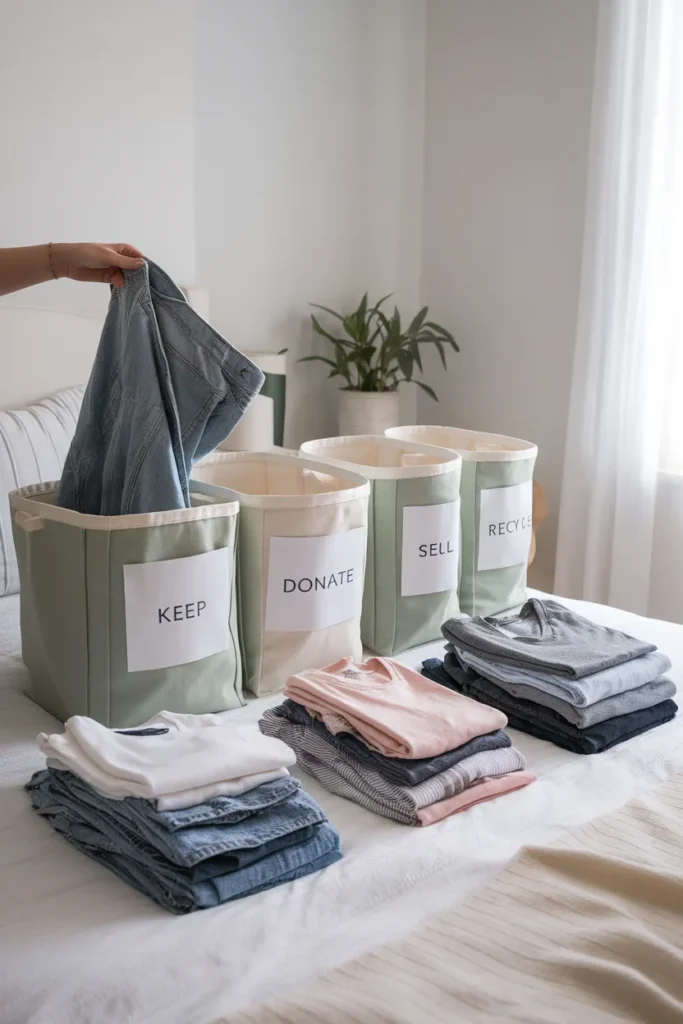
Every professional organizer we’ve read agrees on the order of operations: edit first, shop last. Organizing pros interviewed by Real Simple point out that people who start by buying products usually end up just as disorganized, only now with prettier containers. So pull everything out. Yes, everything. Pile it on the bed and sort into four groups: keep, donate, sell, and recycle. For inherited pieces you’ll never wear, donate or pass them down to someone who will love them.
The stakes here are bigger than a tidy shelf. The EPA reports that Americans generated about 17 million tons of textile waste in a single recent year, and more than 11 million tons of it went straight to landfills. Donating what still has life left is the easiest win in this entire project.
Set a timer for 20 minutes per category so you don’t stall out on sentimental sweatshirts. When we did our own big edit, we found three tank tops still wearing their store tags (oops). Once the keep pile is final, take inventory: count how many feet of hanging space you need, how many pairs of shoes survived, and how much folds. Those three numbers drive every decision that follows.
The Three Reach Zones Rule: A Smarter Walk In Closet Layout
Here’s the framework we use for every closet, and it’s the anchor for the rest of this guide. The Three Reach Zones Rule says you divide every wall of the closet into three horizontal bands based on how your body reaches, then store by frequency: daily items live where your hands naturally land, and everything else earns its spot by how often you touch it. Category zones tell you what goes together. Reach zones tell you where.
| Zone | Height band | What lives there |
|---|---|---|
| Eye Zone | about 40 to 68 inches | daily outfits, work clothes, current favorites |
| Stretch Zone | above 68 inches | off season bins, formal wear, spare bedding |
| Bend Zone | floor to 40 inches | shoes, drawers, hampers, heavy folded knits |
Set your rod heights like a pro
Numbers matter more than vibes here. Professional organizer Karen Schroter, sharing her specs with Reader’s Digest, hangs long items like dresses and coats at about 64.5 inches, medium pieces around 52.5 inches, and short items near 40.5 inches, with a stacked double hang running roughly 79 inches total. Write those on a sticky note before you drill anything.
For the floor plan itself, walk in closets come in three basic shapes: a straight run along one wall, an L along two, or a U wrapping three. Whatever the shape, keep the center open enough to turn around with a laundry basket. Organizer Jeanie Engelbach told Reader’s Digest to treat the room like a store: everyday pieces near the entrance, special occasion pieces in the back.
Hanging Space: Where Slim Velvet Hangers Earn Their Keep
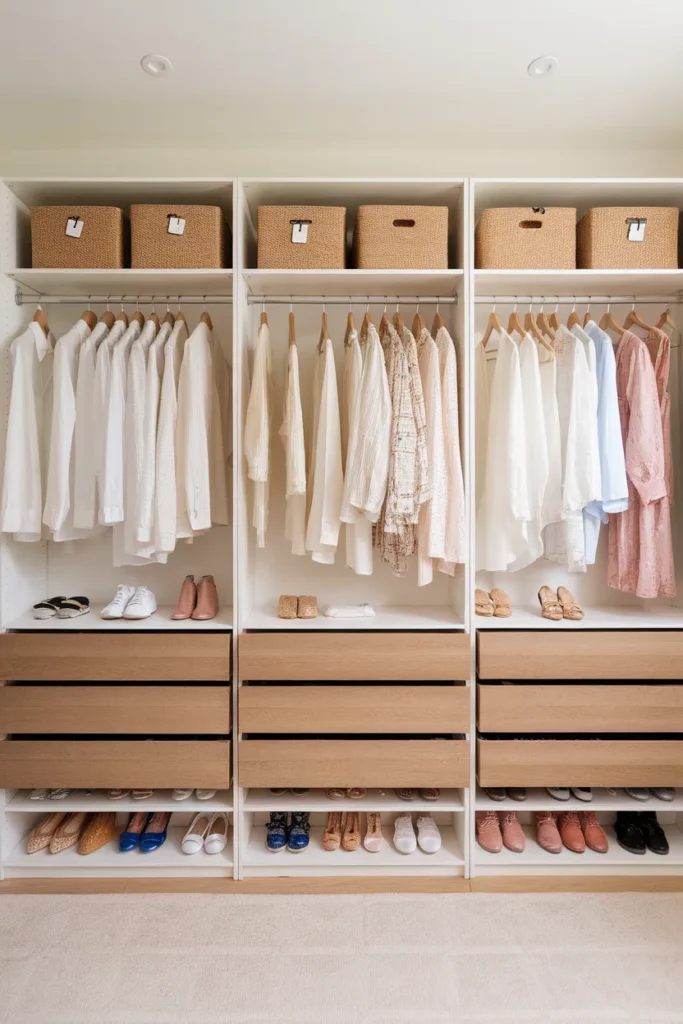
Hanging space is the most valuable real estate in the room, so treat it that way. Swap the mismatched jumble for one style of hanger across the whole closet. A 50 pack of Amazon Basics slim velvet hangers handles most wardrobes, keeps silky straps from sliding, and buys back a surprising amount of rod space compared to chunky wood. Honestly, matching hangers changed the look of our closet more than any bin ever has. Return the wire ones to your dry cleaner for recycling.
Then stack your hanging. A double hang setup, tops on the upper rod and pants or skirts folded over hangers below, roughly doubles capacity on the same wall. Reserve one single tall section, 12 to 18 inches wide, for dresses and coats. Give clothes breathing room too: about an inch of rod per hanger keeps everything visible and wrinkle free. One last trick we love from stylists everywhere: mount a single hook on open wall space and hang tomorrow’s outfit there the night before. Mornings get five minutes easier.

Shelves, Bins, and Drawers That Actually Stay Neat
Shelving handles everything that shouldn’t hang: denim, knits, bags, and bins. Pros interviewed by Reader’s Digest put the usable sweet spot for shelf depth between 12 and 24 inches; shallower is too limiting and deeper turns the back half into a lost and found. Choose adjustable shelves over fixed ones so the closet can change as your wardrobe does.
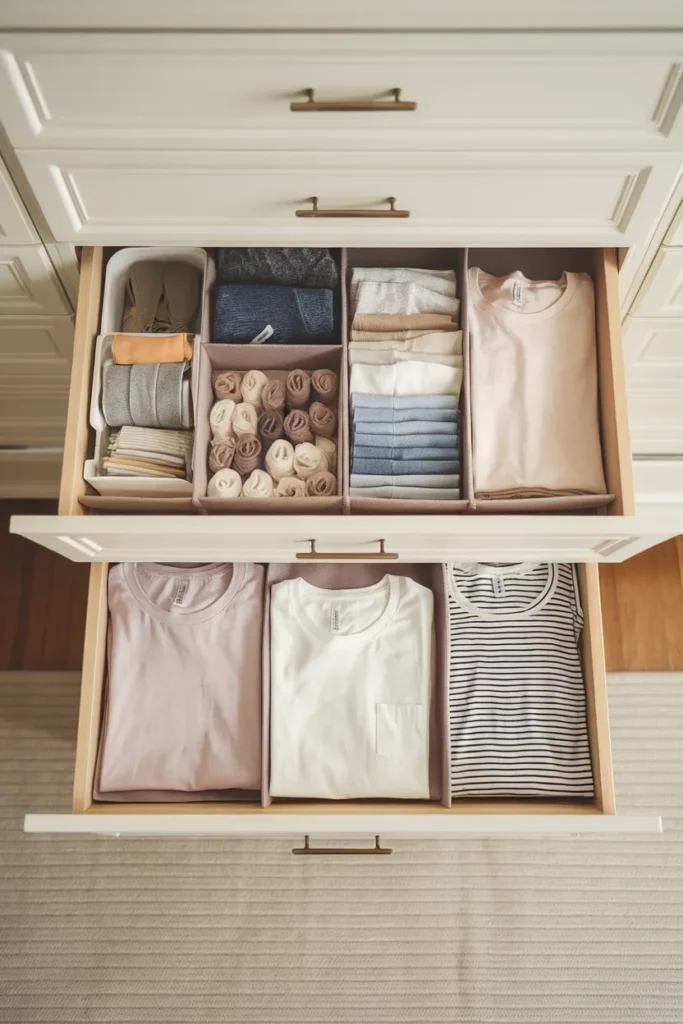
For containment, mix a few workhorses. IKEA Skubb boxes divide drawers and corral clutches on shelves. Target’s Brightroom fabric cubes hide bulky off season pieces up in the Stretch Zone. A couple of HomeGoods baskets soften the top shelf, and Walmart’s Mainstays cubes cover the same jobs for less. Down in drawers, borrow the Marie Kondo file fold: stand tees and leggings upright like folders so you see every option at a glance instead of excavating a stack.
Now the label question. Our rule is simple: clear bins where you’d forget the contents, labels where you can’t see inside. If a bin is opaque and unlabeled, whatever’s in it has basically left your wardrobe.
Small Walk In Closet Organization That Doubles Your Space
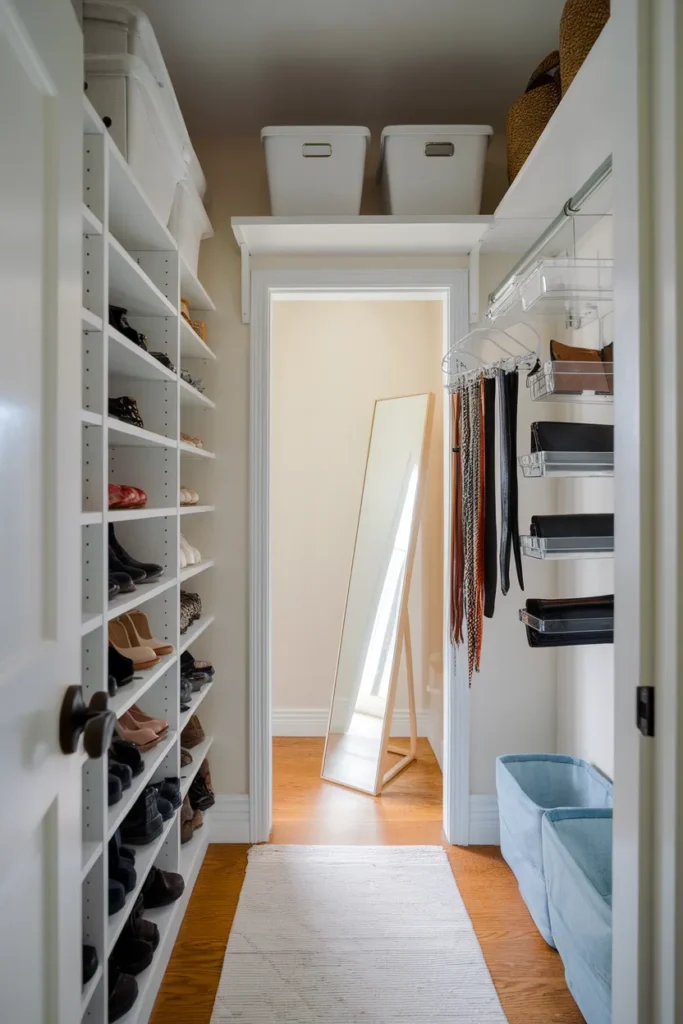
A small walk in closet just means the Three Reach Zones sit closer together. Go vertical before anything else. In order of payoff:
- Run shoe shelving floor to ceiling on one narrow wall; it’s the single biggest space win in a tight closet.
- Add a shelf above the door frame for luggage and rarely used bins.
- Hang an over the door organizer for clutches, belts, and flip flops.
- Slide a slim rolling cart into any awkward gap for workout gear.
- Lean or mount a full length mirror; it bounces light and makes the room feel twice as wide.
Skip the floor pile entirely. Anything living on the floor besides a hamper will multiply, we promise. And if your whole closet is on the smaller side, our small closet organization ideas that double your space go even deeper on squeezing storage out of tight footprints.
Walk In Closet Organization on a Budget
You don’t need a five figure build to get the boutique feeling. Three cheap upgrades do most of the heavy lifting: a fresh coat of paint in a soft light color, a brighter bulb or a plug in LED strip under the shelves, and that full length mirror we already mentioned. Together they make builder grade wire shelving read intentional.
From there, spend where it shows. Matching hangers first. Then a few uniform bins for the Stretch Zone, and shelf dividers to keep sweater stacks from slumping into each other. Tension rods turn dead corners into scarf storage for a few dollars. Thrift stores and HomeGoods regularly turn up baskets that cost a third of the boutique version. We walk through the exact order to spend in, with real prices, in our full budget closet makeover playbook.
One honest caution: skip the ultra cheap flimsy hangers and sagging paper bins. Buying twice costs more than buying decent once.

Closet Systems: From DIY Kits to Full Custom
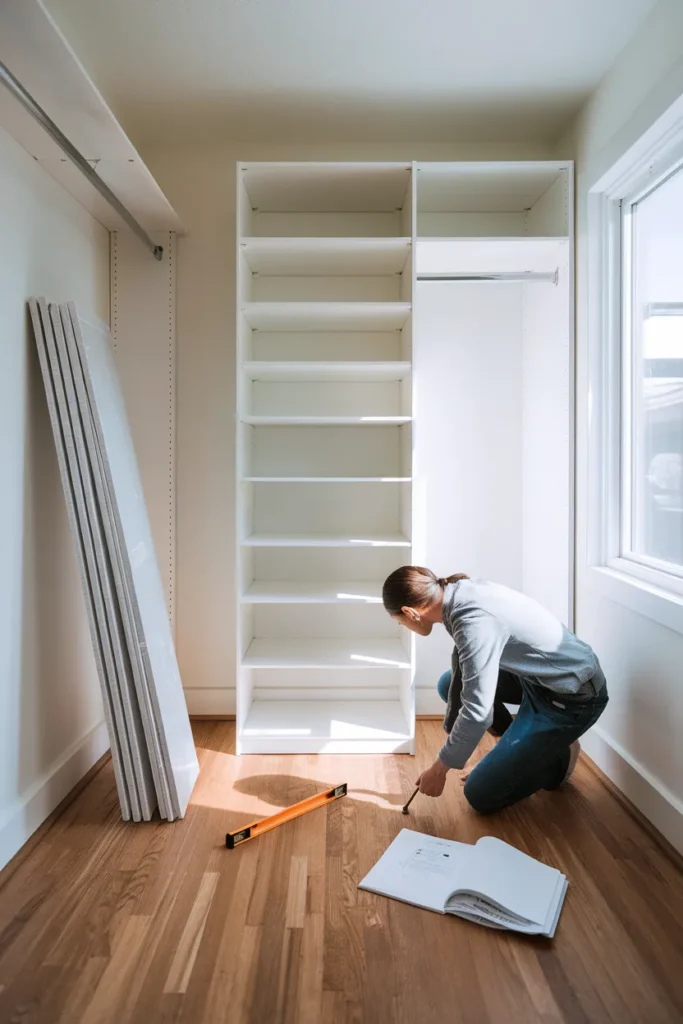
If your closet is a blank box, a system gives it bones. On the accessible end, IKEA’s BOAXEL covers the basics affordably, and the Pax wardrobe line builds a wall of closed storage that looks fitted. The Elfa system from The Container Store is the one professional organizers recommend most often in the articles we studied, largely because you can install it yourself and reconfigure it as life changes. ClosetMaid kits from Home Depot or Lowe’s split the difference on price.
Is custom ever worth it? Sometimes, genuinely yes. Interior designer Robbie Randolph told Reader’s Digest that well planned custom shelving can add roughly 20 to 30 percent more usable space to the same room, which matters a lot in an 8 foot wide closet. His starter recipe for that size: one narrow long hang section, two stacked double hangs, and open shoe shelving across the rest, with baskets up top for the rarely touched.
Whichever route you pick, design it around your keep pile inventory from step one, never around a showroom photo.
Give Shoes and Accessories Their Own Zip Codes
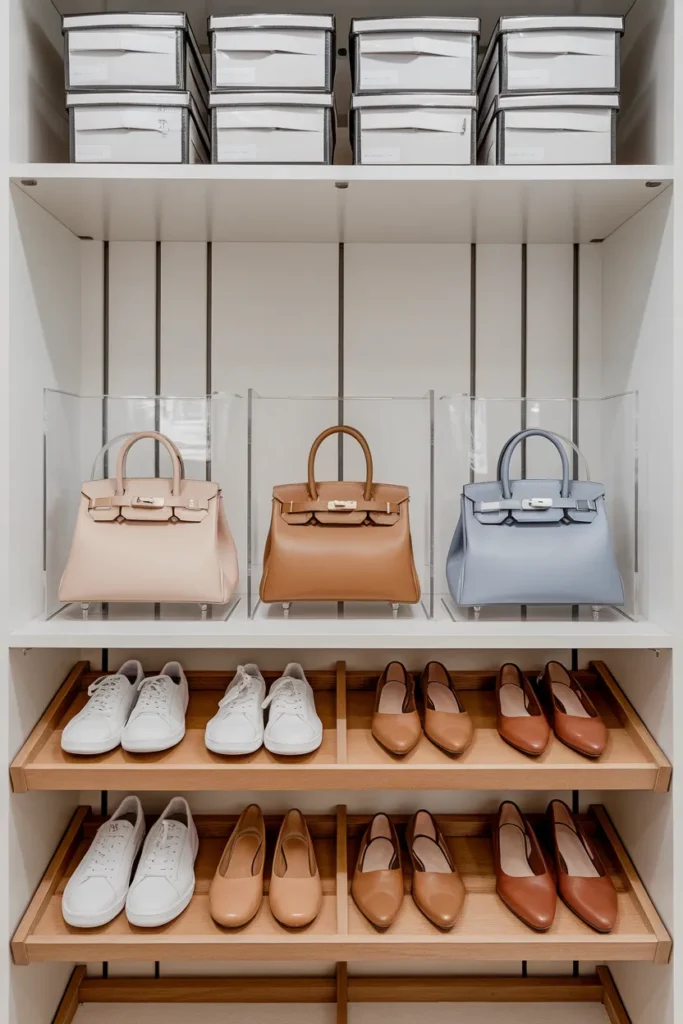
Loose accessories are why organized closets fall apart, so assign real addresses. Shoes belong in the Bend Zone: angled shelves or clear stackable boxes keep pairs together and visible, with daily sneakers at the front and occasion heels behind. Boots stay upright with a cheap trick we swear by: cut a pool noodle in half and slide a piece into each shaft.
Purses stand tall between acrylic shelf dividers, or hang from S hooks on the rod’s end. Jewelry lives in shallow trays inside the top drawer, never in a tangle on a shelf. Belts and scarves coil into small Skubb boxes or hang from a row of hooks on the skinny wall by the door. Sunglasses get one tray by the exit. When every category has a zip code, five second cleanup becomes the default instead of a project.
The Seasonal Clothing Swap That Keeps It Looking This Good
Setup is a weekend. Staying organized is a rhythm, and it’s a gentle one. Twice a year, rotate: off season pieces wash, fold, and ride up to labeled bins in the Stretch Zone while the incoming season claims the Eye Zone. Our swap takes a couple of hours with coffee breaks, and we’ve broken the whole thing into a checklist in our step by step summer closet swap.
Between swaps, protect the system with a ten minute Sunday reset: rehang the chair pile, return strays to their zones, and pull anything you haven’t reached for in a month up out of prime Eye Zone space. Pair it with a soft one in, one out habit and the closet you built this weekend still looks like the photo next year. That’s the whole secret. Systems over willpower.

Walk In Closet Organization Ideas FAQs
What is the best way to organize a walk in closet? Edit your wardrobe first, then group like items into category zones and place them by reach: daily pieces at eye level, occasional pieces up high, shoes and drawers down low. Finish with matching hangers and labeled bins so the system maintains itself.
What is the best layout for a walk in closet? Use the perimeter walls for storage in a straight, L, or U shape and keep the center open for movement. Put a double hang on the longest wall, one tall section for dresses and coats, and shoe shelving low.
How do you organize a small walk in closet? Go vertical: floor to ceiling shoe shelves, a shelf above the door, an over the door organizer, and slim matching hangers. Store off season pieces in bins up top so only current clothes compete for prime space.
How do I organize a walk in closet on a budget? Declutter hard, then spend small where it shows: matching hangers, paint, better lighting, and a full length mirror. Affordable kits like IKEA BOAXEL or ClosetMaid add structure without custom pricing.
In what order should clothes hang in a closet? Group by category first (tops, pants, dresses, jackets), then arrange each category light to dark by color. Hang everyday categories nearest the door and formal pieces toward the back.
Are walk in closets a waste of space? Only when they’re unorganized. A well zoned walk in closet works like a boutique: it speeds up mornings, protects your clothes, and often stores linens and luggage too, which frees up space elsewhere in the house.
The Closet You’ll Brag About
Start with the edit, sketch your Three Reach Zones, and let the hangers, bins, and shelves fall into place from there. None of it requires a contractor, and most of it can happen before Sunday night. Pin this guide so it’s waiting when the coffee kicks in, and when your before and after is done, we’d genuinely love to hear which zone made the biggest difference for you.


