

How to Build an Entryway Drop Zone That Survives a Busy Family Morning
Keys. Where are the keys? Somebody had them last night, and now it is 7:42 a.m., one kid has a shoe missing, the mail from Tuesday is buried under a hoodie, and you are late again. We lived that exact scene for years. An entryway drop zone is the fix, and it is the single highest-payoff project a busy household can do in a weekend. Here is the promise: by the time you finish reading, you will have a clear, copy-it-today plan for keys, mail, shoes, bags, and coats, plus a framework that scales to however many people walk through your door. No carpentry degree required, honestly.
A drop zone is just the spot where everything lands the second you walk in, except this time it lands on purpose. Think of it as the airport for your stuff. Things arrive, get sorted, and take off again the next morning without a frantic search. Most of us already have a drop zone. It is the kitchen counter, and it is losing.
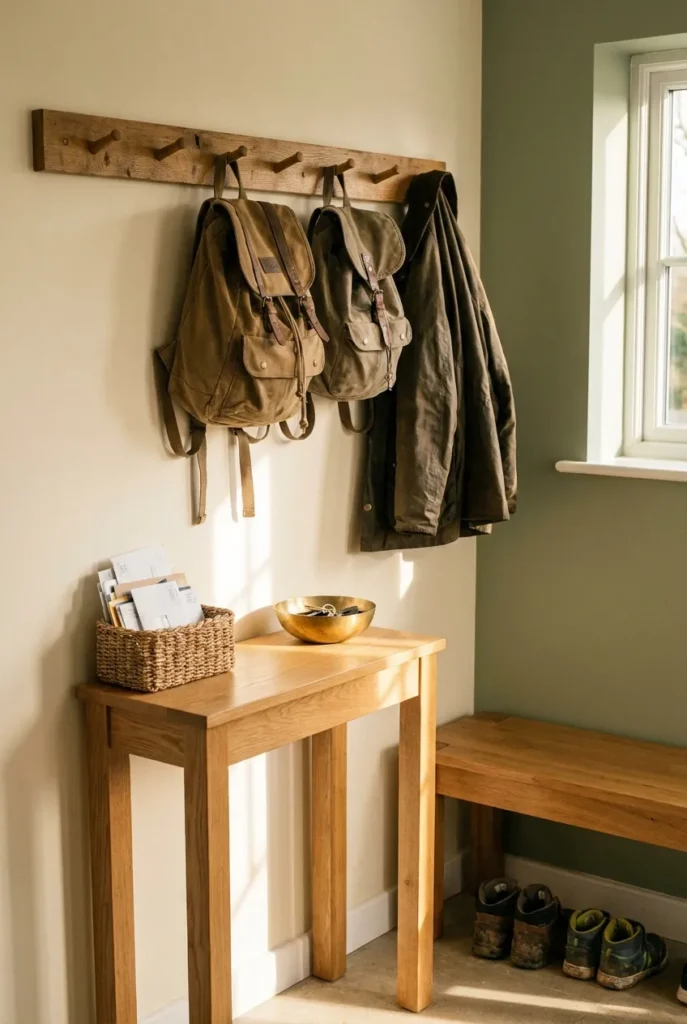
What Is an Entryway Drop Zone, Exactly?
A drop zone is a dedicated landing strip near your door, sized to catch the five things that cause 90 percent of doorway clutter: keys, mail, shoes, bags, and outerwear. That is the whole job. It is not a room. It is not a renovation. In real estate listings, “drop zone” usually means a built-in bench-and-cubby station near the garage or back entry, but for the rest of us it is whatever 24 to 48 inches of wall we can claim.
Here is the part the pretty Pinterest photos skip. A drop zone for one stylish person is easy. A drop zone for a family of four, with sports bags and library books and a dog leash, is a different animal. So we built this guide around a real household, not a magazine shoot.
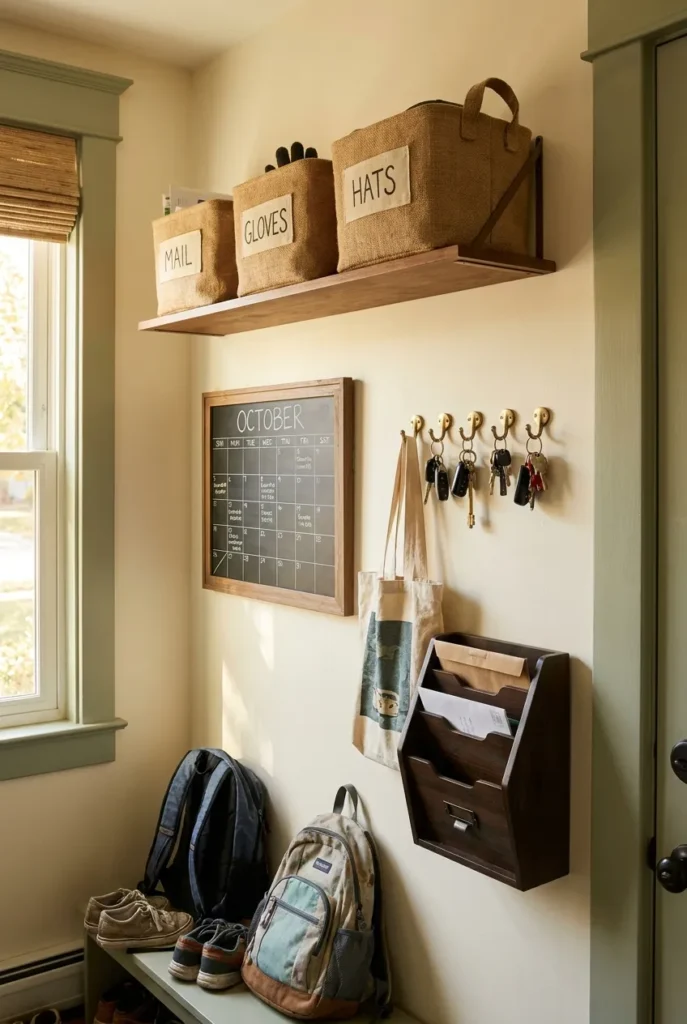
The 5-Zone Family Drop Zone Map
This is the framework we keep coming back to, and it is the backbone of the whole setup. The 5-Zone Family Drop Zone Map assigns one defined home to each of the five high-traffic items so nothing fights for the same surface. Keys go up high in a bowl or on a hook. Mail gets a single basket with a weekly purge. Shoes stay low, off the floor if you can manage it. Bags hang at the user’s shoulder height. Outerwear lives on hooks, never the bench.
Front-load this rule because it is the one that pays off fastest: give keys their own spot first. Lost keys cause more doorway panic than everything else combined, and a $6 wall hook solves it in five minutes. Start there, then build out.
Drop Zone vs. Mudroom: Are They the Same Thing?
People use these words interchangeably, but there is a real difference. A mudroom is a built-out room or alcove, often with a floor that can take a wet boot and a bench bolted to the wall. A drop zone is the lightweight cousin: a slice of wall and a bit of floor that does the same job without the construction. If you rent, or your entry is three feet of hallway, the drop zone is your version, and it works just as well.
The other quiet difference is water. A true mudroom expects mud. If your drop zone sits over carpet or hardwood, add a low-profile boot tray so melting snow and rain do not warp the floor or invite mildew underneath. The EPA notes that controlling indoor moisture is the practical way to prevent mold growth, so a $12 rubber tray earns its keep every winter EPA guidance on controlling indoor moisture and mold.
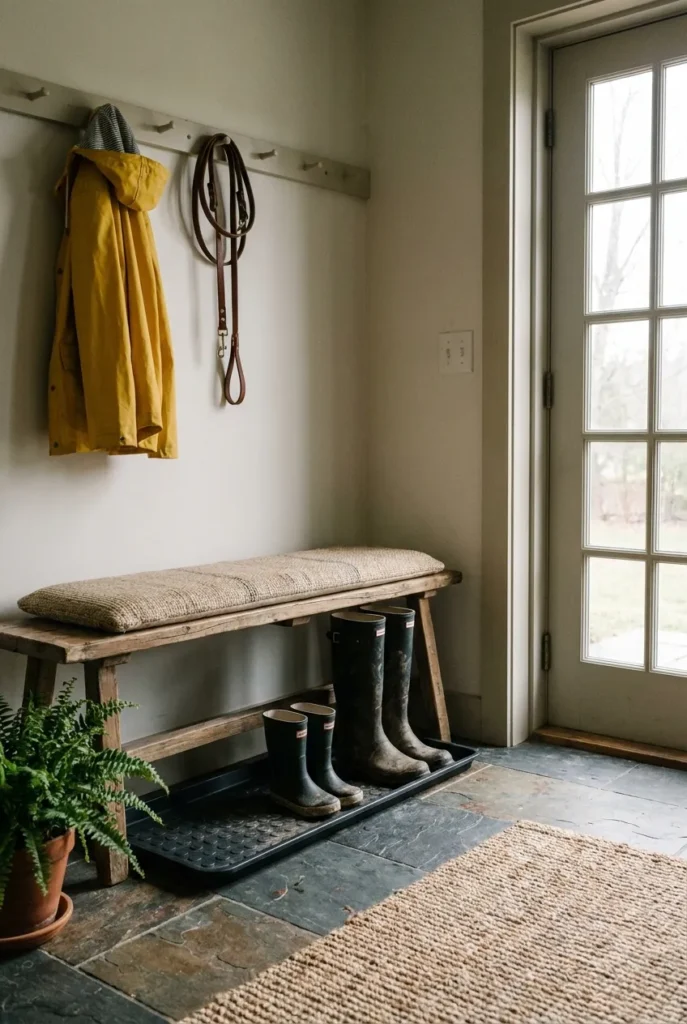
How to Set Up Your Entryway Drop Zone in One Weekend
You do not need a plan from a designer. You need a wall, a Saturday, and the willingness to put things back for the first week until the habit sets. Here is the order that works.
First, map your traffic. Stand at your door and watch one real arrival. What hits the floor? What gets dumped? That tells you your zone sizes before you buy a single bin.
Second, claim vertical space. Walls are free real estate, and going up is how small entryways win. A peg rail mounted at 60 inches for adults and a second rail at 40 inches for kids doubles your hooks without taking an inch of floor.
Third, assign the five zones using the map above. Label them if you have non-readers in the house. Photo labels work beautifully for a four-year-old who cannot read “shoes” yet but knows the picture of their sneakers.
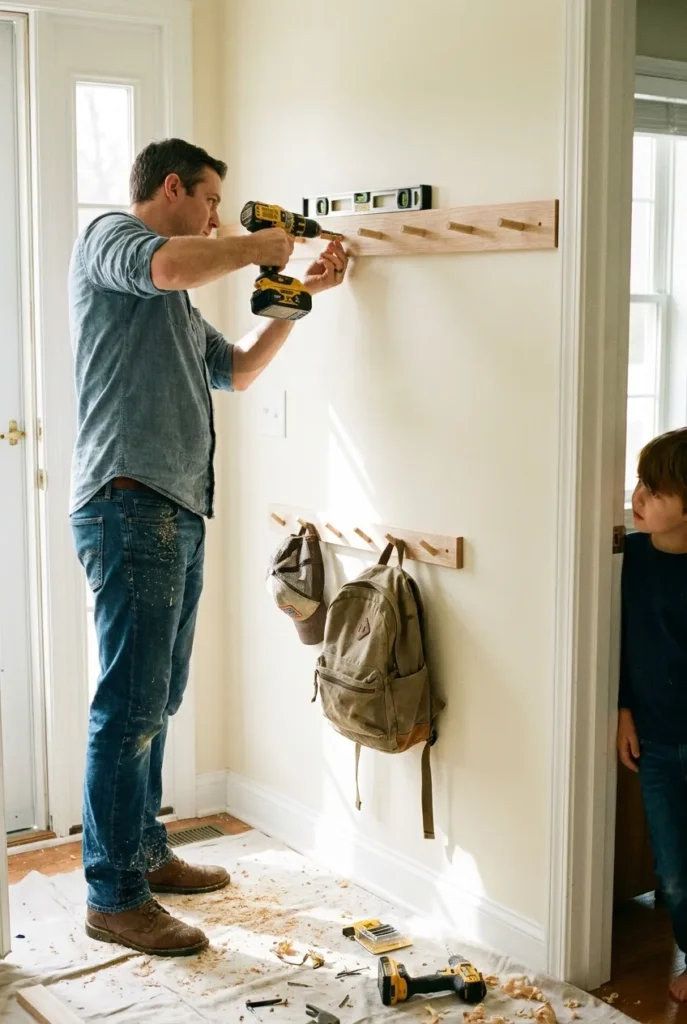
The 3-Hooks-Per-Person Rule
Here is the catch with hooks: people underestimate how many they need, then everything piles on one. The 3-Hooks-Per-Person Rule fixes that. Give every family member three dedicated hooks, one for a coat, one for a bag, one for the wildcard (a hat, a leash, a gym towel). For a family of four, that is twelve hooks, which sounds like a lot until you realize the alternative is a heap on the bench. Space them about 8 to 10 inches apart so coats do not crush each other.
This is also where IKEA earns its reputation. The IKEA Tjusig rail and the Hemnes hook strips are cheap, sturdy, and easy to mount, and the Container Store sells heavier-duty options if your zone hangs winter parkas.
Pick the Right Furniture for Your Footprint
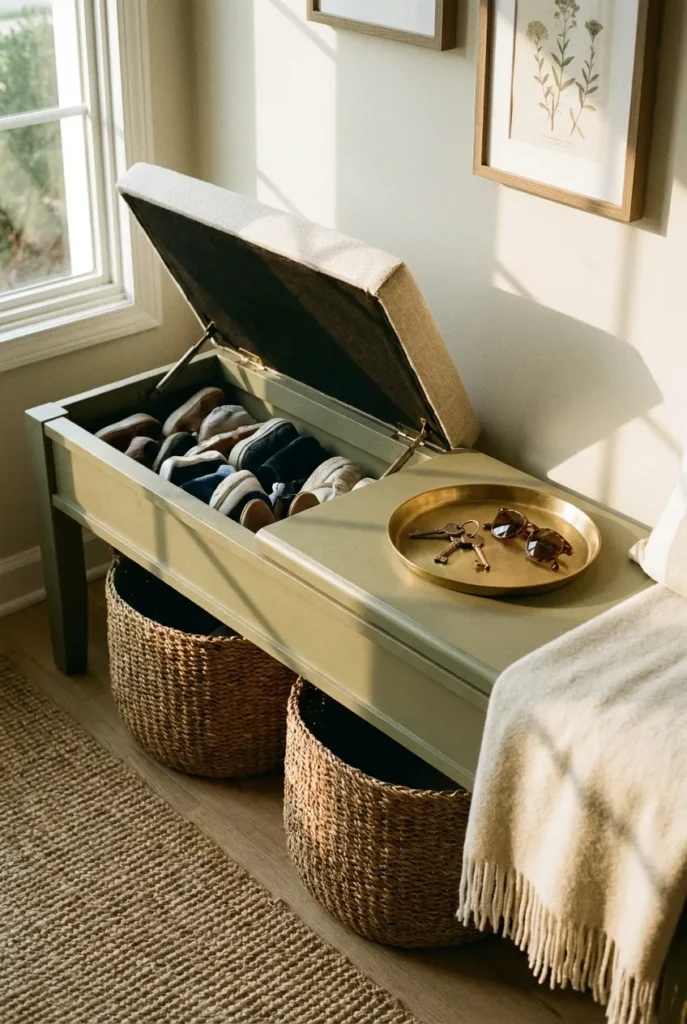
Your furniture choice comes down to inches. Measure the wall before you fall in love with a console online. A slim console between 10 and 12 inches deep fits most hallways without becoming a shin magnet. A storage bench around 16 to 18 inches deep gives you a seat for shoe-tying plus a hidden cubby underneath, and it is the best single piece for a family drop zone because it does two jobs at once.
If floor space is tight, skip the bench and go with a wall-mounted folding seat or a narrow shoe cabinet (the IKEA-style tilt-out kind runs about 7 inches deep when closed). A coat closet near your entry can absorb the overflow too, so a tidy how to organize a coat closet doubles your drop zone capacity without adding a single piece of furniture.
Small-Space and Narrow Entryway Drop Zone Ideas
Not everyone has a foyer. Plenty of us open the door straight into a living room or a three-foot hallway, and that is fine. Small spaces actually force better discipline because you cannot let the zone sprawl.
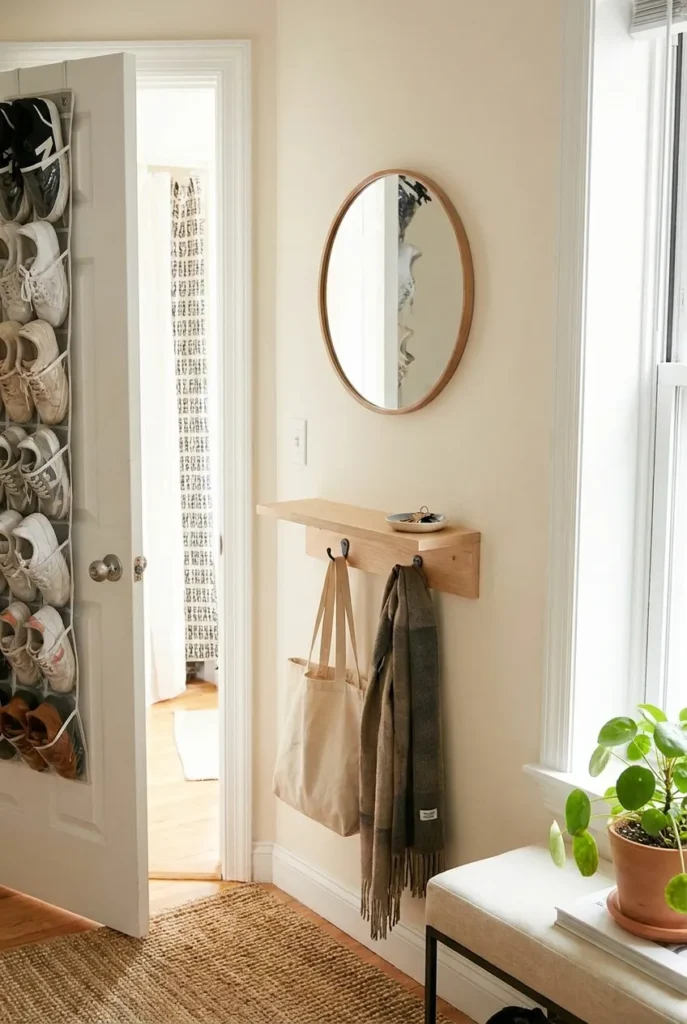
For a narrow entry, go vertical and shallow. A floating shelf with hooks underneath gives you a key drop, a mail catch, and coat hooks in a 6-inch-deep footprint. Add a slim mirror above it and the wall reads as decor, not storage, which keeps the front-of-house pretty for guests.
For an apartment with zero wall you are allowed to drill into, lean on damage-free gear. Command hooks rated for the weight of a winter coat, an over-the-door rack for shoes, and a tension rod inside a closet all set up in an afternoon and leave no holes behind. We tested five adhesive hook brands one rainy spring, and the 3M Command large-coat hooks were the only ones that held a wet raincoat without sliding down the wall by dinner.
A Renter-Friendly Drop Zone With No Drilling
This is the gap most articles skip, so here is the no-drill build start to finish. Use a freestanding shoe cabinet against the wall (no mounting), a Command-hook strip for coats and bags, a small dish or bowl on the cabinet top for keys, and a vertical letter sorter for mail. Total wall damage: zero. When you move, the hooks peel off clean if you pull the stretch-release tab straight down slowly, and your deposit stays yours.
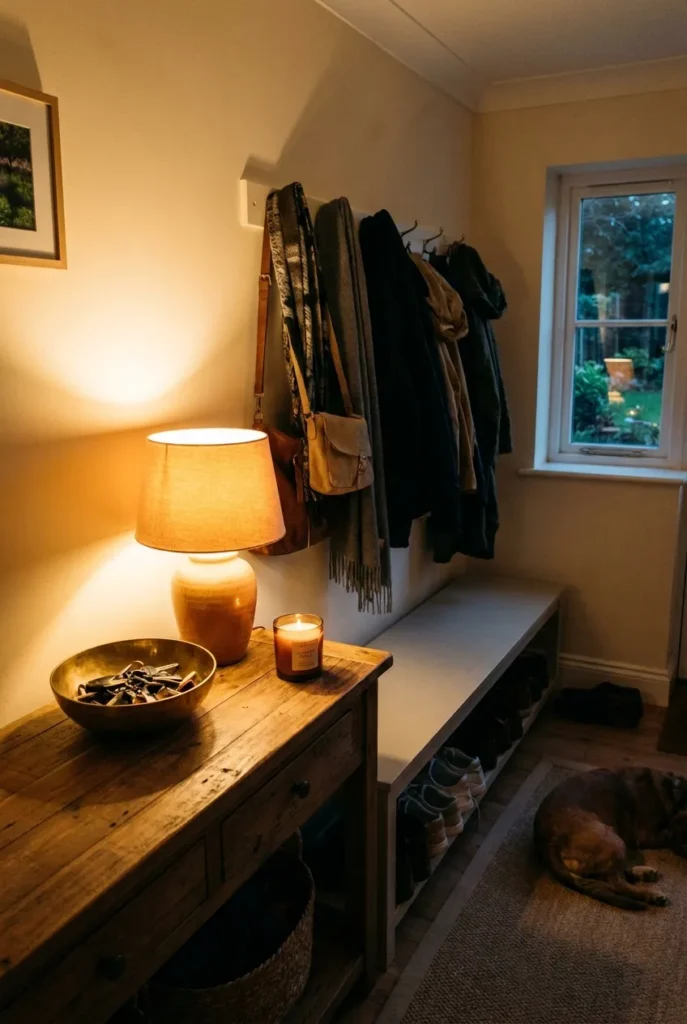
The drop zone bowl deserves a special mention here, because it is the smallest, cheapest piece and it does outsized work. One pretty ceramic bowl by the door for keys, sunglasses, and the dog tags means you stop hunting every morning. Dollar Tree and HomeGoods both carry good ones for a few dollars.
Add a Command Center to Make the Zone Earn Its Keep
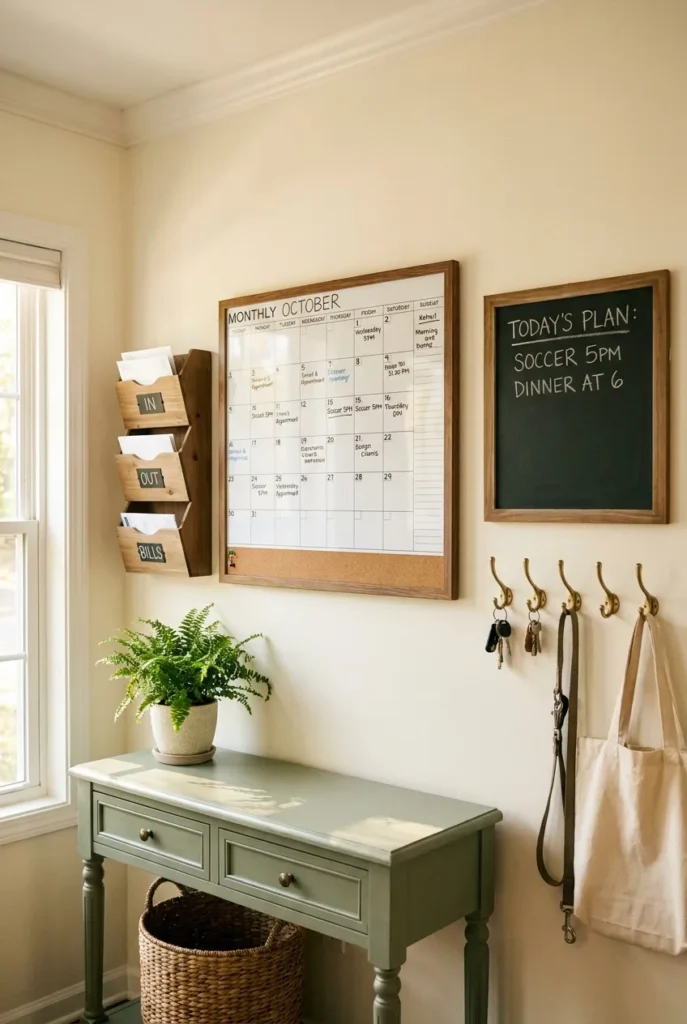
A drop zone handles things. A command center handles information, and pairing the two is where busy families really feel the difference. Mount a small wall calendar, a few mail slots, and a magnetic clip for permission slips right above the drop zone, and suddenly the spot manages your schedule, not just your stuff.
We keep a single chalkboard square for the one thing that matters that day. Soccer at 5. Dentist Thursday. It cuts the “wait, what was happening today” panic to zero. If you want the full build, our guide to a family command center wall setup walks through every piece.
Build a Kids’ Drop Zone That Survives School Mornings
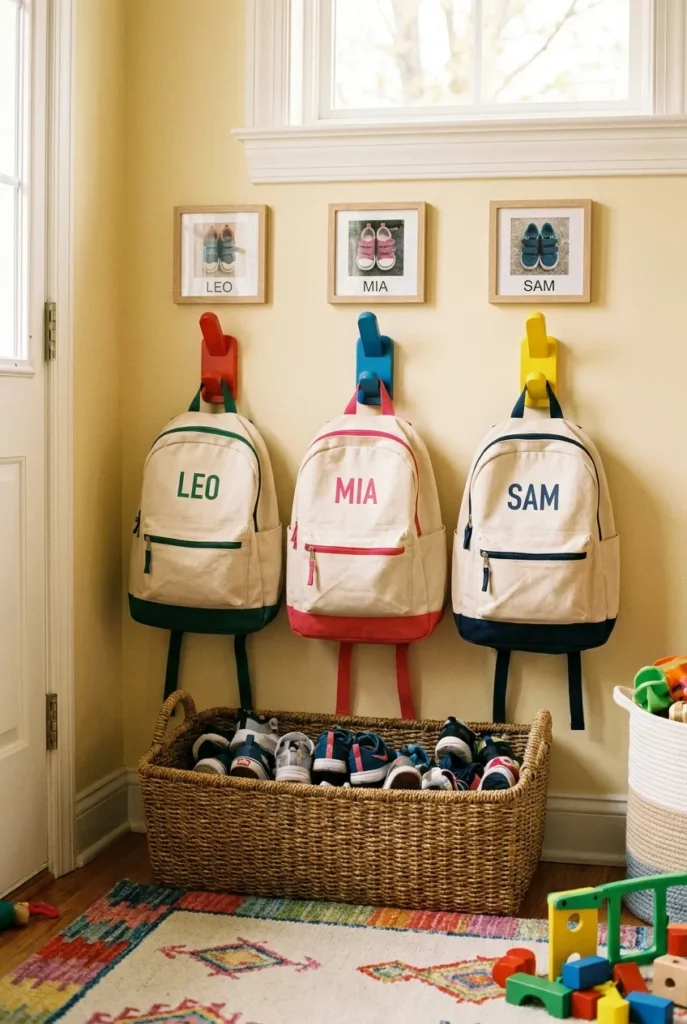
Kids need their own zone, scaled down. Hooks at 40 inches off the floor, a low bin or cubby for shoes they can reach, and a labeled spot for the backpack so it stops landing in the kitchen doorway. The trick is letting them own it. A bin they can pull out themselves at 7:40 a.m. beats a tidy system only you can run.
Backpacks are the usual chaos point, so give each kid a single dedicated backpack hook at their height and make hanging it the last step before shoes come off. If school-gear pileups are your real battle, our full backpack and school gear storage guide has the habit-building piece that makes it stick.
Style It So It Looks Like Decor, Not Storage
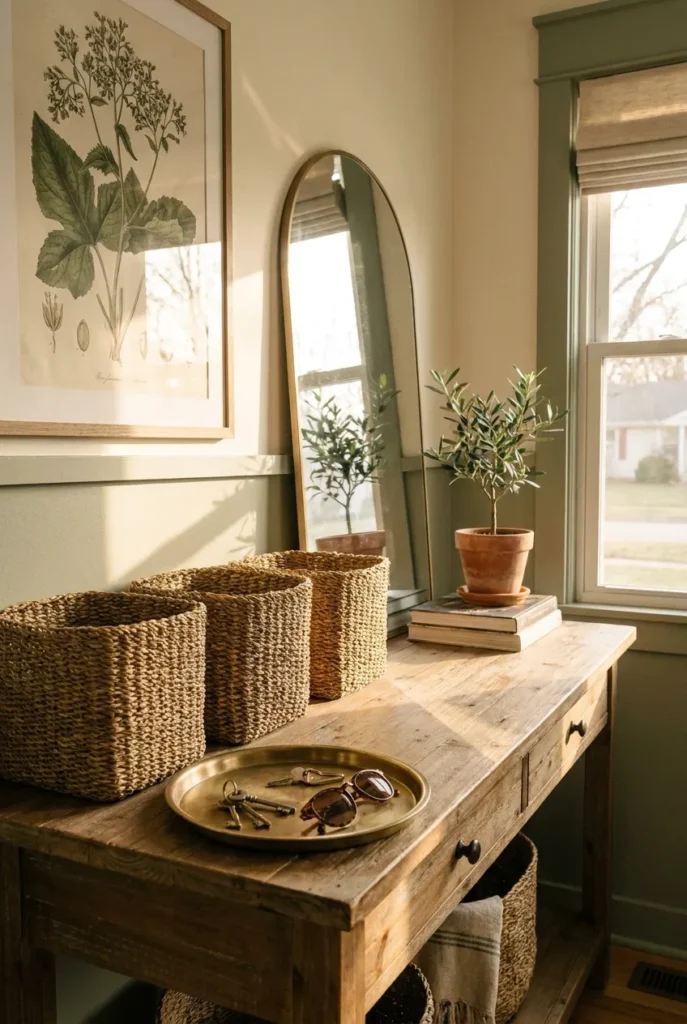
A drop zone does not have to look utilitarian. The 70/30 decorating rule helps here: aim for roughly 70 percent of the look in one calm dominant style and 30 percent in an accent, so the zone feels intentional rather than busy. In practice that means matching your baskets and going neutral on the big pieces, then adding one warm accent (a brass tray, a framed print, a small plant) for character.
Keep the top half visible and the bottom half working. Eye-level stays styled and open. Below the waist is where the baskets, bins, and shoes do their job. That balance is what makes a functional zone still photograph well for guests, which matters more than we like to admit.
Keep It From Backsliding Into a Pile
Any system fails without a tiny reset, so build one in. Once a week, clear the mail basket, return strays to their rooms, and wipe the bench. Five minutes on a Sunday keeps the whole thing humming. We also keep a flat fire-safety habit at the door: keys and a flashlight live in the same bowl, so if anyone needs to leave fast at night, they are not hunting in the dark. The NFPA stresses that a clear, known exit path matters in a home emergency, and a tidy entry is part of that NFPA home escape planning guidance
One more honest note. The zone will look perfect for about three days, then a stray grocery bag will appear. That is normal. The system is not about perfection, it is about a 30-second recovery instead of a Saturday-long dig.
FAQ
What is a drop zone at the entry?
It is a dedicated spot near your door where keys, mail, shoes, bags, and coats land on purpose instead of scattering across the house. A good one combines hooks, a basket or two, a shoe solution, and a key bowl in about two to four feet of wall.
What is the 70/30 rule in decorating?
It is the idea that a space looks pulled together when about 70 percent leans on one dominant style or color and the remaining 30 percent brings in a complementary accent. For a drop zone, that means neutral baskets and furniture with one warm accent piece for personality.
What is another name for a drop zone in a house?
People call it a landing zone, a drop station, a launch pad, or a command center when it includes a calendar and mail slots. In home listings it often shows up as a mudroom bench or a built-in cubby station near the garage.
What does “drop zone” mean in real estate?
In listings it usually refers to a built-in storage station, often a bench with cubbies and hooks near the garage or back entry, marketed as a spot for the family to drop bags, shoes, and coats on the way in.
How do I create a drop zone in a small apartment without drilling?
Use a freestanding shoe cabinet, a Command-hook strip for coats and bags, a vertical letter sorter for mail, and a small bowl for keys on the cabinet top. The whole thing sets up in an afternoon and leaves no holes behind when you move.
Where should I put the family calendar?
Mount it right above the drop zone at adult eye level so it becomes part of the in-and-out routine. Pairing the calendar with the spot where keys and mail already land means people actually look at it.
Conclusion
Your morning does not have to start with a search party for keys. An entryway drop zone gives every item a home, scales to your whole family with the 5-Zone Map and the 3-Hooks-Per-Person Rule, and sets up in a single weekend with tools you probably already own. Start with the keys, claim a little wall, and let the habit do the rest.
So, what is the one thing that always goes missing at your door? Pick that item, give it a home this weekend, and let us know how the first clutter-free morning feels.
General information only. Product and safety details vary by manufacturer, so check the label, and consult a qualified professional for any installation or rental-agreement questions.