
How to Organize a Home Office in a Small Bedroom Corner
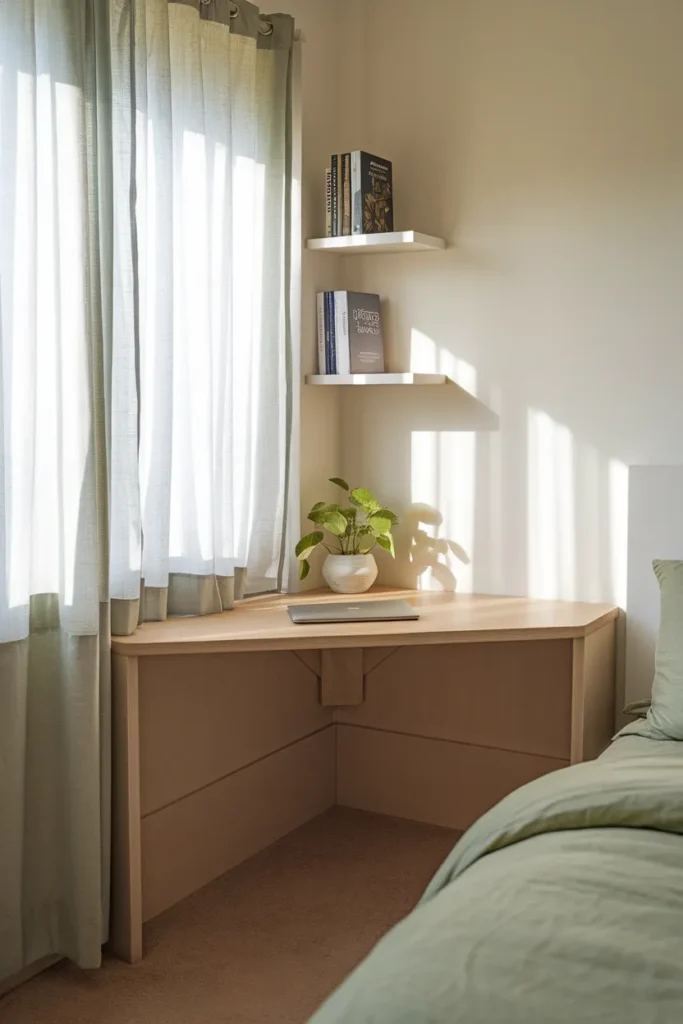
You do not have a spare room. What you have is a corner. Maybe it is the gap between the window and the closet, or that dead triangle beside your bed where a laundry pile currently lives. Good news: that corner is enough. Small bedroom office organization is not about square footage. It is about giving one tight space a clear job and a system that holds up on a Tuesday when you are tired.
Here is the promise. By the end of this post you will have a five-zone plan, a no-drill setup renters can copy, and a two-minute shutdown routine that keeps work from creeping into your sleep. No renovation. No matching furniture set. Just a corner that finally works.
Let me be honest about why the corner matters. A cluttered workspace does not only look busy. Research shared by the American Psychological Association links clutter to higher stress and lower focus, which is the last thing you want six inches from your pillow. So we organize for calm, not just for looks.
Start by Measuring the Corner (Not Shopping)
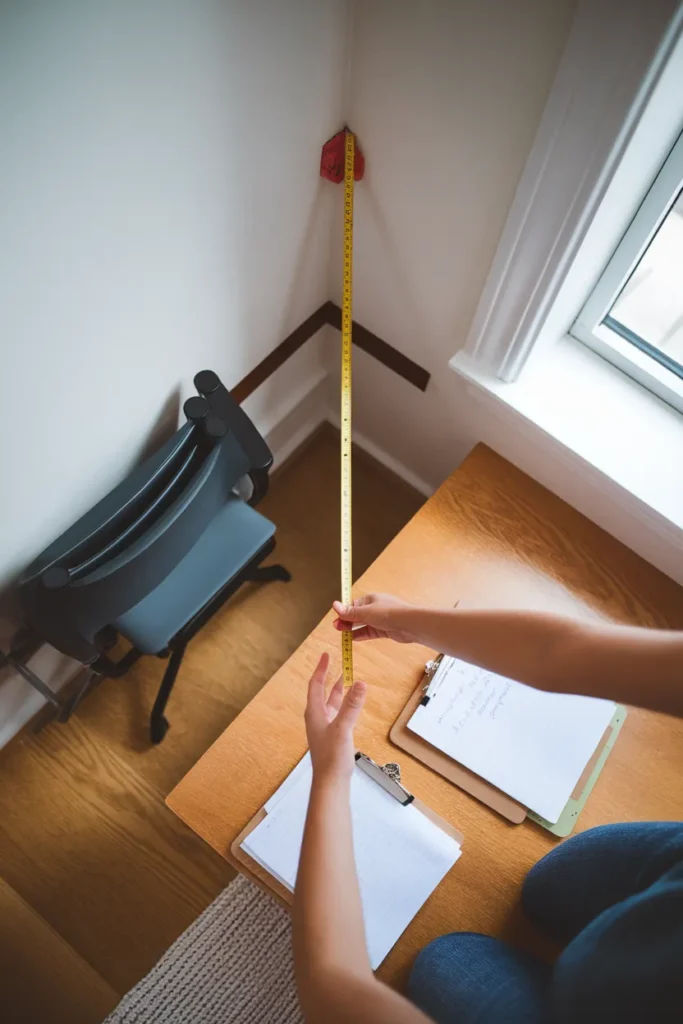
Before you buy a single bin, grab a tape measure. Most small bedroom office regret starts with a desk that was two inches too deep. Measure the wall length on both sides of the corner, the depth you can give up without blocking a door or drawer, and the height to the bottom of the window.
A desk between 36 and 42 inches wide fits most bedroom corners. Keep desk depth to 20 inches if the room is tight, since a 24-inch desk eats walking space fast. Leave at least 30 inches of clear floor behind the chair so you can actually push back and stand.
The Visible Top Half Test
Here is a quick rule I lean on, and I am naming it so you remember it: The Visible Top Half Test. Stand where you sleep and look at the corner. Everything in the top half of your sightline (shelf, wall, desktop) should read as calm and mostly empty. The bottom half (under the desk, inside bins) is where the busy stuff hides. Pass this test and the corner will feel restful even on a working night.
The 5-Zone Corner System
Most ranking articles hand you a pile of ideas. What they skip is a system, so here is mine. Think of your corner in five zones, and give every item a home inside one of them. I call it The 5-Zone Corner System: Work Surface, Vertical, Under-Desk, Daily Carry, and Deep Storage. Two sentences to anchor it: each zone holds one category of stuff, and nothing lives in two zones at once. When something drifts, you know exactly where to put it back.
Zone 1: The Work Surface
Your desktop is prime real estate, so treat it like it. Keep only what you touch daily: laptop, one notebook, a pen cup, and a small plant if it makes you happy. A tray corrals the tiny stuff (charger, earbuds, lip balm) so wiping the surface takes five seconds. If you can only change one habit, make it this: clear the desktop before you shut down each night.
Zone 2: Vertical
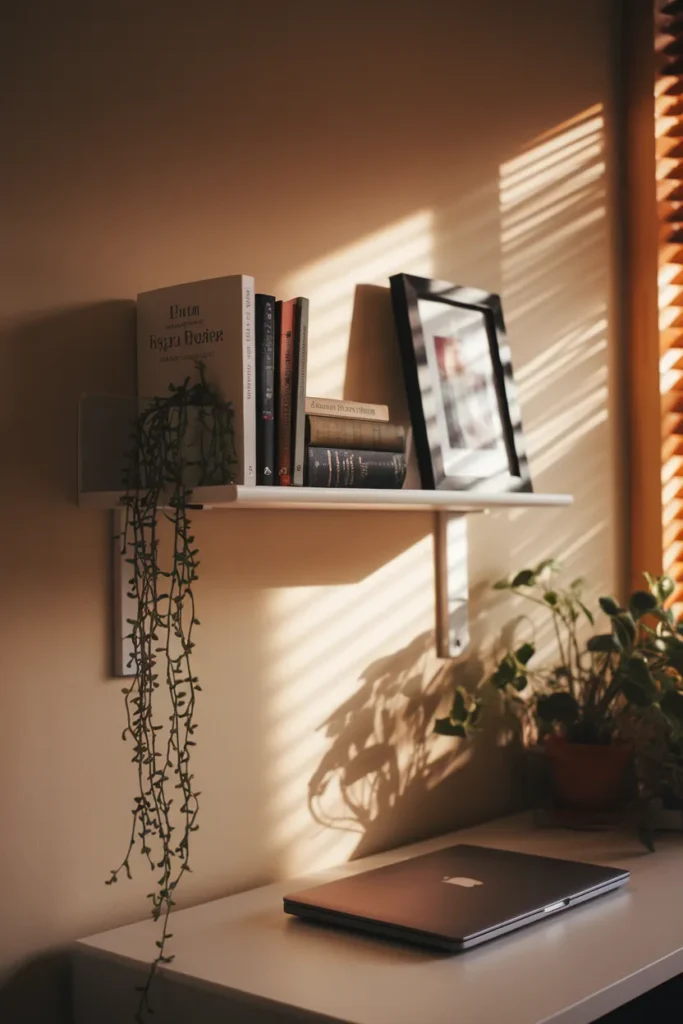
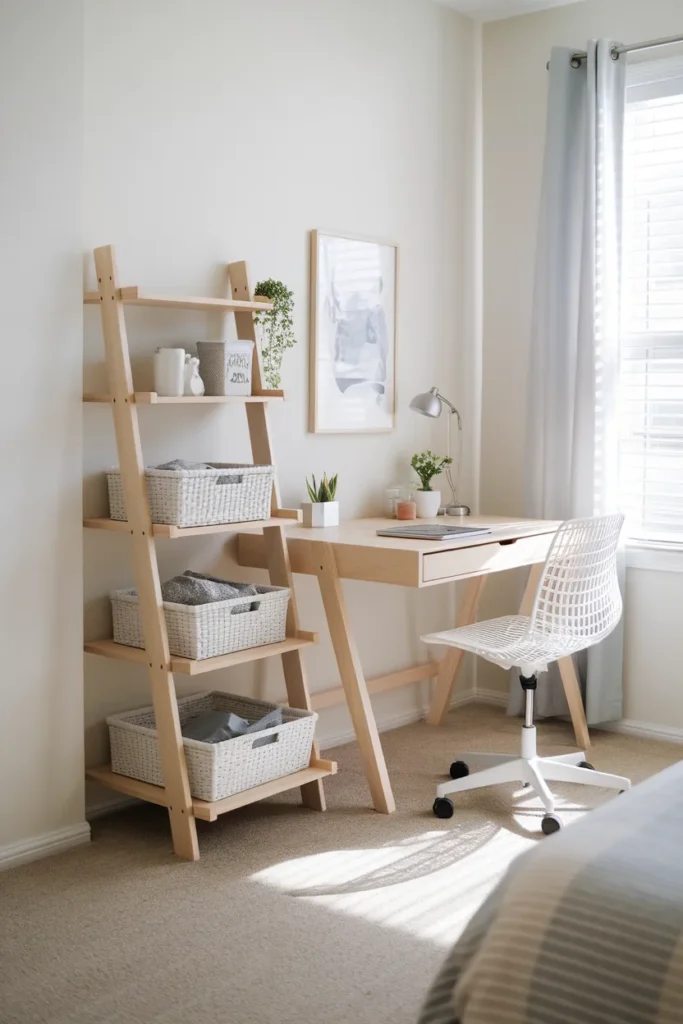
Floor space is the thing you do not have, so climb the wall. A single floating shelf 12 to 16 inches above the desk holds books, a small speaker, and a photo without crowding your elbows. Renters, do not panic about drilling. A tension-mounted shelf or a leaning ladder shelf beside the desk gives you the same lift with zero holes. For loose supplies, over-the-door organizers turn the back of your bedroom or closet door into hidden storage you forgot you had.
Zone 3: Under-Desk
The space under the desk is your workhorse, and it is usually wasted. A three-tier rolling utility cart (the IKEA Raskog is the classic, around $35) tucks under one side and rolls out when you need it. Use it for a printer, files, or craft supplies. On the other side, a soft storage ottoman doubles as a footrest and hides cables and notebooks inside.
Zone 4: Daily Carry
This is the small stuff that follows you around: keys, glasses, the charger you always lose. Give it one bowl or one shallow tray on the desk corner nearest the door side. When daily carry has a fixed landing spot, your desktop stops collecting random pocket clutter.
Zone 5: Deep Storage
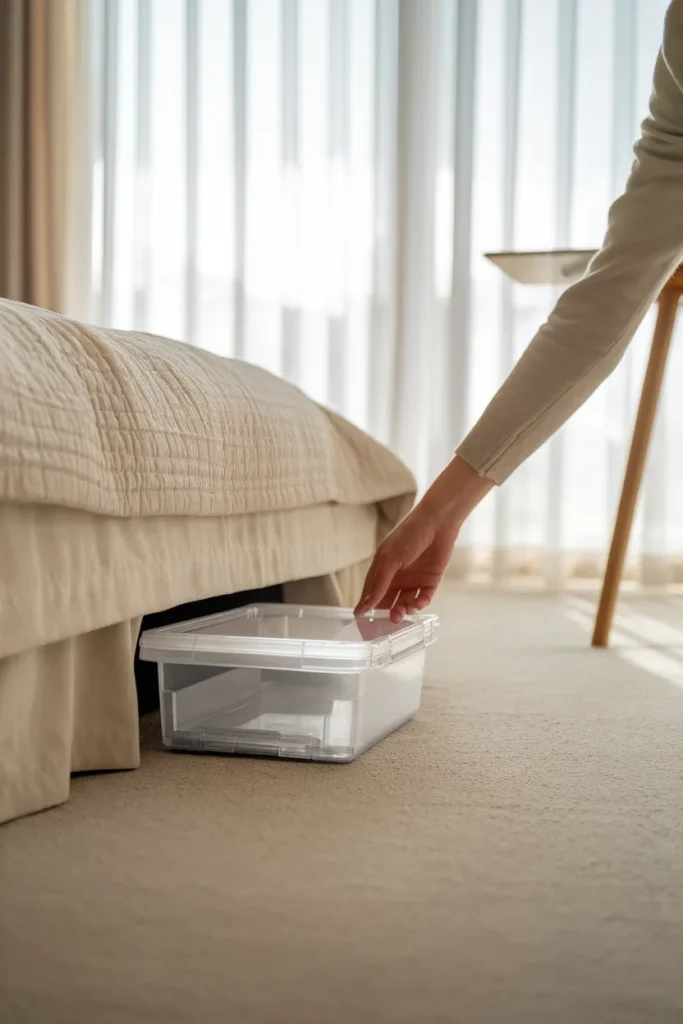
Anything you touch less than once a week does not belong in the corner at all. Under-bed bins are perfect here. Slide flat, lidded bins under the bed for backup supplies, seasonal files, and that ream of printer paper. If you also want a quiet spot to unwind in the same room, you can carve out a reading nook in the same room without stealing from your work zone.
No-Drill Setup for Renters
If your lease says no holes, your corner office is still very doable. Lead with damage-free options and you keep your deposit and your workspace.
Start with a freestanding desk that needs no mounting, then add a leaning ladder shelf for vertical storage. Use adhesive cable clips (the removable kind) to run cords along the desk leg instead of the wall. A tension rod inside the closet or across the corner can hold an S-hook caddy for headphones and a small basket. For the door, a hang-over-the-top hook rack needs zero hardware.
Honestly, the renter version often looks cleaner, because leaning and freestanding pieces read lighter than a wall full of brackets. To fill out the corner cheaply, a handful of budget desk organizers under $25 do most of the heavy lifting.
Cable Management That Stays Hidden
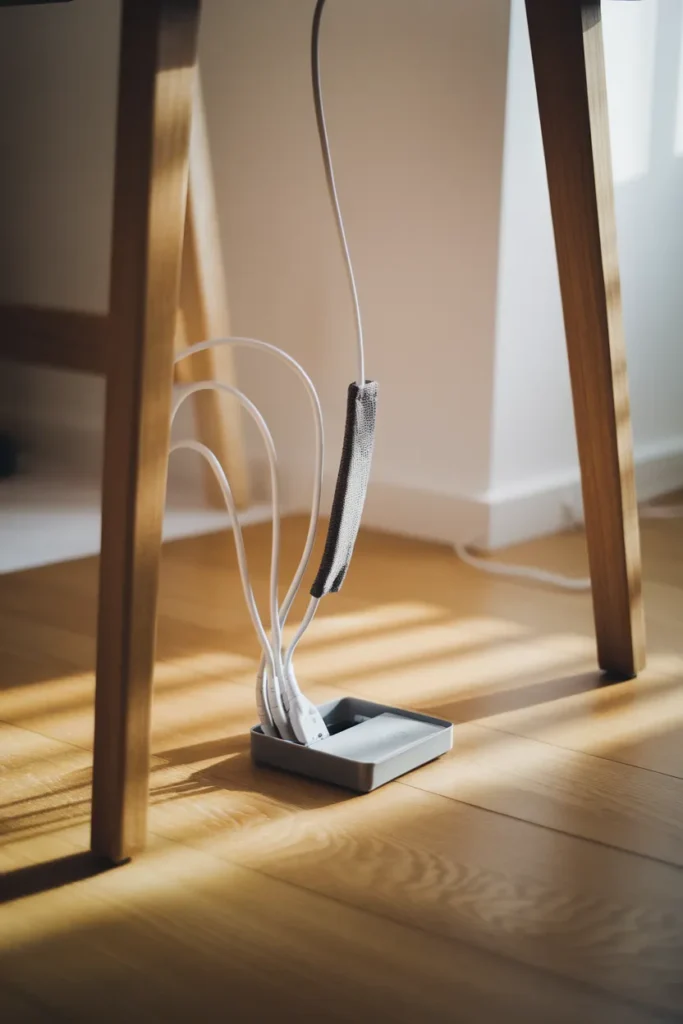
Cords are what make a small corner look chaotic, and they are the easiest fix. Bundle the power strip and adapters into a cable management box that sits on the floor behind the desk leg. Run the remaining cables up one leg with a fabric cord sleeve or a few adhesive clips. Keep only the charger you use daily on the desktop, and coil the rest.
One quick safety note that doubles as a comfort tip: how you sit matters as much as how you store. OSHA’s guidance on good working positions recommends keeping your head and torso upright and your forearms roughly parallel to the floor, which is worth checking once your desk is in place.
Choosing a Desk for a Tiny Corner
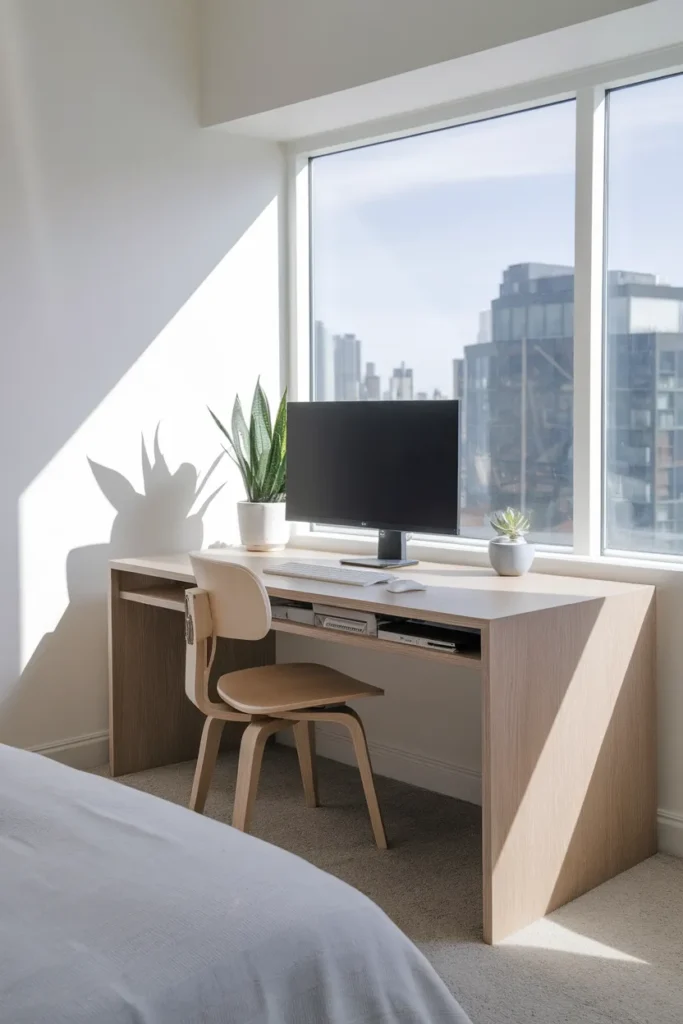
The right desk shape changes everything in a corner. A true corner (L-shaped) desk uses the angle and gives you the most usable surface, but it can feel bulky in a bedroom. A slim rectangular desk pushed into the corner reads lighter and is easier to move. A wall-mounted drop-down desk folds flat when you are done, which is the ultimate small-space trick if you can mount it.
Match the desk finish loosely to your nightstand or bed frame so the corner feels intentional, not tacked on. It does not have to match perfectly. Warm wood tones photograph beautifully and hide fingerprints better than glossy white (to be fair, glossy white does look crisp in a bright room).
A Quick Desk Comparison You Can Screenshot
| Desk type | Best for | Footprint | Watch out for |
|---|---|---|---|
| Slim rectangular | Renters, tight corners | Small | Less surface area |
| L-shaped corner | Dual monitors, paperwork | Medium to large | Can dominate a small room |
| Drop-down wall desk | Rooms with almost no floor | Tiny when folded | Needs wall mounting |
| Secretary desk | Hiding clutter fast | Medium | Interior is often shallow |
Lighting the Corner So You Can Actually Work
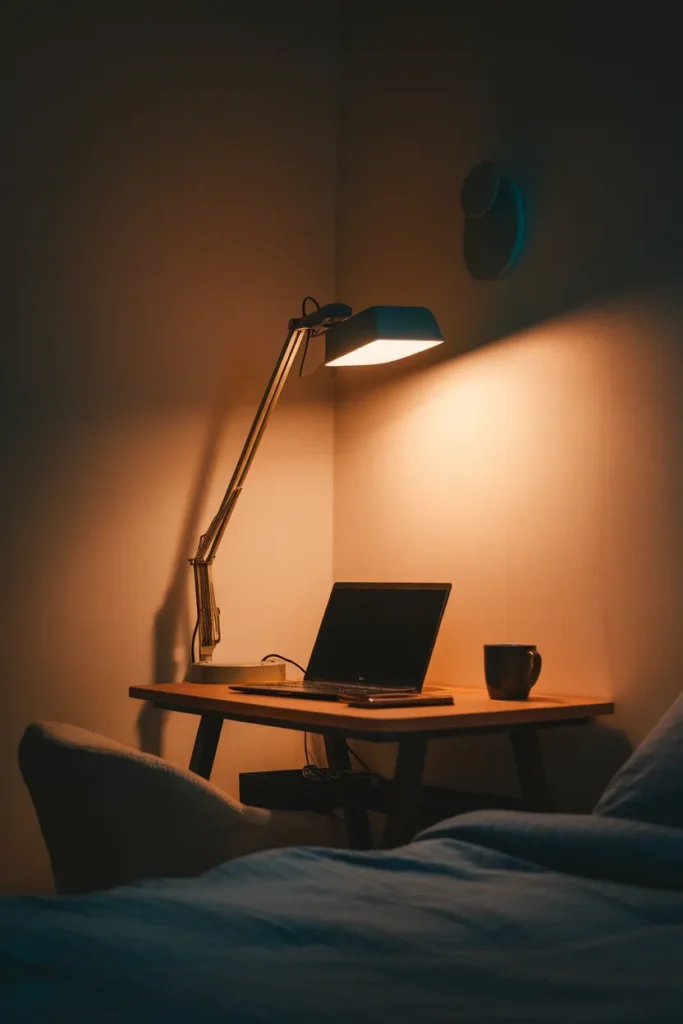
A dark corner feels smaller and strains your eyes at night. You want two light sources: a task light for focus and a soft ambient light so the corner does not turn into a spotlight next to a dark room. A small clamp lamp saves desktop space and points exactly where you need it. Warm bulbs (around 2700K to 3000K) keep the bedroom feeling restful even while you work.
Skip the harsh overhead-only setup. A cord-free wall sconce or a stick-on puck light gives renters ambient glow with no wiring at all.
Keeping Work From Bleeding Into Sleep
This is the part the decor listicles skip, and it might be the most important one. When your office is in your bedroom, your brain needs a clear signal that the workday is over. Without it, you scroll spreadsheets at 11 p.m. and wonder why sleep is bad.
The fix is a routine, not a wall. Try what I call the two-minute shutdown: clear the desktop, close the laptop, park daily-carry items in their tray, and switch off the task lamp so only the ambient light stays. That small sequence tells your body the corner is asleep too.
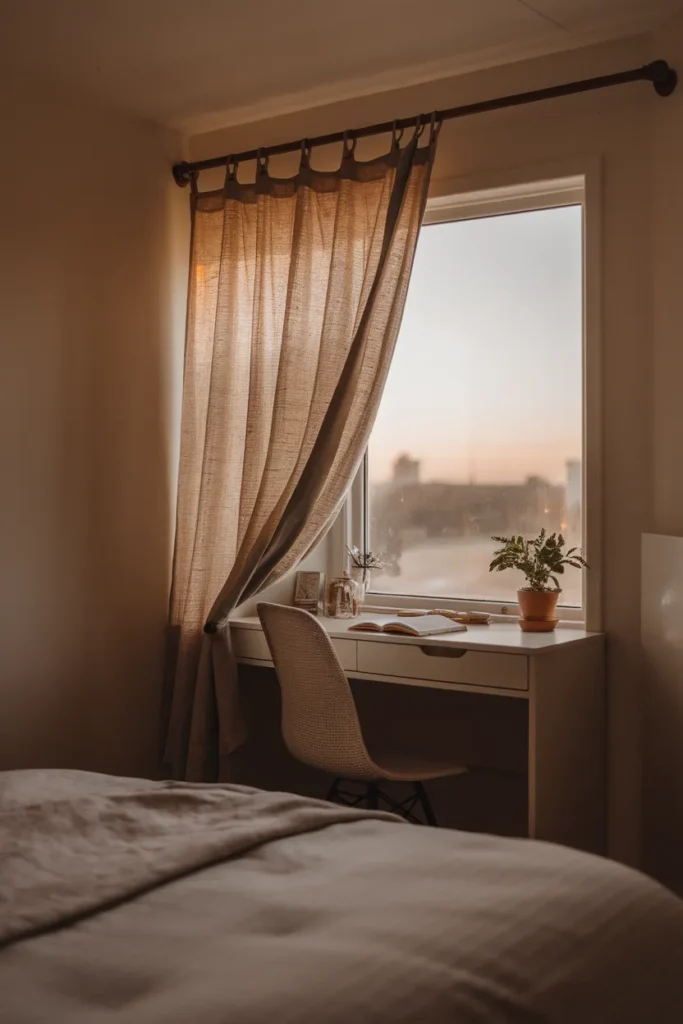
If the desk is still visible from bed and it bugs you, drape a simple linen curtain on a tension rod to hide the corner at night. Out of sight, genuinely out of mind.
A Realistic Weekly Reset
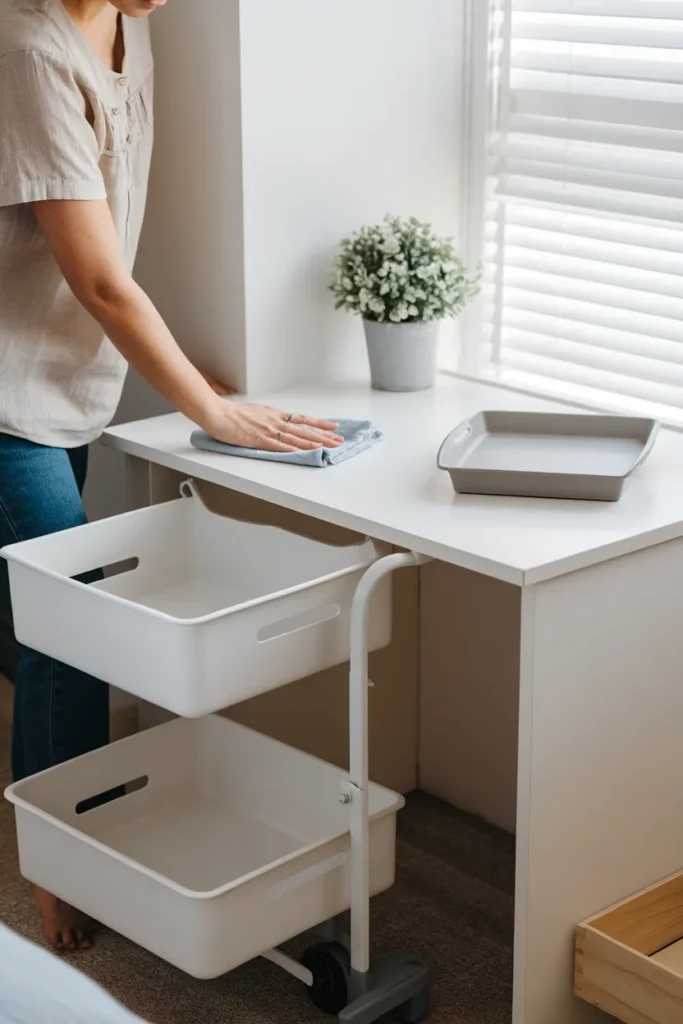
Systems drift, so build in one small reset. Once a week, spend ten minutes on the corner: clear the surface fully, wipe it down, empty the daily-carry tray, and return anything that wandered to its zone. Refill the rolling cart if supplies ran low. That is the whole maintenance plan.
Do this on the same day each week and the corner never spirals. Sunday evening works for a lot of people because it sets up a calm Monday.
Small Bedroom Office Organization Frequently Asked Questions
How do I fit a desk in a small bedroom without it feeling cramped?
Push a slim rectangular desk (20 inches deep or less) into the corner and go vertical for storage so the floor stays open. Keep at least 30 inches of clear space behind the chair, and choose a light finish that visually recedes.
What is the best desk for a small bedroom office combo?
For most small bedrooms, a slim rectangular desk or a wall-mounted drop-down desk works best because both keep the footprint tiny. An L-shaped corner desk gives more surface for dual monitors but can dominate the room.
How can I set up a bedroom office without drilling holes?
Use a freestanding desk, a leaning ladder shelf, removable adhesive cable clips, an over-the-door organizer, and a tension rod for a hanging caddy. All of it comes down with no wall damage, which protects a renter’s deposit.
Where should I store office supplies in a small bedroom?
Split them by how often you use them. Daily items go on the desktop or a rolling cart, weekly items go on a shelf or in the cart, and rarely-used backups go in under-bed bins so they leave the corner entirely.
How do I stop work from taking over my bedroom?
Use a two-minute shutdown routine each night: clear the desk, close the laptop, and switch off the task lamp. If the desk still distracts you from bed, hide the corner behind a linen curtain on a tension rod.
Is a corner office enough for working from home full time?
Yes, if you set it up ergonomically and keep it organized. Follow basic guidance on good working positions, add proper task lighting, and use the five-zone system so the small space stays functional all day.
Your Corner Is Ready to Work
You do not need a bigger place. You need one corner with a clear job, five zones, and a two-minute habit that keeps it calm. Start with the tape measure today, set up the work surface and vertical zones this weekend, and let the rest fall into place.
Which zone are you tackling first? Save this post, pin your favorite setup, and come back to it when you are ready to build your corner. You have got this.