

Shoe Storage Ideas: 10 Ways to Organize Shoes in Any Space
You walk in the door, drop your bag, and there it is again. A puddle of sneakers, boots, and that one flip-flop whose partner vanished three weeks ago. The rug has dirt smudges, the wall has scuff marks, and you’ve started kicking shoes under the console table just to see the floor.
We’ve all been there. Good news: you do not need a custom closet or a $4,000 mudroom build to fix it.
These shoe storage ideas are organized by room zone, with budget, mid-range, and splurge picks inside each one, so you can match the fix to the space you actually have. Every idea answers what it is, why it works, and how to set it up tonight.
Who This Post Is For
- Renters who can’t drill into walls or change baseboards
- Small-space dwellers working with entryways under 4 feet wide
- Homeowners ready to commit to a built-in solution
- Budget-conscious organizers who want results without HomeGoods regret
- Style-minded readers who lean Organic Modern, Japandi, or Modern Farmhouse and refuse to settle for a plastic over-the-door pocket organizer that yellows in six months
If you fit any of these, keep reading. There’s a fix in here for you.
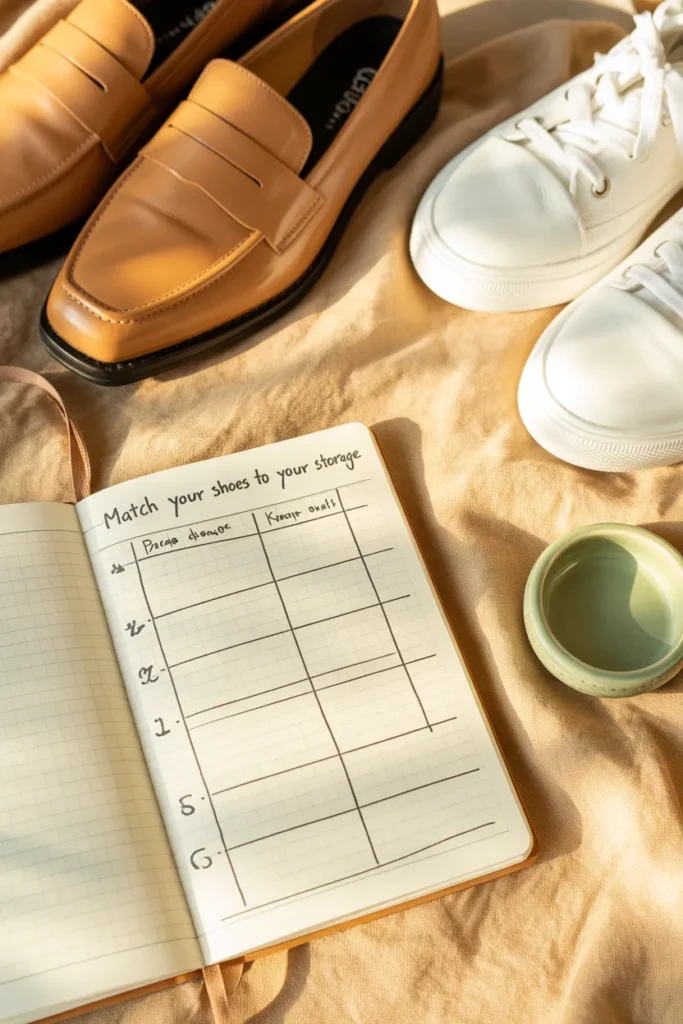
Match Your Shoe Count to the Right Storage Style (Original Framework)
Before you buy anything, count your pairs. The right storage style depends almost entirely on collection size.
| Pairs You Own | Best Storage Style | Where It Lives |
|---|---|---|
| Under 10 pairs | Single bench with cubbies or one slim cabinet | Entryway only |
| 10 to 30 pairs | Two-zone system: daily shoes by the door, off-season in the closet | Entryway + closet |
| 30+ pairs | Display wall, dedicated shoe closet, or floor-to-ceiling cabinet | Walk-in closet or guest closet |
| 50+ pairs | Custom built-in or boutique-style shoe room | Dedicated room or large walk-in |
Screenshot this. It will save you from buying a 20-cubby rack for a 12-pair collection (or a 4-pair bench for a sneakerhead).
1. Slim Shoe Cabinets for Tight Entryways
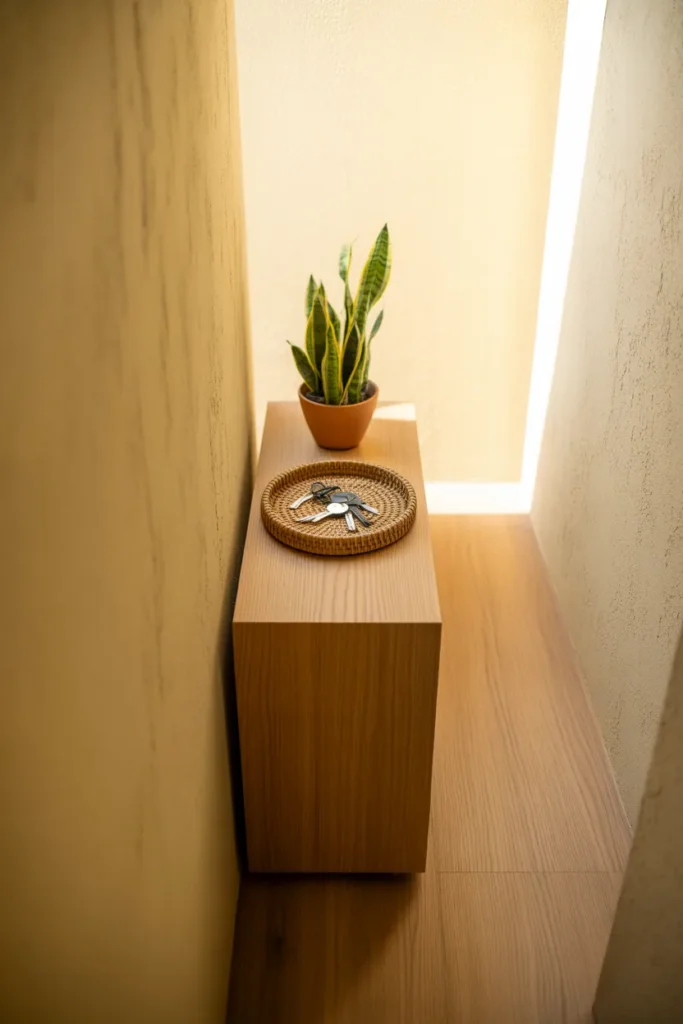
What it is: A shallow, tilt-out cabinet (usually 9 to 11 inches deep) that hugs the wall and holds 12 to 24 pairs vertically.
Why it works: Most entryways lose 18+ inches to a clunky bench or open rack. A slim cabinet reclaims that floor depth, hides the mess behind a clean door, and gives you a flat top surface for keys, mail, and a small lamp. This is the single highest-impact swap for small entryways under 4 feet wide.
How to do it:
- Budget ($25 to $100): IKEA’s BISSA shoe cabinet (about $79, two compartments, 9.5-inch depth) is the workhorse pick. It fits entryways as narrow as 30 inches.
- Mid-range ($100 to $300): Target’s Threshold three-drawer shoe cabinet in oak veneer, around $180. Better hardware, soft-close hinges.
- Splurge ($300+): West Elm’s Mid-Century shoe cabinet in walnut, around $599. Real wood, brass pulls, looks like a credenza.
Renter-friendly flag: No drilling required. Just slide it against the wall.
2. Built-In Bench with Hidden Cubbies
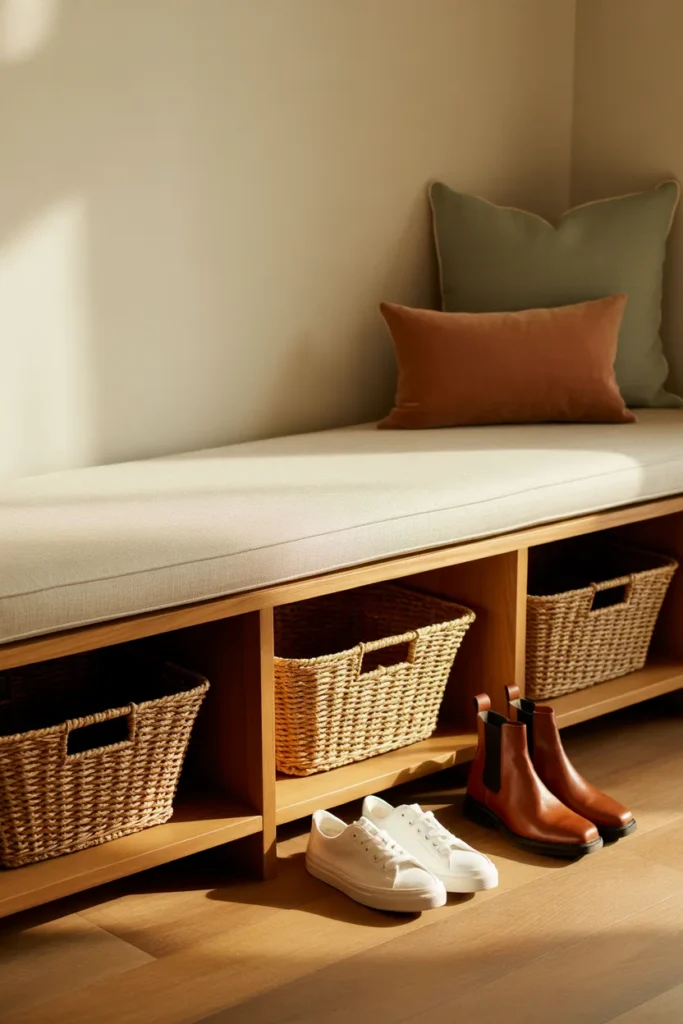
What it is: A bench seat with shoe cubbies tucked underneath, usually 16 to 20 inches deep and 36 to 60 inches wide.
Why it works: It solves three problems with one piece. You sit to take shoes off, you store them where you took them off, and you get a flat top for a basket of scarves or a planter. This is the format that ranks highest in Pinterest entryway saves because it photographs beautifully.
How to do it:
- Budget: IKEA KALLAX 2×2 turned on its side ($60), topped with a $20 cushion from Amazon. Done.
- Mid-range: Target’s Threshold storage bench, around $150, with three open cubbies and a linen-look top.
- Splurge: Pottery Barn’s Samantha entryway bench at around $899, solid wood with a real upholstered seat.
Pro tip from my own entryway: I lined the cubbies with cheap cork shelf liner from Walmart ($8) so the wood doesn’t scratch when I shove sneakers in. Zero scuffs after eighteen months.
3. Vertical Wall-Mounted Shoe Display
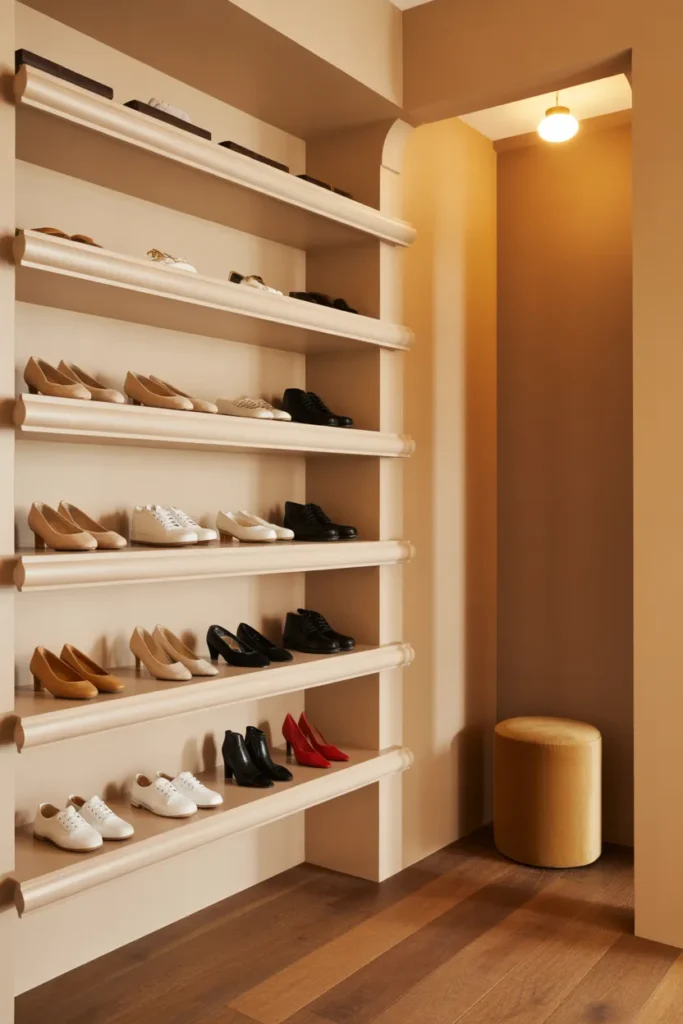
What it is: Floating shelves or angled wall ledges (usually 4 to 6 inches deep) that turn shoes into wall art.
Why it works: Floor space costs the most in any home. Wall space is free. By going vertical, you can store 15 to 40 pairs on a single wall without sacrificing a square inch of walking room. This works especially well in walk-in closets and bedroom corners.
How to do it:
- Use 4-inch picture ledges (IKEA MOSSLANDA, $15 each) mounted 10 inches apart vertically.
- Anchor into studs or use heavy-duty drywall anchors rated for 25+ pounds. Per the U.S. Consumer Product Safety Commission, wall furniture and shelving should always be anchored to prevent tip-over hazards, especially in homes with kids.
- Stagger heels and flats for visual rhythm. Mix textures (suede beside leather beside canvas).
For more wall-based storage that frees up your floor, our guide to vertical storage tricks breaks down how to layer shelving in any room.
Best for: 30+ pair collections. Skip if you only own 8 pairs. It will look sparse.
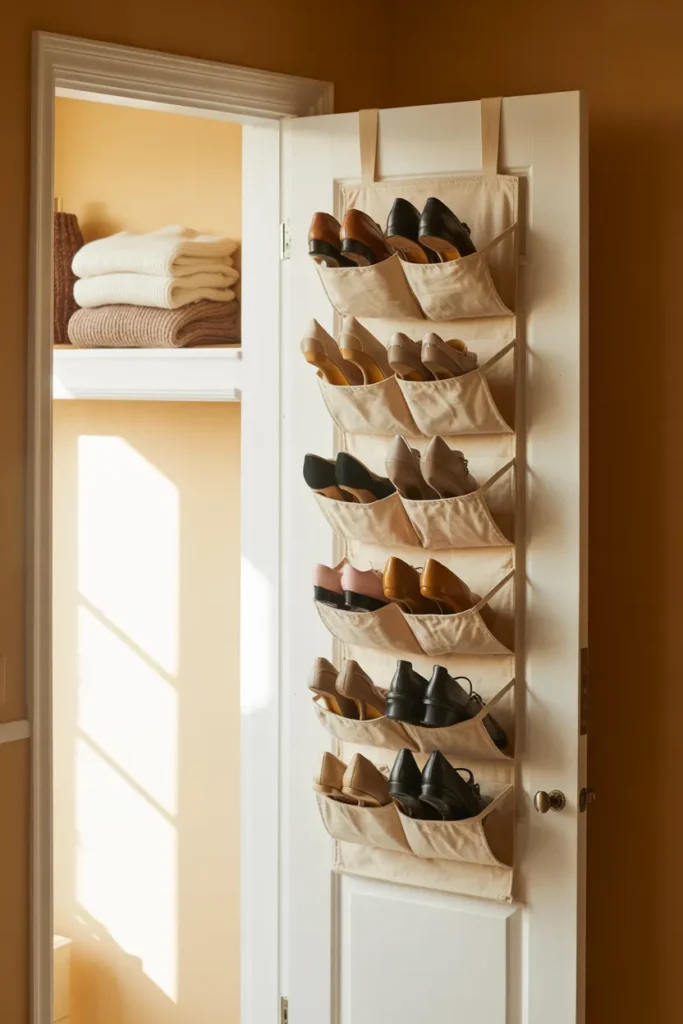
4. Over-the-Door Organizer (the Non-Ugly Version)
What it is: A fabric or metal organizer that hangs on a closet door using over-the-top hooks.
Why it works: It uses the dead 7 square feet of a closet door that’s doing nothing for you. You can store 12 to 24 pairs without losing any floor or shelf real estate.
How to do it:
- Skip the cheap clear vinyl ones. They yellow, crack, and look terrible. Get a felt or canvas version instead.
- The Container Store’s natural canvas over-the-door organizer (around $35) holds 16 pairs and looks like a piece of furniture compared to the plastic ones.
- For sneakers and bulky boots, choose the version with deeper pockets (5 inches+).
Renter-friendly flag: Zero drilling, zero damage, removes in 10 seconds.
5. Clear Stackable Shoe Boxes for Closet Floors
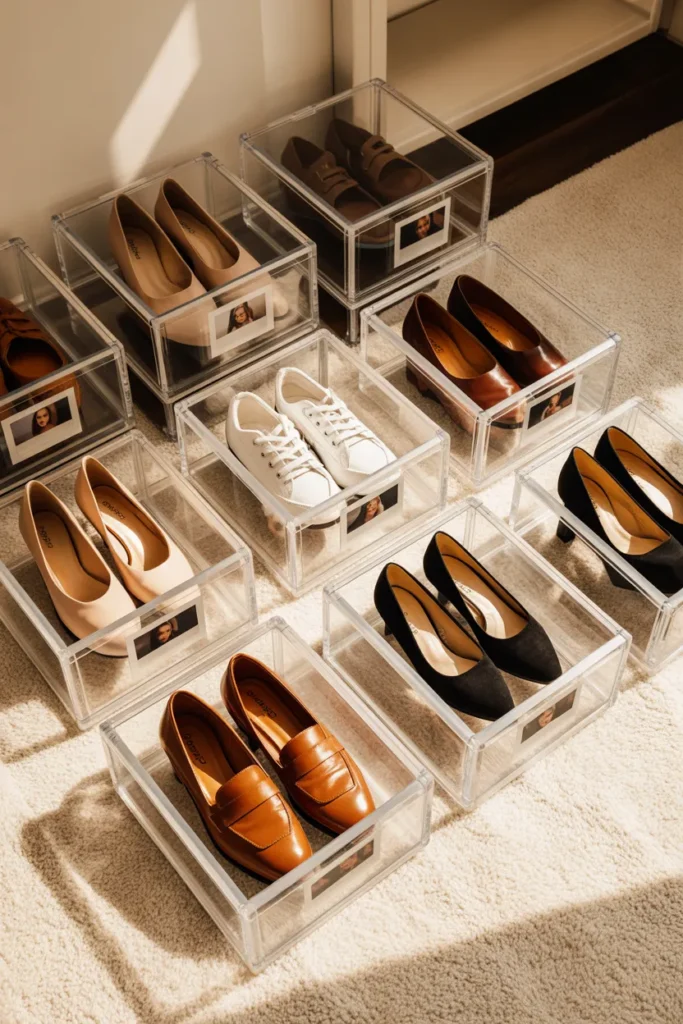
What it is: Stackable plastic boxes with drop-front lids, sized to fit one pair of shoes each.
Why it works: They protect shoes from dust and pet hair, let you see what you own, and stack 6 high without crushing the pair on the bottom. This is the best long-term storage option for shoes you wear seasonally.
How to do it:
- Budget: Amazon Basics drop-front boxes, around $32 for 6.
- Mid-range: The Container Store’s Stackable Drop-Front Shoe Box, around $7 each, sturdier hinge.
- Splurge: OXO Good Grips clear shoe drawer, around $20 each, the gold standard.
Add a silica gel pack to each box if you live in a humid climate. Leather and suede mold faster than people realize.
Storage tip: Snap a phone photo of each pair and tape it to the front of the box. Faster than label makers, and you don’t have to read tiny text at 6 a.m.
6. Under-Stair Shoe Cubbies
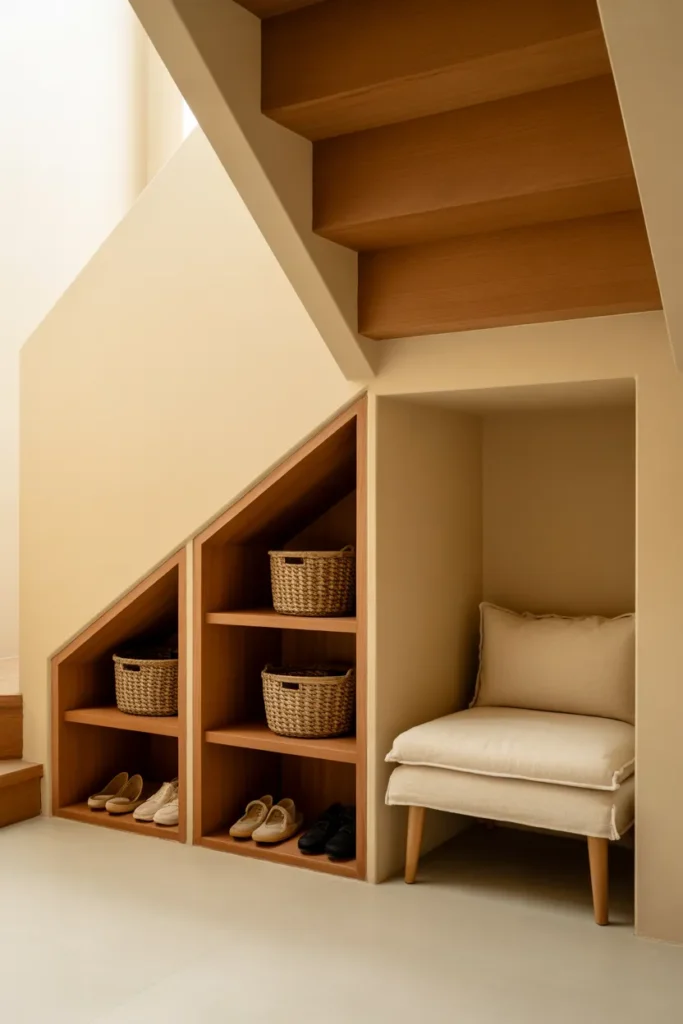
What it is: Custom or modular shelving built into the dead space under a staircase.
Why it works: Under-stair space is the single most underused 15 to 30 square feet in most homes. Convert it and you gain a mudroom-style storage zone without adding a single inch to the home’s footprint.
How to do it:
- Budget DIY: IKEA TROFAST frames cut to fit ($40 to $80 each). Slide them in side by side.
- Mid-range: Modular cube units from Target or Wayfair ($100 to $250) painted to match the wall.
- Splurge: Custom built-in with bench seat, around $1,200 to $3,500 from a local carpenter.
Best for: Homeowners. Most renters cannot modify under-stair walls, but freestanding cubes still work.
7. Bedroom Bench with Lift-Top Storage
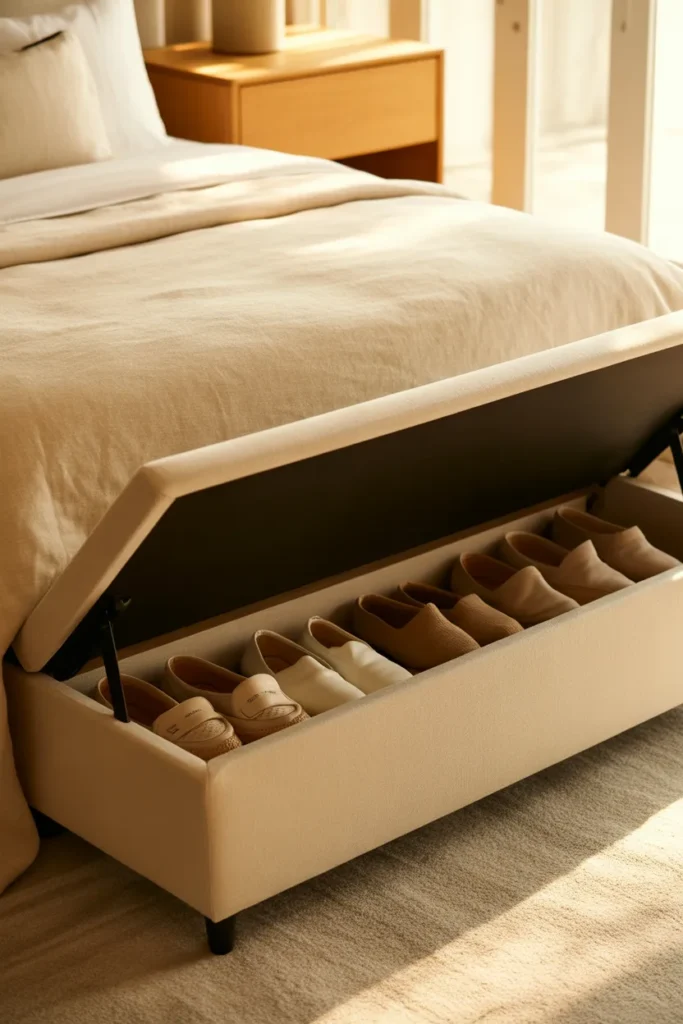
What it is: An upholstered bench at the foot of the bed with a hinged lid that opens to reveal hidden shoe storage inside.
Why it works: It hides shoes completely (no visual clutter in the bedroom) while doubling as seating and a styling moment. This is the best fit if your aesthetic leans Japandi or minimalist and the sight of open shoe shelves stresses you out.
How to do it:
- Budget: IKEA STOCKSUND bench, around $99, holds about 8 pairs of flats inside.
- Mid-range: Target’s Threshold upholstered storage bench in oatmeal linen, around $200.
- Splurge: Crate & Barrel’s Tate storage bench in performance fabric, around $799.
Capacity warning: These hold flats and sneakers well. Tall boots will not fit. Plan accordingly.
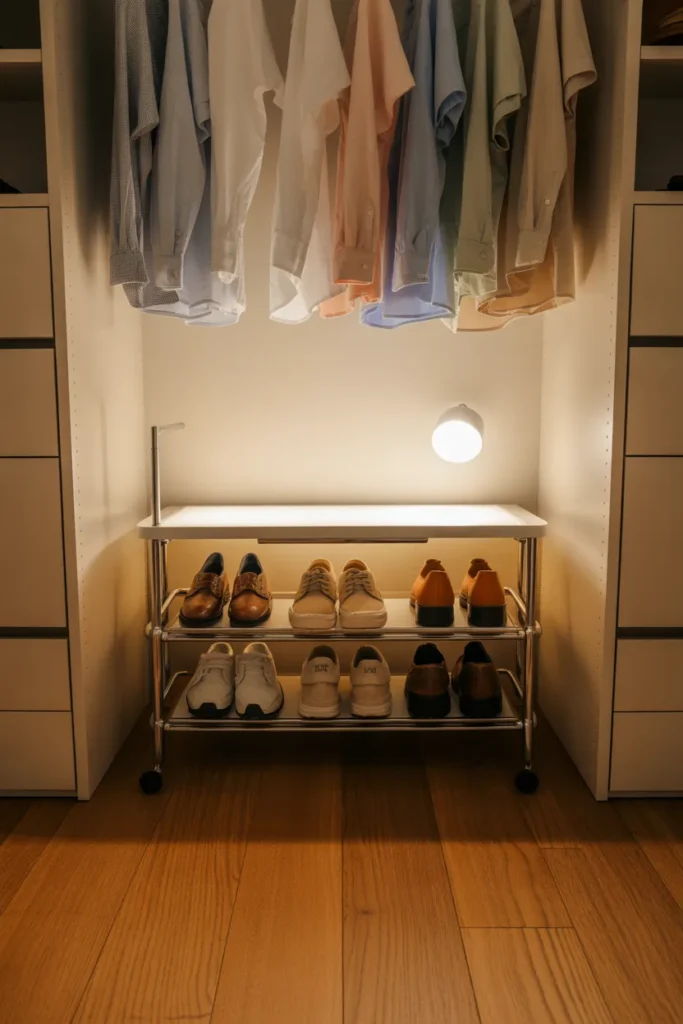
8. Rolling Shoe Caddy for Closet Floors
What it is: A low metal or wood cart on casters that slides under hanging clothes.
Why it works: Closet floor space is awkward, especially under hanging tops where you only have 36 to 42 inches of vertical clearance. A rolling caddy uses that wasted zone, then rolls out for easy access.
How to do it:
- Look for caddies 14 to 16 inches deep so they fit standard reach-in closets.
- The Container Store’s two-tier rolling shoe organizer (around $80) holds 12 pairs.
- Lock the casters once it’s positioned. Otherwise it drifts every time you brush past.
For a deeper closet overhaul, our vertical storage tricks post pairs perfectly with this idea.
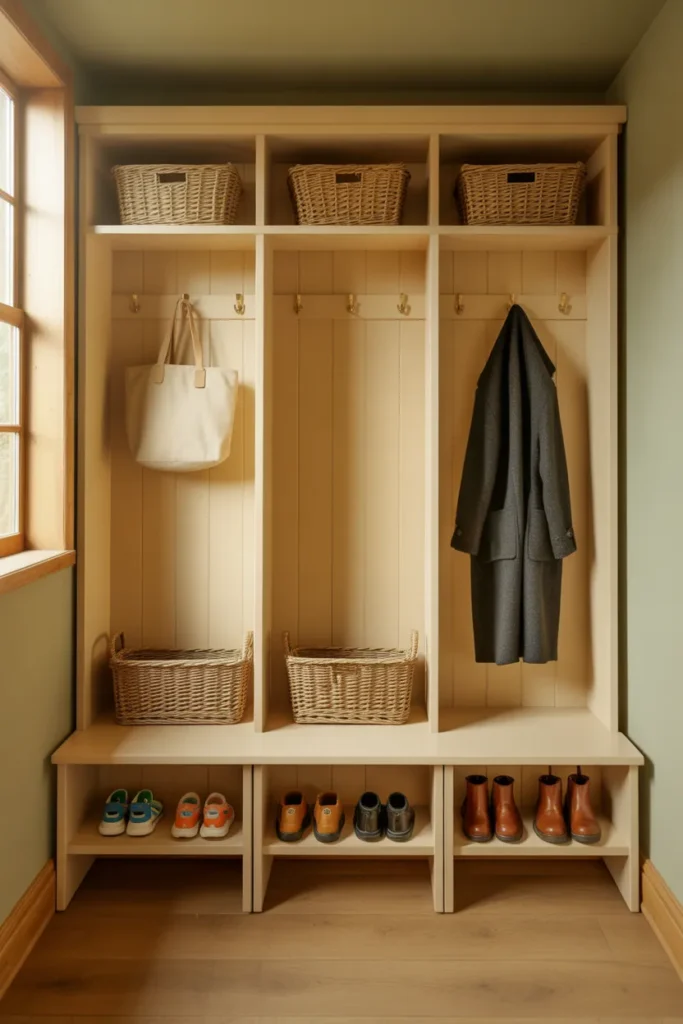
9. Mudroom Locker System
What it is: A row of 12 to 18 inch wide individual lockers, each with a hook on top, a cubby in the middle, and a shoe bench at the bottom.
Why it works: It assigns one zone per family member. Kids’ sneakers stop ending up in your loafer pile. Coats, bags, and shoes all live in one vertical strip per person.
How to do it:
- Budget DIY: Pottery Barn-style lockers built from plywood and 1×4 boards, around $200 in materials per locker if you DIY.
- Mid-range: Sauder mudroom locker units from Target or Wayfair, around $300 each.
- Splurge: Pottery Barn Samantha or Aubrey lockers, around $1,200 each.
Sizing note: Plan for 14 inches wide minimum per person. Anything narrower feels cramped for adult shoes.
10. Boot Tray and Lazy Susan Combo (the Tiny-Entryway Hack)
What it is: A waterproof boot tray on the floor paired with a 14-inch wood lazy Susan on the bottom shelf of a console table.
Why it works: When your entryway is 24 inches wide and you can’t fit any furniture, this is the move. The tray catches snow and rain. The lazy Susan rotates so you can grab any pair without crouching and digging.
How to do it:
- Boot tray: West Elm’s metal boot tray, around $39, or a Dollar Tree foam tray for $1.25 if you’re truly working with nothing.
- Lazy Susan: Walmart’s 14-inch acacia wood lazy Susan, around $18, holds 4 pairs of flats.
- Place the tray inside the front door, the lazy Susan under the nearest console or radiator cover.
Total cost (budget version): Under $20.
Budget vs Splurge: The Side-by-Side
| Category | Budget Pick | Splurge Pick | Real Cost Difference |
|---|---|---|---|
| Slim cabinet | IKEA BISSA, $79 | West Elm Mid-Century, $599 | $520 |
| Storage bench | IKEA KALLAX flip, $80 | Pottery Barn Samantha, $899 | $819 |
| Clear shoe boxes (6) | Amazon Basics, $32 | OXO Drop-Front, $120 | $88 |
| Mudroom locker | Sauder via Target, $300 | Pottery Barn Aubrey, $1,200 | $900 |
The honest take: for shoe storage, mid-range is almost always the smart spend. The IKEA picks last 5+ years. The splurge picks last 20+ years and look like furniture. Skip the in-between only if you rent and plan to move within 3 years.
Common Mistakes to Avoid
Buying capacity for the shoes you wish you owned. That 30-cubby unit looks aspirational. It will look depressing half-empty. Buy for your real collection plus 20%, not double.
Ignoring climate. If you live somewhere humid (the Gulf Coast, the Pacific Northwest, anywhere with a real summer), closed cabinets without ventilation grow mold on leather in months. Use cane front doors, vented cabinets, or open shelving. Add silica packs.
Storing wet boots in fabric pockets or wood cubbies. Water warps wood and ruins canvas. Always use a dedicated boot tray during rain and snow seasons (October through March in most of the US).
Skipping leather and suede care. Wipe leather with a damp microfiber cloth weekly. For deeper cleaning without harsh chemicals, the American Cleaning Institute’s shoe care guidelines cover the basics. You can also reach for one of the gentler homemade natural cleaning recipes if you prefer a chemical-free routine.
Forgetting to anchor tall cabinets. Anything over 4 feet tall needs a wall anchor, especially in homes with kids or pets. The CPSC’s anchor-it guidance linked above is a 5-minute read worth your time.
Frequently Asked Questions
How do I store shoes in a small entryway or rental?
Go vertical and avoid floor pieces deeper than 12 inches. A slim wall-mounted shelf, an over-the-door organizer, or a 9-inch deep tilt-out cabinet (like the IKEA BISSA) all work without drilling and without eating walking space. Skip benches if your entryway is under 36 inches wide.
What is the budget version of a built-in shoe bench?
Flip an IKEA KALLAX 2×2 unit on its side ($60), top it with a $20 cushion, and slide three woven baskets into the cubbies. Total cost: about $110. It looks intentional and holds 12 pairs.
What if I don’t have a coat closet?
A hall tree (a vertical piece with hooks, a bench, and a shoe cubby below) does the job in 24 inches of wall. Target and Wayfair both carry versions in the $150 to $400 range. For renters, a leaning ladder shelf with a boot tray underneath works without any wall mounting.
How long does a shoe storage project take?
Setting up a slim cabinet or rolling caddy takes 30 minutes. Decanting into clear stackable boxes for a 30-pair collection takes about 90 minutes, including labeling. A full mudroom locker install runs a weekend if you DIY, or one day with a hired carpenter.
How do I organize shoes in a closet with limited floor space?
Use the door (over-the-door organizer), use the walls (4-inch picture ledges), and use any vertical clearance under hanging clothes (rolling caddy). This three-zone approach can fit 40+ pairs in a 5-foot reach-in closet.
How do you store shoes long-term without ruining them?
Clean them first, stuff them with acid-free tissue or shoe trees to hold their shape, place them in clear stackable boxes with a silica pack, and store them away from direct sunlight and heat sources. Leather and suede should never be stored in plastic bags long-term, only breathable boxes.
Are clear shoe boxes actually worth it?
For shoes you wear less than once a month, yes. They protect from dust, pet hair, and light damage, and you can see what you own without opening every box. For your daily-rotation shoes, skip the boxes. You’ll never put them back.
Save This for the Next Time You Trip Over a Sneaker
Pick one idea from this list. Just one. Set a 30-minute timer this weekend and put it in place. The fastest wins are the slim cabinet, the rolling caddy, or the boot tray and lazy Susan combo, all of which take less than half an hour to set up.
Pin this post so you have it ready when you finally decide to fix the front door pile, then head over to our 15-minute medicine cabinet reset for another quick win while you’re in decluttering mode.
Which idea are you trying first? The bench? The wall display? Let us know.


