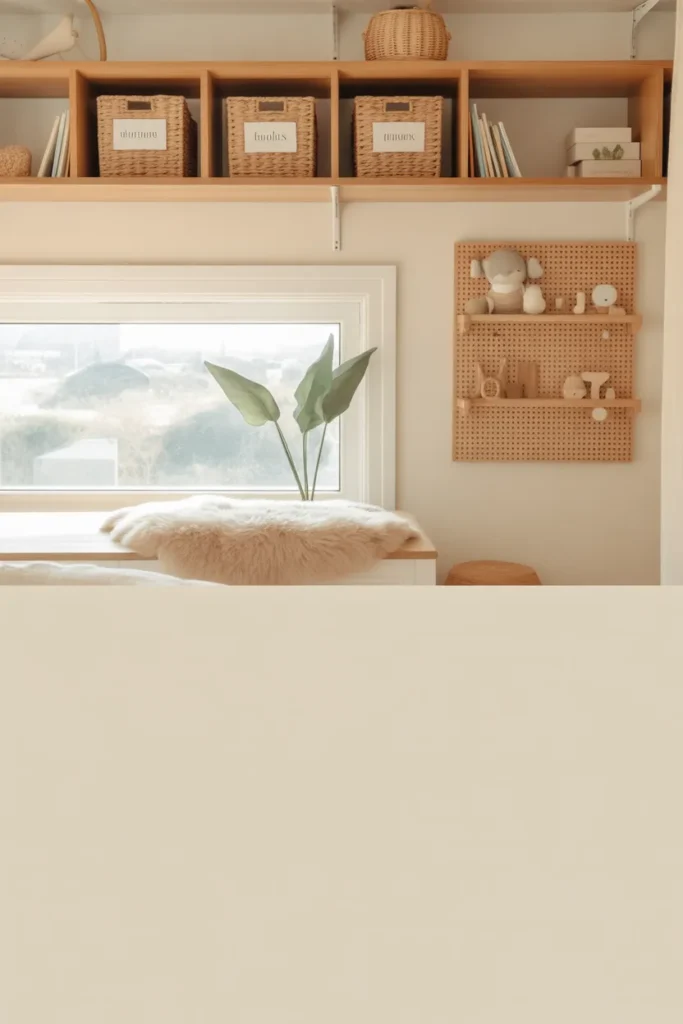

Kids Room Organization: Simple Systems That Kids Can Maintain
You walked into your child’s room, stepped on a LEGO, and froze. The bookshelf is sideways. There’s a pile of yesterday’s outfit on the floor, three half-finished art projects on the dresser, and a stuffed animal avalanche under the bed. We’ve all stood in that doorway, coffee in one hand, sigh on standby, wondering how it got this bad again on a Tuesday.
Here’s the thing nobody tells you about kids room organization. The bins and labels and Pinterest-perfect cubbies are not the point. The point is a system simple enough that your kid can put everything back without you. That is what makes a room stay tidy past Sunday afternoon.
This guide is organized by zone (toys, clothes, books and art, closet, small-space tricks, shared rooms, maintenance), with budget vs splurge price tiers inside almost every idea. Every tip answers what it is, why it works, and how to set it up. The goal: a Modern Farmhouse or Scandi-leaning room that looks calm, costs what you decide it costs, and a 5-year-old can reset in under 10 minutes.
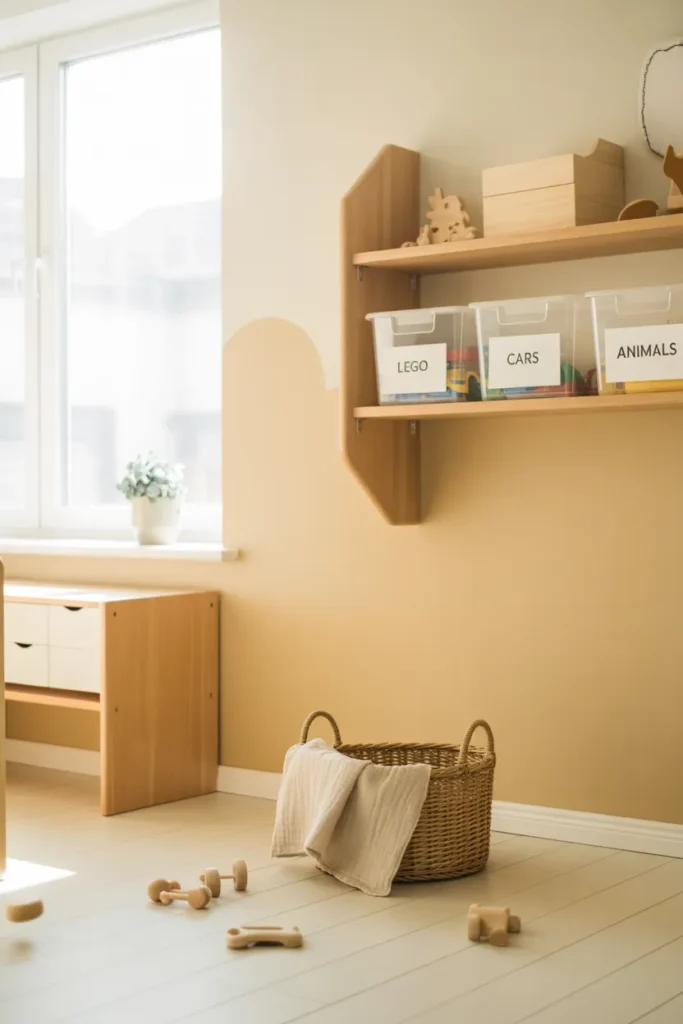
Who This Guide Is For
- Renters who can’t drill into walls (every section flags no-drill options)
- Parents of toddlers through tweens (ages 2 to 12 mostly)
- Small-space families working with rooms under 120 sq ft
- Budget-conscious parents who want big visual change for under $100
- Parents of neurodivergent kids who need extra-clear visual systems
- Siblings sharing a bedroom (we have a whole section for you)
If your child is older than 12, the same principles work, you’ll just swap pegboards for hooks they pick themselves and let them style the bins.
The One Rule That Changes Everything: The 3-Second Putaway Test
Before we get into bins and shelves, here’s the filter we’ll run every idea through.
What it is: A system passes the 3-second test if your child can put one object back in its home in three seconds or less, without your help, without lifting a lid, and without asking where it goes.
Why it works: Kids do not maintain systems that require effort. Adults barely do. Removing lids, removing labels they can’t read, removing the search step, that is the entire game.
How to apply it: When you set up a bin or shelf, hand your child a random toy from the floor and say “show me where this goes.” If they hesitate, the system fails. Adjust until they don’t.
This single rule is what separates Pinterest rooms that stay tidy from Pinterest rooms that look great in photos and explode by Wednesday.
Toy Storage Ideas That Kids Will Actually Use
This is where most rooms go off the rails. Toys multiply. Sets get separated. The dollhouse furniture ends up in the kitchen. Here’s how to fix it for good.
1. Use Open Bins Without Lids for Daily-Use Toys
What it is: Wide, shallow bins with no lid, sized for one toy category each.
Why it works: Lids add a step. One step is enough to make a 4-year-old give up. Open bins also let kids see what’s inside without dumping it.
How to set it up: One bin per category. Cars in one, action figures in another, animals in another. Don’t mix.
- Budget pick (under $25): Sterilite open weave bins from Walmart, around $5 each, or 6-quart clear shoebox bins from Dollar Tree at $1.25 each.
- Mid-range ($25 to $100): Target’s Brightroom open storage bins in cream or sage, $8 to $15.
- Splurge ($100+): Crate & Kids canvas bins with leather handles, $40 to $70 each.
If you want a deeper budget breakdown for the rest of the house, our Dollar Tree organization hacks guide has 10 ideas tested in real homes.
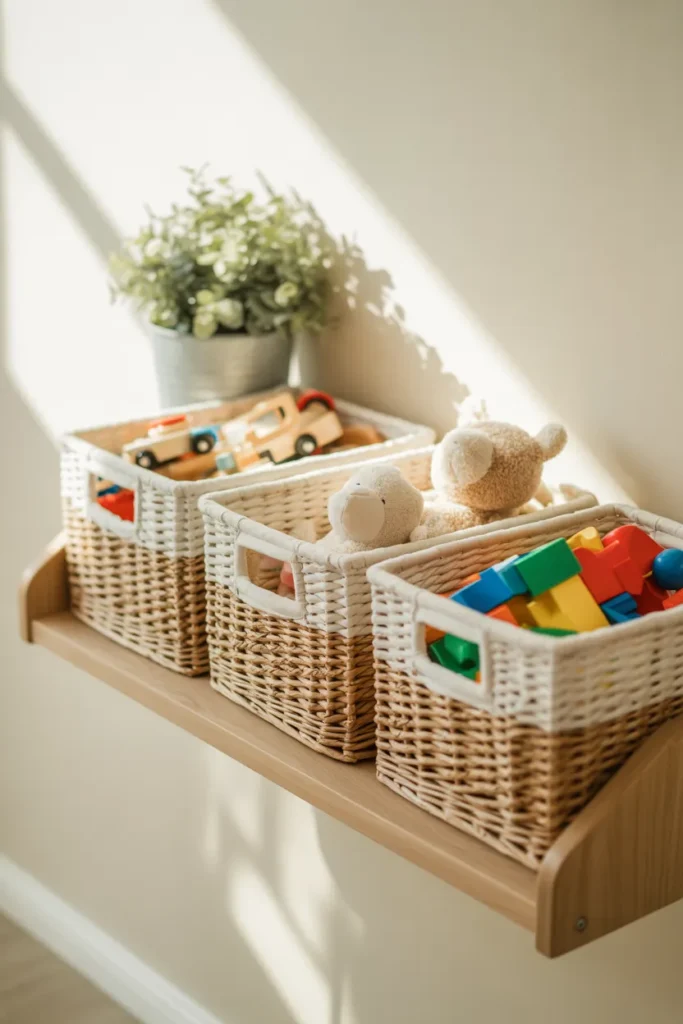
2. Lidded Bins Only for Sets With Many Tiny Pieces
What it is: Clear lidded bins for things like LEGO, magnetic tiles, or playing cards, where loose pieces matter.
Why it works: A 437-piece LEGO set in an open bin will end up in the vacuum. Lids contain. The trick is using lids only when you have to.
How to set it up: Match the bin to the set. The IKEA TROFAST system (around $25 to $80 depending on configuration) is the gold standard for LEGO. The bins slide out, the kids pull, dump on a baseplate, and slide back. The 3-second test passes.
3. Run a Toy Rotation System
What it is: Half the toys live in the room. The other half live in a closet, basement, or labeled tote in the garage. You swap every 3 to 6 weeks.
Why it works: Less visible toys means less mess and, weirdly, more focused play. When a kid sees the same 12 things every day, they get bored and dump bins looking for novelty. Rotate, and old toys feel new.
How to set it up: Buy three large lidded totes ($8 to $12 each at Walmart). Label them A, B, C. Split toys evenly. Set a phone reminder for the first Saturday of every month to swap.
4. Stuffed Animal Hammocks (Rental-Friendly)
What it is: A mesh or fabric corner net that hangs in a corner of the room and holds 20-plus stuffed animals.
Why it works: Stuffed animals do not stack and do not stay in bins. Vertical air space is the only place they fit without taking floor real estate.
How to set it up: Most hammocks ($10 to $20 on Amazon) install with three corner hooks. Rental-friendly version: use 3M Command hooks rated for 5 lb each, no drilling. Hang at kid eye level so they can toss the bears in themselves.
Kids Closet Organization (Even Tiny Closets)
The closet is where the cleanup battle is won or lost. Most kids closets have one rod and one shelf, both at adult height. Both useless to a 6-year-old.
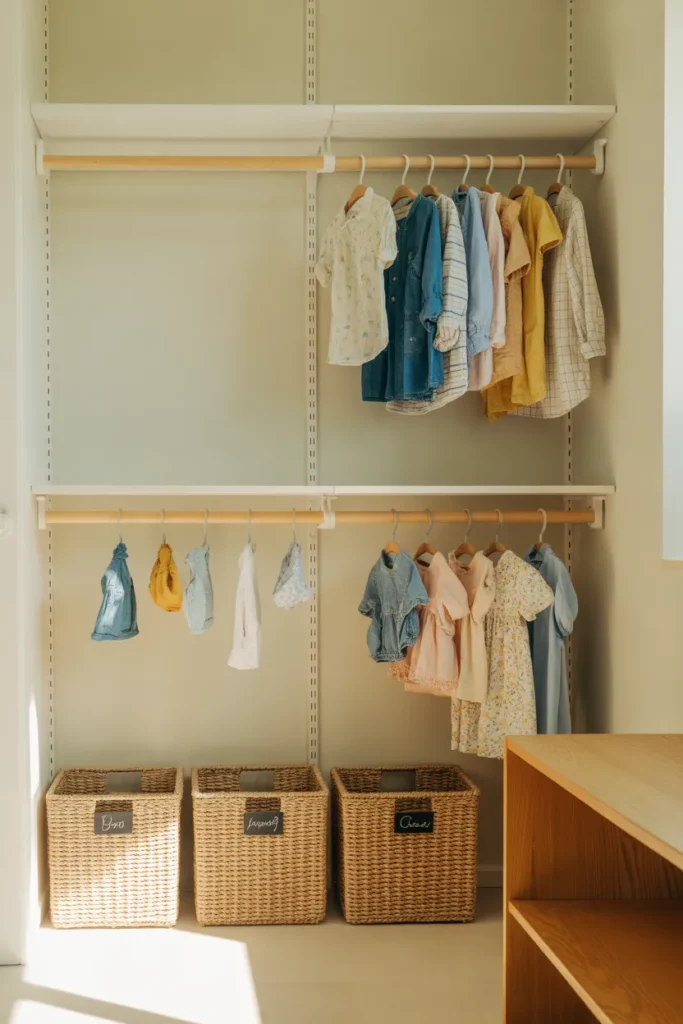
5. Add a Second Closet Rod at Kid Height
What it is: A second hanging rod installed at 36 to 40 inches off the floor, below the existing adult rod.
Why it works: Kids cannot reach a rod at 60 inches. So they don’t hang anything. So clothes end up on the floor. A rod at their height fixes the problem in one afternoon.
How to set it up:
- No-drill rental version: Hanging double rod extender, $10 to $15 on Amazon, hooks over the existing rod.
- Permanent version: A 1-inch wood dowel cut to fit, two closet rod brackets ($6 at Home Depot), and 20 minutes with a drill.
6. Outfit Cubbies for the Whole Week
What it is: A 5-cubby fabric organizer (the kind designed for shoes) hung in the closet, one cubby per weekday.
Why it works: Sunday night, you and your child pick five outfits together and load them. Monday morning, no decisions, no negotiations, no laundry on the floor. The 3-second test passes harder than almost anything else in this guide.
How to set it up: A hanging 5-shelf closet organizer runs $12 to $25 at Target. Load it Sunday with shirt, pants, socks, underwear in each cubby.
For more ideas like this that work in any closet size, our closet makeover on a budget guide walks through the full reset.
7. Hooks Beat Hangers Every Time
What it is: A row of low hooks inside or beside the closet for daily-wear items like jackets, hoodies, and pajamas.
Why it works: Hangers require fine motor coordination most kids under 8 don’t have. Hooks require throwing. Kids are great at throwing.
How to set it up: A 5-hook rail, $10 to $20, mounted at 40 inches off the floor. Use Command brand picture-hanging strips rated for 7 lb if you’re renting.
8. Shoe Storage at the Door of the Room
What it is: A small 9-cube shoe organizer or a shallow tray right inside the bedroom door.
Why it works: Shoes never make it to the closet. Asking kids to walk an extra eight feet with shoes in hand is asking too much. Put the storage where the shoes get kicked off.
How to set it up: A 9-pair stackable shoe organizer ($18 at Walmart) or a flat woven tray ($25 at HomeGoods) right by the door.
Books, Art, and School Supplies
This is the zone that turns to paper chaos fastest. Here’s how to contain it.
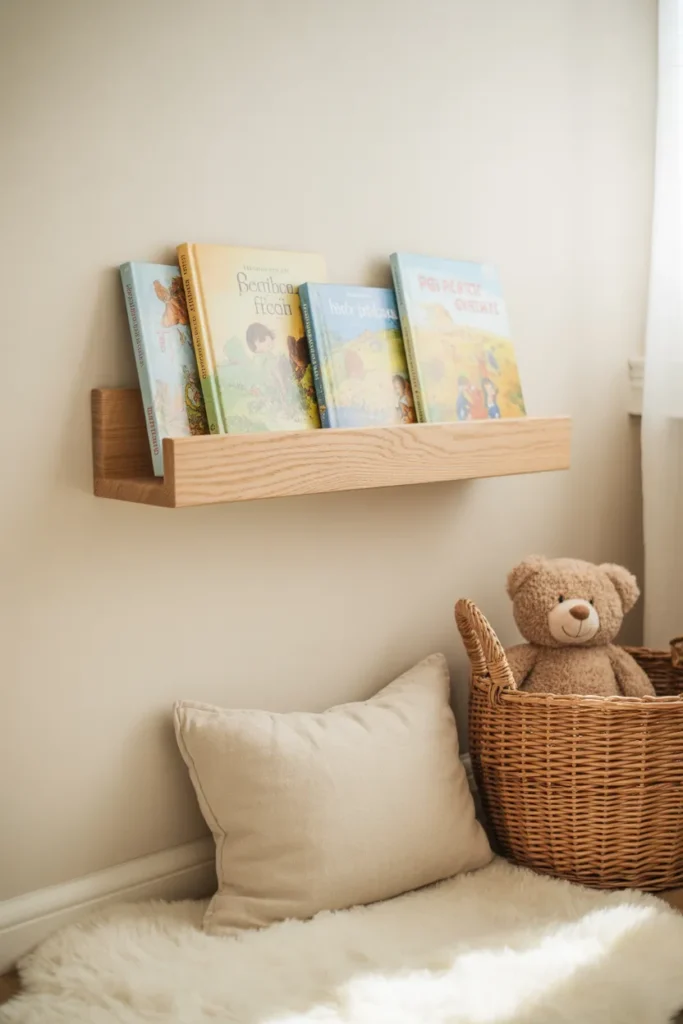
9. Front-Facing Bookshelves (Not Spine-Out)
What it is: A shallow shelf or rail that displays books with the cover facing forward, 3 to 5 books per row.
Why it works: Spine-out shelving works for adults. For kids, especially pre-readers, the cover is the discovery tool. Front-facing displays double the chance a book gets pulled and read.
How to set it up:
- Budget pick: IKEA BERGIG book display, $40 to $50.
- Mid-range: Target Pillowfort wood book ledge, $25 each, install three at staggered heights.
- Rental-friendly: Picture ledge with Command strips rated for 5 lb, no drill. Use lighter board books only.
10. The Art Paper Triage Box
What it is: A single document storage box per child where every drawing, worksheet, and craft lives until the end of the month.
Why it works: You’re never going to keep all 47 macaroni necklaces. But you also can’t toss them in front of your kid. The box gives a delay buffer. End of month, you and your child sort together and keep the top 5.
How to set it up: A bankers-style document box ($8 at Target) or a labeled magazine file ($1.25 at Dollar Tree). Photo each kept piece before storage if you want the digital backup.
11. A Rolling Art Cart
What it is: A 3-tier rolling cart parked near a desk or table, loaded with markers, paper, scissors, glue, and stickers.
Why it works: Art supplies migrate. A cart means everything has one home and that home is mobile. Roll it to the kitchen for messy projects, roll it back at cleanup.
How to set it up: IKEA RÅSKOG cart, $40, in cream or sage. Or a Walmart 3-tier metal rolling cart, $20 to $25. Group supplies by type in small open bins inside each tier.
Small-Space Kids Room Organization
If your child’s room is under 100 sq ft, the rules change. You’re now playing 3D Tetris. These ideas use vertical space, dual-purpose furniture, and rental-friendly mounting.
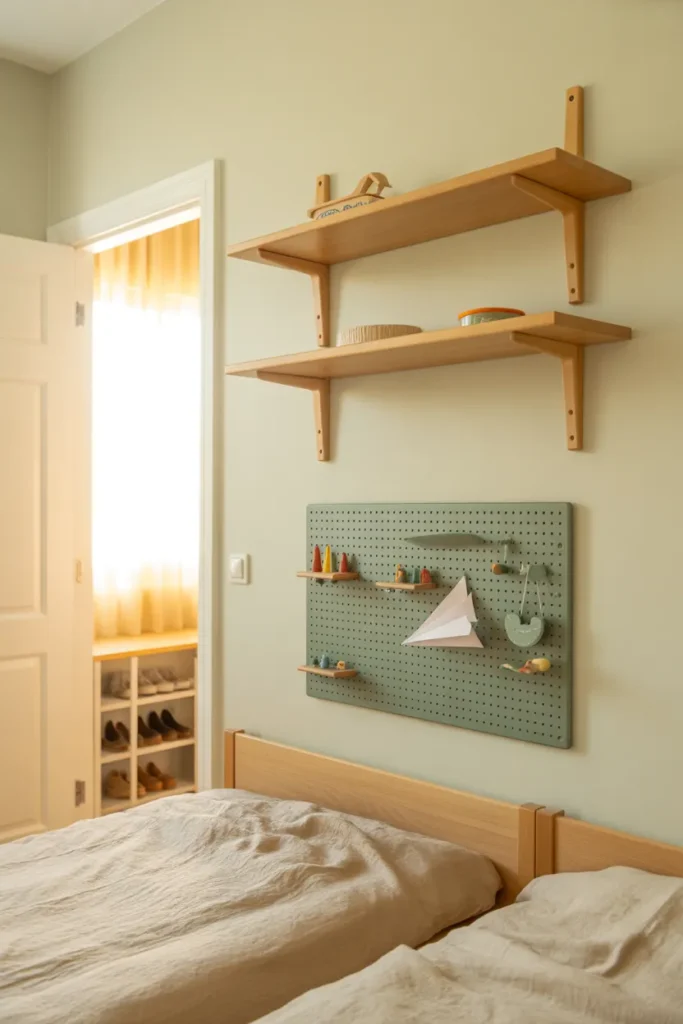
12. Go Up the Wall, Always
What it is: Floating shelves, pegboards, wall pockets, and over-door organizers used aggressively from waist-height to ceiling.
Why it works: Floor space is scarce. Wall space is mostly wasted. In a 10×10 bedroom, walls give you 320 sq ft of vertical surface vs 100 sq ft of floor.
How to set it up: Three to five floating shelves at staggered heights, a 24×24 inch pegboard for small toys and accessories ($25 to $40), and a clear over-the-door shoe organizer ($12) holding everything from socks to art supplies.
We have a full vertical playbook in our vertical storage ideas guide if you want room-by-room examples.
13. Use Every Inch Under the Bed
What it is: Flat rolling drawers, fabric bins, or vacuum-seal storage bags slid under the bed frame.
Why it works: Most kid beds have 6 to 12 inches of clearance. That’s enough for off-season clothes, extra bedding, or rotation toys. Free real estate.
How to set it up: Sterilite rolling under-bed boxes ($12 each at Walmart) for toys you want quick access to. Vacuum-seal bags ($15 for a 6-pack on Amazon) for off-season blankets and snowsuits.
14. Dual-Purpose Storage Furniture
What it is: A bench that opens to reveal storage, an ottoman that holds blankets, a bed frame with built-in drawers.
Why it works: One piece of furniture, two functions. In a tight room, this is non-negotiable.
How to set it up:
- Mid-range: IKEA HEMNES daybed with three drawers, around $300, doubles as guest bed.
- Splurge: Pottery Barn Kids storage bench, $250 to $400, sits at the foot of the bed, holds a winter’s worth of blankets.
Shared Bedrooms: Solving the Sibling Problem
Two kids, one room, age gap of three years or more. You need separate ownership zones or someone is going to cry every day.
15. Define Each Kid’s “Zone of Ownership”
What it is: Every child gets at least one shelf, one drawer, one wall section that is theirs. No sharing.
Why it works: Kids hoard when they feel they have no space. Give them a clear, defended zone and the hoarding stops.
How to set it up: Mark zones with paint (a color block on the wall behind each bed), with a small wood plaque ($8 at Hobby Lobby), or with vinyl letter decals. The kids style the zone themselves within the rules you set (no food, no permanent markers, that kind of thing).
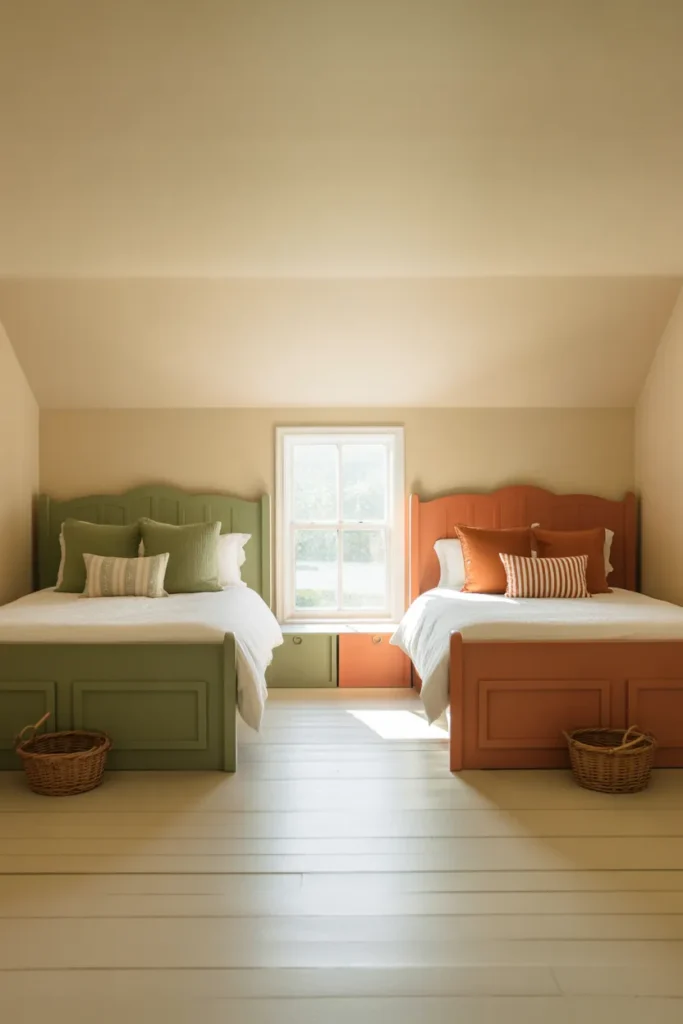
16. Color-Code by Child
What it is: Each kid gets a color. Sage for one, terracotta for the other. Their bin labels, hangers, hooks, and toothbrush all match.
Why it works: Toddlers can’t read. They can recognize “my color.” A color system lets a 3-year-old put their sister’s shirt back without help.
How to set it up: Buy bins, hangers, and labels in two contrasting colors. Tell the kids which is theirs. Done.
17. The Bedtime Caddy
What it is: A small fabric caddy hung on each kid’s bed frame holding a book, water bottle, flashlight, and stuffed animal.
Why it works: Bedtime is when shared rooms melt down. Each kid having their own bedside zone, even a 6-inch fabric pocket, prevents 90 percent of “they’re touching my stuff” arguments.
How to set it up: Bedside caddy, $10 to $18 on Amazon, slips between mattress and box spring, no installation. One per kid.
Budget vs Splurge: A Side-by-Side at a Glance
Save this if you screenshot one thing.
| Zone | Budget (under $25) | Mid-Range ($25 to $100) | Splurge ($100+) |
|---|---|---|---|
| Toy bins | Dollar Tree clear shoeboxes ($1.25) | Target Brightroom open bins ($10) | Crate & Kids canvas bins ($50) |
| Closet rod | Walmart hanging extender ($12) | Custom dowel + brackets ($30) | ClosetMaid kit ($150) |
| Bookshelf | Command-strip ledge ($15) | IKEA BERGIG ($45) | Pottery Barn Kids ($250) |
| Art cart | Walmart 3-tier ($22) | IKEA RÅSKOG ($40) | West Elm rolling cart ($199) |
| Stuffed animal storage | DIY corner net ($10) | Hammock + Command hooks ($25) | Pottery Barn zoo organizer ($120) |
Common Kids Room Organization Mistakes to Avoid
Most rooms fail for the same handful of reasons. Skip these and you save a weekend.
- Buying bins before decluttering. You’ll size for the chaos, not the keep pile. Declutter first, measure what’s left, then shop.
- Using lids on everything. Lids fail the 3-second test. Use them only for tiny-piece sets.
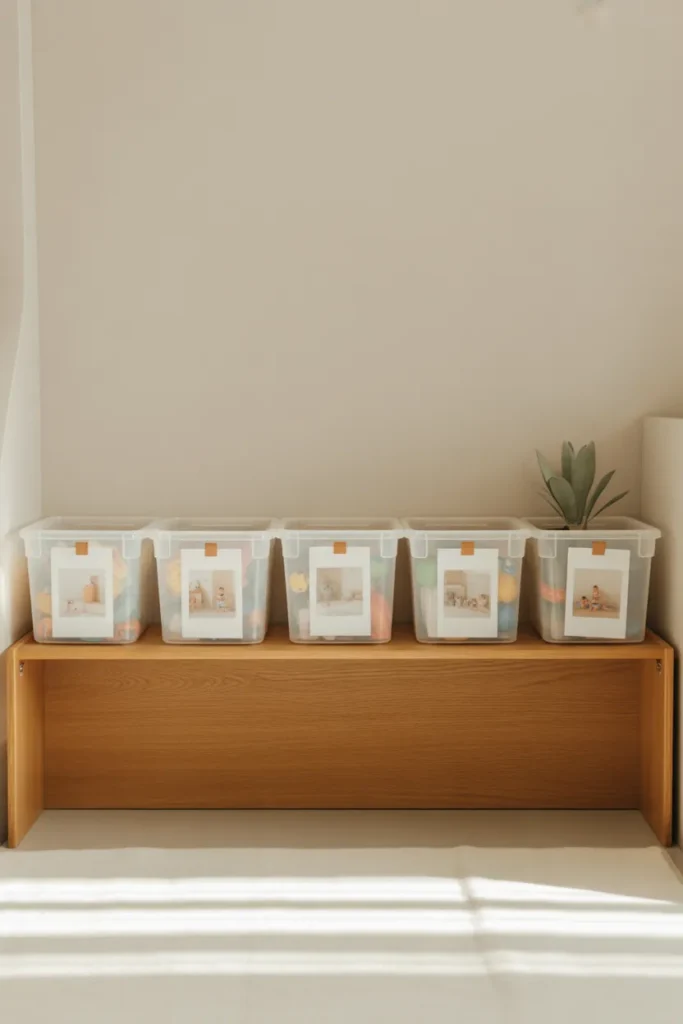
- Labeling with words for pre-readers. A 4-year-old cannot read “blocks.” Use a photo of the actual toy taped to the front.
- Putting daily-use items above kid eye level. If they can’t reach it, you become the storage system. Reserve high shelves for off-season or you-only items.
- Ignoring furniture anchoring. Tall bookcases and dressers must be anchored to the wall. The CPSC recommends every dresser over 30 inches tall be wall-anchored to prevent tip-over injuries. CPSC tip-over prevention guidelines.
- Skipping the kid in the planning. A room organized without your child’s input gets sabotaged within a week. Per the American Academy of Pediatrics, play environments that give kids autonomy support better self-regulation. Translation: let them help.
- Making it too pretty to use. That gorgeous styled corner with the curated toys? They will wreck it. Style 80 percent. Leave 20 percent for actual chaos.
A Simple Weekly Maintenance Routine
A perfectly organized room without a maintenance routine becomes a perfectly disorganized room in 11 days. Here’s the rhythm we use.
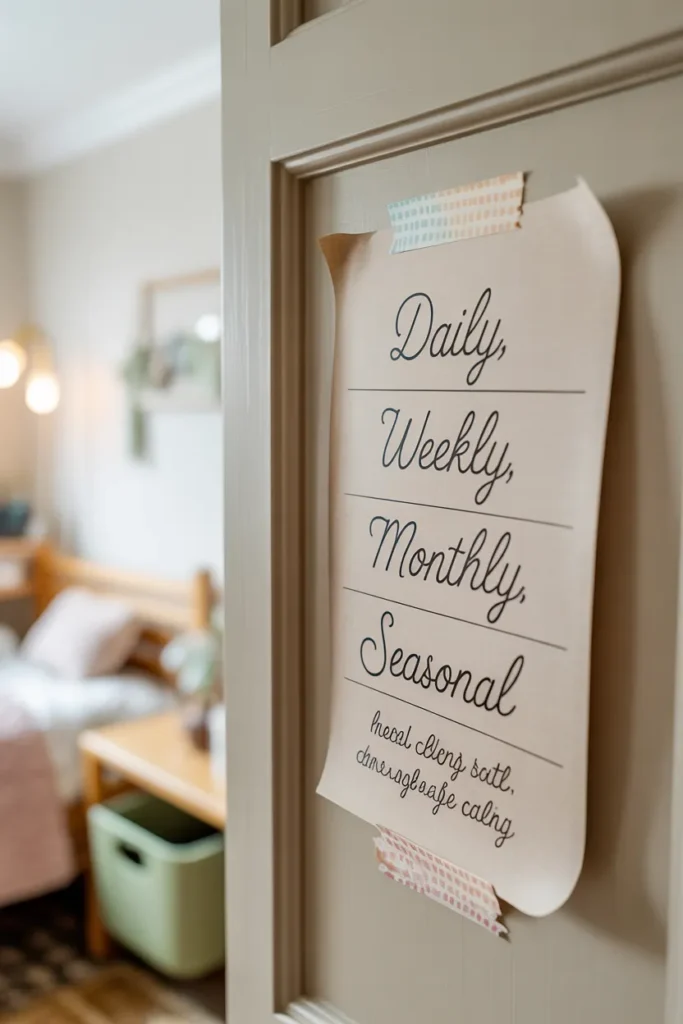
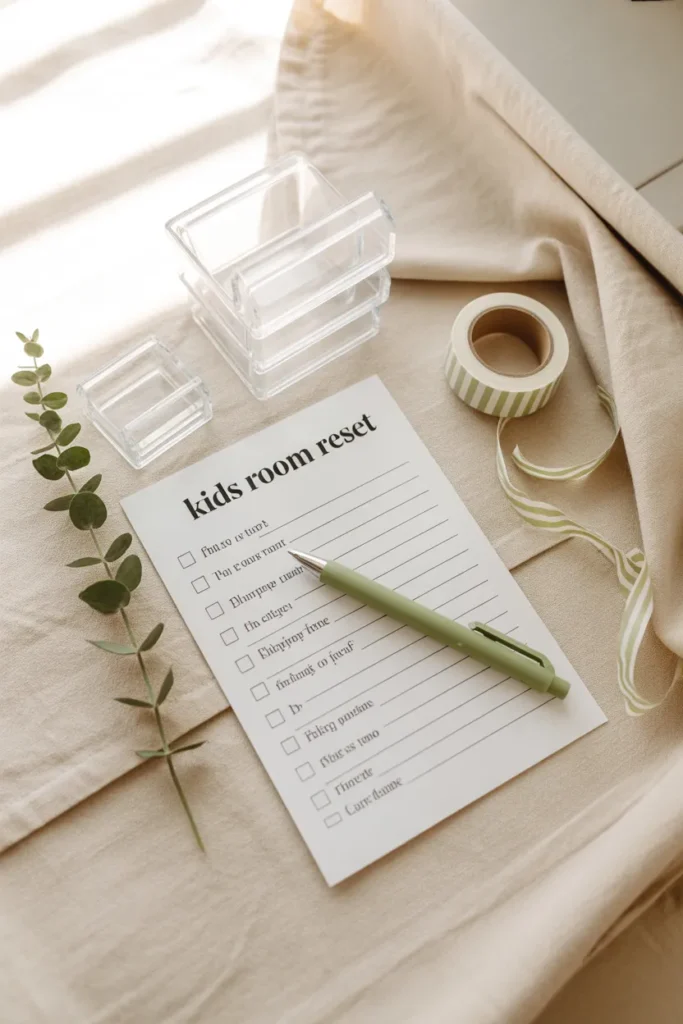
- Daily (2 minutes, before bed): “Floor sweep.” Kid puts everything on the floor into its zone. No sorting needed, just floor to bin.
- Weekly (10 minutes, Saturday morning): “Bin sort.” Kid empties two random bins, puts items back where they actually belong.
- Monthly (30 minutes, first Saturday): “Rotation swap.” Trade a third of the toys with the rotation tote. Donate or toss anything broken.
- Seasonally (1 hour, March and September): “Closet flip.” Pack off-season clothes into under-bed bins. Try on the season’s clothes, donate what doesn’t fit.
Pin this rhythm to the back of the bedroom door if you want it to actually happen.
Neurodivergent-Friendly Tweaks (ADHD and Sensory Sensitive Kids)
If your child has ADHD, autism, or sensory sensitivities, the standard system needs three small adjustments.
- Cut visual noise in half. Use one or two muted colors max (cream, sage, or oat) for bins. Bright rainbow bins overload the eye and make finding things harder.
- Use clear bins for everything. Visual access to contents reduces the executive function load of “what’s in there?” The kid scans, finds, grabs.
- Label with photos at the actual size of the object. Print a photo of one block taped to the block bin. Same for cars, animals, art supplies. The brain matches faster than it reads.
These tweaks help every kid, not just neurodivergent ones, but they are non-negotiable for kids whose brains run hot.
DIY Kids Room Organization Hacks Under $20
For the parent who wants change today, with what’s already at home.
- Cereal box drawer dividers. Cut, wrap in kraft paper, slide into drawers. Free.
- Mason jars for crayons and markers. Sort by color, line up on a shelf. $1 each at the dollar store.
- Pegboard from a thrift store. $5 to $10 used, paint cream, mount with two screws.
- Tension rod under the closet shelf. Hangs scarves, headbands, small bags. $4 at Walmart.
- Old shoeboxes for sock and underwear drawers. Free, infinite.
- A laundry basket as a stuffed animal “bath.” Free if you already own one. Kids love the metaphor.
Kids Room Organization FAQ
What are the best storage ideas for a kids room?
Open bins for daily toys, clear lidded bins for small-piece sets, a rolling art cart, a low closet rod the child can reach, and front-facing book ledges. The best system is whichever your child can reset solo in under 10 minutes.
How do I organize a kids room in a small space or rental?
Go vertical, use Command strips and hooks rated for the weight (no drilling), pick dual-purpose furniture like storage benches and beds with drawers, and use over-the-door organizers on every door. A clear over-door shoe organizer is the single best $12 you can spend in a small rental.
What is the budget version of a fully organized kids room?
Under $50: 6 Dollar Tree clear shoeboxes ($7.50), 5 hooks on a Command rail ($15), one IKEA RÅSKOG-style rolling cart from Walmart ($22), a stack of free cereal-box drawer dividers, and printed photo labels you make at home. That’s a full system for under $50.
What if I do not have a closet, or only one tiny closet?
Build a freestanding wardrobe nook against one wall using a clothing rack ($30 to $60), a basket on top, and a row of bins underneath. Add a curtain rod and a linen curtain to hide it. Total cost under $100, and it gives a small bedroom a complete closet zone where there was none.
How long does it take to organize a kids room?
A full reset for an average 10×10 bedroom takes 4 to 6 hours spread over a weekend. The decluttering takes longer than the organizing. If you have your bins, labels, and hardware ready before you start, the install part is closer to 90 minutes.
What furniture works best for storage in a small children’s room?
Storage beds with drawers underneath, a 5×5 cube organizer (IKEA KALLAX or Target Brightroom version) used as a low room divider, a bench with lift-up storage at the foot of the bed, and a tall narrow bookcase anchored to the wall.
How do I teach my child to stay organized?
Three things, in order. First, build a system simple enough that the 3-second test passes. Second, do daily 2-minute floor sweeps with them, not for them, until age 7 or so. Third, give them ownership of their zones (bin colors, label choices, where the art cart parks). Kids maintain what they helped design.
How can I make cleanup easier for my kids?
Reduce the toy count, switch lidded to open bins, lower everything to kid height, label with photos not words, and turn cleanup into a song or a 2-minute timer race. Friction is the enemy. Remove every step you can.
Are there toy storage ideas kids use on their own?
Yes, the ones that pass the 3-second test. Open bins on low shelves, hooks at child height, an art cart they can roll, and a stuffed animal hammock they can throw bears into. Anything requiring lifting a lid, opening a latch, or reaching above their head will fail.
Save This for Your Next Reset
Kids room organization is not about a perfect Pinterest photo. It’s about a quiet Tuesday night where your kid puts their stuff away because the system makes it easier than not. Pick three ideas from this guide, set them up this weekend, and give it two weeks before you judge.
If you tackle the closet first, the rest of the room follows. Save this post to your home organization board and pin the budget vs splurge table for the next time you’re at Target wondering if you really need that $40 bin.