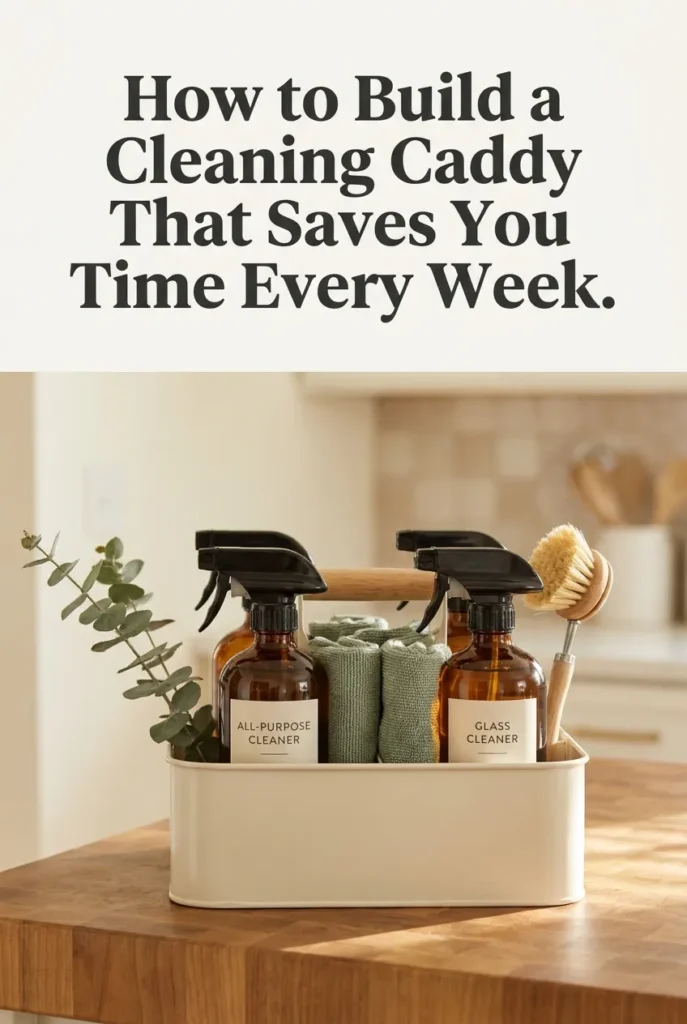

How to Create a Cleaning Caddy That Saves You Time Every Week
You walked into the laundry room this morning and there it was. A leaky bottle of all-purpose spray tipped sideways on the shelf, a crusty sponge stuck to a half-empty tub of disinfecting wipes, three microfiber cloths in a sad gray pile, and a glass cleaner you swear you bought twice because you couldn’t find the first one. The lights are off. The bottles smell faintly of pine and regret. We’ve all stood there at 9 a.m. on a Saturday holding a coffee, trying to decide if cleaning is even worth it today.
Here’s the fix: a smart, styled, room-ready cleaning caddy. Not a dusty plastic bucket. A real system you’ll actually want to grab.
A well-built cleaning caddy can cut your weekly cleaning time by 30 to 40 percent because you stop walking back and forth to the supply closet every 4 minutes. In this guide, you’ll get a room-by-room checklist, three caddy formats to choose from, a budget vs splurge product breakdown, and the Pinterest-worthy styling tricks nobody else online is sharing.
Who This Cleaning Caddy Guide Is For
This guide is built for:
- Renters in apartments under 800 square feet who need a portable cleaning kit because there’s no dedicated cleaning closet
- Homeowners with multiple bathrooms or floors who waste time hauling supplies up and down stairs
- Budget-conscious folks who want a Pinterest-worthy setup without dropping $200 at Container Store
- Busy parents who want a kid-safe version their 8-year-old can actually use for chore day
- Aesthetic-driven readers who want their cleaning supplies to look as good as the rest of their home
This article is organized by caddy format first, then by room-specific contents, then by price tier so you can stop wherever your budget lands.
What Goes In a Cleaning Caddy: The 9 Essentials
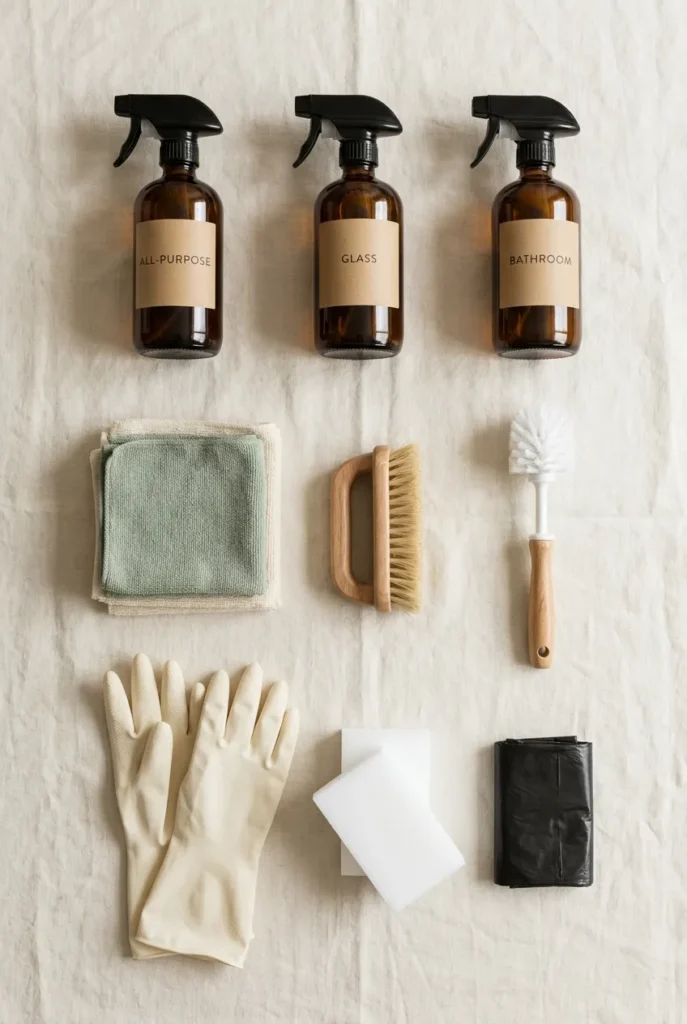
Every great caddy starts with the same 9 items, then gets customized by room. Front-load these and you’ll cover 90 percent of your weekly cleaning without rummaging.
- All-purpose cleaner (1 spray bottle, 16 to 24 oz)
- Glass and mirror cleaner (1 spray bottle, 16 oz)
- Disinfecting spray or bathroom cleaner (1 bottle)
- Microfiber cloths (4 to 6, color-coded by surface)
- Scrub brush with a comfortable handle
- Toilet bowl brush (only in bathroom caddies)
- Rubber gloves (1 pair, nitrile if you have a latex sensitivity)
- Magic erasers or melamine sponges (2 to 3)
- Small trash bag or grocery sack for collecting debris as you go
According to the CDC, cleaning physically removes dirt and germs from surfaces using soap and water, while disinfecting uses chemicals to kill germs, so you’ll want both an everyday cleaner and a disinfectant in your caddy, not one product trying to do both jobs.
Choosing Your Cleaning Caddy Format: 4 Styles Compared
The container itself matters more than people think. Pick the wrong one and you’ll quietly stop using it within two weeks. Here are the 4 formats worth considering, with the trade-offs nobody mentions.
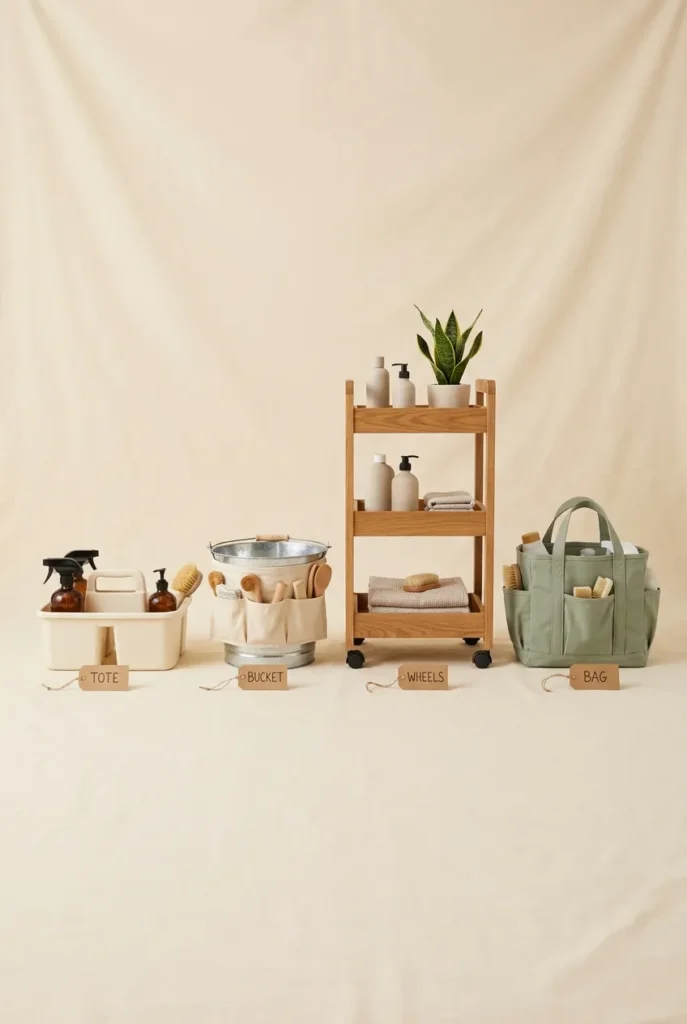
1. The Classic Tote Caddy (Best All-Around Pick)
What it is: A plastic or fabric tote with a center handle and divided compartments, usually 14 to 16 inches long.
Why it works: The center handle lets you carry it room to room one-handed, and the dividers stop bottles from clanking and tipping. It fits on most closet shelves.
How to execute it: Look for one at least 6 inches deep so taller spray bottles stand upright. The Casabella Cleaning Caddy and the Polder Tote both fit standard 24-oz bottles.
2. The Bucket Caddy (Best for Deep Cleaning Days)
What it is: A 2 to 5 gallon bucket fitted with an exterior tool organizer, like the Bucket Boss apron-style accessory.
Why it works: You get the bucket for mop water plus the perimeter pockets for supplies. Great for monthly deep cleans, not weekly maintenance.
How to execute it: Pick up a basic 5-gallon Home Depot bucket for around $5, then add a Bucket Boss caddy organizer for $15 to $20. The whole setup runs under $25.
3. The Caddy on Wheels (Best for Multi-Story Homes)
What it is: A rolling cart with 2 or 3 tiers, similar to the IKEA RÅSKOG cart, dedicated to cleaning supplies.
Why it works: No lifting, no carrying. Roll it down the hallway like a hotel housekeeping cart. Holds twice the supplies of a tote.
How to execute it: The IKEA RÅSKOG cart runs about $40 and measures 13.75 inches wide by 17.75 inches long, so it rolls through standard 28-inch doorways with room to spare. Stash bulkier refills on the bottom tier.
4. The Cleaning Caddy Bag (Best for Renters and Small Spaces)
What it is: A soft-sided canvas or nylon tote bag, often with exterior pockets for bottles.
Why it works: Folds flat for storage, which matters in apartments under 600 square feet where a rigid caddy feels like one more object to find a home for. No drilling, no permanent footprint, fully rental-friendly.
How to execute it: Look for canvas bags with reinforced bottoms and 4 to 6 exterior pockets. The Joey’z Premium Cleaning Caddy Bag is a popular pick under $25.
Cleaning Caddy Ideas by Room: Custom Contents That Save Even More Time
Here’s the angle nobody else online is covering: most homes need 2 to 3 mini caddies, not one giant one. A dedicated bathroom caddy that lives upstairs cuts your cleaning time again because you stop hauling toilet brushes around your house.
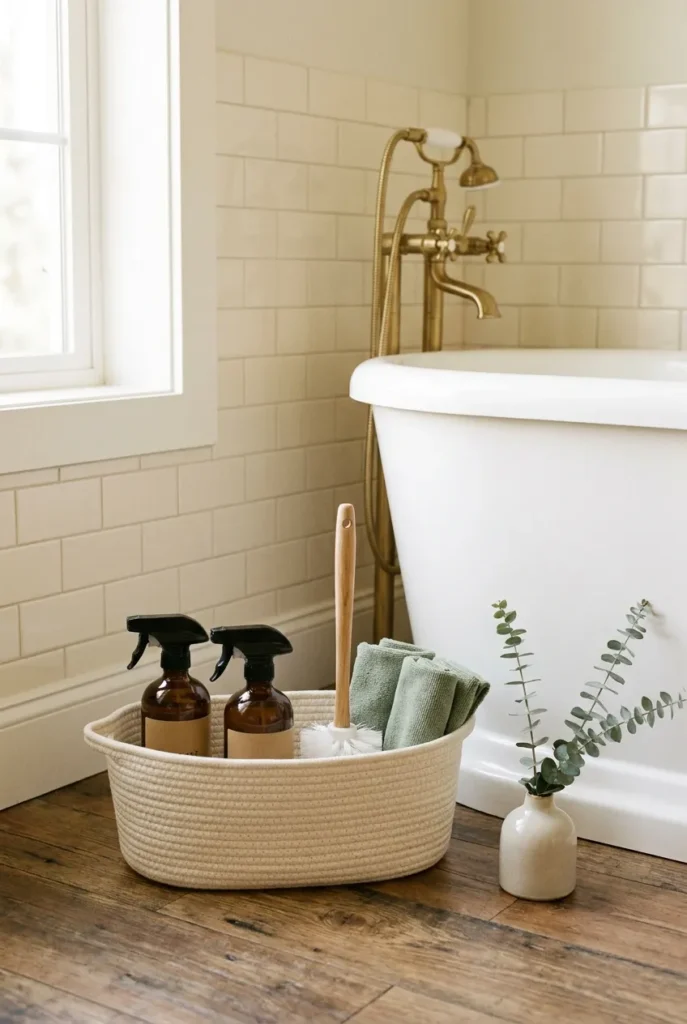
Bathroom Cleaning Caddy
Stock it with: toilet bowl cleaner, soap-scum bathroom spray, glass cleaner for mirrors, 3 microfiber cloths (one labeled “toilet only” in red), a small scrub brush, a pumice stone for hard-water rings, and rubber gloves.
The bathroom is also where most under-sink chaos starts, so before you build this caddy, it’s worth fixing the storage situation underneath. For a full walkthrough on that, see our guide on how to organize under the bathroom sink so your caddy has a clean home to come back to.
Kitchen Cleaning Caddy
Stock it with: degreaser spray, granite or quartz-safe surface cleaner, stainless steel polish, dish soap concentrate, 4 microfiber cloths (blue for counters, yellow for appliances), a small scrub brush for grout lines, and white vinegar in a spray bottle.
Pro tip: keep this one under the sink in a clear shallow bin so you can pull the whole thing out in 2 seconds. If your kitchen is already crammed, you’ll want to address layout first. Our small kitchen organization ideas walk through exactly how to free up under-sink and counter space so your caddy actually fits.
Bedroom and Living Room Caddy
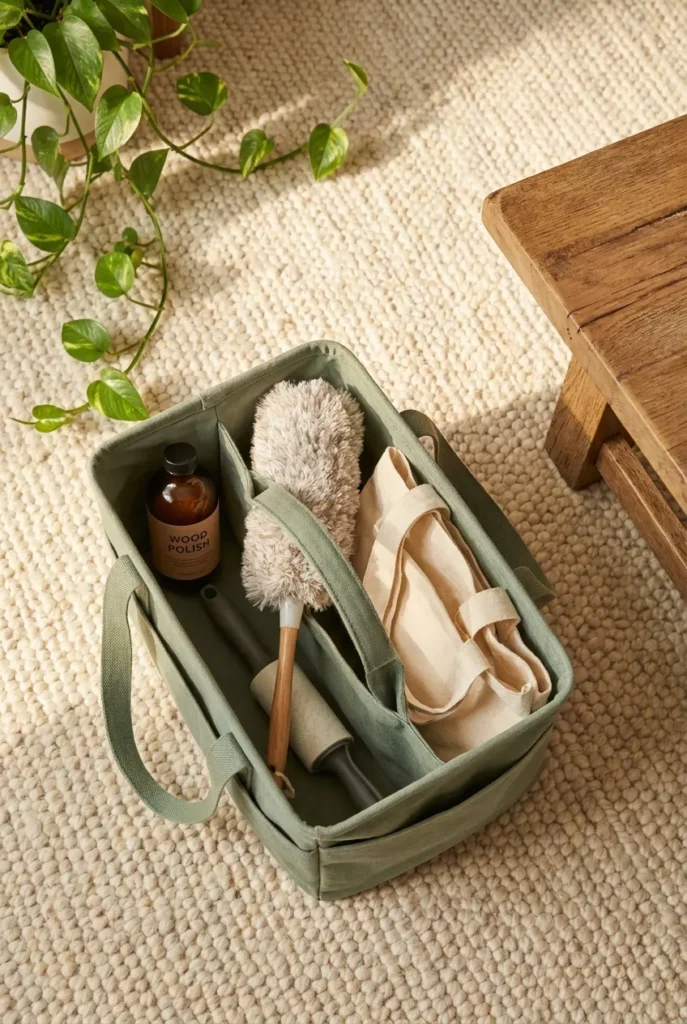
Stock it with: a wood-surface cleaner, glass cleaner, dust spray, 3 microfiber dusters, a small lint roller for upholstery, and a folded grocery sack for collecting stray socks and mugs you’ll find under furniture.
Kid-Friendly Caddy (the Gap Angle Nobody Covers)
Stock it with: child-safe plant-based cleaner (Better Life or ECOS), 3 colorful microfiber cloths, a soft-bristle brush, a small dustpan and brush set, and a printable chore checklist taped to the inside lid.
Use a lightweight plastic tote (Dollar Tree carries one for $1.25) so it’s not heavy when full. This is the secret to actually getting your 8-year-old to clean their own bathroom on Saturdays.
Budget vs Splurge: Cleaning Caddy Setups at Every Price Point
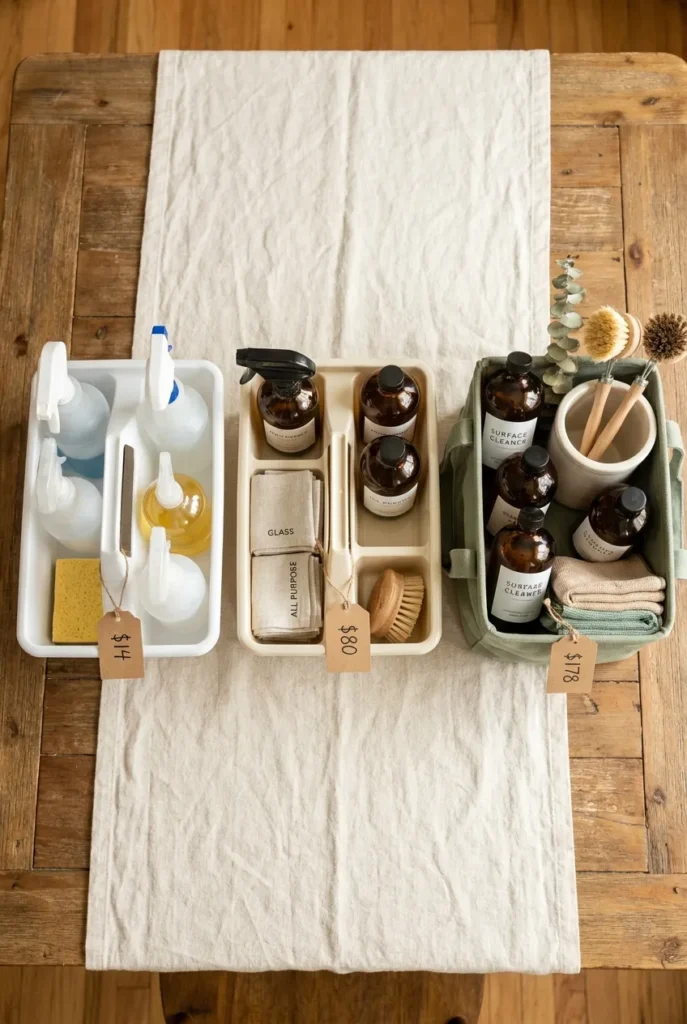
Three full kits at three price points, so you can pick the one that fits your wallet today.
Budget-Friendly Setup (Under $25 Total)
- Plastic shower caddy from Dollar Tree, $1.25
- 6-pack microfiber cloths from Walmart, $4.97
- Generic all-purpose spray from Walmart, $2.48
- Generic glass cleaner from Dollar General, $1.50
- Pack of 2 magic eraser dupes, $1.25
- Pair of cleaning gloves, $1.25
- Wood-handled scrub brush, $1.25
Total: around $14, leaves room for a small plant on top.
Mid-Range Setup ($25 to $100)
- Casabella Cleaning Caddy in stone, around $20 at Target
- 12-pack of MR.SIGA microfiber cloths from Amazon, around $13
- Method All-Purpose Cleaner, around $4 at Target
- Method Glass + Surface Cleaner, around $4
- OXO Good Grips Scrub Brush, around $7
- Mrs. Meyer’s bathroom spray, around $5
- Reusable amber glass spray bottles, 4-pack on Amazon, around $18
- Roll of cream waterproof labels from Amazon, around $9
Total: around $80, with a styled, refillable, Pinterest-worthy aesthetic.
Splurge Setup ($100+)
- Open Spaces Cleaning Caddy in sage, around $48
- Grove Collaborative starter kit with refillable bottles and concentrates, around $40
- Williams Sonoma wood-handled brush set, around $30
- Casabella Microfiber Cloth Set, around $20
- Custom-printed waterproof labels from Etsy, around $15
- Small ceramic crock for brushes, around $25
Total: around $178, fully styled and giftable.
How to Make Your Cleaning Caddy Look Pinterest-Worthy
This is the section the top-ranking articles completely skip. Here’s how to get the aesthetic look without spending $200.
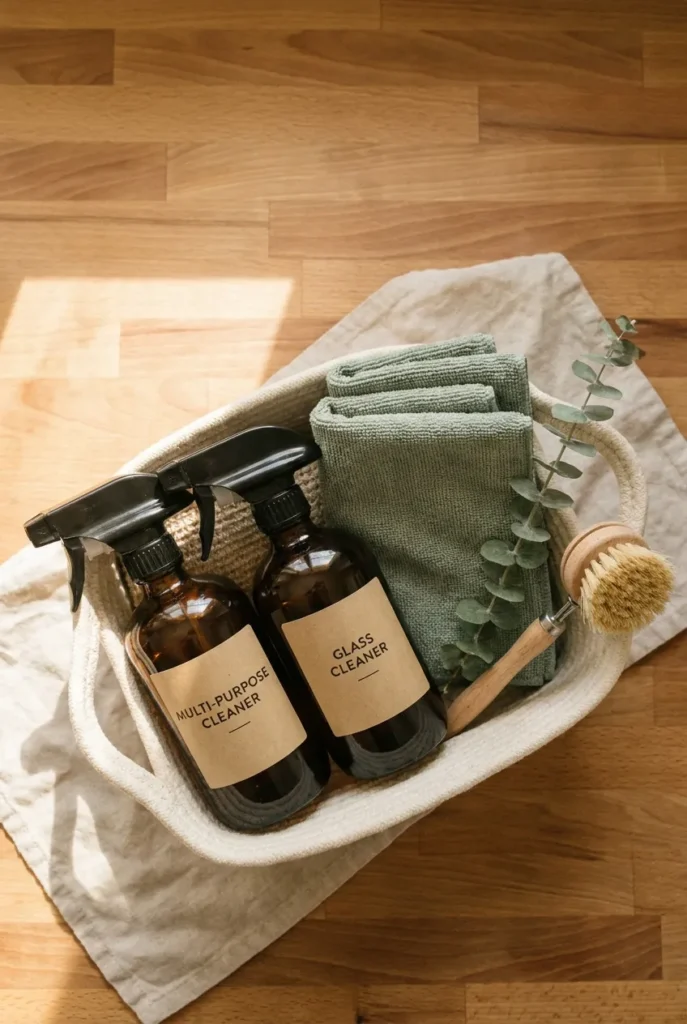
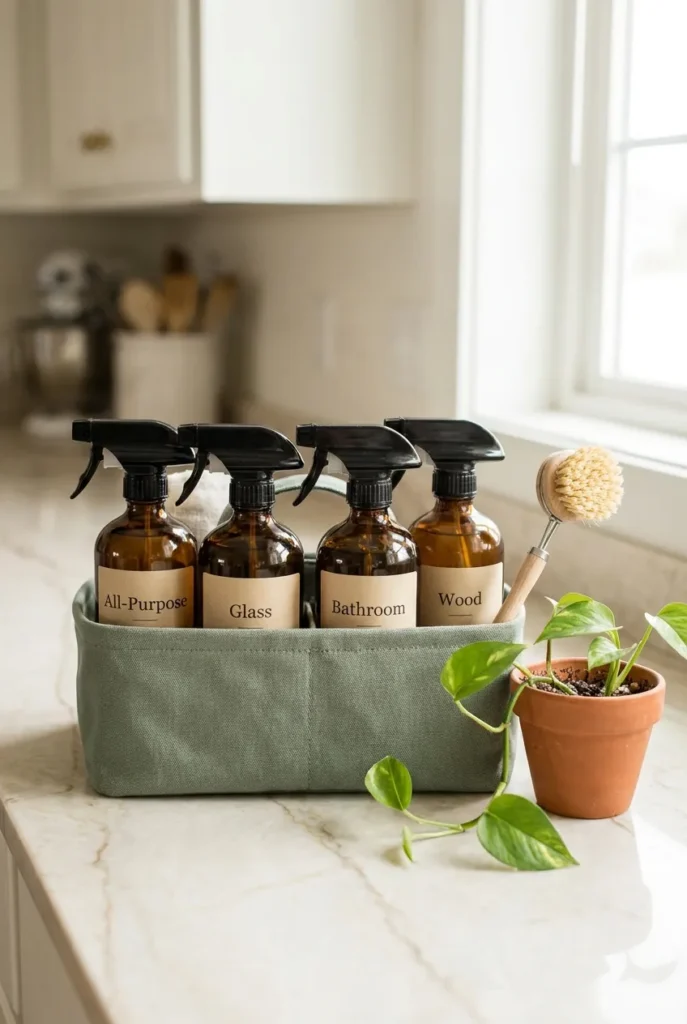
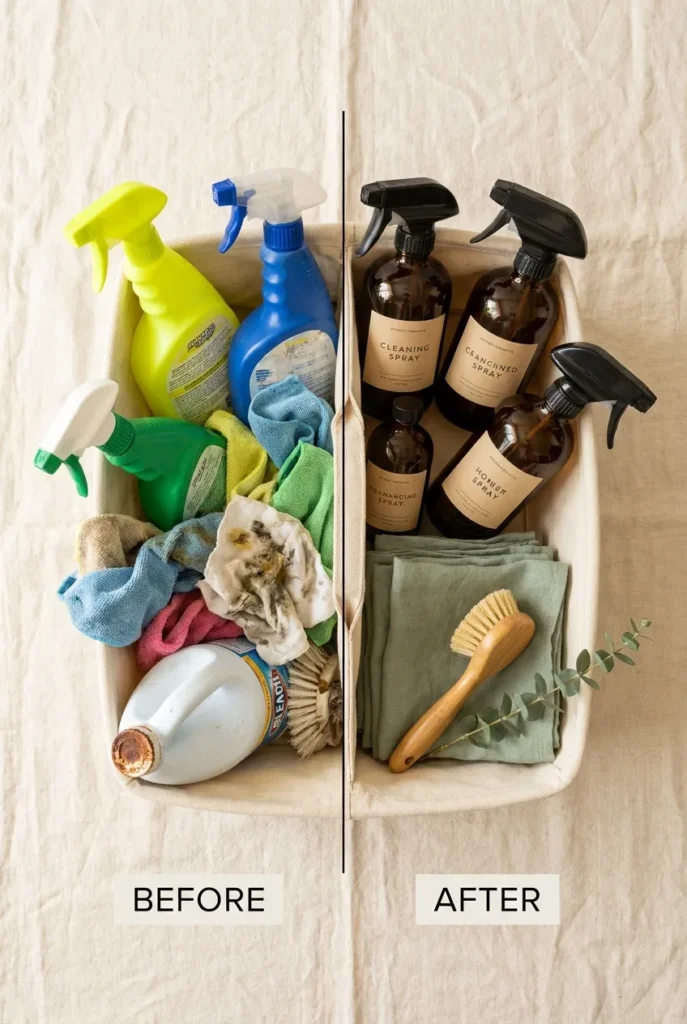
- Decant everything. Pour your cleaners into matching 16-oz amber glass spray bottles. Visual chaos disappears the second you stop staring at 6 different brand labels.
- Label with intent. Use a cream waterproof label sheet from Amazon (around $9) and write contents in a clean serif font for cozy niches or sans-serif for modern niches.
- Color-code your cloths. Pick 2 colors max. Sage and cream, or charcoal and ivory. Drop the rainbow microfiber pack from 2018.
- Add one wood element. A wood-handled brush or a small wood scoop changes the whole look. Costs under $10.
- Style with one living thing. A single eucalyptus sprig or a tiny pothos cutting in a bud vase that rides along on the top tier of a rolling caddy. Sounds silly. Works every time.
The visual cohesion alone makes you 3 times more likely to actually use the caddy weekly, because the act of pulling it out feels rewarding instead of grim. If motivation is the real blocker for you, our post on cleaning motivation when you’re too overwhelmed to start breaks down the mental side too.
Common Cleaning Caddy Mistakes to Avoid
After testing five caddy setups over two years in my own 1,200 square foot house, here are the mistakes I made so you don’t have to.
- Buying one giant caddy for the whole house. It gets too heavy, you stop carrying it, you give up. Build 2 to 3 smaller ones instead.
- Mixing all your cloths together. Cross-contamination is real. Use one cloth color for toilets, another for counters, a third for glass. Wash them separately.
- Skipping the trash bag pocket. You’ll always find a candy wrapper, a stray hair tie, a receipt. Without a bag, you set it on the counter and forget it.
- Stocking too many products. If you have 11 different sprays, you’ll freeze every time. 4 is plenty.
- Refilling cleaners with hot water. Many concentrates lose effectiveness or separate. Use cool tap water unless the label says otherwise.
- Storing the caddy in the garage. Cold and heat both degrade cleaning products. The EPA‘s Safer Choice program recommends storing cleaning products in cool, dry, ventilated indoor spaces away from extreme temperatures, so a hall closet beats the garage every time.
How to Use Your Cleaning Caddy on a Weekly Routine
Building the caddy is half the win. The other half is the routine. Here’s the 4-step weekly system I use:
- Sunday night reset. Wipe the outside of the caddy, restock anything you ran out of, refill spray bottles to the fill line.
- Wednesday quick pass. Grab the kitchen caddy only. 15 minutes, hit counters and one bathroom.
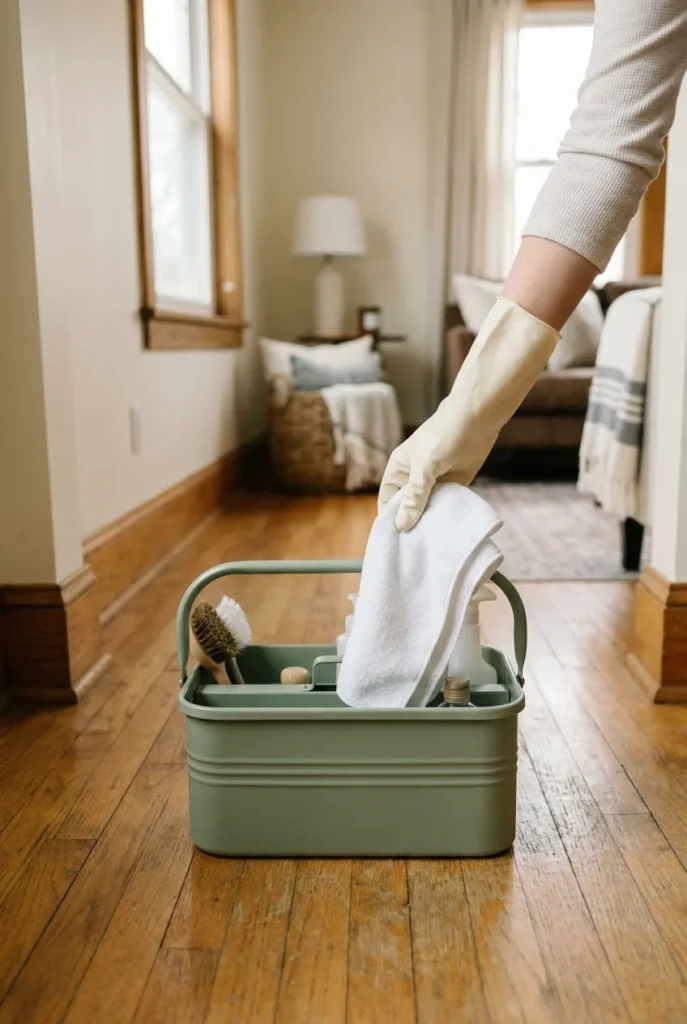
- Saturday morning deep clean. Carry the caddy room by room, top to bottom, left to right. About 45 minutes for a 1,200 sq ft home.
- Monthly audit. Once a month, check expiration dates, swap microfiber cloths if they’re fraying, and re-label any smudged bottles.
FAQ: Cleaning Caddy Questions, Answered
How can a cleaning caddy save time?
A caddy saves time by eliminating the 15 to 20 trips you’d otherwise make to the supply closet during a standard cleaning session. You carry everything room to room in one motion, which cuts most weekly cleaning routines from 90 minutes down to roughly 45 to 60 minutes for an average 1,200 square foot home.
What is the 80/20 rule in housekeeping?
The 80/20 rule (or Pareto Principle) applied to cleaning means 80 percent of your home’s visible cleanliness comes from 20 percent of the tasks. Wiping counters, cleaning toilets, vacuuming high-traffic floors, and clearing surfaces handle most of the visual impact. A well-stocked caddy makes that 20 percent dramatically faster.
Is $50 an hour good for house cleaning?
For professional house cleaning in the US in 2026, $50 an hour is on the higher end of average. Most one-person residential cleaning services charge between $30 and $50 per hour depending on city and home size. If you’re a solo cleaner using a professional caddy setup, $40 to $55 per hour is a reasonable range, with major metro areas trending higher.
How do I create a realistic cleaning schedule?
Split tasks into daily, weekly, and monthly buckets. Daily: dishes, counters, one quick reset. Weekly: bathrooms, vacuuming, laundry. Monthly: baseboards, inside the fridge, ceiling fans. Pair each bucket with a specific caddy so you grab and go without thinking.
How do I build a cleaning caddy in a small apartment or rental?
Pick a soft-sided canvas bag instead of a rigid tote so it folds flat between uses. Store it under the kitchen sink or hanging on a Command hook inside a closet door, no drilling required. Stock 4 essentials only (all-purpose, glass, disinfectant, cloths) to keep weight under 5 pounds.
What is the budget version of a Pinterest-worthy cleaning caddy?
Dollar Tree shower caddy ($1.25), 4-pack microfiber cloths ($4), generic spray cleaners from Walmart ($6 total), and a $1 wood-handled brush. Decant cleaners into amber bottles from the dollar store and add cream kraft labels you write on with a fine-tip black marker. Total under $15 and it photographs beautifully.
What if I don’t have a closet or pantry to store the caddy?
Slide it under a bathroom vanity, tuck it on the bottom shelf of an open kitchen cart, or store it on top of your washer if you have a stacked unit. Caddies on wheels can simply live in a corner of the laundry area or a hall nook.
How long does it take to build a cleaning caddy from scratch?
Shopping takes 20 to 30 minutes online or one short trip to Target. Decanting bottles, applying labels, and arranging the caddy takes another 25 to 35 minutes. Plan for one focused hour total, or break it into two 30-minute sessions over a weekend.
Save This Cleaning Caddy Guide for Saturday Morning
A cleaning caddy isn’t just a bucket of supplies. It’s permission to clean faster, with less mental friction, and to actually enjoy the 45 minutes you spend on your home each week. Pick the format that fits your space, customize one per room if you can, and decant a few bottles to make the whole thing feel calm instead of chaotic.
If this guide saved you a Target run, pin the first image to your “Cleaning + Reset” board so you can find it again on Sunday night when you’re prepping for the week.