
Things Pinterest Says You Need (And What You Actually Need) for Pantry Organization
You opened the pantry this morning, reached for the oats, and a half-empty bag of brown sugar tipped over behind three cans of beans you forgot you owned. A box of pasta slid sideways. Somewhere in the back, a jar of something is fossilizing. Sound familiar?
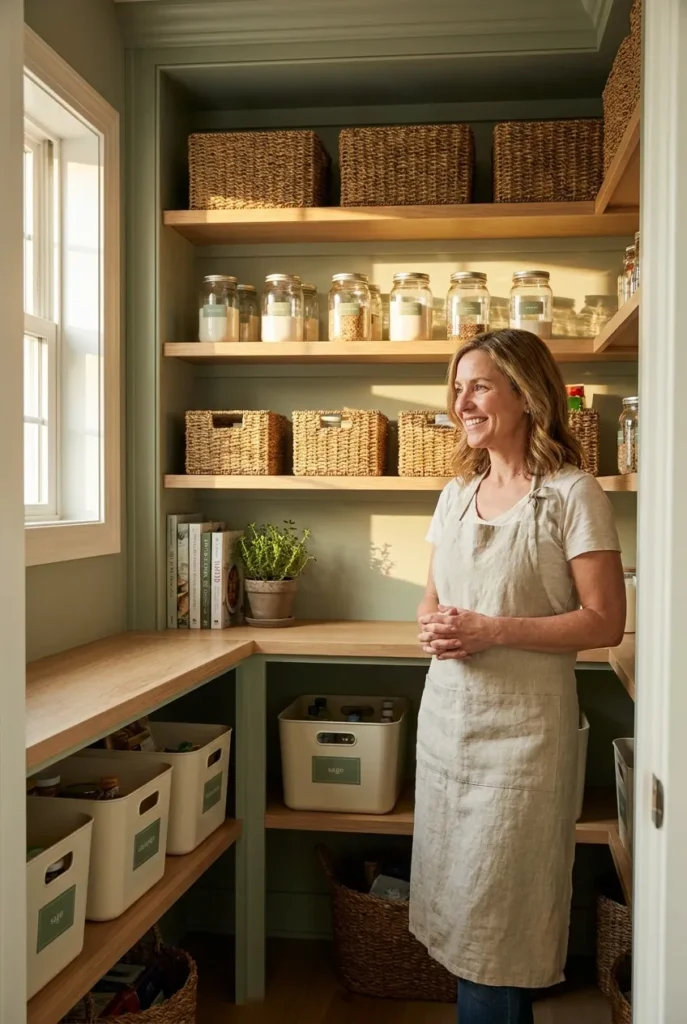
Here’s the honest truth about pantry organization essentials: Pinterest has sold us a fantasy. Matching glass canisters, woven baskets in a perfect row, hand-lettered labels catching the morning light. It looks incredible. It also costs a small fortune, and half of it stops working the second real groceries come home. After redoing my own pantry twice (the first attempt was very pretty and lasted about nine days), I learned which buys actually earn their shelf space and which ones are just photogenic clutter.
So this is the buy-or-skip guide I wish I’d had. We’ll separate the genuine pantry organization essentials from the stuff that only works in a styled photo, and yes, we’ll deal with deep shelves and the no-spend route too. Grab your coffee. Let’s sort this out.
What Pantry Organization Essentials Actually Means (Start Here)
Before you buy a single bin, you need a plan. The top organizers all say this, and they’re right, but they rarely tell you what “a plan” looks like in practice. So here’s mine.
A working pantry does three jobs. It shows you what you have, it keeps the things you reach for daily within easy grabbing distance, and it stops food from expiring in the dark. That’s it. Every real essential supports one of those three jobs. Anything that doesn’t is decoration.
I call this the Three-Job Test, and it’s the backbone of everything below. Before any product goes in your cart, ask: does this help me see, reach, or rotate? If it fails all three, it’s a Pinterest prop, not a pantry essential. (You’d be amazed how many cute bins fail this on the spot.)
Quick reality check on the budget side: you can absolutely build a functional pantry for under $40 at Dollar Tree and Target, or you can spend $400 on a matched OXO set. Both can pass the Three-Job Test. The price tag isn’t the point. The function is.
The Pinterest Essentials That Actually Earn Their Spot
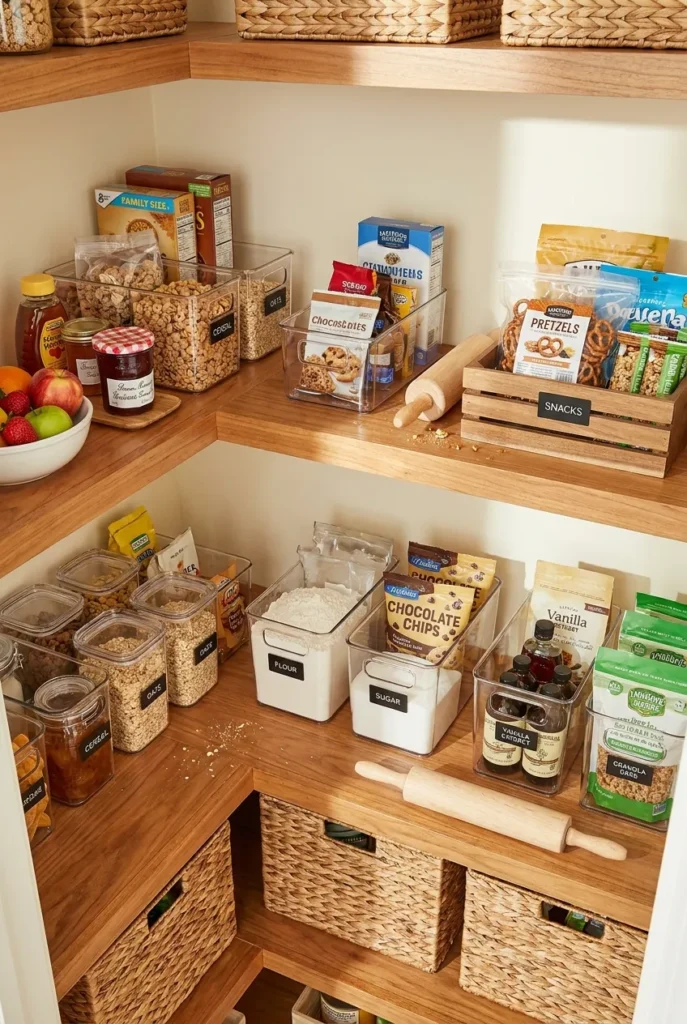
Some of the famous Pinterest buys are genuinely worth it. Here are the ones that survived real life in my kitchen, ranked with the highest-value pick first, because if you only buy one thing, make it this.
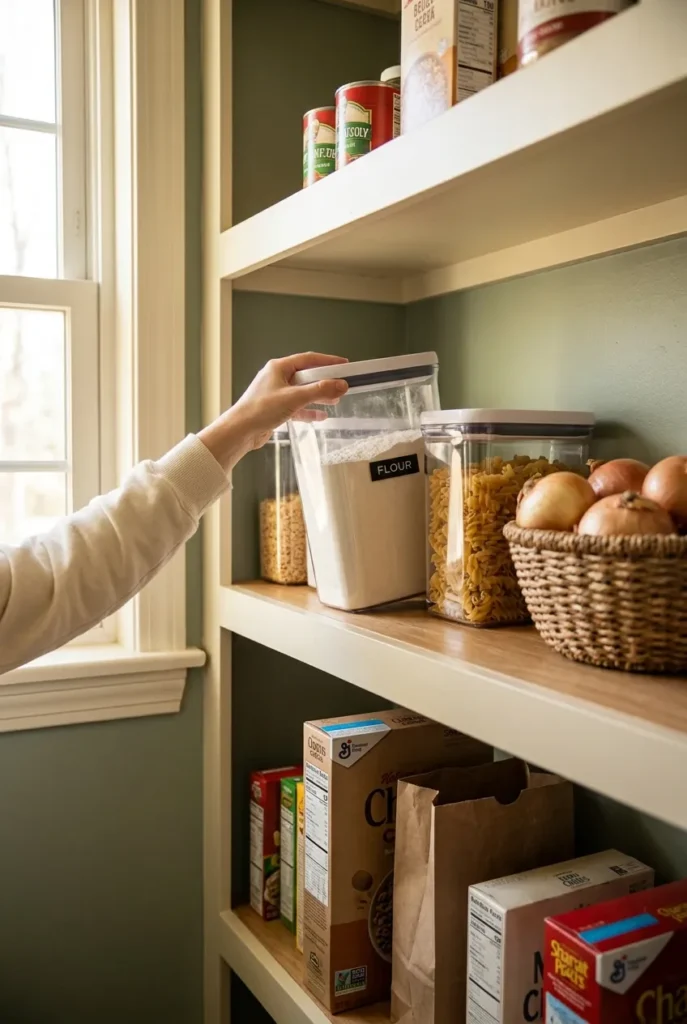
Clear airtight containers (the real MVP). Decanting flour, sugar, rice, and pasta into see-through containers does more than look nice. You can spot when you’re running low, pests stay out, and stale air stays away. The OXO Good Grips POP line is the cult favorite for a reason: the push-button lids genuinely seal, and the square shape wastes zero shelf space. A 1.6-quart POP holds about a standard bag of sugar. They run roughly $13 to $16 each, which adds up fast, so start with your four most-used staples and build slowly. Honestly, that’s the move.
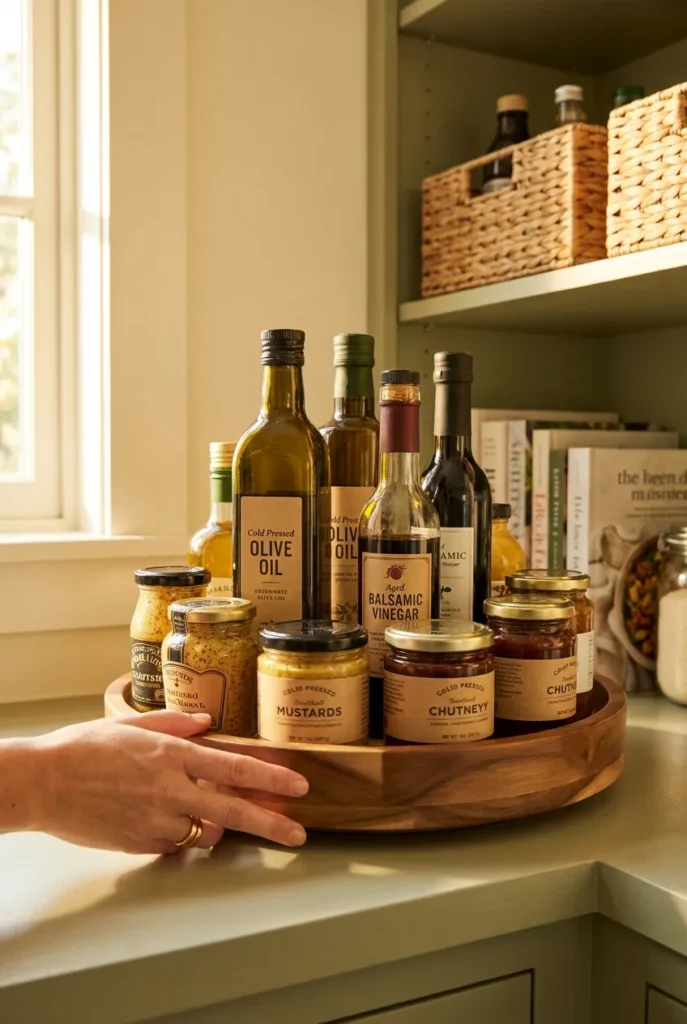
A lazy Susan for oils and condiments. This one’s cheap and it punches way above its weight. A simple turntable (Dollar Tree has them, so does mDesign for a sturdier version around $10) means the soy sauce in the back is no longer lost forever. One spin and you see everything.
Tiered shelf risers for cans and jars. Flat rows hide the back two-thirds of everything. A tiered riser tilts your cans up like a little stadium so you can read every label at a glance. This is the single best fix for the “I bought three jars of cumin because I couldn’t see the first two” problem.
Stackable bins for grab-and-go zones. A labeled snack bin your kids (or you, at 9 p.m.) can pull out in one motion keeps clutter contained. Look for clear ones with cut-out handles.
If you want to take your whole kitchen from chaos to calm in one sitting, this 15-minute kitchen reset routine pairs perfectly with a freshly sorted pantry.
The Pretty Stuff That Pinterest Oversells
Now the fun part. These are the famous buys that photograph beautifully and then quietly let you down. I owned most of these, so I’m speaking from experience (and mild regret).
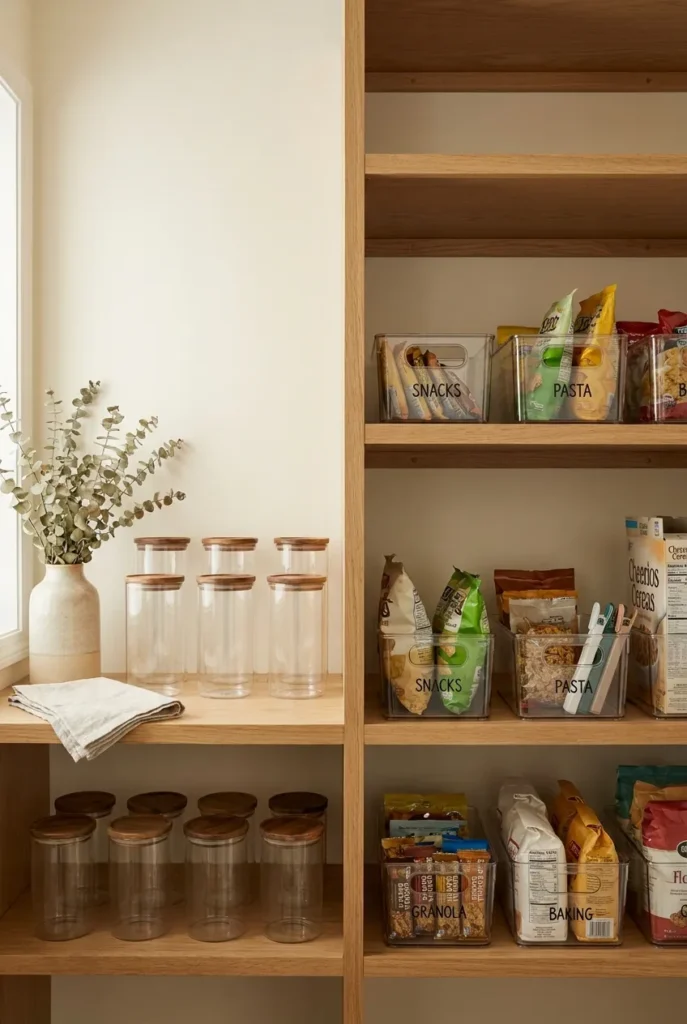
Glass canisters for everything. Gorgeous, heavy, breakable, and expensive. Glass is great for a small display row of pasta or beans on a counter. For a full pantry of staples? You’ll spend hundreds and risk a shattered mess every time one slips. Clear plastic does the same visual job for a fraction of the cost.
Decanting your entire pantry. Pinterest loves a pantry where even the goldfish crackers live in a fancy jar. The catch nobody mentions: you lose the cooking instructions, the expiration date, and the barcode. Decant the staples you use constantly. Leave the rest in their packaging. There’s no prize for a label-free pantry.
Matching woven baskets in a perfect row. Beautiful, yes. But solid baskets hide everything inside, so unless you label the front, you’re back to playing memory games. They also eat vertical space. Use one or two for produce like onions and potatoes, then stop.
Spice drawer inserts when you don’t have a spice drawer. So many pins push a specific gadget for a setup you may not even have. Buy for your actual pantry, not the one in the photo.
The pattern here is simple: aesthetic-first buys fail the Three-Job Test. They don’t help you see, reach, or rotate any better than a $4 alternative. They just look better on a grid.
How to Organize Deep Pantry Shelves (The Part Nobody Explains)
Deep shelves are where good intentions go to die. Stuff gets shoved to the back, forgotten, and rediscovered two years past its date. If your pantry is more cave than closet, this section is for you, and it’s something the big articles skip entirely.
The fix is to stop storing things in rows and start storing them in pull-out lanes. Here’s how.
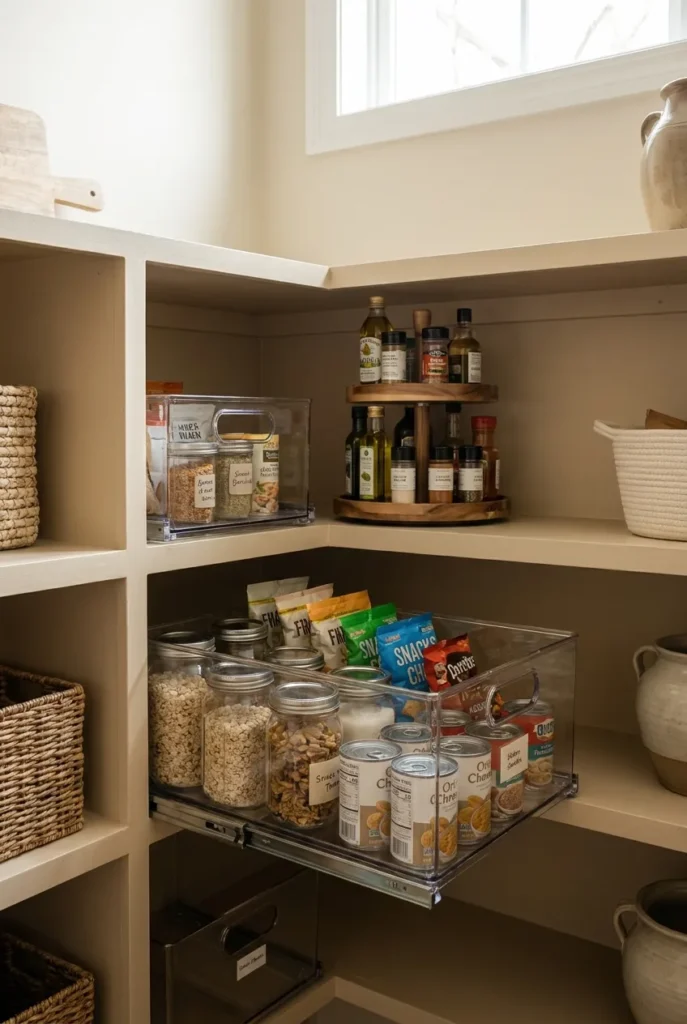
Use deep bins as drawers. Put a labeled bin on the shelf, fill it front to back, and pull the whole thing out when you need the back items. The bin becomes a drawer you never installed. Clear ones work best, but even a $1.25 Dollar Tree bin does the job.
Put a lazy Susan in the deep corner. Corners are the worst offenders on deep shelves. A turntable turns dead corner space into spinnable, reachable storage.
Store backstock behind frontstock, same item only. The back of a deep shelf is perfect for the extra jar of peanut butter, as long as the front jar is the same thing. That’s how you avoid the three-jars-of-cumin trap.
Keep a step stool nearby for the high deep shelves. The pros mention this for a reason. The top deep shelf is useless if you can’t safely reach the back of it.
The Pantry Zone Method (Your Free Organizing Framework)
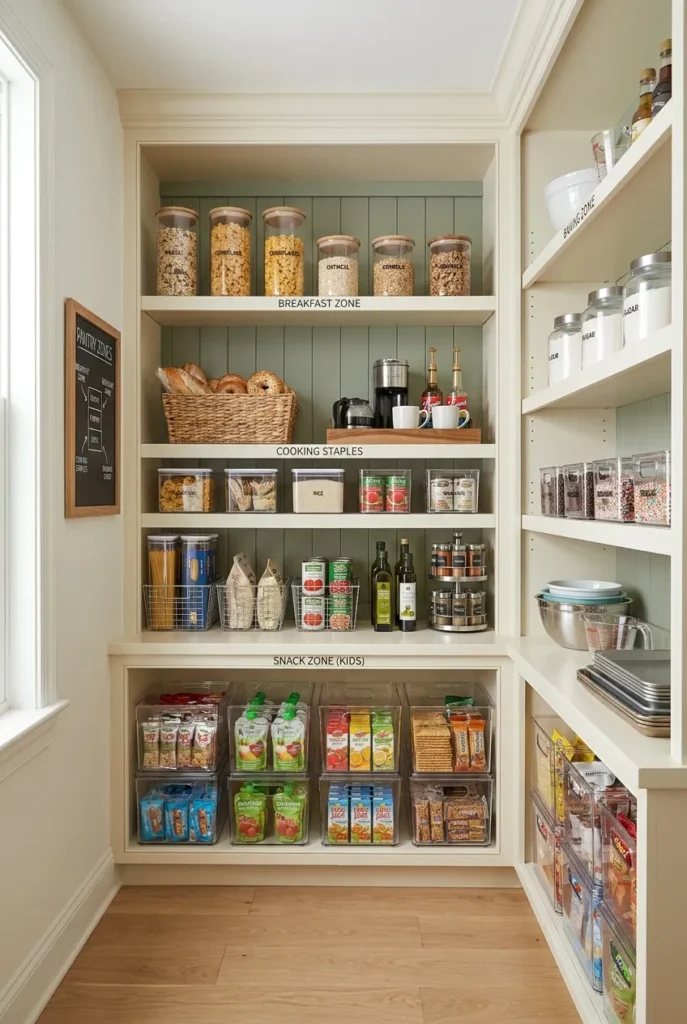
If you remember one system from this whole article, make it this. The Pantry Zone Method sorts your shelves by when you actually use things, not by food type. It’s how organized pantries stay organized.
Four zones, eye level to floor:
Breakfast zone at eye level. Cereal, oats, coffee, the stuff you reach for half-asleep. Put it where your hands land first.
Dinner and cooking zone just below. Pasta, rice, canned tomatoes, oils, the daily-driver ingredients.
Baking and occasional zone up high or to the side. Flour, sugar, sprinkles, the things you reach for on weekends.
Snacks and grab-and-go down low. Kid height, so little hands serve themselves and leave your eye-level shelves alone.
How to Organize a Pantry Without Buying Anything
Here’s the part Pinterest will never show you, because nobody profits from it. You can dramatically improve your pantry today, with zero new products. This is the real essentials list: things you already own.
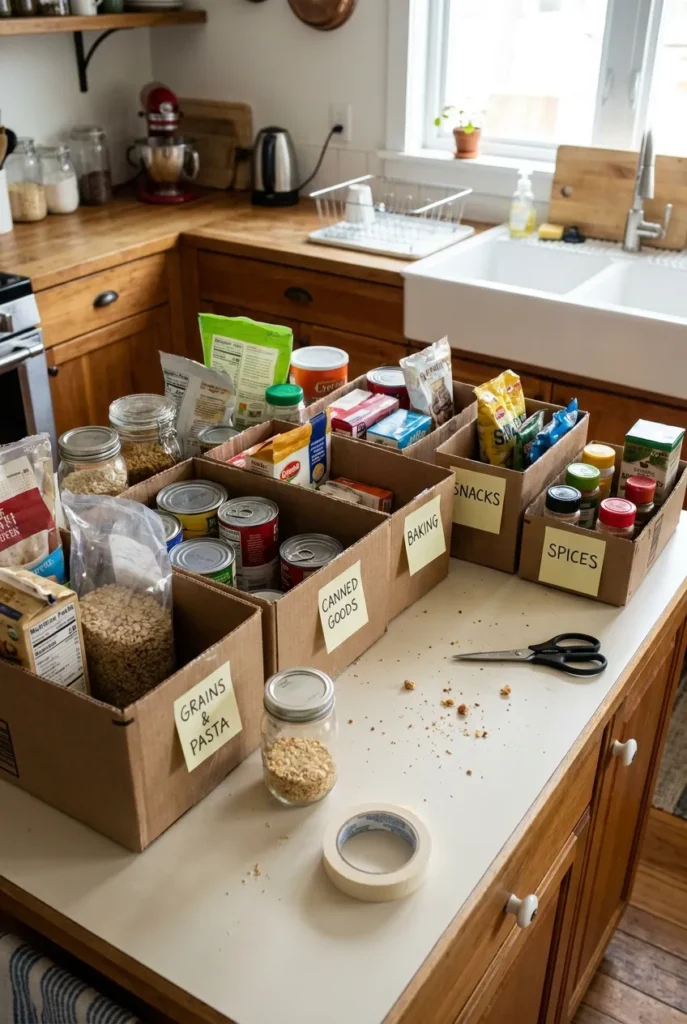
Start by pulling everything out. Every box, can, and bag onto the counter. You can’t organize around chaos you can’t see.
Group like with like as you go. All the canned goods together, all the baking stuff together, all the snacks together. You’re building zones with what you have.
Repurpose boxes you’d recycle. A clean shoebox or a cut-down cereal box makes a free drawer divider. Tape the front shut, cut the top at an angle, and you’ve got a bin.
Use jars and containers you already own for decanting. That empty pasta sauce jar is a perfectly good home for lentils.
Put a sticky note on each shelf as a temporary label. Free, instant, and it tells you if your zones actually make sense before you commit to anything fancier.
While you’ve got everything out, this is the ideal moment to run a quick audit. Here’s a guide to the expired pantry items worth tossing tonight so you only reorganize food you’ll actually eat.
The FIFO Refill Rule (How to Keep It Organized for Good)
Organizing is the easy part. Staying organized is where most of us fall apart by week two. The trick is one tiny habit: First In, First Out.
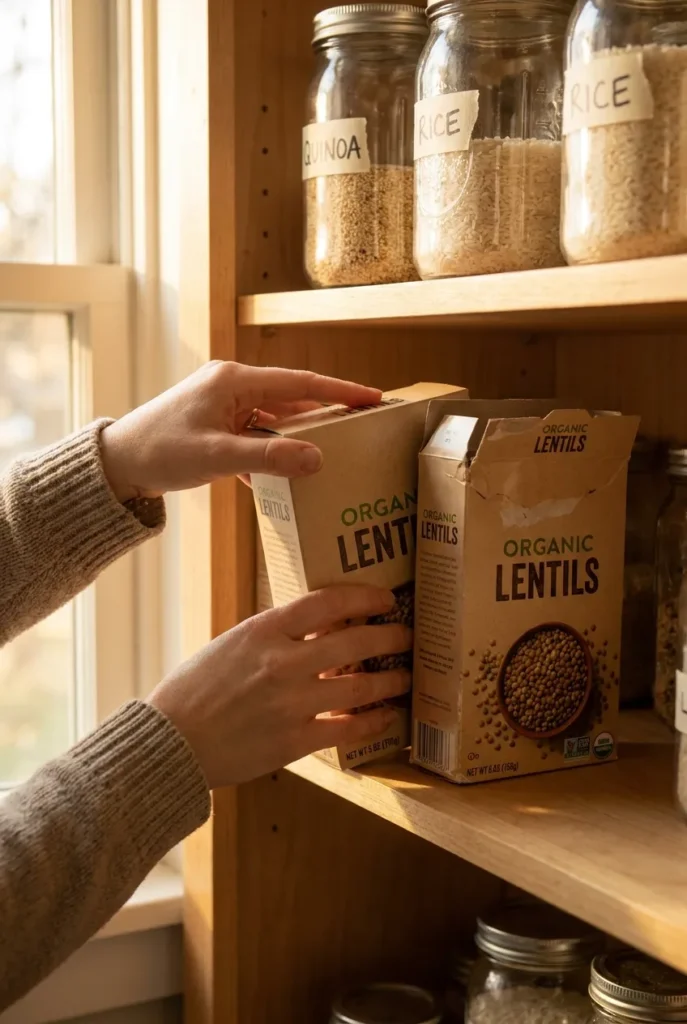
When you bring home groceries, put the new items behind the old ones. Always. The older food moves to the front and gets used first, so nothing rots in the back. Grocery stores run their whole business on this, and it works just as well in your pantry.
Pair FIFO with a five-minute weekly check. Every week, before your grocery run, glance at each zone and pull anything getting low to the front. That’s it. Five minutes protects all the work you just did.
A capsule list of true pantry essentials to keep stocked, for the Pinterest crowd asking what to buy: a couple of pastas, rice, canned tomatoes and beans, broth, oats, flour, sugar, cooking oil, and your three or four go-to spices. Build from there based on what you actually cook. A first apartment doesn’t need a 90-item list. It needs the dozen things you’ll really use.
A Quick Buy-or-Skip Cheat Sheet (Screenshot This)
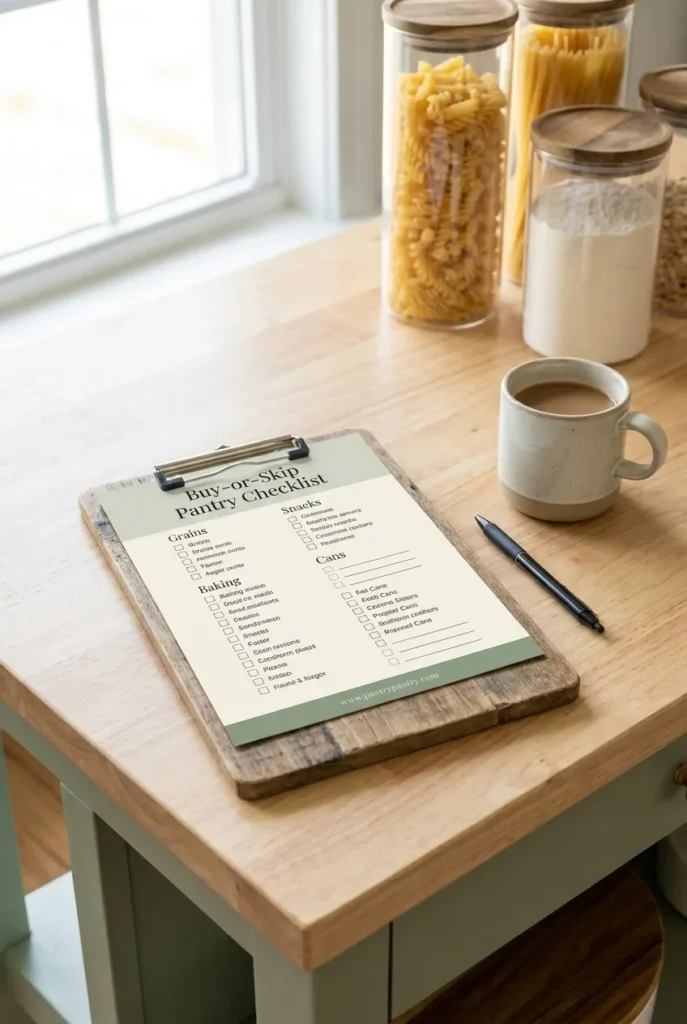
Here’s the whole article boiled down to one screenshottable list. Pin it, save it, take it to Target.
Buy: clear airtight containers for your top staples, one or two lazy Susans, tiered can risers, a few clear stackable bins with handles, simple white labels.
Skip: a full set of glass canisters, baskets you can’t see into, single-purpose gadgets for setups you don’t have, anything bought just because it matched.
Free: pull-everything-out reset, repurposed-box dividers, sticky-note labels, the zone method, the FIFO habit.
The honest summary is this. Real pantry organization essentials are the handful of things that help you see, reach, and rotate. Everything else is optional, and a surprising amount of it is just for the photo.
FAQ: Your Pantry Organization Questions, Answered
What are pantry organization essentials, really?
The genuine essentials are clear airtight containers for your most-used staples, a lazy Susan or two for bottles and corners, tiered risers so you can see cans, and a few labeled bins for grab-and-go items. Everything beyond that is preference, not necessity.
What are the basic pantry essentials to keep stocked?
A practical pantry essentials list looks like: pasta, rice, canned tomatoes, canned beans, broth, oats, flour, sugar, cooking oil, and a few core spices. Add to it based on the meals you actually make each week.
How do I organize a pantry with deep shelves?
Use clear bins as pull-out drawers so back items never get lost, tuck a lazy Susan into the deep corners, and store backstock directly behind the same frontstock item. Keep a step stool handy for high deep shelves.
Can I organize my pantry without containers?
Absolutely. Pull everything out, group like items together, repurpose cardboard boxes as free dividers, decant into jars you already own, and use sticky notes as temporary labels. It costs nothing and works.
What are pantry essentials for one person?
Scale down, don’t skip. One person still wants the core staples, just in smaller quantities and fewer multiples. Buy single containers, smaller bags, and lean on your freezer to keep extras from going stale.
Is there a pantry essentials PDF or checklist I can use?
The buy-or-skip cheat sheet above is built to screenshot and take shopping. Save it to your phone, and you’ve got a working pantry checklist without printing a thing.
How do I keep my pantry organized long-term?
Two habits: FIFO (new groceries go behind old ones) and a five-minute weekly glance before grocery shopping. That tiny routine protects all your hard work.
Your Pantry, Minus the Pressure
Here’s the thing I wish someone had told me before my first very expensive, very Pinterest-y attempt: a pantry doesn’t have to be beautiful to be brilliant. It has to help you see what you’ve got, reach what you need, and use food before it expires. If a matching jar set makes you happy, wonderful, get it. But you don’t need it, and you definitely don’t need all of it.
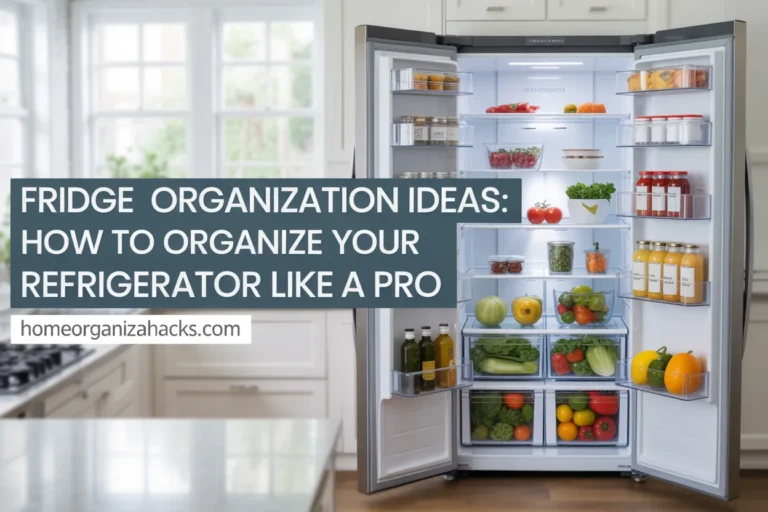
Start with one shelf this weekend. Pull it out, group it, and try the zone method with stuff you already own. See how it feels before you spend a dime. Once your pantry’s sorted, your fridge is usually next, so here are some fridge organization ideas that follow the same see-reach-rotate logic.
What’s the one item hiding in the back of your pantry right now that you completely forgot you owned? Go find it. That’s where the real organizing starts.