
Natural Cleaning Recipes: 7 DIY Solutions Using Vinegar and Baking Soda
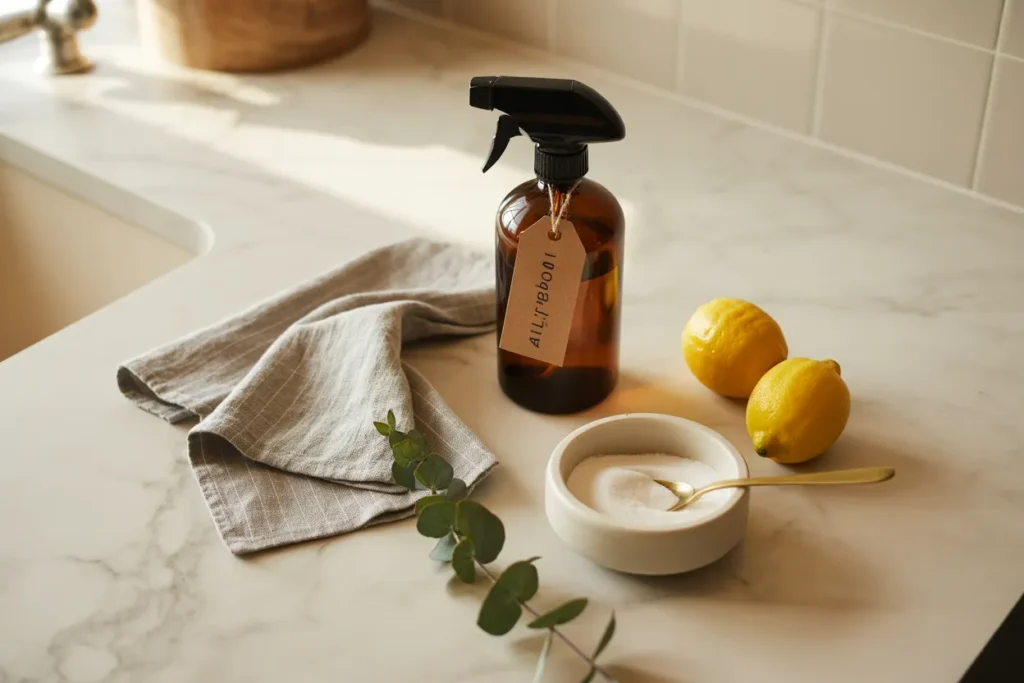
You walk into the kitchen, glance at the counter, and there it is again. That sticky ring under the coffee maker, the streaky stovetop, the lineup of plastic spray bottles you don’t fully trust around the dog. The cabinet under the sink looks like a chemistry warning poster. Your wallet feels lighter every time you restock.
Here’s the good news. Seven natural cleaning recipes, two pantry staples, and about $12 in ingredients can replace nearly every bottle in that cabinet. I’ve tested every recipe in this post in my own home over the last two springs, including the one that finally got the hard water off my glass shower door.
Who This Guide Is For
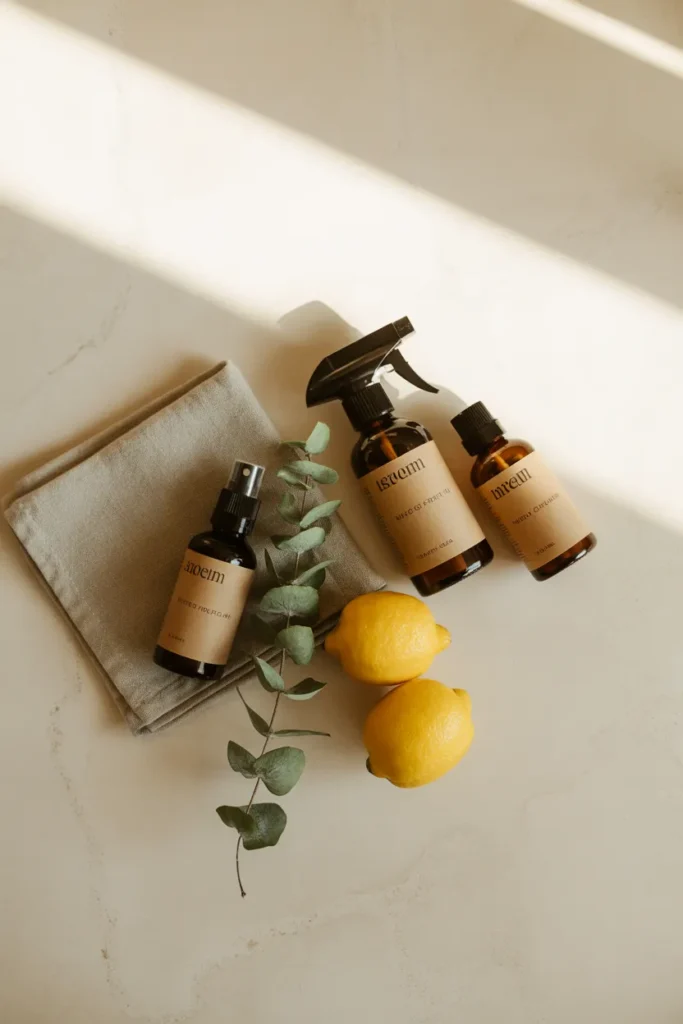
This post is for you if you’re a renter who can’t be opening every window for fumes, a parent with crawlers and toddlers, a pet owner whose dog licks the floor twenty times a day, or a homeowner who’s tired of paying $6 a bottle for cleaner that smells like a swimming pool. Budget-conscious, health-conscious, and kind of done with the chemical aisle. That’s our reader.
How This Guide Is Organized
We’re going room zone by room zone. The 7 core natural cleaning recipes come first (the master toolkit), then I’ll show you exactly which one to grab for the kitchen, the bathroom, your floors, glass, laundry, and carpet. After that, a budget vs splurge starter kit, a printable cheat sheet you can pin, common mistakes to skip, and the FAQs every reader actually asks me.
Why Bother Making Your Own Natural Cleaning Recipes
Three reasons, and I’ll keep it short because you’re here for recipes.
1. Cost. A 16 oz bottle of Mrs. Meyer’s All-Purpose runs about $5.99 at Target. The DIY version costs roughly $0.42 per bottle once you’ve got vinegar and a few drops of essential oil. Over a year of weekly use, that’s a $260 swing for one household.
2. Ingredient transparency. You mix it, you know what’s in it. No “fragrance” loophole, no surfactants you can’t pronounce.
3. Pet and kid safety. The American Lung Association points out that many conventional household cleaners contribute to indoor air pollution and can trigger respiratory irritation. With vinegar, baking soda, and essential oils, you control the exposure.
For more on what to actually look for on a label, the EPA’s Safer Choice program keeps a public list of vetted ingredients. Worth a bookmark.
What You Need Before You Start (Starter Kit)
Before we touch a recipe, get these basics. Total cost, around $35 for the whole setup, and you’ll use it for months.
- Distilled white vinegar, 1 gallon, $3.50 at Walmart
- Baking soda, 4 lb box, $4 at Target
- Castile soap, 16 oz Dr. Bronner’s unscented, $13 at Target or Amazon
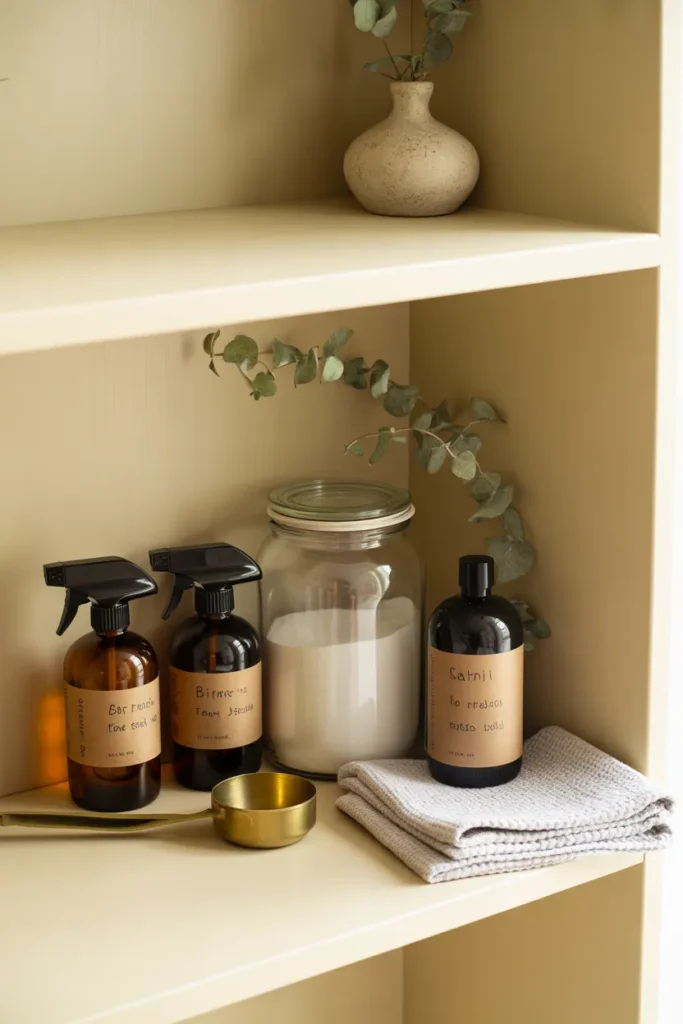
- Three 16 oz amber glass spray bottles (amber protects essential oils from light), about $12 for a 3-pack on Amazon
- Essential oils: lemon, tea tree, lavender, eucalyptus. Plant Therapy or NOW Foods, roughly $7-$10 per bottle
- Microfiber cloths, 6-pack, $8 at Costco or HomeGoods
That’s your foundation. If you want to keep things tidy under the sink, my vertical storage ideas guide walks through how to fit all of this in a 24-inch base cabinet without losing your mind.
The 7 Core Natural Cleaning Recipes
Each recipe below answers three things: what it is, why it works, and how to make it. Save this section to Pinterest and you’ve got a year of cleaning sorted.
1. The All-Purpose Vinegar Spray (your daily workhorse)
What it is: A diluted white vinegar spray with citrus peel infusion that handles 80% of everyday surfaces.
Why it works: Vinegar’s acetic acid breaks down grease, soap scum, and mineral deposits. The citrus peel cuts the harsh smell and adds a mild antibacterial boost from d-limonene.
How to make it:
- 1 cup distilled white vinegar
- 1 cup distilled water
- Peels from 2 lemons or 1 orange, soaked in the vinegar for 2 weeks before mixing
- 10 drops lemon essential oil
Strain, pour into a 16 oz amber spray bottle, shake before each use. Cost per bottle: about $0.45.
Use it on: Sealed countertops, stovetops, kitchen tile, trash cans, garbage disposals, microwave interiors.
Don’t use it on: Granite, marble, travertine, natural stone, hardwood floors, cast iron, or electronic screens. The acid etches stone and strips finishes.
2. The Baking Soda Scrub (for anything stuck-on)
What it is: A thick paste that scours without scratching.
Why it works: Baking soda is a mild abrasive (about 2.5 on the Mohs hardness scale) plus an alkaline base, so it lifts grease while it scrubs.
How to make it:
- ½ cup baking soda
- 2 tablespoons castile soap
- 1 teaspoon water (add more drop by drop if needed)
- 5 drops lemon essential oil
Mix in a small mason jar. Apply with a damp cloth or sponge, scrub gently, rinse. Lasts 2 weeks in a sealed jar.
Use it on: Stainless steel sinks, bathtub rings, oven racks, sheet pans, grout lines.
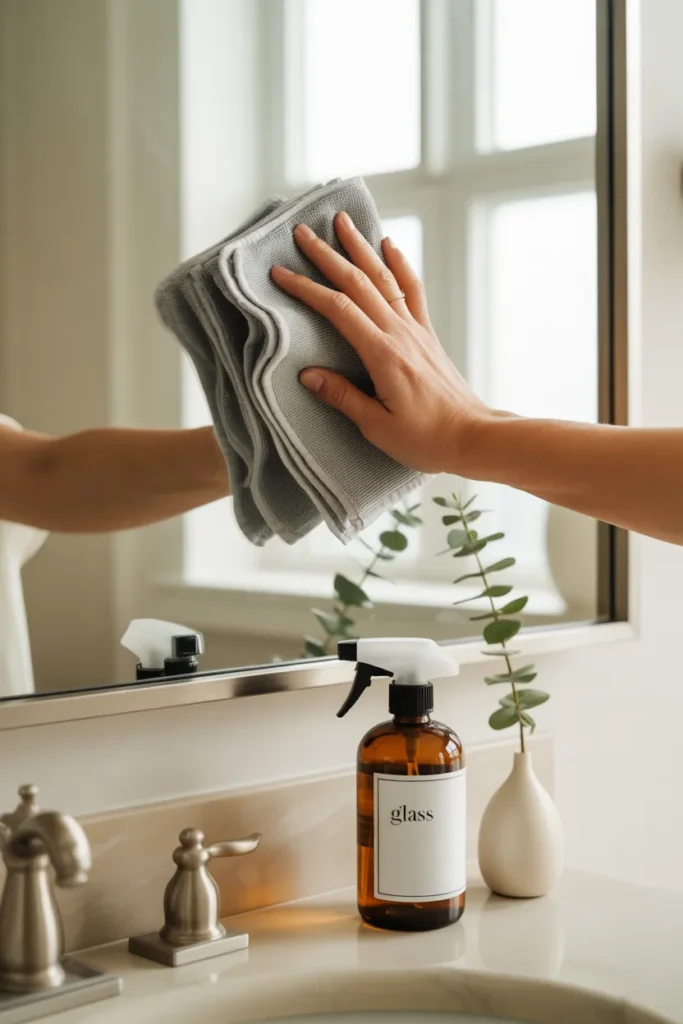
3. The Glass and Mirror Spray (truly streak-free)
What it is: A vinegar-and-cornstarch glass cleaner that beats Windex, no joke.
Why it works: Cornstarch is the secret. It bonds to dust and pulls it off the surface instead of smearing it around.
How to make it:
- 1 cup water
- 1 cup distilled white vinegar
- 1 tablespoon cornstarch
- 5 drops lavender essential oil (optional, but it smells dreamy)
Shake well before every use because the cornstarch settles. Spray, wipe with a clean microfiber cloth in a Z pattern, then buff with a dry cloth.
Use it on: Windows, mirrors, glass shower doors, framed art glass.
4. The Bathroom Disinfecting Spray (kills the gross stuff)
What it is: A heavier-duty spray for the toilet, shower, and high-touch surfaces.
Why it works: Tea tree oil is naturally antimicrobial. Studies published in the Clinical Microbiology Reviews journal note that tea tree oil shows broad-spectrum antimicrobial activity against several common household pathogens. Pair it with vinegar and you’ve got real cleaning power.
How to make it:
- 1 ½ cups distilled water
- ½ cup distilled white vinegar
- 1 teaspoon castile soap
- 20 drops tea tree essential oil
- 10 drops eucalyptus essential oil
Pour into an amber spray bottle, shake gently. Spray, let sit 5 minutes, wipe.
Use it on: Toilet exteriors, shower walls, tile, sinks, doorknobs, light switch plates.
If your bathroom storage is part of the problem, my 15-minute medicine cabinet organization post shows exactly how I keep my DIY sprays and bath supplies from becoming a junk drawer.
5. The Wood Floor Cleaner (gentle, no warping)
What it is: A castile soap and water solution that cleans wood without leaving residue.
Why it works: Castile soap is plant-based and pH-balanced enough to lift dirt without the high acidity that damages wood finishes.
How to make it:
- 1 gallon warm water
- 2 tablespoons unscented castile soap
- 5 drops lemon essential oil (optional)
Mix in a bucket. Mop with a barely-damp microfiber mop. Never soak the floors.
Use it on: Sealed hardwood, engineered wood, luxury vinyl plank, laminate.
Note: Skip the vinegar for wood floors. Acid plus wood finish equals dull, hazy floors over time. This is one of the most common mistakes I see in DIY cleaning blogs.
6. The Carpet Refresher Powder (cozy on a budget)
What it is: A baking-soda-based dry powder you sprinkle, let sit, and vacuum up.
Why it works: Baking soda absorbs odors at the molecular level. It doesn’t mask smells, it neutralizes them.
How to make it:
- 2 cups baking soda
- 20 drops lavender essential oil
- 10 drops eucalyptus essential oil
- 1 dried bay leaf, crumbled (optional, helps absorb moisture)
Mix in a mason jar with holes punched in the lid (or use an old Parmesan shaker). Sprinkle generously, let sit 20 minutes, vacuum thoroughly.
Use it on: Area rugs, carpet, upholstered chairs, pet beds, the inside of fabric-lined trash cans.
Pet warning: If you have cats, skip the tea tree and eucalyptus. Use lavender alone or rosemary instead.
7. The Laundry Booster (replaces fabric softener)
What it is: A vinegar-based fabric softener that cuts detergent residue and leaves clothes softer.
Why it works: Vinegar dissolves the alkaline soap residue that makes towels stiff and locks odors into fabric.
How to make it:
- 2 cups distilled white vinegar
- 30 drops lavender essential oil
- 10 drops lemon essential oil
Mix in a glass jar. Add ½ cup to your washing machine’s fabric softener compartment per load.
Use it on: Towels, sheets, workout clothes, kids’ laundry. The vinegar smell rinses out completely.
The Vinegar Surface Safety Chart (Save This One)
This is the chart nobody else gives you, and it’ll save your countertops.
| Surface | Vinegar Safe? | Use Instead |
|---|---|---|
| Sealed quartz counter | Yes (diluted) | All-Purpose Spray |
| Granite or marble | No | Castile soap + water |
| Hardwood floor | No | Wood Floor Cleaner (recipe 5) |
| Stainless steel | Yes | All-Purpose Spray |
| Cast iron | No | Coarse salt + oil |
| Glass and mirror | Yes | Glass and Mirror Spray |
| Tile grout | Yes | Baking Soda Scrub |
| Natural stone shower | No | Castile soap + water |
| Sealed laminate | Yes (diluted) | All-Purpose Spray |
| Electronic screen | No | Distilled water + microfiber |
Screenshot this. Pin it. Tape it inside your cleaning cabinet. Future you will thank present you.
Budget vs Splurge: Building Your Natural Cleaning Kit
Two ways to set this up depending on where your wallet is this month.
Budget Kit (under $25 total)
- Distilled white vinegar, $3.50 at Walmart
- Generic baking soda, $4 at Dollar Tree
- Two repurposed spray bottles, free (rinse out old cleaner bottles)
- One Walmart store-brand essential oil, $5
- Generic microfiber pack, $5 at Dollar Tree
- Total: about $17.50
Splurge Kit ($120+ total)
- Heinz organic white vinegar, $7 at Whole Foods
- Bob’s Red Mill baking soda, $5
- Three Crate & Barrel amber glass spray bottles with chalk labels, $36
- Plant Therapy essential oil starter set (lemon, lavender, tea tree, eucalyptus), $42
- West Elm pure linen tea towels, 2-pack, $24
- Williams Sonoma stoneware crock for baking soda, $18
- Total: about $132
Honestly, the $17 kit cleans just as well. The splurge kit just looks beautiful on an open shelf, which matters if your laundry room is a Pinterest moment. While we’re talking budget upgrades, the same logic shows up in my closet makeover on a budget post where the $25 swap looks identical to the $400 version.
Cost Per Bottle: DIY vs Name Brand
Here’s the math that made me a convert. Per 16 oz bottle of all-purpose spray:
- DIY All-Purpose Vinegar Spray: $0.42
- Method All-Purpose at Target: $4.49
- Mrs. Meyer’s All-Purpose at Target: $5.99
- Branch Basics concentrate (diluted): $7.20
If you go through one bottle a week, the DIY version saves you about $264 a year over Mrs. Meyer’s. Two bottles a week, double that.
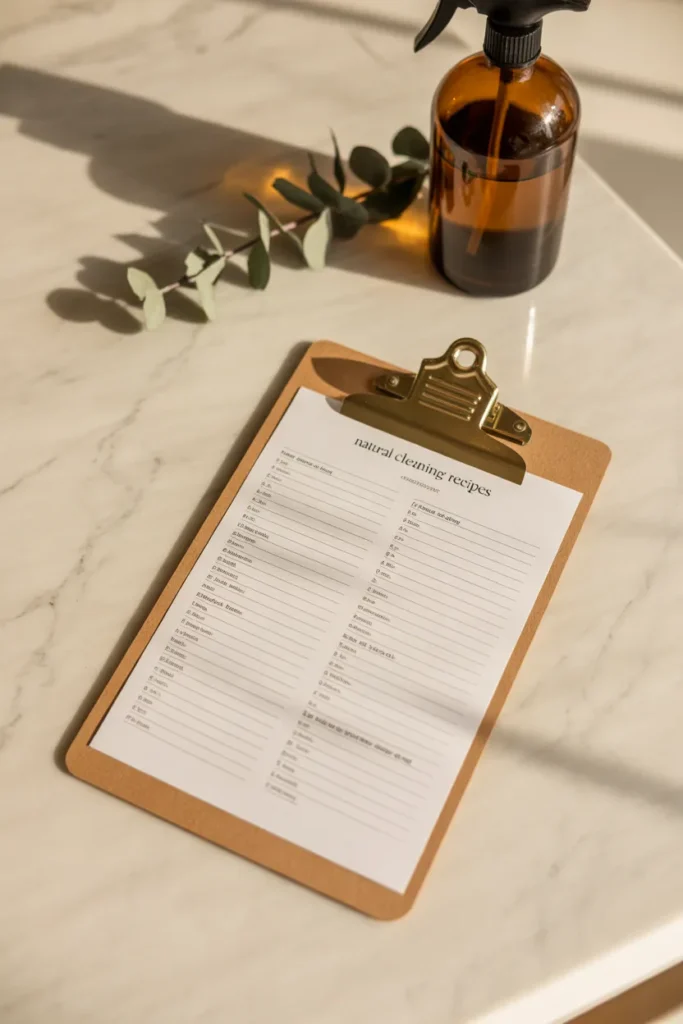
The Printable Cheat Sheet (Pin This)
Here’s the one-page summary readers love to screenshot or print:
Kitchen: All-Purpose Vinegar Spray + Baking Soda Scrub Bathroom: Bathroom Disinfecting Spray + Baking Soda Scrub for grout Glass and Mirrors: Glass and Mirror Spray Wood Floors: Wood Floor Cleaner (no vinegar) Carpets and Rugs: Carpet Refresher Powder (skip eucalyptus if cats) Laundry: Vinegar Laundry Booster in fabric softener slot
Print it, tape it inside the cabinet door. Done.
How to Store Your DIY Cleaners (so they actually last)
This is the part nobody covers and it’s the reason your homemade spray went bad in 3 weeks.
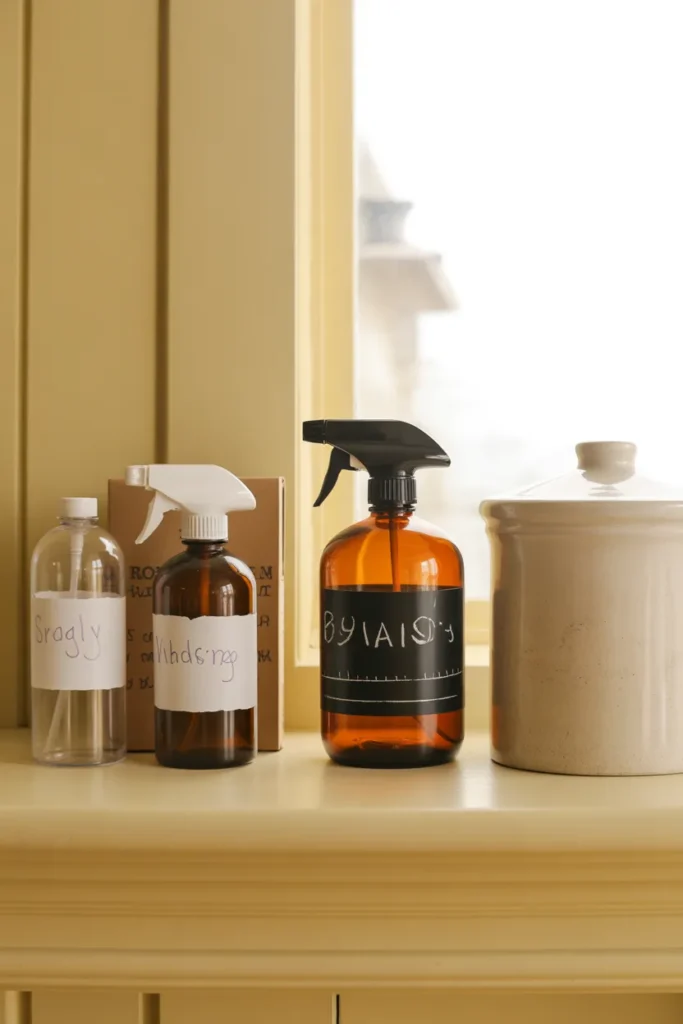
Use amber or cobalt glass bottles, not clear plastic. Light degrades essential oils, and vinegar slowly breaks down some plastics.
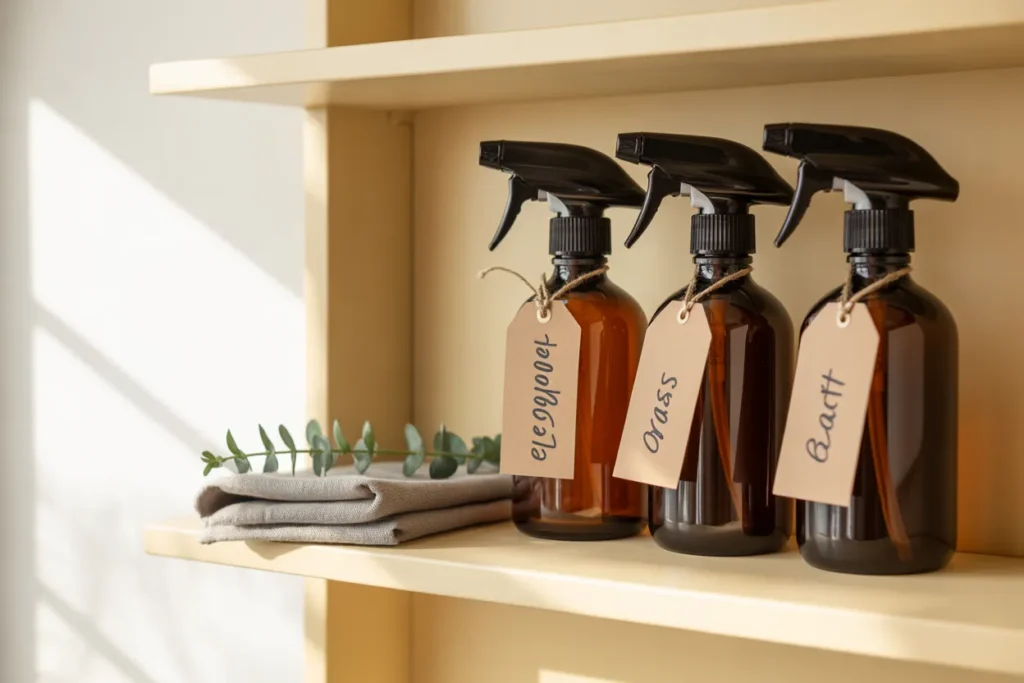
Label everything with the recipe name and the date you mixed it. A little kraft paper tag and a brown marker works.
Shelf life by recipe:
- All-Purpose Vinegar Spray: 6 months in a cool dark cabinet
- Baking Soda Scrub: 2 weeks in a sealed jar
- Glass and Mirror Spray: 1 month
- Bathroom Disinfecting Spray: 2 months
- Wood Floor Cleaner: mix fresh each time
- Carpet Refresher Powder: 3 months in a sealed mason jar
- Laundry Booster: 1 year
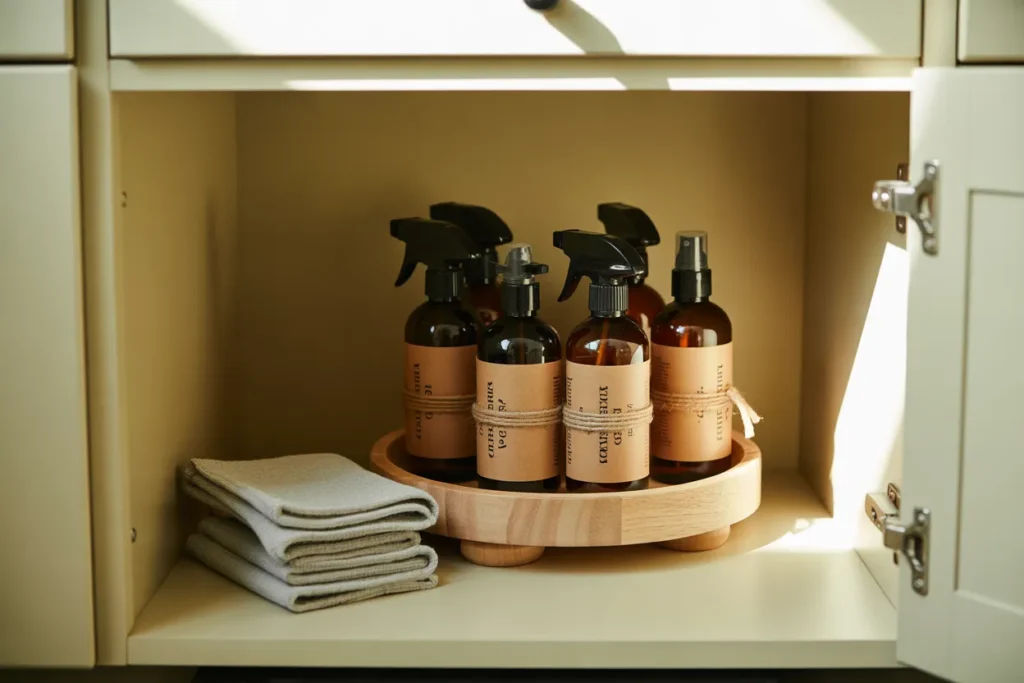
Storage spot: A cool dark base cabinet, ideally with a small turntable so you can see every bottle without digging.
Common Mistakes to Avoid
After three years of testing, these are the slip-ups I see the most.
Mixing vinegar and castile soap together. They cancel each other out. The acid curdles the soap into a useless white mess. Use them in separate recipes, never the same bottle.
Storing in clear plastic. Essential oils break down some plastics over time, and light degrades the oils themselves. Glass only.
Using vinegar on stone. I know I keep saying it. Granite, marble, and travertine will etch and dull within months. Castile soap and water is your friend here.
Skipping the dilution. Straight vinegar isn’t more effective, it’s just harsher and smellier. Diluted formulas clean better because they spread evenly.
Not labeling. Three unmarked amber bottles three weeks later? Pure chaos. Label everything.
Using tap water. Tap water minerals shorten the shelf life of any DIY recipe and can leave streaks. Distilled water from any grocery store, $1 a gallon, fixes it.
Adding essential oils to hot water. It evaporates the active compounds. Always cool or room temperature.
Scent Pairings That Actually Smell Amazing
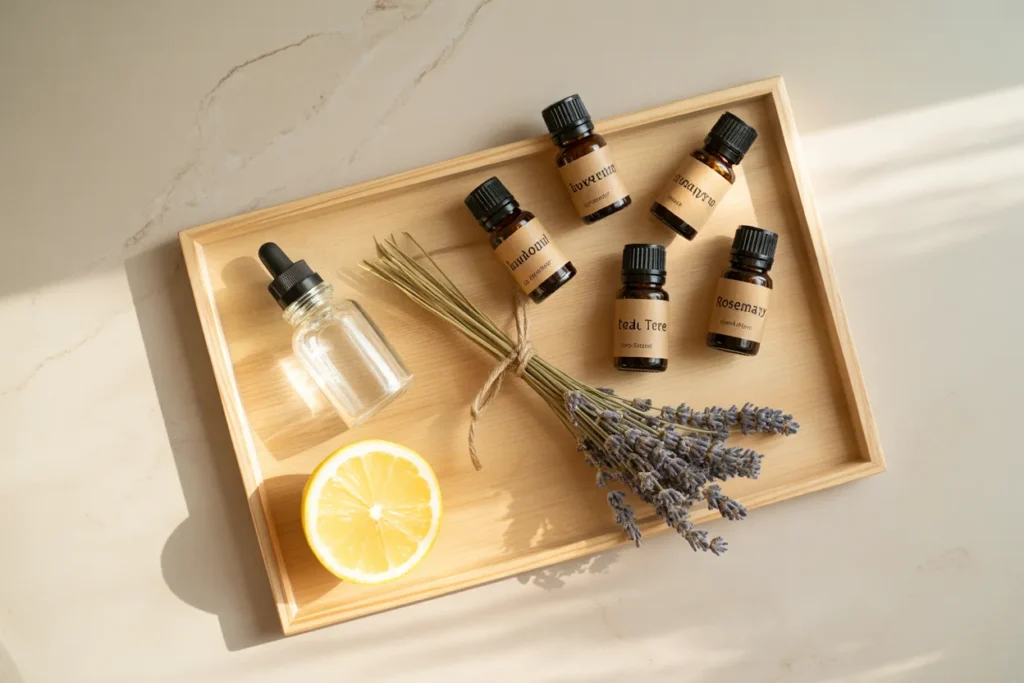
Because cleaning shouldn’t smell like a hospital. Here are my favorite essential oil combos for each space:
- Kitchen: Lemon + a drop of basil. Fresh, food-safe vibe.
- Bathroom: Tea tree + eucalyptus + peppermint. Spa shower energy.
- Bedroom and laundry: Lavender + cedarwood. Calm, cozy, sleepy.
- Living room: Bergamot + lavender. Soft, slightly citrusy.
- Mudroom and entry: Rosemary + lemon. Crisp and slightly herbal.
Stick to 15-25 drops total per 16 oz bottle. More isn’t better, it just gets headache-y.
Frequently Asked Questions
What is the best homemade cleaning solution?
For 80% of jobs, the all-purpose vinegar spray (recipe #1) is the workhorse. It handles kitchen counters, stovetops, tile, and most sealed surfaces. For tougher jobs, switch to the baking soda scrub.
Are natural cleaning recipes safe for kids and pets?
Generally yes, with two caveats. Skip tea tree and eucalyptus oils if you have cats since both can be toxic to felines. Always store sprays out of reach of small children, even when the ingredients are food-grade. Vinegar in the eyes still stings.
How long do homemade cleaners last?
It depends on the recipe. Vinegar-based sprays last 4-6 months in dark glass. Water-based recipes (like the wood floor cleaner) should be mixed fresh each time or stored only 1-2 weeks. The carpet refresher powder lasts 3 months sealed.
Can I use vinegar on every surface?
No. Avoid vinegar on natural stone (granite, marble, travertine), hardwood floors, cast iron, electronic screens, and waxed surfaces. The acid etches and strips finishes. Use the surface chart above as your reference.
What is the budget version of a natural cleaning starter kit?
Around $17 total. Distilled white vinegar from Walmart, generic baking soda from Dollar Tree, two repurposed spray bottles, one bottle of generic essential oil, and a Dollar Tree microfiber pack. That’s the whole kit.
How do I do this in a small apartment or rental?
A 24-inch base cabinet fits everything you need. Use a small lazy Susan or a clear stackable bin to corral your bottles. The recipes themselves don’t need a pantry, just a shelf. If you’re rental-bound, the all-purpose spray and baking soda scrub alone cover most cleaning without any special tools or drilling.
What if I don’t have essential oils?
You can skip them. Essential oils are for scent and a small antimicrobial boost, not the core cleaning power. The vinegar and baking soda do the actual work. Start without oils, add them later when you want to upgrade the experience.
Save This and Start With One Recipe Tonight
Don’t try to make all seven natural cleaning recipes this weekend. Pick the one you’d use the most (probably the all-purpose vinegar spray) and make just that one. Once it’s in your cabinet for two weeks and you realize you haven’t bought a single store cleaner, the rest will follow naturally.
Save this post to your Home Cleaning Pinterest board so you’ve got the surface chart and the cheat sheet when you need them. And if your under-sink situation is the actual problem (raise your hand, I see you), my vertical storage ideas guide is the next stop.
What recipe are you mixing first? Pin the bottle that calls to you and start there.