

Weekly Cleaning Schedule Printable: The Easy Routine That Works
The kitchen counter is buried under mail. There’s a fine layer of dust on the nightstand, a hamper threatening to topple, and a bathroom mirror you’ve been meaning to wipe down since Tuesday. You’re not lazy. You’re just running out of week.
If your house feels like it’s always two steps behind you, a weekly cleaning schedule is the fix. Not the Pinterest-perfect kind that demands two hours a day. A real one. The kind built around the life you actually live.
This guide walks you through a weekly cleaning schedule organized by day and by zone, with three time-budget versions so you can pick what fits the week ahead. We’ll cover what to do, why it works, and exactly how to execute each step in 15, 30, or 60 minutes. There’s a printable-style table you can screenshot, a budget vs splurge supply breakdown, and a recovery plan for the weeks everything goes sideways.
Who This Weekly Cleaning Schedule Is For
This routine works best for:
- Busy working parents who have roughly 20 to 45 minutes a day, not three hours
- Apartment renters and small-space dwellers (this plan scales down to spaces under 600 square feet)
- Pet owners dealing with daily fur, paw prints, and the occasional accident
- Roommates splitting tasks who need a clear, fair rotation
- Anyone whose schedule has fallen apart twice this year and is ready for one that bends without breaking
If you live in a 4,000-square-foot home with a cleaning service, you’ll still find the framework useful, but you can skim the time-budget sections.

How This Schedule Is Organized: One Zone Per Day
The plan uses a simple axis: one zone per weekday, plus a weekend reset. You’re never cleaning the whole house in one go. You’re touching one area deeply and keeping the rest in maintenance mode.
Here’s the seven-day map at a glance:
| Day | Zone | Core Tasks | 15-Min Version | 30-Min Version | 60-Min Version |
|---|---|---|---|---|---|
| Monday | Kitchen | Wipe counters, clean stovetop, mop floor | Counters + stovetop | Add fridge wipe-down | Add deep mop + small appliance clean |
| Tuesday | Bathrooms | Toilets, sinks, mirrors | Toilets + sinks | Add tub and tile spray | Add grout, vent, drawer purge |
| Wednesday | Bedrooms | Sheets, surfaces, floors | Change sheets | Add dust + vacuum | Add closet tidy + under-bed sweep |
| Thursday | Living Areas | Dust, vacuum, declutter | Surface declutter | Add full vacuum | Add upholstery, vents, baseboards |
| Friday | Floors + Trash | Vacuum/mop high traffic, all trash | Trash + entry sweep | Add main floor mop | Add full vacuum + trash bin clean |
| Saturday | Laundry | Wash, dry, fold, put away | One load | Two loads | Sheets, towels, full catch-up |
| Sunday | Reset + Plan | Tidy, restock, plan week | 10-min tidy | Add fridge inventory | Add meal prep + supply restock |
Save that table. It’s the backbone of everything below.
Monday: Kitchen Reset
What it is: A focused 15 to 60 minute scrub of the room that gets dirtiest fastest.
Why it works: The kitchen accumulates more bacteria, grease, and crumbs than any other room. Hitting it on Monday means you start the week with a clean cooking surface, which makes you more likely to cook at home (and waste less takeout money).
How to execute it:
- Clear the counters completely. Yes, completely.
- Spray with an all-purpose cleaner (Mrs. Meyer’s Lemon Verbena runs about $5 at Target and smells like a fresh start).
- Wipe in a clockwise pattern so you don’t miss spots.
- Quick-clean the stovetop with a degreaser, lift burners if needed.
- Sweep, then mop. Use a microfiber flat mop, not a string mop, in apartments under 800 square feet.
If you have a 60-minute window, add the inside of the microwave (a bowl of water with lemon slices, microwaved for 3 minutes, then wipe clean) and a quick fridge shelf wipe-down.
Tuesday: Bathroom Touch-Up
What it is: A targeted clean of every bathroom in the home.
Why it works: Bathrooms grow grime faster than anywhere else, and small daily wipe-downs lose to weekly deep attention. Tuesday is far enough from the weekend that you’re not exhausted yet.
How to execute it:
- Spray toilet bowls first. Let the cleaner sit for 5 minutes while you do other tasks (this is the lazy person’s secret weapon).
- Wipe sinks, faucets, and counters with a glass-and-multisurface cleaner.
- Squeegee or wipe the mirror with a microfiber cloth (paper towels leave lint).
- Scrub toilets last, then floor.
Rental-friendly note: If you can’t drill in a toilet brush holder, a Simplehuman countertop caddy ($30 at Target) sits on the floor without damage and looks like decor.
For the 60-minute version, spray the tub and tile with a foaming cleaner, let it sit, and tackle the grout with an old toothbrush. Rotate which bathroom gets the deep clean each week if you have more than one.
Wednesday: Bedrooms
What it is: Sheet change, surface dust, floor pass.
Why it works: Sleeping in fresh sheets midweek is a small but real mood booster. Wednesday is the psychological hump of the week, and a clean bedroom rewards you with better sleep going into Thursday and Friday.
How to execute it:
- Strip the bed. Toss sheets in the wash.
- Clear nightstands. Wipe with a damp microfiber cloth.
- Dust the dresser, lamps, and headboard. A microfiber duster ($8 at Walmart) beats a feather duster every time.
- Vacuum or sweep, focusing on the area around the bed and under the nightstand.
- Make the bed with the fresh sheets the moment they’re dry.
Pet owner add-on: Vacuum your pet’s bed or wash their cover the same day. Skipping this is how a bedroom starts to smell like a dog by Friday.

Thursday: Living Areas
What it is: Dust, vacuum, and declutter the room you spend the most awake hours in.
Why it works: A clean living room going into the weekend means you’ll actually relax in it instead of staring at the dust on the TV stand all Saturday morning.
How to execute it:
- Round up everything that doesn’t belong. Use a small basket as a “homeless items” bin, then redistribute.
- Dust top to bottom: shelves, picture frames, TV stand, baseboards.
- Plump and rotate couch cushions. Flip them quarterly.
- Vacuum the rug, including under the coffee table.
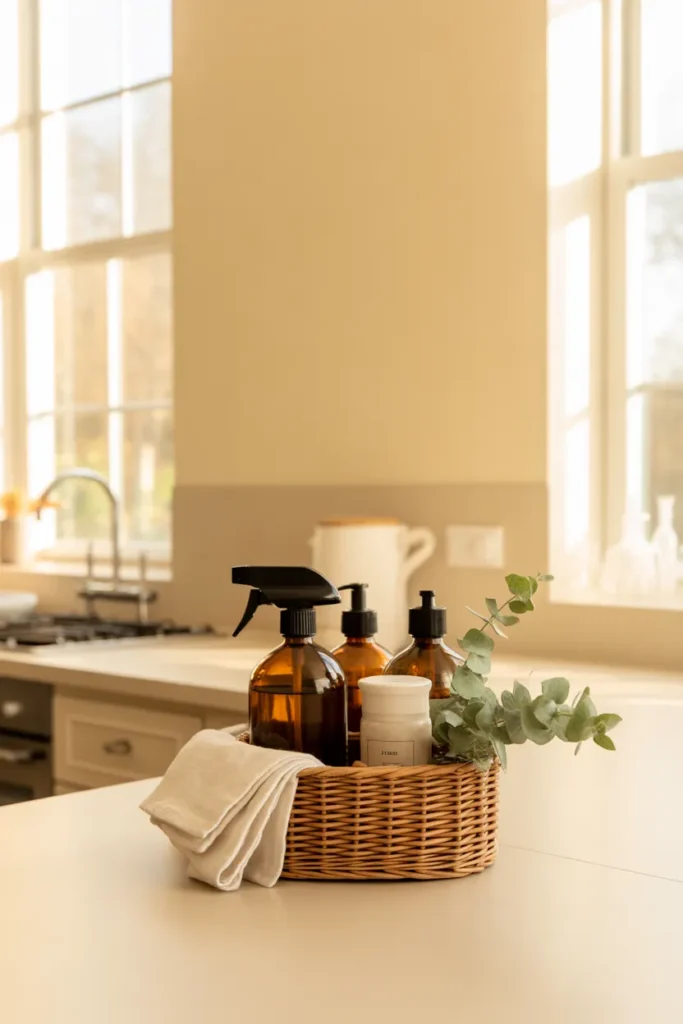
Aesthetic styling tip: Keep your supplies in a pretty caddy (more on that in the supply section). If your cleaning kit looks like decor, you’ll actually use it. A small woven basket from HomeGoods, around $15, holds a microfiber cloth roll and three spray bottles without looking like a janitor’s closet.
If your living space is part of a studio apartment, this Thursday block becomes especially powerful because the living zone is doing triple duty.

Friday: Floors and Trash
What it is: A whole-home pass on floors and a complete trash run.
Why it works: Going into the weekend with clean floors and empty bins changes how the house feels. It’s the single biggest visual reset for the lowest effort.
How to execute it:
- Empty every trash can in the house. Replace liners.
- Vacuum the high-traffic zones: entryway, hallway, kitchen, living room.
- Mop the kitchen and bathroom floors.
- Wipe the inside of the kitchen trash can with disinfectant once a month.
Time-saving move: Keep a roll of trash bags inside the bottom of the can itself, under the current liner. When you pull the full bag, the next one is right there.
Saturday: Laundry
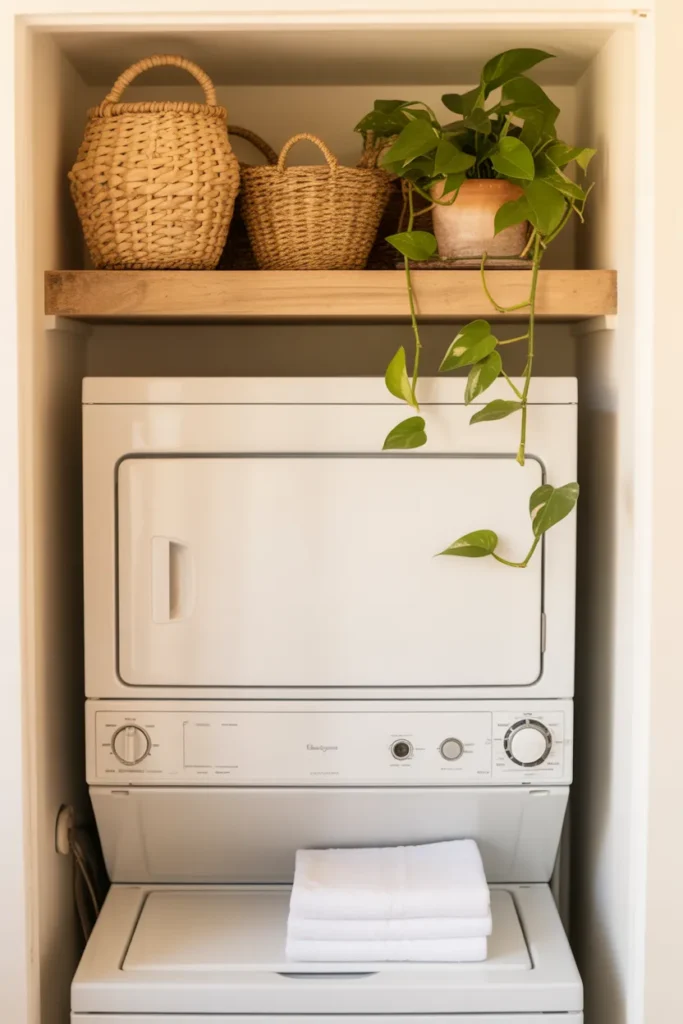
What it is: A dedicated block to wash, dry, fold, and actually put away one to three loads.
Why it works: Laundry is the chore most likely to defeat a weekly cleaning schedule. Giving it a real home on Saturday (not “whenever you can squeeze it in”) removes the daily mental load.
How to execute it:
- Sort the night before, Friday evening.
- Start a load the moment you wake up.
- Use the dryer’s wrinkle-release cycle if folding will be delayed by more than 30 minutes.
- Fold and put away within the same day. The unfolded laundry pile is the gateway drug to a chaotic bedroom.
Sunday: Reset and Plan
What it is: A 10 to 60 minute closeout of the week and prep for the next.
Why it works: The Sunday reset is what makes Monday’s kitchen clean fast. You’re not starting cold. You’re starting from “almost done.”
How to execute it:
- Tidy every room for 10 minutes (set a timer, this is non-negotiable).
- Restock cleaning supplies. Refill spray bottles, replace sponges.
- Glance at the fridge. Toss expired food, write a quick grocery list.
- Plan two or three meals for the upcoming week.
- Look at the calendar. Adjust which day’s zone gets the most or least time based on your week.
This is also a great day to refresh decor touches: a fresh sprig of greenery in a vase, a new candle, freshly fluffed pillows. Tiny aesthetic resets train your brain to see the home as cared for.
Budget vs Splurge: Cleaning Supply Breakdown
The supplies you choose change how often you clean. A pretty caddy gets used. An ugly bucket lives under the sink forever.
Budget (Under $25 per item, ideal for renters and roommates)
- Microfiber cloths, 24-pack: about $12 at Walmart
- Refillable amber glass spray bottles: $8 for two at Dollar Tree (with the 16-ounce upgrade)
- All-purpose castile soap (Dr. Bronner’s): about $11 at Target, dilutes into multiple bottles
- Wicker storage caddy: about $15 at HomeGoods
Mid-range ($25 to $100, ideal for homeowners refreshing the kit)
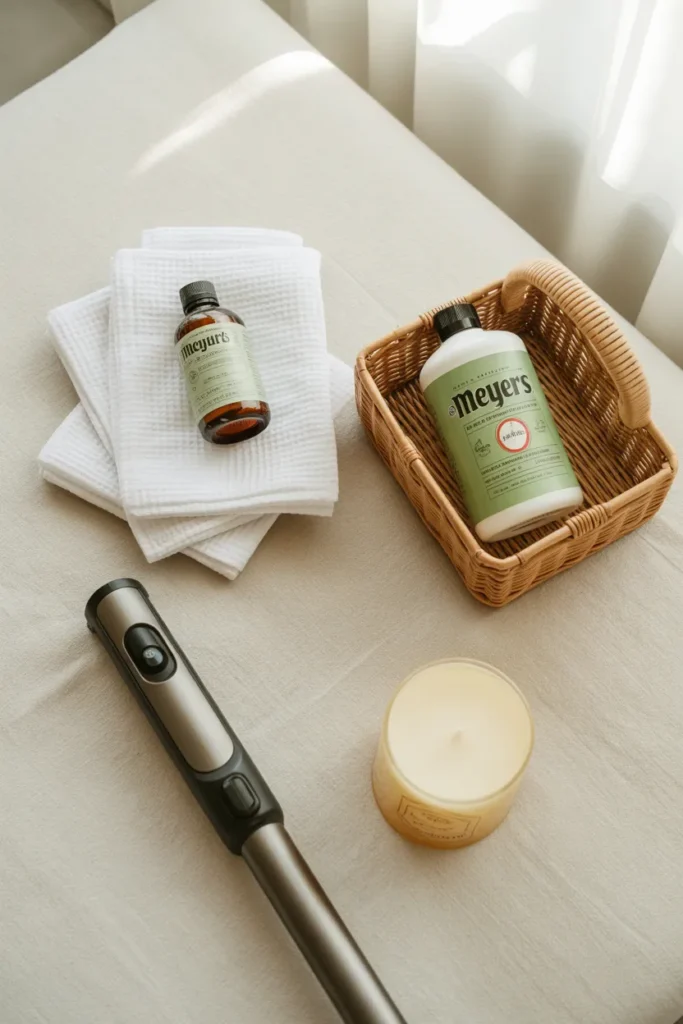
- Mrs. Meyer’s variety pack: about $22 at Target
- Swiffer WetJet starter kit: about $25 at Target
- Bissell handheld vacuum (great for pet owners): about $40 at Walmart
- Ceramic toothbrush holder repurposed as bathroom caddy: about $18 at HomeGoods
Splurge ($100+, ideal if cleaning supplies live on open shelving)
- Dyson V8 cordless vacuum: around $349 at Target
- Branch Basics starter kit: about $69 to $89 direct from the brand
- West Elm woven storage basket: around $59
- Public Goods or Grove Collaborative refill subscription: $40 to $80 per quarter
The Bissell handheld is the OXO bin alternative of the vacuum world: 80% of the function for a fraction of the Dyson price. If you have pets and a small apartment, it’s the single best mid-range buy on this list.
Customizing the Schedule by Household Type
Most weekly cleaning schedules online assume one universal reader. Yours doesn’t have to.
For working moms with young kids: Move laundry to Wednesday and Saturday. Kids generate laundry faster than the rest of the household combined. Use Sunday for a 20-minute toy reset.
For apartment renters under 600 square feet: Combine Monday (kitchen) and Friday (floors) into a single 30-minute block, then use Friday for a deeper bathroom or a closet reset. Studio dwellers can rotate which “zone” gets attention since the zones overlap.
For pet owners: Add a 5-minute fur sweep to Tuesday and Thursday. Wash pet beds every other Saturday with the towels. Keep a lint roller in every room (one in the entryway, one in the bedroom, one in the living room).
For roommates: Print three copies of the schedule. Each roommate owns two weekdays plus one weekend day, rotating monthly. Assign Sunday reset to whoever cooks the least that week.
If you’re working with a small kitchen or pantry, pairing this routine with a small pantry makeover under $50 gives the Monday kitchen reset a much faster finish line.
The 7-Day Zone Reset: Time-Budget Selector
Some weeks you have time. Some weeks you don’t. Pick a version each Sunday based on your calendar:
- 15-minute days (survival mode): Hit only the “Core Tasks” first column. Total time: roughly 1.5 hours across the whole week.
- 30-minute days (normal week): Standard plan above. Total: about 3.5 hours per week.
- 60-minute days (catch-up week): Adds depth tasks. Total: 6 to 7 hours, ideal once a month.
The trick is choosing on Sunday, not deciding mid-Monday when you’re already tired.
What To Do When You Fall Behind: The Recovery Protocol
Every weekly cleaning schedule eventually gets blown up by a sick week, a work deadline, or a houseguest. Here’s how to recover without abandoning the system entirely.
- Skip ahead, don’t catch up. If you missed Monday and Tuesday and it’s now Wednesday, do Wednesday. Don’t try to triple up.
- Run a “10-minute tidy” in every missed zone instead of a full clean.
- Add the missed deep tasks to next month’s catch-up week (the 60-minute version).
- Reset on Sunday like normal. No guilt. No making up for lost time.
A schedule you bend is one you keep. A schedule you break is one you abandon.

Common Mistakes to Avoid
- Cleaning every room every day. The whole point of a weekly cleaning schedule is rotation. If you’re scrubbing bathrooms daily, you’re burning out.
- Buying matching supplies before you’ve used the system for a month. Test the routine first, then upgrade your kit.
- Skipping the Sunday reset. This is the keystone. Without it, Monday becomes a deep clean instead of a maintenance pass.
- Setting unrealistic times. If 30 minutes feels impossible, start with the 15-minute version and graduate up.
- Hiding your supplies under the sink. Out of sight, out of routine. Use a styled caddy on the counter or in a visible cabinet.
- Treating laundry as a “whenever” task. Give it a day. Honor the day.
- Forgetting the pantry. A clean kitchen with a chaotic pantry isn’t a clean kitchen. Reset yours quarterly using clear bins and consistent pantry labels and jars.
Frequently Asked Questions
How many hours a week should I spend on a weekly cleaning schedule?
Most households can maintain a tidy home in 3 to 5 hours per week using the zone method. That’s roughly 30 minutes per weekday plus a 30-minute weekend reset. Larger homes or households with kids or pets may need 6 to 8 hours.
How do I follow this weekly cleaning schedule in a small apartment or rental?
Combine zones that overlap. In a studio under 600 square feet, Monday (kitchen) and Thursday (living) can merge into one 30-minute block, freeing up a day for laundry or a deeper closet tidy. Use rental-friendly tools like command-strip caddy hooks and removable shelf liners. The American Cleaning Institute also has a useful breakdown of cleaning frequency by surface that scales nicely to small spaces.
What is the budget version of this routine?
The full kit can be assembled for under $40 using Dollar Tree spray bottles, a Walmart microfiber 24-pack, a single bottle of castile soap, and a $15 wicker caddy from HomeGoods. Skip the cordless vacuum, use a broom and a Swiffer wet mop refill instead.
What if I don’t have a washer and dryer in my unit?
Move laundry to whichever day you can access a laundromat or shared machine. Many apartment dwellers do laundry on Sunday because shared rooms are often less crowded that morning. Keep a rolling hamper with a lid (about $25 at Target) so dirty laundry doesn’t spill into your living zone.
How long does it take to set up this schedule from scratch?
Allow 30 to 45 minutes the first Sunday: print or screenshot the table, gather supplies into one caddy, walk through each zone briefly, and write your three meal ideas for the week. From the second week onward, the Sunday reset takes 10 to 30 minutes.
What should I clean weekly versus daily versus monthly?
Daily: dishes, one quick counter wipe, a bed-making pass, a 5-minute tidy before bed. Weekly: everything in the table above. Monthly: baseboards, vents, inside the oven, washing machine self-clean, fridge deep clean, light fixtures. The CDC has clear guidance on how often to disinfect high-touch surfaces that’s worth bookmarking.
Can this weekly cleaning schedule work for pet owners?
Yes, with two tweaks: add a 5-minute fur sweep on Tuesday and Thursday, and wash pet beds every other Saturday. A handheld vacuum kept in the living room (the Bissell handheld at $40 is a workhorse) cuts pet hair maintenance roughly in half.
Save This Routine for the Week Ahead
A weekly cleaning schedule isn’t about a spotless house. It’s about not thinking about cleaning between scheduled blocks. The mental quiet is the real reward.
Pick one version (15, 30, or 60 minutes), screenshot the seven-day table above, and run it for one full week before changing a thing. Then customize.
If you found this helpful, save the pin so you can come back to it on Sunday when you’re planning your week. And if your kitchen is the room that always feels behind, pair this routine with the small pantry makeover linked above. A clean schedule and a styled pantry is a combination that’s hard to beat.