
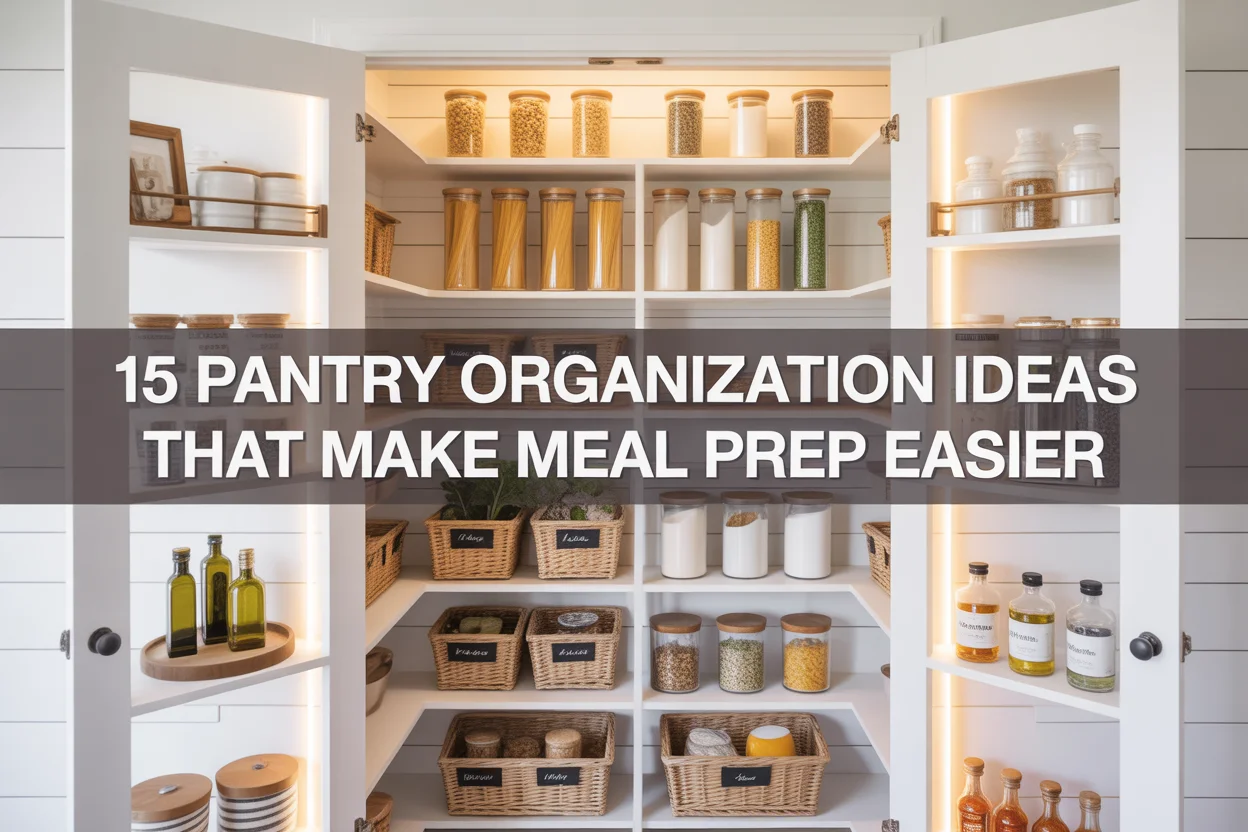
15 Pantry Organization Ideas That Make Meal Prep Easier
Does your pantry feel like a black hole where groceries go to disappear? You toss in a bag of rice, a couple of cans, and somehow everything vanishes behind a wall of forgotten snacks. Then when it’s time to cook, you’re standing there — door open, cold air escaping — wondering where you put the quinoa you bought last Tuesday.
You’re not alone. The average household wastes roughly $1,500 worth of food each year, and a disorganized pantry is one of the biggest culprits. When you can’t see what you have, you overbuy. When ingredients are scattered across random shelves, meal prep turns into a frustrating scavenger hunt instead of a smooth, efficient routine.
The good news? A few smart pantry organization ideas can completely transform how you cook, shop, and eat. Whether you’re working with a spacious walk-in or tackling a small pantry makeover in a closet-sized space, these 15 strategies will turn your pantry into a meal prep command center that actually works.
📌 Pin this for later! Save this post to your Pinterest board so you can come back to it when you’re ready to tackle your pantry makeover.
1. Create Meal-Based Zones Instead of Random Categories
Forget organizing alphabetically — that system looks great on paper but falls apart in real life. Instead, organize your pantry around how you actually cook by creating dedicated meal-based zones.
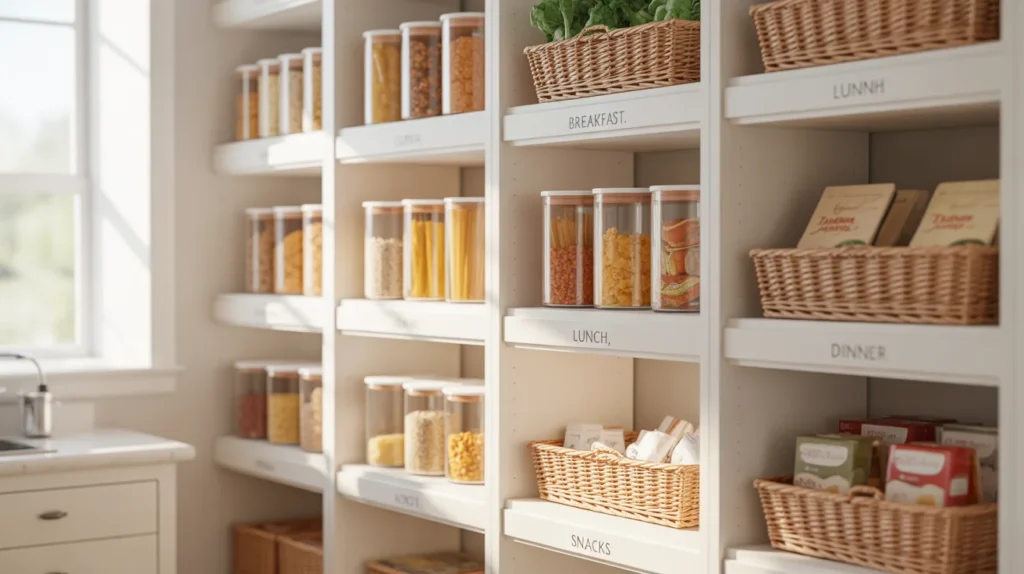
Set up separate areas for breakfast staples (oats, cereal, pancake mix), lunch prep supplies (canned tuna, crackers, nut butters), dinner essentials (pasta, rice, sauces), and snacks. When everything you need for Monday night’s stir-fry lives in the same zone, you grab ingredients in one sweep instead of bouncing between shelves.
Professional kitchens use this zone method because it minimizes movement and speeds up preparation. Your home pantry deserves the same efficiency.
2. Invest in Clear, Airtight Containers for Dry Goods
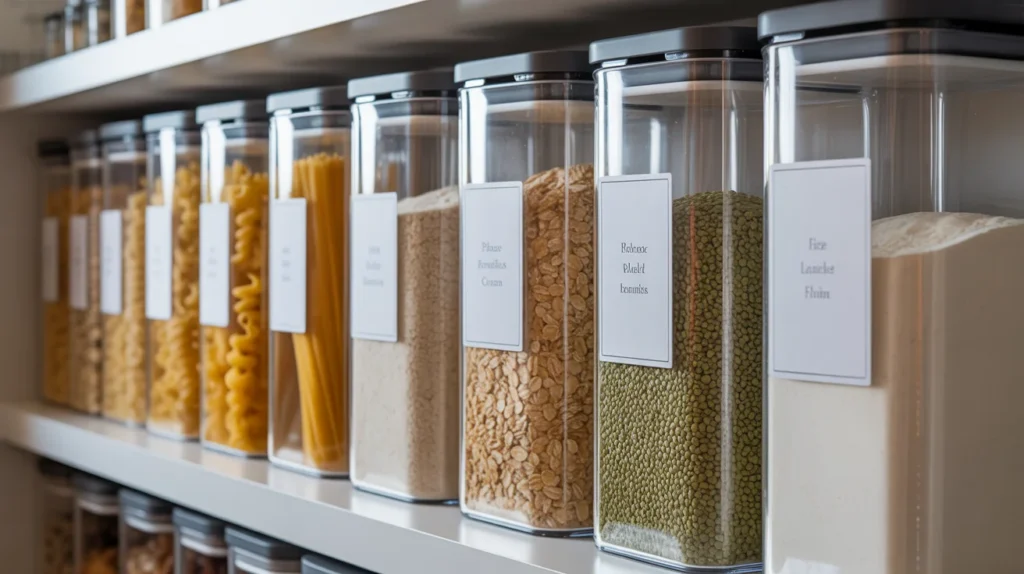
This is the single most impactful upgrade you can make for your pantry storage. Transferring dry goods like flour, rice, pasta, oats, and cereal into clear, airtight containers accomplishes three things at once: you can see exactly how much you have left, food stays fresher longer, and your shelves look instantly streamlined.
Stackable, uniform containers also save a surprising amount of space compared to bulky, irregularly shaped bags and boxes. Look for BPA-free plastic or glass options with snap-lock lids. Label each one clearly — including the expiration date on the bottom — so nothing expires unnoticed.
If you’re on a budget, repurposed mason jars work beautifully for grains, nuts, and seeds. You can find a dozen for under ten dollars at most home goods stores.
3. Use the “Prep Zone” Shelf Strategy
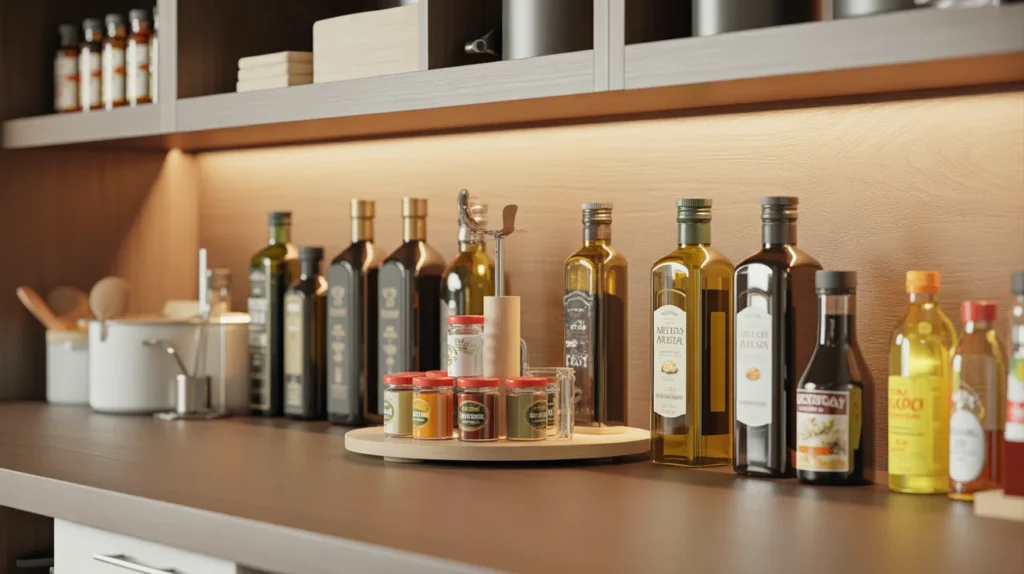
Here’s a game in small pantry makeover, pantry storage-changing concept borrowed from professional kitchens: designate one shelf as your dedicated “prep zone.” This shelf holds everything you reach for daily — cooking oils, vinegars, your most-used spices, salt, pepper, and frequently needed sauces.
Position this shelf at eye level, ideally between waist and shoulder height, so you never have to bend down or stretch up during cooking. Everything else — bulk items, baking supplies, specialty ingredients — can live on less accessible shelves.
This single adjustment can cut your meal prep time dramatically because you’re no longer hunting for basics every time you cook. For more kitchen efficiency strategies, check out our storage hacks that work in every room.
4. Install a Door-Mounted Rack to Double Your Space
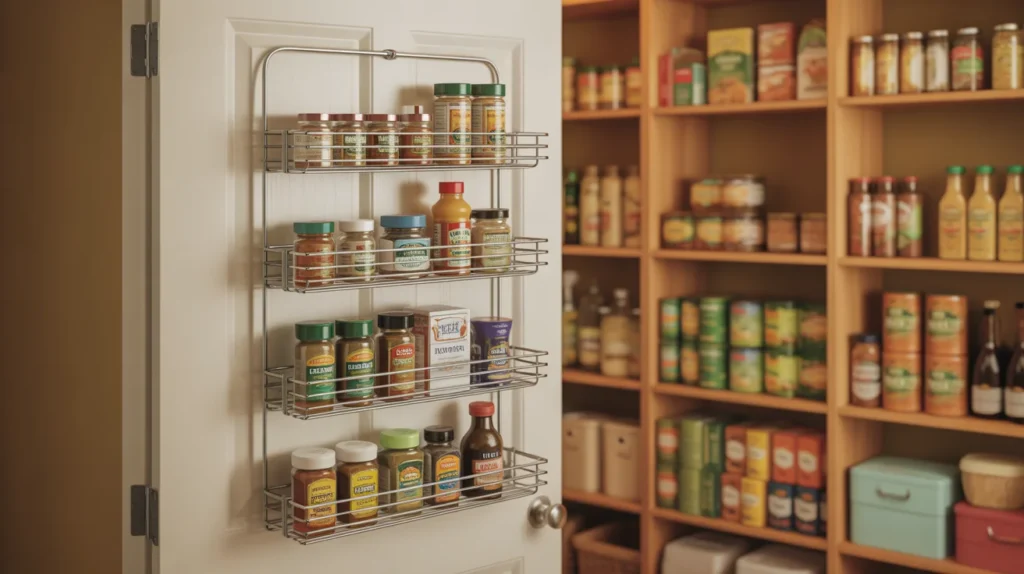
If you’re working with a small pantry, the back of the door is prime real estate that most people completely ignore. A sturdy over-the-door organizer or mounted wire rack can effectively double your storage capacity without taking up a single inch of shelf space.
Use door racks for lightweight items like spice packets, seasoning mixes, foil, plastic wrap, and small condiment bottles. This keeps them visible and accessible while freeing up shelf space for bulkier items. Just make sure your door is solid — hollow-core doors may not support the weight of a fully stocked rack.
This trick is especially powerful for anyone tackling a small pantry makeover in an apartment or older home where storage space is limited.
5. Adopt the FIFO Method to Reduce Food Waste
FIFO stands for “First In, First Out,” and it’s the stock rotation system used by every grocery store and restaurant in the world. The concept is simple: when you bring home new groceries, place them behind the older items already on your shelves.
This ensures you always use older products first, which dramatically reduces expired food hiding at the back of your pantry. It’s particularly important for items like canned goods, spices, and baking ingredients that can sit untouched for months.
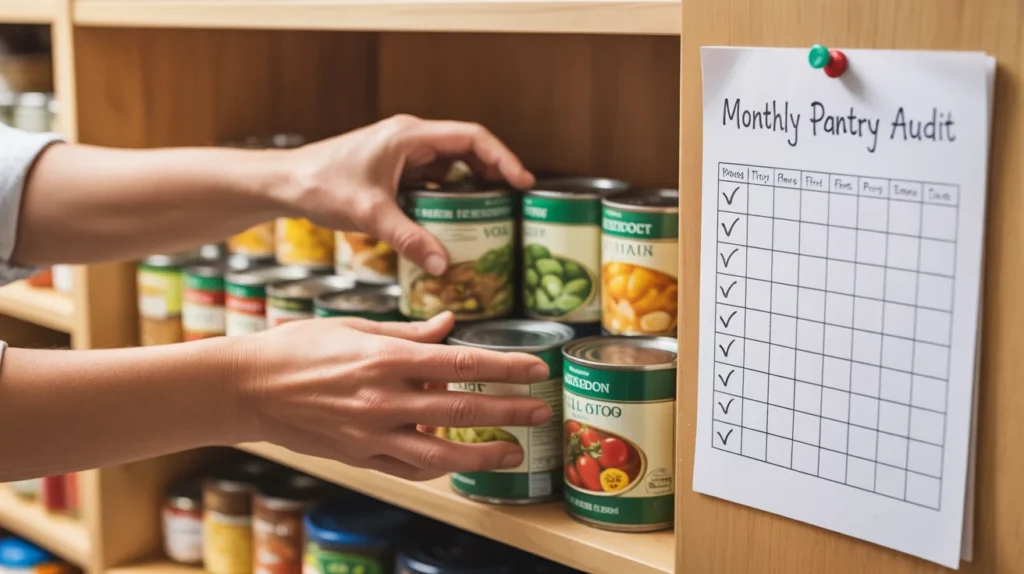
Pair FIFO with a regular pantry audit — once a month, spend ten minutes checking expiration dates and moving soon-to-expire items to the front. You’ll waste less food and spend less money on duplicates you didn’t know you already had.
6. Add Shelf Risers and Tiered Racks for Visibility
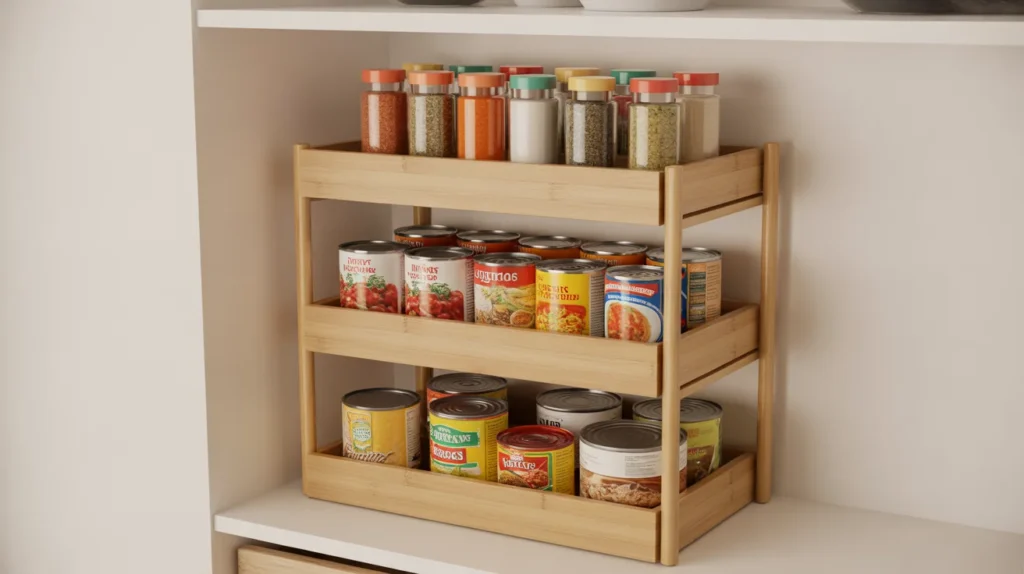
One of the most frustrating pantry problems is not being able to see what’s in the back. Cans and jars form a single-file wall, and anything behind the front row might as well be invisible. Shelf risers and tiered racks solve this instantly by creating a stadium-seating effect for your food.
Tiered spice racks, expandable shelf risers, and stepped can organizers are all affordable solutions that typically cost under fifteen dollars. Place them on any shelf to elevate back-row items into clear view. Metal and plastic versions both work well — choose what matches your pantry aesthetic.
This small investment pays for itself quickly because you’ll stop buying duplicate items you couldn’t see. It’s one of those pantry organization ideas that seems minor but makes a huge daily difference.
7. Designate a “Weekly Meal Prep” Basket
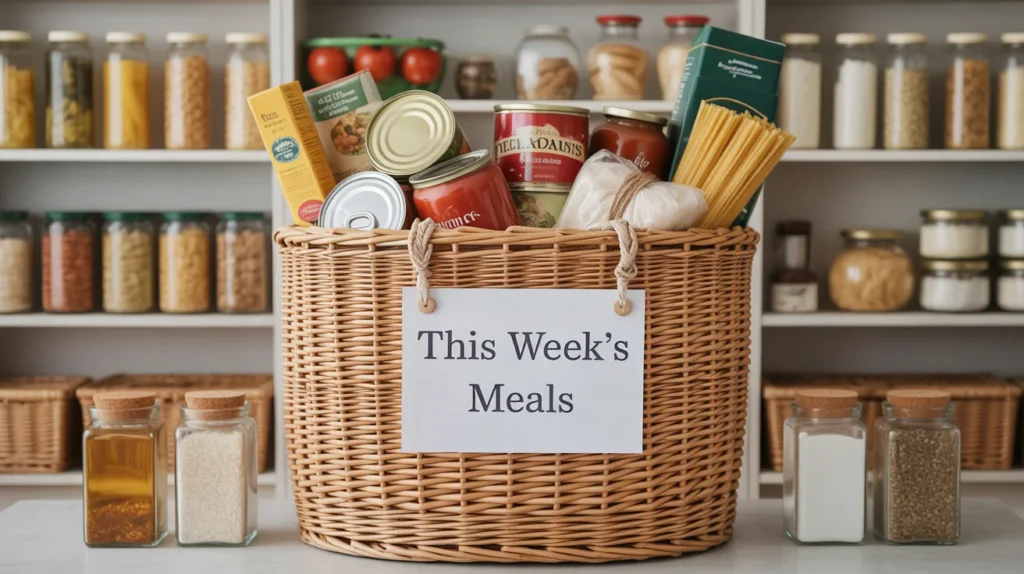
This idea takes meal prep from concept to habit. Choose one large basket or bin and label it “This Week’s Meals.” Every Sunday (or whenever you plan your week), pull the ingredients you’ll need for your planned recipes and place them all in this basket.
During the week, you simply grab the basket, and everything you need for that night’s dinner is already together. No searching, no forgotten ingredients, no decision fatigue at 6 PM when you’re tired and hungry.
At the end of the week, the basket goes back empty, ready to be refilled with next week’s ingredients. This method also helps you visually track whether you’ve actually used what you bought — a powerful nudge against food waste.
8. Use Baskets and Bins to Corral Loose Items
Loose packets, snack bars, tea bags, and seasoning mixes are the chaos agents of any pantry. They slide around, fall behind larger items, and create visual clutter that makes your entire pantry feel disorganized even when it’s not.
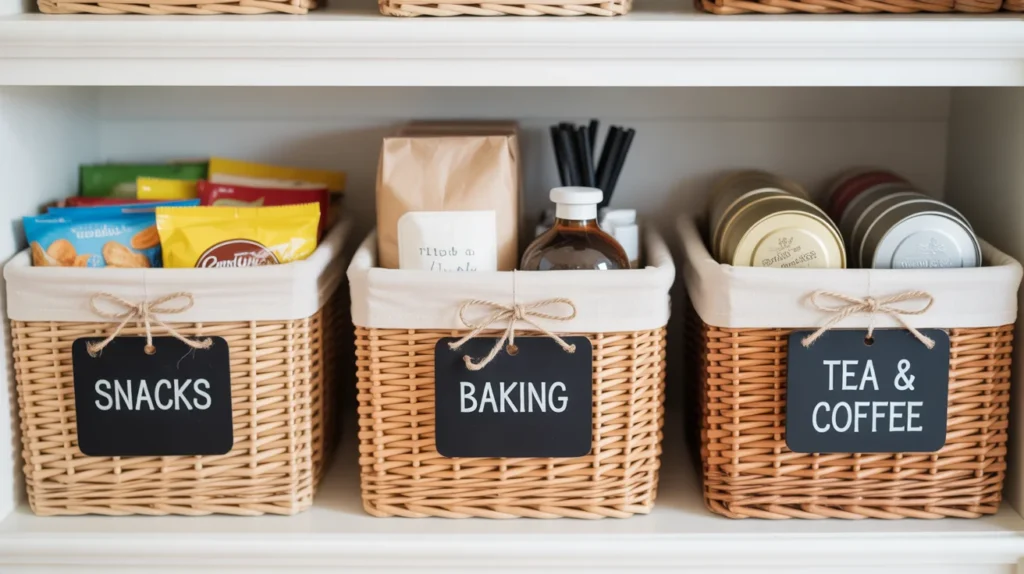
The fix is beautifully simple: group similar loose items into matching baskets or bins. Woven baskets add a warm, Pinterest-worthy aesthetic, while clear acrylic bins offer maximum visibility. Label each basket with its category — “Snacks,” “Tea & Coffee,” “Baking Mixes” — and suddenly every loose item has a home.
This is also a fantastic solution for families. Place a kid-friendly snack basket on a lower shelf so children can grab their own snacks independently. For more ideas on organizing family-friendly spaces, explore our small spaces guide.
9. Install Pull-Out Drawers or Sliding Shelves
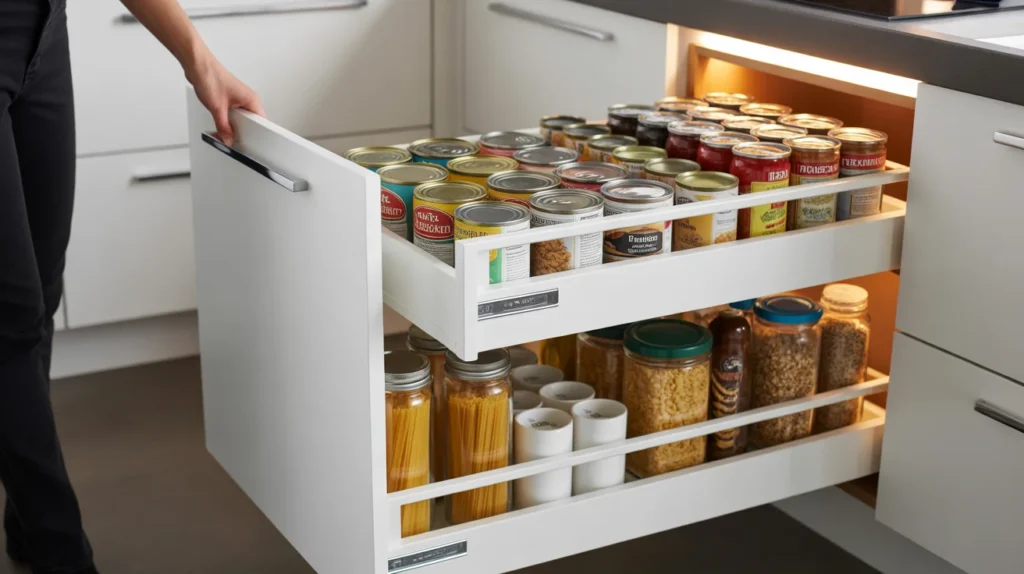
Deep pantry shelves are a double-edged sword — they offer generous storage but practically guarantee that items in the back get forgotten. Pull-out drawers and sliding shelf inserts solve this problem completely by letting you glide the entire shelf forward and see everything at once.
Many home improvement stores sell retrofit kits that fit inside existing shelving. Installation is a straightforward DIY project that usually takes less than an hour per shelf. The improvement in accessibility is dramatic — especially for lower shelves where you’d otherwise have to crouch and dig.
If a full pull-out system isn’t in your budget, a simple turntable or lazy Susan on deep shelves accomplishes a similar goal for oils, sauces, and condiments. Spin to find what you need without moving a single bottle.
10. Label Everything — Shelves and Containers Both
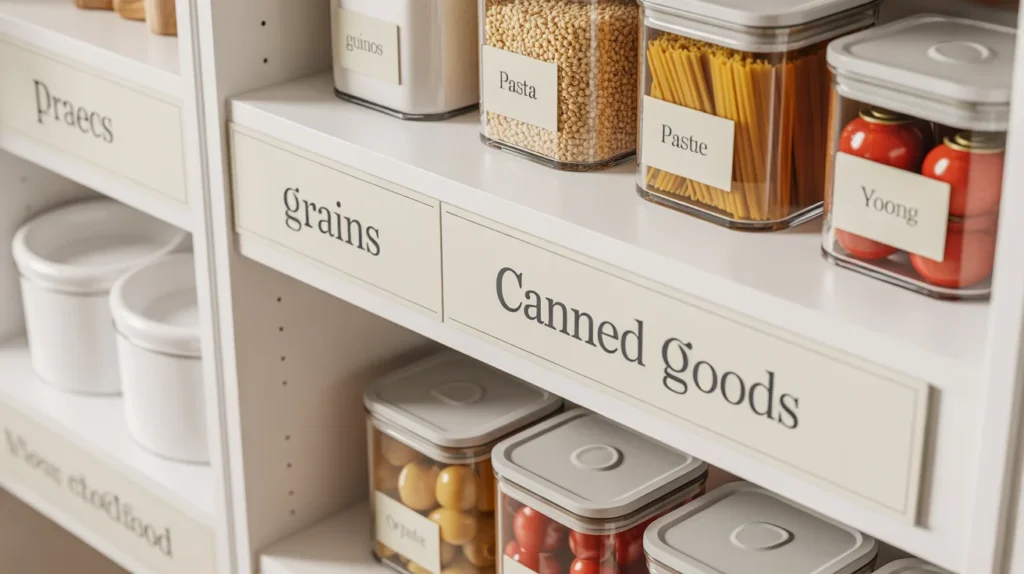
Labeling is the unsung hero of lasting pantry organization. Containers need labels so everyone in the household knows what’s inside them. But shelves need labels too — small tags or stickers along the shelf edge that indicate what category belongs there.
Shelf labels serve as a gentle reminder system. When someone puts the cereal back, they see the “Breakfast” label and know exactly where it goes. Without labels, even the best-organized pantry drifts back into chaos within weeks because people put things back wherever there’s space.
For a polished look, use a label maker or print custom labels on waterproof sticker paper. Chalkboard labels are another popular choice because you can rewrite them as your categories evolve. Whatever style you choose, consistency across your whole pantry creates a calm, cohesive feel.
11. Add Under-Shelf Lighting for Better Visibility
A well-organized pantry is pointless if you can’t see what’s on the shelves. Poor lighting is one of the most overlooked obstacles to effective pantry storage, especially in closet-style pantries without windows.
Battery-operated LED strip lights or motion-sensor puck lights are inexpensive, easy to install (most use adhesive backing), and make an enormous difference. Mount them under each shelf so they illuminate the shelf below. Motion-sensor options are especially convenient — the light turns on when you open the door and off when you leave.
Beyond practicality, good lighting also elevates the overall look of your pantry. Those glass jars and neatly arranged containers look even better when properly lit, giving your space that magazine-worthy glow. For more tips on refreshing your spaces, visit our cleaning & reset section.
12. Create a Dedicated Baking Station
If you bake regularly, having your supplies scattered across multiple shelves is a recipe for frustration. Instead, dedicate one section of your pantry exclusively to baking: flour, sugar, baking powder, baking soda, vanilla extract, chocolate chips, sprinkles, and your measuring tools.
Keeping everything together means you can pull out what you need for a batch of cookies in under a minute. It also prevents the classic mistake of starting a recipe only to discover halfway through that you’re out of baking powder.
Store flours and sugars in large airtight containers to keep them fresh and pest-free, and keep smaller items in a dedicated bin or basket so they don’t get lost among the larger containers.
13. Use Vertical Space with Stackable Containers and Hooks
Most people organize their pantry horizontally — spreading items across shelves — but forget to think vertically. Stackable containers maximize the space between one shelf and the next, and hooks or adhesive-mounted racks on walls or shelf sides can hold lightweight items like measuring cups, small bags, or utensils.
Vertical dividers (tension rods or shelf dividers) are also excellent for storing cutting boards, baking sheets, and trays upright instead of stacking them flat. This makes them far easier to grab without toppling a pile.
If you’re tackling a small pantry makeover, thinking vertically can genuinely double your usable storage without any structural changes. Check out our decluttering tips for ideas on what to remove before reorganizing.
14. Set Up a Snack Station for the Whole Family
A designated snack zone — especially one at kid-friendly height — saves time, reduces nagging, and keeps the rest of your pantry undisturbed. Use open bins or baskets that children can easily access, and fill them with pre-portioned, grab-and-go options.
This is also a smart meal prep strategy for adults. Having a visible, organized snack station means you’re less likely to reach for unhealthy options hidden in random corners. When healthy snacks are front and center, you naturally gravitate toward them.
Restock the snack station weekly as part of your grocery routine, and let family members have input on what goes in. Buy-in creates accountability, and everyone is more likely to maintain a system they helped design.
15. Schedule a Monthly Pantry Reset
Even the most perfectly organized pantry will drift without maintenance. Scheduling a brief monthly reset — fifteen to twenty minutes on a consistent day — keeps everything running smoothly and prevents the slow slide back into clutter.
During your reset, check expiration dates, wipe down shelves, reorganize anything that’s migrated out of place, and note what needs restocking. This is also a great time to adjust your zones seasonally — move holiday baking supplies to an accessible shelf in November, then store them higher in January. Bring grilling marinades forward in summer and tuck them away in fall.
Consistency is the secret. A pantry that gets a monthly tune-up stays organized permanently. One that gets a big makeover once a year and then gets ignored? That chaos returns within weeks. For a complete home organization approach, browse our organized by room guides.
Quick-Reference: Pantry Organization Essentials Checklist
Before you start your pantry transformation, here’s what you’ll need: clear airtight containers in multiple sizes, matching baskets or bins (3–6 depending on pantry size), a label maker or printable labels, shelf risers or tiered racks, an over-the-door organizer (for small pantries), LED strip lights or puck lights, a turntable or lazy Susan for deep shelves, and one large basket designated for weekly meal prep ingredients.
You don’t need to buy everything at once. Start with the two or three ideas from this list that address your biggest pain points, implement them, and add more over time. Small, consistent improvements beat a massive one-time overhaul every time.
Final Thoughts
A well-organized pantry isn’t just about aesthetics — although there’s nothing wrong with wanting a space that looks beautiful when you open the door. It’s about building a system that makes your daily life easier. When your pantry supports your meal prep routine instead of sabotaging it, cooking becomes faster, grocery shopping becomes more efficient, and you waste less food and money in the process.
Start with one or two of these pantry organization ideas this weekend. Label a few shelves. Set up a prep zone. Fill a basket with this week’s meal ingredients. You’ll feel the difference immediately — and wonder why you didn’t do it sooner.
Found this helpful? Share it on Pinterest to help others discover smarter ways to organize their pantry! And explore more home organization tips across our Kitchen & Pantry, Storage Hacks, and Decluttering Tips archives.


