

Deep Kitchen Drawer Organization: Make Deep Drawers Actually Usable
Deep drawers should be the best storage in the kitchen. Instead, most of them turn into a pit. You pull the handle, a lid slides, something clangs, and the pan you need is somewhere under three things you forgot you owned. So why does the biggest drawer in the house work the worst? Because depth without a system is just a hole.
This guide to deep kitchen drawer organization gives you the fix we use in our own kitchen: a simple three zone map, the right organizers for cookware and plates, a mini pantry drawer setup, and a ten minute reset that keeps it all from sliding back into chaos. Ours was the pot pit for longer than we’d like to admit. Not anymore.
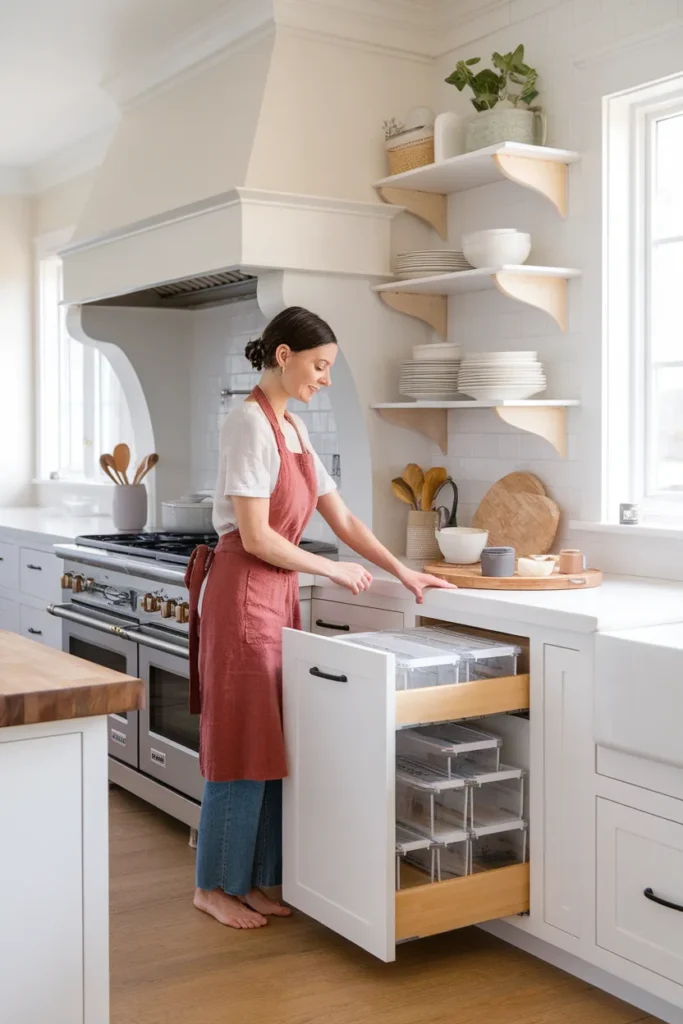
Why Deep Drawers Turn Into the Junk Pit of the Kitchen
Depth invites stacking. Stacking buries things. Buried things stop getting used, and the drawer quietly fills with whatever had no other home: the third spatula, appliance manuals, a bag of birthday candles. Sound like your bottom drawer? That’s not a personal failing. It’s just physics plus a busy week, repeated for a year.
The fix starts with one rule: a deep drawer holds kitchen items only, grouped by job. Everything else moves out before a single organizer goes in. Empty the whole drawer onto the counter, wipe it down, and sort into three piles: belongs here, belongs elsewhere, belongs in the donate box. Ten minutes of sorting saves you from organizing clutter you were never going to use.
One more thing before you buy anything. Measure. Grab a tape and write down the interior width, depth front to back, and usable height with the drawer closed. Organizers get returned all the time for missing that last number by half an inch.
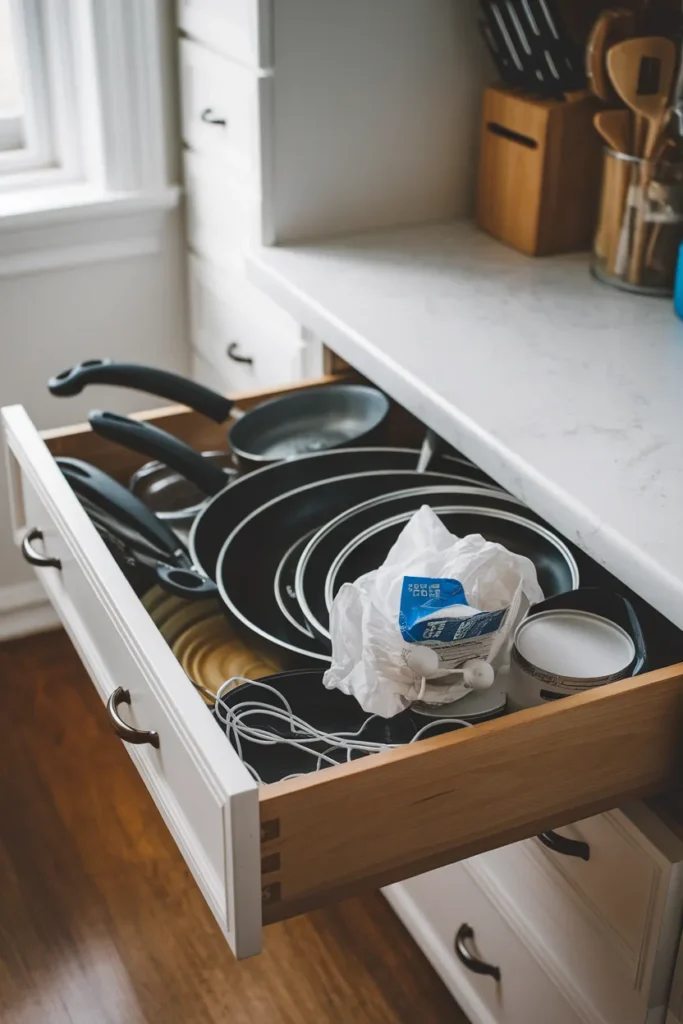
The Front Row Rule: A 3-Zone Map for Every Deep Drawer
Here is the framework that makes deep kitchen drawer organization stick, and it takes one sentence to learn. The Front Row Rule: anything you touch daily earns the front third of the drawer at the top level, weekly items sit behind it on the Back Bench, and rarely used pieces live in the Basement, the lower layer under a stackable tray. If an item has not been used in a month, it loses its Front Row seat. That single demotion habit is what keeps the drawer honest.
Map it like this before you load anything back in:
| Zone | Where it sits | What lives there |
|---|---|---|
| Front Row | Front third, top level | Daily pans, everyday plates, the flour you bake with |
| Back Bench | Rear two thirds, top level | Weekly cookware, serving bowls, backup towels |
| Basement | Bottom layer under a lift-out tray | Holiday platters, the stockpot, the waffle maker |
Screenshot that table. It works in every deep drawer in the house, and we will keep coming back to it as we set up each drawer type below.
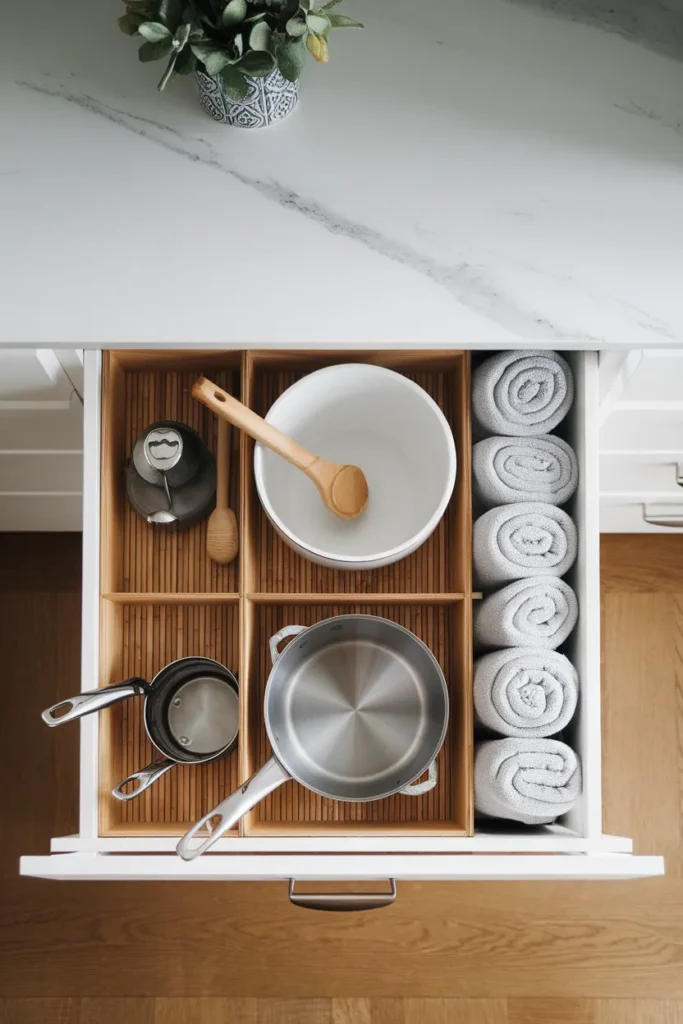
What to Store in Deep Kitchen Drawers
Big drawers are for big things. That sounds obvious, yet it’s the step most cluttered drawers skip.
Pots, pans, and their lids
Cookware is the classic answer, and it earns the spot. Stack same size pans two or three high, keep the daily skillet in the Front Row, and give lids their own lane. A wire lid rack standing at the back of the drawer ends the avalanche for good. Heavy pieces like a cast iron skillet sit flat on the drawer floor, never balanced on top of a stack.
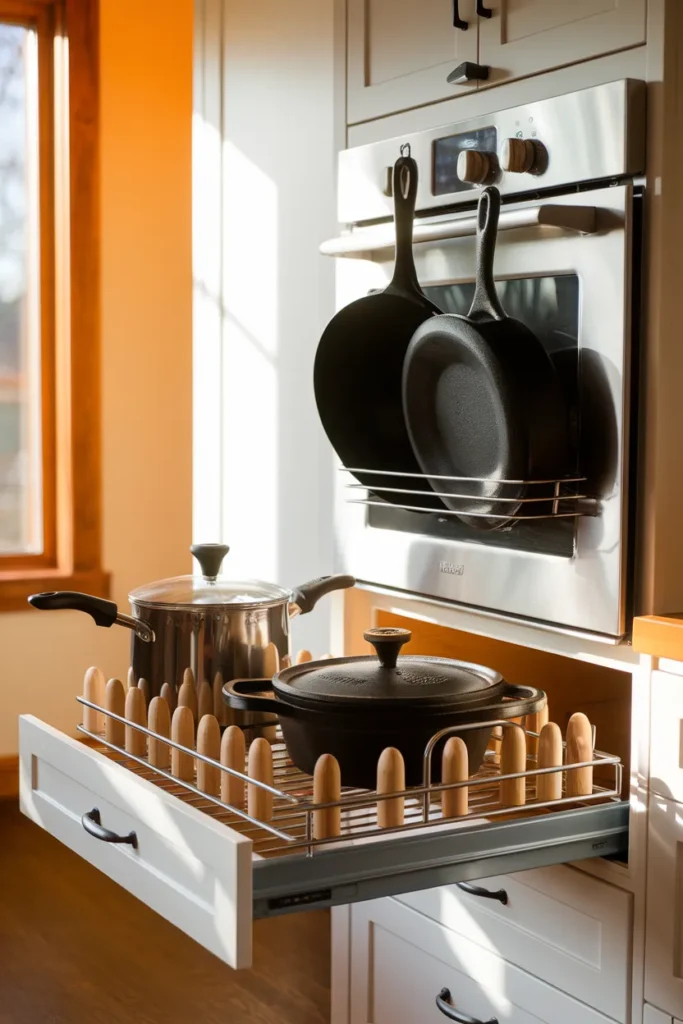
Plates, bowls, and everyday dishes
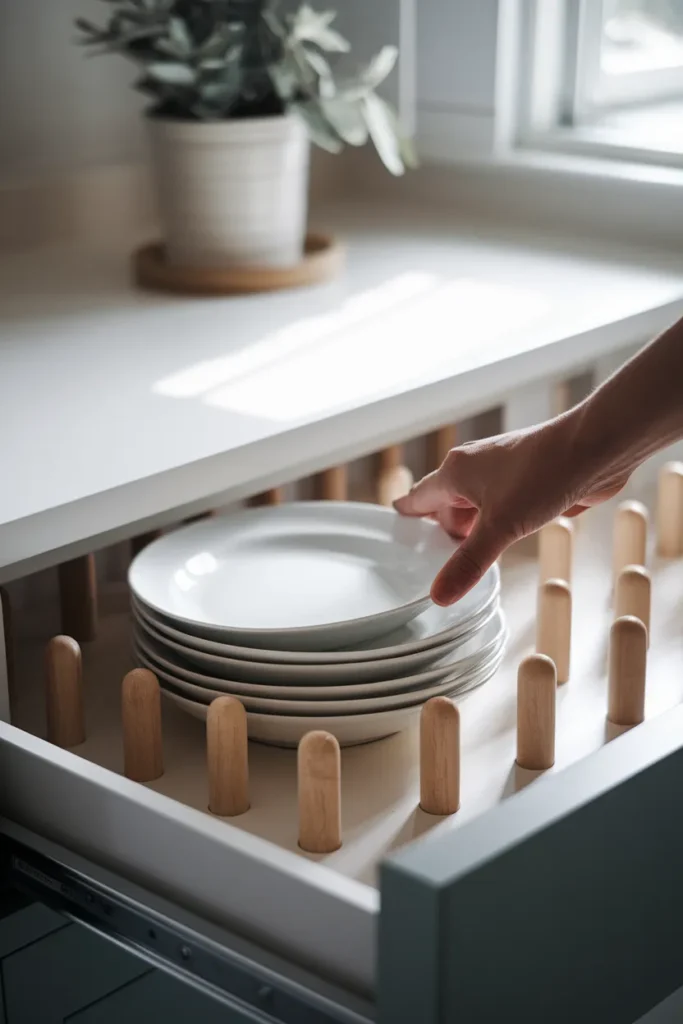
A deep drawer near the dishwasher makes a surprisingly great dish cabinet. Peg organizers hold stacks of plates steady while the drawer rolls, so nothing chips or drifts. Kids can reach their own bowls, which quietly ends one of the most annoying dinner time relay races. We cover the full room layout logic in our drawer-by-drawer kitchen organization system, and this is the drawer where that map pays off most.
Small appliances and bulky extras
The stand mixer, the blender, the air fryer basket: countertop squatters, every one. A deep drawer with a sturdy slide swallows them whole and gives you your counter back. Rolled dish towels, oven mitts, and mixing bowls fill the awkward gaps around them so nothing rattles.
Check the Weight Rating Before You Load Cast Iron
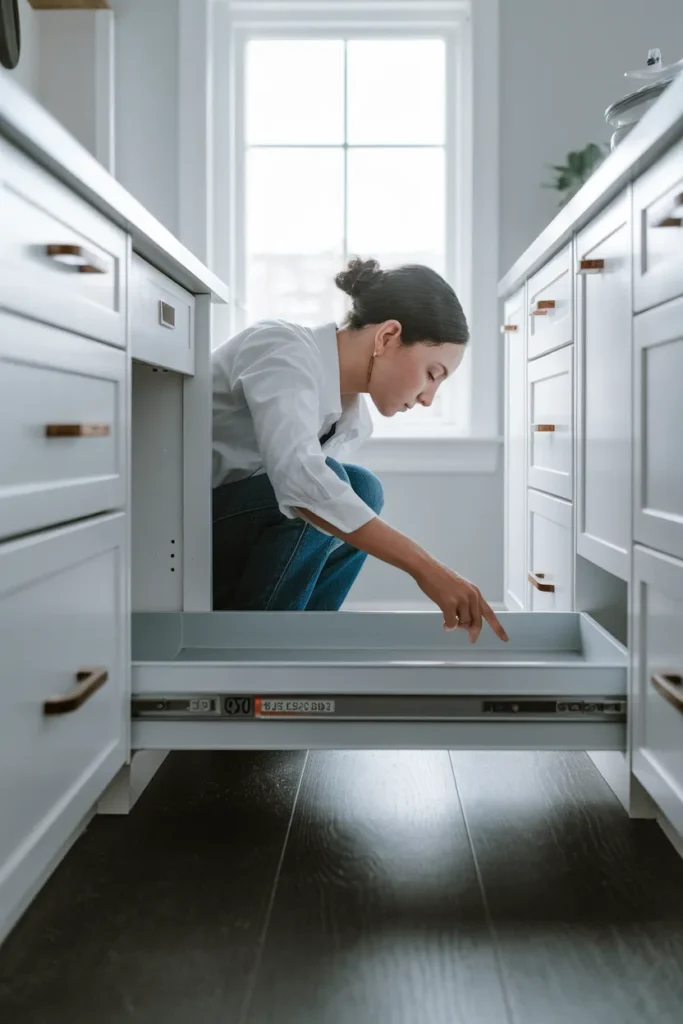
Here is the part almost nobody talks about, and it’s the difference between a drawer that glides for a decade and one that sags by spring. Drawer slides carry a weight rating, and builder grade hardware is not built for a Dutch oven collection. A single 10 inch cast iron skillet runs north of five pounds. Stack dishes for a family of five on top of cookware and you can pass a budget slide’s limit without trying.
Before loading heavy zones, pull the drawer out and check the slides. Many have the brand and model stamped right on the metal, which you can look up for the rating. If there’s no stamp, run the wobble test: load the drawer to about the weight you plan, then open it fully. Sagging, drifting open on its own, or grinding are all signs to lighten the Basement layer or upgrade to full extension soft close slides.
Distribute weight low and even, keep the heaviest single item centered on the drawer floor, and let dividers stop the sliding, never a taller stack.
Dividers, Pegs, and Stackable Trays: Pick One System per Drawer
Choosing a deep drawer organizer gets much easier once you decide the drawer’s job first. One drawer, one system. Mixing three organizer types in one space is how the chaos sneaks back in.
Expandable dividers for zones
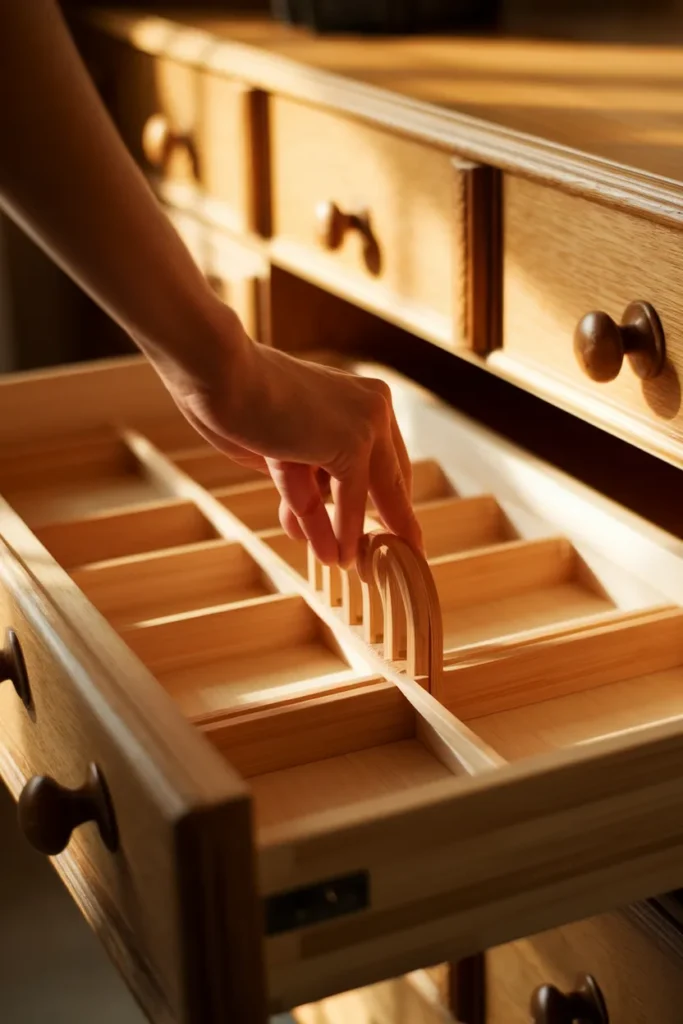
Spring loaded bamboo dividers are the workhorse. The Royal Craft Wood expandable organizer at Walmart, for example, adjusts from 13.5 to 20 inches wide with slots about 2.5 inches deep, which suits utensils, towels, and shallow zoning in a top layer. For full height zoning in a deep drawer, taller adjustable dividers from mDesign or The Container Store press against the drawer walls and split the box into thirds, no tools involved.
Pegs for anything that stacks
Peg systems shine with plates, bowls, and pot lids. You set the posts in a perforated base to fit your exact stack, and everything stays planted while the drawer moves.
Stackable trays for a second story
A lift out tray, like IKEA’s Variera utensil insert or a slim Amazon Basics organizer, adds a shallow Front Row level over a deep Basement. Lift the tray, grab the stockpot, drop it back. And line the whole drawer with non skid liner first. It’s a three dollar step that stops every organizer from skating.
Turn One Deep Drawer Into a Mini Pantry
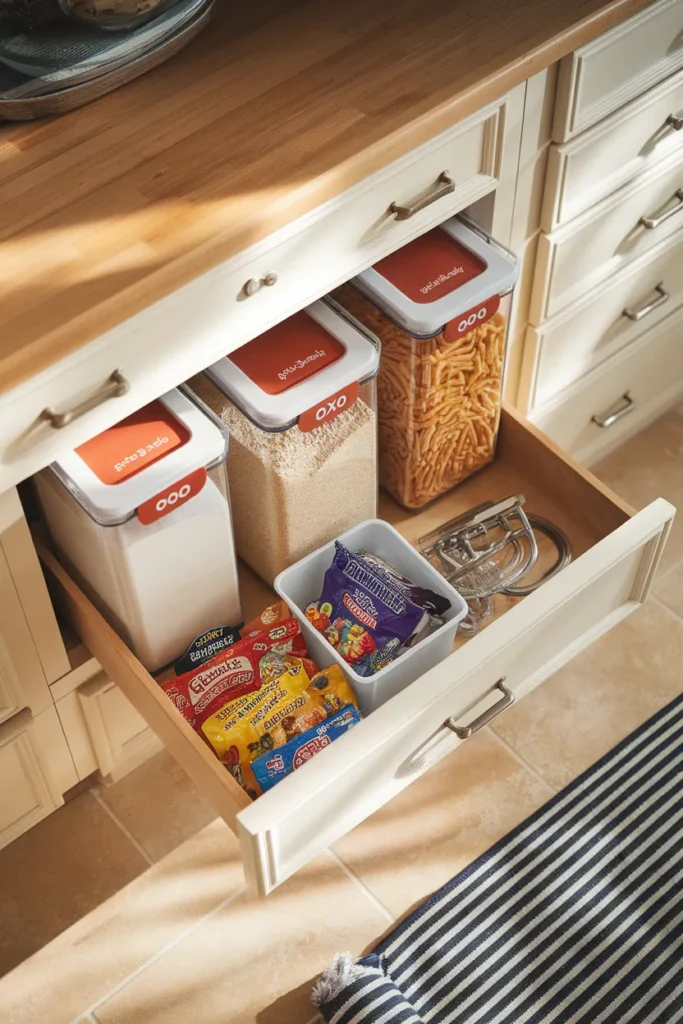
This is our favorite deep kitchen drawer storage idea, and the one that gets pinned the most: a full pantry drawer. Tall airtight canisters stand upright, labels face the ceiling, and one pull shows you everything at a glance. Chef’s Path tall containers hold 2.8 liters each, OXO Good Grips POP canisters stack square and tight, and Rubbermaid Brilliance and Target Brightroom bins corral the loose packets between them. Low bin in the Front Row corner for kid snacks, and suddenly after school help themselves happens without you.
Two food rules keep this drawer safe, not just pretty. First, decant dry goods only into truly airtight, food grade containers, because Penn State Extension notes that moisture swings change how flour behaves in baking, and whole wheat flour actually belongs in the fridge since its natural oils can go rancid at room temperature. Second, placement matters more in a drawer than on a shelf. The University of Missouri Extension puts properly stored flour at roughly six to eight months and calls for a cool, dry, dark spot, so skip the drawer that hugs the oven or dishwasher. We learned that lesson one sticky August, and the flour didn’t survive it.
Run the drawer on first in, first out: new refills load behind or below, older stock moves to the Front Row. It’s the same rotation trick from our can organization system, and if you want container prices before you commit, our IKEA pantry organization guide breaks those down jar by jar.
Deep Kitchen Drawer Organization on a Budget
You don’t need custom inserts to get the custom look. Dollar Tree clear bins zone a deep drawer for a few dollars, Walmart Mainstays baskets handle towels and gadgets, and budget airtight four packs were sitting around seven dollars at Walmart at this writing. Cheap works fine here because drawers hide their contents anyway.
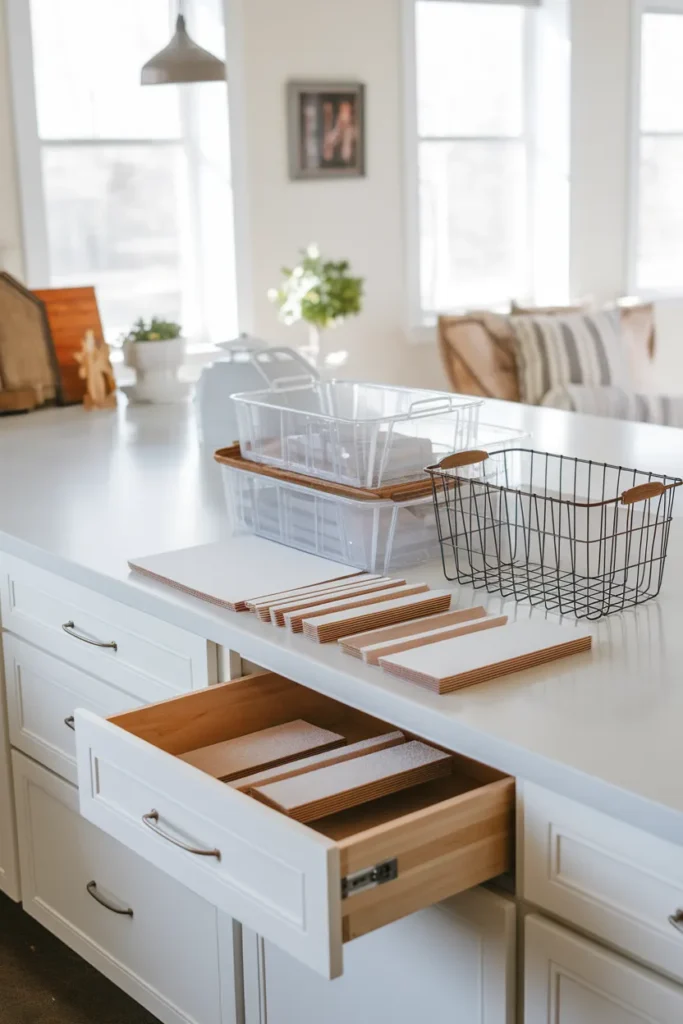
Two free tricks beat most paid organizers. Cut foam board or double walled cardboard into dividers, taped into a grid sized to your exact drawer, and you have zoning that cost nothing but fifteen minutes. Then run tension rods front to back across one end of the drawer to file baking sheets and cutting boards upright like records. Vertical beats horizontal every time for flat items.
Test before you spend, too. Set empty shoe boxes in the drawer for a week to trial your zone layout. If the map works in cardboard, buy the pretty version. If it fights you, you just saved forty dollars.
The 10-Minute Reset That Keeps It Organized
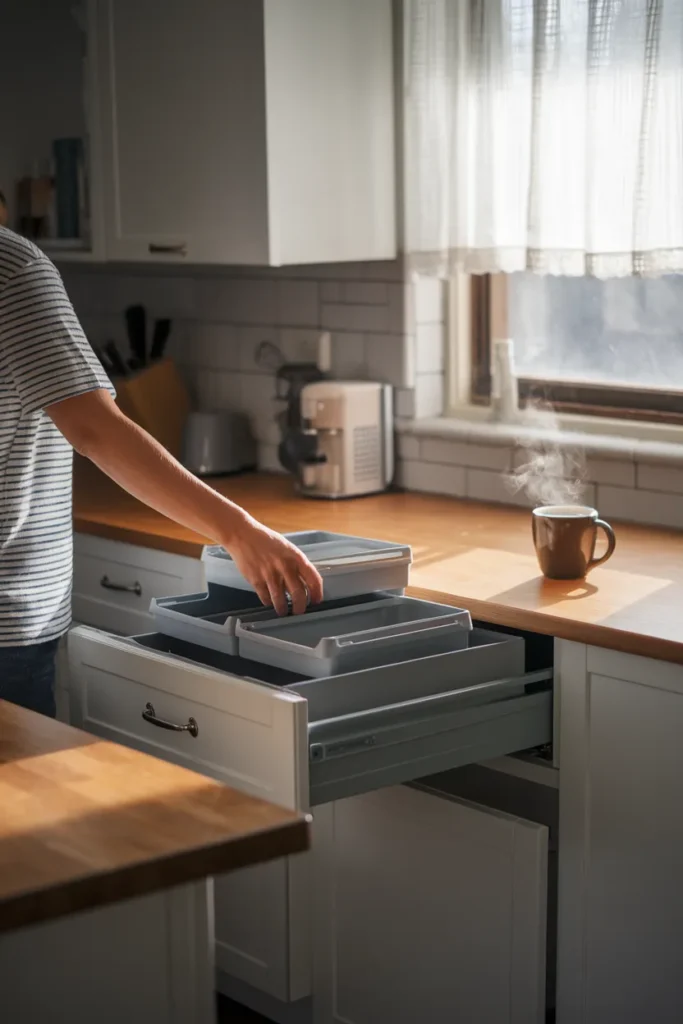
Systems fail quietly, one borrowed lid at a time. So once a month, give each deep drawer a ten minute reset. Lift out the tray. Pull the three strays that migrated in, wipe the liner, square up the dividers, and demote anything that sat untouched in the Front Row. Done. We run ours on Sunday while the coffee brews, and honestly it rarely takes the full ten.
The reset is also your early warning system. A drawer that starts grinding or drifting open tells you the weight crept up. Catch it in month two and you rebalance a zone. Catch it in month twelve and you are shopping for slides.
Deep Kitchen Drawer Organization FAQ
What should you store in deep kitchen drawers? Big, heavy, or tall items: pots and pans with their lids, stacked plates and bowls on pegs, mixing bowls, small appliances, rolled towels, and tall airtight canisters of pantry staples. Small loose items only belong there inside a shallow lift out tray.
What is the best way to organize deep kitchen drawers? Empty everything, measure the interior, then load by the Front Row Rule: daily items in the front third on top, weekly items behind them, rarely used pieces on the bottom layer under a tray. One organizer system per drawer keeps it maintainable.
How do you keep things from sliding around in a deep drawer? Start with non skid liner on the drawer floor, then anchor stacks with peg posts or spring loaded dividers pressed against the walls. Heavy items sit flat and centered so momentum has nothing to throw.
Can you store plates in a deep drawer? Yes, and it’s one of the best uses for one, especially near the dishwasher. Use a peg organizer so stacks stay planted while the drawer rolls, and keep each stack to a height you can lift with one hand.
Is it safe to keep flour and dry goods in a kitchen drawer? Yes, if the containers are airtight and food grade and the drawer stays cool, dry, and away from the oven and dishwasher. University extension guidance puts properly stored all purpose flour at about six to eight months, so label lids with the fill date and rotate first in, first out.
How do you organize deep kitchen drawers on a budget? Dollar Tree bins, foam board dividers cut to size, tension rods for upright baking sheets, and a week long shoe box trial of your layout before buying anything. The zone map matters far more than the price tag on the organizers.
Start With the Worst Drawer
Deep kitchen drawer organization isn’t a whole weekend project. It’s one drawer, one hour, one honest sort, and the Front Row Rule doing the heavy lifting after that. Start with the drawer that annoys you most, run the map, and let the monthly reset protect the win. Save this guide to your kitchen board on Pinterest so the zone table is there when you empty that first drawer, and when it’s done, come tell us which drawer finally stopped fighting back. We love a good before and after.