

The Small-Home Homework Caddy That Ends the Nightly Supply Hunt
We used to lose ten minutes every school night just finding a pencil. One kid at the kitchen table, one hunting through a junk drawer, glue sticks vanishing into thin air. Sound familiar? A good homework caddy organization system fixes that fast, and you do not need a bonus room or a Pinterest-perfect study nook to pull it off. You need one caddy, a short supply list, and a spot the whole family agrees on.
This guide is built for small homes. Apartments, ranch houses, shared bedrooms, kitchen-table setups. Everything here packs away, rolls out of sight, or lives happily on a counter. We will set the whole thing up in an afternoon, and there is a free printable supply checklist at the end so nobody forgets the scissors again.
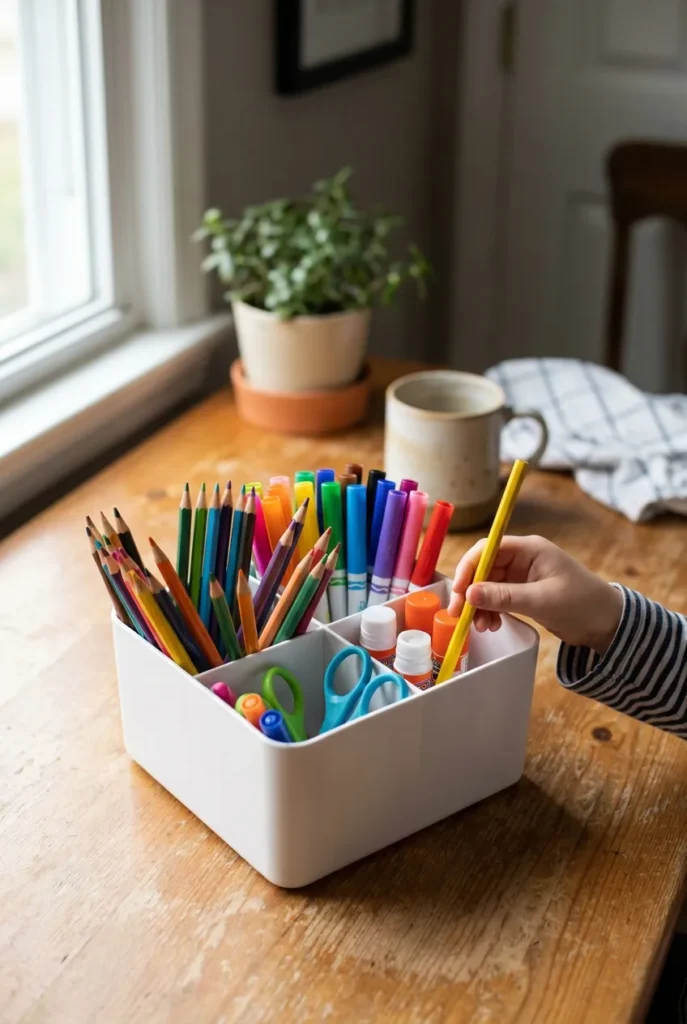
What Is a Homework Caddy (and Why Small Homes Need One)
A homework caddy is a portable container that holds every supply your kids reach for during homework, all in one grab-and-go spot. Think of it as a lunchbox, but for pencils and focus. The magic word is portable. In a small home, storage that only works in one fixed location is storage you will resent by October.
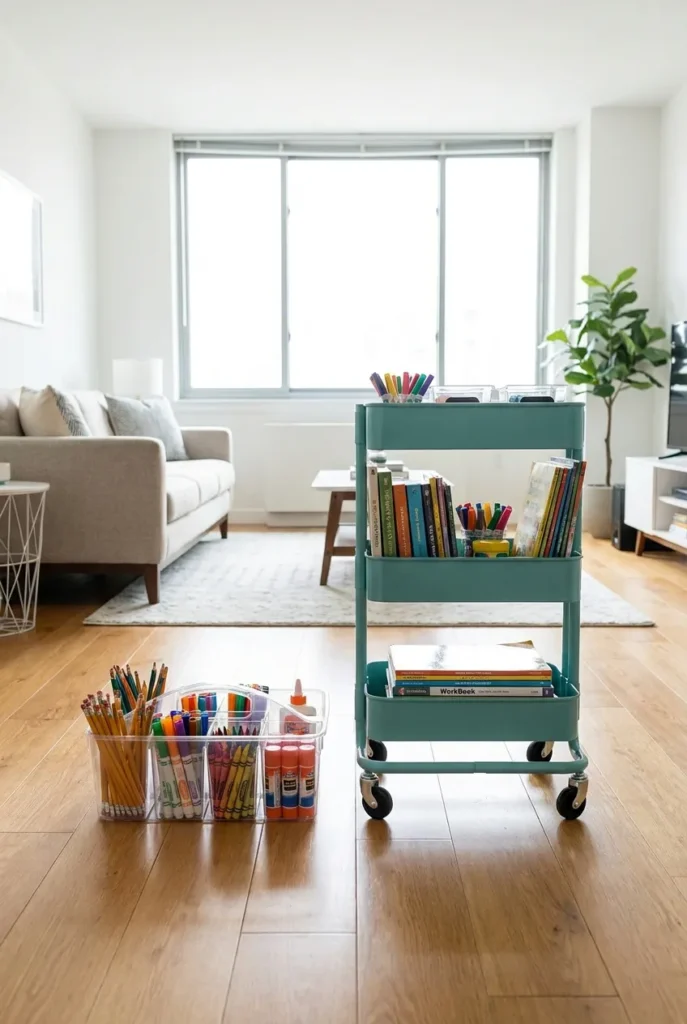
Here is the difference that matters. A caddy sits on a table or shelf and moves with the child. A study cart is the bigger sibling: a rolling 3-tier cart (the IKEA Raskog is the classic) that parks in a closet and rolls out at homework time. Small homes usually want one or the other, sometimes both. We will help you choose in the next section.
Why bother? Because a defined supply zone cuts the nightly hunt, reduces the “I can’t find it” stalls, and gives kids ownership. When everything has a home, kids can set up and clean up themselves. That is the same principle behind systems kids can actually keep up, just shrunk down to one container.
Caddy or Study Cart? Pick the Right One for Your Space
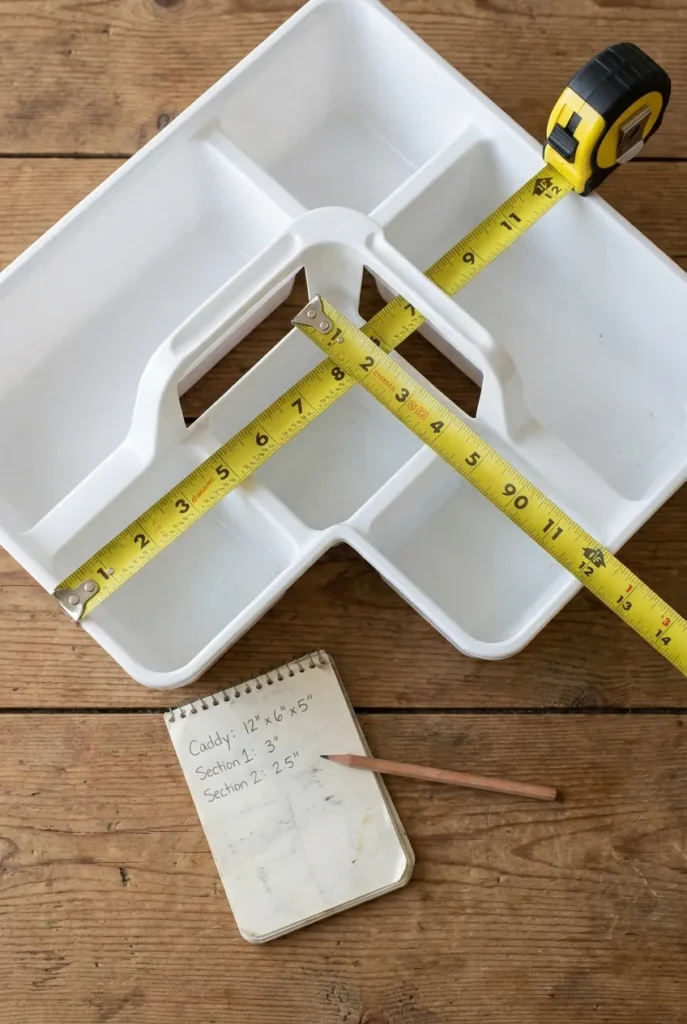
Grab a tape measure before you buy anything. This one step saves so many returns.
Choose a tabletop caddy if homework happens at the kitchen or dining table and gets cleared for meals. Look for a caddy around 10 to 13 inches wide so it fits in a cabinet or on a shelf when dinner rolls around. The Target Brightroom divided caddy and the Really Good Stuff On-The-Go caddy both hit this size range.
Choose a rolling study cart if you have a sliver of floor space, ideally a 13 by 17 inch footprint, near an outlet or a wall. A cart holds more, separates supplies by tier, and disappears into a closet or beside a bookshelf. Honestly, for two or more kids, the cart usually wins.
Choose both if you have multiple kids in a shared room: one small personal caddy per child (name-labeled) plus one shared cart for the bulky stuff like construction paper and the pencil sharpener.
Quick-glance sizing table (screenshot this)
| Your space | Best pick | Target footprint | Where it lives |
|---|---|---|---|
| Kitchen or dining table | Tabletop caddy | 10 to 13 in wide | Cabinet or open shelf |
| Corner or closet nook | 3-tier rolling cart | 13 x 17 in | Rolls into closet |
| Shared kids’ room | Caddy per kid + 1 cart | mix | Under desk plus closet |
| Renter, no floor space | Over-door caddy pocket | door-width | Back of a door |
The Homework Caddy Supply List (Nothing Extra)
Small homes reward restraint. A caddy stuffed with supplies nobody uses is just a heavier mess. Stock the essentials, leave the rest in a backstock bin.
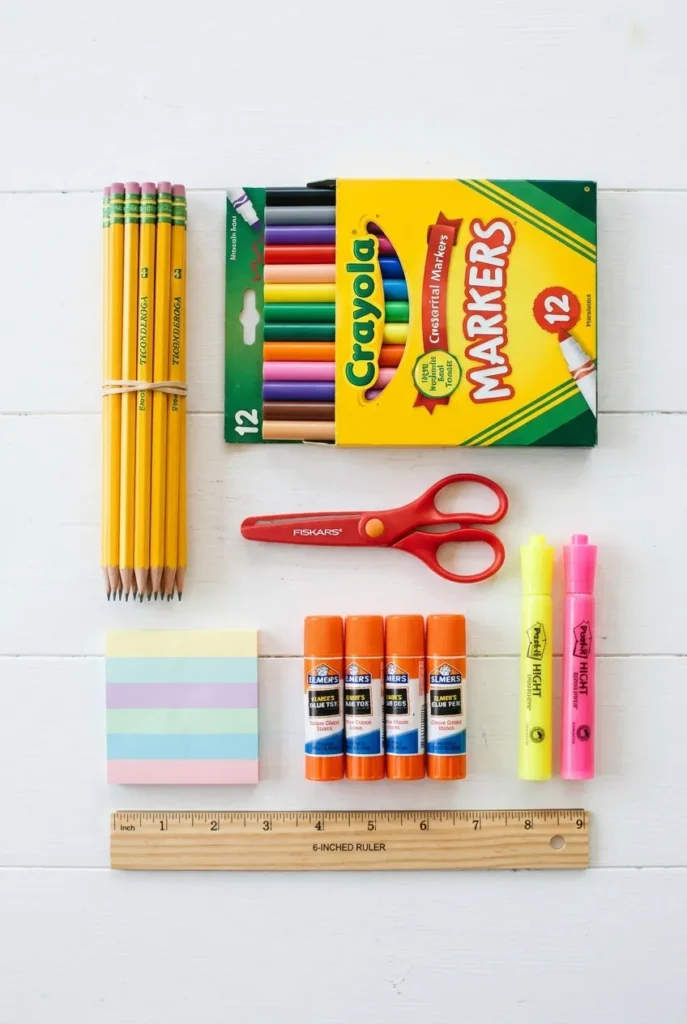
Here is the core list, front-loaded with the item that prevents the most meltdowns:
- Sharpened pencils, 6 to 8. Pre-sharpened is the single highest-value move. A jar of dull pencils starts fights.
- A good eraser plus pencil-top erasers.
- Colored pencils or markers, one small set, not the mega pack.
- Child-safe scissors.
- Glue stick (keep a spare in backstock).
- Highlighters, two colors.
- Sticky notes and index cards.
- A short ruler, 6 inches.
- A handheld pencil sharpener with a lid so shavings stay contained.
That is it for the caddy. Save the staplers, the tape guns, and the 64-count crayon boxes for a labeled backstock bin on a closet shelf. When a caddy item runs out, you refill from backstock in five seconds. If you want the actual containers and dividers we like, this roundup of budget-friendly Amazon organizers under $25 covers the caddies and small bins that hold up to daily kid use.
Set Up Your Caddy by Zone (The 4-Zone Homework Caddy Method)
Here is our simple framework: The 4-Zone Homework Caddy Method. You split the caddy into four supply zones so kids always know where things go. Name them, and the caddy stays organized because kids are matching items to zones, not guessing. The four zones are Write, Correct, Color, and Cut-and-Stick.
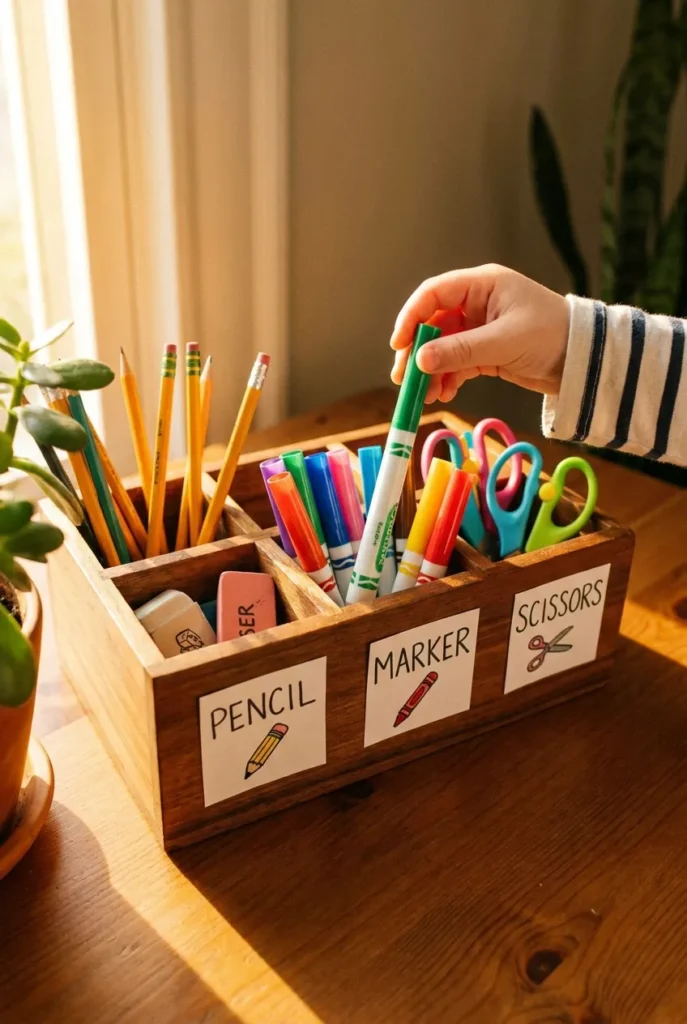
Write holds pencils, pens, and the sharpener. Correct holds erasers and highlighters. Color holds the marker or colored-pencil set. Cut-and-Stick holds scissors, glue, and sticky notes. Four little bins or four divided compartments, that is the whole system. We keep a fifth flat slot at the back for index cards and a small notepad.
Why zones beat a free-for-all: kids as young as five can reset a zoned caddy in under a minute, because putting away becomes a sorting game. For pre-readers, add a picture on each zone (a tiny pencil, an eraser, a marker, scissors) so help younger kids find their own supplies without asking you every night.
The Small-Home Setup: Where the Caddy Actually Lives
This is the part competitors skip, and it is the part that makes or breaks a small home. A caddy without a designated home just migrates around the apartment until it is lost under a couch cushion.
Pick one primary spot and one storage spot. The primary spot is where homework happens, usually the kitchen table. The storage spot is where the caddy waits between sessions: a low cabinet, an open shelf, or the seat of a dining chair pushed under the table. Match the caddy’s home to your real routine, and it stays put.
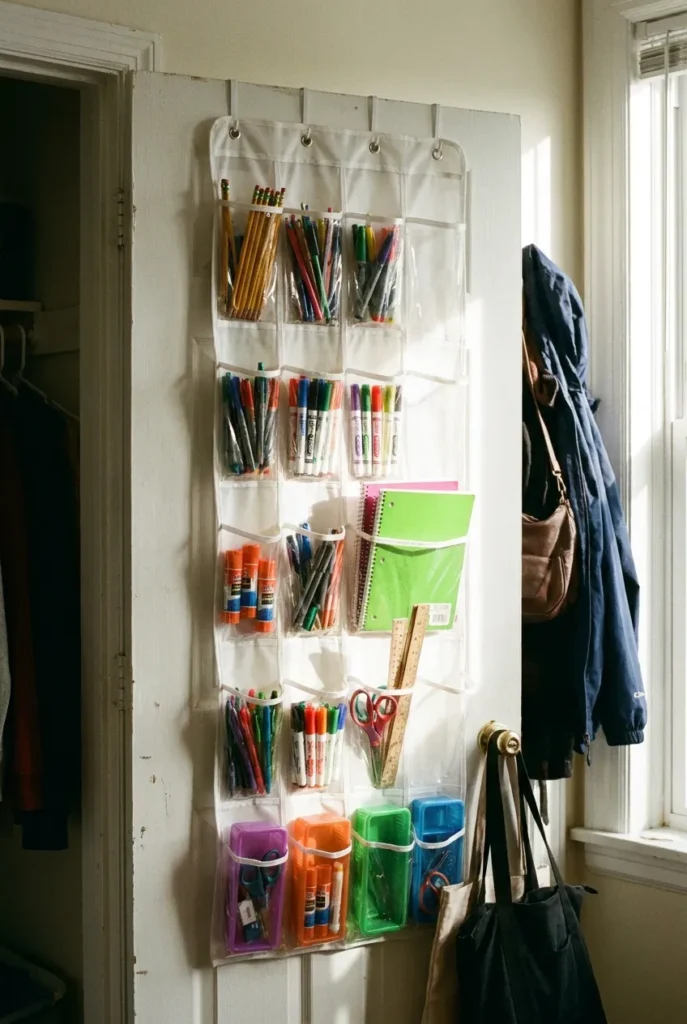
For renters and tiny kitchens, go vertical. An over-the-door pocket organizer on the back of a pantry or closet door turns dead door space into a full supply wall, no drilling required. Command hooks hold a small caddy on a wall beside the table. These damage-free moves protect your deposit and free up your two square feet of counter.
Building a Rolling Study Cart for Slightly Bigger Loads
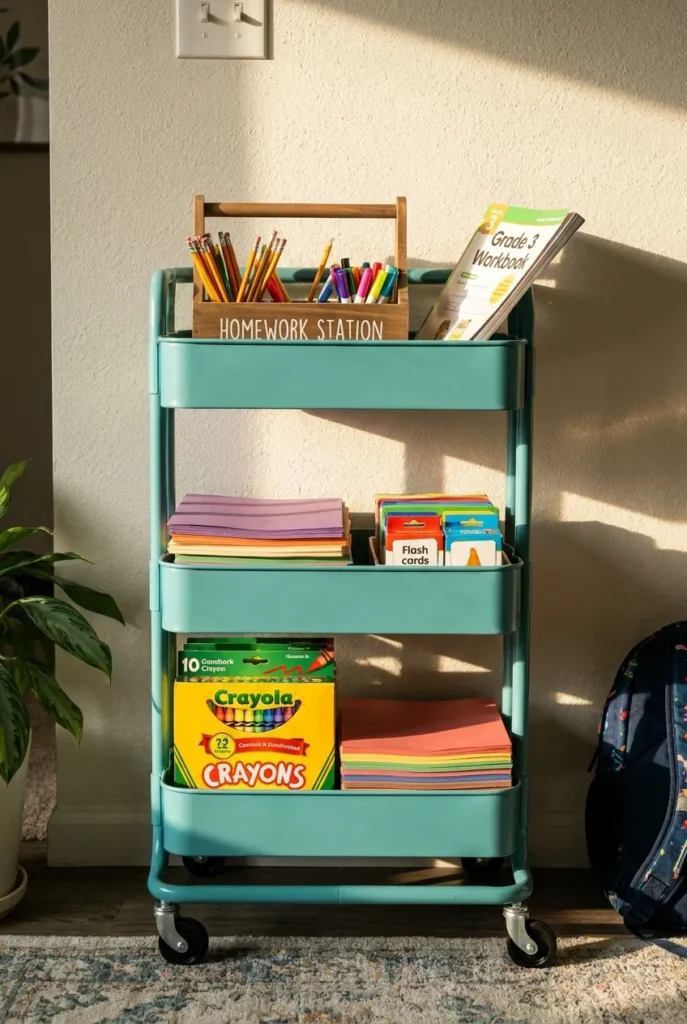
If a caddy is not enough, a rolling study cart carries the whole operation. We build ours on a 3-tier cart, and it parks in a closet when the homework is done.
Top tier: the daily caddy plus whatever the current unit needs (a library book, a math workbook). Keep this tier light and grab-ready. Middle tier: backstock and mid-use items, the extra glue, the loose-leaf paper, the flashcards. Bottom tier: bulky and messy, construction paper, the big crayon box, a small lap desk if your kids do homework on the couch.
The cart also solves the shared-room problem. Two kids, one cart, each gets a labeled caddy on the top tier. When homework is finished, everything rolls back into the closet and the room reads clean again. If your family also battles the morning rush, pairing this with a backpack station by the door means supplies go into the caddy at night and backpacks get loaded by the exit, so mornings stop being a scramble.
The Weekly Reset That Keeps It Working
A caddy set up in September that is chaos by October did not fail. The reset did. Small systems need a small, regular reset, and this one takes five minutes.
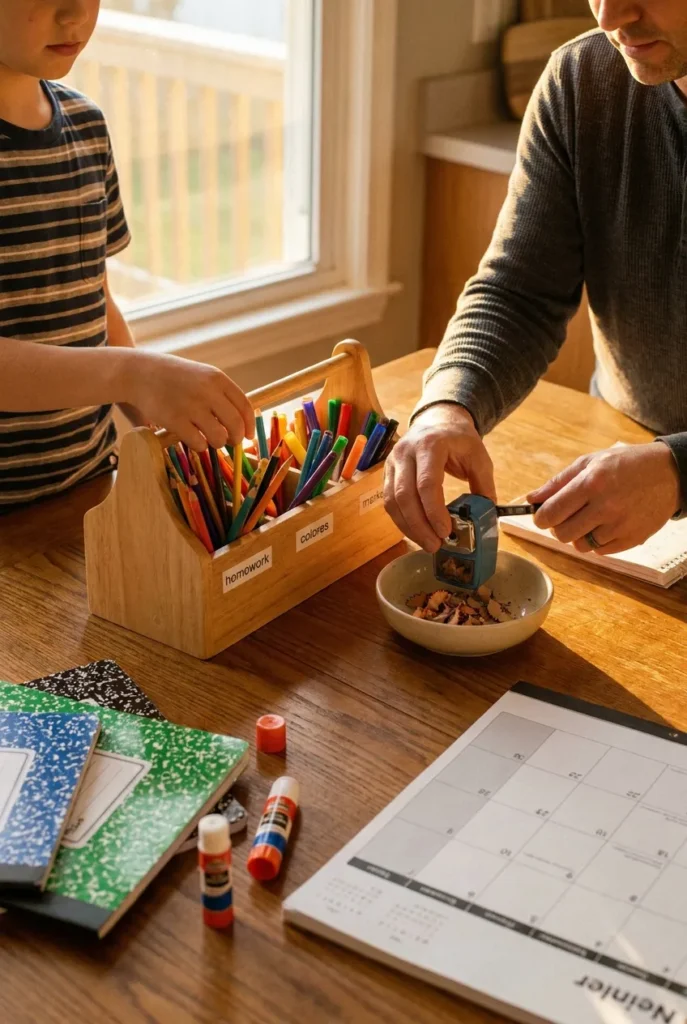
Every Sunday evening, do a quick sweep: sharpen the pencils back up to six, toss the eraser nubs, refill anything empty from backstock, and return stray supplies to their zone. That is the whole ritual. Tie it to something you already do, like right after dinner or during the Sunday lunch-pack, so it actually happens. A calm, predictable homework routine starts with supplies that are ready before the pencil hits the paper.
Want it to stick? Put the kids in charge of their own reset. A five-year-old can match supplies back to zones. An eight-year-old can run the whole sweep with a checklist. Which is exactly what the free printable below is for.
Age-by-Age: What Goes in the Caddy as Kids Grow
The caddy grows with the kid. Here is a quick age-by-age guide so you are not buying compasses for a kindergartner.
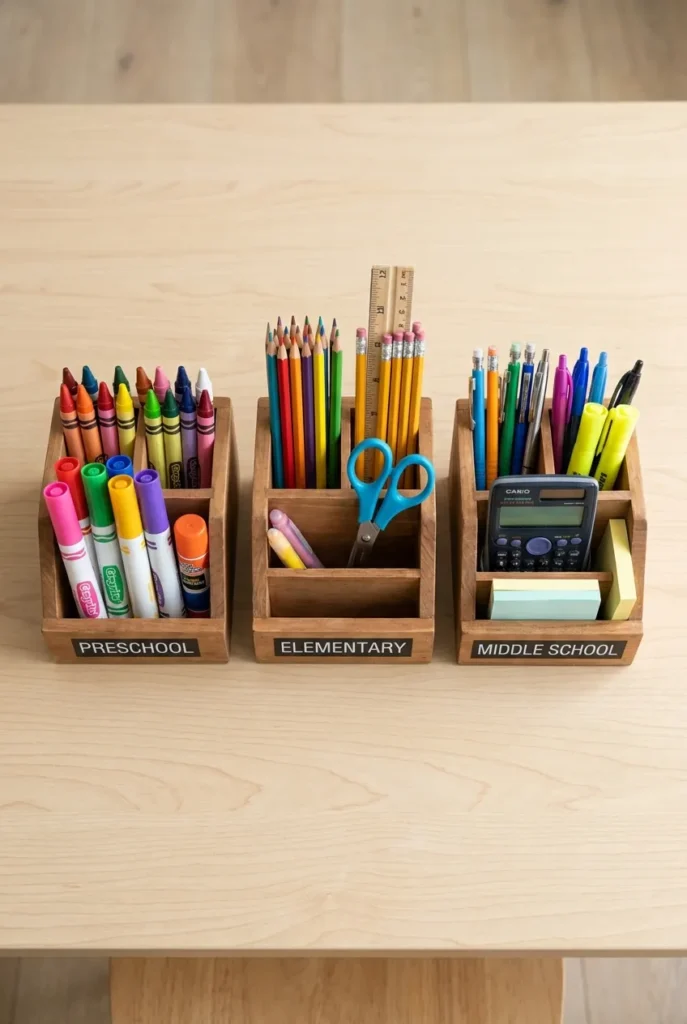
Ages 5 to 7 (K to 2nd): chunky pencils, one washable marker set, child-safe scissors, a glue stick, and picture labels on every zone. Keep it to five or six items so it never overwhelms.
Ages 8 to 10 (3rd to 5th): standard pencils, a real eraser, colored pencils, two highlighters, index cards, and a short ruler. This is peak “run your own reset” age, so hand over the checklist.
Ages 11 and up (middle school): add a pen zone, a small stapler in backstock, sticky tabs, and a mini calculator. Middle schoolers often prefer a personal caddy they carry to their room, so lean caddy over cart here.
Grab the Free Homework Caddy Checklist
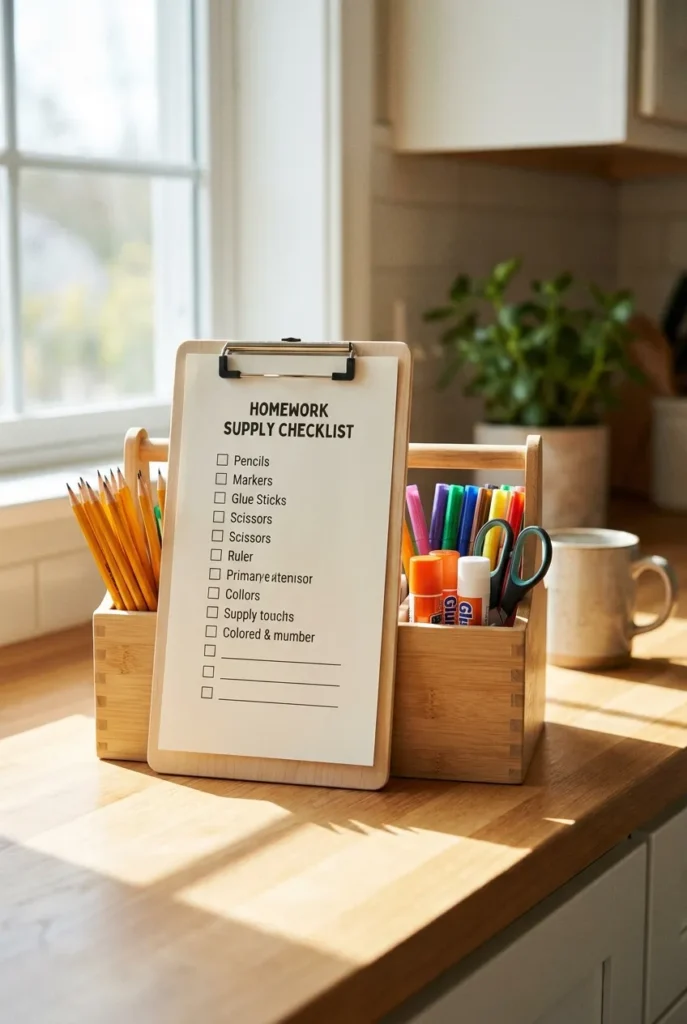
We made a one-page printable so you can shop, stock, and reset without the guesswork. It lists the core supplies, the four zones, and a Sunday reset checklist kids can follow themselves. It prints on standard US letter (8.5 x 11) as a PDF, and it looks fine in black and white if you want to save ink. Laminate it, clip it to the cart, and let the kids run the system.
Frequently Asked Questions
How do you organize a homework caddy?
Split it into four zones (Write, Correct, Color, Cut-and-Stick), stock only the essentials in each, and keep bulky extras in a separate backstock bin. Add picture labels for younger kids so they can reset it themselves.
What is the best way to organize kids’ school supplies in a small home?
Use one portable caddy per child plus a shared backstock bin, and give the caddy a fixed home (a cabinet, shelf, or rolling cart) so it does not wander. Vertical, over-door storage saves counter space in tiny kitchens.
How do you organize kids’ homework, not just supplies?
Pair the supply caddy with a simple routine: same spot, same time, and a five-minute Sunday reset. Supplies ready before homework starts removes the biggest stall.
What is the difference between a homework caddy and a study cart?
A caddy is a small portable container for the daily essentials. A study cart is a rolling 3-tier unit that holds more and parks in a closet. Small homes often use a caddy, and larger loads or multiple kids do better with a cart.
How do you keep a homework caddy from becoming a mess?
Run a five-minute weekly reset: sharpen pencils, refill from backstock, and return strays to their zone. Zoned, labeled caddies stay tidy because kids can sort items back in seconds.
What supplies go in a homework caddy?
Sharpened pencils, an eraser, one marker or colored-pencil set, child-safe scissors, a glue stick, two highlighters, sticky notes, a short ruler, and a lidded sharpener. Skip the mega packs.
Your Afternoon Project Starts Now
A homework caddy is one of those tiny systems that pays you back every single school night. Pick your caddy or cart, stock the four zones, give it a home, and let the kids run the Sunday reset. Small home, big calm. Grab the free printable, set yours up this weekend, and tell us which zone your kids fight over first (it is always the marker zone, honestly).


