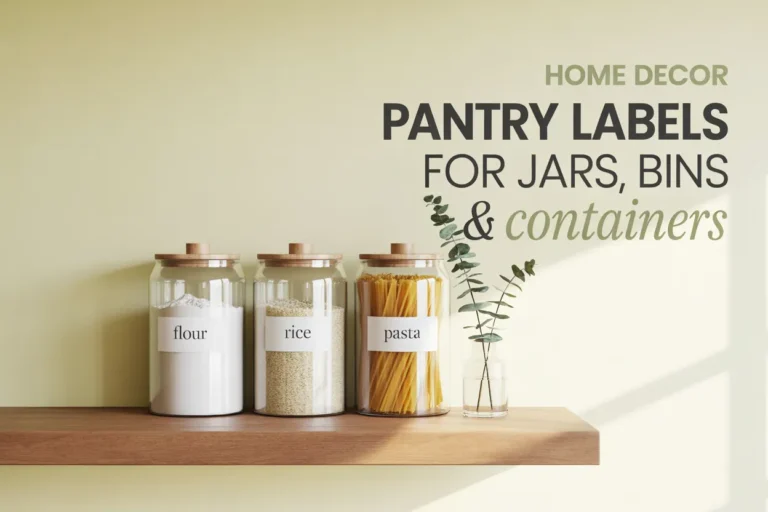

Pull-Out Pantry Organization That Actually Works for Deep and Narrow Shelves
Your pull-out pantry looked like a dream in the showroom. Then real life happened. Now the front holds three open cracker sleeves and the back swallows a can of chickpeas you bought in 2023. Good pull-out pantry organization fixes exactly this, and the trick is not more bins. It is a repeatable system that respects how a slide-out actually moves.
Here is the promise. By the end of this guide you will know how to zone a deep slide-out, tame a skinny tower, keep the back reachable, and pick organizers that fit standard shelf depths. We tested this on our own narrow 8-inch tower and a deep double-glide unit, so the advice comes from stuff we actually pulled out and shoved back a hundred times.
We will keep it practical. Short steps. Real brands. A framework you can screenshot.
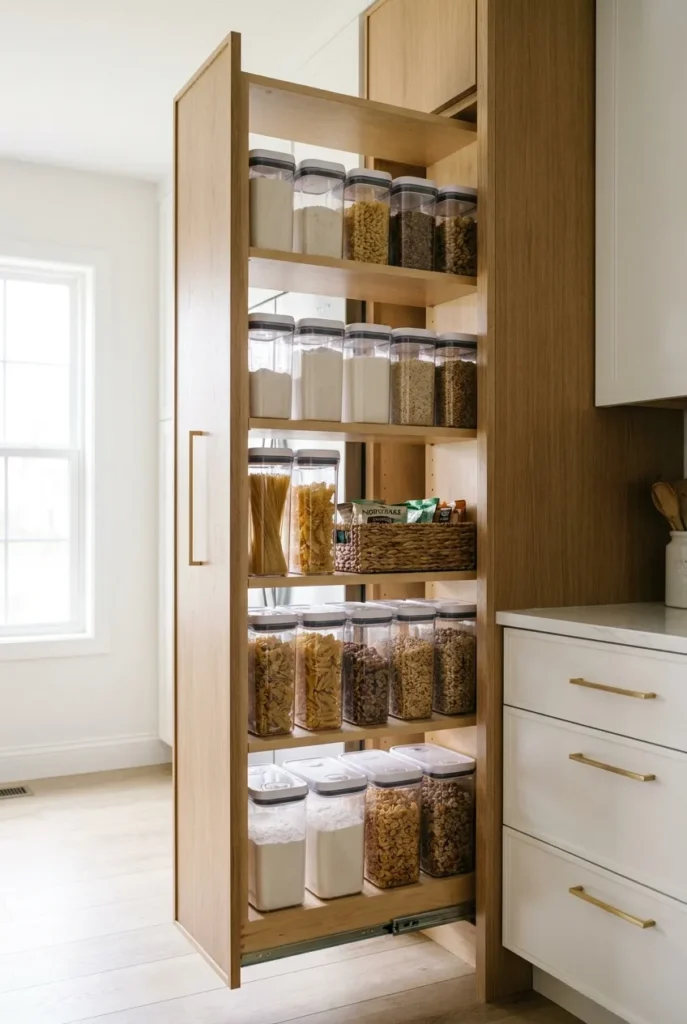
Why Pull-Out Pantry Organization Is Different From Regular Shelves
A fixed shelf just sits there. A pull-out moves, which changes everything about how you load it. Weight matters, because full-extension glides have a rated limit and an overloaded slide-out starts to sag and stick. Balance matters too, since a top-heavy tower can tip forward when you yank it open fast.
So the first rule is not aesthetic. It is mechanical. Heavy on the bottom, light up top, and never past the glide’s rating.
Most residential pull-out units use glides rated somewhere around 75 to 100 pounds per shelf, though yours may differ. Canned goods and glass jars add up fast. We learned this the hard way when a bottom drawer packed with sauce jars started dragging.
The payoff of getting this right is huge. When a slide-out glides clean and every item faces you, you stop losing food, and you stop rebuying things you already own.
The 3-Depth Pull-Out Rule (our framework)
Here is the system we keep coming back to. The 3-Depth Pull-Out Rule splits every slide-out shelf into three reach zones: Front (grab-and-go daily items), Middle (weekly staples), and Back (backstock and rarely used goods). You load each zone on purpose so the back never becomes a graveyard.
Use it as a recurring check. Every time you restock, ask which of the three depths an item belongs in. That one habit keeps a deep pull-out honest.
Start Here: Empty, Sort, and Group by Category
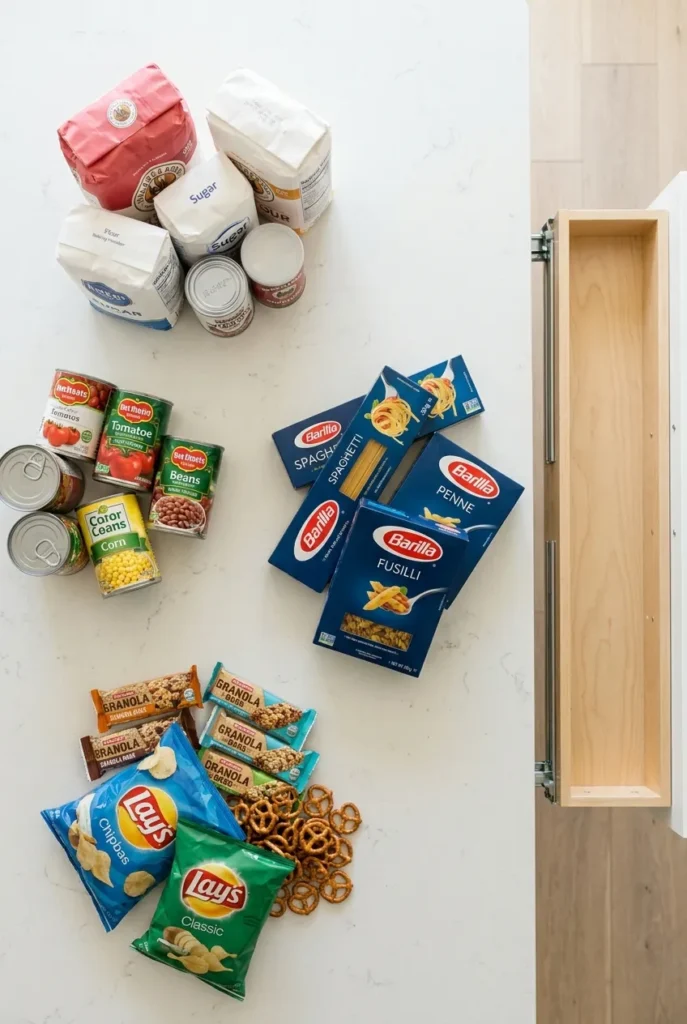
Before you buy a single bin, pull everything out. We mean everything. Lay it on the counter so you can see duplicates, and honestly, you will find duplicates.
Toss what is expired. The USDA keeps a handy reference for how long shelf-stable staples actually last, so check it if you are unsure whether that baking soda is still good.
Now sort into loose categories: baking, breakfast, canned goods, pasta and grains, snacks, and drinks. Wipe the empty shelves while they are bare. This is the fastest your pull-out will ever be to clean, so take the two minutes.
Grouping first is what makes the next steps click. When like lives with like, a pull-out reads at a glance.
Build Your Pull-Out Pantry Zones (Breakfast, Snacks, Baking, Backstock)
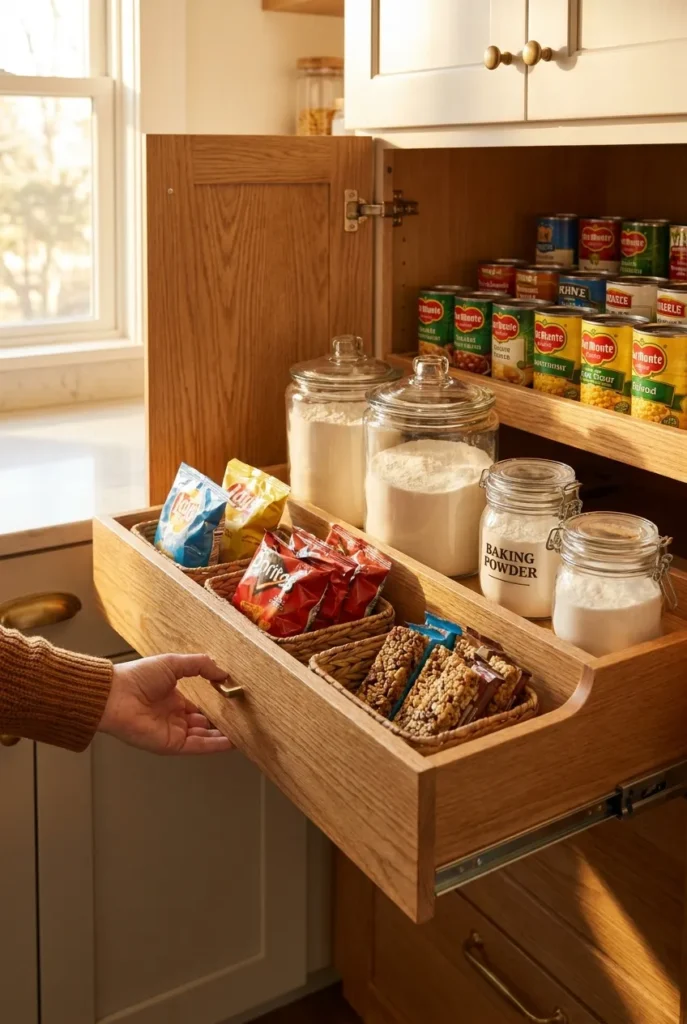
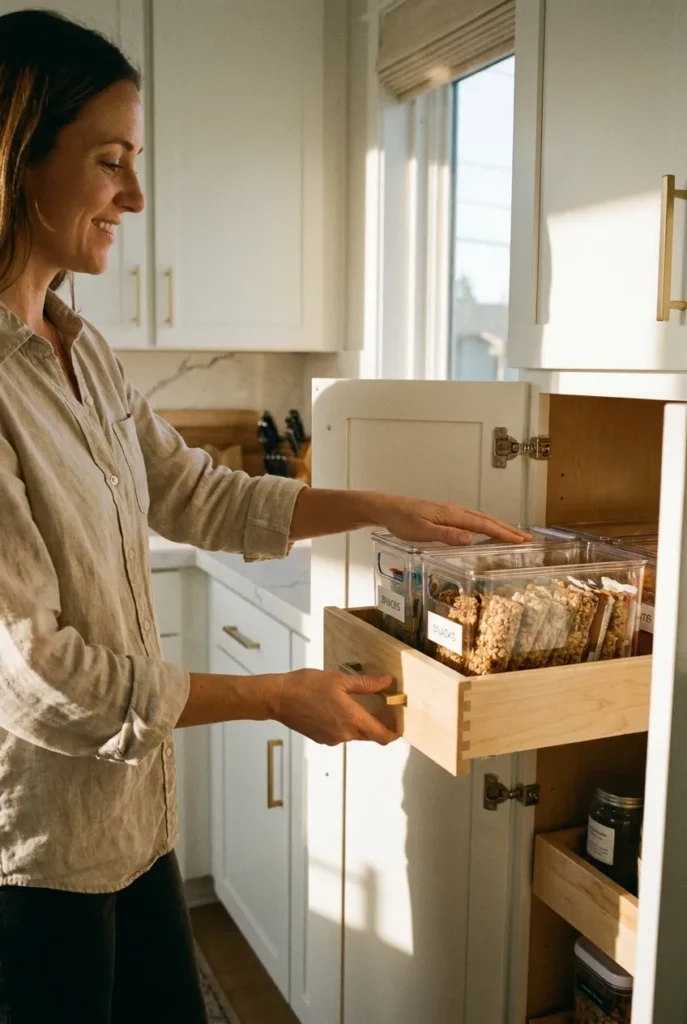
Zones turn a pile of food into a system you can maintain. Assign each slide-out shelf or drawer a job. Breakfast on one, snacks on another, baking on a third, and canned backstock down low where the weight belongs.
Put the shelves you open most at waist-to-eye height. Your morning coffee and cereal should never make you crouch. Save the bottom slide-outs for heavy, less-frequent items like bulk flour and canned tomatoes.
Kids change the math. If little hands raid the snack drawer, make the lowest easy-reach pull-out the snack zone so they can serve themselves. [VERIFY: your real setup, e.g. the drawer height your kids can actually reach.]
For a deeper walk-through of grouping logic across a whole kitchen, our guide on how to organize your kitchen cabinets from top to bottom pairs well with this pantry system.
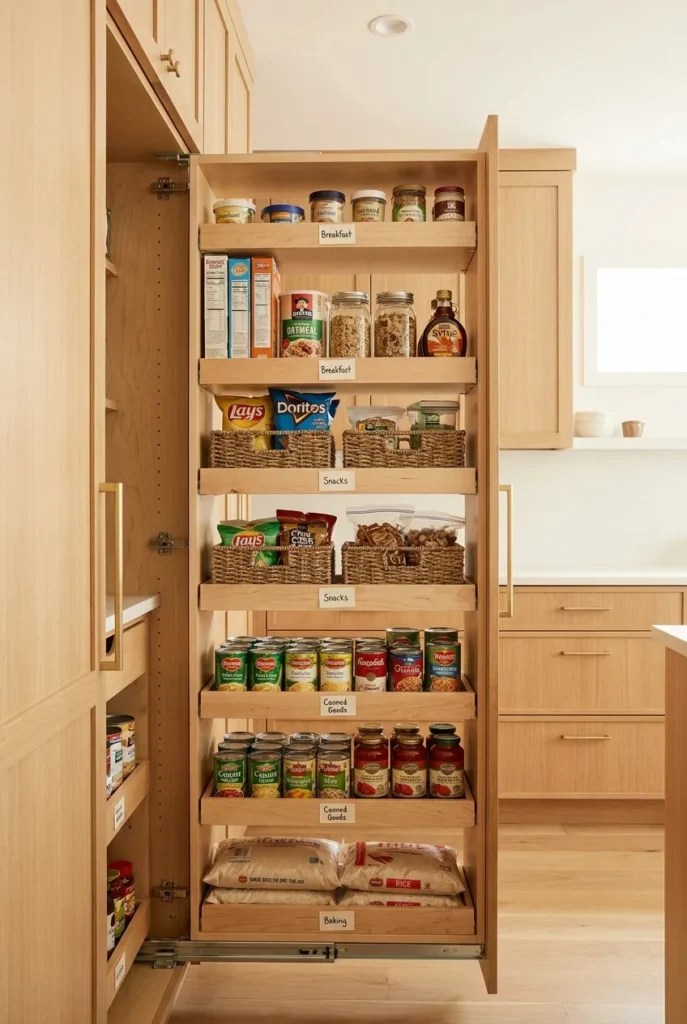
The Best Containers and Bins for Pull-Out Shelves
Containers are where a pull-out goes from functional to genuinely easy. Clear wins, because you can spot a low bag of rice without pulling the whole shelf. We decant our most-used dry goods into clear OXO Good Grips POP containers, and the 1.7-quart size holds a standard bag of pasta with room to spare.
For grab-and-go groups, low open bins beat lidded boxes. Reach in, grab, done. mDesign clear plastic bins and Target Brightroom bins both come in narrow widths that suit skinny towers, and Dollar Tree clear bins work fine for snacks if you want to test a layout before investing.
Match the bin to the shelf depth. Measure first. Most residential pull-out shelves run around 10 to 14 inches deep, so a 12-inch bin sits flush without hanging off the glide.
One caution. Keep food in food-grade containers only, and leave anything that needs its original packaging (like some baking mixes with cook lines) in its box.
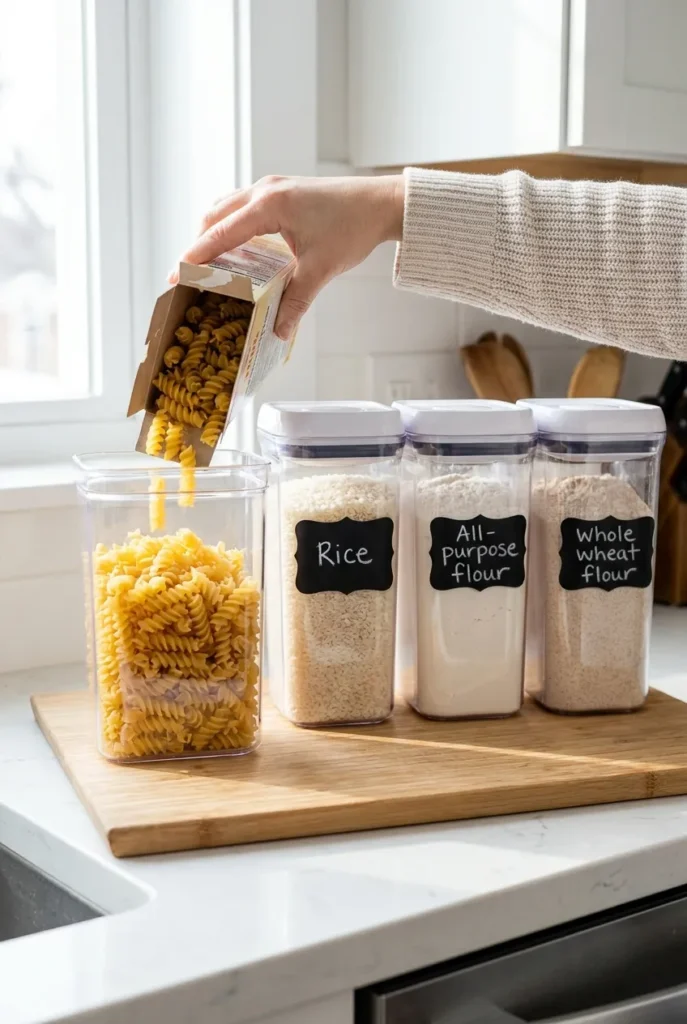
How to Keep the Back of a Deep Slide-Out Reachable
This is the gap nobody covers, and it is the real pain of a deep pull-out. The back becomes a dead zone. Here is how we keep ours alive.
Face labels forward and stand items in single rows so nothing hides behind a taller box. Use a small back-of-shelf riser or a shallow lazy Susan so rear items rotate into view. A tiered shelf riser, like the ones from mDesign, turns a buried back row into a visible back row.
Practice one-in-one-out. When a new box goes in front, the oldest one slides forward to get used first. This FIFO habit is the single reason our backstock stopped expiring.
Honestly, the riser trick alone changed how we shop, because we finally stopped burying good food.
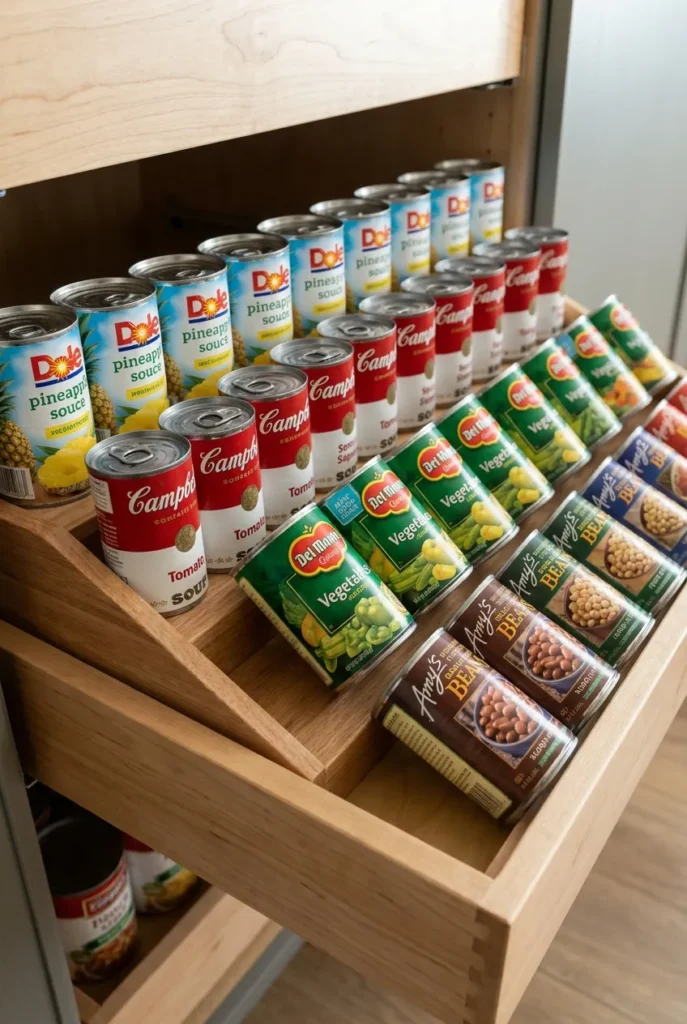
Narrow and Slim Pull-Out Towers: Small Space Wins
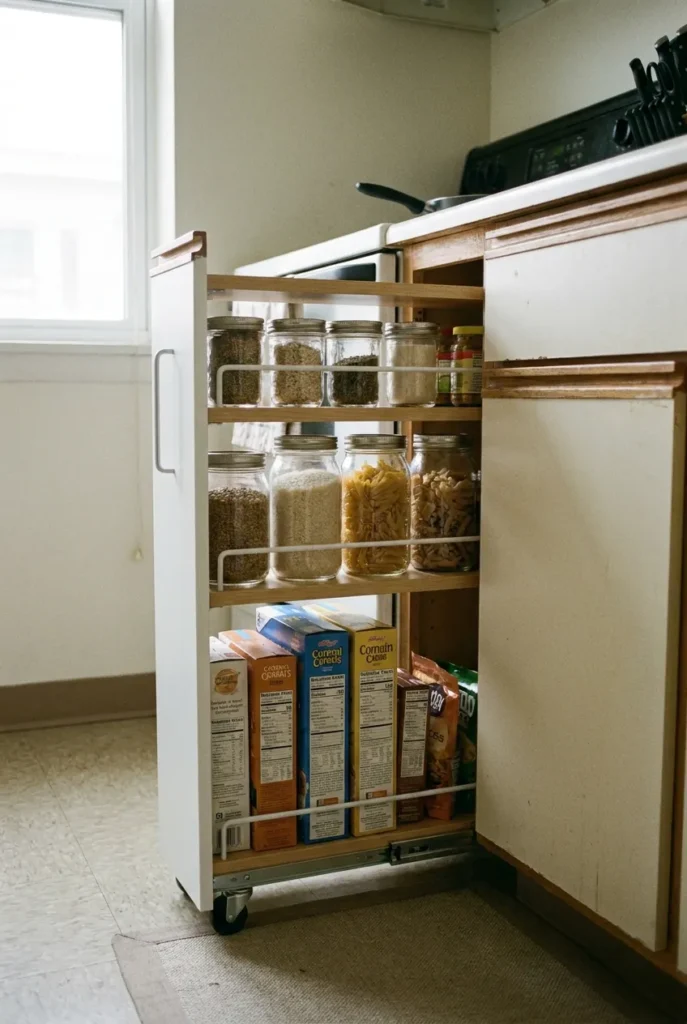
Skinny towers, the 6 to 12-inch ones wedged between the fridge and a wall, are secretly the best storage in the kitchen. Everything sits in a single visible column, so nothing hides. The catch is they tip if you load them top-heavy, so keep the weight low.
Group by height, not just category. Tall bottles down one section, short cans and jars in another, so no space goes to waste above a short item. Slim baskets, like the narrow IKEA Variera inserts, keep loose packets from sliding when the tower moves.
If you rent or your kitchen is tight, our full list of small kitchen organization tricks has more space-savers that pair with a slim tower.
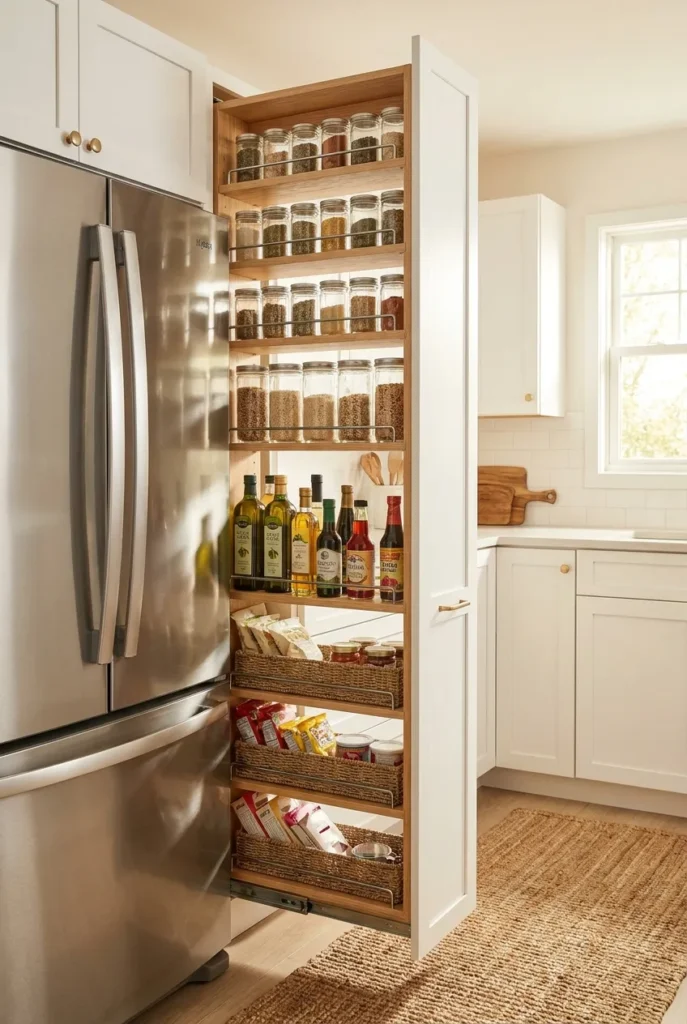
No-Drill Pull-Out Ideas for Renters
You do not need a contractor to get pull-out convenience. Renters, this section is for you. Freestanding rolling shelves, like a slim Mainstays or Amazon Basics slide-out cart, tuck into a gap and roll out with a tug, no install required.
For fixed pantry shelves, add pull-out function with standalone wire or bamboo slide-out baskets that simply sit on the shelf. They give you the same reach-everything benefit without a single screw. Command hooks on the inside of a pantry door add a no-damage spot for measuring cups and snack clips.
Three no-drill wins, zero deposit risk. That is the whole point.
Labels, Liners, and the Little Details
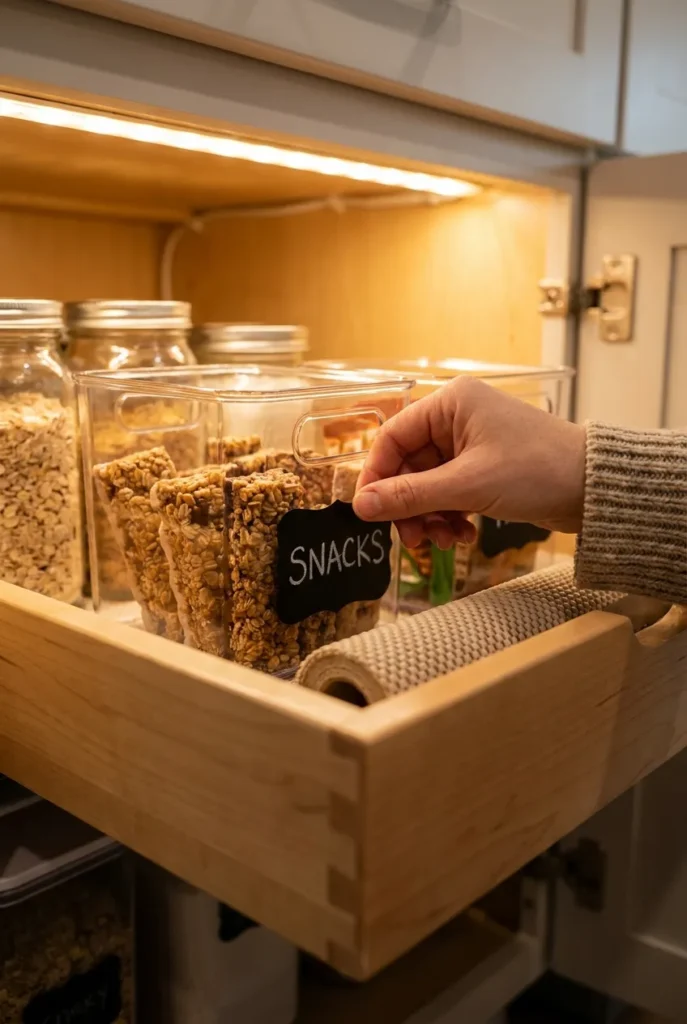
Labels are not just pretty. On a pull-out, they let you read a shelf in one glance instead of lifting lids. Print simple ones, or write on a chalk marker label so you can wipe and change them as your staples shift.
Liners are optional but nice. A grippy drawer liner keeps jars from sliding forward every time you open a slide-out, and it protects the shelf from sticky drips. Cut it to size so it does not bunch under the bins.
Small stuff, real difference. These finishing touches are what make the system stick.
Maintain It: The 5-Minute Weekly Reset
A pull-out pantry falls apart the same week you finish it unless you build in a tiny reset. Once a week, pull each shelf, push stray items back to their zone, and slide the oldest backstock forward. Five minutes, tops.
Add staples to your list as bins empty, not after they run out. That keeps you from panic-buying doubles that then clog the back. For a broader refresh across your whole food storage, our roundup of 15 pantry organization ideas that make meal prep easier is a good weekend companion.
Consistency beats perfection here. A slightly messy system you actually maintain wins over a flawless one you abandon.
Frequently Asked Questions
How do I organize a pull-out pantry step by step?
Empty it fully, toss expired items, group by category, assign each slide-out a zone, decant into clear bins, label the fronts, and load heavy items low. Finish with a weekly five-minute reset so it stays that way.
What are the 7 pantry zones?
A common setup is breakfast, snacks, baking, canned goods, pasta and grains, drinks, and backstock. On a pull-out, give the heaviest zone (usually canned goods) the bottom shelf and put daily zones at eye level.
How do I organize a pull-out drawer pantry for better visibility?
Stand items in single rows with labels facing forward, add a small tiered riser to lift the back row, and keep tall boxes to the sides so they do not hide shorter items. Clear bins do most of the visibility work.
How do I keep the back of a deep slide-out from becoming a dead zone?
Use a back riser or shallow lazy Susan, practice one-in-one-out so older food slides forward, and avoid double-stacking items front to back. Rotate every week during your reset.
How do I add pull-out storage to a rental without drilling?
Use freestanding rolling carts in gaps, set standalone slide-out baskets on existing fixed shelves, and hang Command hooks inside the pantry door. All three are damage-free.
What size bins fit a pull-out pantry shelf?
Measure your shelf depth first, usually around 10 to 14 inches, and pick bins an inch or two shorter so they sit flush on the glide. Narrow towers often need 6 to 8-inch-wide bins.
Should I use shelf liner in a pull-out pantry?
It is optional but helpful. A grippy liner stops jars from sliding forward each time you open the shelf and catches sticky drips, which makes cleanup easier.
Bring It All Together
Pull-out pantry organization is not about buying the prettiest bins. It is about loading each slide-out with intent, keeping the back reachable, and doing a quick weekly reset so the whole thing holds. Start with one shelf this weekend, try the 3-Depth Pull-Out Rule, and see how much faster your mornings feel.
If you tackle a shelf, we would love to know which zone tripped you up first. Save this guide, pin your favorite image below, and come back when you are ready for the next shelf.