

Kids Room Organization: Systems That Grow With Your Child
You can spend a whole Saturday on kids room organization, take the photo, feel amazing, and watch the entire thing collapse by the following Thursday. That is not a discipline problem. It is a height problem, an age problem, and usually a lid problem. This guide gives you a system that adjusts as your child grows instead of one you have to rebuild every eighteen months. Real bin dimensions, real prices, a reach line you measure in about a minute, and a ten minute reset your kid can run without you standing there.
Grab a tape measure. Honestly, that is the only tool you need to start.
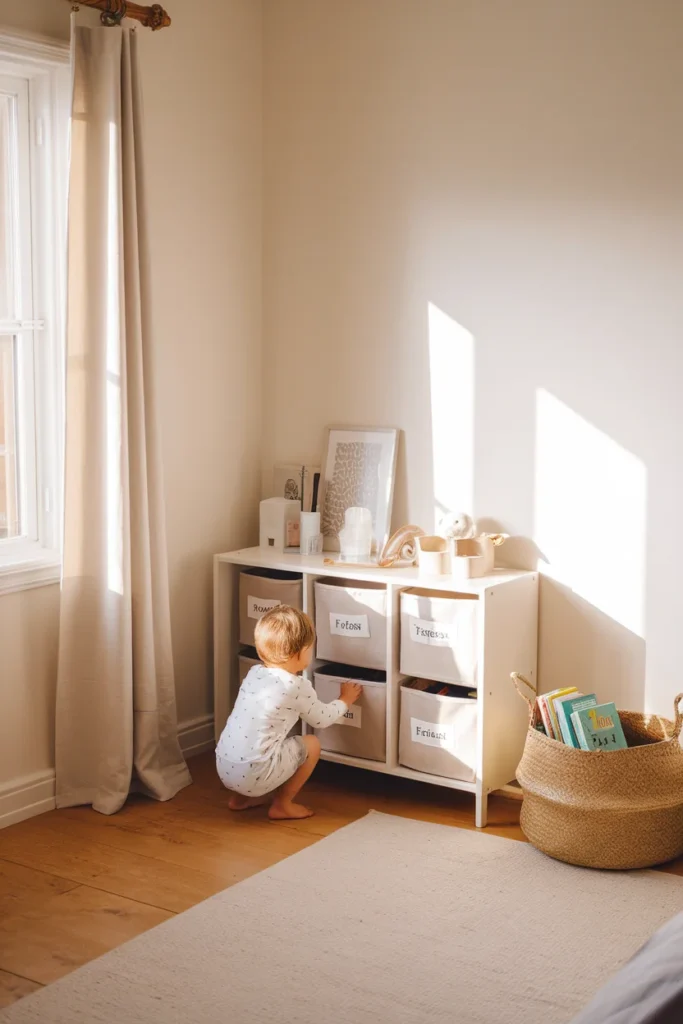
Why Most Kids Room Organization Fails By Week Three
Walk into almost any organized kids room a month after the makeover and you will find the same three failures.
The bins are too high. The lids are still on the floor where they were kicked. And the labels say things like “miscellaneous,” which means nothing to a six-year-old and, honestly, not much to the adult who wrote them.
Here is what the top-ranking articles get wrong. They sell you containers. More cubes, more baskets, more acrylic. Containers are the last step, not the first. If a child cannot physically reach a bin, cannot open it in one motion, and cannot tell what goes inside it, the container is just a nicer place for mess to hide.
Every system in this guide passes three tests before it earns a spot in the room:
- The one-motion test. Can your child put the item away without opening, lifting, or unstacking anything first?
- The reach test. Can they do it flat-footed, no chair, no tiptoes?
- The label test. Can they identify the right home in under two seconds, whether or not they can read yet?
Fail any one of the three and the system is decoration. That is the whole thesis.
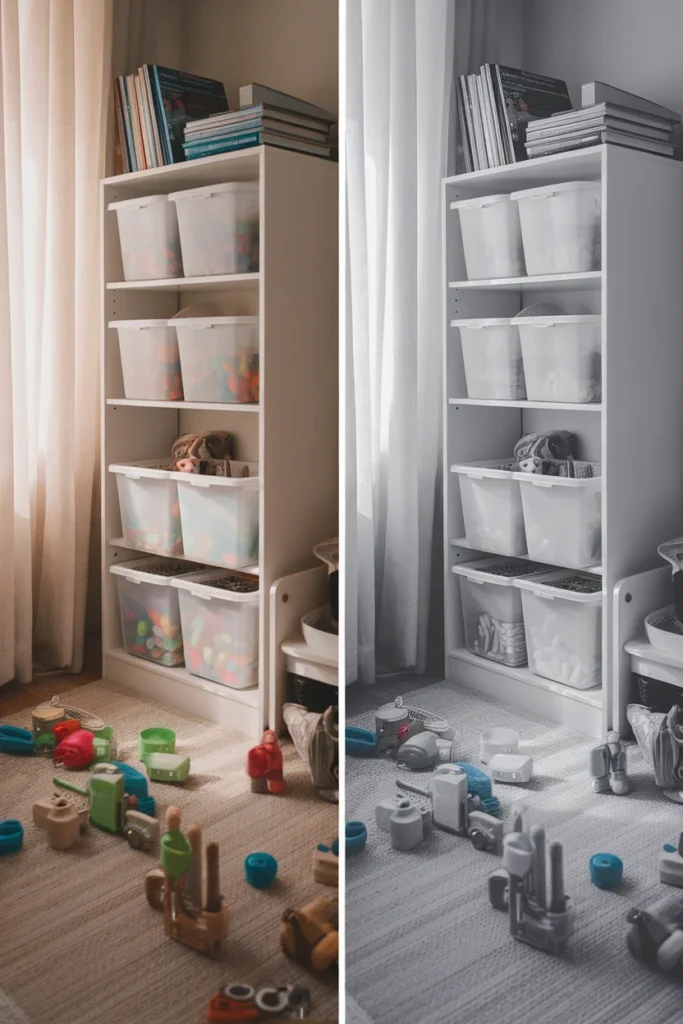
The Reach Line Method
This is the framework the rest of the article hangs on, and it is the reason kids room organization built this way keeps working as your child gets taller.
The Reach Line Method: measure the highest point your child can touch with a flat palm while standing on the floor. That measurement is their reach line. Everything they are responsible for lives below it. Everything you are responsible for lives above it. You re-measure twice a year and slide the system up.
Three zones, and the whole room sorts into them:
| Zone | Where it sits | What lives there | Who owns it |
|---|---|---|---|
| Daily Zone | Floor up to the reach line | Everyday toys, current clothes, library books, shoes | Your child, fully |
| Stretch Zone | Reach line to about 12 inches above | Weekly items, art supplies, board games, backup socks | Shared, with a step stool |
| Parent Zone | Everything above that | Off-season clothes, rotation toys, keepsakes, spare bedding | You, alone |
Why the twice-a-year cadence matters: children grow fast enough that a system built for a three-year-old is already wrong by kindergarten. According to CDC growth chart data, the median three-year-old stands about 37 inches tall. By seven that same child is right around 48 inches. Eleven inches of growth changes which shelf is usable, which rod is reachable, and which bin they will actually put away.
Pick two dates you will not forget. The first weekend of January and the first weekend of August work well, because one lands at the New Year reset and the other lands right before back-to-school.
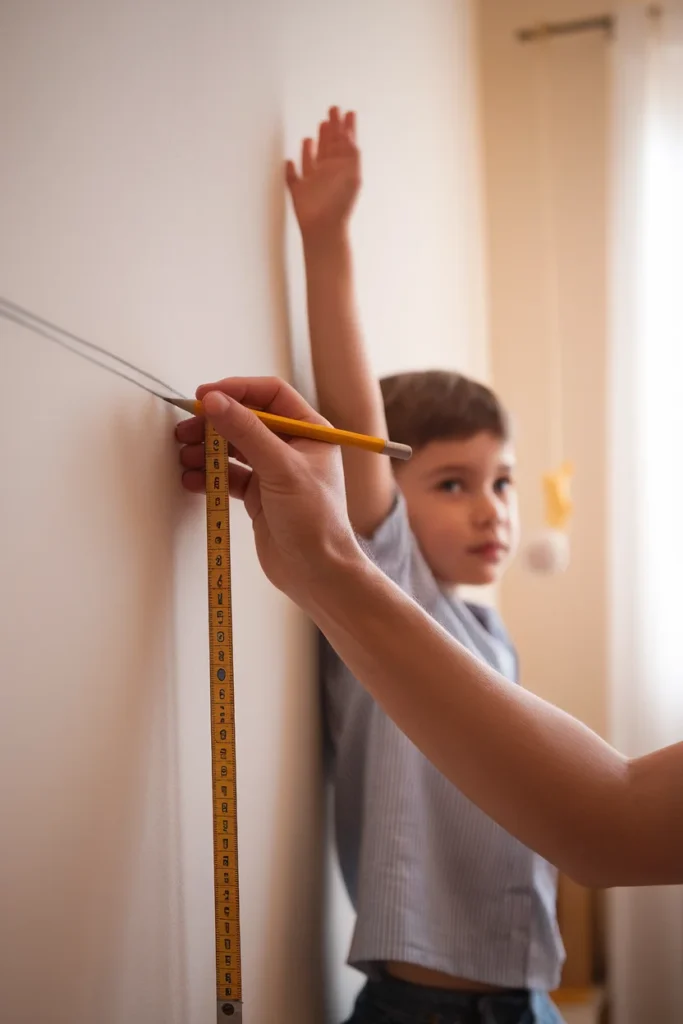
How to find the reach line in 60 seconds
Have your child stand flat against a wall with their arm straight up, palm flat, no stretching onto toes. Mark the wall in pencil at the top of their palm. Measure from the floor to the mark. Write the number and the date on a piece of tape stuck inside the closet door.
That number is now your buying guide. A 22 inch tall storage frame is a purchase you can justify against a real measurement. A 57 inch tower is not, at least not for the Daily Zone.
Age By Age: What Your Child Can Actually Maintain
Most kids room organization guides never mention your child’s age. Not once. That is a strange thing to skip, because age is the single biggest predictor of whether a system survives.
The American Academy of Pediatrics places “put toys away” and “neaten bookshelves” squarely in the 5 to 7 year old chore band, with sorting laundry and making beds in the same group. Below five, you are building habits with heavy scaffolding. Above eight, you can hand over real ownership.
Ages 2 to 4. One bin per category, maximum four categories. No lids, ever. Labels are photographs or simple picture icons, because they cannot read yet. Reach line is roughly 30 to 40 inches, so the Daily Zone is essentially the bottom two feet of the room. Success looks like your child putting three blocks in the block bin while you do the other forty. That counts.
Ages 5 to 7. Word labels start working, though pairing a word with a picture is smarter for another year or so. You can go up to six or eight categories. This is the age to introduce the ten minute reset as a routine rather than a request. They can hang their own clothes if the rod is low enough.
Ages 8 to 10. Real ownership begins. Let them name their own categories, even when the naming is odd, because “battle stuff” is a category they will actually use and “action figures and accessories” is one you invented. Add a drawer they control entirely and you do not inspect.
Ages 11 and up. Stop redesigning their room. Ask what is not working, offer two solutions, let them pick. The reach line is basically an adult reach line now, which means vertical space finally opens up and the Parent Zone can shrink to seasonal storage only.
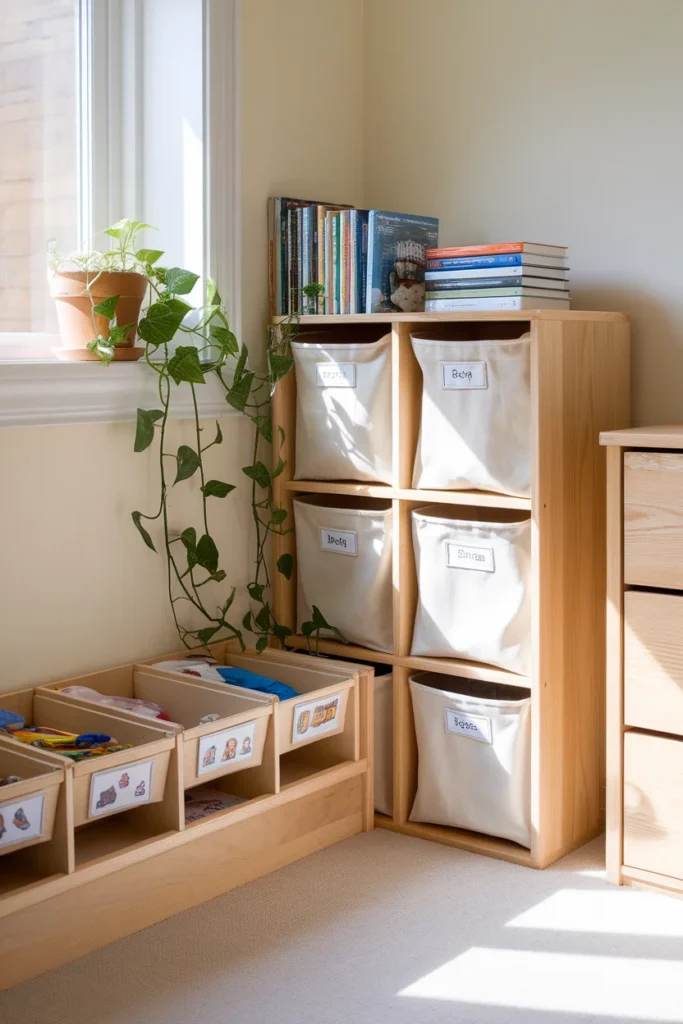
Kids Room Storage Ideas That Move With the Reach Line
Now the products. Real dimensions and real regular prices, so your kids room organization plan runs off your reach line instead of a guess in a store aisle.
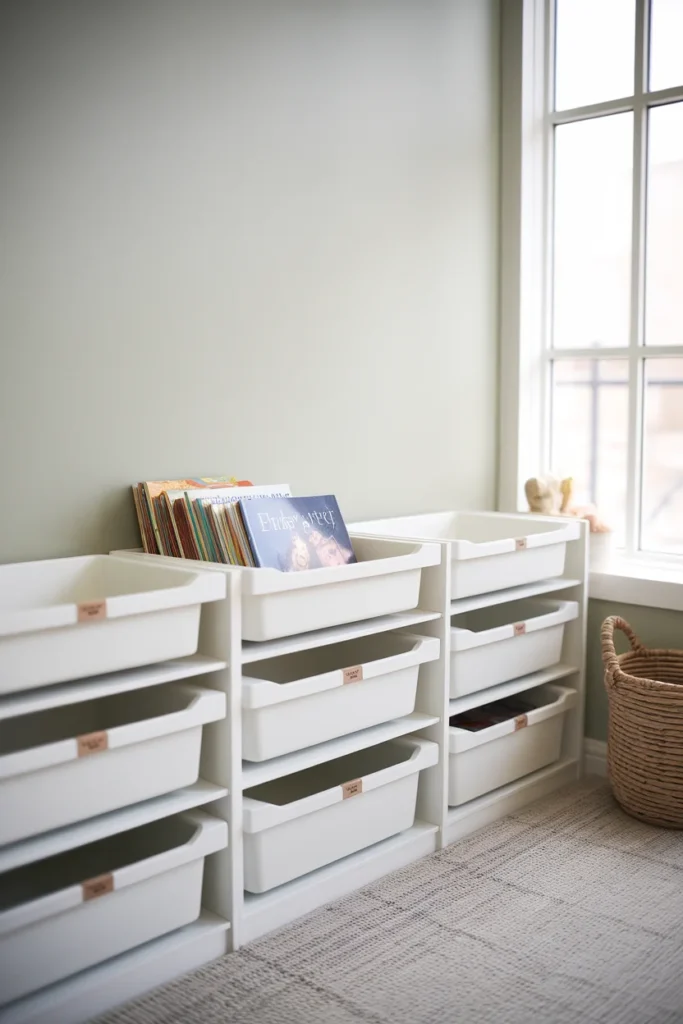
IKEA TROFAST is the workhorse for the Daily Zone. The 39 by 17 3/8 by 22 inch frame runs $67.99 at regular price and IKEA discounts it several times a year. That 22 inch height is the useful number: it puts every bin under the reach line of a typical preschooler. Boxes are sold separately, which people forget. The shallow box (16 1/2 by 11 3/4 by 4 inches) is $4.00 and the deep box (16 1/2 by 11 3/4 by 9 inches) is $5.00. Buy shallow for small parts, deep for bulk. There are lids available. Skip them.
IKEA KALLAX is the Stretch Zone answer. The 2×2 unit measures 30 1/8 by 15 3/8 by 30 1/8 inches at $49.99, with 13 by 13 inch cube openings and a 29 pound load rating per shelf. The 2×4 tower is $79.99 and 57 5/8 inches tall, which puts it firmly in Parent Zone territory for anyone under about ten.
Target Brightroom 13 inch fabric bins run $10.00 each and drop straight into KALLAX cubes. Target’s Pillowfort stackable wood bin (11 by 14 by 13 inches, $22.00) is the prettier option if the room is on display.
Lakeshore Learning Connect & Store book bins (14 by 5 1/4 by 7 1/4 inches, $6.99 each at regular price) are the single best purchase for picture books, because they hold books face-out. Kids re-shelve face-out books. They do not re-shelve spine-out ones.
One measurement to carry into any store. Standard closet shelving is 12 to 16 inches deep. That is why a 15 3/8 inch deep KALLAX slots neatly into a closet nook, and a 17 3/8 inch TROFAST usually will not.
The Closet: Drop the Rod, Then Raise It
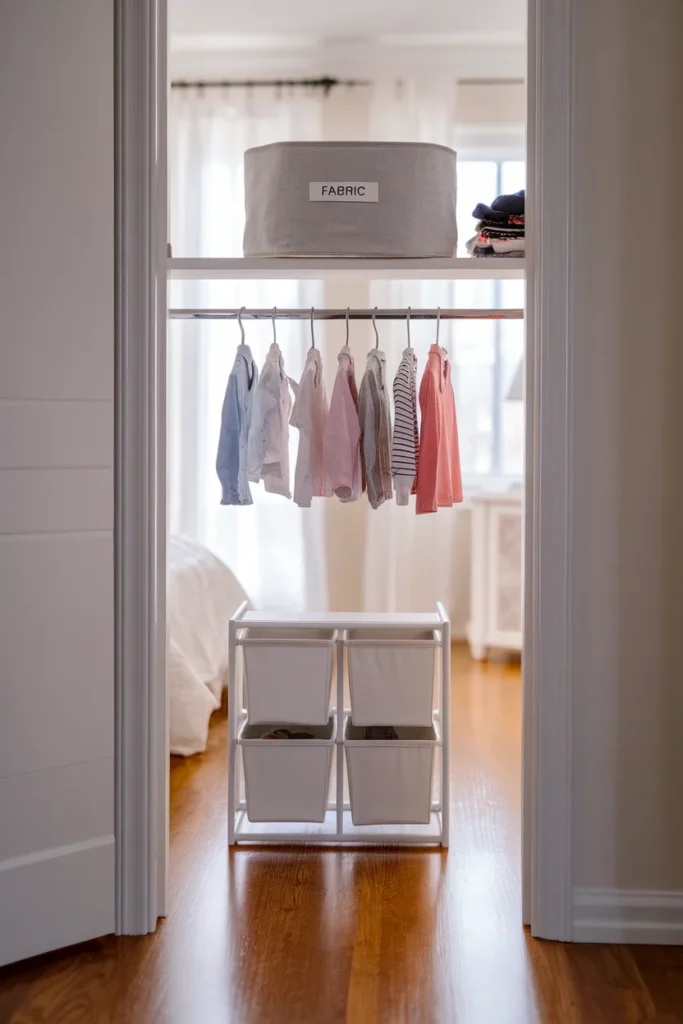
Standard closet rods hang at 66 inches from the floor. A double-hang setup puts the upper rod at 80 inches and the lower at 40. Those numbers are built for adults, which is why kids’ clothes end up in a pile on the closet floor and everyone blames the kid.
Drop the rod. For a toddler or preschooler, 30 inches from the floor is the published recommendation across multiple closet-system manufacturers. For early elementary, 36 to 40 inches. Then raise it as the reach line climbs, which is exactly the twice-a-year adjustment the method calls for.
The upside people miss: a 30 inch rod leaves a huge amount of empty space beneath it. That space takes a TROFAST frame, a two-drawer dresser, or a row of shoe bins. You did not lose closet space by lowering the rod. You created a second story.
Keep the shelf above the rod for the Parent Zone. Off-season clothes, the next size up in hand-me-downs, spare bedding. Label those bins by size, not by season, because “18 to 24 months” tells you when to open the bin and “winter” does not.
If the closet is the piece you want to solve properly, our full breakdown of kids closet organization by age walks the toddler-to-tween progression rod height by rod height.
How to Organize Kids Room With Toys Without Buying More Bins
Almost every parent asking this question already owns plenty of bins. That is the tell.
The problem is not storage capacity. It is inflow.
A toy that enters the house has a roughly permanent lease unless you build an exit. Birthdays, holidays, grandparents, party favors, the dentist’s prize box. The volume compounds and no container system on earth absorbs it forever.
Two mechanics fix it, and neither costs anything.
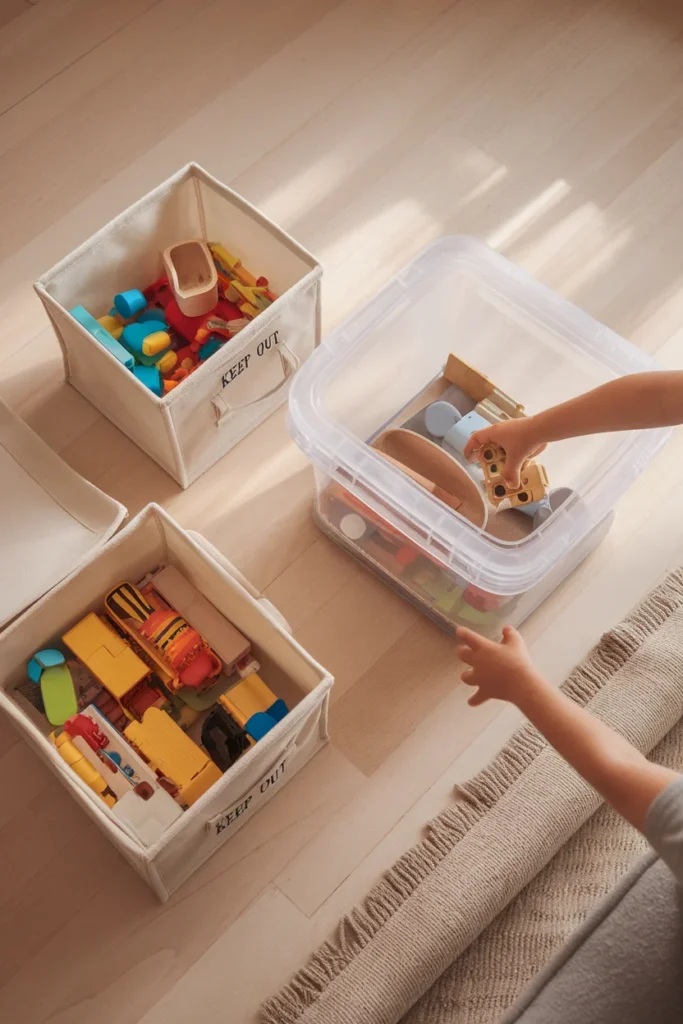
Rotation. Split the toys into two roughly equal halves. One half lives in the Daily Zone, the other lives in the Parent Zone in a lidded tote (lids are fine up there, since your child is not opening it). Swap them every four to six weeks. Kids treat the returning half like new, which is the entire trick, and the room holds half the volume at any given moment. We break the full mechanic down in our toy rotation system guide.
One in, one out, tied to events. Not a vague rule. A specific one: before a birthday and before the December holidays, one item leaves for every item you expect to arrive. Do it two weeks ahead, while the new things are still abstract and nothing has been unwrapped yet. Timing is everything here.
The toy ceiling
Here is the number nobody publishes: pick a cap per category and hold it. Eight stuffed animals. One bin of vehicles. One bin of building sets. Two board games out at a time.
The cap does the emotional work for you. You are no longer the parent deciding a specific beloved toy has to go. The bin decided. If it does not fit in the bin, something in the bin leaves, and your child picks which one. Letting them choose is the part that prevents tears, and it is also the part most guides skip. Our walkthrough on how to declutter toys with your kids covers the conversation script in detail.
Small Parts: Where Every System Quietly Breaks
Parents ask this one out loud more than any other: how do you keep small pieces together? The standard answer, deep open baskets, is the exact thing that destroys small parts.
A deep basket makes small items unfindable. LEGO minifigure hands, doll shoes, game pieces, beads, the tiny accessory that came with the set. They sink. Then the set is “missing pieces” and stops getting played with, and eventually it gets decluttered for the wrong reason.
Shallow beats deep, every time, for anything under about three inches.
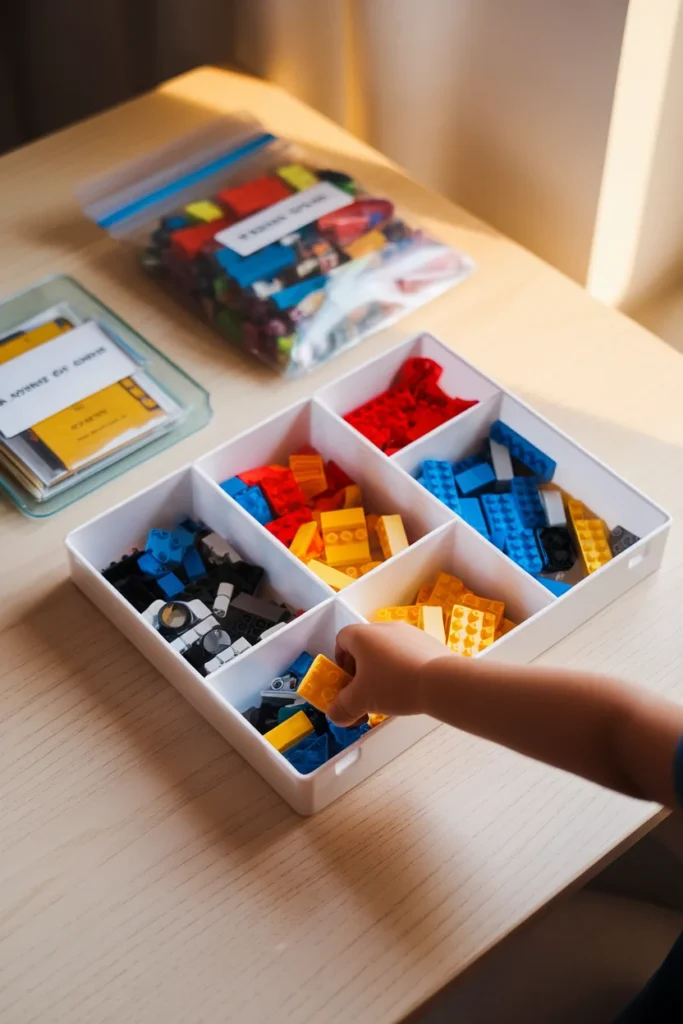
- LEGO: sort by color or by set, never both. Color works better for freeform builders, set-based works better for instruction followers. Shallow TROFAST boxes at 4 inches deep are correct here. Deep ones are not.
- Craft supplies: a shallow tray with compartments keeps beads and buttons visible. Anything that needs a lid gets used less, so keep lids for the Parent Zone only.
- Board games: the boxes disintegrate around year two. Move pieces to labeled zip bags, keep the rules sheet in the bag, store bags upright in one bin, recycle the box.
- Doll and figure accessories: one shallow box per doll family, not one for all accessories. Grouping by owner beats grouping by object type for kids.
- Trading cards: a single binder outperforms any bin. Nothing else contains them.
The rule underneath all five: container depth should match the item, not the shelf. A 9 inch deep bin holding 1 inch items is a well-organized junk pile.
Small Kids Room Organization and Shared Rooms
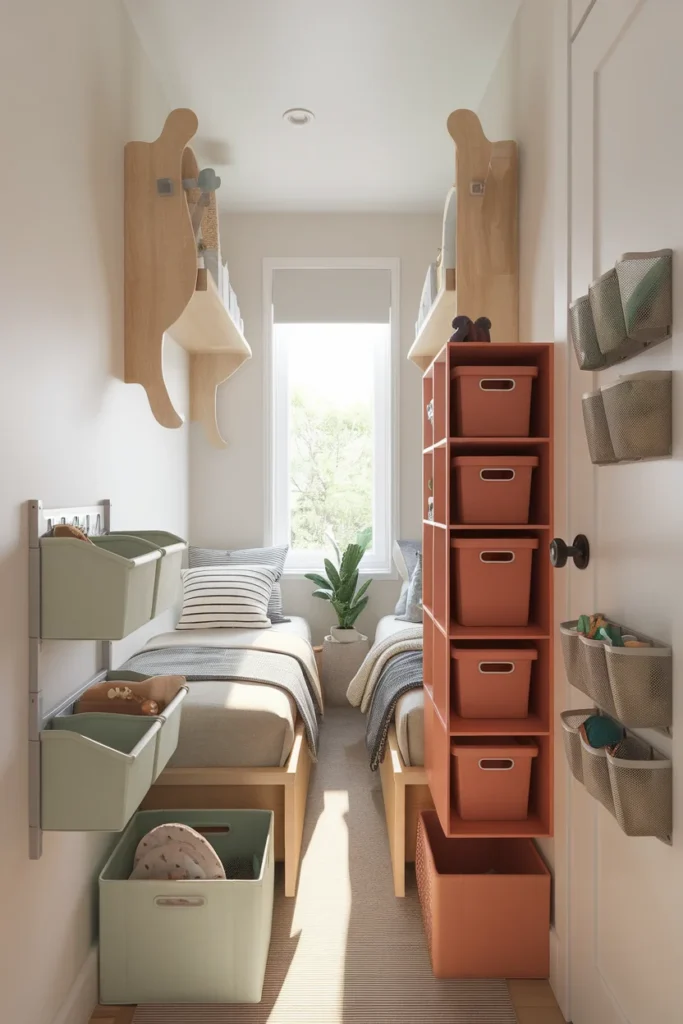
Small kids room organization is its own problem, and most advice written for it just says go vertical and stops there. When square footage is the real constraint, three moves buy the most.
Go vertical, but only above the reach line. Wall shelves at 50 inches are useless to a five-year-old and perfect for storing the things you do not want them accessing anyway. Put the display and the Parent Zone up high, the working system down low.
Use the bed. A bed frame with 10 or more inches of clearance takes flat under-bed totes for off-season clothes and rotation toys. If clearance is tight, bed risers add 5 to 8 inches for around $20.
Make the door work. Over-the-door pocket organizers hold shoes, art supplies, small figures and hair accessories without touching a wall, which matters in a rental.
Shared rooms add one wrinkle the top-ranking guides skip entirely: two children usually have two different reach lines. A four-year-old and a nine-year-old sharing a room need two separate Daily Zones, not one shared system at an averaged height. Split it by color instead of by shelf. Every bin, hook and hanger belonging to the younger child is one color, the older child another. Ownership disputes end because the color settles them, and you can keep small parts out of the toddler’s zone entirely by putting the older child’s shallow trays above the younger one’s reach line.
Anchor It Before You Load It
Almost no kids room organization guide covers this, and every one of them should. They all recommend tall bookcases and cube towers, in rooms with small children in them, and then say nothing at all about tipping.
The U.S. Consumer Product Safety Commission’s Anchor It! campaign exists for a reason. CPSC’s 2023 tip-over report estimates roughly 17,800 emergency-department-treated tip-over injuries a year in the United States, averaged across 2020 through 2022, and children under 18 accounted for 44 percent of them. Furniture was involved in 82 percent of those injuries. A federal stability rule for dressers and clothing storage units took effect in September 2023.
Practical version, four points:
- Anchor anything with drawers, doors or shelves to a wall stud. IKEA prints the warning directly on the KALLAX and taller TROFAST product pages: this product must be securely anchored.
- Heavy items go on the bottom shelf. Always. This also happens to be good organizing.
- Do not put anything tempting on top of a tall unit. A remote, a favorite toy, a screen. Climbing is how tip-overs start.
- Anchor kits are a few dollars. Renters can use them too, since the patch-and-paint at move-out is trivial.
If you take one thing from this article and it is not the reach line, make it this.
The Same Room, Three Budgets
Almost nobody puts a price on any of this. Here is the same kids room organization system executed three ways, using the products and figures above.
| Around $0 | Under $60 | $150 and up | |
|---|---|---|---|
| Bulk toys | Shoeboxes and diaper boxes, fronts cut down | 3 deep TROFAST boxes, $15 | TROFAST frame plus 6 boxes, ~$95 |
| Small parts | Egg cartons, muffin tins, jar lids | Shallow TROFAST boxes at $4 each | Compartment trays, $2.99 each |
| Books | Cereal boxes cut into magazine files | 2 Lakeshore book bins, ~$14 | 4 book bins plus low shelf, ~$60 |
| Closet | Existing rod, lowered on brackets | Tension rod at kid height, ~$12 | Second rod plus 4 Brightroom bins, $40 |
| Labels | Index cards and tape | Printed on paper, taped | Avery 5453 removable 3×4 labels, 80 count |
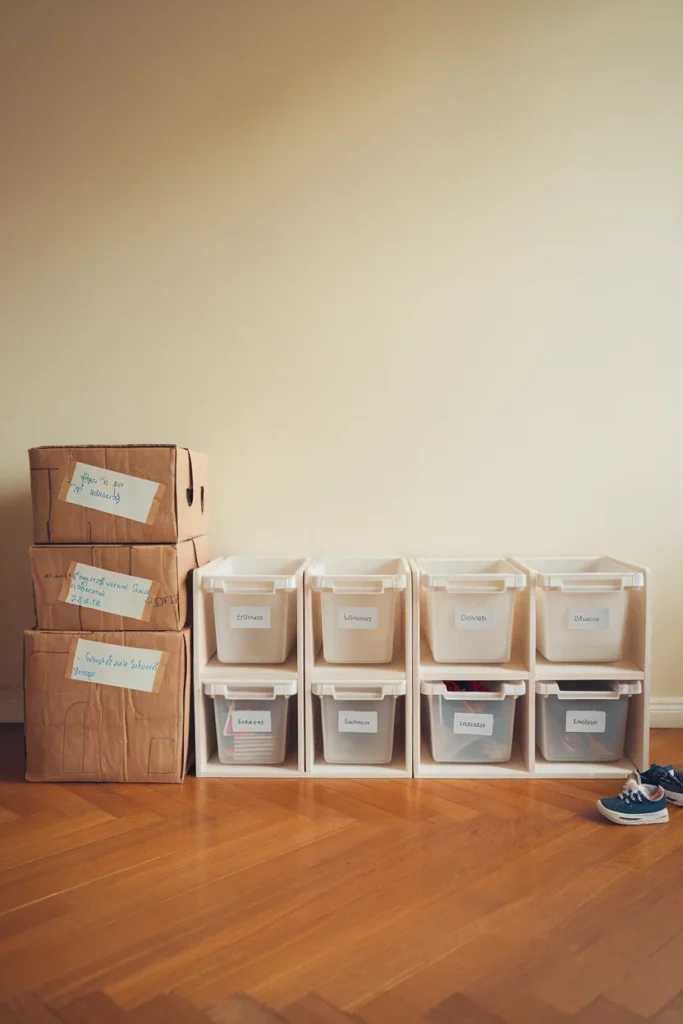
The $0 column is not a consolation prize. Cardboard fails eventually, but a cardboard system your child actually uses beats a $200 system they cannot reach. Test the categories with boxes for one month, then buy bins only for the categories that survived. That order saves more money than any sale ever will.
One caution on the cheap end: thin dollar-store plastic bins crack at the handle within about a year of daily kid use. Fine for the Parent Zone where they get opened four times a year. Poor value in the Daily Zone.
The Ten Minute Reset That Keeps It All Alive
Kids room organization is only as good as its maintenance loop. This is the shortest one that works.
Set a timer for ten minutes, same time every day. After dinner is good because the room is already messy and bedtime creates a natural deadline.
Round one, three minutes: everything off the floor and into its bin. Speed over accuracy.
Round two, four minutes: anything in the wrong bin moves to the right bin. This is where the labels earn their keep.
Round three, three minutes: flat surfaces. Desk, nightstand, dresser top, windowsill. Clear them completely.
Run it with your child until about age six, alongside them until eight, then hand it over. You are not aiming for a perfect room. You are aiming for a room that never gets more than one reset behind, which is a much easier target and a much more forgiving one.
If it slips for a week, restart without commentary. Ten minutes tomorrow beats a lecture tonight.
FAQ
How do I organize my kids small room? Work vertically above the reach line and keep everything below it in the Daily Zone. Three moves buy the most square footage in a tight room. Flat under-bed totes take rotation toys and off-season clothes. An over-the-door pocket organizer handles small items without touching a wall. Dropping the closet rod to 30 or 40 inches turns the space underneath into real storage. Buy nothing until you have measured the reach line.
How do I keep my kids room clutter free? Control inflow rather than adding storage. Most kids room organization advice does the opposite. Set a cap per category, run a one-in-one-out rule two weeks before birthdays and December, and rotate half the toys out of the room every four to six weeks. Then add the ten minute daily reset. Clutter-free is a maintenance rhythm, not a one-time project.
How do you maximize space in a kids room? Lower the closet rod to child height and put a storage frame or dresser in the space you open up underneath. Use the wall above the reach line for display and Parent Zone storage. Choose furniture that does two jobs, like a bed with drawers or a bench with cubbies. Measure your closet depth first: standard shelving runs 12 to 16 inches, so a 15 3/8 inch deep KALLAX fits a closet nook where a 17 3/8 inch TROFAST will not.
How do I organize my kid’s room with too much stuff? Do not start by sorting. Start by removing. Take half of everything out of the room into a lidded tote, close it, and put it in the Parent Zone for six weeks. Organize only what remains, which is now a manageable volume. When the six weeks are up, most of what is in the tote can be donated without your child noticing, and whatever they specifically asked for during that window comes back. Reversing the order (sort first, then organize) is what makes this feel impossible.
How do you keep small pieces together? Shallow containers, never deep ones. Anything under about three inches goes in a tray or box no more than four inches deep so pieces stay visible. Board game pieces move to labeled zip bags stored upright with the rules sheet inside, and the disintegrating box goes to recycling. Sort LEGO by color or by set, but not both at once. Doll and figure accessories group by owner rather than by object type.
How do you rotate toys so they keep feeling like new? Split the collection roughly in half, keep one half in the room, and store the other half in a lidded tote above the reach line. Swap every four to six weeks. Do the swap while your child is out of the house so the returning half arrives as a surprise. Leave two or three constant favorites in the room permanently and never rotate those out, because rotation works on novelty items and backfires on comfort items.
How many toys are too many in the kids room? The honest answer is a cap you can enforce rather than a universal number. A workable starting point: eight stuffed animals, one bin of vehicles, one bin of building sets, two board games accessible at a time, and one shelf of books face-out. If a category will not fit its bin, that category is over its ceiling and your child picks what leaves. The bin becomes the rule, which takes you out of the role of the parent who said no.
Start With the Tape Measure
You do not need a Saturday, a Container Store run, or a color palette to begin. You need one measurement and one honest look at what is currently sitting above your child’s reach.
Measure the reach line this week. Move three bins below it. Take the lids off. That is enough to see whether the method holds in your house, and it costs nothing to test.
Then put the January and August dates in your calendar now, while you are thinking about it. Kids room organization built this way is designed to be adjusted rather than redone. Your child grows about eleven inches between preschool and second grade. The system should move right along with them.
Tell us in the comments what your child’s reach line came out to, and which category broke its ceiling first. Ours is almost always the stuffed animals.