

The 15-Minute Kitchen Reset Routine That Saves Every Weeknight
It’s 8:43 p.m. on a Tuesday. The skillet is still on the stove, two plates wait in the sink with cold pasta clinging to them, the dish towel is bunched somewhere near the toaster, and a sticky ring of marinara is quietly cementing itself to the counter. You promised yourself you’d handle it after the kids’ bath. Now the couch is calling, the dishwasher is half-loaded, and tomorrow’s breakfast is going to start in a war zone.
This is exactly where a real kitchen reset routine earns its keep.
In the next 15 minutes, you can take that kitchen from “I’ll deal with it in the morning” to ready-for-tomorrow without scrubbing a single thing on your hands and knees. I’ve been running some version of this on weeknights for years, and after refining it across two apartments and one move that involved a galley kitchen the size of a hallway, I landed on a 3-phase system that actually holds up when you’re tired. It’s called the 5-5-5 Weeknight Close, and I’ll walk you through every minute.
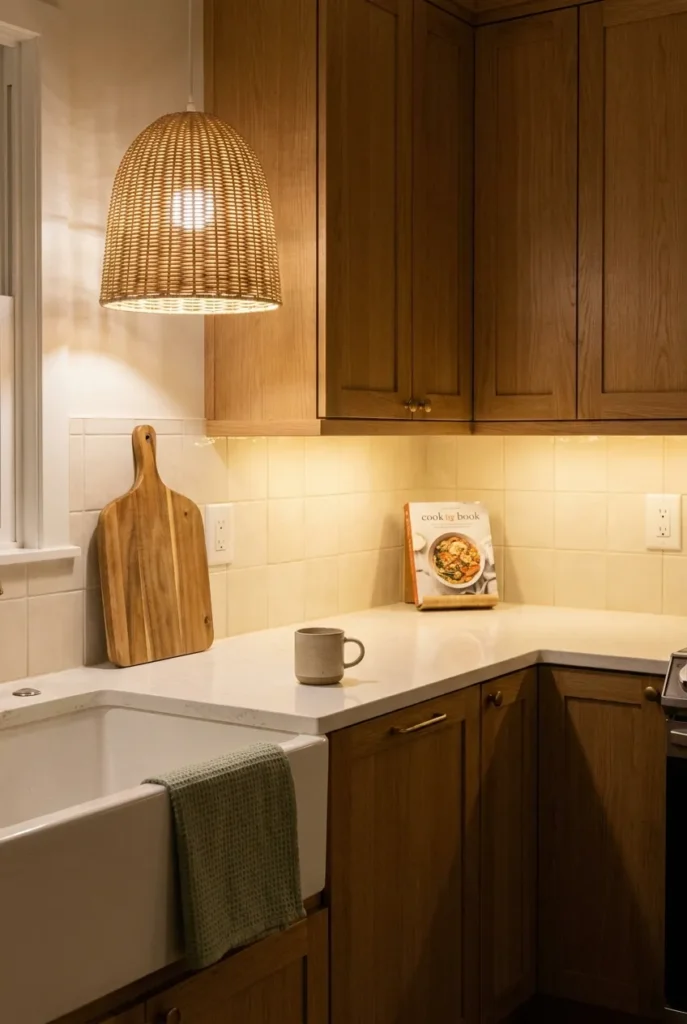
What a Kitchen Reset Routine Actually Is (and Why 15 Minutes Is the Sweet Spot)
A kitchen reset routine is the short, repeatable sequence you run at the end of the day to bring your kitchen back to a workable starting point. Not spotless. Not Pinterest-perfect. Workable. The dishes are handled, the counters are clear, and tomorrow morning you walk in to make coffee without dodging last night’s mess.
The reason 15 minutes works better than a longer deep clean is simple. Anything longer than 15 feels like a chore, so you skip it, so the mess compounds, so the next reset takes an hour. Honestly, the 15-minute cap is the whole game. You’re trading perfection for consistency, and consistency is what keeps the kitchen tidy by Friday.
A daily kitchen reset is not a deep clean. It’s a close. Think of it the way a restaurant line cook thinks of “the close” at the end of service: surfaces clear, station ready, walk-in restocked, lights out. Same logic, smaller kitchen.
The 5-5-5 Weeknight Close: Your New Kitchen Reset Routine
Here’s the framework I keep coming back to. Three phases, five minutes each, in a fixed order so you stop thinking and start moving.
- Minutes 0 to 5: Surfaces. Clear, scrape, wipe.
- Minutes 5 to 10: Sink and dishwasher. Load, run, scrub.
- Minutes 10 to 15: Setup for tomorrow. Reset the coffee station, prep one thing for breakfast, lights out.
That’s it. The order matters more than people realize. If you start with dishes, you’ll still be staring at sticky counters at minute 14. Start with surfaces and the kitchen visually transforms in the first three minutes, which is the dopamine hit that keeps you going.
Phase One: Five Minutes on Surfaces
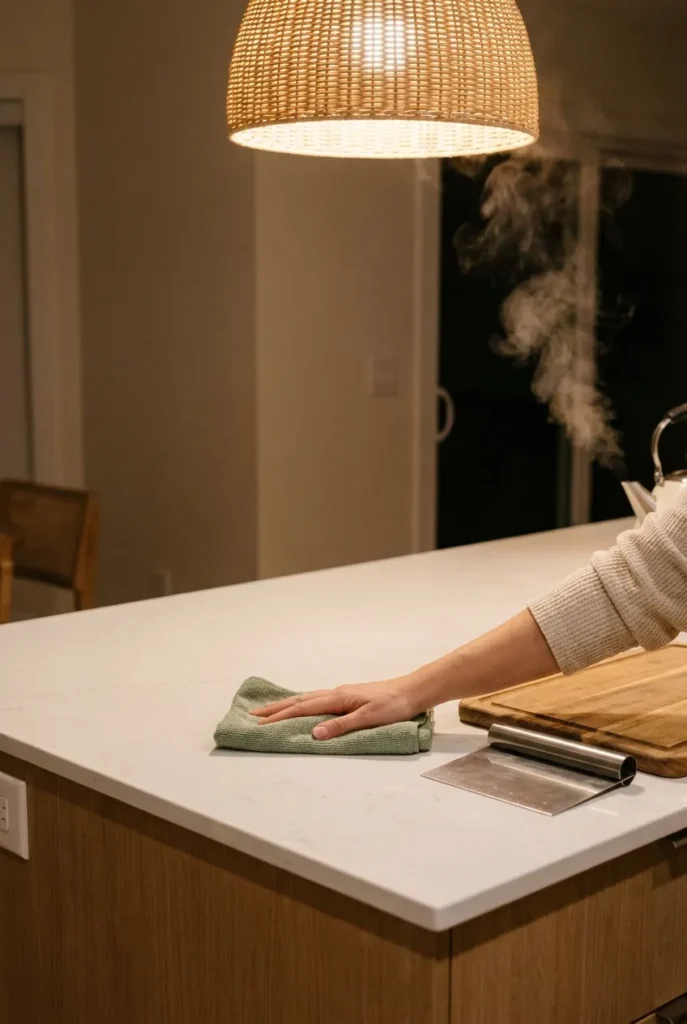
Set a timer for five minutes and start at the cooking zone. Move clockwise around the kitchen. Anything that doesn’t live on the counter goes home: spice jars back in the cabinet, the mail in a single pile by the door, the toddler’s water bottle into the dishwasher.
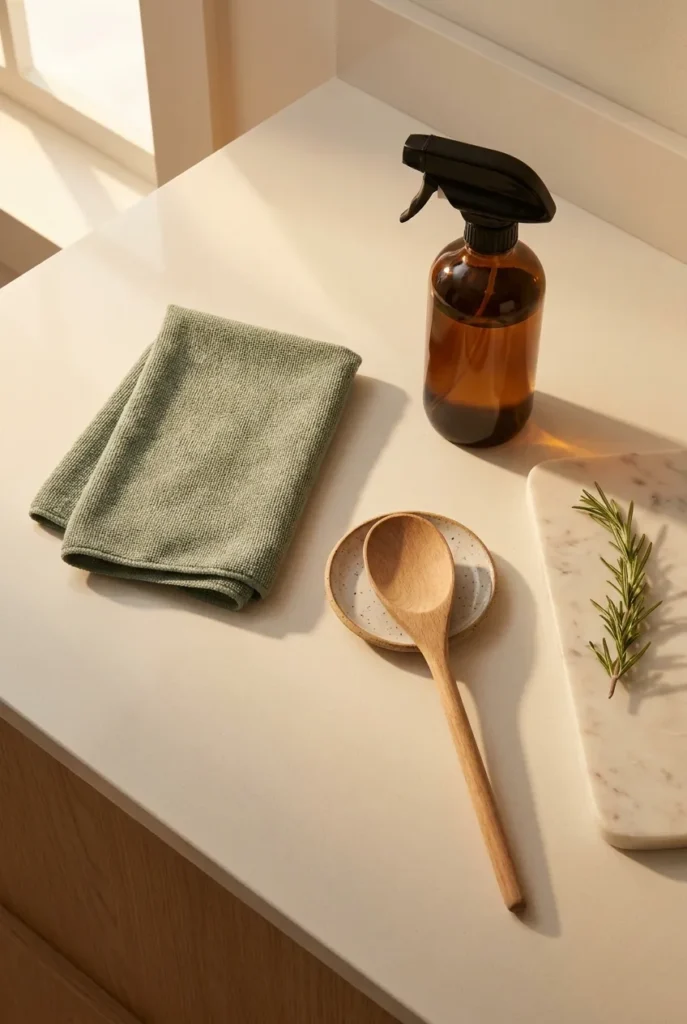
Then scrape. A bench scraper or a thin spatula pulls dried marinara, breadcrumbs, and that mystery sticky spot off in seconds, way faster than a wet rag. Then wipe the counters with an all-purpose spray and a microfiber cloth, not paper towels. Microfiber lifts grease better and saves you a small fortune in paper. Method, Mrs. Meyer’s, and Branch Basics all make solid all-purpose sprays. I keep a refillable amber bottle on the counter just because it’s prettier than the original packaging, and a kitchen you want to look at is a kitchen you actually reset.
Hit the stovetop last. The five minutes are usually up around here, and that’s fine. The stove can be cleaner tomorrow if you ran out of time tonight. Surfaces matter most.
Phase Two: Five Minutes on the Sink and Dishwasher
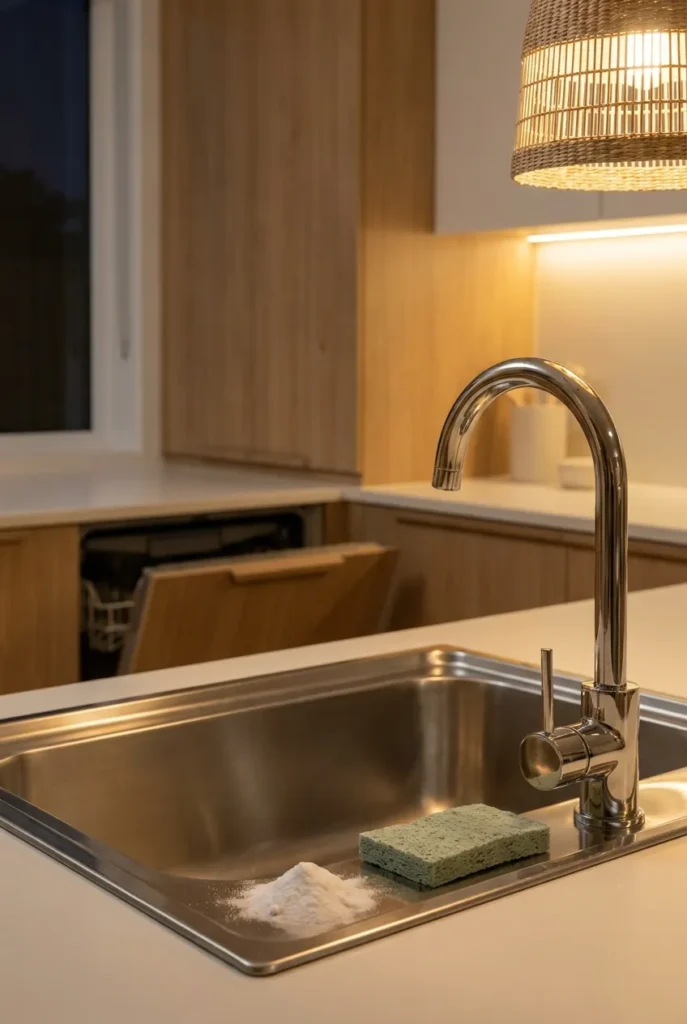
Five minutes is enough to load a dishwasher if you stop overthinking the layout. Plates on the bottom, bowls and mugs on the top, silverware handles down for forks and knives, handles up for spoons so they don’t nest. Hit start. The hum of a running dishwasher is the single best soundtrack for the rest of the close.
While it runs, scrub the sink. The sink is the most overlooked surface in any kitchen reset, and it’s the one your eye lands on first when you walk in tomorrow. A pinch of baking soda, a drop of dish soap, a damp sponge, thirty seconds of circles, rinse. Dry the faucet with that microfiber cloth. The whole sink area can go from grimy to gleaming in under two minutes, and that single move makes the kitchen feel reset even if everything else is mid.
If you want to go a level deeper here, the CDC’s guidance on cleaning vs. disinfecting is worth a skim. The short version: most weeknights you only need to clean. Save disinfecting for after handling raw chicken, sick kids, or major spills.
A clean sink also fixes a problem most people don’t realize they have, which is a sour smell from the disposal. Drop in a few ice cubes and a lemon peel once a week and run it for ten seconds. It’s not part of the daily reset, but it pairs well with Phase Two.
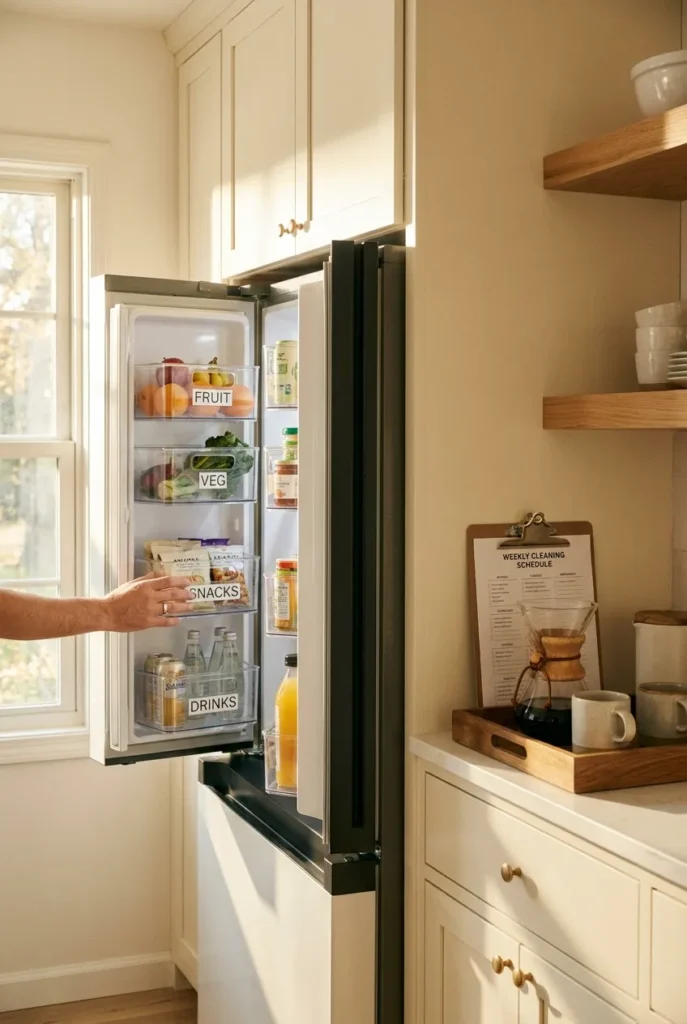
For the fridge side of things, a quick once-a-week pass keeps the daily reset from turning into a full clean-out. If your fridge is the chaos zone in your kitchen, our guide on fridge organization ideas that stay tidy walks through twelve aesthetic layouts you can copy in an afternoon.
Phase Three: Five Minutes of Setup for Tomorrow
This is the phase most kitchen reset articles forget, and it’s the one that earns the routine. Future-you opens the kitchen at 6:30 a.m. and the question is: does she walk into a soft landing or a second job?
Three small moves:
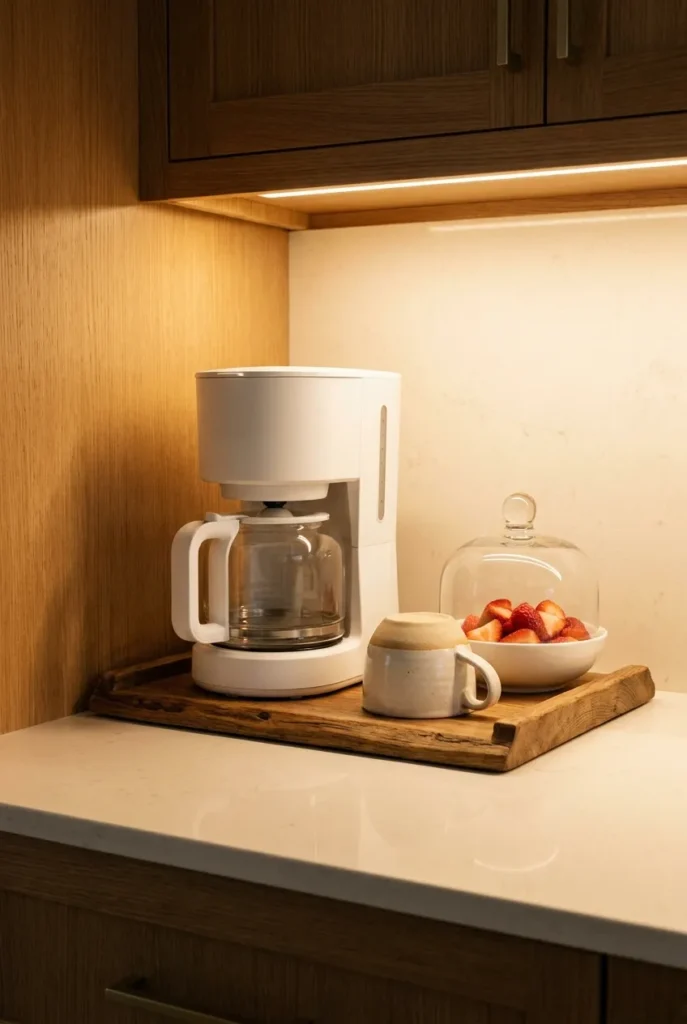
- Reset the coffee station. Empty the grounds, rinse the carafe, fill the reservoir, set the timer. If you use pods, restock the holder. Whatever your setup, leave it one button-press away from coffee.
- Prep one breakfast element. Slice the fruit. Portion the overnight oats. Crack eggs into a jar. One thing. Not the whole meal.
- Lights out, with intention. Turn off the overheads, flip on the under-cabinet lights or a small lamp on the counter, and call it. The lighting flip is the move that turns “I cleaned up” into “I closed the kitchen.” This is also why “kitchen reset lighting” is trending on Pinterest, by the way. The vibe is part of the close.
If you keep a cleaning caddy stocked with the right basics, Phase Three takes less than four minutes because you’re not hunting for supplies.
The Skip-It-Tonight Rule (What NOT to Do During a Weeknight Reset)
This is the gap no competitor covers. A weeknight reset is not when you reorganize the spice drawer or scrub grout. Save that energy. Anything that takes longer than two minutes and isn’t part of the 5-5-5 sequence gets skipped.
Skip these tonight:
- Deep-cleaning the oven or microwave (Sunday job).
- Reorganizing cabinets.
- Wiping down baseboards.
- Decanting pantry items.
- Bleaching the cutting board (a USDA-approved sanitizing solution is fine, but make it a once-a-week move, not a nightly one). The USDA’s FoodSafety.gov guidance on cutting board care is solid here.
- Anything Pinterest-perfect. Aesthetic comes from clear surfaces, not styled props.
The whole point of a daily kitchen reset is that it’s small enough to actually happen. The minute it grows, it stops happening.
The 5-Minute Fallback for Truly Wrecked Nights
Some nights, 15 minutes is too much. Maybe you got home at 9:15. Maybe one kid threw up and one kid cried. Maybe you just don’t have it. The whole 5-5-5 framework has a fallback for those nights, and it’s exactly five minutes.
Here’s the 5-minute kitchen reset:
- One minute: clear the counter directly next to the stove. Just that strip.
- One minute: load whatever fits in the dishwasher in 60 seconds and start it.
- One minute: wipe the strip you cleared.
- One minute: scrub the sink.
- One minute: set up coffee for the morning.
It’s not a full reset. It’s a beachhead. Tomorrow’s reset starts from a slightly less chaotic base. That’s the whole win. Consistency beats intensity.
Your 15-Minute Kitchen Reset Routine Checklist
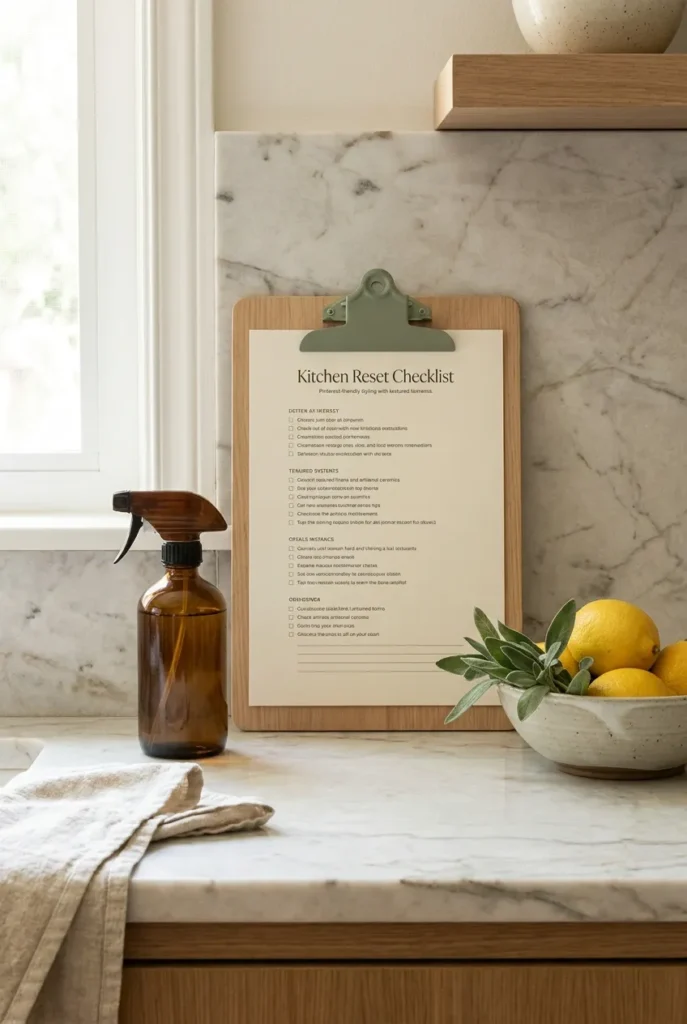
If you want a screenshot-ready version for your phone, here it is.
Phase One (Minutes 0 to 5): Surfaces
- Clear everything that doesn’t live on the counter.
- Scrape dried-on spots with a bench scraper.
- Spray and wipe counters with microfiber.
- Wipe the stovetop if time allows.
Phase Two (Minutes 5 to 10): Sink and Dishwasher
- Load and start the dishwasher.
- Scrub the sink with baking soda and dish soap.
- Dry the faucet.
- Hand-wash any odd pan that won’t fit.
Phase Three (Minutes 10 to 15): Setup for Tomorrow
- Reset the coffee station.
- Prep one breakfast element.
- Wipe the kitchen table or island.
- Flip on the under-cabinet lights and call it.
Screenshot it, save the pin, do it tonight.
How Often Should You Run a Full Kitchen Reset?
Daily is the answer for the 5-5-5 close. But the kitchen also needs a slightly bigger reset once a week and a deeper one once a month. Here’s the cadence that holds up.
- Daily: The 5-5-5 Weeknight Close (15 minutes).
- Weekly: Add a fridge wipe-down, a pantry quick-audit for expired items hiding in plain sight, and a microwave wipe. Roughly 30 extra minutes on a Sunday.
- Monthly: Pull out and clean under small appliances, run a dishwasher cleaning cycle, vacuum the toe-kick under the cabinets.
- Seasonally (every 90 days): Wipe the inside of upper cabinets, check the spice rack for anything older than a year, deep clean the oven.
You don’t need to do every layer every week. The daily reset is the foundation. The rest is bonus.
Frequently Asked Questions
What is a kitchen reset?
A kitchen reset is the short routine you run at the end of the day, or sometimes once a week, to bring your kitchen back to a clean, usable starting point. A daily kitchen reset focuses on clearing counters, handling dishes, and prepping for tomorrow. A weekly reset adds a deeper wipe of the fridge, microwave, and small appliances.
What is the 5-5-5 rule for decluttering?
The traditional 5-5-5 rule says to find 5 things to throw away, 5 to donate, and 5 to put back where they belong. In the kitchen reset context, I reframe it as the 5-5-5 Weeknight Close: 5 minutes on surfaces, 5 minutes on the sink and dishwasher, and 5 minutes setting up for tomorrow. Same number, different application, equally effective.
What is the 30-3 rule for cleaning?
The 30-3 rule is a cleaning approach where you spend 30 minutes cleaning followed by a 3-minute reset of your space, or some interpretations flip it to 30 seconds of immediate cleanup after any 3-minute mess. For weeknight kitchens, the 30-3 idea translates well into “if a spill takes less than 30 seconds to wipe, wipe it now,” which keeps your nightly reset down to 15 minutes total.
What are the 7 personal hygiene rules in the kitchen?
The seven generally cited kitchen hygiene rules are: wash hands before and after handling food, tie back long hair, keep nails short and clean, avoid touching your face while cooking, cover any cuts with a bandage and glove, don’t cook when you’re sick, and wear clean clothing or an apron. These are habits, not part of the nightly reset, but the reset is much faster when the cook follows them.
How often should you redo your kitchen layout or systems?
The functional systems (where things live, how the pantry is organized, the bin setup) deserve a tune-up every 90 days. The full kitchen redesign question (new cabinets, new layout) is closer to every 10 to 15 years for most households. The daily reset routine itself rarely needs to change once it’s working.
Can I do a kitchen reset routine with kids around?
Yes, and honestly it gets easier with practice. Phase One (surfaces) is hard to delegate. Phase Two (sink and dishwasher) is great for a 7+ year old. Phase Three (setup for tomorrow) is the perfect kid involvement zone: have them pick the breakfast item or refill the water pitcher. Five extra minutes of patience now saves you fifteen minutes of solo work.
What’s the best playlist or soundtrack for a kitchen reset?
Pinterest autocomplete tells me people are searching “kitchen reset ASMR” and “kitchen reset videos” for a reason: the sound of running water, a humming dishwasher, and a knife on a cutting board is genuinely calming. If you want music instead, pick something with a 90 to 110 BPM tempo. It paces you through the 15 minutes without rushing.
The Real Reason This Kitchen Reset Routine Works
It’s not the steps. It’s the cap. Fifteen minutes is short enough that you’ll actually do it on the nights you don’t feel like it, and the nights you don’t feel like it are the nights that matter most. Skip a Sunday deep clean and you lose a little. Skip the weeknight close five nights in a row and you’ve lost the kitchen.
Run the 5-5-5 tonight. Just tonight. See how the kitchen feels tomorrow morning when you walk in to make coffee. That feeling is the whole reason this routine exists.

Try the 5-5-5 Weeknight Close tonight and screenshot the checklist so you’ve got it on your phone for the next time the kitchen wins. If your fridge or pantry is the real source of the chaos, start there next, and the nightly reset will get even faster.