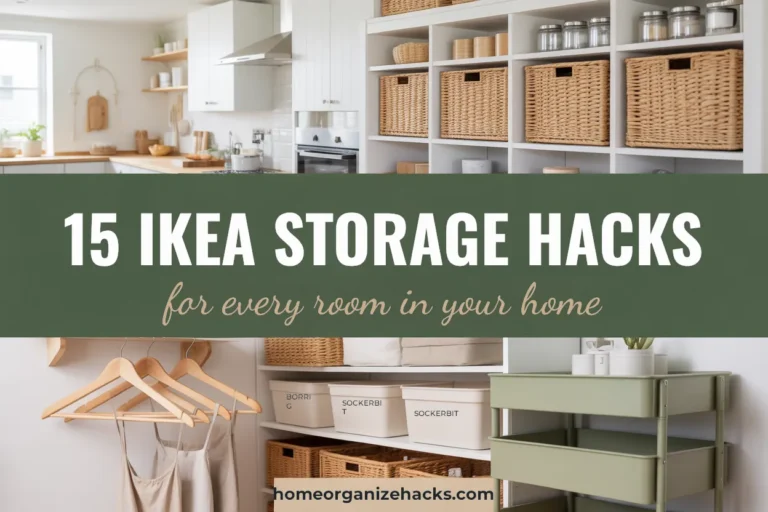

Above Cabinet Storage: How to Use the Wasted Foot of Space in Every Kitchen
Stand in your kitchen and look up. See that gap between your upper cabinets and the ceiling? In most US homes it measures 12 to 18 inches tall and runs the entire length of the cabinetry, which means above cabinet storage is sitting right there, unused, in a kitchen where you can’t find room for a stockpot. Honestly, it might be the most ignored square footage in the whole house.
Time to fix that. This guide turns that strip into working above cabinet storage: what belongs up there, what never should, the baskets that hide the mess, and the no-drill versions renters can copy this weekend.
What the Space Above Kitchen Cabinets Is Called (and Why It Sits Empty)
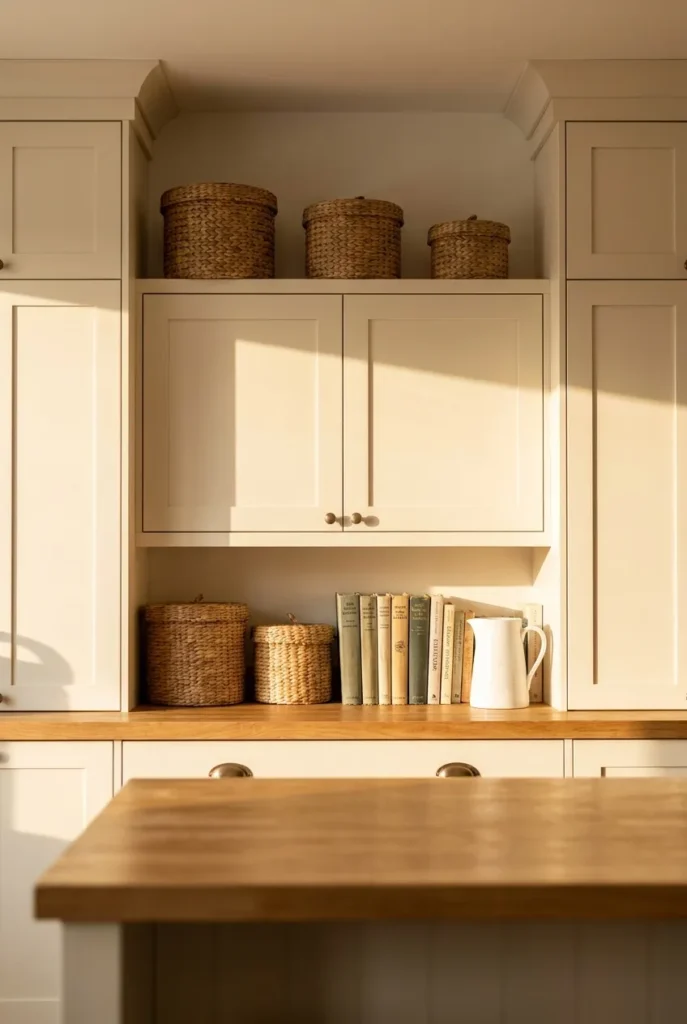
Builders call the boxed-in version a soffit. When the area is open, most designers just call it the cabinet to ceiling gap, and almost every standard 8 foot kitchen has one because stock upper cabinets stop at 30 or 36 inches tall. The result is a ledge about 12 inches deep, the full depth of a standard upper cabinet, hiding in plain sight.
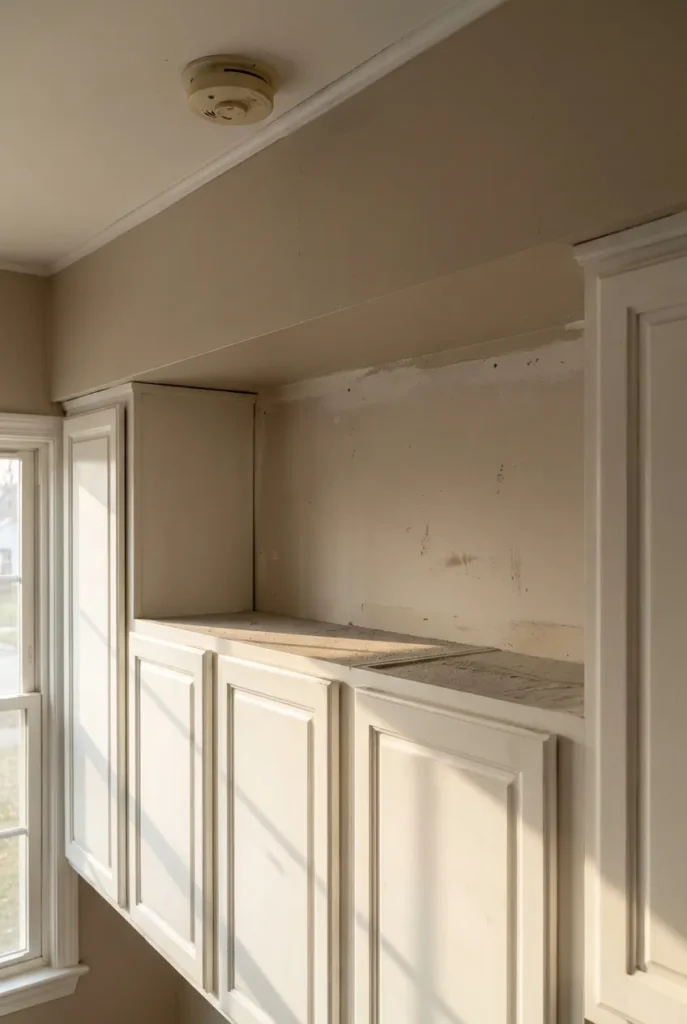
So why does it sit empty? Two reasons. Reaching it requires a step stool, and an open ledge collects dust and cooking film, so anything left bare up there needs regular washing.
Neither problem is a dealbreaker. Above cabinet storage just needs a system, and that system is the whole point of this article. (We fixed a similarly cursed spot in our hallway closet makeover, and the same “wasted space” thinking applies here.)
The Crown Zone Method: Show, Stow, and No Go
Here’s the original framework we use for every above cabinet storage project, and you’ll see it repeated through this guide. The Crown Zone Method splits the ledge into three zones: the Show Zone (the visible corners and end caps, reserved for things pretty enough to display), the Stow Zone (the long middle runs, where lidded bins hide practical backstock), and the No Go Zone (the 36 inches directly above your range and hood, which stays empty, always). Map your cabinet tops into those three zones before you buy a single basket. Map first. Shop second.
The order matters too. Assign the No Go Zone first, fill the Stow Zone second, and style the Show Zone last. Decorating before storing is how kitchens end up with seven dusty fake plants and nowhere to put the slow cooker.
Above Cabinet Storage Baskets and Bins That Hide the Mess
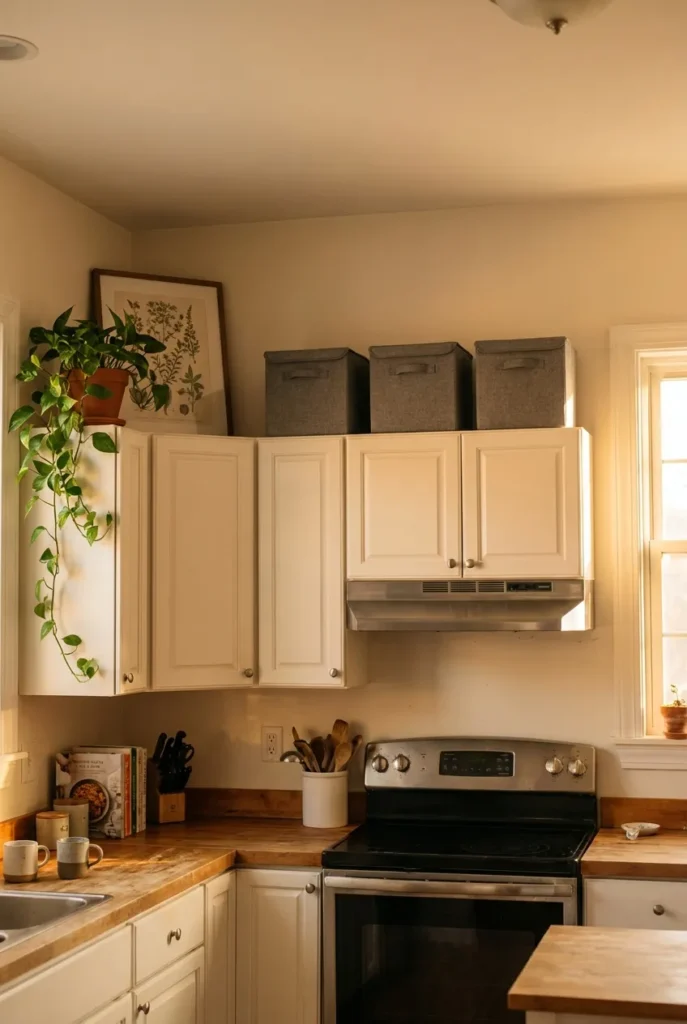
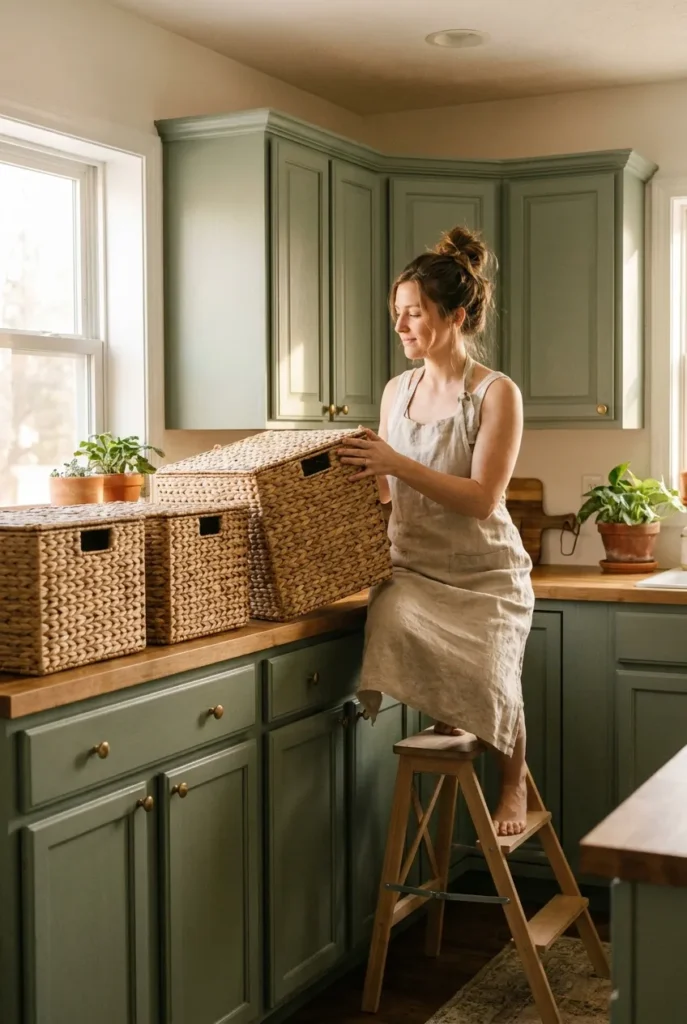
Start with the single highest-value move: matching lidded baskets, pulled flush to the cabinet edge. Lids block dust and grease film, matching shapes read as decor from below, and pulling them forward hides the dead space behind. One row of baskets converts an awkward ledge into above cabinet storage that looks intentional in about ten minutes. Start there.
After testing several brands on our own cabinet tops, a few earned a permanent spot. Target’s Brightroom 13 by 13 inch lidded water hyacinth cubes (around $15 each) are light enough to lift down one-handed. HomeGoods seagrass baskets run $10 to $20 and vary week to week, so grab matching ones when you see them. The Container Store’s water hyacinth line costs more but holds its shape for years.
Budget and Clear Bin Options
On a tighter budget, Walmart’s Mainstays fabric cubes and Dollar Tree’s $1.25 plastic bins both handle above cabinet storage fine if you add a simple label. Want to see contents at a glance? mDesign and Amazon Basics clear lidded bins (the 12 by 12 inch size fits the ledge depth almost exactly) turn the Stow Zone into visible inventory.
One small trick makes any bin work better: a strip of museum putty under each corner stops sliding when you pull one down. Cheap insurance.
How to Store Things on Top of Kitchen Cabinets Safely
The Stow Zone earns its keep with items you touch monthly or seasonally, never daily. Best candidates: holiday platters, the punch bowl, vases, extra glassware, cookbook overflow, small appliance attachments, bulk paper goods, and party supplies. I kept our Thanksgiving serving set above the fridge cabinet for two years and never once wished it were closer.
Food needs more care. Sealed dry goods in airtight containers (a 1.6 quart OXO Good Grips POP canister, for example) can live up there in cooler kitchens, but skip anything heat sensitive. Warm air pools near the ceiling. Oils, chocolate, and most snack backstock degrade faster up there. The USDA’s guidance on shelf stable food storage recommends cool, dry conditions, and the top of a cabinet is usually the warmest spot in the room. Our heat friendly summer pantry essentials list covers what survives warm storage and what doesn’t.
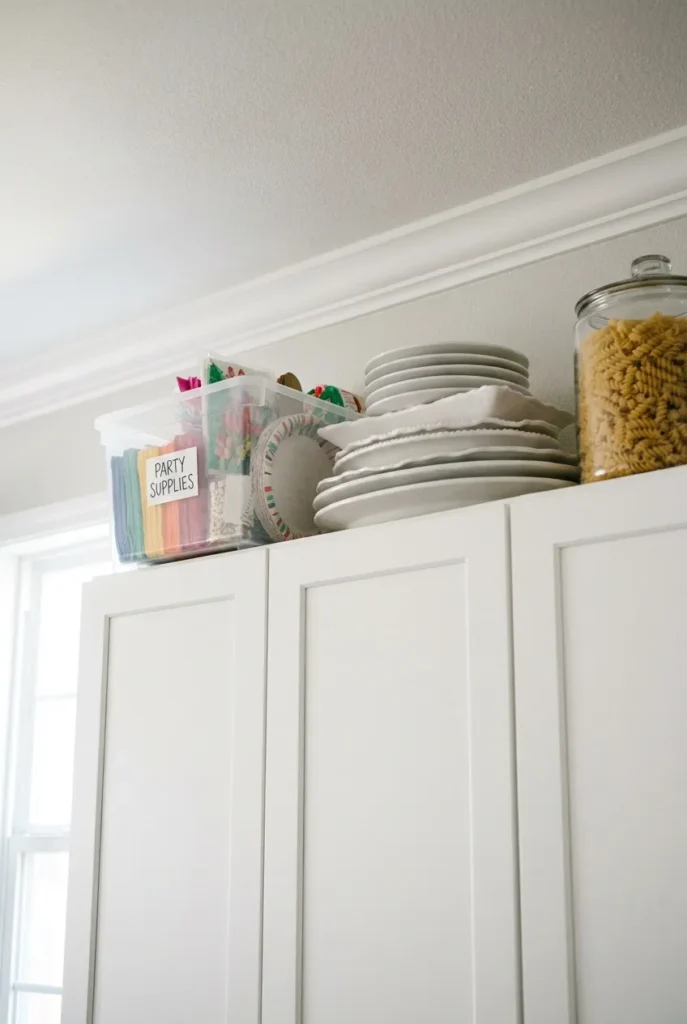
Two hard rules. Keep the 36 inches above the range and hood empty, because NFPA’s home cooking safety guidelines flag anything that can catch fire near cooking equipment, and baskets, paper goods, and cookbooks all qualify. And keep weight sane: if you can’t lift it down safely from a step stool with one hand on the counter, it doesn’t belong overhead.
Above Cabinet Decor That Still Pulls Storage Duty
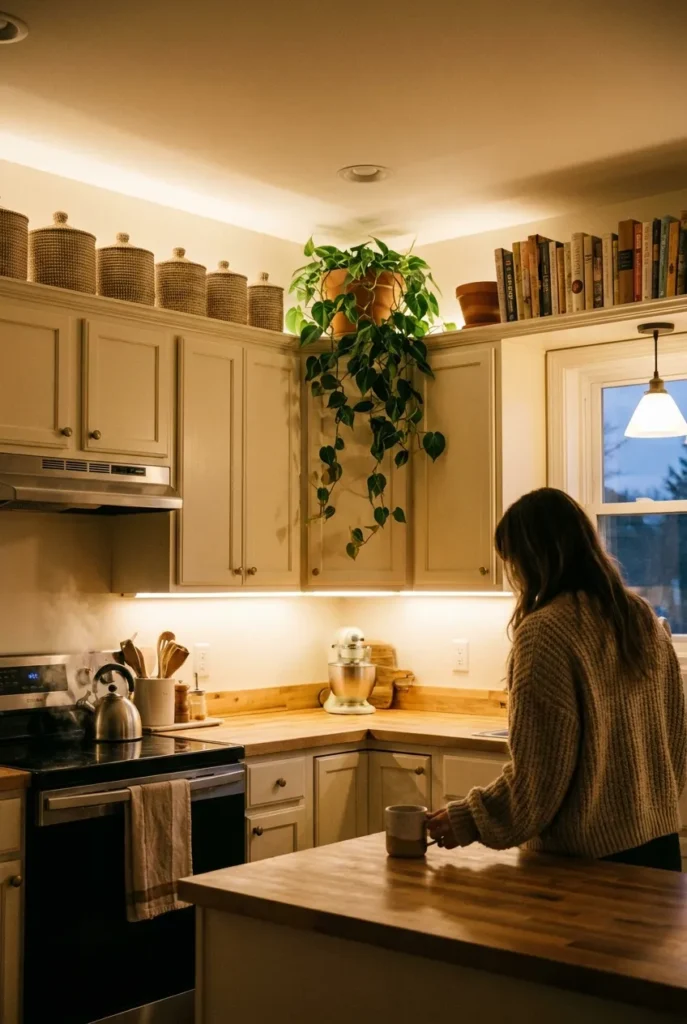
Display can work hard too. A big dough bowl up top can hold rolled kitchen towels. Pitchers store extra wooden spoons. A pretty crate corrals the cookbooks you reach for monthly. That’s the Show Zone done right. Every visible piece holds something.
A few double-duty winners we’ve styled repeatedly: oversized glass jars holding dried pasta or beans, a cake stand stacked with the napkins that never fit in the drawer, and a low wooden tray keeping the wine bottles you’re saving (not the ones you’ll open Friday) lined up and dust-managed. If your counters are crowded because mugs took over, shift the overflow up here and steal the layout from our coffee and hydration corner setup.
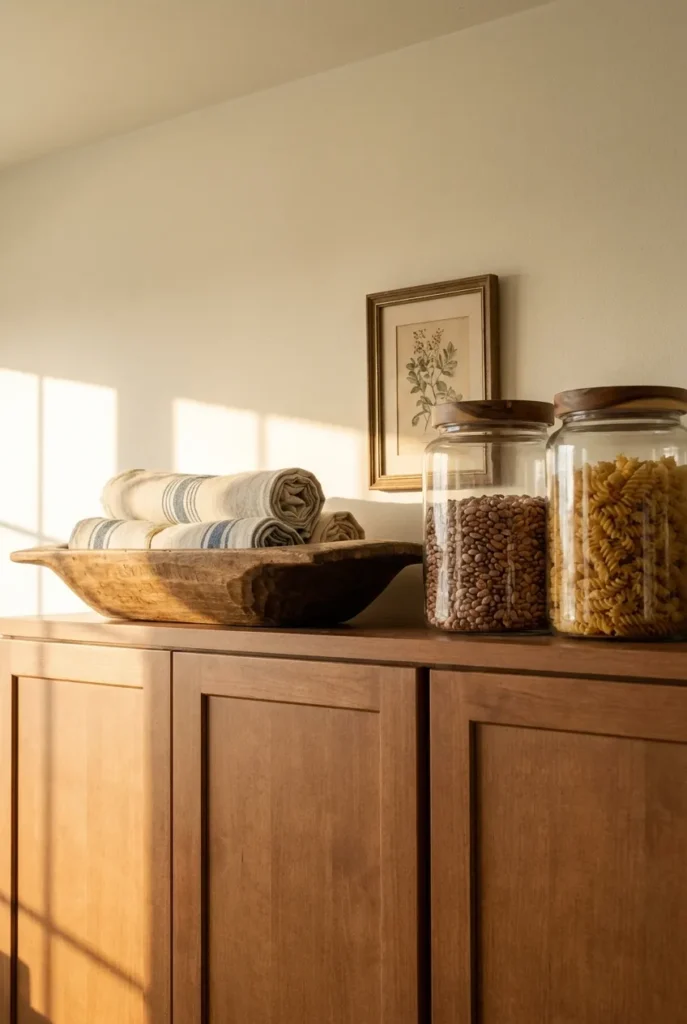
Color matters more than most storage guides admit. For 2026, designers keep pointing to warm greens, deep browns, and creamy neutrals for kitchens, so baskets in honey and sage tones will photograph well and date slowly. Bright primary plastic bins, on the other hand, read as clutter from below even when they’re perfectly organized.
Above Cabinet Storage DIY Upgrades for a Custom Look
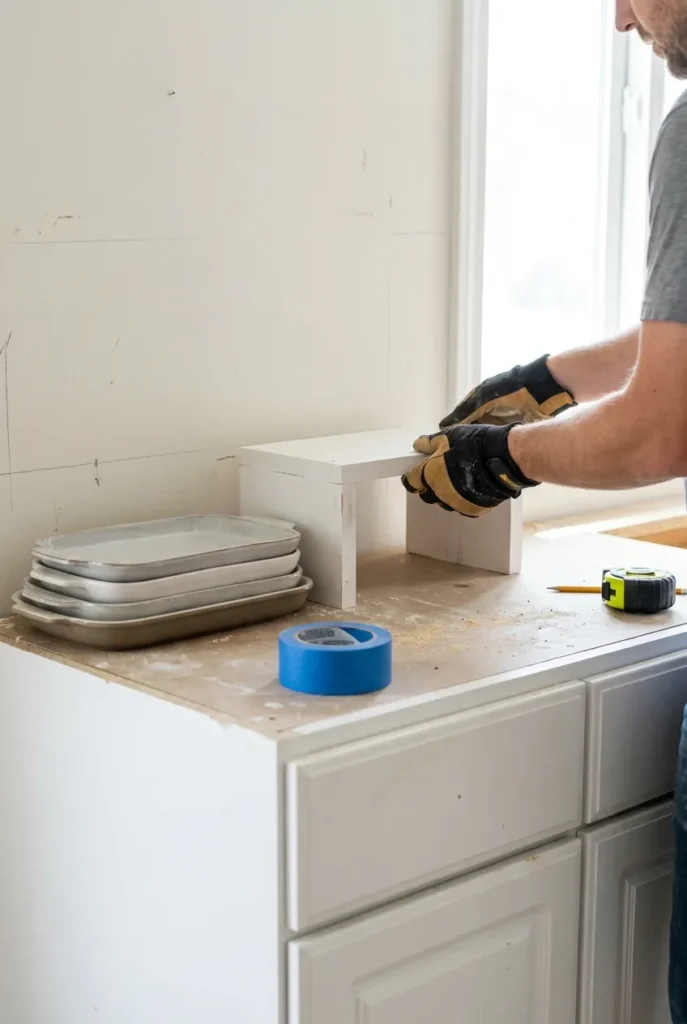
The simplest above cabinet storage DIY is a riser. IKEA’s Variera shelf inserts (about $5 to $8) double your stacking height inside the gap so platters and trays don’t teeter. Measure your gap first. A 12 inch clearance fits a riser plus one flat layer; 18 inches fits two comfortable tiers.
Got basic tools and a free Saturday? Adding a single floating shelf in the gap, painted to match the cabinets, turns open air into a built-in look for under $40. Trim lovers can go further and box the gap with crown molding plus a hinged front, which creates a hidden cabinet topper that real estate agents will assume came with the house.
Rental and Apartment Friendly Above Cabinet Storage
Renters get skipped in every major article on this topic, and yet “above cabinet storage rental” and “apartment” are both live Pinterest searches. Good news: this is one of the few storage zones that needs zero drilling by default, because the ledge already exists.
Three rental-safe moves cover almost every situation. First, line the cabinet tops with removable shelf liner or contact paper so years of grease film land on the liner, not the landlord’s cabinets; swap it at move-out and the tops look untouched. Second, use freestanding lidded bins only, weighted with museum putty, so nothing attaches to walls. Third, if the gap is tall, a spring tension rod placed vertically between cabinet top and ceiling becomes a damage-free bookend that stops a row of cutting boards or trays from sliding sideways. Zero holes. Zero deposit drama.
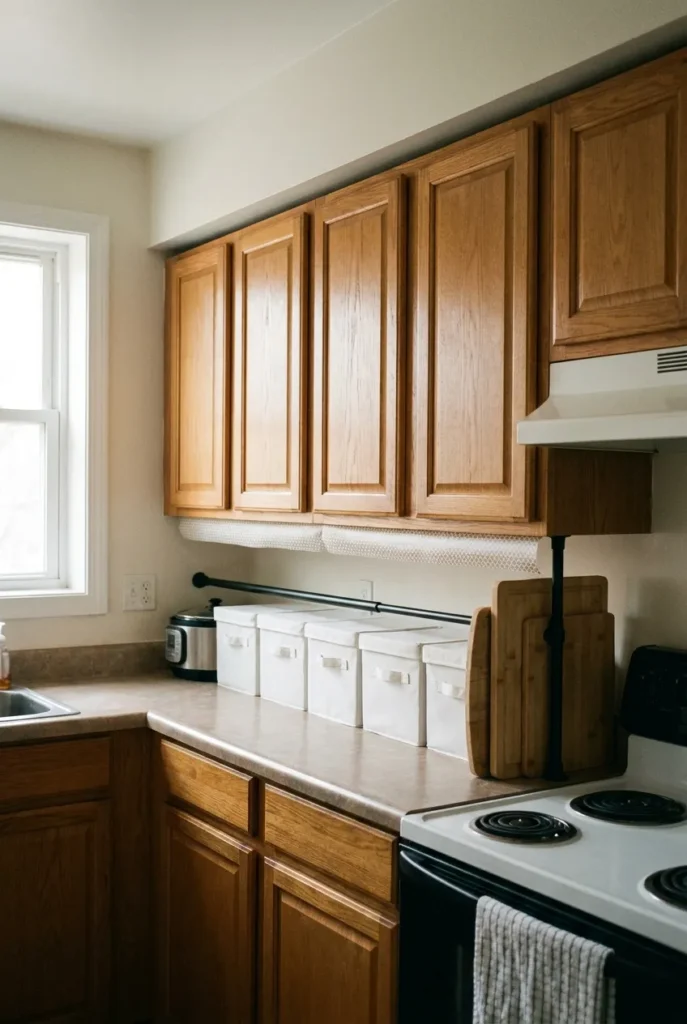
A fourth option for awkward gaps: Command hooks rated for the weight, mounted on the side of the cabinet box rather than the wall, can hang a lightweight basket off the end cap. Check the package weight rating and stay under it. Renters in furnished units, take photos of the tops before you set anything down; five seconds now saves a deposit argument later.
Above Cabinet Storage for the Laundry Room and Bedroom
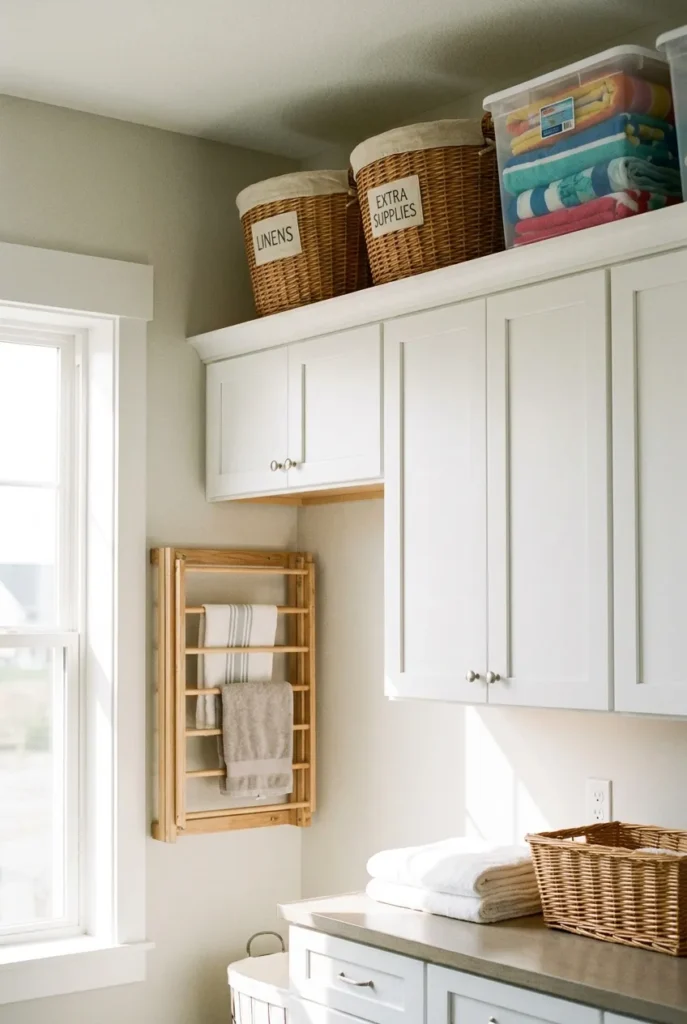
Here’s the angle nobody else covers: cabinets aren’t only in kitchens. Laundry rooms with upper cabinets almost always have the same gap, and it’s the perfect spot for detergent backstock, out of reach of small kids, plus seasonal items like beach towels in a labeled bin. The Crown Zone Method transfers directly; the No Go Zone simply moves to wherever your dryer vents heat.
Bedroom wardrobes and armoires offer the same foot of above cabinet storage. Sweater boxes, off-season bedding in a zippered bag, and keepsake bins all live happily up there. We store winter quilts in two Brightroom cubes on top of an IKEA wardrobe, and they vanish into the room’s sightline within a day of putting them up.
The Dust and Grease Problem (and the 5 Minute Fix)
Dust happens. In kitchens it bonds with cooking vapor into a sticky film, which is the real reason people give up on above cabinet storage. The fix costs almost nothing. Lay wax paper or that removable liner across the tops, set your bins on it, and replace the layer every three months. The film lands on the paper instead of your baskets.
For the quarterly reset, take everything down, swap the liner, and wipe basket lids with a barely damp microfiber cloth. Last spring this took me 22 minutes for an entire L-shaped kitchen, timed, including finding the step stool. To be fair, 15 of those minutes were deciding which platters deserved to stay.
FAQ: Above Cabinet Storage Questions Everyone Asks
What can I do with the space above my kitchen cabinets?
Treat it as real storage, not just decor. Use lidded baskets or bins for seasonal platters, party supplies, extra glassware, and bulk paper goods, then style the visible corners with a plant, cookbooks, or large jars. The Crown Zone Method above gives you the exact layout.
What is the space above a cabinet called?
When it’s boxed in with drywall, it’s a soffit (some builders say bulkhead). When it’s open, there’s no official name; designers call it the cabinet to ceiling gap, and it typically measures 12 to 18 inches in homes with 8 foot ceilings.
How do you store things on top of kitchen cabinets without it looking cluttered?
Use matching containers, pull them flush to the cabinet front edge, and limit yourself to one or two container styles across the whole run. Matching lidded baskets read as a design choice; mismatched loose items read as a garage sale.
Is it OK to store food above kitchen cabinets?
Only sealed, heat-tolerant dry goods in airtight containers, and only if your kitchen stays reasonably cool. Heat rises, so the cabinet top runs warmer than your pantry. Skip oils, chocolate, and anything the USDA classifies as needing cool, dry storage.
What kitchen colors are in for 2026, and should above cabinet decor match?
Warm greens, rich browns, and soft creams lead current kitchen palettes. Your above cabinet storage doesn’t need to match exactly; baskets in natural honey or sage tones coordinate with nearly every 2026-leaning kitchen without a repaint.
How do I keep things above my cabinets from getting greasy?
Lids and liners. Choose lidded bins, lay replaceable wax paper or removable liner under everything, and swap the layer quarterly. The grease film lands on the disposable layer instead of your containers.
How can renters add above cabinet storage without drilling?
Freestanding lidded bins on removable liner, museum putty to stop sliding, and a vertical tension rod as a bookend cover most needs with zero holes. Command hooks on the cabinet side handle lightweight hanging if you stay under the rated weight.
Make the Wasted Foot Work This Weekend
You don’t need a renovation. A step stool, a measuring tape, and one free hour will do. Measure the gap, map your Show, Stow, and No Go zones, and start with three matching lidded baskets in the longest run. That single row of above cabinet storage will swallow more clutter than another round of drawer reshuffling ever could.
So here’s our question for you: which zone is your cabinet top right now, an accidental Show Zone of dusty decor or an empty ledge waiting for its first basket? If wasted space is your weakness, the hallway closet is usually the next offender; our hallway closet makeover walks through the same reclaim-the-space approach, one shelf at a time.