
Coat Closet Organization: Make the Front Hall Closet Actually Work
The front hall closet is the hardest-working three feet of your house, and it shows. Coats shoved two deep, a vacuum wedged sideways, one boot here and its partner who-knows-where, plus a tangle of bags hanging off the single sad rod. Good coat closet organization fixes all of that, and you can do most of it in an afternoon without a single power tool.
Here is the promise: a closet you can open without bracing for a landslide, where every coat, shoe, and stray backpack has a home you will actually keep using. We rebuilt ours last fall (twice, honestly, because the first try ignored the floor), and the method below is what finally stuck.
Start With a Hard Empty: The Only Way to See the Space
Pull everything out. All of it, onto the floor or the bed, including the lone glove and the reusable bags you forgot you owned. This feels dramatic, but you cannot plan good coat closet organization around clutter you can no longer see. We thought ours held “mostly coats.” It held four coats and roughly forty other things.
Sort the pile into four stacks as you go: keep, donate, relocate, trash. Coats nobody has worn in two winters go in the donate tote (Goodwill and your local Buy Nothing group both take clean outerwear). The tennis racket and the spare paint roller get relocated to where they belong. Be honest here, but never ruthless: a coat you inherited or a kid’s first snow jacket can move to overflow storage instead of the donate pile.

The 4-Zone Coat Closet System (Your New Spine)
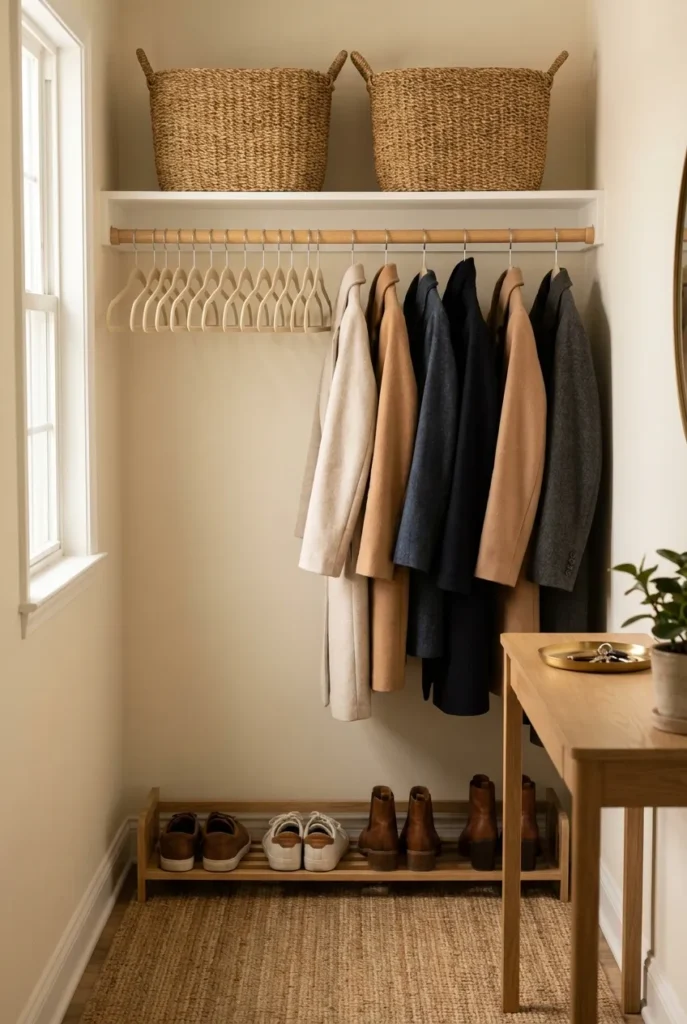
Here is the framework we built the whole closet around, and it is the thing that keeps it neat months later. The 4-Zone Coat Closet System splits your closet into four jobs: Daily, Seasonal, Gear, and Overflow. Daily lives at eye level and arm’s reach (the coats you grab on the way out). Seasonal goes up high or to one end (winter parkas in July, rain shells in January). Gear takes the floor and lower wall (shoes, the vacuum, umbrellas, the diaper bag). Overflow is the top shelf or a labeled bin for the stuff you touch twice a year.
Why four zones and not a free-for-all? Because every item that lands in your hand has an obvious home, so putting it back takes a second, not a decision. That is the whole secret to organization that survives a busy Tuesday.
Zone 1: Daily Coats at Eye Level
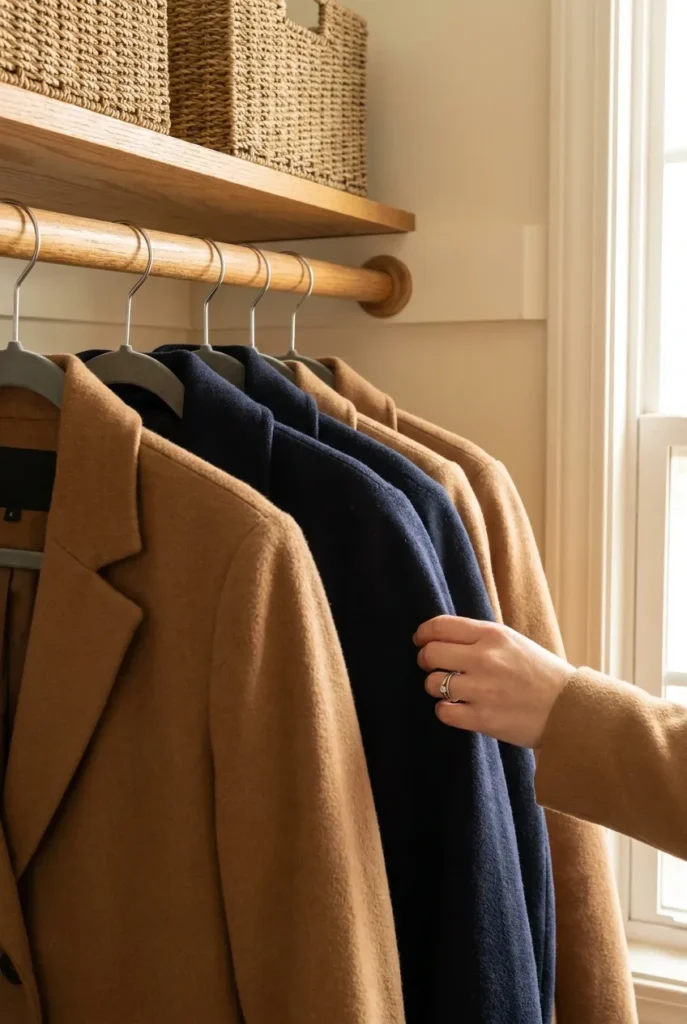
Reserve the prime real estate, the middle of the rod at roughly 60 inches off the floor, for the four to six coats your household reaches for right now. Hang them on matching slim velvet hangers (Amazon Basics sells a 50-pack cheap, and they free up real inches because they are about a quarter the thickness of plastic). Matching hangers are not about looking precious. Uniform hangers let coats sit flush, so you fit more and see all of them at a glance.
Zone 2: Seasonal Coats Up and Out of the Way
Off-season outerwear does not deserve eye level. Move it to the far end of the rod or up to the top shelf in a breathable storage bag or a labeled IKEA Skubb box. Twice a year you swap: parkas come down in fall, rain shells go up in spring. We call this the Sunday Swap, and it takes about fifteen minutes with a coffee. Tie it to the time change so you never forget which weekend it is.
If your closet shares duty with a bedroom that has no hanging space, the same swap logic applies, and you can borrow a few tricks from our guide on how to organize a bedroom with no closet for the overflow pieces that will not fit.
Small Coat Closet Organization: Win the Vertical Inches
Most front hall closets are small, narrow, reach-in boxes, so the game is vertical. Look up: the dead space above your single rod is usually 18 to 24 inches of pure waste. Add a second rod below the first to double-hang short jackets and kids’ coats, or drop in a wire shelf for baskets. The Container Store and ClosetMaid both sell hang-from-the-rod shelf kits that need zero drilling.
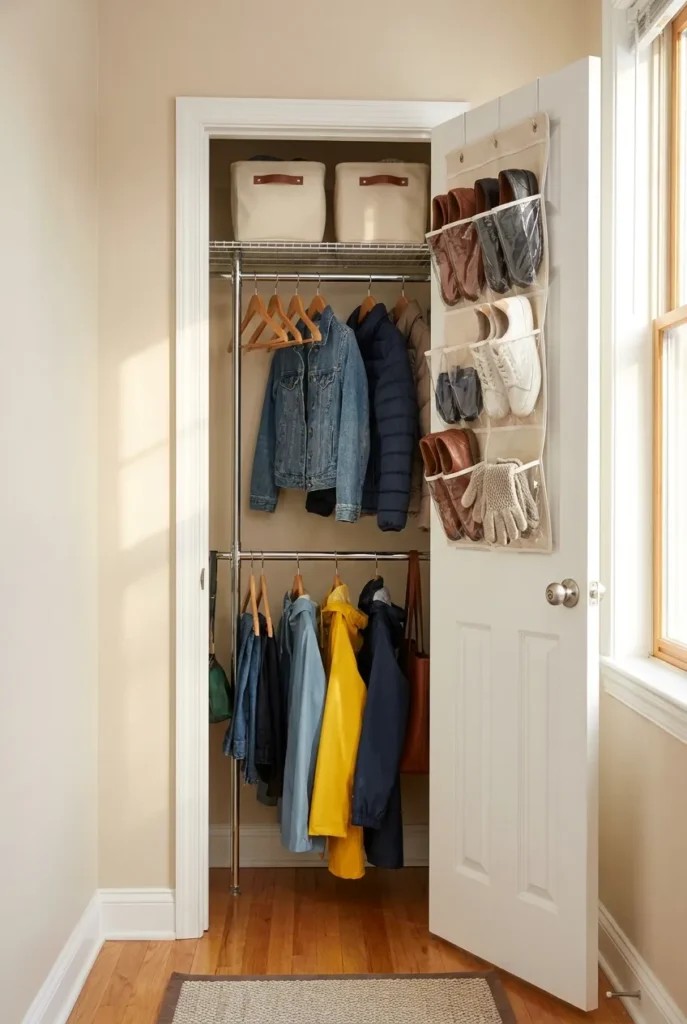
Doors are the other forgotten surface. An over-the-door organizer turns the inside of the door into shoe storage, glove cubbies, or a hat shelf. This is the single highest-value move for small coat closet organization, and it is the first thing we tell anyone with a tiny entry to try.
A No-Drill Setup for Renters
If you rent, you do not have to live with a useless closet, and you should never put an anchor in a wall you do not own. Lead with damage-free gear: 3M Command hooks for bags and umbrellas, a spring-loaded tension rod for a second hanging line, and an over-the-door rack that lifts off when you move. A freestanding shoe rack on the floor and stackable bins do the rest. Everything comes back out at the end of the lease, and the security deposit stays yours.
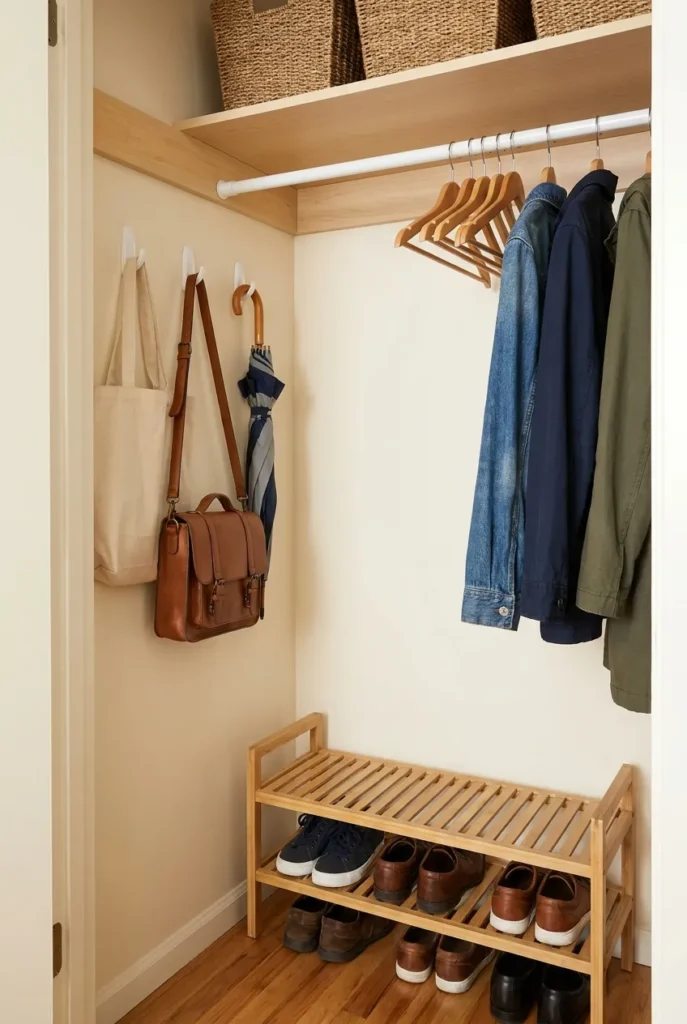
Coat Closet Organization for Shoes (and the Boot Problem)
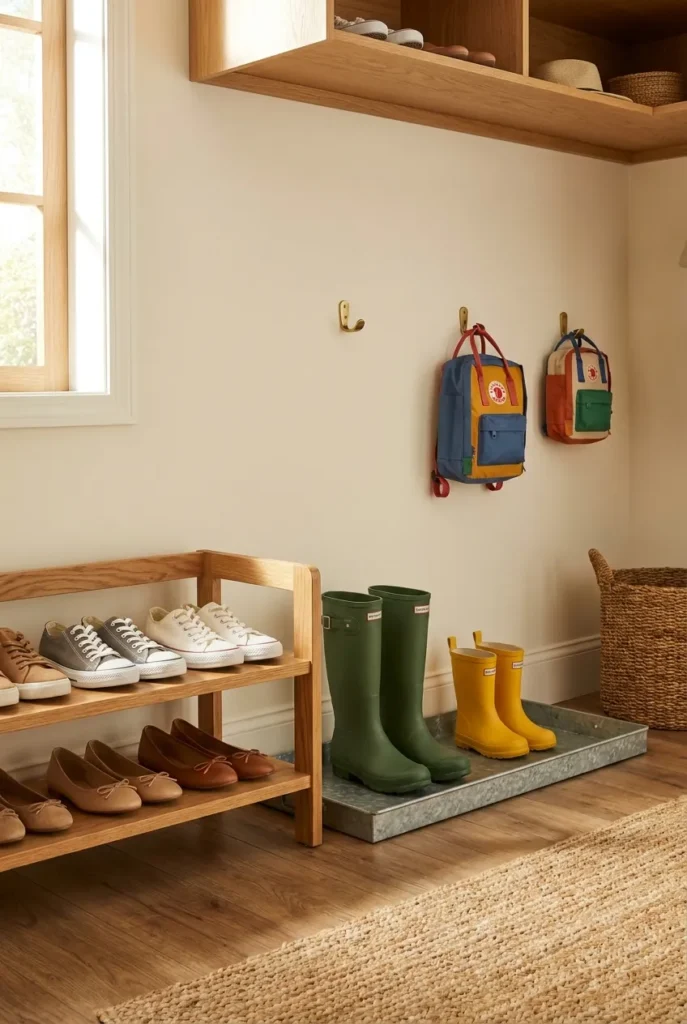
Shoes are where front hall closets go to die. They scatter, they stack wrong, and wet boots soak whatever they touch. Give them a defined floor zone. A two-tier shoe rack doubles your floor capacity, and a low boot tray (a simple plastic or galvanized one from Target) catches slush so it never reaches your coats or carpet. Keep only in-season shoes here; the rest go to a bedroom or the overflow bin.
For families, this is also your backpack landing strip. Low hooks at kid height mean school bags come off little shoulders and onto a hook instead of the floor. If mornings in your house are a scramble, our backpack and school gear storage] guide pairs perfectly with this zone.
Where the Vacuum and the Awkward Stuff Actually Go
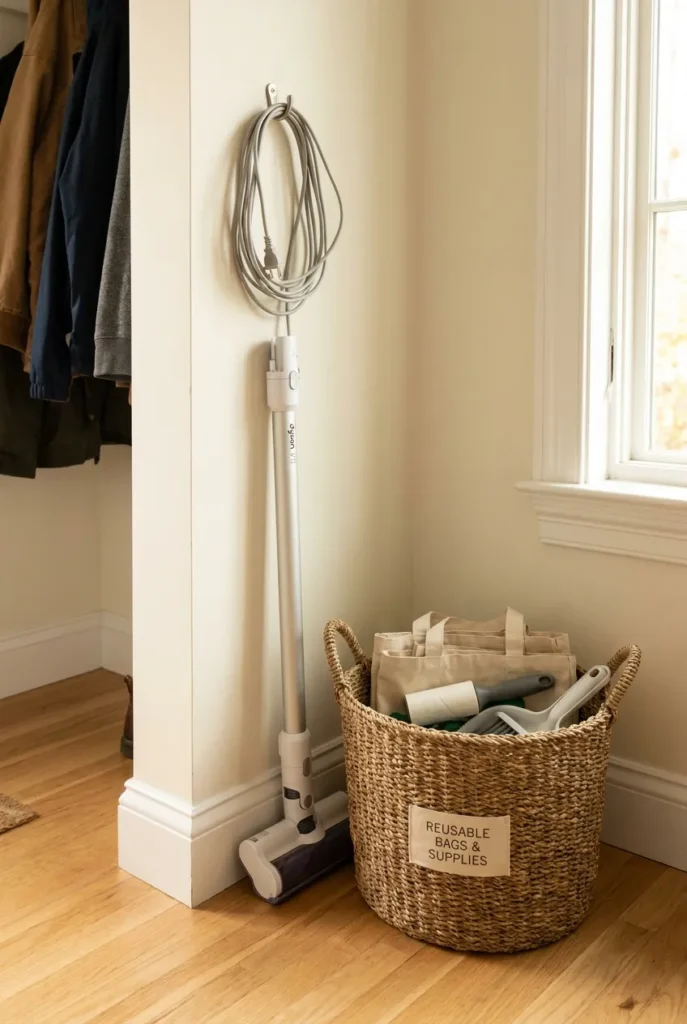
Nobody puts this in their pretty closet roundup, but it is the real question: where does the vacuum live? In most homes the front hall closet is also the utility closet, so plan for it instead of pretending it does not exist. Stand the vacuum upright at one end (a slim stick vac like a Dyson or a Shark earns its keep here because it tucks against a side wall). Coil the cord on a single Command hook beside it.
The other awkward orphans, reusable bags, the ironing board, the first-aid kit, batteries, light bulbs, gather them into one labeled bin so they stop migrating. Cleaning supplies belong in their own caddy, and if your closet is doing double duty as storage for them, our cleaning supplies storage ideas piece has spots that beat cramming them under the kitchen sink.
Easy DIY and IKEA Upgrades That Cost Almost Nothing
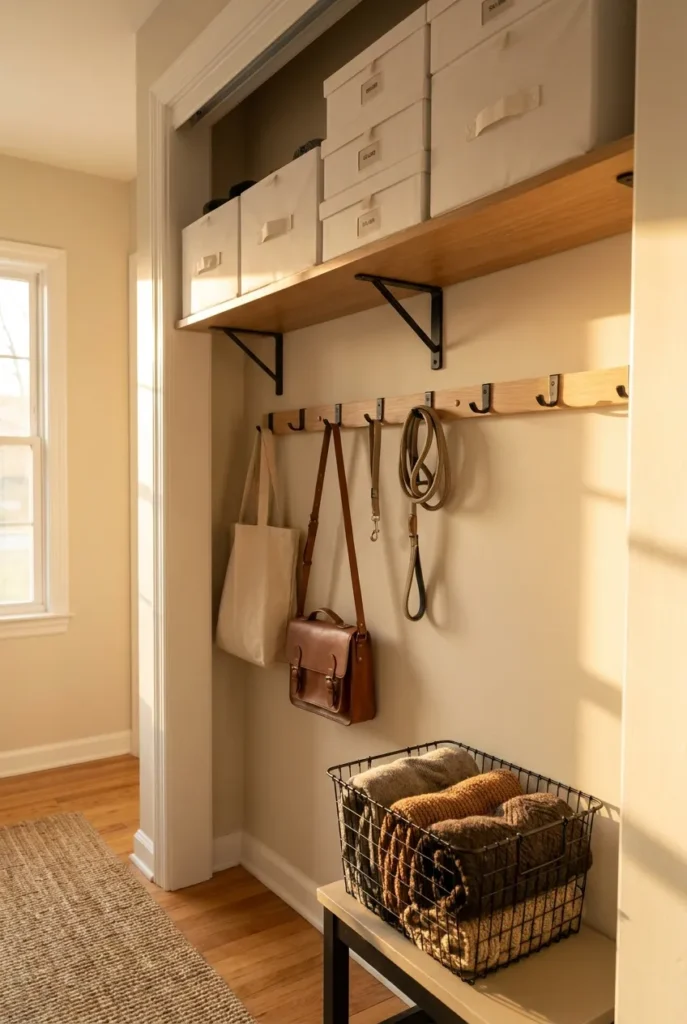
You do not need a custom build. A few small upgrades punch way above their price. Add a wire basket shelf for hats and scarves. Screw in a peg rail (in a home you own) for bags and dog leashes. IKEA’s hallway range, the Skubb boxes, Tjusig hooks, and a slim shoe cabinet, was practically made for this closet, and most pieces run well under $25. For a true budget refresh, Dollar Tree bins and a fresh coat of light paint on the back wall make the whole space read bigger and brighter.
Keep It Neat: The 10-Minute Monthly Reset
A closet you organize once and never touch slides right back to chaos. Put a recurring ten-minute reset on your calendar for the first of each month. Rehang anything that fell, return the orphan shoes, empty the overflow bin of stuff that crept in, and wipe the boot tray. That is it. The 4-Zone System makes this fast because nothing has to be re-decided, just put back where its zone says it goes.
This light-touch habit, plus the twice-a-year Sunday Swap, is what separates a closet that stays beautiful from one that photographs well for a day and then collapses.

Frequently Asked Questions
How do I best organize a coat closet?
Empty it completely, sort everything into keep, donate, relocate, and trash, then rebuild using zones. We use the 4-Zone Coat Closet System: Daily coats at eye level, Seasonal up high, Gear (shoes and the vacuum) on the floor, and Overflow in a labeled top-shelf bin. Matching slim hangers and one vertical upgrade, a second rod or an over-the-door rack, do most of the heavy lifting.
Are coat closets still in style?
Yes, and arguably more useful than ever. Open peg-rail entryways look great on Pinterest, but a closed coat closet hides the mess, protects coats from dust, and gives you somewhere to park the vacuum. The trend is not ditching the closet; it is making the inside of it work as hard as a styled mudroom.
What is the best way to store coats?
Hang structured coats (wool, leather, blazers) on matching slim velvet hangers so they keep their shape, and reserve the most reachable spot for daily wear. Store off-season coats clean, in a breathable bag or labeled box up high, never in a sealed plastic bin that can trap moisture. Knits and puffers can be folded into a bin if hanging space is tight.
What is the best closet organizing system?
The best system is the one your household will actually maintain. A zoned setup beats a fancy modular build you stop using by February. Start with the 4-Zone method, add no-drill pieces if you rent, and keep the monthly ten-minute reset on the calendar. Function first, then pretty.
How do I organize a small or narrow coat closet?
Go vertical and use the door. Add a second rod to double-hang, put a wire shelf in the dead space up top, and mount an over-the-door organizer for shoes and gloves. Keep only in-season items in the closet and send everything else to overflow.
The Front Hall You Walk Past a Dozen Times a Day
A working coat closet is a small thing that quietly fixes your whole entry. No more morning dig, no more avalanche, just open, grab, go. Start with the hard empty this weekend, set your four zones, and add one vertical upgrade. That is enough to feel the difference by Monday. So tell us: which zone is the disaster in your house right now, the shoes, the seasonal pileup, or the vacuum nobody has a home for? Pick that one and start there.