

Fridge Organization Chart: Where Every Food Actually Goes
Open your fridge right now. Odds are the milk is chilling in the door, the raw chicken is sitting above your salad greens, and something leafy is quietly turning to soup in a drawer. A good fridge organization chart fixes all of that in one glance. It tells you where every food actually goes, why cold air behaves the way it does, and how to keep groceries fresh days longer. We rebuilt ours this way, and honestly, the weekly “what do we even have” panic mostly stopped.
Here is the promise: by the end of this guide you will have a shelf-by-shelf map, a free printable chart, and a 30-minute reset plan. No new gadgets required to start.
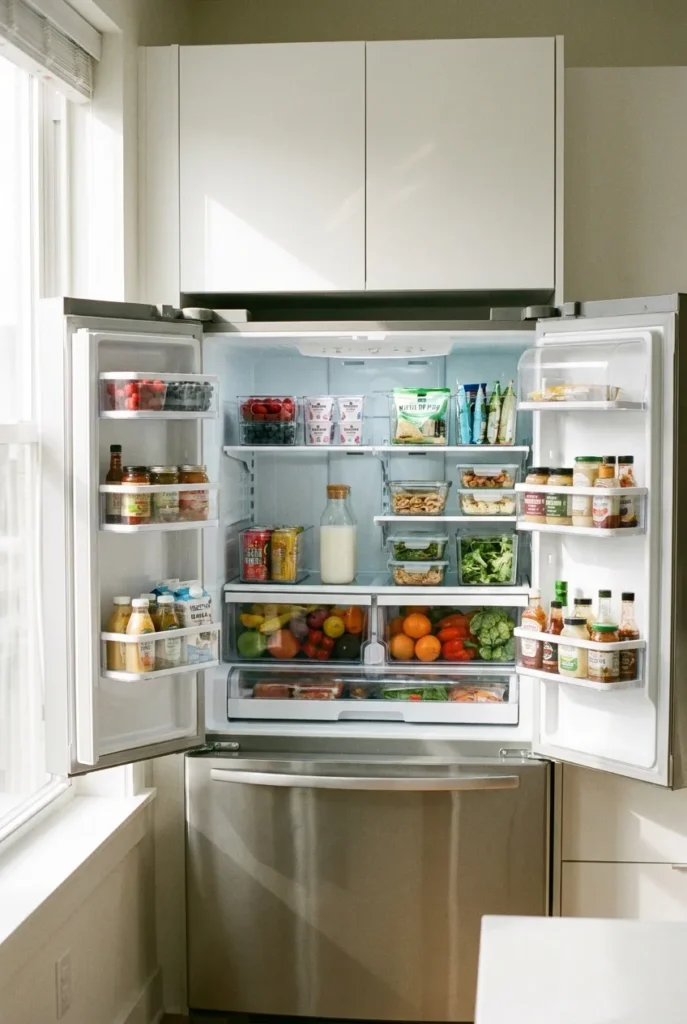
Why a Fridge Organization Chart Actually Matters
Cold air is not evenly distributed inside a refrigerator. The bottom runs coldest, the door runs warmest, and every food has a spot where it lasts longest. A fridge organization chart maps those temperature zones so you stop guessing.
The payoff is real. You waste less food, you find things fast, and you keep raw juices away from ready-to-eat items. To be fair, none of this requires a fancy fridge. It just requires knowing the rules.
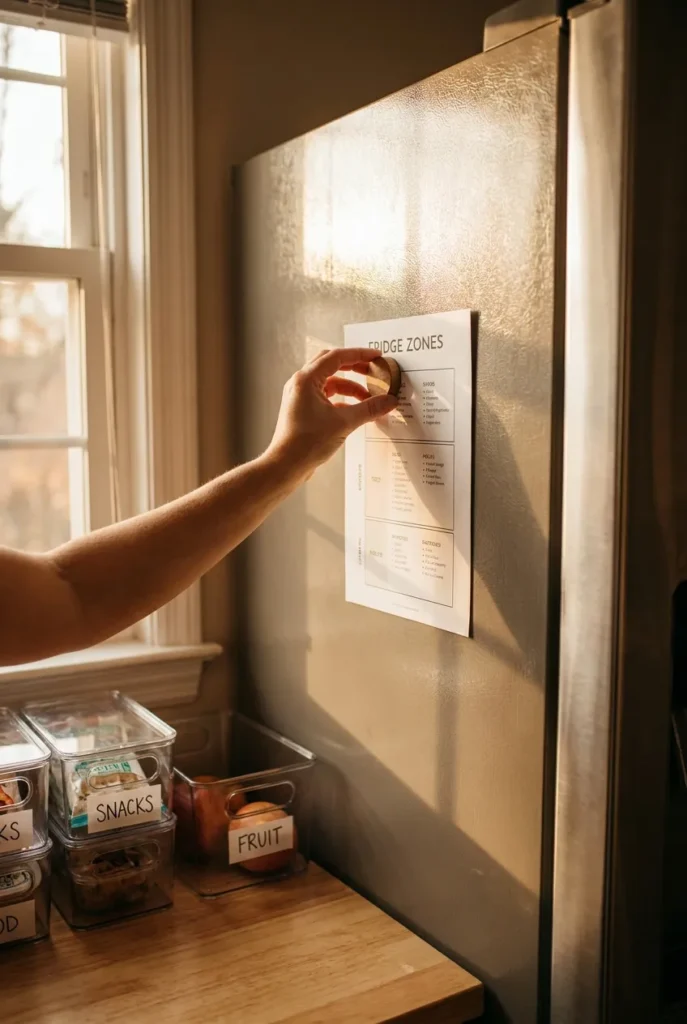
The Fridge Zone Chart: Where Every Food Goes
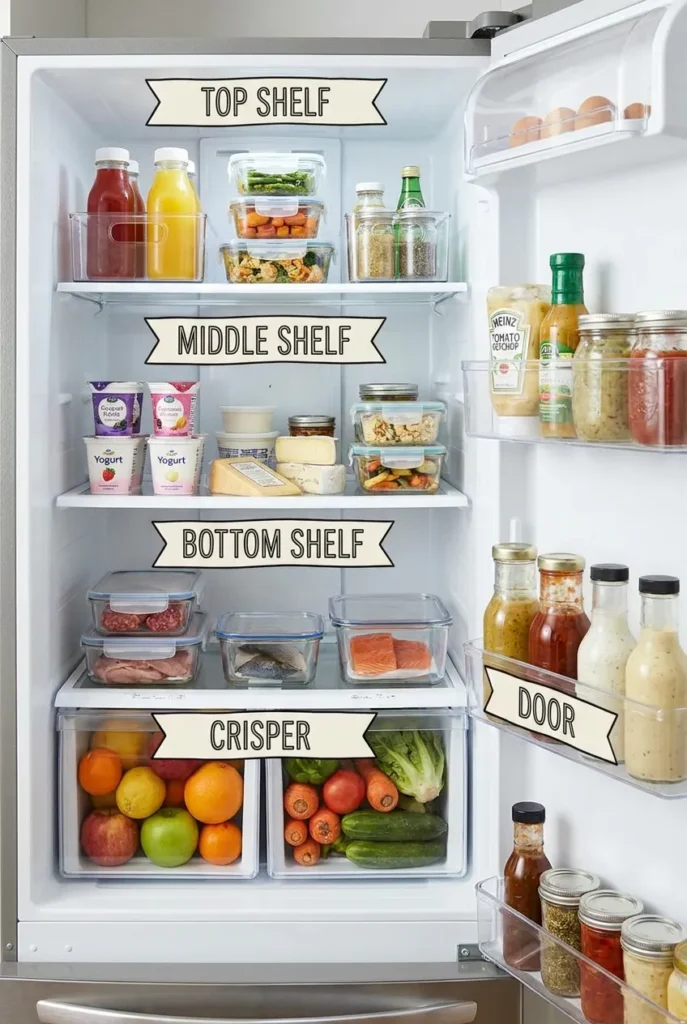
Here is the core layout. Think of your fridge in five zones, coldest at the bottom, warmest at the door. FDA 40°F recommendation goes here once approved.
| Zone | Temp range | What goes here | Why |
|---|---|---|---|
| Top shelf | 37 to 40°F | Leftovers, drinks, ready-to-eat foods, herbs in water | Warmer and stable, no cooking needed |
| Middle shelf | 36 to 38°F | Dairy, eggs, butter, hard cheese | Steady cold that dairy loves |
| Bottom shelf | 33 to 36°F (coldest) | Raw meat, poultry, fish (in a tray) | Coldest spot, and drips stay contained |
| Crisper drawers | Adjustable humidity | High humidity for greens, low humidity for fruit | Humidity control slows wilting and rot |
| Door shelves | 40 to 42°F (warmest) | Condiments, juice, water, sauces | Warmest zone, best for shelf-stable items |
Screenshot that table. It is the whole chart in one place, and it is the framework the rest of this guide builds on.
Top Shelf: Ready-to-Eat Zone
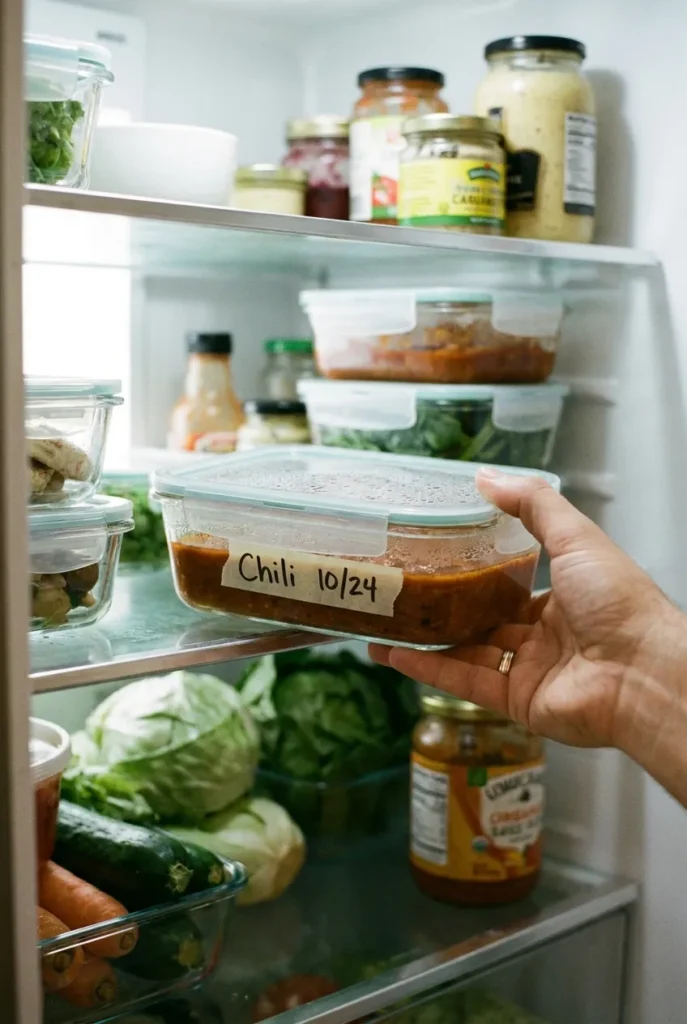
Your top shelf stays relatively warm and steady, so it suits foods that need no further cooking. Think leftovers in clear containers, yogurt, drinks, and fresh herbs standing in a jar of water. Keep leftovers front and center so they get eaten before they expire.
Middle Shelf: Dairy and Eggs
Dairy wants consistent cold, not the fluctuating warmth of the door. Milk, eggs, butter, and blocks of cheese belong here. Yes, your fridge door has a cute egg tray. Ignore it.
Bottom Shelf: The Raw Meat Drip Line
This is the coldest shelf, and it is where raw chicken, beef, pork, and fish go. Always. Set them on a rimmed tray so any juices cannot drip onto anything below. We call this the drip-line rule, and it is the single easiest way to prevent cross-contamination in a home fridge. [EXTERNAL LINK: USDA cold storage guidelines go here once approved.]
Crisper Drawers: Humidity Is the Secret
Those little sliders on your crisper drawers actually do something. High humidity (slider closed) traps moisture and keeps leafy greens, broccoli, and herbs crisp. Low humidity (slider open) lets ethylene gas escape, which suits apples, pears, and other fruit that rots fast in trapped moisture. One drawer for greens, one for fruit. Done.
Door Shelves: Warmest Spot, Shelf-Stable Only
The door swings open and shut all day, so it is the warmest zone. Reserve it for things that tolerate temperature swings: ketchup, mustard, salad dressing, juice, water. Milk in the door is the classic mistake, and it is why your milk sometimes turns before the date.
The 5-Zone Reset Method: Our Original Framework
Every good system needs a name you can remember. Ours is the 5-Zone Reset Method, and it maps one action to each fridge zone so a full reorganize never feels overwhelming. You touch one zone at a time, top to bottom: clear the top shelf, group the middle, tray the bottom, sort the crispers, and cap the door. Five moves, five zones, one calm fridge.
Use it weekly as a quick tune-up or monthly as a deep reset. The beauty is you can stop after any single zone and still have made real progress.
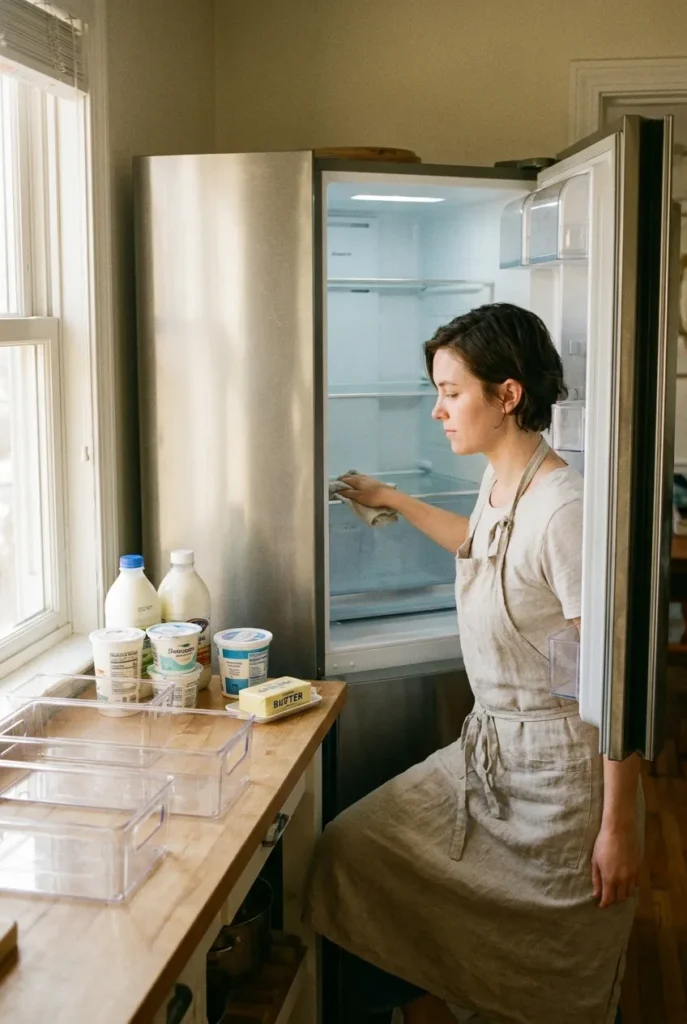
How to Organize Your Fridge in 30 Minutes
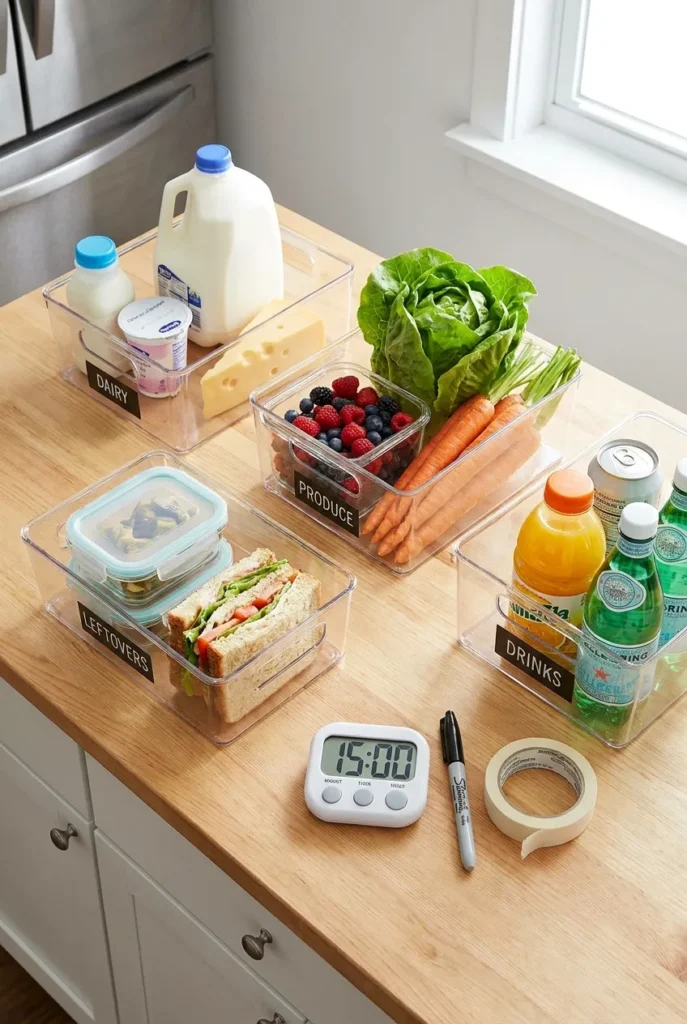
Set a timer. This is the try-this-weekend version, and it moves fast.
- Empty and wipe (10 minutes). Pull everything out, toss anything past its prime, and wipe each shelf. This is also the moment to check for pantry items worth tossing that migrated into the fridge.
- Sort by zone (10 minutes). Group foods on the counter by their chart zone, then load them back bottom to top.
- Label and date (5 minutes). A quick label on leftovers and bins means everyone in the house follows the same map.
- Set a weekly check (5 minutes). Before each grocery run, pull the oldest items forward. That is FIFO, first in first out, and it is what keeps the system alive.
If your kitchen storage tends to sprawl beyond the fridge, it is worth taking the same zone thinking to the cabinets. Here is how we organize our kitchen cabinets using the same grouping logic.
The No-Buy Version (For Renters and Small Kitchens)
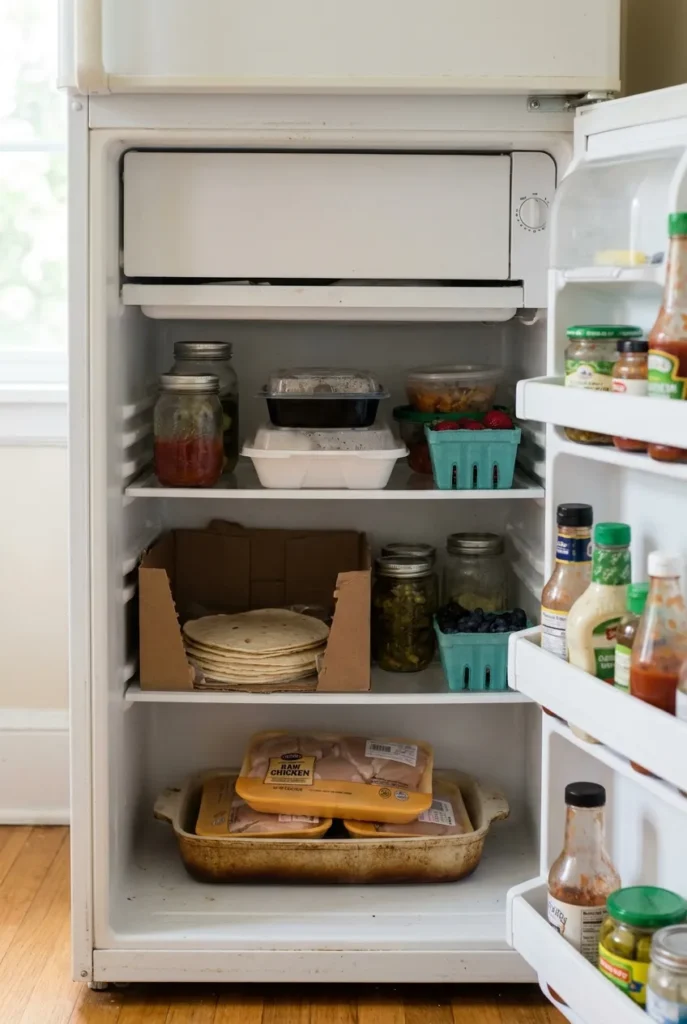
You do not need a cart full of matching bins to use a fridge organization chart. This is our first beat-the-field angle, because most guides push products first.
Start with what you own. A cereal box cut down becomes a wrap holder. A small baking dish becomes your raw-meat drip tray. A repurposed jar corrals loose packets. Group like with like, even in mismatched containers, and the chart still works. Later, if you want the aesthetic clear-bin look, add pieces slowly. Clear stackable bins and a lazy Susan for jars are the two upgrades that earn their space first.
Fridge Charts by Fridge Type
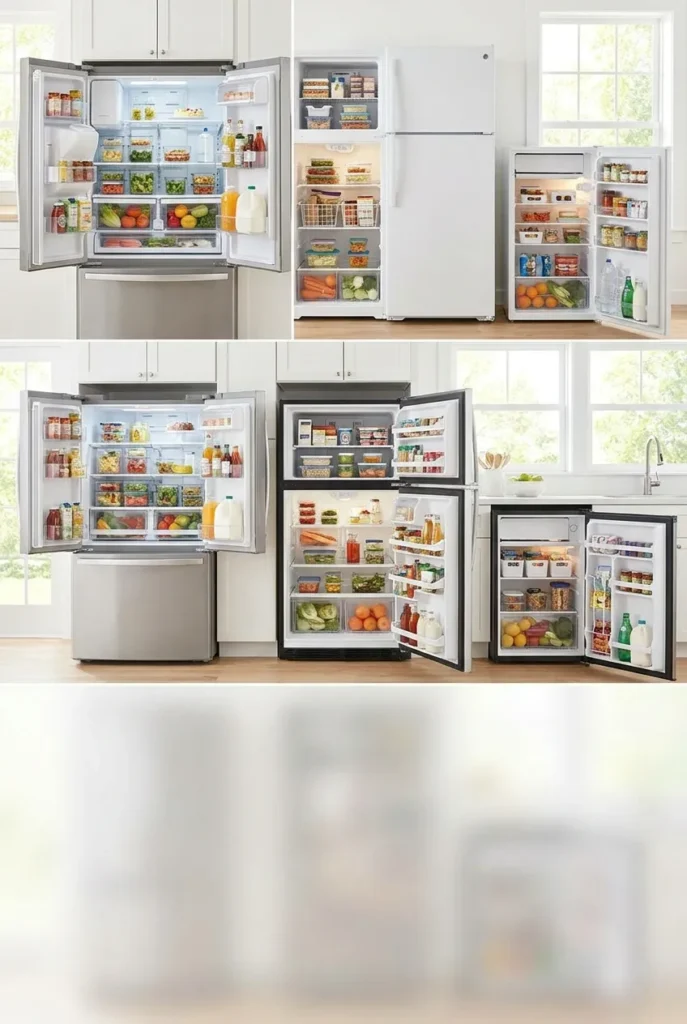
Not every fridge is a French-door. This is our second beat-the-field angle, because layout changes the map. For a French-door model, the wide shelves suit big platters and the pull-out drawer is a great deli or snack zone.
For a top-freezer fridge, the top shelf sits closest to the freezer and runs coldest, so flip the logic and keep dairy higher. For a mini or apartment fridge, verticality is everything: use a small riser to double a shelf and keep the tiny door for condiments only.
The Best Bins and Labels (Optional Upgrades)
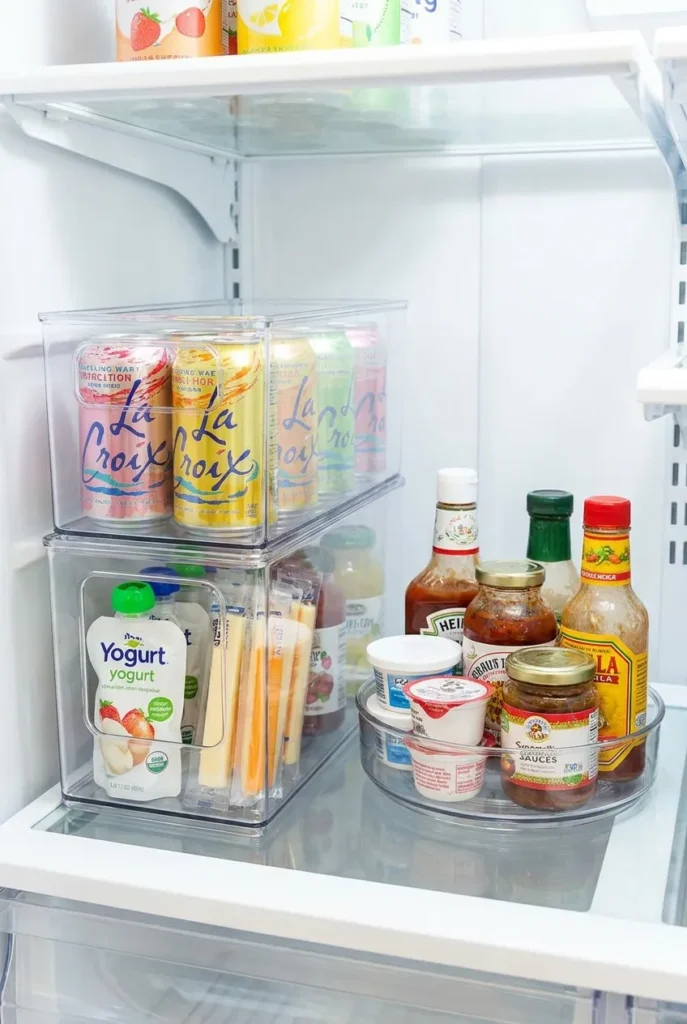
Once your zones work, a few products make them prettier and easier to maintain. Clear stackable bins let you pull a whole group out at once. A turntable tames tall condiment jars. Simple write-on labels keep the household aligned. Add these after the system works, never before.
Keeping It Organized Week to Week
A chart only helps if the fridge stays close to it. Pull older items forward before each shop, wipe one shelf a week, and do a full 5-Zone Reset once a month. That rhythm is what separates a fridge that looks good for a day from one that stays functional for good. For a deeper dive into styling and layout, browse our more fridge organization ideas.
Frequently Asked Questions
What is the best organization layout for a refrigerator?
Coldest at the bottom, warmest at the door. Raw meat on the bottom shelf, dairy and eggs in the middle, ready-to-eat foods and leftovers up top, produce sorted by humidity in the crispers, and shelf-stable condiments in the door.
How do I organize a fridge correctly?
Empty it, wipe it down, group foods by zone, then reload bottom to top following the chart. Label leftovers with a date and pull the oldest items forward each week.
How should your fridge be arranged?
By temperature zone, not by height or habit. Match each food to the zone where it lasts longest, which is exactly what the chart above maps out.
What order is correct for placing items in the fridge?
Load from the coldest zone up: raw proteins on the bottom shelf first, then dairy and eggs in the middle, then leftovers and drinks on top, produce in the crispers, and condiments in the door last.
What temperature should my fridge be?
Keep the main compartment at or below 40°F. [EXTERNAL LINK: FDA reference supports this once approved.] A fridge thermometer is a cheap way to confirm yours is actually holding.
Where should I not store milk?
Not in the door. The door is the warmest zone, and milk spoils faster there. Keep it on the middle shelf instead.
Ready to Reset Your Fridge?
You now have the full chart, a named method, and a 30-minute plan. Start with one zone this weekend, snap a photo of the chart table for your fridge door, and grab the free printable so the whole household follows the same map. Then tell us in the comments which zone was the biggest mess (the door usually wins).