

The Mudroom Laundry Combo That Finally Works for a Busy Family
Here is the honest truth about a mudroom laundry combo: it is the hardest working room in the house, and usually the messiest. Wet boots meet clean towels. Backpacks land on the folding counter. Somewhere under the pile, a washing machine is quietly running. If you want a mudroom laundry combo that stays tidy on a Tuesday (not just in a magazine photo), the fix is not more bins. It is zones.
We are going to walk through a simple system, real layout ideas for small and narrow rooms, and a batch of no-drill setups renters can use. You will also get ten image ideas you can recreate. Let’s set it up so the room works as hard as you do.
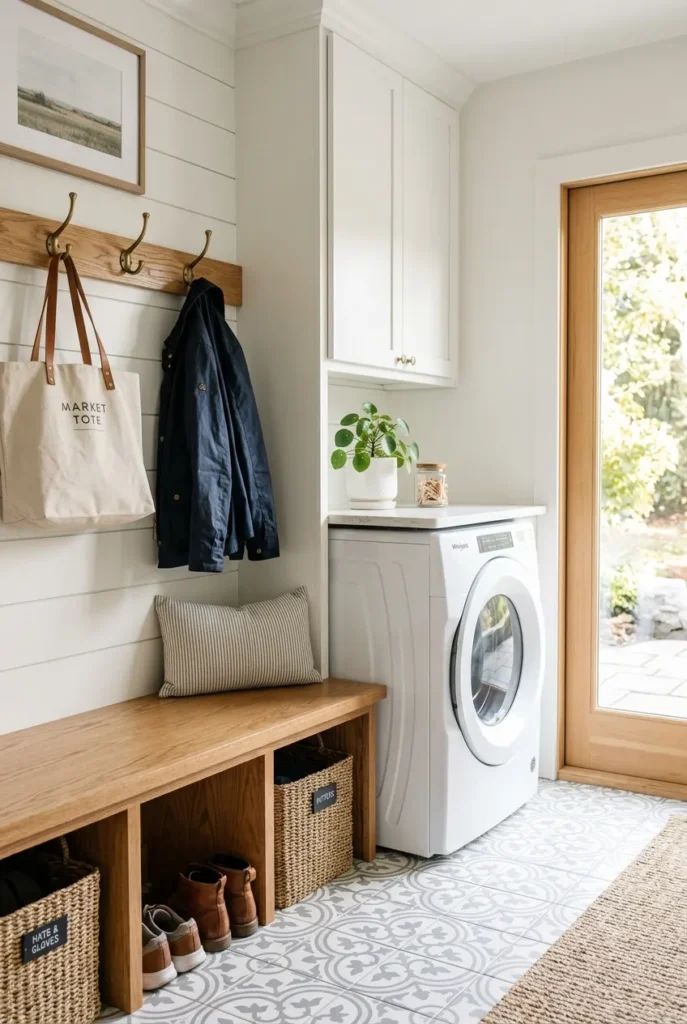
Why a Mudroom Laundry Room Combo Is Worth Getting Right
When you share one room between the entryway and the laundry, you double the demands on the same square footage. People walk in muddy. Clothes go out clean. Those two jobs fight each other unless you plan for both.
Get it right and the payoff is big. You drop your keys, hang your coat, and start a load without crossing the house. Get it wrong and the folding counter becomes a junk shelf by Thursday. (Been there.)
The good news: a mudroom laundry combo rewards structure more than square footage. A tiny room with clear zones beats a big room with none.
The 5-Zone Combo System (My Core Framework)
Here is the framework this whole article hangs on. Call it the 5-Zone Combo System. Every mudroom laundry combo has five jobs, and every item in the room should belong to exactly one zone. When something has no zone, that is what ends up on the counter.
The five zones are: Enter (shoes, coats, bags), Drop (keys, mail, chargers), Wash (machines, detergent, hampers), Fold and Hang (counter, rod, drying rack), and Store (bulk supplies, seasonal gear, cleaning kit).
Assign a wall or a section to each zone. Even in a narrow room, you can stack zones vertically instead of spreading them wide. This mirrors the same 4-zone mudroom system we use for entry-only rooms, just with laundry folded in as its own zone.
Screenshot this mini map:
| Zone | What lives here | Best storage |
|---|---|---|
| Enter | Shoes, coats, bags | Bench, cubbies, hooks |
| Drop | Keys, mail, phones | Wall tray, small bins |
| Wash | Machines, detergent, hampers | Cabinet, tiered hampers |
| Fold and Hang | Folded loads, drying items | Counter, rod, rack |
| Store | Bulk, seasonal, cleaning | Upper cabinets, baskets |
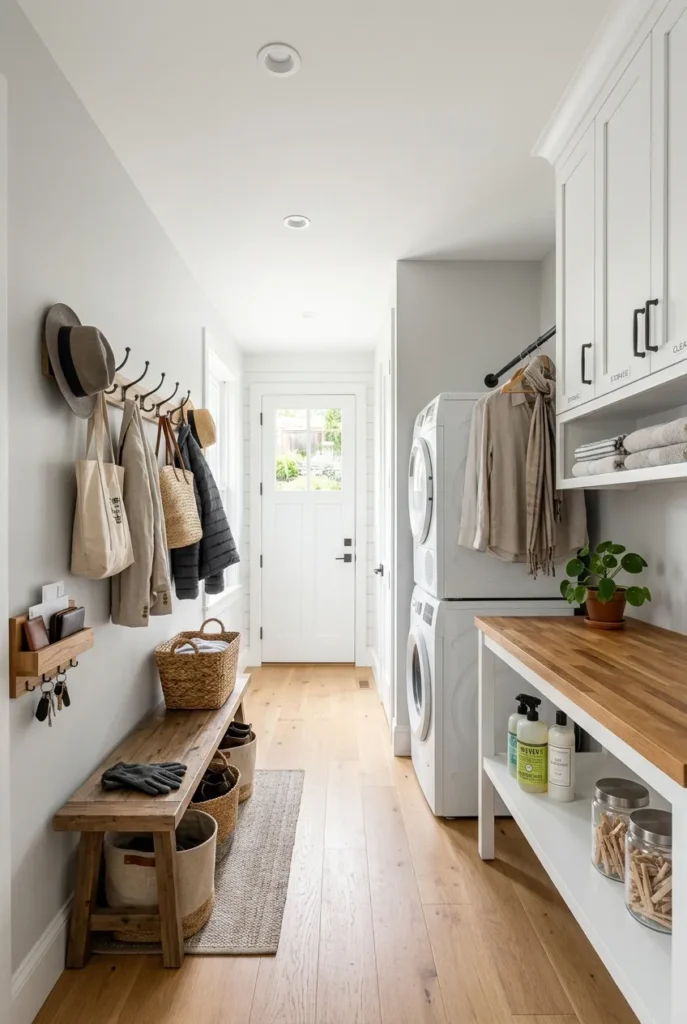
Plan the Layout First (Even in a Narrow Room)
Layout is where most people go wrong. They buy bins before they know the floor plan. Flip that order.
Measure your wall length and note the door swing. A standard front-load washer or dryer is about 27 inches wide and needs roughly 30 inches of depth with the door and hoses. Measure your actual machines, some compact units run 24 inches. A comfortable walkway in front is 36 to 42 inches, and a bench seat sits happiest around 18 inches deep.
Three layouts work for almost everyone. A single-wall run puts entry, machines, and counter along one side (great for narrow rooms). An L-shape wraps the bench around a corner from the machines. A galley faces machines and storage across a center aisle, which suits a pass-through off the garage.
Small and Narrow Combo Rooms
If your room is under 6 feet wide, go vertical and go stacked. Stack the washer and dryer to reclaim a full appliance footprint, then use that reclaimed wall for a slim bench and hooks. A folding counter only needs about 18 to 24 inches of depth to be useful.
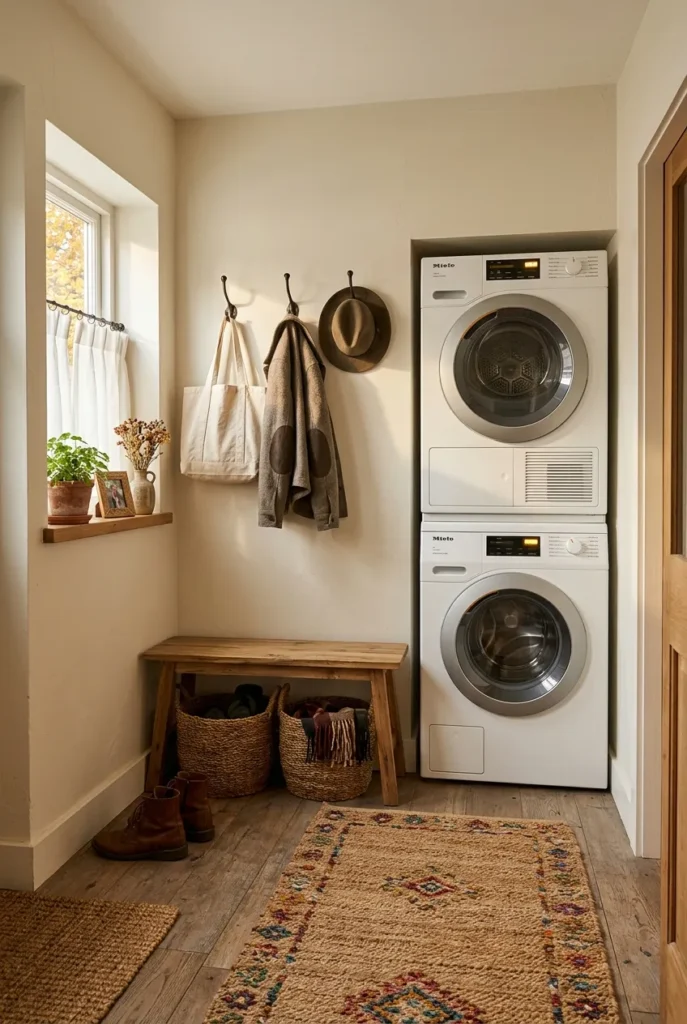
Set Up the Entry Zone So Shoes Never Hit the Floor
The entry zone is your first line of defense against tracked-in mess. Give every family member a landing spot and the floor stays clear.
Start with a bench plus lower cubbies for shoes. Add hooks at two heights: high for adult coats, low (around 40 inches) so kids can hang their own. A boot tray on the floor catches the wet stuff. Honestly, the tray alone changed our winter entryway.
Toss a washable runner over the walkway. It hides grit between cleanings and softens the room. If you want the full entry treatment, you can build a real entryway drop zone that survives a busy family morning and slot it right into this combo.
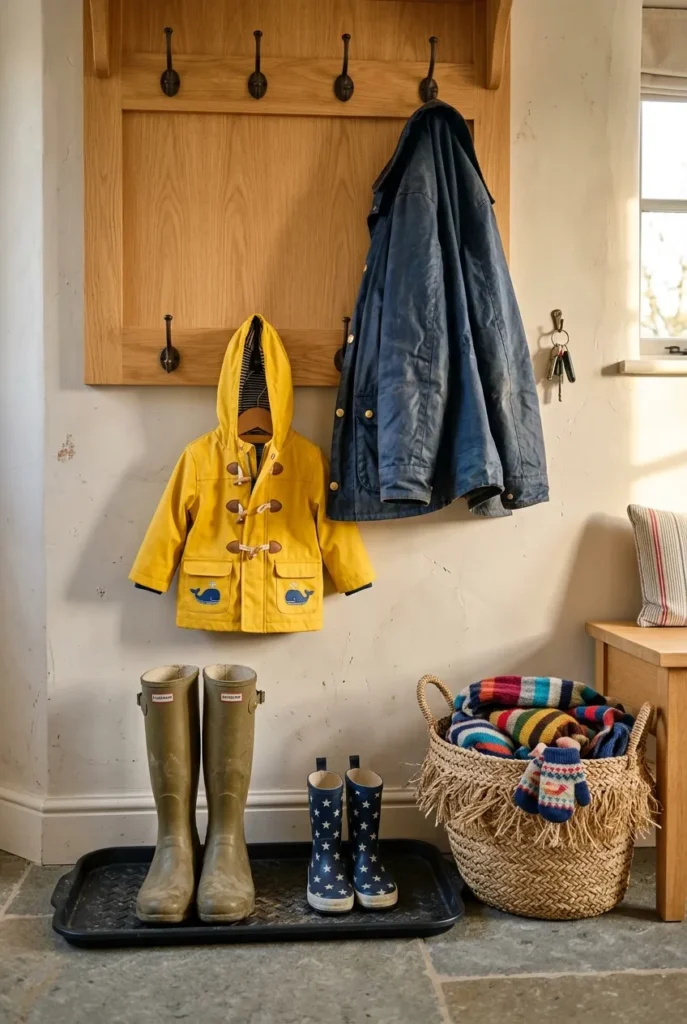
Build a Drop Zone for Keys, Mail, and Chargers
Small stuff causes big clutter. Keys, mail, sunglasses, and phone chargers need a home or they colonize the folding counter.
Mount a small wall shelf with a lip, or a single brass tray, right by the door. Add a mail sorter with two slots: action and file. Clip a charging station to the underside of the shelf so cords stay hidden.
Keep this zone tiny on purpose. The drop zone is a pit stop, not a storage unit.
Make the Wash Zone Do More in Less Space
Now the laundry half. The wash zone holds the machines, detergent, and dirty clothes waiting their turn.
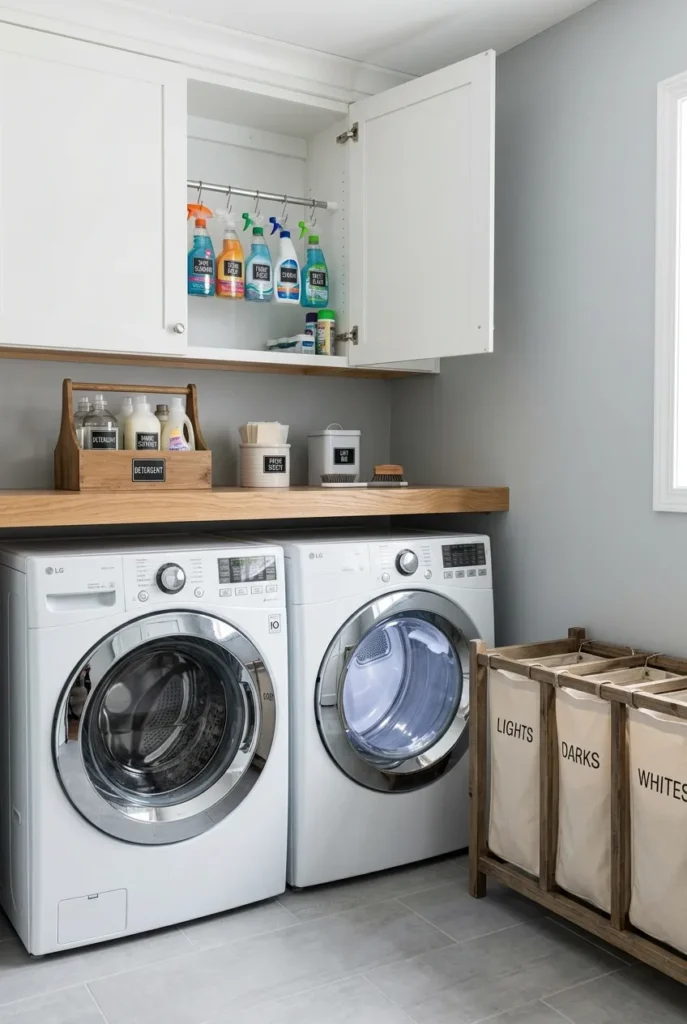
Use a two-part or three-part hamper so sorting happens as clothes come off, not in a frantic pile later. A tiered rolling hamper tucks into a 15-inch gap beside a machine. Corral detergent, dryer sheets, and stain spray in one caddy on a shelf above, well away from any food storage.
If you have base cabinets, a slim pull-out between the machines holds bottles upright. No cabinets? A tension rod under the sink or across a cabinet opening hangs your spray bottles by the trigger and frees the shelf below. These laundry room organization ideas that save space carry straight over to a combo room.
Add a Fold and Hang Zone That Earns Its Space
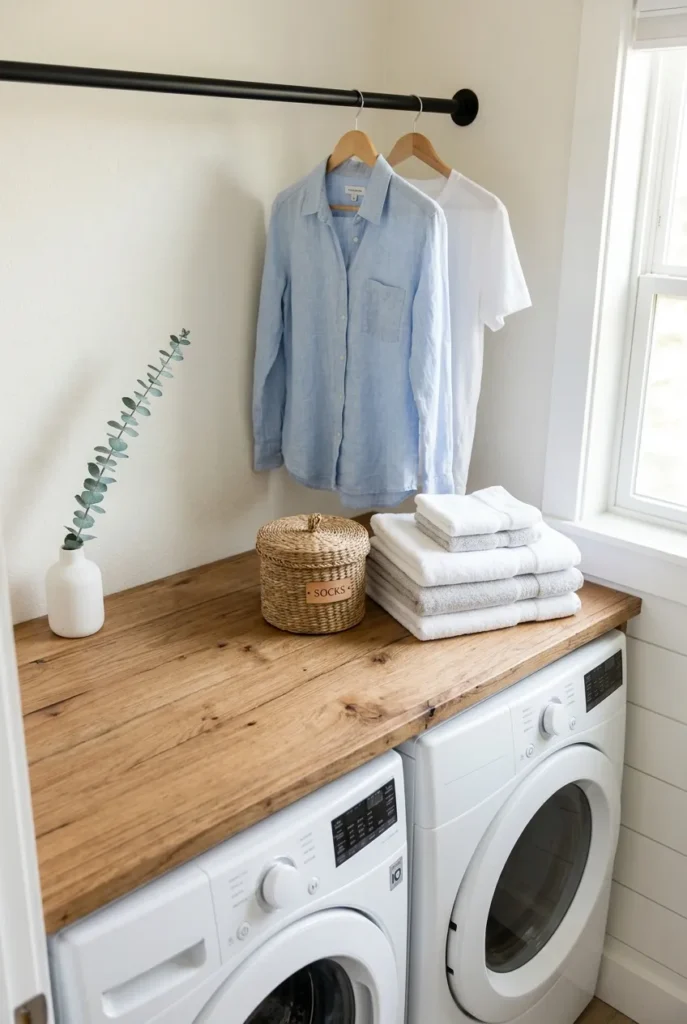
A folding counter over front-load machines is the single best upgrade for a mudroom laundry combo. It gives you a work surface and hides the appliances under one clean line.
Above the counter, mount a wall rod or a retractable drying line for shirts that cannot go in the dryer. A slim fold-down drying rack handles sweaters laid flat. Keep a lidded bin for orphan socks, because there will always be orphan socks.
If you cannot add a counter, a butcher-block board that sits across a top-load machine works as a lift-off folding surface.
Store Bulk Supplies and Seasonal Gear Up High
The store zone is where the big, occasional stuff goes so it stays out of the daily flow. Think bulk detergent, extra light bulbs, off-season boots, and beach towels.
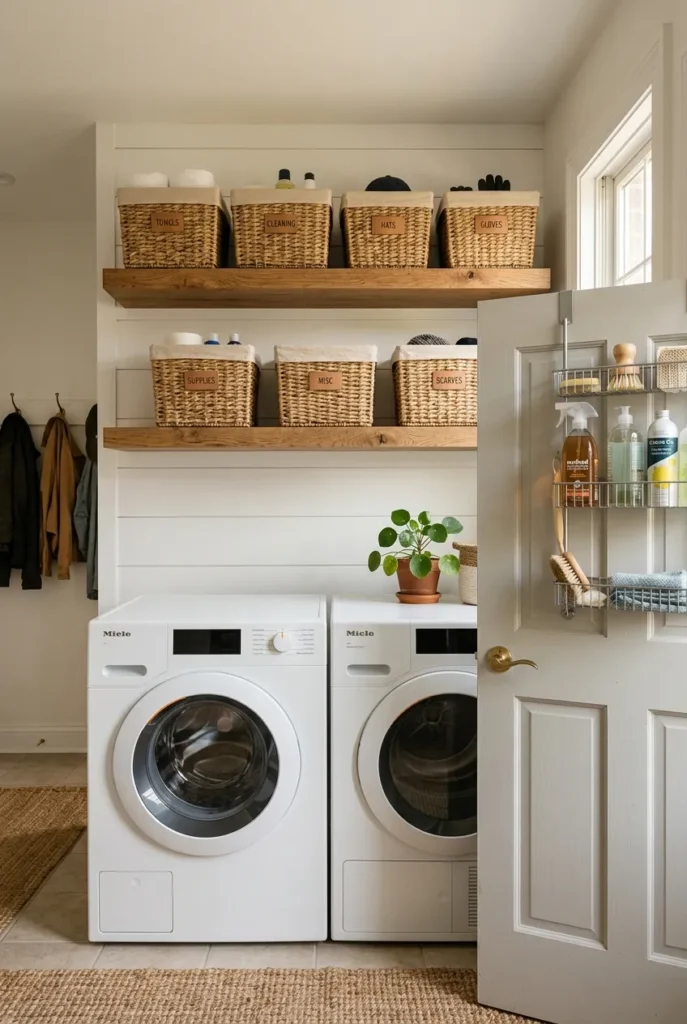
Use the wall above the machines and the door. Upper cabinets or a simple pair of shelves hold labeled woven baskets. Over-the-door racks hold cleaning supplies flat against the back of the door, which is dead space otherwise.
Group like with like and label the front of each basket. When a basket has a name, it stops collecting random junk.
Renter-Friendly, No-Drill Ideas That Still Look Built-In
Renting? You can still zone the whole room without a single hole in the wall. This is the angle most inspiration posts skip.
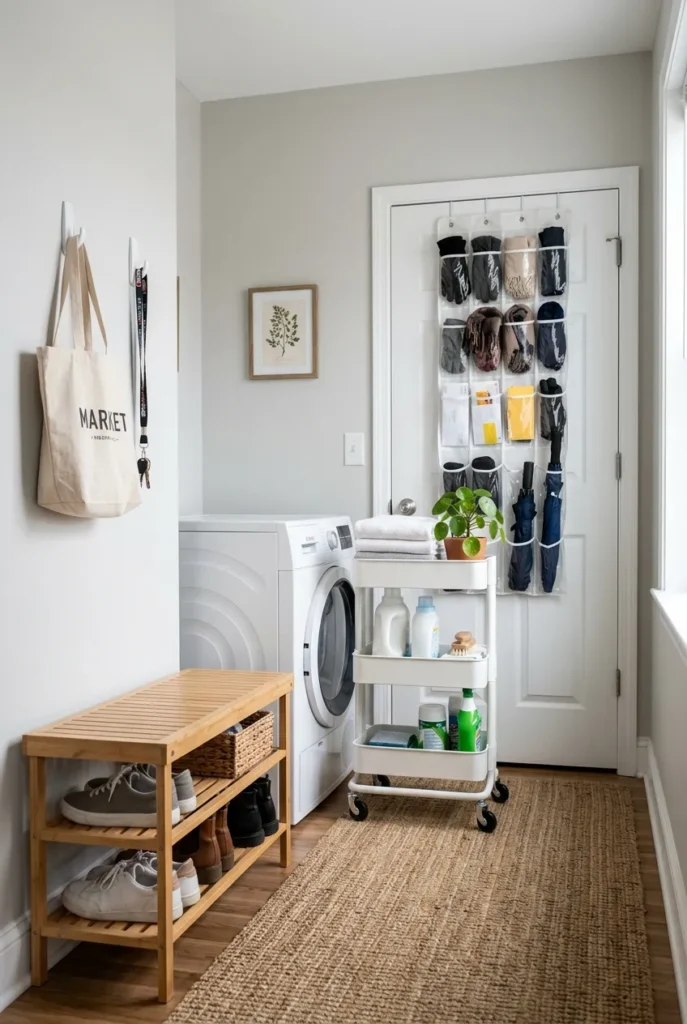
Here are seven damage-free swaps. Adhesive hooks (rated for the weight you need) replace drilled coat hooks. A freestanding shoe bench stands in for a built-in. A tension rod hangs drying clothes across a nook. Over-the-door organizers cover shoes, cleaning bottles, and small gear. A rolling cart becomes a movable drop zone and folding surface. Peel-and-stick shelf liner refreshes cabinet interiors. Stackable bins build vertical storage with zero mounting.
A rolling cart honestly does triple duty here: drop zone by the door, extra folding surface on laundry day, and a snack or supply station when you need it. That double-duty pick is worth more than any single-use bin.
The Garage-Entry Combo (A Common Real-World Layout)
Plenty of these rooms sit right off the garage, and that setup has its own rules. This is the space where dirt, sports gear, and grocery runs all collide.
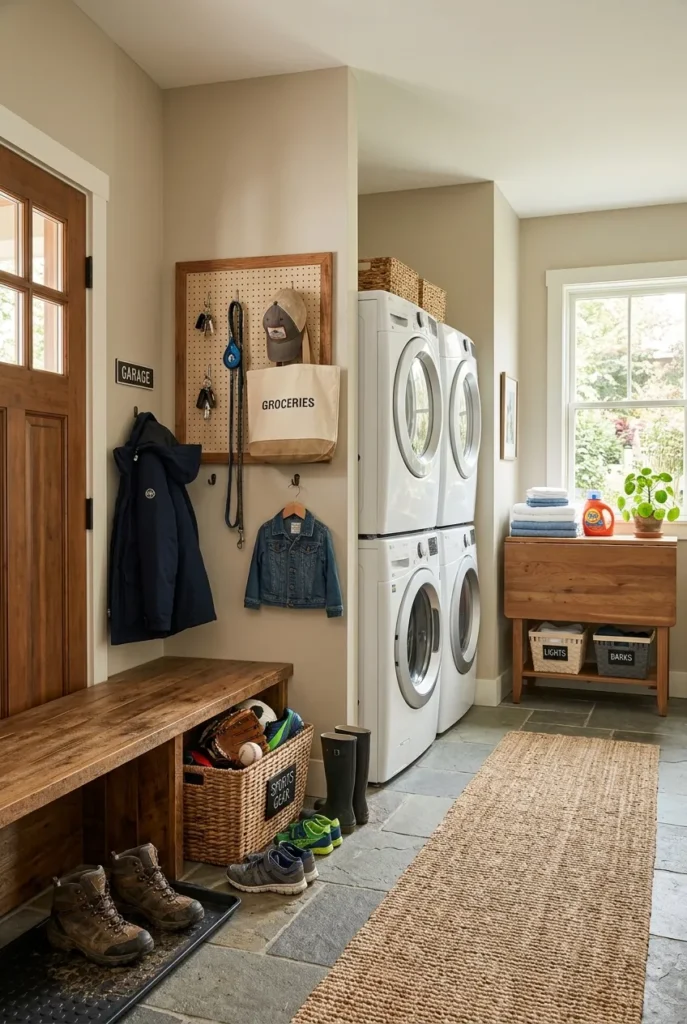
Put the entry zone closest to the garage door so mess stops at the threshold. Add a bigger boot tray and a dedicated bin for sports gear. Keep the folding counter farthest from the door so clean laundry never sits in the dirty-traffic path.
A slim console or a pegboard on the garage-side wall holds keys, dog leashes, and reusable bags right where you grab them on the way out.
Style It Warm So It Feels Like a Room, Not a Utility Closet
Function first, but style keeps you using the system. A pretty room gets maintained. A grim one gets ignored.
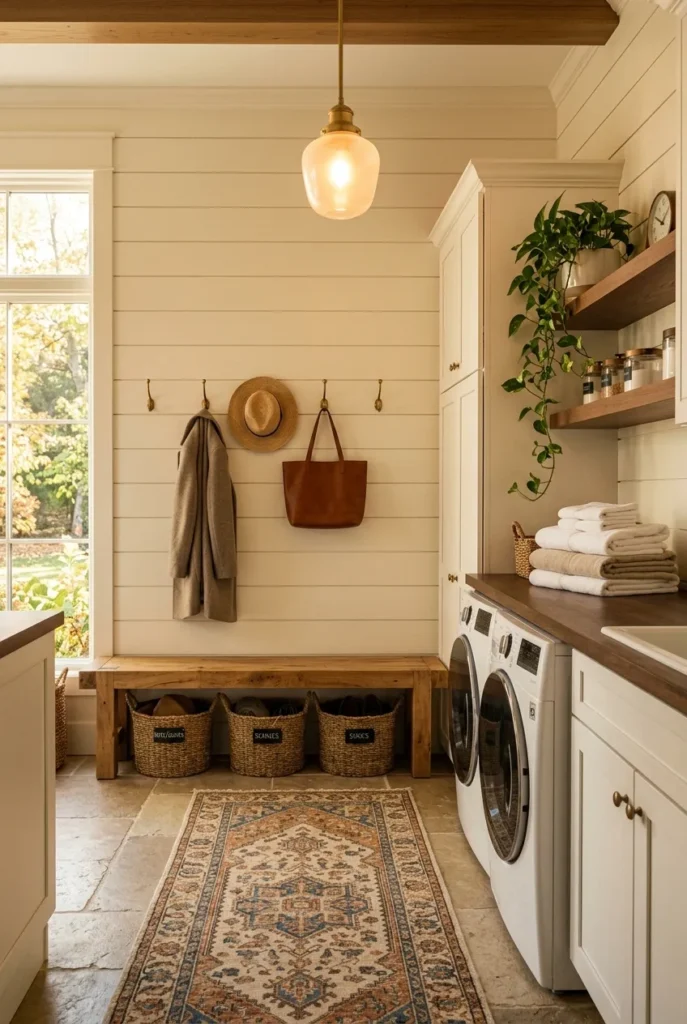
Lean into warm neutrals: cream walls, wood tones, and a few woven baskets. Add one plant that tolerates low light, a framed print, and a runner with some pattern to hide daily grit. A single pendant or two wall sconces soften the hard appliance edges.
Keep the color story simple so the room reads calm even when a basket of laundry is mid-fold. That calm is what makes the space feel finished.
Frequently Asked Questions
How do I organize a small mudroom laundry combo without buying much?
Start by zoning what you already own. Move shoes to one spot, supplies to another, and clear the folding counter. Then add only what a specific zone still needs, usually a hamper and a few labeled baskets.
What is the best layout for a narrow mudroom laundry room combo?
A single-wall run with a stacked washer and dryer. Stacking frees an entire appliance footprint for a bench and hooks, and a folding counter needs only about 18 to 24 inches of depth to work.
Where should the washer and dryer go in a combo room?
Put them in the middle or far side, away from the muddy entry path, so clean laundry never sits where wet boots land. Stack them if the room is under 6 feet wide.
How do I keep the folding counter from becoming a dumping ground?
Give the small stuff its own drop zone by the door: a tray for keys, a two-slot mail sorter, and a hidden charging spot. When keys and mail have a home, they stop landing on the counter.
Can renters set up a mudroom laundry combo without drilling?
Yes. Use rated adhesive hooks, a freestanding shoe bench, tension rods, over-the-door organizers, and a rolling cart. You get every zone with zero holes in the wall.
How often should I reset the space?
A five-minute reset at the end of laundry day keeps it going: clear the counter, empty the drop tray, and return stray shoes to the cubbies.
Your Next Step
A mudroom laundry combo does not need a renovation to work. It needs five clear zones and a two-minute habit of putting things back where they belong. Pick one zone this weekend, set it up, and let the rest follow.
Which zone is your trouble spot right now? Start there, and save this post so you have the zone map handy when you tackle the next one.