

Japandi-Style Organization for a Calm, Minimal Home
You walk into a room and your shoulders drop. Nothing is shouting at you. Every surface is clear, the wood is warm, and one small vase of greenery does all the talking. That feeling has a name, and japandi organization is how you build it at home. It blends Japanese minimalism with Scandinavian function, and the payoff is a space that feels calm without feeling cold. Here is the promise: you can get there without gutting your house or buying everything new.
Most guides stop at “declutter and add baskets.” We are going further. You will get a named system you can run in any room, a budget and rental-friendly path, and the upkeep habits that keep the calm from unraveling by Thursday.
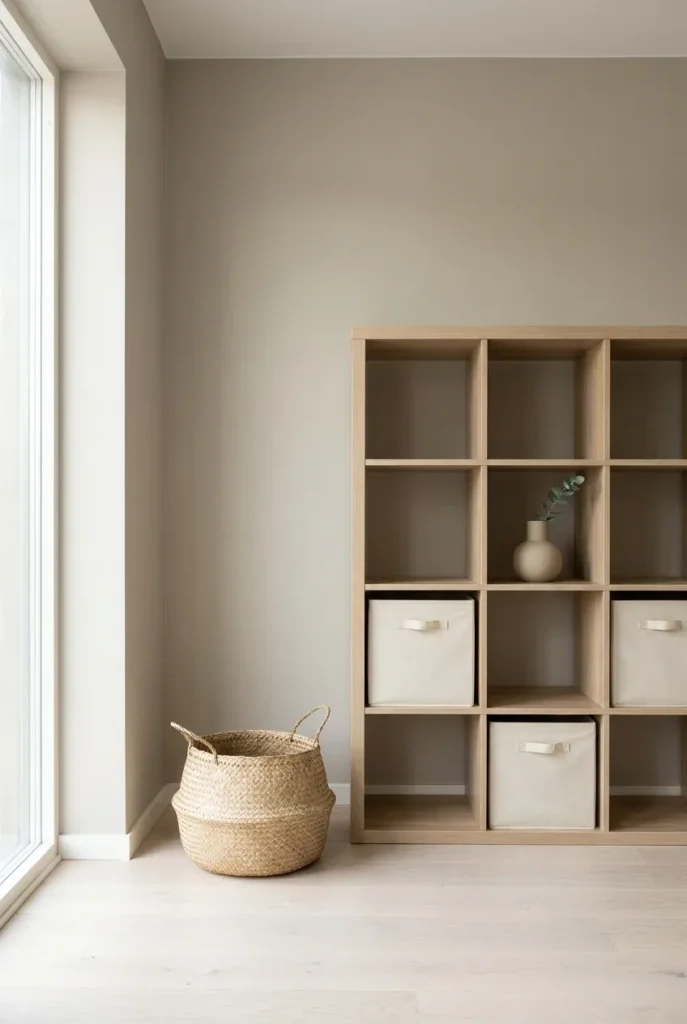
What Japandi Organization Actually Means
Japandi is a mash-up word: Japanese plus Scandinavian. The Japanese side brings restraint, natural materials, and a love of imperfect, handmade things rooted in the idea of wabi-sabi, finding beauty in the simple and weathered. The Scandinavian side brings light woods, cozy function, and storage that earns its keep.
For organizing, that translates into three plain rules. Hide most of it. Show a little of it, and choose that little on purpose. Let everything you own have a real home. That is the whole philosophy in one breath.
Notice what it is not. It is not stark, empty, or precious. A Japandi home looks lived in. Honestly, that is the part I love most about it.
The 80/20 Calm Rule (Our Simple Japandi Framework)
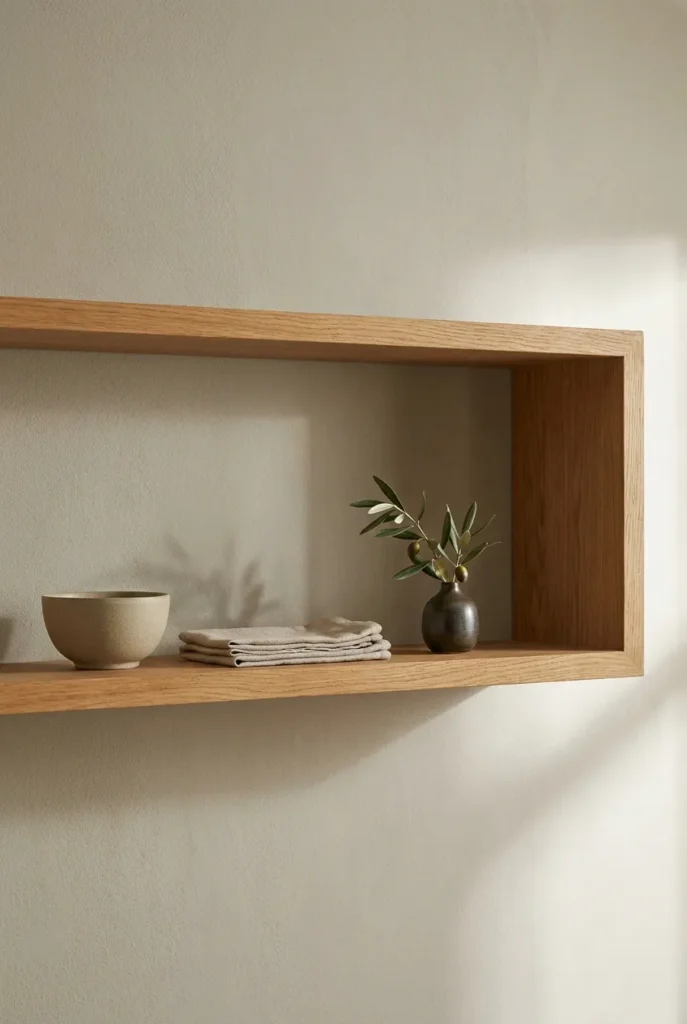
Here is the framework competitors skip. We call it the 80/20 Calm Rule. Store 80% out of sight. Display 20% on purpose. That is it.
Run it in any room. In a closet, that means closed drawers and bins carry the bulk, while one shelf shows a folded stack and a plant. In a kitchen, the gadgets live behind cabinet doors and the counter holds a wood board and a kettle. The math keeps you honest. If your “display 20%” starts creeping toward half the surface, something needs to go back into hiding.
Why it works: your eye needs rest. A room reads as calm when most of it is quiet and a few chosen pieces get to speak. Clear air matters too, and reducing dust-catching clutter supports better indoor air quality according to the US EPA, which is a nice bonus for a style built on breathing room.
Screenshot this checklist and use it as you go:
- Every item has a home. No “I’ll deal with it later” pile.
- 80% hidden in closed storage or lidded, matching bins.
- 20% on display, chosen for beauty or daily use.
- One natural material per surface (wood, rattan, linen, stone, ceramic).
- One living thing per zone (a plant, a branch, fresh air from an open window).
Japandi Closet Organization
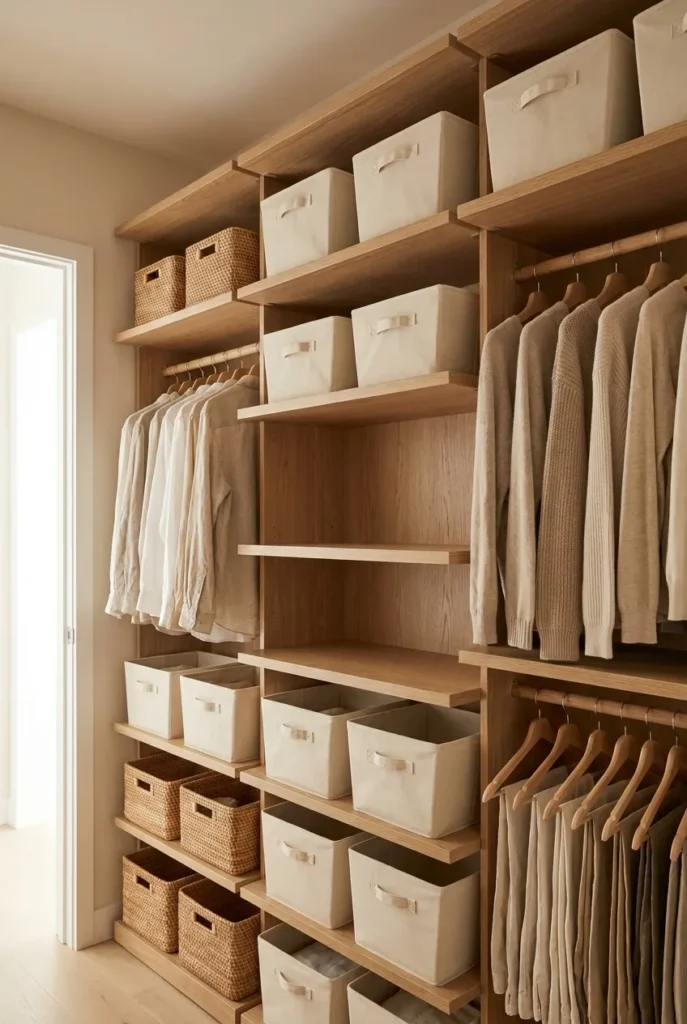
Closets are where japandi closet organization pays off fastest, because a closet is 90% hidden storage already. You are working with the grain of the style.
Start by emptying and grouping like with like. Then swap loud plastic hangers for a single hanger type in a warm tone; slim wood or natural finishes read Japandi instantly. Fold what you can into drawers and bins so the rod holds less and breathes more. For the zoning approach that keeps a bigger closet from sliding back into chaos, we walk through it step by step in our guide to zone your master closet so it stays organized.
Keep three quiet rules here. Matching bins only, so the shelf reads as one calm line. Labels small and low-contrast, think handwritten kraft tags, not bright stickers. And leave one shelf mostly empty on purpose. That empty shelf is the whole point.
Japandi Pantry and Kitchen Organization
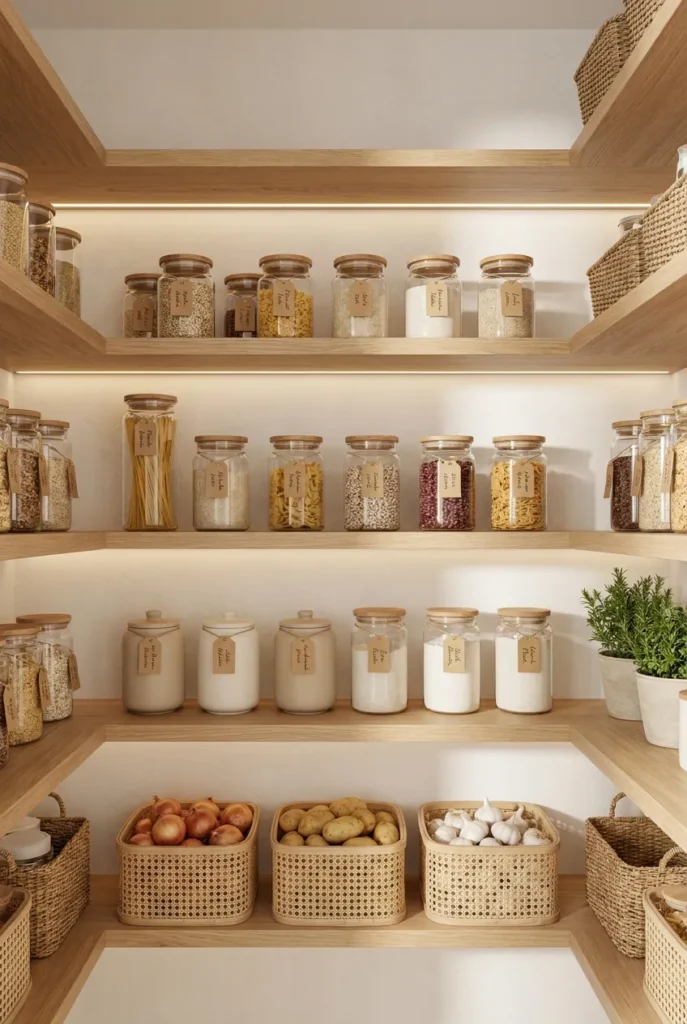
The pantry is the single most-pinned Japandi organizing zone, and japandi pantry organization follows one move above all others: decant.
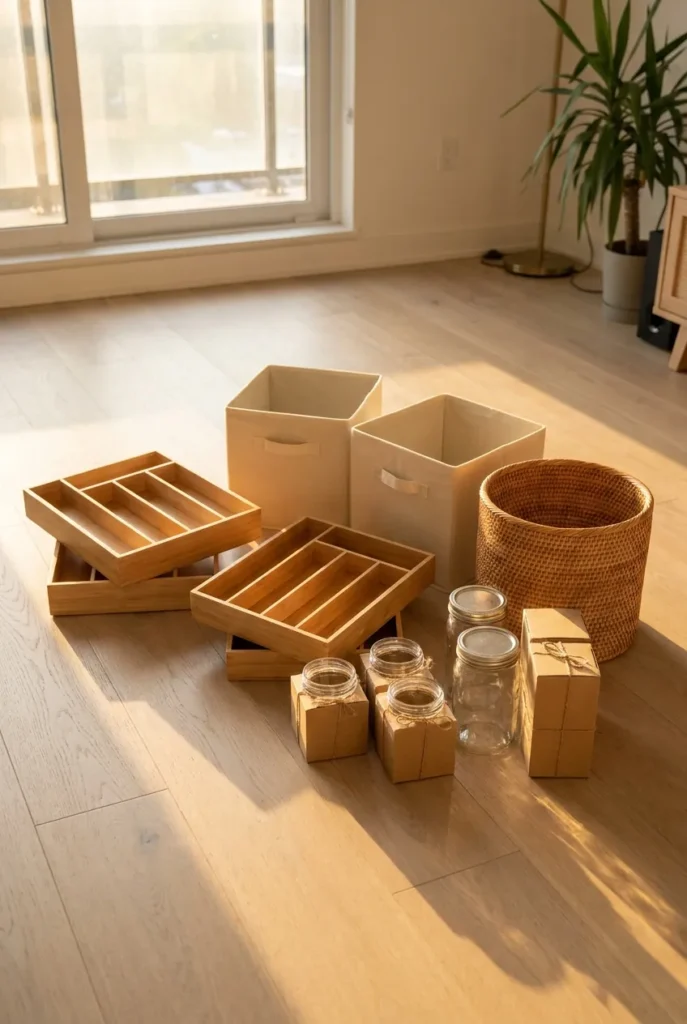
Take dry goods out of their loud printed packaging and pour them into clear glass jars with bamboo lids or matte canisters. The visual noise disappears and the shelf turns into something you actually want to look at. Group like with like, keep a small step stool or shelf riser for deep cabinets, and add a lazy Susan in that awkward corner so nothing gets lost.
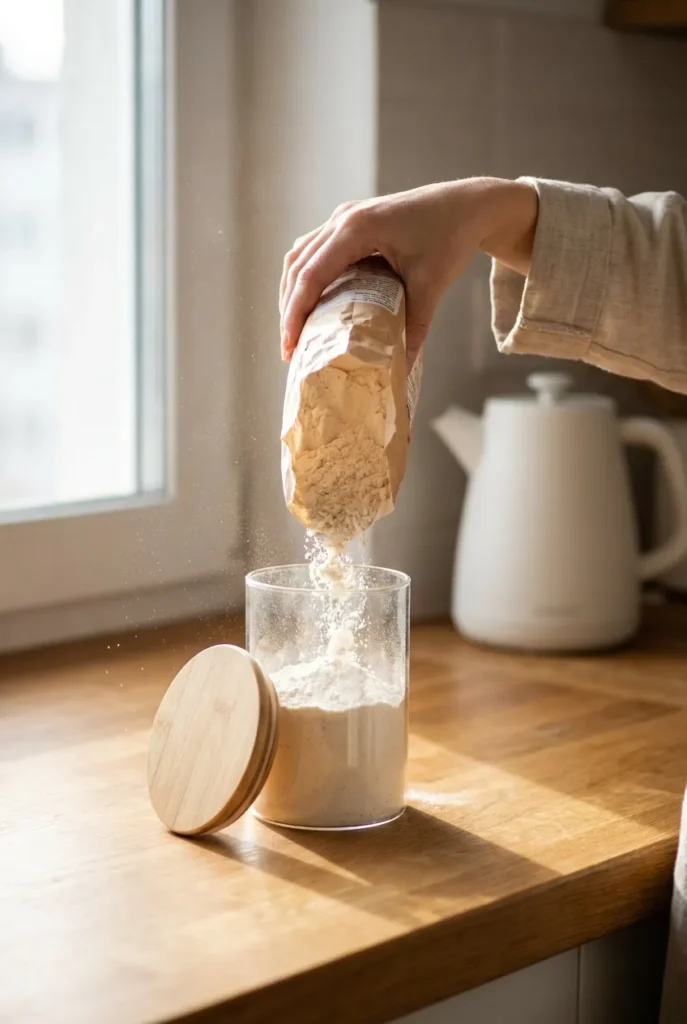
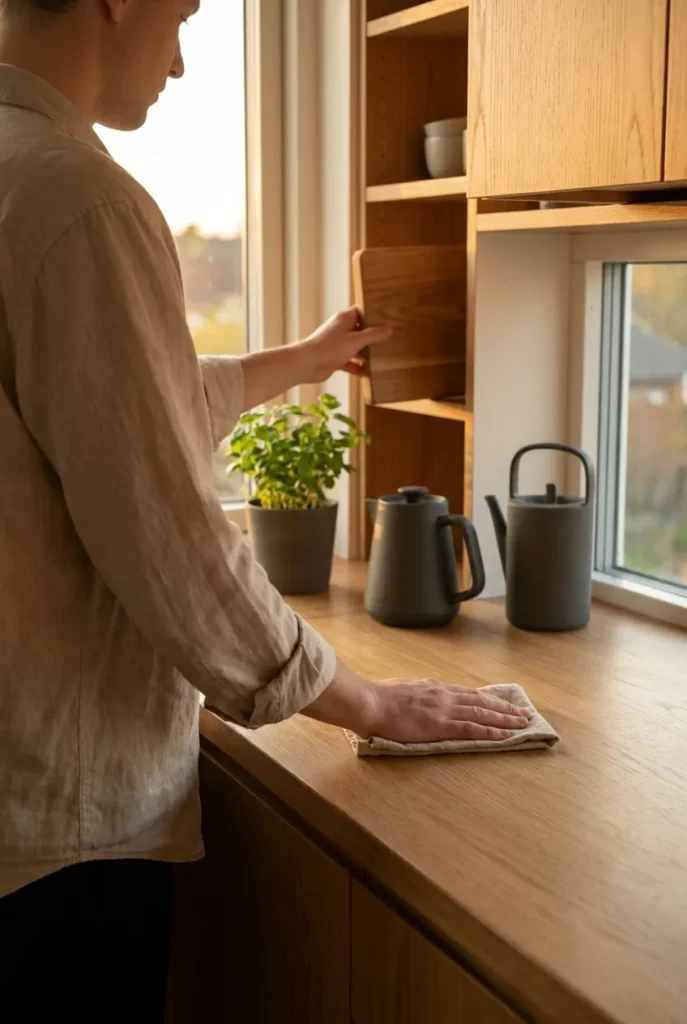
On the counter, the 80/20 Calm Rule does the heavy lifting. Hide the small appliances behind a cabinet door or in a garage cupboard. Leave out only what you use daily and love the look of: a wood cutting board, a stovetop kettle, maybe a single crock of utensils.
Quick Japandi kitchen swaps that cost little:
- Trade mismatched food storage for one clear jar set.
- Line a drawer with a natural bamboo divider tray.
- Move the dish soap into a plain amber or ceramic pump.
- Corral spices into small matching jars with tiny kraft labels.
Japandi Bedroom Organization Tips
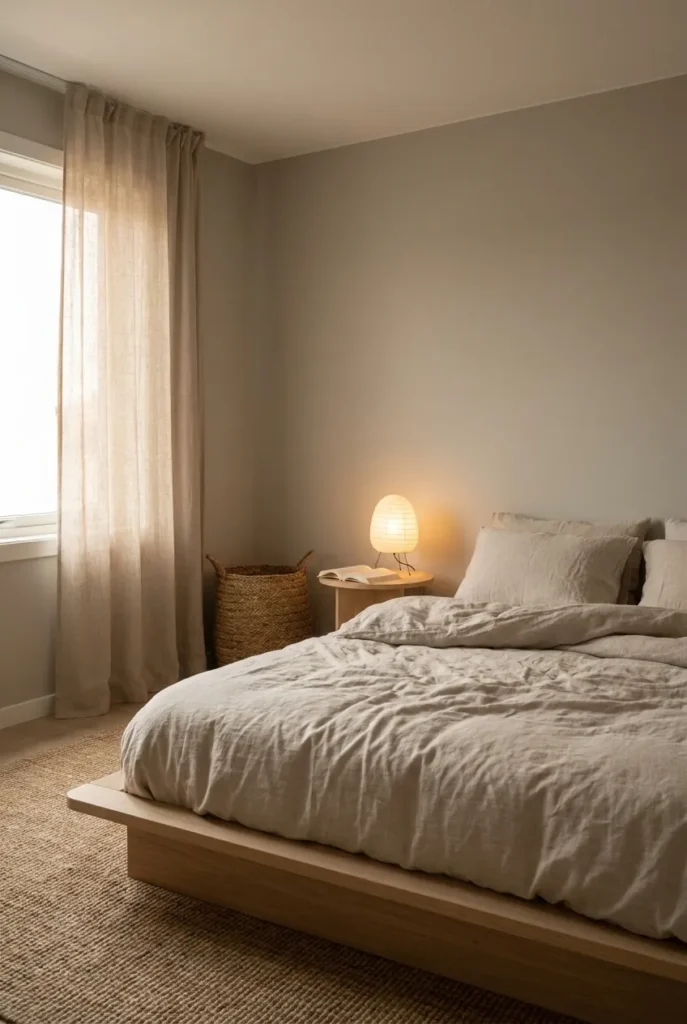
A Japandi bedroom is built to help you exhale, so japandi bedroom organization tips center on getting stuff off the floor and out of sight. A low platform bed with built-in drawers, or simple under-bed bins in linen or canvas, swallows the off-season clothes and spare bedding that usually pile up.
Keep the nightstand to three things at most. A small lamp, one book, and a little tray for a glass of water or your rings. Everything else goes in the drawer. Clothes get the same 80/20 treatment as the closet: fold the bulk into drawers, hang the rest, and resist the urge to drape things over a chair. (We all have the chair. Be honest about the chair.)
Japandi Bathroom Organization
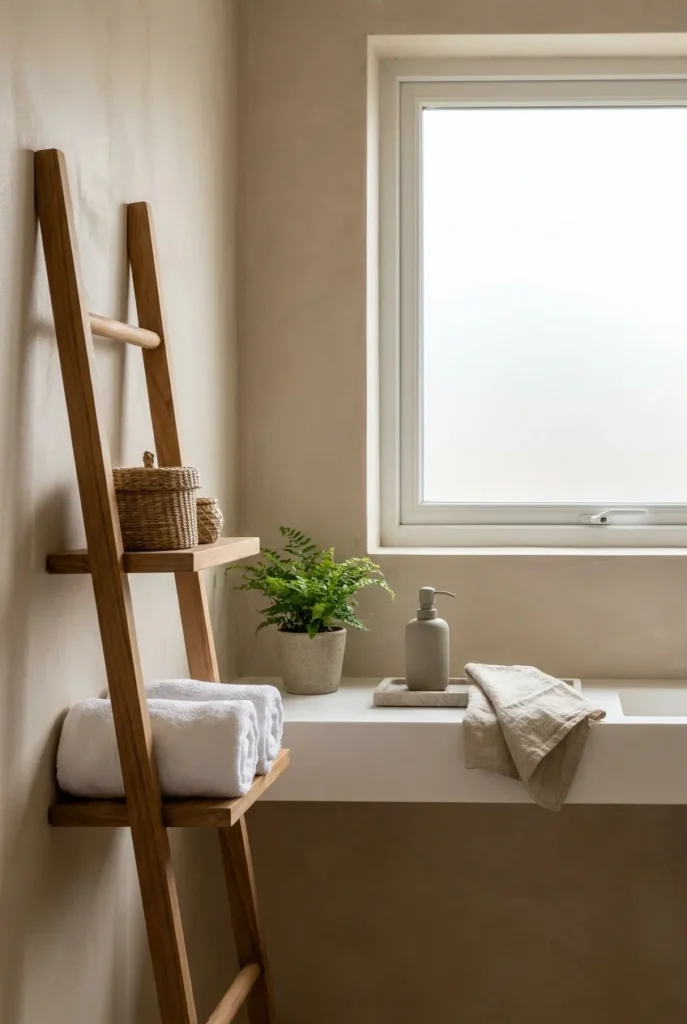
Small bathrooms love this style because Japandi thrives on restraint. For bathroom organization japandi-style, clear the counter down to a soap pump and one plant, then move the rest into a drawer or a closed cabinet.
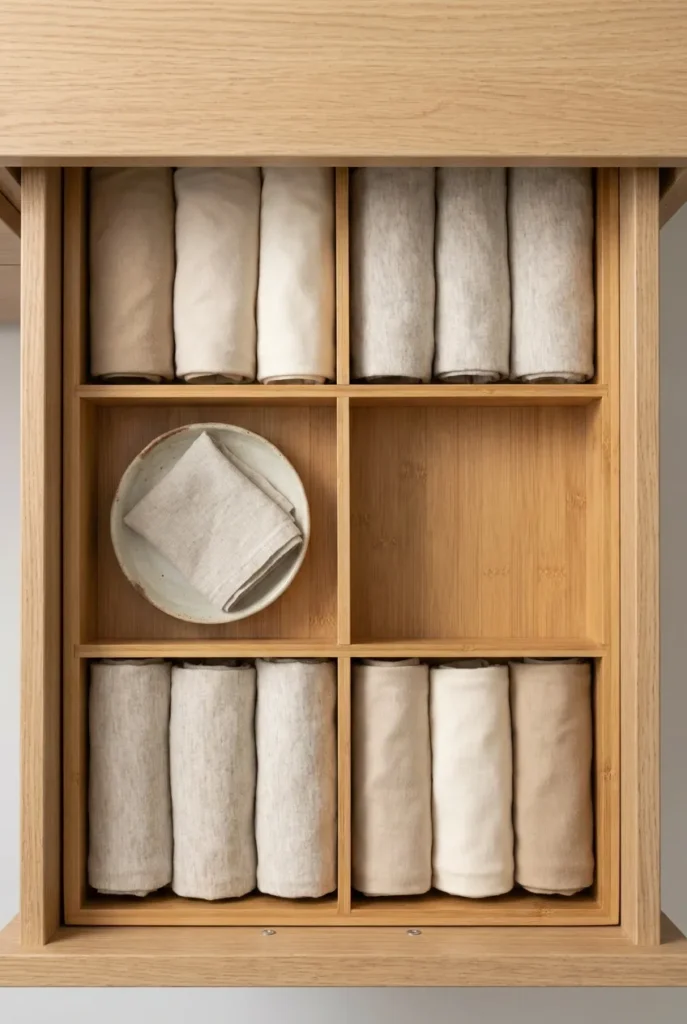
Roll towels and stand them in a woven basket for that spa look. Decant cotton rounds and swabs into small glass canisters. If you rent and cannot drill, lean on tension rods, adhesive hooks, and a freestanding wood ladder shelf to add storage without touching the walls.
Bring in one natural texture (a teak bath mat, a stone tray, a linen hand towel) and let it warm up all the hard tile. That single soft element is what separates Japandi from a cold hotel bathroom.
The Budget and Rental-Friendly Path
You do not need a designer budget for this. Here is the gap most articles leave open: how to get the Japandi look cheaply and without permanent changes.
Shop your own home first. Empty jars, plain baskets, and neutral bins you already own get you halfway. Then thrift for wood trays, ceramic bowls, and rattan baskets, which turn up constantly secondhand. For new pieces, IKEA and budget lines carry light-wood organizers and lidded bins that read Japandi for very little, which is exactly why “japandi organization ideas ikea” is such a common search.
Renter rules: no-drill everything. Adhesive hooks, tension rods, freestanding shelves, and over-the-door organizers add storage you can take with you. If you want the full mindset shift behind buying less and keeping less, our real-person guide to minimalist decluttering pairs perfectly with this look. And for finding hidden capacity in tight homes, these clever under-stairs storage ideas show how to tuck bulk away completely, which is the Japandi dream.
How to Keep It Calm (Maintenance)
Organizing once is easy. Keeping it calm is the real skill, and it answers the question about how organized homes stay that way. The Japanese approach leans on small daily resets rather than big seasonal overhauls.
Try a five-minute nightly reset. Walk one loop, return anything off its home, and wipe the main surface. Do a one-in-one-out rule on anything you buy. And once a season, revisit the 80/20 Calm Rule to pull creeping clutter back into hiding. That rhythm is what makes the look last past week one.
Frequently Asked Questions
What is the concept of Japandi?
It is a hybrid of Japanese minimalism and Scandinavian function. The concept is a home that feels calm and warm at once: few belongings, natural materials, muted colors, and storage that hides clutter so the eye can rest.
What is the Japandi style of design?
Japandi design uses light and dark woods together, neutral earthy colors, handmade and imperfect textures, clean lines, and plenty of empty space. Function matters as much as looks, so every piece tends to do a job.
What are the characteristics of Japandi?
Clean lines, muted neutral palettes, natural materials like wood, rattan, linen and stone, lots of hidden storage, minimal display, quality over quantity, and a little greenery or natural light to keep it from feeling sterile.
How do people keep a Japandi home organized?
With small, steady habits rather than big purges. A short daily reset, a one-in-one-out buying rule, and a regular check against the 80/20 balance keep the space calm long-term.
Can I do Japandi organization on a budget or in a rental?
Yes. Shop what you own, thrift wood and rattan pieces, use affordable light-wood organizers, and stick to no-drill solutions like tension rods and adhesive hooks so nothing damages the walls.
Bring the Calm Home
Japandi organization is really just a promise to your future self: fewer things fighting for your attention, and a home that lets you breathe. Start with one zone, run the 80/20 Calm Rule, hide the bulk, and choose your few displayed pieces on purpose. If you want to linger a little longer and pick your next project, stay and browse a few more of our organizing walk-throughs. Your calmest room is closer than you think.


