
Flat vs Vertical Spice Drawer Organization: How to Pick the Right System
You open the drawer. You know the cumin is in there. You paw past the paprika, knock over the oregano, and pull out three jars before you find it. Sound familiar? Good spice drawer organization fixes that ten-second scramble for good, and the secret is not buying more stuff. It is picking the right style of system for the drawer you actually have. This guide compares the two systems people fight over (flat and vertical), then hands you a simple way to choose in about a minute.
Here is the promise. By the end, you will know your drawer depth, know which system fits it, and know exactly what to buy. No guessing.
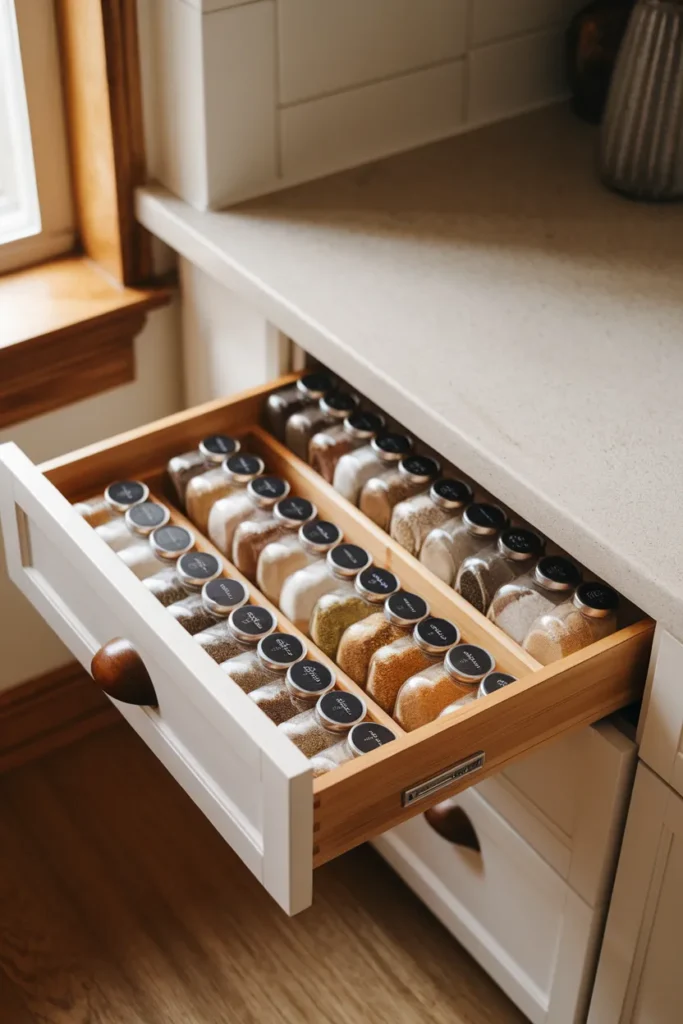
Flat vs Vertical Spice Drawer Organization at a Glance
Before we get into the weeds, let’s define the two camps in plain language.
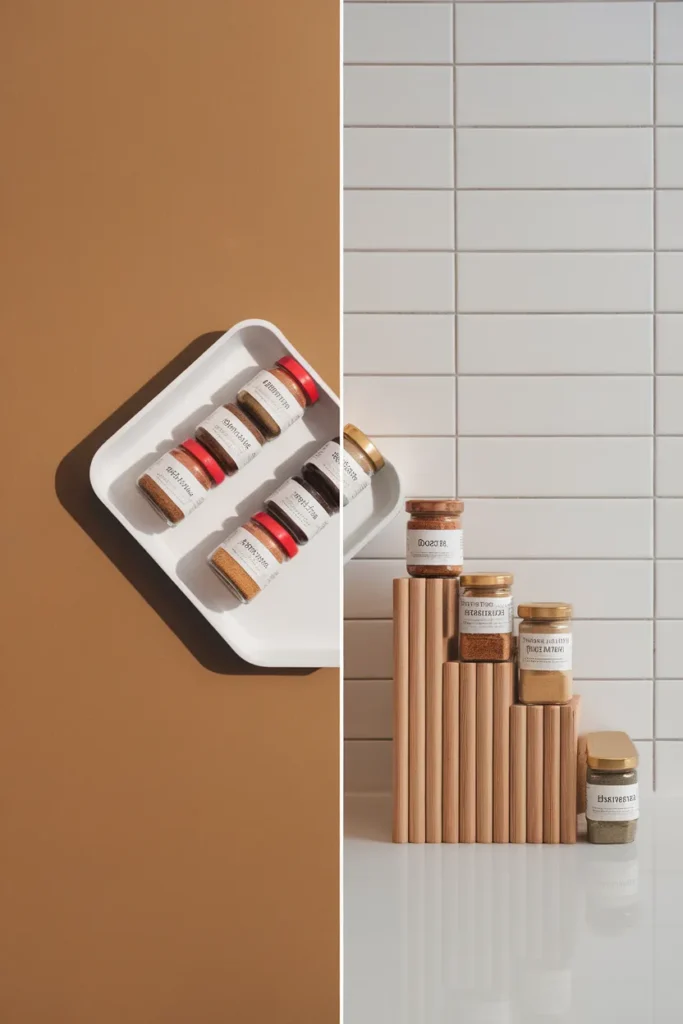
A flat system lays every jar down on its back or side in a single layer, usually in an angled tray so the labels face up at you. You read the tops, or you read the sideways labels, and you grab. A vertical system stands jars upright on stepped tiers (think tiny stadium seating) so each row sits higher than the one in front, and you read the top of every lid at a glance.
Both work. They just fit different drawers and different cooks. Here is a quick mini-table you can screenshot.
| Feature | Flat system | Vertical (tiered) system |
|---|---|---|
| Best drawer depth | Shallow, under 3 inches tall | Deeper, 3.5 inches tall or more |
| How you read jars | Top labels or angled labels | Top lids, stadium style |
| Jar count (typical) | Fewer (around 9 to 20) | More (up to about 48) |
| Standout product | OXO Compact tray, about $16.99 | SpaceAid Bamboo 4-tier, about $34.99 |
| Vibe | Minimal, low profile | Full collection on display |
That table is the whole article in miniature. The rest just helps you use it.
Measure First: The 3-Inch Rule for Spice Drawer Organization
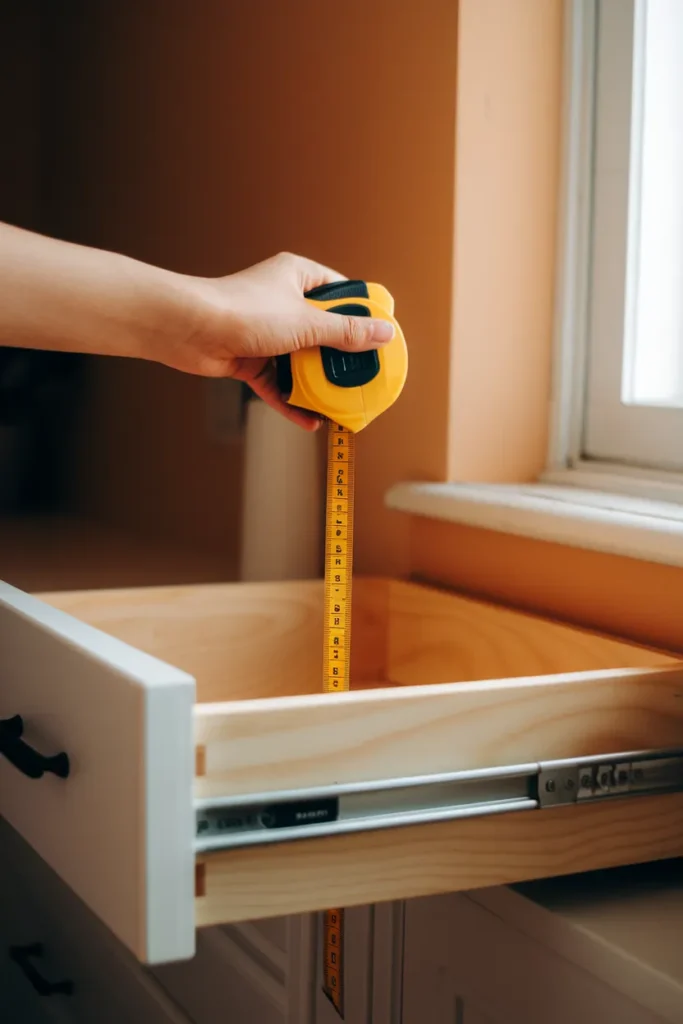
This is the step everyone skips, and it is why so many organizers get returned. Grab a tape measure. You need three numbers: drawer width, drawer depth (front to back), and interior height (the clear space from the bottom to the underside of the drawer above it).
That height number decides everything. Call it the 3-Inch Rule, my own simple cutoff for choosing a system.
If your interior height is under 3 inches, go flat. Standard spice jars stand about 4 inches tall, so they will not fit upright, and forcing them means the drawer jams every time it closes. If your height is 3.5 inches or more, vertical is on the table, and you get to fit far more jars in the same footprint. Right around 3 to 3.5 inches is the gray zone, where a low-profile flat tray or short jars win.
For reference, the OXO Compact tray measures about 6.7 by 16.5 by 2.5 inches, so it slips into genuinely shallow drawers. The SpaceAid bamboo tiered organizer runs about 17 inches deep and expands from 12 to 23 inches wide, so it wants a bigger, deeper drawer. Measure once. Buy once.
While you have the tape out, it helps to think about the whole kitchen, not just one drawer. If you are still deciding which drawer should even become the spice drawer, it pays to plan your kitchen cabinet layout by zones first so your spices land near the stove where you cook.
The Flat Spice Drawer System: Low, Simple, Fast
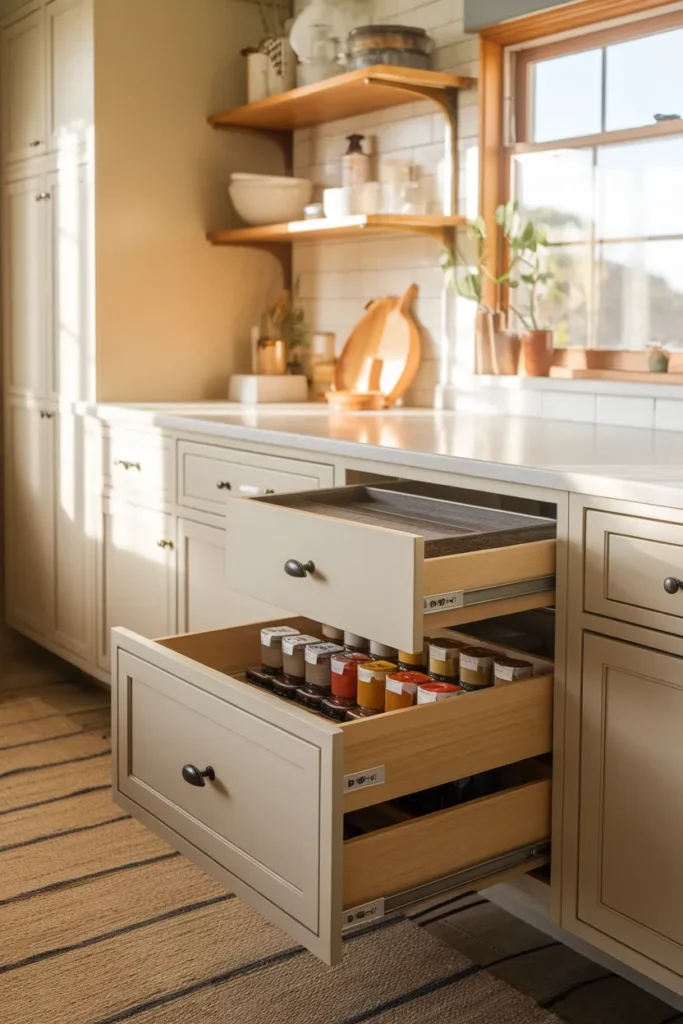
Flat systems shine in shallow drawers and small collections. You lay jars in an angled tray, the labels tilt up toward you, and the whole drawer stays low-profile enough to close under a tight countertop overhang.
Who flat is for
Flat is your pick if your drawer height is under 3 inches, if you keep a tight rotation of maybe 10 to 20 spices, or if you just like a minimal look. Renters love it too, since there is no install and nothing to attach. An angled tray like the OXO Compact holds around 9 standard jars for about $16.99, which makes it a low-risk first buy.
Make flat work harder
The weakness of flat is capacity, so labeling is where you win back speed. Label the tops of every jar in a big, plain font, because in a flat layout your eyes hit the lids first. Keep the jars uniform. Mismatched bottles waste space and make even a tidy drawer look busy. If you want the labels to look pulled-together without buying a machine, here are DIY pantry labels you can actually read that work just as well on spice lids.
One honest caveat: flat trays hold fewer jars than they look like they will. If you cook from 40 spices, a single flat tray will not cut it, and you will end up double-stacking, which defeats the point.
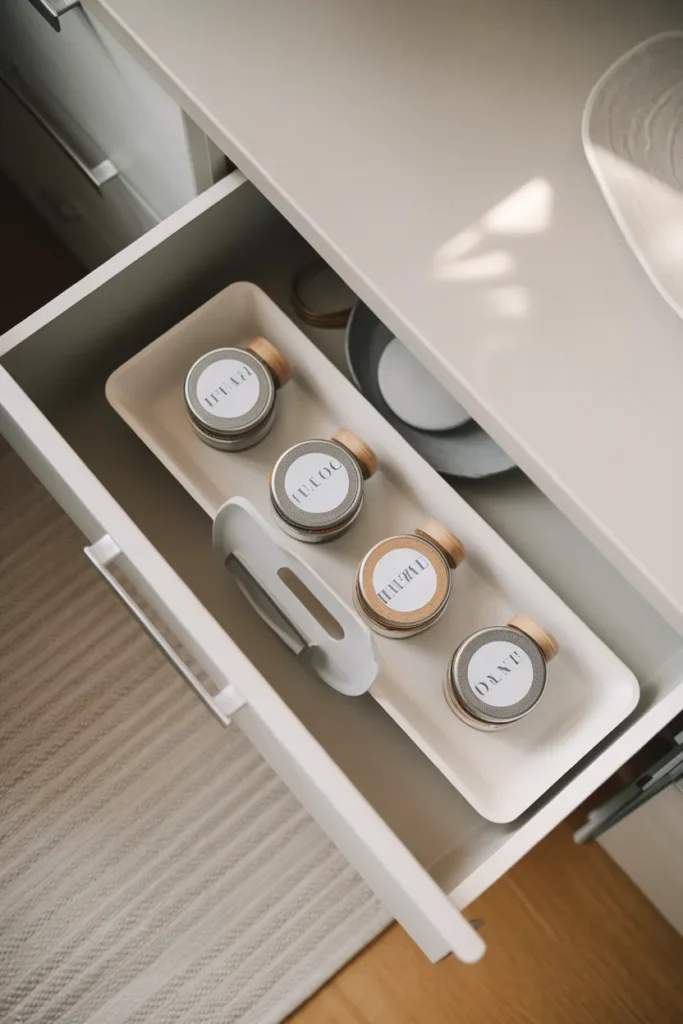
A quick flat setup, start to finish
Empty the drawer completely. Wipe it out. Toss anything past its prime (more on timing below). Drop in the tray, line jars up alphabetically so muscle memory kicks in, and label the tops. Fifteen minutes, honestly, once the jars are decanted.
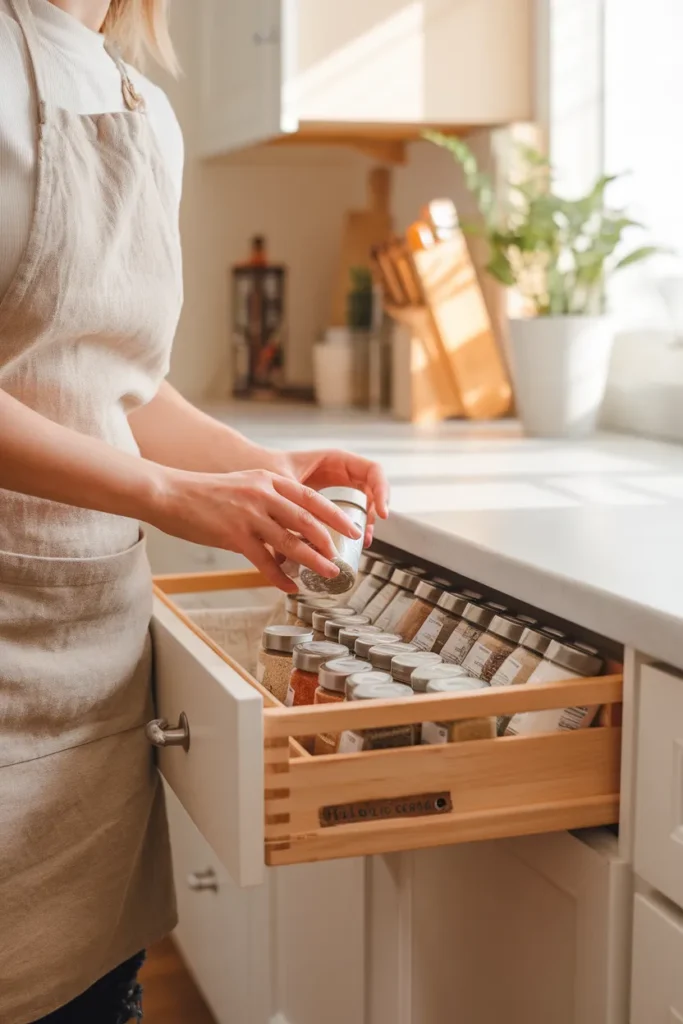
The Vertical Spice Drawer System: More Jars, Full View
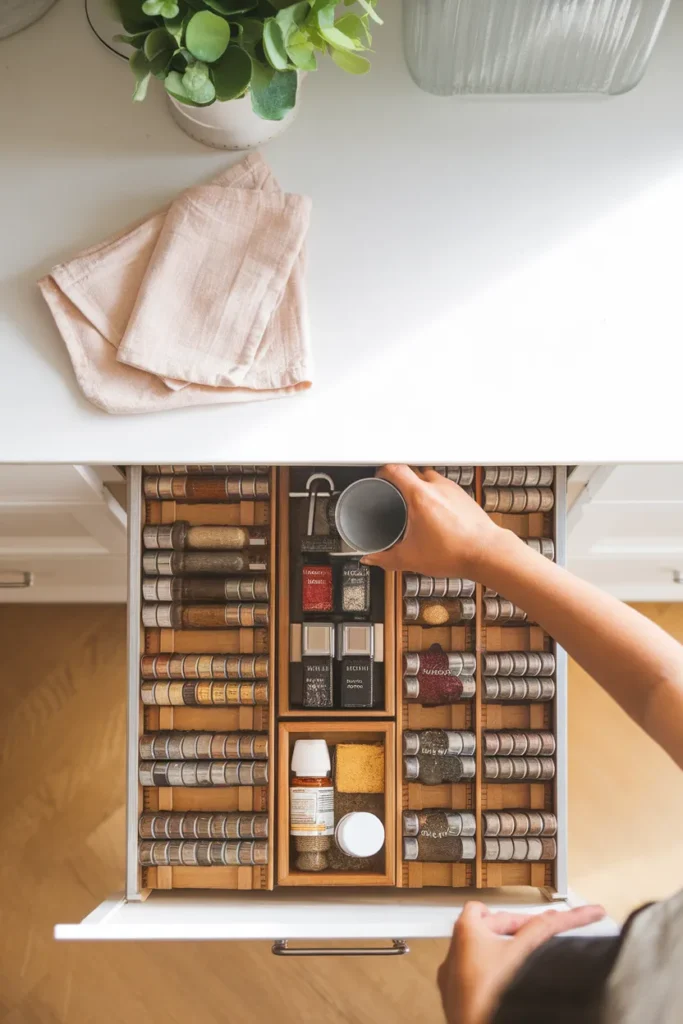
Now the crowd favorite on Pinterest. Vertical systems stand jars upright on stepped tiers so each back row peeks over the front row. You look down once and read every lid. It is the stadium-seating trick, applied to cumin.
Who vertical is for
Vertical is your pick if your drawer height clears 3.5 inches, if you own a serious spice collection, or if you want that magazine-clean, everything-on-display look. The SpaceAid bamboo 4-tier organizer holds up to 48 jars, expands to fit drawers 12 to 23 inches wide, and runs about $34.99. That capacity is the real draw. You fit two to five times more spices in the same drawer footprint than a flat tray allows.
The tradeoffs nobody mentions
Vertical eats height, so it is useless in a shallow drawer. Tiers also need a bit of depth to earn their keep, around 17 inches front to back for the popular bamboo trays. And if your jars are all different heights, the stadium effect breaks and short jars vanish behind tall ones. The fix is uniform jars, which is why decanting into a matching set matters more for vertical than for flat.
If your only deep storage is a tall, awkward cabinet rather than a wide drawer, do not force it. A vertical drawer insert has cousins built for that shape, and the same logic drives pull-out pantry organization for deep and narrow spaces.
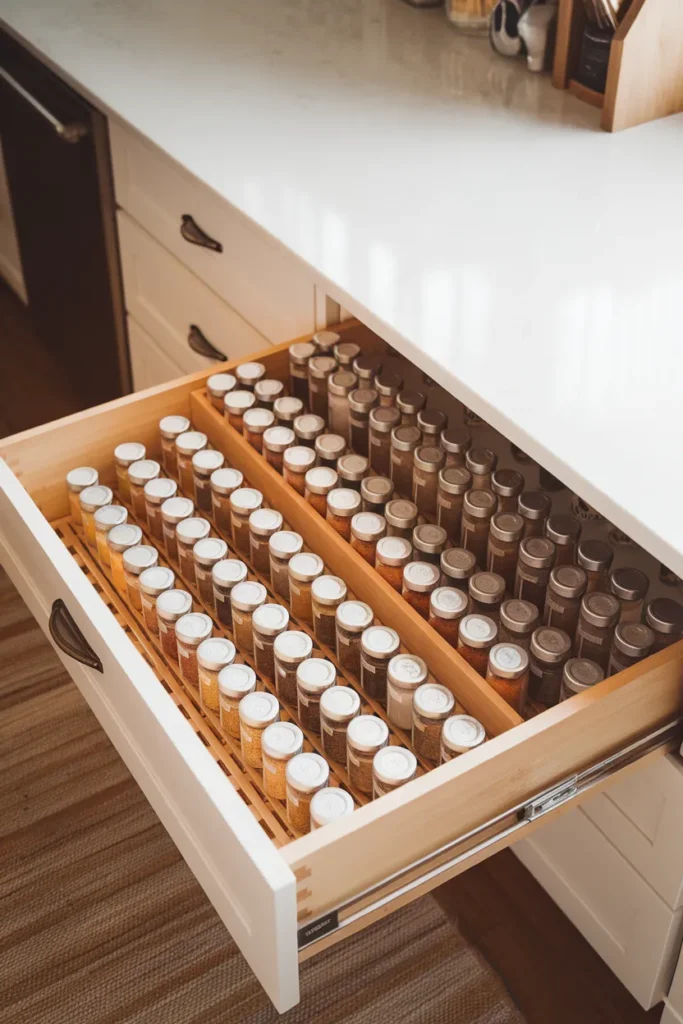
A quick vertical setup, start to finish
Same start: empty, wipe, purge. Set the expandable insert to your drawer width. Decant spices into matching jars so the tiers read cleanly, then arrange with your most-used spices on the front, lowest tier where they are easiest to grab. Label the front and the top, since you will sometimes catch the front edge first.
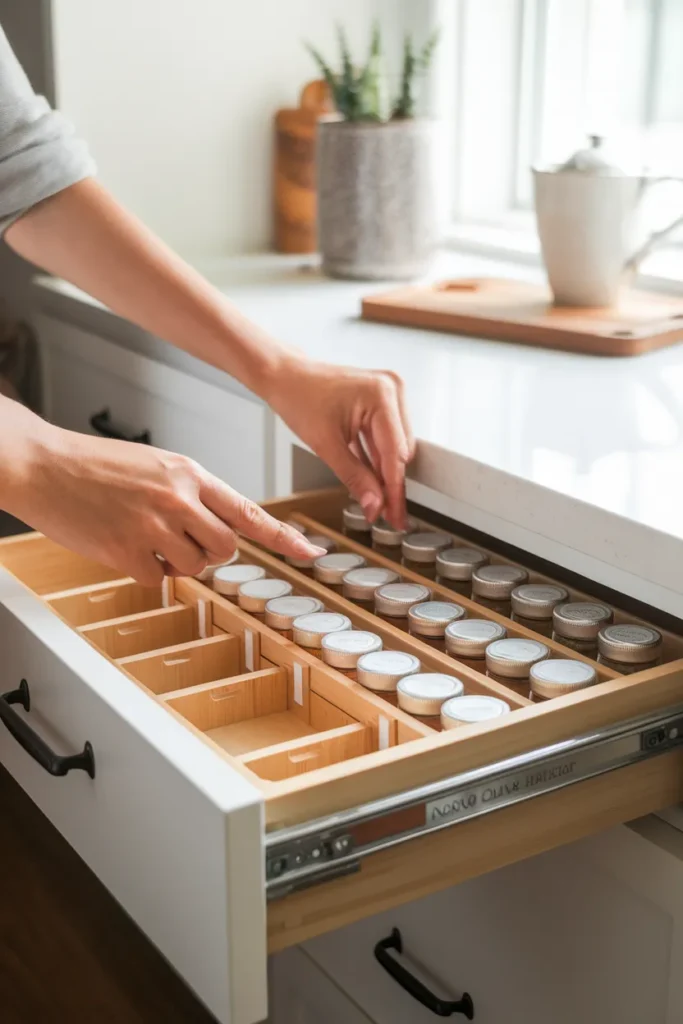
The Hybrid Path: When to Mix Both
Here is the angle the big listicles skip. You do not have to marry one system. Plenty of kitchens run a hybrid, and it is often smarter.
Say you have one shallow drawer and one deep drawer. Put your everyday nine (salt, pepper, garlic powder, paprika, cumin, chili powder, oregano, cinnamon, onion powder) in a flat tray in the shallow drawer right by the stove. Stash the rest, the baking spices and the once-a-year jars, in a vertical tiered drawer a step away. Daily cooking stays low-friction, and the overflow still has a real home instead of a chaotic corner cabinet.
I have seen this two-drawer split work better than either system alone, because it sorts by how often you reach for something, not just by what fits.
Keep It Fresh: Storage Rules That Protect Flavor
A pretty drawer is pointless if the spices inside are flat and dusty. Where you put the drawer matters as much as how you arrange it.
Store spices in a cool, dark, dry spot away from heat and moisture. According to Ohio State University Extension, whole spices keep their punch for about two years while ground spices and dried herbs fade after roughly one year, and they specifically advise against storing spices right next to the stove (source: Ohio State University Extension). Texas A&M AgriLife Extension echoes the “dark, cool place away from heat” guidance (source: Texas A&M AgriLife Extension).
The practical takeaway: a closed drawer is actually a great home for spices because it blocks light. Just keep that drawer away from the oven and the dishwasher, where heat and steam sneak in. Write the open date on the bottom of each jar so you know when a spice has quietly gone dull.

Keeping It Neat: The 5-Minute Refill Rule
Every system drifts. The fix is tiny and repeatable. Once a month, spend five minutes on a refill pass: top off any jars running low, wipe the tray, and pull anything that smells like nothing. That is the whole maintenance plan.
Name it so you remember it. Call it the 5-Minute Refill Rule. Five minutes, once a month, and your drawer never slides back to chaos. It is the difference between a setup that looks great in week one and one that still works in month six.
Frequently Asked Questions
How do I organize a spice drawer?
Empty and wipe the drawer, purge anything stale, then measure the interior height. Under 3 inches, use a flat angled tray. Over 3.5 inches, use a vertical tiered insert. Decant into uniform jars, arrange alphabetically or by how often you use each spice, and label the tops.
What is the best spice organizer for drawers?
It depends on your drawer, not on a single winner. For shallow drawers, a flat tray like the OXO Compact (about $16.99, around 9 jars) is hard to beat. For deep drawers, a vertical tiered organizer like the SpaceAid bamboo 4-tier (about $34.99, up to 48 jars) gives you far more capacity.
Is a spice drawer a good idea?
Yes, and freshness experts actually favor it. A closed drawer blocks the light that degrades spices, so as long as the drawer sits away from the stove and dishwasher heat, it is one of the better places to keep them.
What are the different types of spice organizers?
The main families are flat angled trays, vertical stepped tiers, pull-out cabinet racks, lazy Susans, and in-cabinet risers. For a drawer specifically, the real choice comes down to flat versus vertical, decided by your drawer’s height.
How many spices should I keep in a drawer?
A flat tray comfortably holds about 9 to 20, while a vertical tiered insert can hold up to roughly 48. Keep your everyday spices in the easiest-to-reach spot and let the rest live a step away.
The Bottom Line on Spice Drawer Organization
You do not need a Pinterest-famous kitchen or a big budget. You need a tape measure and one honest decision. Under 3 inches, go flat. Over 3.5, go vertical. Cooking from a huge collection across two drawers, go hybrid. Then protect your work with a five-minute monthly refill and a drawer that lives away from the heat.
Pick your system this weekend and measure your drawer today. Once you find every jar in one glance, you will wonder why you waited. If this helped, save it to your kitchen board so it is there when you are standing in front of that messy drawer with a tape measure in hand.